
What Does Parking Garage Pressure Washing Pricing Actually Cost?
Parking garage pressure washing pricing typically falls in these ranges, depending on the method used:
| Pricing Method | Typical Range |
|---|---|
| Per square foot (parking lots) | $0.03 – $0.20 per sq ft |
| Per square foot (parking garages) | $0.10 – $0.25 per sq ft |
| Per parking space | $8 – $20 per space |
| Hourly rate | $50 – $150 per hour |
| Flat rate (small to large projects) | $500 – $5,000+ |
Most property managers in the DFW Metroplex pay somewhere in the middle of those ranges — but the final number depends on surface condition, garage size, accessibility, and how often the work gets done.
Here’s the frustrating reality: pricing varies a lot. A 48,000 sq ft lot might run $2,800–$3,000 for new construction cleanup, but that same space as an established parking garage with oil stains and tire marks could cost $4,800–$9,600.
Getting the wrong quote — or pricing your own job incorrectly — can cost you a client relationship before the work even starts. One pressure washing contractor on Quora learned this the hard way: a client praised the quality of the work but never called back because the price was too high.
This guide breaks down exactly what drives those numbers so you can budget accurately and compare quotes with confidence.
Understanding Parking Garage Pressure Washing Pricing
When we talk about maintaining a commercial property in the DFW Metroplex, the parking garage is often the first thing a visitor sees. If it’s covered in oil spots, grime, and old chewing gum, that first impression isn’t great. However, figuring out the budget for a cleanup can feel like trying to solve a math problem where the variables keep changing.
Professional cleaning isn’t just about “spraying water.” It involves specialized equipment, chemical degreasers, and often, complex water reclamation systems to stay compliant with Texas environmental regulations.
Average Cost Per Square Foot for Parking Structures
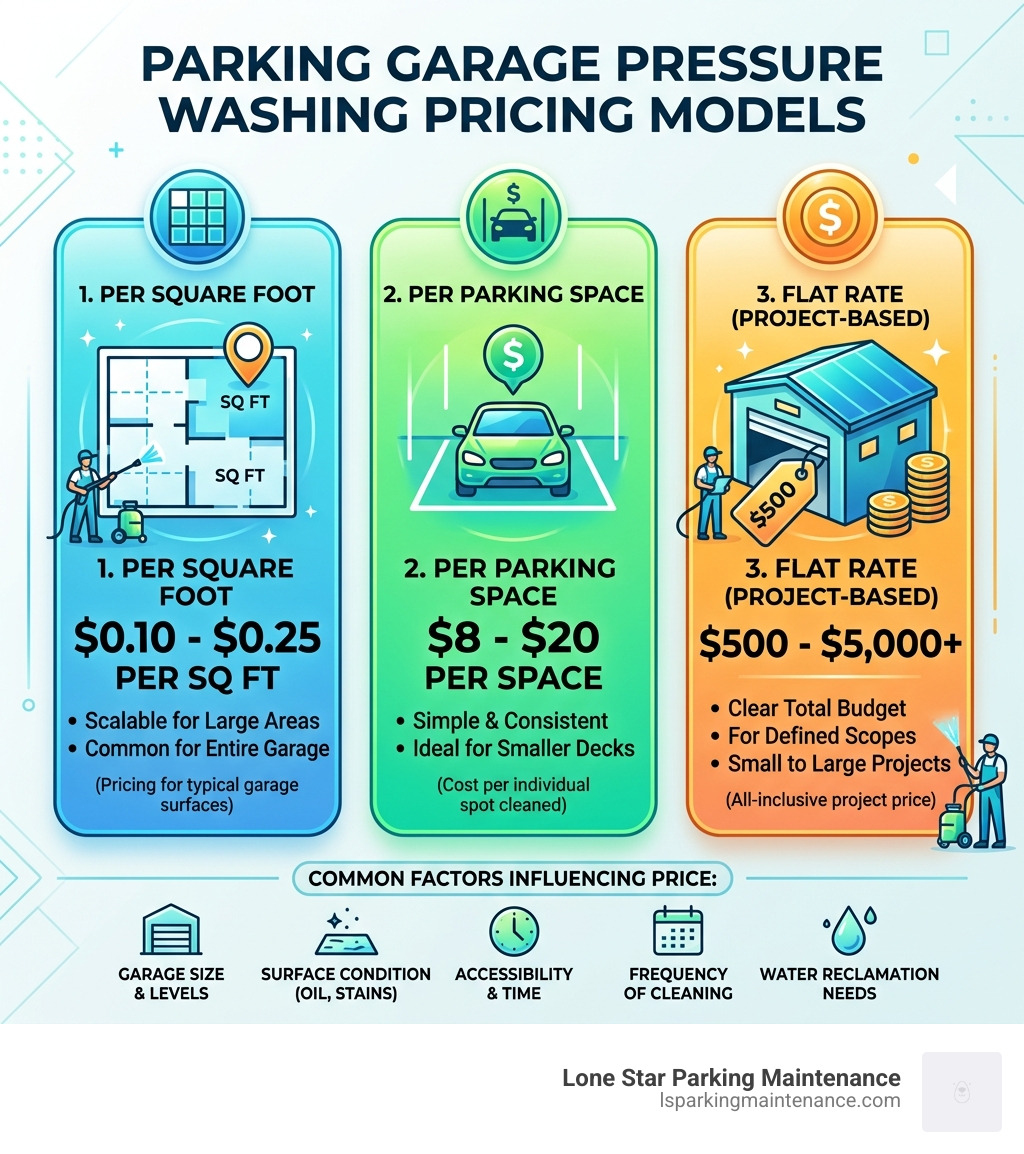
For most multi-level structures, the industry standard for parking garage pressure washing pricing ranges from $0.10 to $0.25 per square foot.
Why is this higher than a standard flat parking lot? It comes down to complexity. Garages have ceilings, columns, stairwells, and drainage systems that all require attention. Furthermore, the vertical nature of a garage means we have to account for water runoff and how it moves from the top deck down to the bottom.
At Lone Star Parking Maintenance, we often see parking lot power washing rates fluctuate based on the total size of the project. We call this the “economy of scale.”
- Small Garages (under 10,000 sq ft): You might see prices on the higher end ($0.20–$0.25) because the setup and mobilization costs are spread over a smaller area.
- Large Garages (50,000+ sq ft): Rates often drop toward the $0.10–$0.15 mark because our crews can get into a “flow state,” covering massive amounts of concrete efficiently once the equipment is staged.
Pricing Per Parking Space vs. Flat Rates
Sometimes, it’s easier to look at a garage and count the stalls. Many companies use a “per space” model, which typically lands between $8 and $20 per parking space.
This method is popular for property managers who have a fixed number of stalls and want a quick, digestible number for their board members. However, keep in mind that “per space” pricing usually includes the drive lanes and ramps associated with those spaces.
For very small lots or specific “spot cleans,” a flat rate might be applied. Most professional outfits in Dallas-Fort Worth will have a minimum mobilization fee (often $500 or more) to cover the cost of bringing out the heavy-duty rigs, heated water units, and a trained crew.
Key Factors Influencing Your Cleaning Quote
No two garages are identical. If you have a brand-new construction site that just needs a “dust-off” before the striping crew arrives, your quote will look very different from a 20-year-old downtown garage that hasn’t seen a power washer since the 90s.
Surface Condition and Specialized Stain Removal
The biggest “wildcard” in parking garage pressure washing pricing is the condition of the concrete.
- Oil and Grease: These are the enemies of clean concrete. We use industrial-strength degreasers and hot water to emulsify these stains.
- Chewing Gum: Removing gum requires high-heat and specific nozzles to “pop” the gum off without damaging the concrete cream coat.
- Tire Marks: Heavy skid marks in turns and near exits require more dwell time with chemicals and multiple passes with a surface cleaner.
If you are planning to refresh your layout, you might wonder: is pressure wash preparation necessary when striping or re-striping parking lots? The answer is a resounding yes. Paint won’t bond to oil or dust. If we don’t clean it first, that expensive new striping will start peeling in a matter of months.
How Frequency Affects Parking Garage Pressure Washing Pricing
Here is a pro tip: the cleaner you keep your garage, the cheaper it is to wash.
When you sign up for a maintenance contract (semi-annual or annual), the “build-up” never gets out of hand. This means our crews spend less time on stubborn stains and use fewer chemicals. Over time, this leads to significant long-term savings.
When clients ask how often should i have my parking lot pressure washed?, we generally recommend a deep clean once or twice a year for high-traffic DFW facilities. Waiting five years between cleanings actually increases the price because the grime becomes “baked in,” requiring more aggressive (and expensive) treatment.
Regional Variations in Parking Garage Pressure Washing Pricing
In the DFW Metroplex, we have specific factors that influence local pricing. Labor rates in North Texas are competitive, but environmental compliance is a major factor here. Texas has strict rules, often overseen by the Texas Commission on Environmental Quality, about where “process water” (the dirty water from pressure washing) can go.
In urban areas like Dallas or Fort Worth, you cannot simply wash oil and chemicals into the storm drains—those lead directly to our local waterways. Professional companies must invest in recovery systems, which is reflected in the local market rate compared to rural areas where regulations might be less stringently enforced.
Essential Equipment and Environmental Compliance Costs
Why can’t you just rent a pressure washer from a big-box store and do it yourself? Well, you could, but you probably shouldn’t. Commercial-grade cleaning requires equipment that most DIYers (and even some “handyman” services) simply don’t have.
Hot Water vs. Cold Water
This is a huge factor in the final cost. What is the difference between hot water pressure washing and cold water pressure washing? Cold water is fine for moving dirt and leaves, but it won’t touch oil. To truly clean a parking garage, you need water heated to at least 200°F. This heat melts the grease so it can be lifted away.
Environmental Safety and Water Reclamation
At Lone Star Parking Maintenance, we take our environmental responsibility seriously. You might ask, are your services environmentally friendly? Yes, and that’s because of water reclamation.
We use vacuum systems that suck up the dirty water as we wash. This water is then filtered or hauled away according to EPA regulations. This equipment is expensive—some thermal extraction units cost upwards of $140,000—but it ensures that your business stays compliant with the law and avoids massive fines for illegal discharge.
Surface Safety
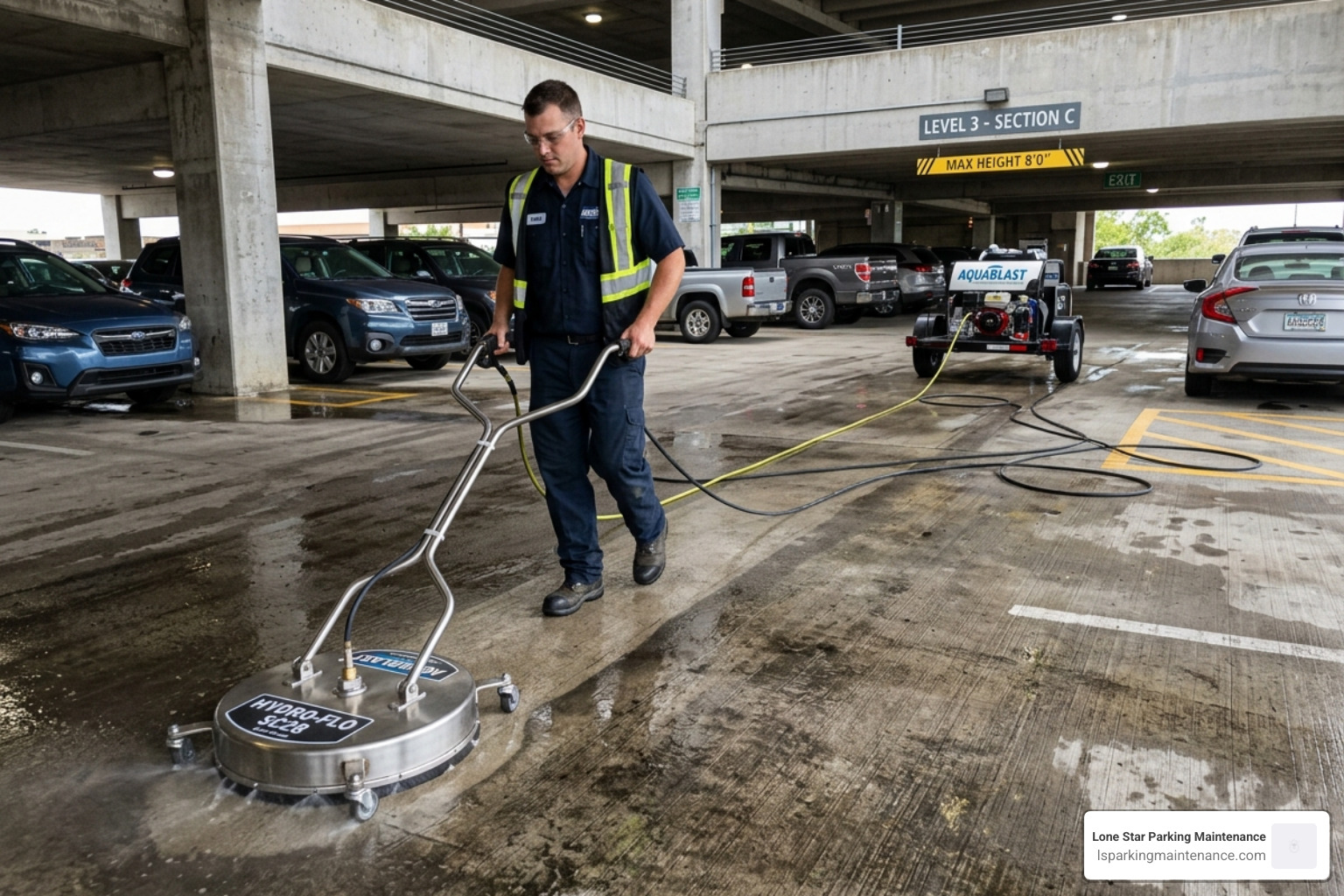
Another common concern is whether the pressure will hurt the structure. People often ask, is pressure washing safe for all surfaces? While concrete is tough, using the wrong PSI (pounds per square inch) or the wrong nozzle can actually “etch” the surface, leaving permanent swirl marks. Professionals use “surface cleaners”—circular walk-behind units—that distribute the pressure evenly to protect your investment.
Frequently Asked Questions about Parking Lot Washing
How long does a typical pressure washing job take?
The timeline depends entirely on the size of the garage and the level of staining. For a medium-sized garage (around 20,000 sq ft), a professional crew can usually finish in one long shift. However, if we are doing a “full restoration” on a neglected property, it could take 2–3 days. When you ask how long does a typical pressure washing job take?, we usually estimate based on a rate of 2,000 to 4,000 square feet per hour for a standard crew.
What should i expect during a pressure washing service?
Preparation is key! When you’re wondering what should i expect during a pressure washing service?, the biggest factor is vehicle relocation. The garage needs to be empty. We also recommend notifying tenants about noise levels, as industrial engines and vacuum systems can be quite loud. We typically perform these services during “off-peak” hours (nights or weekends) to minimize disruption to your business.
Is hot water necessary for parking garages?
In a word: Absolutely. Parking garages are essentially giant magnets for automotive fluids. Cold water just pushes oil around. Hot water (often combined with a “thermal extraction” process) opens the pores of the concrete to pull out the deep-seated grease. Without heat, you’re just giving the dirt a cold shower.
Conclusion
Investing in your parking structure is about more than just aesthetics. It’s about safety, liability reduction, and preserving the lifespan of your concrete. When you look at parking garage pressure washing pricing, you aren’t just paying for water—you’re paying for specialized expertise, environmental compliance, and the peace of mind that comes with a job done right.
At Lone Star Parking Maintenance, we are proud to serve the DFW Metroplex with top-quality materials and a commitment to industry standards. Whether you need a one-time deep clean or a recurring maintenance plan to keep your property looking its best, we are here to help.
Don’t let a grimy garage drive away your customers or tenants. Request a Parking Lot Power Washing Quote today and let our experts give your property the “Lone Star” treatment it deserves!