
Your DFW Asphalt Is Under Attack — Here’s What You Need to Know
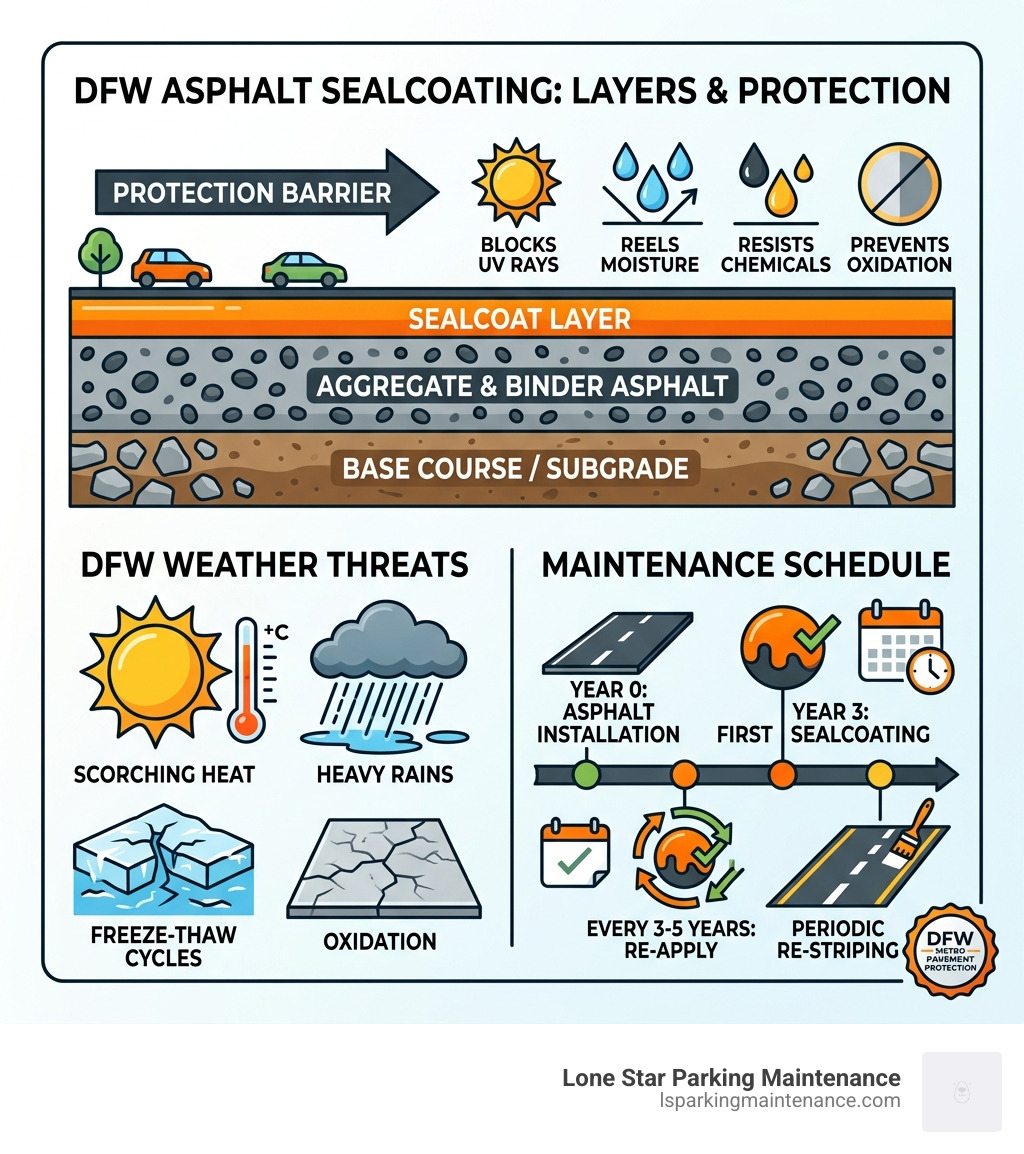
Asphalt sealing DFW metro is one of the most cost-effective ways to protect your parking lot or driveway from Texas’ brutal weather, chemical spills, and heavy traffic.
Quick answers:
- What it is: A protective coating applied over asphalt to block UV rays, moisture, oil, and oxidation
- How often: Every 3-5 years (first application 3 years after installation)
- Cost savings: Regular sealcoating can save property owners more than 25% over 25 years compared to neglecting pavement and facing full reconstruction
- Best for: Parking lots, commercial driveways, residential driveways across Dallas, Fort Worth, and surrounding DFW cities
- Who does it: Licensed, insured paving contractors with experience in North Texas conditions
The DFW Metroplex is one of the harshest environments for asphalt in the country. Scorching summers, surprise freezes, heavy spring rains, and expansive clay soils all work together to crack, fade, and weaken pavement faster than in most other regions.
For property managers and business owners, a deteriorating parking lot isn’t just an eyesore. It’s a liability. Faded stripes, spreading cracks, and oil-stained surfaces send the wrong message to customers and can create real safety risks.
The good news? Most of this damage is preventable — and sealcoating is where that protection starts.
Why Asphalt Sealing DFW Metro is Essential for Texas Pavement
In the Dallas-Fort Worth area, asphalt isn’t just a “set it and forget it” surface. Because asphalt is a petroleum-based product, it is naturally flexible. However, that flexibility is exactly what the Texas sun targets.
The Battle Against UV Rays and Oxidation
Think of sealcoating as high-SPF sunscreen for your pavement. The intense North Texas sun causes oxidation, a chemical process where the “glue” (bitumen) that holds the rocks together dries out. When this happens, your once-black parking lot turns a brittle grey. Without asphalt sealing DFW metro, the surface begins to “ravel,” meaning the small stones start to break loose, leaving you with a sandpaper-like texture that eventually turns into potholes.
Managing Expansive Soils and Heavy Rain
The DFW metroplex is famous (or perhaps infamous) for its expansive clay soils. These soils swell when wet and shrink when dry, causing the ground beneath your pavement to shift constantly. When heavy spring rains hit, water seeks out any tiny crack in your asphalt. If that water reaches the subbase, it weakens the foundation, leading to structural failure.
Why is parking lot sealing important? It creates a waterproof barrier. By sealing the surface, we prevent moisture penetration and protect that vulnerable subbase from the “yo-yo” effect of Texas soil movement.
Chemical Resistance and Thermal Cracking
Whether it’s a leaky oil pan in a retail parking lot or gasoline spills at a travel stop, chemicals eat through asphalt. Because sealcoating is non-porous, it gives you a window of time to clean up spills before they dissolve the asphalt binder. Furthermore, it helps mitigate thermal cracking—the cracks that form when the temperature swings from 100°F in the afternoon to a chilly 60°F at night.
The Professional Sealcoating Process Used by Top DFW Contractors
We don’t just “paint” your parking lot. A professional application is a multi-step engineering process designed to ensure the sealant actually bonds to the surface. If you skip the prep, you’re essentially throwing money down the storm drain.
1. Surface Cleaning
The first step is a deep clean. We use high-powered blowers, industrial brooms, and sometimes pressure washing to remove dirt, North Texas dust, and “pollen cakes.” Sealant will not stick to dirt.
2. Crack Filling
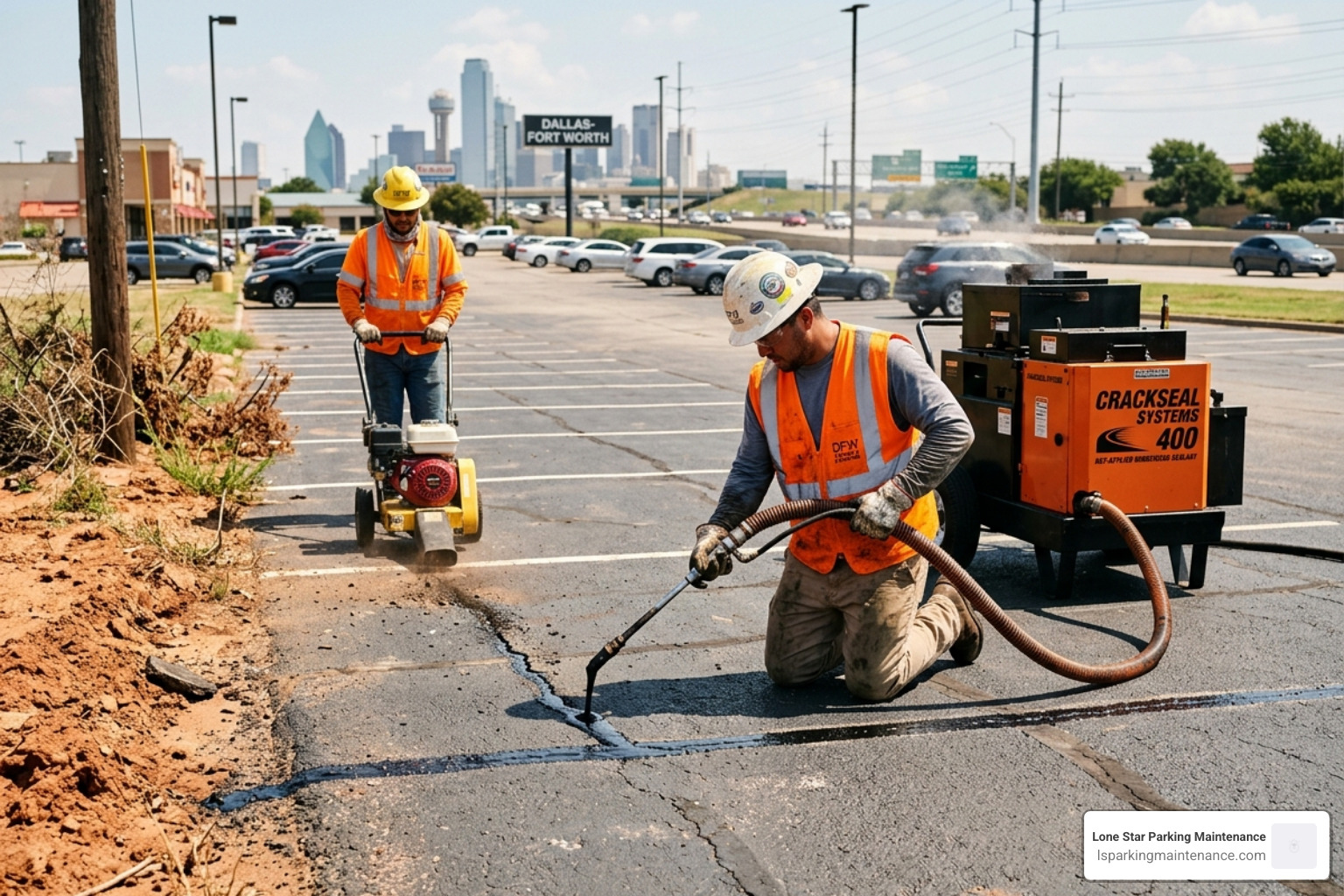
Before the sealcoat goes down, we must address the “veins” of the pavement. What are the benefits of crack filling? It stops water from reaching the base and prevents cracks from spreading into wider, more expensive issues. We use a hot-applied rubberized sealant that expands and contracts with the Texas heat.
3. Oil Spot Treatment
If we see dark spots from car leaks, we apply a specialized primer. If we didn’t, the oil would bleed right through the new sealcoat, ruining the finish within weeks.
4. Application Techniques
Depending on the size of the lot, we use either a spray application or a squeegee method. Squeegee applications are often preferred for older, more porous asphalt because they “force” the material into the nooks and crannies. Spraying provides a very uniform, aesthetically pleasing finish.
5. Curing Time and Edging
We pay special attention to perimeter edging, ensuring we get a clean line without getting sealant on your concrete curbs or landscaping. Once applied, the material needs time to “cure.” In the DFW heat, this usually takes 24 to 48 hours before we can allow vehicle traffic back on the lot.
Choosing the Right Materials for Asphalt Sealing DFW Metro
Not all sealants are created equal. In the DFW area, we generally choose between two main types:
- Asphalt Emulsion: Environmentally friendly and offers excellent protection against UV rays. It’s the modern standard for many DFW commercial properties.
- Coal Tar: While less common now due to environmental regulations, it offers superior resistance to gasoline and oil spills.
What types of sealants do you use for parking lot sealing? We utilize high-quality, industry-standard materials often enhanced with polymer additives for extra toughness and friction sand to ensure the lot isn’t slippery when wet. This combination ensures maximum durability under the heavy traffic loads seen in Dallas and Fort Worth.
Maximizing Your Investment: Frequency and Cost Factors
Let’s talk numbers. Many property owners view maintenance as an annoying expense, but the data tells a different story. Statistics show that regular sealcoating can save you over 25% over a 25-year period compared to the cost of waiting for the lot to fall into disrepair and requiring a total reconstruction.
The Long-Term ROI
Think of it this way: a full asphalt replacement in DFW can cost a fortune. A sealcoating job costs a fraction of that. By spending a little every few years, you push that massive replacement cost decades into the future.
| Maintenance Strategy | 25-Year Estimated Cost | Pavement Condition |
|---|---|---|
| Proactive (Sealcoat every 3-5 years) | $ (Lowest) | Smooth, Black, Safe |
| Reactive (Wait for potholes) | $$$ (Medium) | Rough, Grey, Constant Repairs |
| Neglect (Wait for failure) | $$$$$ (Highest) | Dangerous, Failed Subbase |
How long does parking lot sealing last? In the DFW climate, a professional application typically lasts 3 to 5 years. High-traffic areas like the entrance to a Chick-fil-A or a busy distribution center may need service closer to the 3-year mark, while a quiet HOA cul-de-sac might last 5 or 6 years.
When to Schedule Your Asphalt Sealing DFW Metro Service
Timing is everything. You shouldn’t wait until the asphalt is crumbling to call us.
- The 3-Year Rule: New asphalt should be sealed for the first time about 3 years after installation. This allows the new oils to cure but catches the surface before oxidation sets in.
- Visual Cues: If your lot is turning light grey, or if you see “alligator cracking” (small, interconnected cracks that look like reptile skin), you are overdue.
- Seasonal Timing: While we can sealcoat much of the year in Texas, the “sweet spot” is late spring through early fall. The nights need to be warm enough for the sealant to cure properly.
How do I know if my parking lot needs crack filling? Look for cracks wider than a quarter-inch. If you see weeds growing out of your pavement, that’s a flashing red light that water is getting underneath and you need immediate service.
Common Mistakes to Avoid in Texas Sealcoating
We’ve seen it all in the DFW metroplex—from DIY disasters to “fly-by-night” contractors who disappear as soon as the check clears. Here are the pitfalls to avoid:
- Improper Cleaning: As mentioned, if you seal over dust, the sealant will peel off like a bad sunburn within months.
- Weather Interference: Some contractors try to squeeze in a job right before a North Texas thunderstorm. If the sealant isn’t dry before the rain hits, it can wash off into the storm drains, creating an environmental mess and a ruined lot.
- Low-Quality Materials: Some “budget” contractors dilute their sealant with too much water. It looks black and pretty for a month, but it has no protective body and wears away almost immediately.
- Overspray Damage: Professional crews use shields or hand-apply near buildings and sidewalks. Amateurs often leave black speckles on your expensive brickwork or white concrete curbs.
- Inadequate Curing Time: Opening a lot too early to save a few hours of inconvenience can lead to “power steering marks” where tires tear the fresh sealcoat right off the surface.
Frequently Asked Questions about DFW Sealcoating
How long does it take for sealcoating to dry in the Texas heat?
While the 100-degree Dallas sun helps speed things up, it’s a double-edged sword. The surface might feel dry to the touch in 4-6 hours, but it hasn’t “cured” yet. We recommend keeping cars off the surface for at least 24 hours, and ideally 48 hours for heavy trucks.
Can sealcoating fix large potholes or structural failures?
No. Sealcoating is a preventative treatment, not a structural one. If you have a pothole or “soft spots” where the pavement sinks under a car’s weight, that requires a patch or a “remove and replace” repair. Applying sealcoat over a pothole is like putting a band-aid on a broken leg—it might hide the problem for a week, but it won’t fix it.
Does sealcoating make the pavement slippery when wet?
It can if it’s applied incorrectly. That is why we mix silica sand into our sealant. This provides the necessary grit for tires to grip the surface during those sudden DFW downpours.
Conclusion
Your parking lot is the “red carpet” to your business. It is the very first thing a customer or tenant sees when they arrive. A well-maintained, jet-black lot with crisp white or yellow stripes signals that you care about safety, detail, and quality.
At Lone Star Parking Maintenance, we are proud to serve the entire DFW Metroplex with top-tier parking lot sealing and crack filling services. We don’t just aim for a “good enough” job; we adhere to the highest industry standards and use premium materials designed specifically for the North Texas climate.
From small retail lots in Plano to massive industrial complexes in Fort Worth, our commitment to safety and customer satisfaction is what sets us apart. Don’t wait for the Texas sun to turn your investment into gravel.
Ready to protect your pavement? Visit us at https://www.lsparkingmaintenance.com/ to schedule your free consultation today. Let us help you maximize the life of your asphalt and keep your property looking its best for years to come.