
Why Your Garage Floors Are Costing You More Than You Think
Garage power washing is the process of using high-pressure water — often heated — to blast away oil stains, grime, mold, and built-up contaminants from garage floors, walls, and doors.
Here’s what you need to know upfront:
- What it does: Removes oil, grease, tire marks, mold, algae, and road salt from concrete and other garage surfaces
- Power vs. pressure washing: Power washing uses hot water; pressure washing uses cold — hot water works better on grease and bacteria
- Who needs it: Residential homeowners, commercial property managers, parking structure operators
- How often: Most garages benefit from cleaning once or twice a year; heavy-use facilities may need quarterly service
- Cost range: Roughly $100–$300 for residential garages; commercial facilities typically run $0.10–$0.30 per square foot
- DIY vs. pro: DIY is possible for light cleaning, but oil-soaked or large commercial floors almost always need professional-grade equipment
Garages take a beating. Every vehicle that rolls in brings oil drips, road salt, tire rubber, and grime. Over time, that buildup doesn’t just look bad — it creates real problems.
Slippery floors increase the risk of accidents. Embedded oil degrades concrete. Mold and mildew thrive in damp corners. For property managers in the DFW Metroplex, a neglected garage can quietly erode both safety standards and property value.
The good news? A professional garage power washing service can reverse years of buildup in a matter of hours. One crew of three experienced technicians can clean a 150,000 sq ft parking structure top to bottom in a single workday.
This guide will help you understand exactly what’s involved — and whether hiring a professional is the right call for your property.
Understanding Garage Power Washing vs. Pressure Washing
When you’re looking to clean your garage, you might hear the terms “pressure washing” and “power washing” used interchangeably. However, in professional maintenance, there is a distinct and very important difference: temperature.
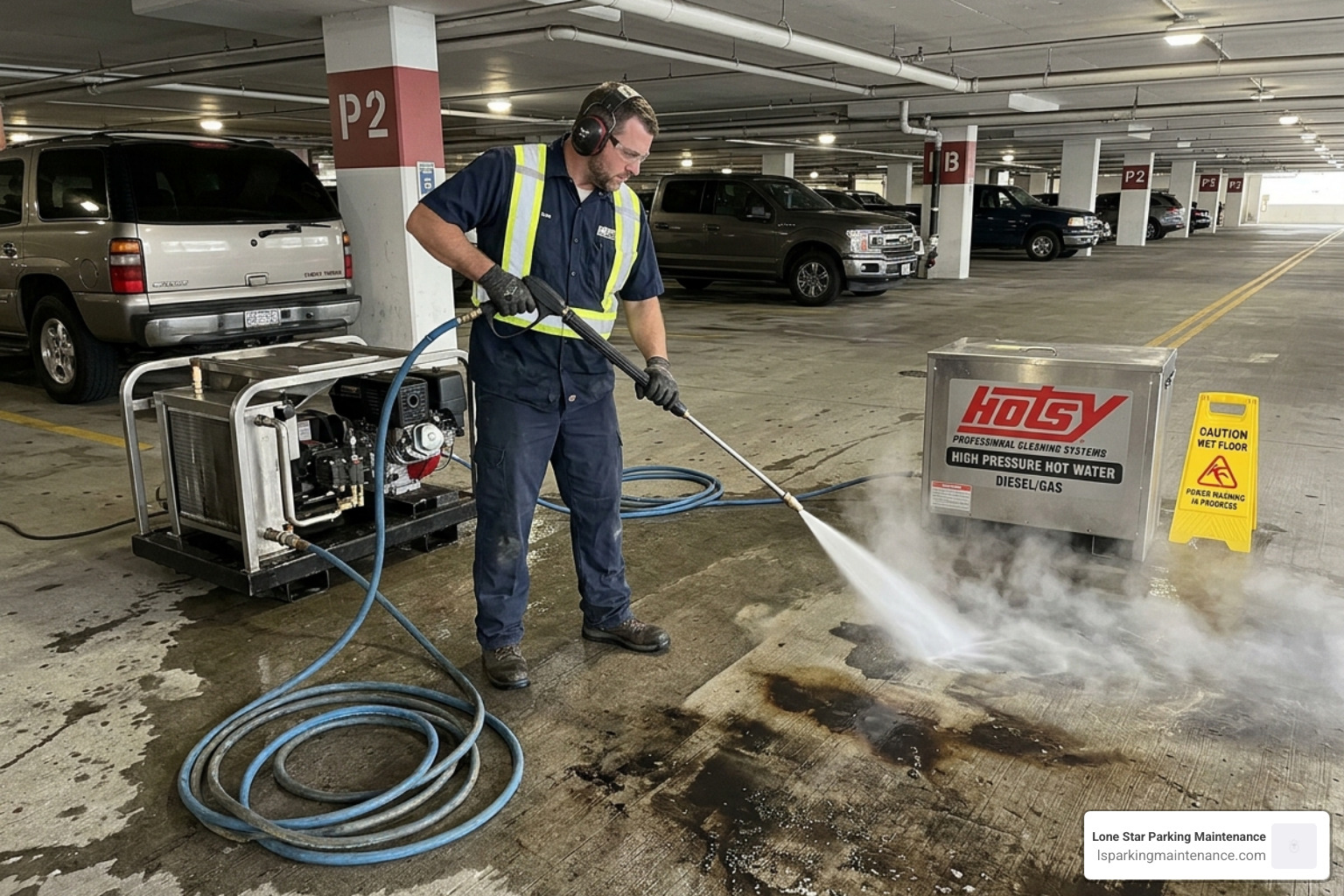
At Lone Star Parking Maintenance, we specialize in hot water pressure washing because it is significantly more effective for garage environments. Standard pressure washing uses cold water at high pressure. It’s great for blasting away loose dirt or peeling paint, but it struggles with the one thing garages have in abundance: grease.
Power washing involves heating the water. Think about trying to wash a greasy lasagna pan in the sink with cold water. No matter how hard you scrub, the grease just smears around. But the moment you turn on the hot water, the grease melts and washes away. This is called grease emulsification. By using hot water, we reduce the surface tension of the oil, allowing our detergents to penetrate deeper into the porous concrete.
For heavy-duty jobs, we may even use thermal extraction. This process uses extreme temperatures—sometimes between 290 and 400 degrees—to pull deeply embedded oils out of the concrete. This is especially useful in commercial parking garages in the DFW area where decades of leaks have created permanent-looking shadows on the floor.
| Feature | Cold Pressure Washing | Hot Power Washing |
|---|---|---|
| Water Temp | Ambient/Cold | 180°F to 400°F |
| Best For | Dust, mud, loose debris | Oil, grease, gum, bacteria |
| Cleaning Speed | Standard | 6-12x faster for oil stains |
| Chemical Use | Higher | Lower (heat does the heavy lifting) |
| Surface Impact | High pressure risk | Lower pressure needed due to heat |
Equipment and PSI Standards
To get the job done right, you need more than just a garden hose. In fact, professional pressure washers use about 80% less water than a standard garden hose because the velocity of the water is so much higher.
When we evaluate a garage, we look at two main numbers:
- PSI (Pounds per Square Inch): This is the “punch” or the pressure. For parking surfaces and concrete floors, we typically recommend at least 2,000 to 3,000 PSI.
- GPM (Gallons per Minute): This is the flow rate. While PSI breaks the bond of the dirt, GPM is what actually flushes the dirt away. Most professional units run between 4 and 8 GPM.
Choosing the right nozzle is also a science. We use a 25-degree nozzle (usually green) for most concrete work, as it provides a wide enough fan to be efficient but enough pressure to clean. For more fragile surfaces like garage doors or windows, we switch to a 40-degree nozzle (white) to ensure pressure washing is safe for the surface.
There is also the question of power source. For residential garages, electric units are often preferred because they are quiet and don’t produce fumes. However, for the massive parking structures we maintain in Dallas and Fort Worth, gas or diesel-powered units are necessary for the mobility and high heat required for deep cleaning.
The Essential Benefits of Professional Garage Power Washing
Why bother with garage power washing? Beyond just making the neighbors jealous, there are several structural and safety-related reasons to keep your garage clean.
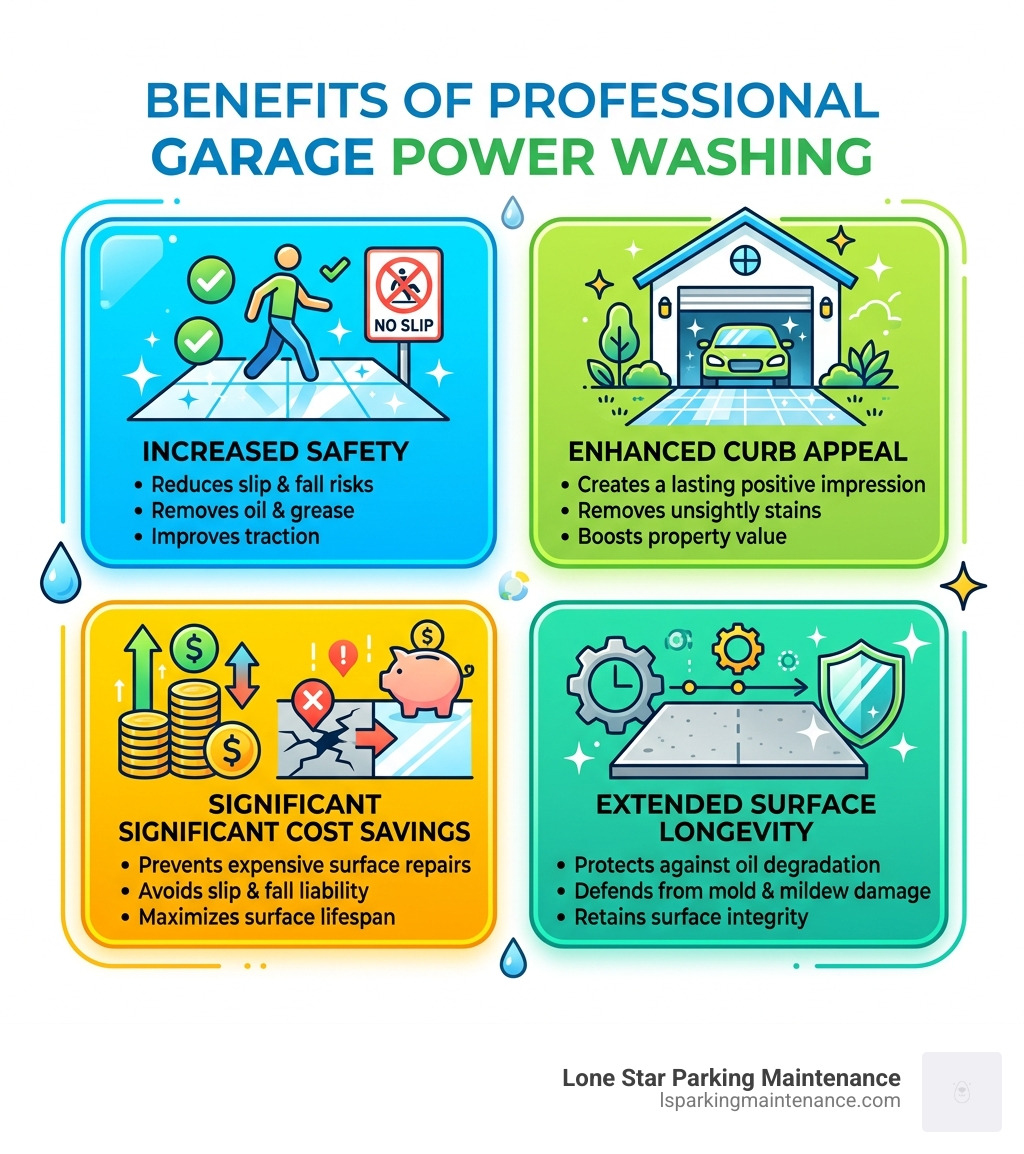
First and foremost is safety. Oil and grease are incredibly slippery, especially when they get wet from a humid Texas afternoon or a stray rainstorm. By removing these slick spots, you drastically reduce the risk of slip-and-fall accidents for your family or your customers.
Second is property value and longevity. Concrete is a porous material. When oil, road salt, and chemicals sit on it for too long, they can lead to surface deterioration and cracking. Regular cleaning extends the life of your concrete. If you are planning to sell your home or lease a commercial space, a clean garage provides an immediate boost in curb appeal.
Third is health and hygiene. Garages are often breeding grounds for mold and mildew, particularly in the corners where moisture gets trapped. Power washing doesn’t just move the mold; the heat kills the spores, creating a healthier environment. This is especially important if you use your garage as a home gym, workshop, or art studio.
Our Professional Garage & Parking Lot Cleaning Services are designed to handle these issues efficiently. Whether it’s a small single-car garage or a sprawling commercial lot, Parking Lot Power Washing is an investment in the safety and durability of your property.
Step-by-Step Guide to a Deep Clean Garage
If you’re wondering what to expect during a pressure washing service, it’s a systematic process. We don’t just show up and start spraying water everywhere.
- Inspection and Prep: We identify the most stubborn stains and ensure all sensitive areas (like electrical outlets or wooden baseboards) are protected.
- Pre-treatment: We apply a heavy-duty degreaser or concrete cleaner. One of our professional secrets is applying detergent under low pressure first. This prevents dust from flying into the air and allows the chemical to “dwell” on the surface to break down the oil.
- The Wash: We use professional surface cleaners—these look like circular lawnmowers that hover over the floor. They use rotating jets to provide a streak-free clean without splashing water all over your walls.
- Rinsing: We work from the back of the garage toward the exit, pushing all the dirty water and debris outside.
- Water Reclamation: Especially in commercial settings, we use vacuums and filtration units to capture the wastewater. This ensures we stay compliant with EPA regulations and prevents oils from entering the Dallas storm drains.
- Finishing Touches: We use industrial squeegees to remove excess water, allowing the floor to dry quickly.
Preparing Your Space for Garage Power Washing
Before the crew arrives (or before you start your DIY project), preparation is key. You’ll want to move all vehicles and clear the floor of any belongings. If you have items on shelves that can’t be moved, we recommend covering them with plastic sheeting to protect them from potential mist or overspray.
Preparation is also necessary when striping or re-striping because paint won’t adhere to a dirty surface. Even if you aren’t painting, a quick sweep to remove loose leaves and spider webs makes the washing process much faster.
Handling Stubborn Stains and Oil Spills
Some stains require a little extra “love.” For deep oil spills, we use eco-friendly, biodegradable degreasers that “encapsulate” the dirt, making it easier to rinse away.
Tire marks (those black streaks left by hot tires) are another common issue. These aren’t just dirt; they are actually plasticizers from the tire that have leached into the concrete. Our Commercial Pressure Washing Services utilize high-heat units specifically designed to lift these marks without damaging the underlying concrete.
Commercial vs. Residential Garage Maintenance
While the physics of cleaning remains the same, the scale of a commercial parking garage versus a residential one is vastly different.
In a residential setting, we focus on detail—cleaning the corners, washing the garage door, and ensuring no water gets into the home. A typical residential job takes about 2 to 4 hours.
In a commercial parking structure, efficiency is the name of the game. We often utilize fire hydrant permits to access high volumes of water—fire hydrant nozzles can allow for 150 to 300 gallons per minute, which is necessary for moving heavy sludge in massive facilities. Our teams can clean roughly 8,100 square feet per hour, meaning even a 150,000 sq ft garage can be finished in a standard shift.
How long a pressure washing job takes depends entirely on the level of buildup. A garage that hasn’t been cleaned in 20 years will require a “Deep Clean” level of service, where the wand is held just 2-3 inches from the surface, whereas a regularly maintained garage might only need a quick “Rinse.”
Crucially, commercial jobs in the DFW Metroplex must adhere to strict EPA compliance. We use specialized recovery equipment to ensure no pollutants enter the local water system, protecting both the environment and our clients from potential fines.
Frequently Asked Questions about Garage Power Washing
How often should I schedule a garage cleaning?
For most residential homes in Texas, an annual “spring cleaning” is sufficient. However, if you live in an area with a lot of construction dust or if your vehicles leak frequently, you might want to consider bi-annual service.
For commercial facilities, we recommend a regular maintenance schedule. High-traffic garages should be swept monthly and deep-cleaned every six months to prevent oil from becoming a permanent part of the concrete.
Can high-pressure water damage my garage floor?
Yes, if used incorrectly. A common DIY mistake is using a zero-degree nozzle (the red one) and holding it too close to the floor. This can actually “etch” the concrete, leaving permanent swirl marks or even blowing out chunks of the surface.
Professional teams know how to adjust the pressure based on the surface integrity. For example, if you have an epoxy-coated floor, we use “soft washing” techniques—lower pressure and specific chemicals—to clean the surface without peeling the coating.
What are the average costs for professional services?
Prices vary based on the size of the project and the level of grime:
- Residential Garages: Typically range from $100 to $300.
- Commercial Parking Garages: Usually priced by the square foot, ranging from $0.10 to $0.30 per sq ft.
- Factors: Heavy oil staining, the need for water reclamation, and after-hours scheduling (to minimize disruption to tenants) can influence the final quote.
Conclusion
Your garage is more than just a place to park; it’s an extension of your property and a foundation for safety. Whether you’re a homeowner in Plano looking to restore your pristine floor or a property manager in downtown Fort Worth responsible for a seven-story parking structure, garage power washing is the most effective way to protect your investment.
At Lone Star Parking Maintenance, we bring the best materials, industry-standard safety protocols, and a deep commitment to customer satisfaction to every job in the DFW Metroplex. Don’t let oil and grime take over your space.
Ready to give your garage the makeover it deserves? Check out our Professional Parking Lot Power Washing Services and let us handle the heavy lifting. We’ll bring the heat, so you can enjoy the clean.