
Why Line Stenciling Parking Lots Matters for Hospital Safety and ADA Compliance
Line stenciling parking lots is one of the most effective ways to create safe, organized, and legally compliant parking areas — especially in high-stakes environments like hospitals and healthcare facilities.
Here’s a quick overview of what you need to know:
- What it is: Line stenciling uses pre-cut stencils to apply precise, uniform markings on asphalt or concrete surfaces
- Why it matters: Clear markings guide traffic, designate accessible spaces, and help facilities meet ADA and MUTCD requirements
- Best materials: Durable LDPE or LLDPE plastic stencils (1/8″ contractor grade for heavy use)
- Most common size: 4-inch wide lines in lengths from 7.5 to 19 feet, depending on space type
- Key compliance note: ADA-compliant spaces require specific dimensions, blue color coding, and properly marked access aisles
- When to repaint: Typically every 1–3 years depending on traffic volume, weather, and paint quality
For a hospital parking lot, the stakes are even higher than a typical commercial property. Emergency vehicles need clear fire lane access. Patients with mobility challenges depend on properly marked van-accessible stalls. Visitors under stress need intuitive traffic flow.
A confusing or faded parking lot doesn’t just look bad — it creates real safety risks and potential legal liability.
If you manage a healthcare facility or commercial property in the DFW Metroplex, understanding the full picture of stenciling techniques, materials, and compliance standards can save you time, money, and headaches down the road.
The Role of Line Stenciling Parking Lots in Facility Safety
When we talk about line stenciling parking lots, we aren’t just talking about making things look pretty. In a hospital setting, stencils are the “language” of the pavement. They tell a driver where they can’t park (Fire Lanes), where they must stop (Stop Bars), and where the most vulnerable patients need to exit their vehicles (Handicap Access Aisles).
The primary benefit of using stencils over free-hand painting is precision. When a contractor uses a high-quality stencil, every single “H” in “HOSPITAL” and every “NO PARKING” warning looks exactly the same. This consistency isn’t just for aesthetics; it’s a requirement for meeting Manual on Uniform Traffic Control Devices (MUTCD) standards. Professional results eliminate guesswork for drivers, which reduces the likelihood of low-speed collisions in busy medical plazas.
Furthermore, using a 4 Inch Parking Lot Line Stencil – ADA and Government Compliant ensures that your facility stays on the right side of the law. In April 2026, regulatory scrutiny on healthcare accessibility is higher than ever. Stencils allow for rapid, repeatable application that saves time during the painting process while guaranteeing that every line meets the mandatory 4-inch width.
Choosing Materials for Line Stenciling Parking Lots
Not all stencils are created equal. If you are a property manager in Dallas or Fort Worth, you need to know which material suits your specific project.
- LDPE (Low-Density Polyethylene): This is the industry workhorse. It is flexible, non-porous, and paint-resistant.
- 1/8″ PolyTough (Contractor Grade): This is the gold standard for durability. These stencils are heavy enough to lie flat without excessive taping and can be used thousands of times. Many manufacturers even offer a lifetime warranty on 1/8″ plastic because it is virtually indestructible.
- 60 mil (1/16″) LDPE: A lighter, more economical choice. It’s great for smaller jobs or DIY projects, but it may warp or “curl” over time if paint is allowed to build up too heavily.
- Aluminum Stencils: These are nearly permanent. They are heavy, stay in place during high-pressure spraying (up to 3000psi), and are the only choice if you are using thermoplastic extruding methods.
- HDPE (High-Density Polyethylene): Typically found in 1/4″ thickness, this is the “heavy-duty” option that prevents sagging on very large stencils, such as 8-foot-tall roadway arrows.
For most hospital lot applications, we recommend the 1/8″ contractor-grade LDPE. It balances flexibility with enough weight to ensure clean, sharp edges even on textured asphalt. For more details on the specific paints we pair with these materials, check out our parking lot striping services.
Standard Sizes and Dimensions
Precision in line stenciling parking lots requires adhering to standard dimensions. A standard parking stall line is 4 inches wide. However, the length of that line varies:
- Compact Spaces: Typically require a 15-foot (180-inch) line.
- Standard Spaces: Usually require a 19-foot (228-inch) line.
Many professional stencils come in 92-inch (7.5 ft) or 114-inch (9.5 ft) sections. By “bridging” or combining two 114-inch stencils, we create a perfect 19-foot stall line. Most high-end stencils are CNC-cut, meaning a computer-controlled laser ensures the dimensions are perfect to the millimeter. Many also feature a 4-inch “overspray border,” which acts as a shield to prevent paint from misting onto the pavement outside the intended line area.
Essential Preparation and Painting Techniques
You could have the most expensive stencil in Texas, but if you put it down on a dirty surface, the paint won’t last through the first summer thunderstorm.
Preparation is 90% of the job. We always start with a thorough cleaning to remove dirt, oil, grease, and those pesky North Texas pebbles. But is it always necessary? We answer that in our guide: Is Pressure Wash Preparation Necessary When Striping Or Re Striping Parking Lots. Generally, if you want the paint to bond, the answer is a resounding yes.
Beyond cleaning, you must consider the 50-degree threshold. Paint is a chemical, and it needs the right environment to cure. If the pavement temperature is below 50°F, the paint may fail to stick or may stay tacky for days. Moisture testing is also vital; the asphalt must be completely dry. Even a little morning dew can ruin a day’s work.
Best Practices for Line Stenciling Parking Lots in High-Traffic Zones
In a 24/7 hospital environment, you can’t shut down the ER entrance for two days while paint dries. You need efficiency.
| Feature | Waterborne Acrylic Paint | Solvent-Borne (Oil-Based) Paint |
|---|---|---|
| Drying Time | 15–30 minutes | 10–20 minutes |
| Durability | High (Good for most lots) | Excellent (Best for high-friction) |
| Eco-Friendliness | Better (Lower VOCs) | Lower (Stronger fumes) |
| Best Use | General stalls & stencils | High-traffic turns & Stop bars |
When applying paint through a stencil, the secret is thin layers. It is tempting to soak the stencil to get a “deep” color, but this leads to “bleed-under,” where paint seeps under the edges of the stencil, leaving you with blurry lines. Whether using a 3000psi airless sprayer, a foam roller, or an aerosol can, multiple light coats are always superior to one heavy one. For a deeper dive into getting your lot ready, see our FAQ: How Do I Prepare My Parking Lot For Striping.
Preventing Common Stenciling Errors
Even pros run into hiccups. Here is how we avoid the “Big Three” stenciling mistakes:
- Paint Buildup: As you use a stencil, paint dries on the plastic. Eventually, this buildup makes the stencil heavy and “chunky,” which ruins the crispness of the lines. We clean our stencils regularly during the job.
- Bridging: This happens when the “bridges” (the little plastic tabs that hold the middle of letters like ‘O’ or ‘A’ in place) leave gaps in the paint. To fix this, we “move” the stencil slightly and touch up the gaps or use a small brush for a seamless look.
- Ghosting: This occurs when old, faded lines are still visible under new paint. In professional hospital lot maintenance, we use “blackout” techniques—painting over the old markings with asphalt-colored paint—before stenciling the new, corrected layout.
Specialized Markings for Hospital and Healthcare Environments
Hospital parking lots are unique because they must accommodate a high volume of patients with disabilities. This isn’t just a courtesy; it’s a federal requirement.
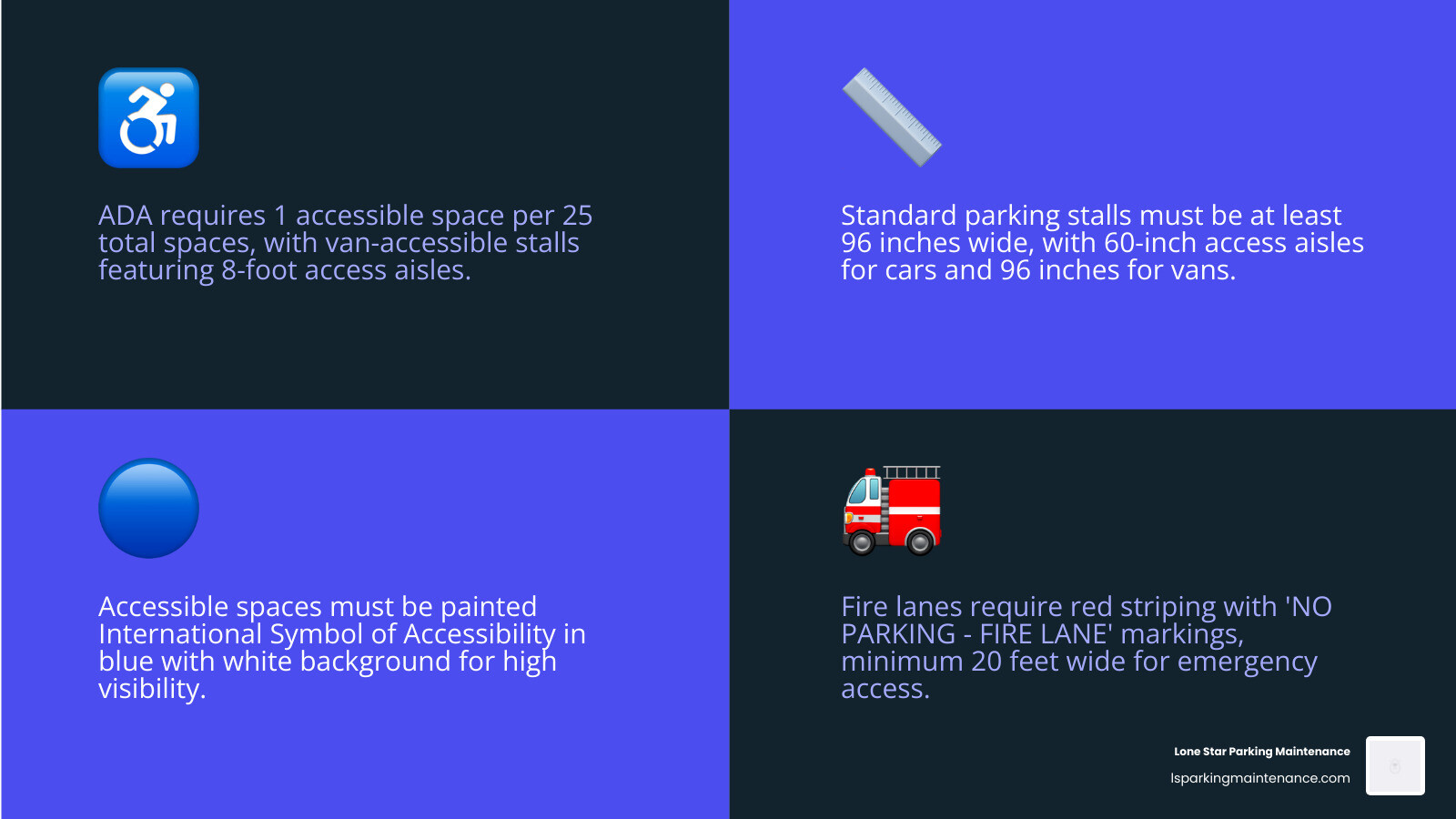
According to The Essential Guide To Ada Compliant Parking Lot Striping, you must have a specific number of handicap spaces based on the total number of spots in your lot. These spaces require:
- Blue-Coded Zones: To clearly identify the spot from a distance.
- Access Aisles: These must be marked with diagonal “hatching” lines to prevent people from parking too close to a wheelchair ramp.
- Van-Accessible Stalls: At least one in every six handicap spaces must be wide enough for a van lift.
We also pay special attention to Fire Lanes. In the DFW Metroplex, fire marshals are strict. These curbs must be painted a specific shade of “Safety Red” with white stenciling that reads “FIRE LANE – NO PARKING” at regular intervals.
Beyond the Stall: Crosswalks and EV Stations
As we move through 2026, healthcare facilities are increasingly adding EV Charging Stations. These require specialized line stenciling parking lots techniques. Often, these spots are painted with a high-visibility green background and a white “EV” or “Plug” symbol.
Directional arrows are another hospital essential. Patients are often stressed or in a hurry; clear, large stenciled arrows (ranging from 42 to 96 inches) help direct them to the correct wing or emergency entrance without confusion. To keep these markings from disappearing under the Texas sun, refer to this guide on preventing fading and keeping your lot professional.
Durability and Long-Term Maintenance
In Texas, the sun is the enemy of your parking lot. UV rays break down the chemical bonds in paint, causing it to chalk and fade. Combine that with tire friction—especially in areas where ambulances are frequently turning—and your lines can disappear in less than a year.
To maximize longevity, we recommend:
- Sealcoating: Applying a protective layer every 2-3 years. This provides a dark, “like-new” backdrop that makes your stenciled lines pop.
- Reflective Glass Beads: For hospital lots that are busy at night, we can add reflective beads to the wet paint. This significantly improves nighttime visibility for elderly patients or emergency staff.
- Seasonal Checks: After a rare North Texas ice storm, salt and snowplows can wreak havoc on markings. A quick spring touch-up can prevent a total re-striping job later.
Frequently Asked Questions about Parking Lot Stenciling
How long do stenciled parking lot lines typically last?
In a standard DFW parking lot, you can expect 1–3 years of life from your lines. However, in high-traffic hospital “hot zones” (like the ER entrance), you may need a “refresh” every 12 months. Factors like the quality of the paint (solvent-borne lasts longer under friction) and whether the lot was sealcoated will play a huge role in durability.
What is the best way to clean and store reusable stencils?
If you are using water-based paint, warm soapy water and a stiff brush work wonders if done immediately. For solvent-based paints, you’ll need a paint thinner or a specialized stencil cleaner. Always store your stencils flat. If you lean them against a wall in a hot Texas garage, they will warp and curl, making them useless for creating straight lines next time.
Can I use line stencils on both concrete and asphalt?
Yes! However, concrete is less porous than asphalt. To ensure the paint sticks to a concrete parking garage floor, we often use an “adhesion promoter” or a specific concrete-grade paint. Asphalt is generally easier for paint to “bite” into, but it must be free of loose oils and sealants.
Conclusion
Mastering line stenciling parking lots is a blend of art, science, and strict adherence to safety regulations. For hospitals in the DFW Metroplex, these markings are the first point of care for every patient who drives onto the campus. Clear lines, compliant ADA stalls, and bright fire lanes aren’t just maintenance tasks—they are safety essentials.
At Lone Star Parking Maintenance, we pride ourselves on using top-quality materials and industry-leading techniques to ensure your facility remains safe, accessible, and professional. Whether you need a full lot redesign or a quick refresh of your emergency zones, we are here to help.
Schedule your professional parking lot striping today and let us help you make a lasting first impression.