
What Are the Best Parking Lot Drainage Solutions?
Parking lot drainage solutions range from simple surface grading to advanced sustainable systems. Here’s a quick overview of the most effective options:
| Solution | Best For | Key Benefit |
|---|---|---|
| Catch basins | General commercial lots | Affordable, widely used |
| Trench drains | High-flow zones, entrances | Handles heavy sheet flow |
| French drains | High groundwater areas | Subsurface water control |
| Permeable pavers | Eco-friendly projects | 80-100% runoff reduction |
| Bioswales | Large lots with open space | Natural filtration + cost savings |
The right system depends on your lot’s size, slope, soil type, rainfall patterns, and budget.
Picture this: you pull into a commercial parking lot after a Texas downpour, and you’re navigating ankle-deep puddles just to reach the front door. It’s frustrating — and it’s also a sign of a serious problem.
Water is the single biggest cause of damage to paved structures. When a parking lot can’t move stormwater away efficiently, the consequences stack up fast: cracked asphalt, eroded subgrades, flooded building entrances, and slip-and-fall liability.
For property managers and business owners in the DFW Metroplex, where heavy rain events are common, getting drainage right isn’t optional. It’s the difference between a lot that lasts 20+ years and one that needs costly repairs every few seasons.
This guide breaks down every major drainage system type, how to choose the right one, design best practices, and how to keep your system working year after year.
Common Challenges and the Importance of Parking Lot Drainage Solutions
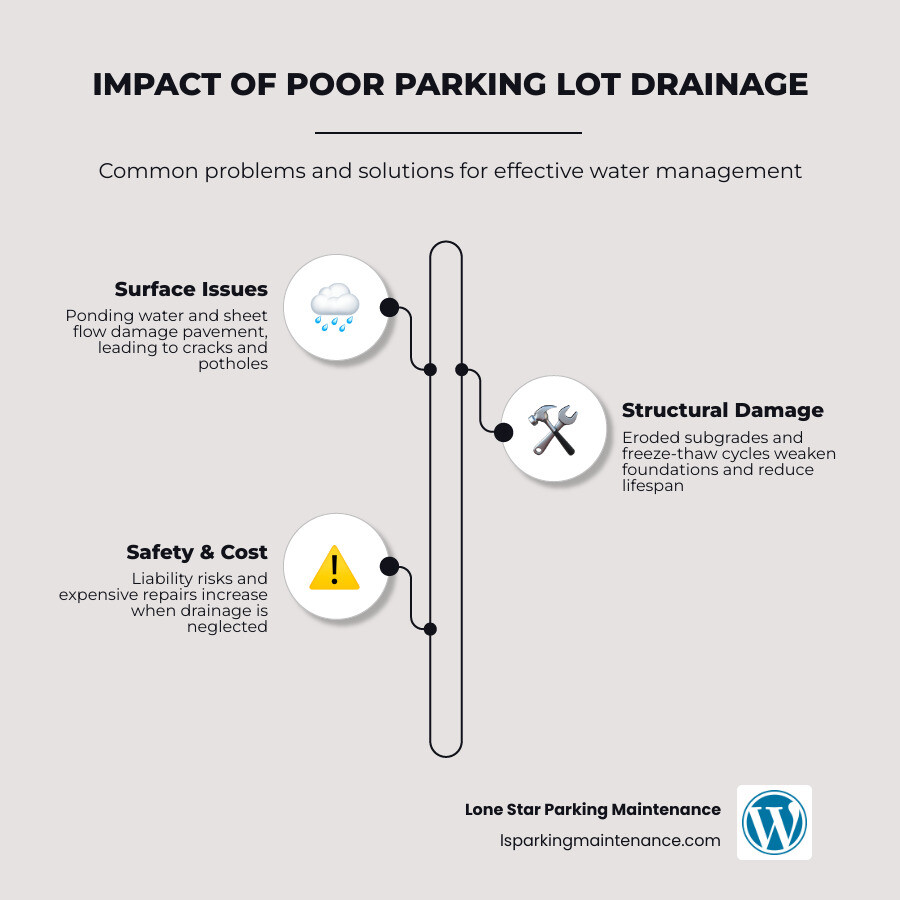
In the DFW Metroplex, we see a lot of “lazy water.” This is water that doesn’t know where to go, so it just sits there, slowly eating away at your investment. When we talk about parking lot drainage solutions, we are really talking about an insurance policy for your pavement.

The most common issues property managers face include:
- Ponding (Pooling Water): If you see standing water persisting for more than 24 hours after a storm, you have a drainage failure. This water seeps into the asphalt pores, weakening the bond between the oil and the aggregate.
- Surface Erosion: High-velocity runoff can literally wash away parts of your lot, especially near the edges or on steep slopes.
- Foundation Seepage: Without proper parking lot drainage solutions, water often flows toward building foundations. This can lead to interior flooding, mold, and structural cracks that cost a fortune to fix.
- Freeze-Thaw Damage: Even in North Texas, winter temperatures fluctuate. Water trapped in or under the pavement freezes, expands, and creates “alligator cracking” and potholes.
- Liability Risks: Ankle-deep puddles aren’t just an eyesore; they are a slip-and-fall hazard. If a customer slips in your lot because of poor drainage, your business is on the hook.
By implementing proactive parking lot drainage tips, you can prevent these issues before they require a total lot replacement.
Primary Types of Commercial Parking Lot Drainage Systems
Not every lot requires the same approach. A small retail strip in Plano has different needs than a massive distribution center in Fort Worth. Choosing the right parking lot drainage solutions requires balancing performance with your budget.
| System Type | Performance | Initial Cost | Maintenance |
|---|---|---|---|
| Catch Basins | Moderate | Low to Moderate | Moderate (Cleaning) |
| Trench Drains | High (Sheet Flow) | High | Low (Debris removal) |
| French Drains | High (Subsurface) | Moderate | Moderate |
| Permeable Pavers | High (Eco) | High | High (Vacuuming) |
Traditional Gray Infrastructure: Catch Basins and Trench Drains
“Gray infrastructure” refers to the traditional pipes-and-concrete approach. These are the workhorses of the industry.
Catch Basins: These are the most common parking lot storm drains. They consist of an underground box with a grate on top. They are designed to “catch” sediment and debris in a sump area at the bottom, allowing cleaner water to flow into the city’s storm sewer. In heavy-traffic DFW lots, we often recommend concrete-encased basins to prevent the surrounding asphalt from sinking under the weight of delivery trucks.
Trench Drains: If your lot is relatively flat or has a large “sheet flow” (water moving across the surface in a wide, thin layer), a trench drain system is often the best choice. These are long, narrow channels that act like a gutter for your pavement.
When selecting these, you must consider Grate Load Classes:
- Class B125: For passenger vehicles and light traffic.
- Class C250 to D400: For commercial lots with delivery trucks and frequent traffic.
- Class E600 to F900: For industrial sites, bus terminals, and heavy machinery.
Subsurface and Sustainable Parking Lot Drainage Solutions
As we move toward May 2026, many DFW businesses are looking for “Green” or Low Impact Development (LID) options. These systems don’t just move water; they manage it.
- French Drains: These are perforated pipes buried in a trench filled with gravel and wrapped in filter fabric. They are excellent for lots with high groundwater tables or where water tends to soak the subgrade.
- Permeable Pavers: These allow water to flow through the surface into a stone reservoir below. Research shows these systems can reduce runoff by 80-100%.
- Bioswales: These are landscaped areas filled with native Texas plants and specialized soil. They filter pollutants out of the water while slowing down the flow, often reducing peak flow rates by over 50%.
Understanding the basics of drainage helps in deciding whether to stick with traditional pipes or invest in a modern LID system.
Engineering and Design Best Practices for Effective Water Control
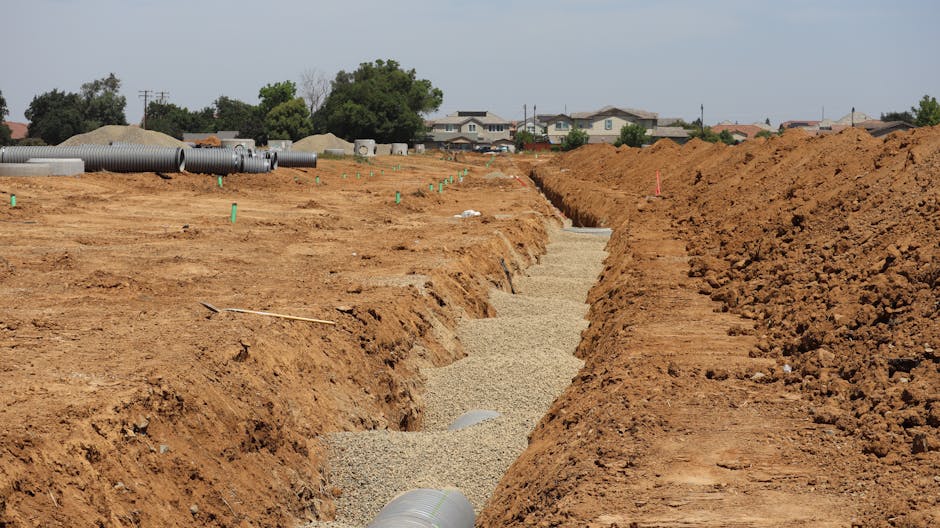
Good drainage starts long before the first bucket of asphalt is poured. It begins with the “pitch” or slope of the lot.
The Golden Rules of Design:
- Minimum Slope: For paved surfaces, a minimum slope of 0.4% is required to prevent ponding, though 1% to 2% is much safer.
- Gutter Grades: Gutters should have a minimum grade of 0.5% to keep water moving toward the inlets.
- Sheet Flow Limits: Water shouldn’t travel more than 75 to 100 feet across the surface before hitting a drain. The longer the water travels, the more likely it is to cause erosion or hydroplaning.
In the DFW area, we look at NOAA Atlas 14 data to understand rainfall intensity. We design systems to handle at least a “2-year storm event,” which ensures that during a typical Texas thunderstorm, your lot remains safe and navigable.
Calculating Runoff and Selecting the Right Parking Lot Drainage Solutions
To size a system correctly, engineers use the Rational Method (Q=CiA):
- Q: Peak runoff rate (how much water is coming).
- C: Runoff coefficient (asphalt is usually 0.9, meaning 90% of rain becomes runoff).
- i: Rainfall intensity (how hard it’s raining).
- A: Drainage area (how big the lot is).
Using this formula ensures you don’t end up with an undersized pipe that backs up the moment a cloud looks at it funny. Proper inlet placement is also key—drains should be at the absolute low points of the lot, never near building entrances or high-pedestrian walkways.
Maintenance Strategies to Extend Pavement Lifespan
You wouldn’t buy a car and never change the oil, right? Your drainage system is the same. Preventive maintenance is the secret to avoiding a $50,000 repair bill down the road.
Statistics show that sites with semi-annual catch basin cleaning prevent over 90% of non-structural drainage failures. Here is our recommended maintenance checklist for DFW properties:
- Spring Inspection: After the winter, check for “heaving” or cracks around your drains. Clean out any sand or salt used during ice events.
- Fall Preparation: Before the leaves drop, ensure all grates are clear. Clogged grates are the #1 cause of parking lot flooding.
- Vacuum Sweeping: If you have permeable pavers, you must vacuum sweep them at least twice a year. If the pores get clogged with dust and silt, the pavers stop draining.
- Pressure Washing: Periodically flush out trench drains and pipes to remove sediment buildup that can reduce flow capacity.
- Crack Sealing: If you see cracks forming near a drain, seal them immediately. Water getting under the edge of a drain box will quickly cause the asphalt to collapse.
Frequently Asked Questions about Parking Lot Drainage
How much does it cost to install a commercial drainage system?
Costs vary wildly based on whether you are building new or retrofitting. A simple catch basin might cost a few thousand dollars, while a complex LID system for a large lot can reach tens of thousands. However, LID systems can actually be 15-50% cheaper than traditional gray infrastructure over their whole lifecycle because they often eliminate the need for massive underground detention tanks.
How often should parking lot drains be cleaned?
We recommend a semi-annual schedule. Clean them once in the spring to remove winter debris and once in the late fall after the leaves have fallen. If your lot is near a construction site or has lots of trees, you may need quarterly service.
Can permeable pavement handle heavy vehicle traffic?
Yes! Modern permeable pavers are designed to handle heavy wheel loading. However, they aren’t ideal for areas where trucks are making tight turns (which can “scuff” the pavers). They are perfect for parking stalls, while the drive aisles can remain traditional asphalt or concrete.
Conclusion
At Lone Star Parking Maintenance, we’ve seen how a well-designed drainage system can double the life of a parking lot. Whether you’re dealing with a persistent puddle in Arlington or planning a new commercial development in Dallas, the right parking lot drainage solutions are essential for safety and structural integrity.
We specialize in the DFW Metroplex, providing everything from professional striping and sealcoating to drainage repairs and cleaning. We use top-quality materials and adhere to the highest industry standards to ensure your lot is safe, compliant, and built to last.
Don’t let water wash away your investment. Protect your investment with expert parking lot maintenance and give your customers a dry, safe place to park.