
Why Asset Preservation Outperforms Cosmetic Quick-Fixes
Viewing parking lot maintenance as a cosmetic task is one of the most expensive mistakes a facility manager can make. When asphalt turns gray, it is giving you an early warning sign. Sun exposure, intense Texas UV rays, and traffic friction oxidize the asphalt binder—the glue that holds the sand and stone aggregates together. Without protection, that binder becomes brittle, allowing water to penetrate the surface layer.
Proactive sealing acts as a sacrificial barrier against UV radiation, engine fluids, and rainwater. A properly applied sealcoat typically lasts 3 to 5 years under normal operational conditions. For high-traffic commercial zones, drive aisles, or properties subject to heavy equipment, resealing cycles may drop to every 2 to 4 years.
Deferring this simple step turns a manageable operational expense into a massive capital expenditure. Once water penetrates the sub-base, the supporting soil softens and shifts under load, turning minor hairline surface cracks into severe structural failure. Proactive maintenance preserves capital: spending cents per square foot on preventative sealing helps delay spending dollars per square foot on full-depth asphalt replacement down the road. You can learn more about this strategic protection in our article on why parking lot sealing is important. For broader facility trends, check out the Resealing Parking Lot: The Ultimate 2026 Guide – Facility Management Insights.
How to Inspect and Reseal Asphalt Parking Lot Areas
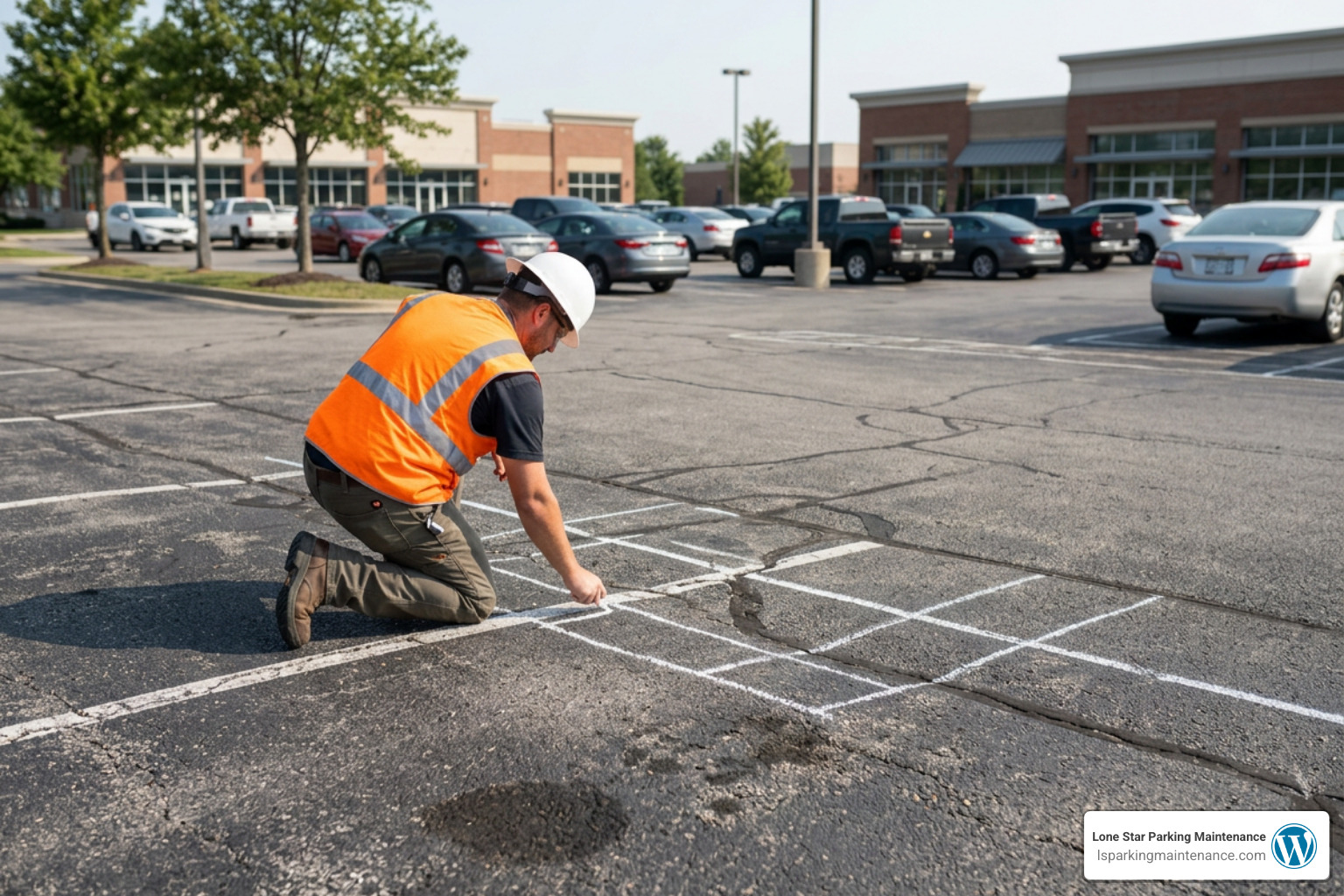
Before requesting bids or bringing equipment on-site, perform a comprehensive inspection. Walking the lot gives you a real picture of pavement conditions that you simply cannot get while driving past in a truck.
We recommend a simple grid evaluation method:
- Divide your parking facility into logical sections or driving bays on a printed site map.
- Perform a physical walk-and-mark inspection, taking clear photo documentation of high-risk spots.
- Mark identified issues directly on your map to structure your vendor scope accurately.
Watch closely for these critical warning signs:
- Faded, Gray Pavement: Indicates severe UV oxidation of the top binder layer.
- Raveling and Rough Texture: Loose sand and small stones collecting along curbs, showing the aggregate is separating.
- Oil and Grease Splotches: Hydrocarbon stains that soften and dissolve the asphalt matrix beneath.
- Linear Cracks: Transverse or longitudinal openings that allow water down into the base layers.
- Standing Water (Ponding): Low spots where moisture accelerates surface deterioration.
When to Reseal Asphalt Parking Lot Surfaces vs. Structural Repair
Knowing when to apply a protective coat and when to order structural repairs prevents premature coating failure and wasted budget. Sealcoat is a surface preservative—it is not structural concrete or hot-mix asphalt.
Surface oxidation, light aggregate unraveling, and hairline surface cracks (under 1/2 inch wide) are ideal candidates for crack filling and sealcoating.
However, if you see “alligator cracking”—an interconnected pattern of small blocks resembling reptile skin—or depression rutting, you are looking at sub-base failure. Sealcoat poured over alligator cracking will fail almost immediately because the underlying pavement flexes and shifts whenever a car drives over it. These areas require localized saw-cutting, base compaction, and hot-mix asphalt patching before any sealant touches the surrounding pavement. If you are unsure about the state of your cracks, review our guide on how do I know if my parking lot needs crack filling.
Step-by-Step Guide to Reseal Asphalt Parking Lot Areas Successfully
Achieving a durable surface comes down to flawless preparation and execution. Following a standardized workflow keeps your project on track and protects your investment.
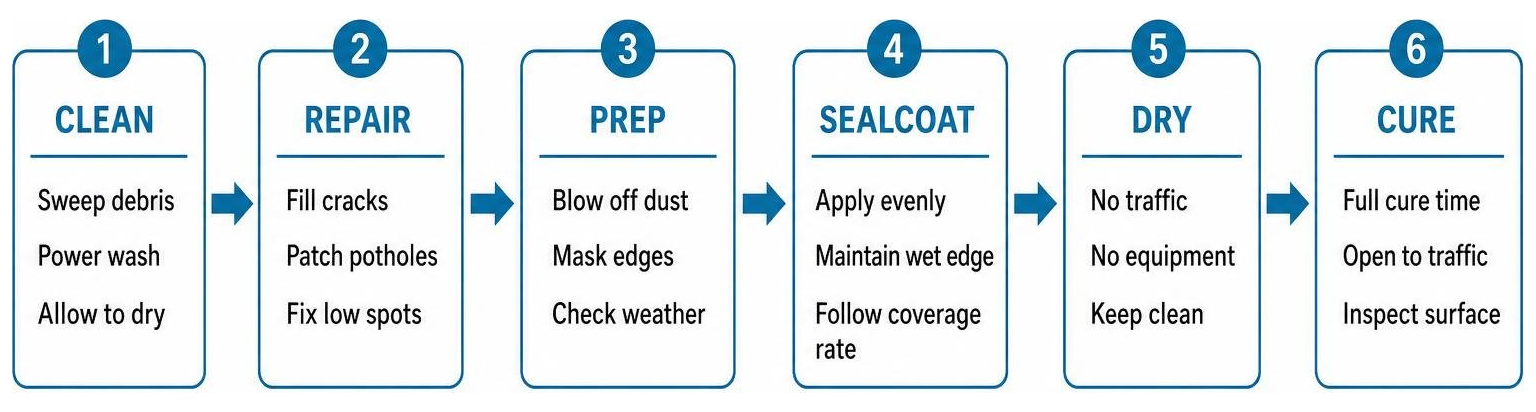
Step 1: Deep Surface Cleaning
Surface contamination is the single biggest cause of coating failure. In fact, residual dust, dirt, mud, and oil cause approximately 35% of all sealcoat bond failures.
- Sweeping with manual brooms or mechanical blowers is only the first step.
- Cleaning with high-pressure washers rated at 3,000+ PSI is essential to blast embedded dirt and organic growth out of pavement pores.
Step 2: Chemical Stain Treatment
Oil and diesel spills interact chemically with asphalt because both are petroleum-based products. Left untreated, oil eats through fresh sealcoat within weeks. Oil stains must be scraped, scrubbed with commercial degreasers, and sealed with a specialized oil-spot primer before the main sealcoat application.
Step 3: Crack Routing and Filling
Unsealed cracks are open doors for moisture. For cracks wider than 1/2 inch, use a hot-pour rubberized sealant heated to 350°F. When applied at this exact temperature, the rubberized material bonds firmly to the asphalt walls, achieving 95% fill retention through seasonal freeze-thaw and heat-expansion cycles.
Step 4: Structural Patching
Address all sub-base failures by removing damaged sections and applying full-depth hot mix asphalt patches. Ensure patch edges are sealed properly to integrate with the surrounding pavement.
Step 5: Sealcoat Application
Apply two full coats of professional-grade sealant, adhering to proper dilution rates and application volumes. Ensure adequate dry time between coats.
Step 6: Line Striping and Cure Phase
Once the sealcoat is dry to the touch, apply high-durability traffic paint for parking stalls, ADA markings, directional arrows, and fire lanes. Restrict traffic until the coating is fully cured.
Watch Out for Common Preparation Shortcuts
Cutting corners during surface prep directly compromises your project’s longevity. Common shortcuts that cost facility managers dearly later include:
- Applying sealcoat directly over fine silt, lawn clippings, or standing mud.
- Skipping oil spot priming and expecting standard sealcoat to block petroleum stains.
- Filling cracks with cold-pour bucket caulking instead of hot-applied 350°F rubberized sealants.
- Sealcoating directly over flexible alligator cracks without performing structural asphalt patching first.
For detailed repair techniques, read our guide on asphalt patching and sealing best practices.
Material Selection, Application Techniques, and Project Scope
Selecting the right materials and application methods directly impacts visual appeal, wear life, and long-term project costs.
| Feature / Metric | Asphalt Emulsion (AE) | Refined Coal Tar Emulsion (RCTE) | Squeegee Application | Spray Application |
|---|---|---|---|---|
| Primary Base | Petroleum asphalt solids & water | Refined coal tar pitch & water | Mechanical squeegee blade | High-pressure spray wand |
| Environmental Impact | Low VOCs, eco-friendly, low odor | Higher VOCs, strong odor, local restrictions | Minimal overspray risk | Risk of overspray on cars/walls |
| Chemical Resistance | Good (Requires polymer additives) | Superior natural oil/gas resistance | N/A | N/A |
| Pavement Penetration | Excellent pore penetration | Excellent pore penetration | Pushes binder deep into rough pores | Uniform top-coat coverage |
| Target Application Rate | 0.18 to 0.25 gal/sq yd per coat | 0.18 to 0.25 gal/sq yd per coat | Great for 1st coat on rough pavement | Great for 2nd coat / smooth surfaces |
For commercial applications in the DFW Metroplex, asphalt emulsions blended with high-performance polymer additives and silica sand aggregate yield outstanding performance. If you have specific questions about product formulations, read our detailed overview of what types of sealants do you use for parking lot sealing.
Professional sealcoating requires a two-coat system. Each coat should be applied at an absolute minimum rate of 0.18 to 0.25 gallons per square yard. The first coat fills pavement voids and secures fine aggregate, while the second coat provides a smooth, uniform protective wear layer.
Scope Structuring and Bidding Best Practices
Vague bids invite unexpected change orders. When requesting proposals from contractors, write a structured Request for Proposal (RFP) that breaks down pricing into clear, unbundled line items.
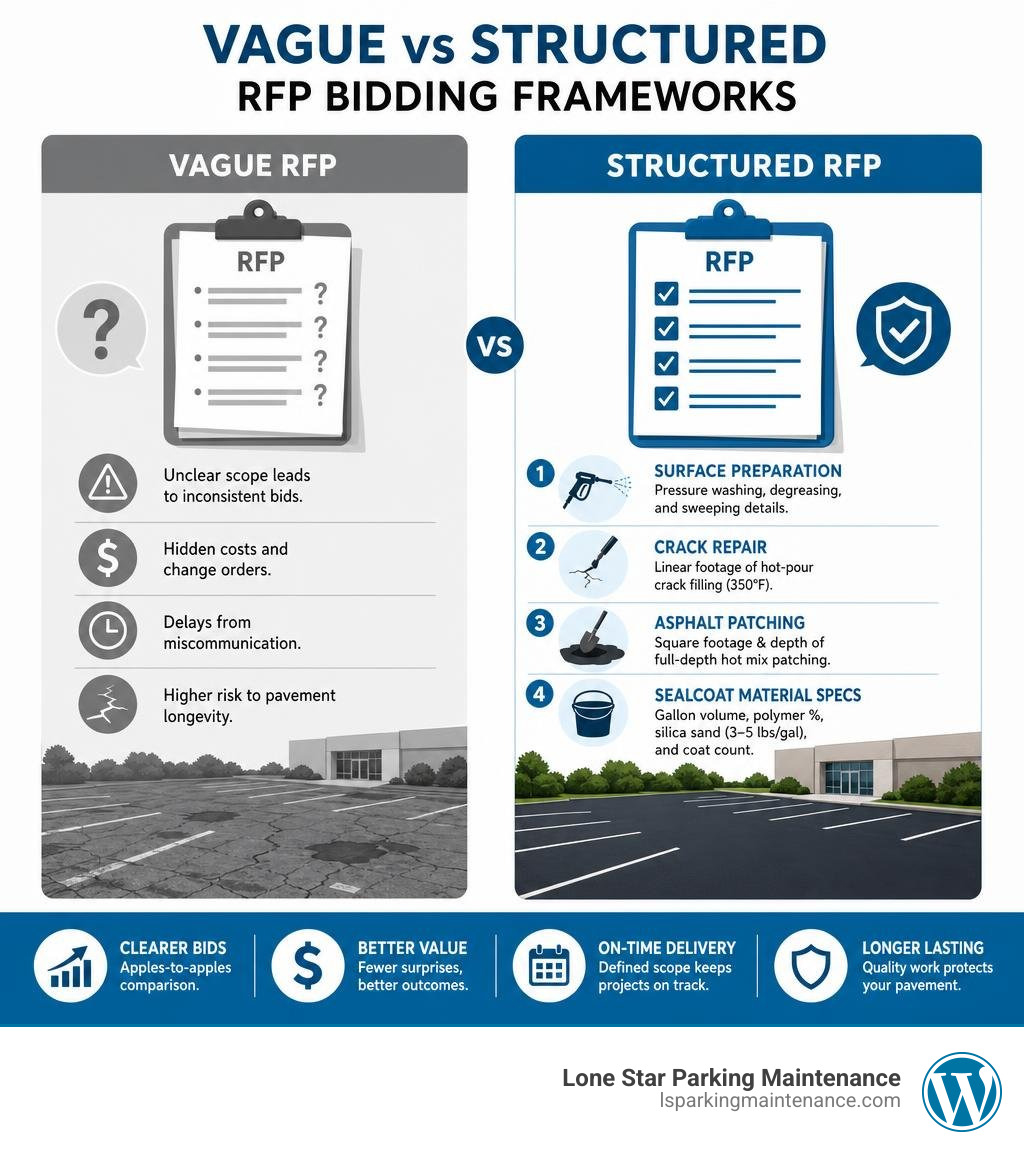
Require every bidding vendor to break down their estimate into these specific line items:
- Surface Preparation: Pressure washing PSI specs, degreasing chemical details, and mechanical sweeping inclusions.
- Crack Repair: Linear footage of hot-pour crack filling (heated to 350°F) versus cold-pour fills.
- Asphalt Patching: Square footage and depth of full-depth hot mix patching for alligator-cracked zones.
- Sealcoat Material Specs: Total gallon volume, polymer additive percentages, silica sand loading (typically 3 to 5 lbs of sand per gallon of concentrate), and exact coat counts.
- Traffic Control Phasing: Barricades, safety cones, temporary signage, and night/weekend labor premiums.
- Pavement Markings: Striping layout, paint type (waterborne acrylic vs. solvent-based), and stall/symbol counts.
Unbundling your bids ensures you receive apples-to-apples comparisons, eliminating surprise change orders halfway through the job.
Contractor Vetting, Curing Windows, and Ongoing Maintenance
Selecting the right crew protects your facility from poor workmanship, premature coating failure, and unnecessary operational disruptions.
Red Flags to Watch For When Evaluating Vendors
- No proof of commercial general liability or workers’ compensation insurance: Protect your property ownership from third-party injury claims.
- Unwillingness to provide material safety data sheets (MSDS) or mix design submittals: Reputable vendors gladly detail their exact mix design, sand concentration, and additive percentages.
- Bidding by total area without specifying material volume: A contractor who cannot tell you how many gallons of concentrate will be sprayed is likely over-diluting their mix with excess water.
- Refusing to guarantee a 48-to-72-hour curing window: Contractors who push you to open a lot early to clear their schedule are prioritizing speed over quality.
Respecting the Cure Window
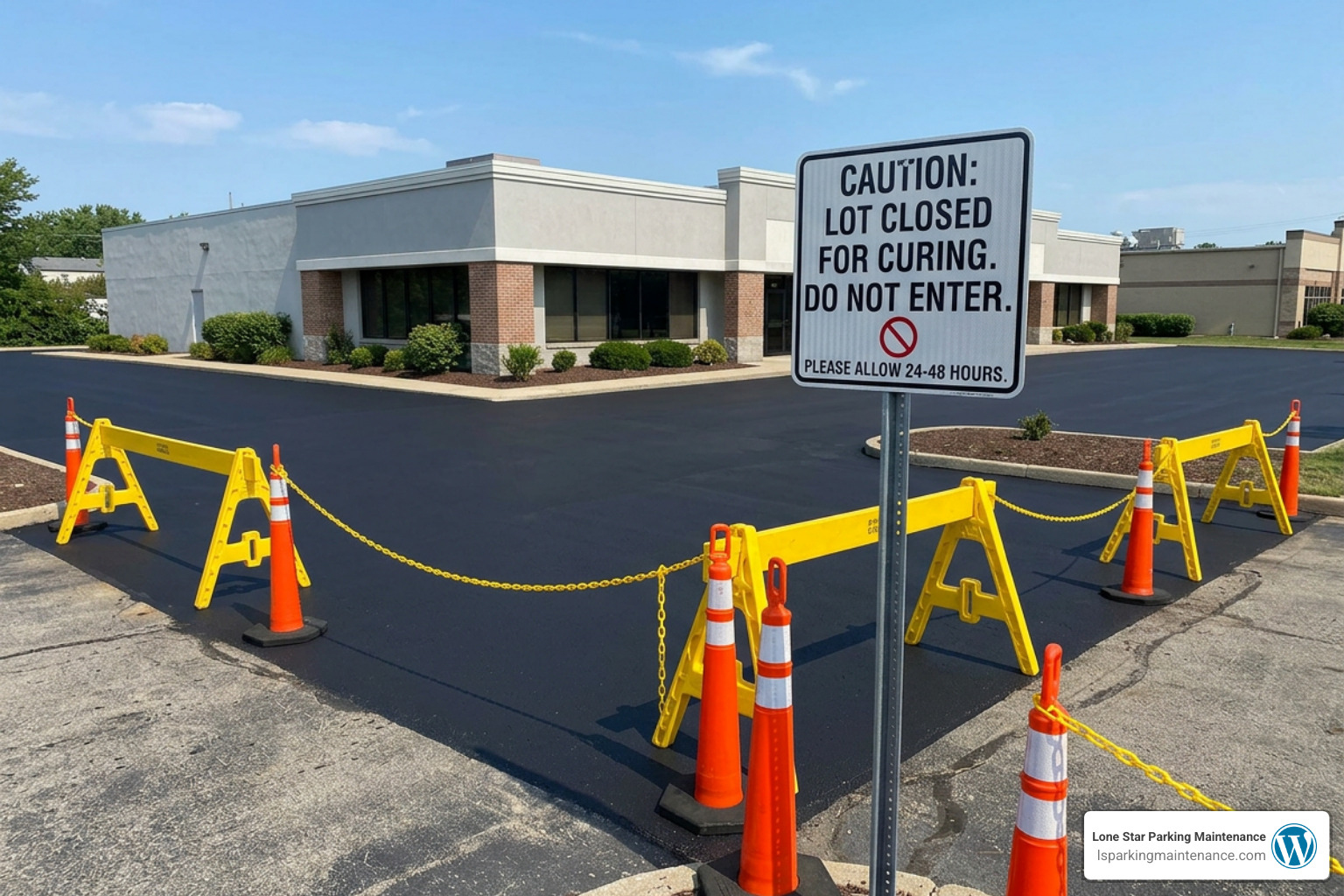
Cure time is non-negotiable. Sealcoat dries through evaporation and cures through chemical cross-linking.
- Temperature Threshold: Apply sealcoat only when ambient and surface temperatures are above 50°F and rising, with no freezing temps forecasted for at least 24 hours.
- Standard Window: Enforce a mandatory 48-to-72-hour traffic restriction post-application.
- Operational Risk: Allowing vehicle traffic back onto fresh sealcoat early can reduce the coating’s overall durability by up to 40%. Vehicles will cause power-steering tire scuffing, striping tracking, and bond peeling.
Long-Term Lifecycle Planning and Documentation
Once your project is complete, perform a thorough final walkthrough:
- Capture closeout photos of fresh striping, patched areas, and sealed cracks to baseline your maintenance tracking.
- Establish a “repair watchlist” for structural zones that may need attention during future capital planning cycles.
- Log all contractor submittals, dates, square footage, and gallon quantities into your maintenance database.
To establish ongoing operational routines, check out our guide on how to manage your sealcoat maintenance schedules.
Frequently Asked Questions About Parking Lot Resealing
How often should a commercial asphalt parking lot be resealed?
Under standard commercial operating conditions, an asphalt parking lot should be resealed every 3 to 5 years. However, high-traffic commercial drive lanes, heavy delivery zones, or lots exposed to intense local weather may require a 2-to-4-year resealing schedule to maintain proper surface protection.
Can sealcoating repair alligator cracking on asphalt surfaces?
No. Sealcoat is a protective surface wear layer, not a structural adhesive. Alligator cracking signifies sub-base or structural failure beneath the asphalt layer. Attempting to bridge alligator cracks with sealcoat will fail quickly as vehicle loads flex the pavement. These sections must be repaired using full-depth hot mix asphalt patching prior to sealcoating.
How long must a parking lot cure before vehicle traffic reopens?
A newly sealcoated parking lot requires a curing window of 48 to 72 hours with ambient temperatures consistently above 50°F. Opening a parking surface early to vehicle traffic can diminish coating durability by as much as 40%, leading to tire scuffing, power-steering marks, and premature wear.
Conclusion
Proactive parking lot maintenance is not an unnecessary expense—it is a core asset preservation strategy. By catching surface wear early, insisting on thorough surface preparation, using commercial-grade materials, and honoring essential curing windows, you can extend your pavement’s lifespan by decades while keeping long-term capital costs low.
At Lone Star Parking Maintenance, we help facility leaders across the DFW Metroplex preserve their pavement investments safely, efficiently, and with total peace of mind. Contact our team today for expert surface evaluation, custom repair planning, and comprehensive Parking Lot Sealing And Crack Filling Services.