
Why Hiring the Right Asphalt Sealcoating Companies Matters for Your Parking Lot
Asphalt sealcoating companies protect one of your property’s most visible — and most vulnerable — assets: your pavement.
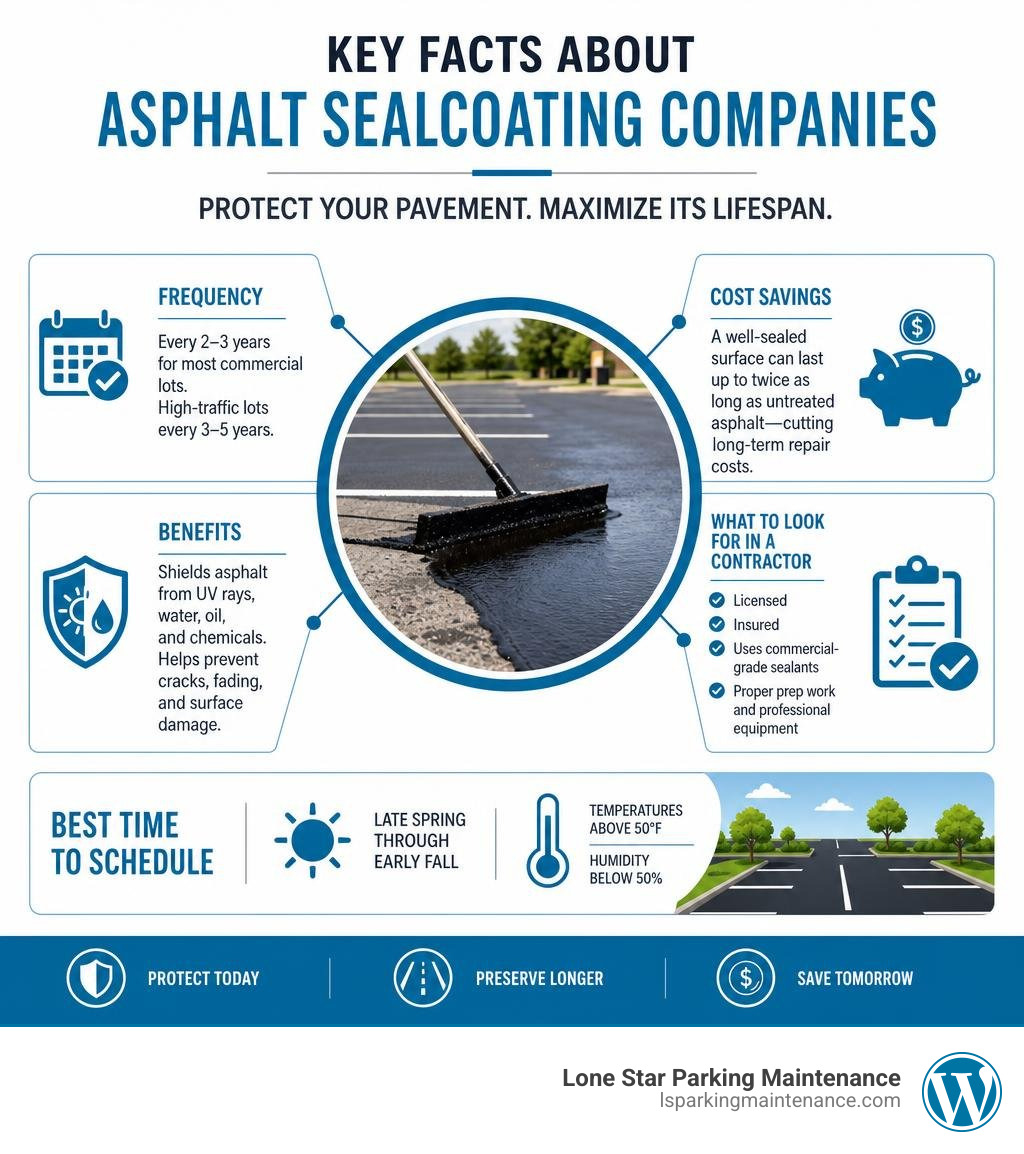
If you manage a parking lot or commercial property in the DFW Metroplex, here’s what you need to know at a glance:
- What they do: Apply a protective coating over asphalt to block UV rays, water, oil, and chemicals
- How often you need it: Every 2–3 years for most commercial lots (some high-traffic lots every 3–5 years)
- What to look for: Licensed, insured contractors using commercial-grade sealants — not watered-down budget products
- Cost savings: A well-sealed surface can last up to twice as long as untreated asphalt, dramatically cutting long-term repair costs
- Best time to schedule: Late spring through early fall, when temperatures stay above 50°F and humidity stays below 50%
Asphalt doesn’t fail all at once. It fades, cracks, and crumbles slowly — often starting with something as minor as a small surface crack or an oil stain left untreated. By the time most property owners notice the damage, the repair bill is already far larger than a routine sealcoat would have cost.
The good news? Regular sealcoating is one of the most cost-effective maintenance investments you can make. The challenge is finding a contractor who does it right — using the correct materials, proper prep work, and professional equipment.
This guide walks you through everything you need to know: how sealcoating works, what separates great contractors from bad ones, and how to build a maintenance schedule that protects your pavement for the long haul.
Simple asphalt sealcoating companies word guide:
What is Sealcoating and Why is it Crucial for Your Pavement?
Asphalt pavement is essentially a mixture of stone aggregate and a petroleum-based liquid binder that glues it all together. When it is first laid, it is dark, flexible, and strong. However, from the moment vehicles begin driving on it, the deterioration process starts.
In the DFW Metroplex, our pavement faces a brutal combination of extreme summer heat, sudden torrential downpours, and shifting clay soils. Without protection, the sun’s intense UV rays break down the chemical bonds in the asphalt binder, a process known as oxidation. This causes the pavement to lose its flexibility, turn a dull gray color, and become highly brittle. Once brittle, the weight of daily traffic easily causes cracks to form, allowing water to seep into the sub-base and compromise the structural foundation of your entire lot.
Understanding the Sealcoating Process
Think of sealcoating as sunscreen and a waterproof jacket combined for your parking lot. The sealant material acts as a sacrificial wear layer that absorbs the brunt of UV oxidation, water penetration, and chemical spills from leaking vehicles.
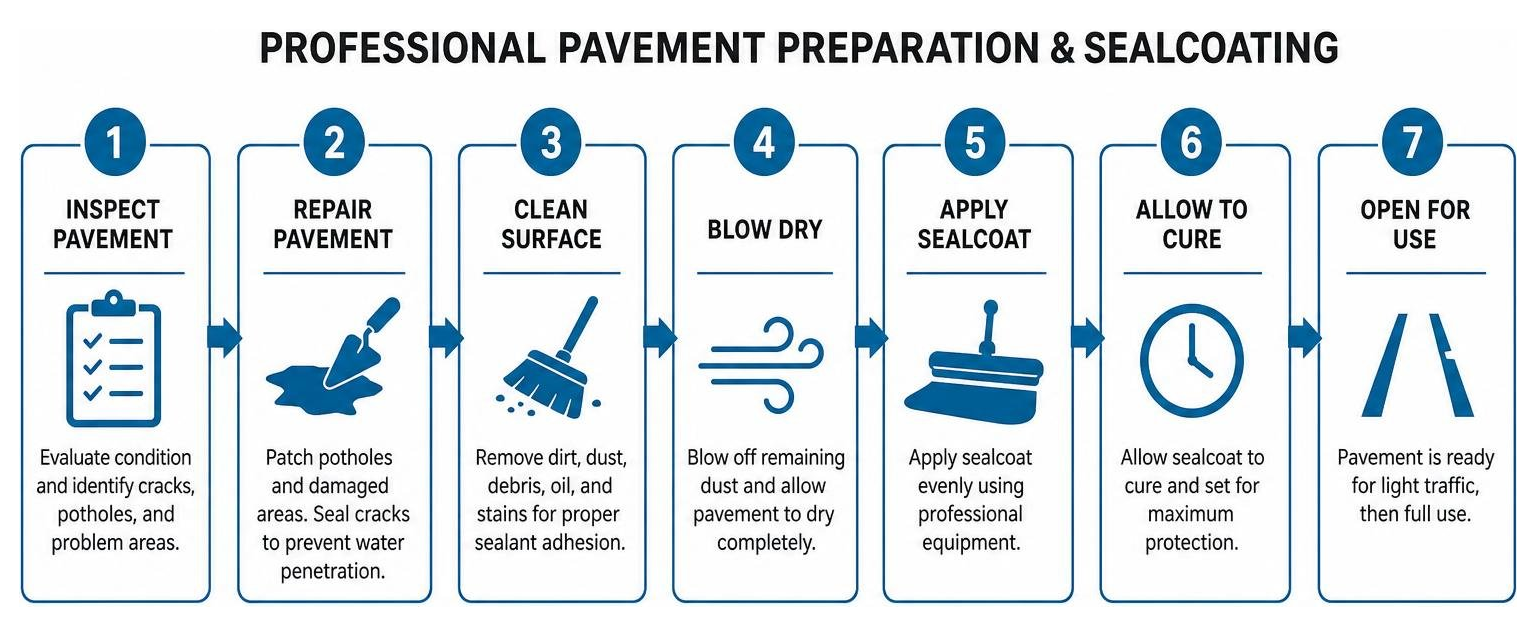
When professional asphalt sealcoating companies treat your lot, they typically use high-performance asphalt emulsions or coal-tar-based sealants blended with specialized polymer additives and sand. This mixture is meticulously applied over the clean pavement to form a continuous, impermeable shield.
To understand how this material works to preserve your pavement over time, you can read more about how it functions as The Magic Shield for Your Asphalt. This protective barrier repels water, prevents motor oils and gasoline from eating through the binder, and restores that rich, deep black finish that instantly elevates your property’s curb appeal.
Sealcoating vs. Crack Sealing and Asphalt Repair
A common point of confusion for property owners is distinguishing between sealcoating, crack sealing, and general asphalt repair. They are not the same thing, and applying sealcoat over a damaged parking lot without addressing underlying issues is a recipe for premature failure.
- Sealcoating: A preventative surface treatment applied to the entire asphalt surface to protect it from environmental damage. It is designed to preserve healthy or lightly worn pavement, not to fix structural failures.
- Crack Sealing (or Crack Filling): A targeted repair method where a hot-applied, rubberized crack sealant is injected into individual cracks (typically those 1/4-inch to 1-inch wide). This flexible material expands and contracts with changing temperatures, preventing water from reaching the sub-base.
- Asphalt Repair (Patching): When asphalt has developed deep potholes, severe depressions, or “alligator cracking” (which indicates sub-base failure), the damaged section must be cut out, the base repaired, and new hot-mix asphalt laid down.
For a complete breakdown of how these services work hand-in-hand to keep your lot safe and functional, explore our detailed resource on Parking Lot Sealing and Crack Filling.
Professional Application vs. DIY Sealcoating
It can be tempting for budget-conscious property managers to consider buying a few buckets of sealant from a local hardware store and assigning a maintenance crew to apply it. However, DIY sealcoating almost always results in a thin, uneven coat that peels away within a single season.
There is a massive difference in quality between the retail-grade “budget sealants” available to the public and the industrial-grade, polymer-modified sealants used by professional asphalt sealcoating companies. Professional mixtures contain specific percentages of solids, performance-boosting additives, and clean silica sand to provide traction and durability.
Furthermore, professionals utilize two primary application methods depending on the lot’s layout:
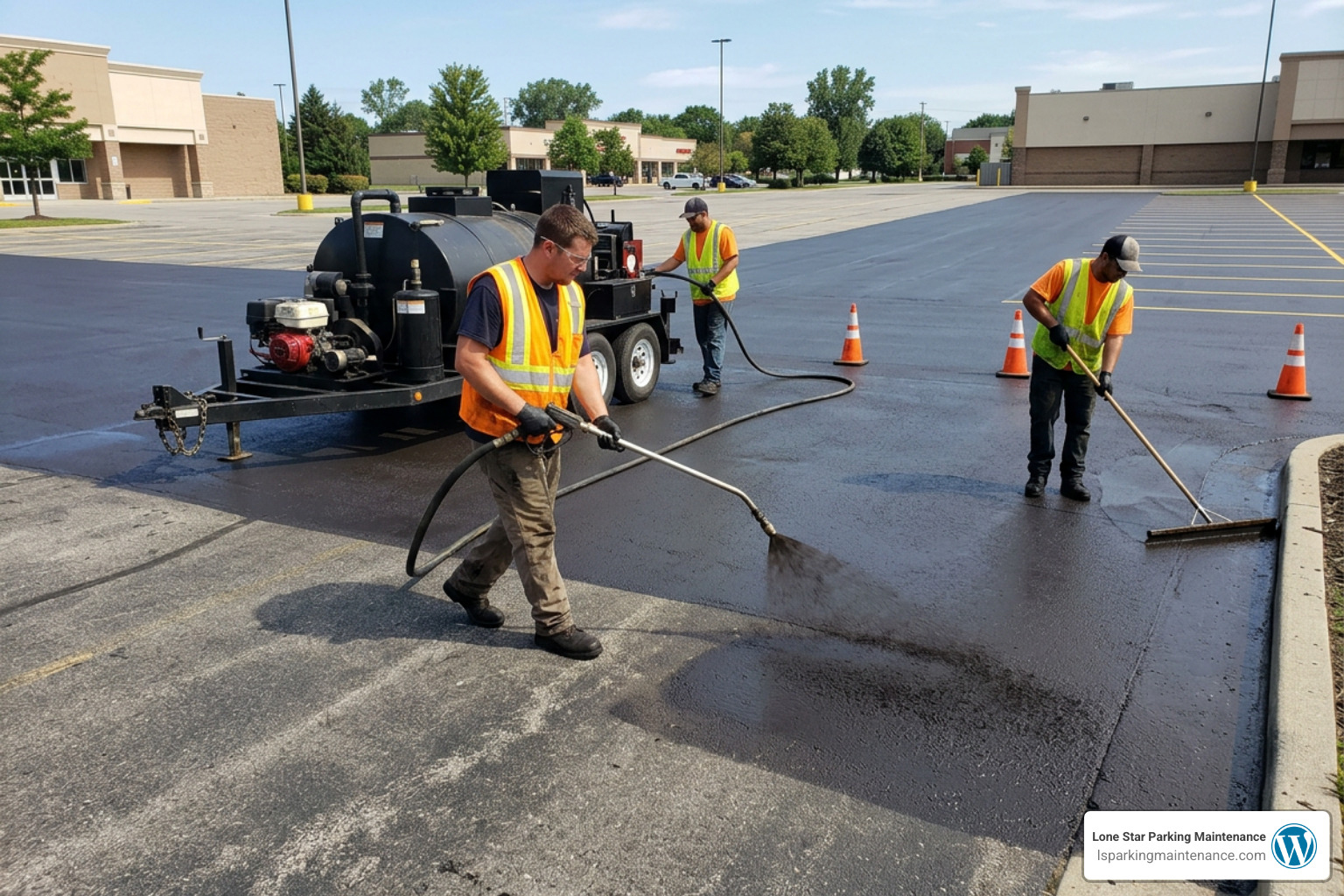
- Spray Application: High-volume commercial spray systems apply a uniform, consistent coat over large open spaces quickly and efficiently.
- Hand-Brush (Squeegee) Application: This method uses hand tools to physically press the sealant into the porous surface of the asphalt. It is highly recommended for rougher pavements, edges, and high-traffic entryways because it creates a thicker, more secure bond.
Cutting corners on prep work or using cheap materials will cost you more in the long run. To avoid common pitfalls, review our guide on how to Don’t Let Cracks Win With These Asphalt Patching and Sealing Best Practices.
How to Choose the Best Asphalt Sealcoating Companies
Selecting the right commercial contractor is the most critical step in ensuring your pavement project is successful. The market is filled with various operators, and making your choice solely on the lowest bid can lead to disastrous results.
Key Qualities of Professional Asphalt Sealcoating Companies
When evaluating potential contractors in the DFW Metroplex, look for companies that demonstrate a high level of professionalism and commercial capability. A reputable contractor should always provide:
- Commercial-Grade Materials: They should be transparent about the brands and mixtures they use, such as industry-leading SealMaster products or equivalent high-performance emulsions.
- Active Licensing and Insurance: The contractor must carry comprehensive general liability insurance and workers’ compensation to protect your property and their crew from liability during the project.
- Specialized Equipment: Look for companies with dedicated sealcoat transport tankers, professional spray rigs, and mechanical agitation systems that keep the sand and sealant properly mixed during application.
- A Clear, Written Proposal: The estimate should clearly outline the scope of prep work (cleaning, oil priming, crack filling), the exact materials to be used, the number of coats applied, and the expected curing timeline.
Red Flags When Hiring Asphalt Sealcoating Companies
Unfortunately, the paving industry has its share of “fly-by-night” operators who travel from town to town offering cheap, immediate services. To protect your investment, be on the lookout for these common red flags:
- Unsolicited Door-to-Door Solicitations: Reputable commercial contractors rarely show up unannounced claiming they “have leftover material from a nearby job.”
- Overly Diluted Sealants: Some low-quality contractors water down their sealant mixture beyond the manufacturer’s specifications to save on material costs. If the wet sealant looks like thin, watery paint rather than a thick, rich batter, it has been over-diluted and will not protect your lot.
- No Written Contract or Warranty: Avoid any contractor who refuses to provide a detailed written scope of work or a clear material warranty.
- Lack of Physical Address or Local Reviews: Always verify that the company has a physical office, active local references, and positive reviews from other commercial property managers in the DFW area.
Beyond Sealing: Comprehensive Parking Lot Maintenance
A freshly sealed parking lot is a beautiful sight, but it is also a blank canvas. To ensure your facility remains safe, organized, and compliant with all local regulations, you need a contractor who can handle more than just the black sealant.
Top-tier asphalt sealcoating companies offer a full suite of parking lot maintenance services, including:
- Precision Line Striping: Applying bright, durable traffic paint to define parking spaces, fire lanes, directional arrows, and pedestrian crosswalks.
- ADA Compliance: Ensuring your handicap-accessible stalls, access aisles, and van-accessible spaces meet all state and federal Americans with Disabilities Act guidelines.
- Signage and Wheel Stops: Installing regulatory signs, bollards, and concrete or rubber wheel stops to protect your landscaping and building structures.
When you are ready to refresh your lot’s markings, check out our dedicated service page for professional Parking Lot Striping to see how we coordinate striping with our sealing process.
Timing and Scheduling Your Sealcoat Maintenance
Proper timing is everything when it comes to asphalt preservation. Applying sealant at the wrong time of year or ignoring your lot’s wear cycle can lead to premature coating failure and wasted budget.
How Often Should You Sealcoat Your Asphalt?
For most commercial properties and retail facilities in the DFW Metroplex, we recommend scheduling professional sealcoating every 3 to 5 years. High-traffic areas, such as drive-thru lanes, main entrance channels, and busy retail loading zones, may require a fresh coat every 2 years to combat heavy tire wear.
It is important to note that you should avoid sealcoating your lot every single year. Applying sealant too frequently causes an excessive buildup of material, which eventually leads to cracking, peeling, and a rough, unsightly surface texture.
To help you map out a cost-effective, long-term plan for your facility, read our expert guide on How to Manage Your Sealcoat Maintenance Schedules.
Weather Conditions and Curing Times
Sealcoating is a weather-dependent chemical process. For the sealant to bond, dry, and cure correctly, the environmental conditions must meet strict industry standards:
- Temperature: The ambient air and pavement temperature must be at least 50°F and rising, and it must not drop below freezing for at least 24 hours after application.
- Humidity: Ideally, humidity should be below 50% with clear, sunny skies. High humidity and heavy shade significantly slow down the drying process.
- Precipitation: The pavement must be completely dry before application, and there must be no rain in the forecast for at least 24 to 48 hours.
In Texas, our peak sealcoating season runs from April through October. Attempting to seal your lot during a damp, cold winter week will prevent the material from curing, causing it to wash away during the next rainstorm.
To learn more about what to expect during different seasons and how weather impacts your project’s durability, read our FAQ on How Long Does Parking Lot Sealing Last?.
Frequently Asked Questions about Asphalt Maintenance
Managing a commercial property involves keeping track of many moving parts. Here are direct, clear answers to the most common questions we receive about maintaining asphalt parking lots.
How long does it take for sealcoating to dry and cure?
While sealcoat may dry to the touch in just 2 to 4 hours on a hot, sunny Texas day, there is a big difference between “dry” and “fully cured.”
- Foot Traffic: Usually safe after 24 hours of dry weather.
- Vehicle Traffic: We strongly recommend keeping all vehicles off the freshly sealed surface for 48 to 72 hours to allow the material to fully cure and harden against power-steering wear.
Driving on the lot too early can cause tire scuffing, tracking, and premature wear on the new coating.
What are the signs that my asphalt needs sealcoating?
You should start shopping for professional asphalt sealcoating companies if you notice any of the following warning signs on your pavement:
- Color Fading: The deep black color has oxidized into a dull, light gray.
- Hairline Cracks: Small, non-structural surface cracks are beginning to spiderweb across the lot.
- Rough Texture: The smooth asphalt binder has worn away, leaving a rough, rocky texture where individual stones are exposed.
- Water Absorption: Instead of water pooling or running off the surface, the asphalt visibly darkens and absorbs moisture when it rains.
Can sealcoating fix deep cracks and potholes?
No. Sealcoating is a thin protective topcoat, not a structural repair material. It cannot fill deep cracks, level sunken pavement, or fix potholes.
If your lot has “alligator cracking” (dense clusters of intersecting cracks that look like reptile skin), this indicates a failed sub-base. Applying sealcoat over these areas is a temporary cosmetic fix that will fail within weeks. These areas must be repaired using professional asphalt patching or hot-rubberized crack filler prior to applying the sealcoat.
Conclusion
Your parking lot is more than just a place for vehicles to park — it is the literal welcome mat for your customers, tenants, and visitors. Investing in routine maintenance not only protects your physical property but also projects a clean, safe, and professional image for your business.
At Lone Star Parking Maintenance, we specialize in providing top-tier parking lot striping, sealing, cleaning, power washing, and minor repairs throughout the DFW Metroplex. By utilizing industry-standard materials, advanced application techniques, and a strict commitment to safety, we help property managers extend their pavement’s lifespan while minimizing business disruption.
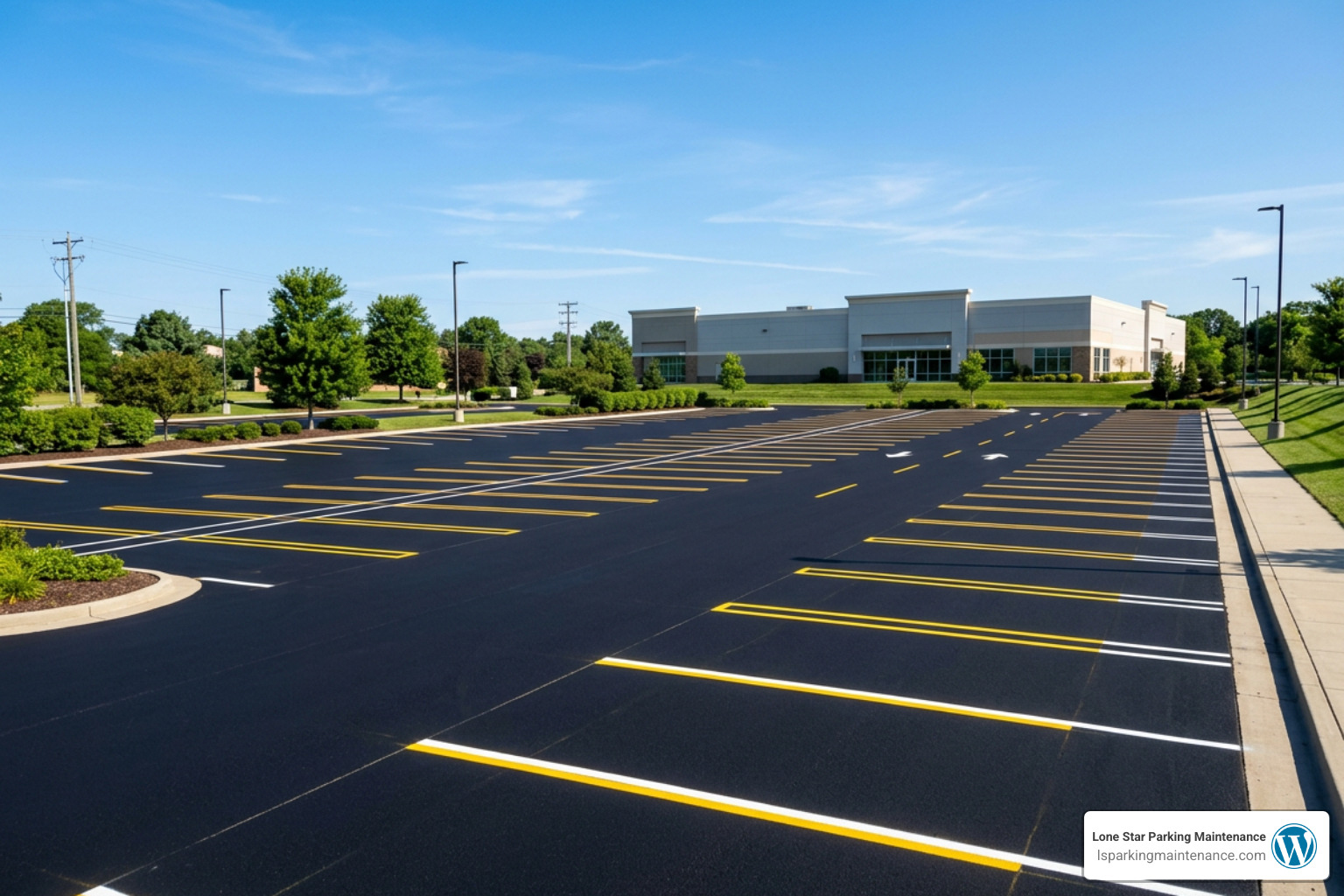
Ready to protect your pavement investment and restore your lot’s pristine black finish? Contact Lone Star Parking Maintenance today to schedule your comprehensive on-site consultation and receive a free, detailed estimate.