
Why the Right Parking Entrance Sign Can Make or Break Your Property
A parking entrance sign is one of the first things drivers see when they arrive at your property — and it does more work than most people realize.
Here are the most common types you’ll encounter:
| Sign Type | Primary Purpose |
|---|---|
| Enter Only | Directs drivers into the lot safely |
| Exit Only | Prevents wrong-way entry at exits |
| Do Not Enter | Blocks unauthorized or unsafe access |
| Directional Arrow | Guides traffic flow through the lot |
| Entrance Only (with vehicle type) | Designates truck, visitor, or delivery access |
For most commercial properties in the DFW Metroplex, aluminum signs with 3M reflective sheeting are the go-to choice. They’re durable, weatherproof, and rated for at least 7 years without fading.
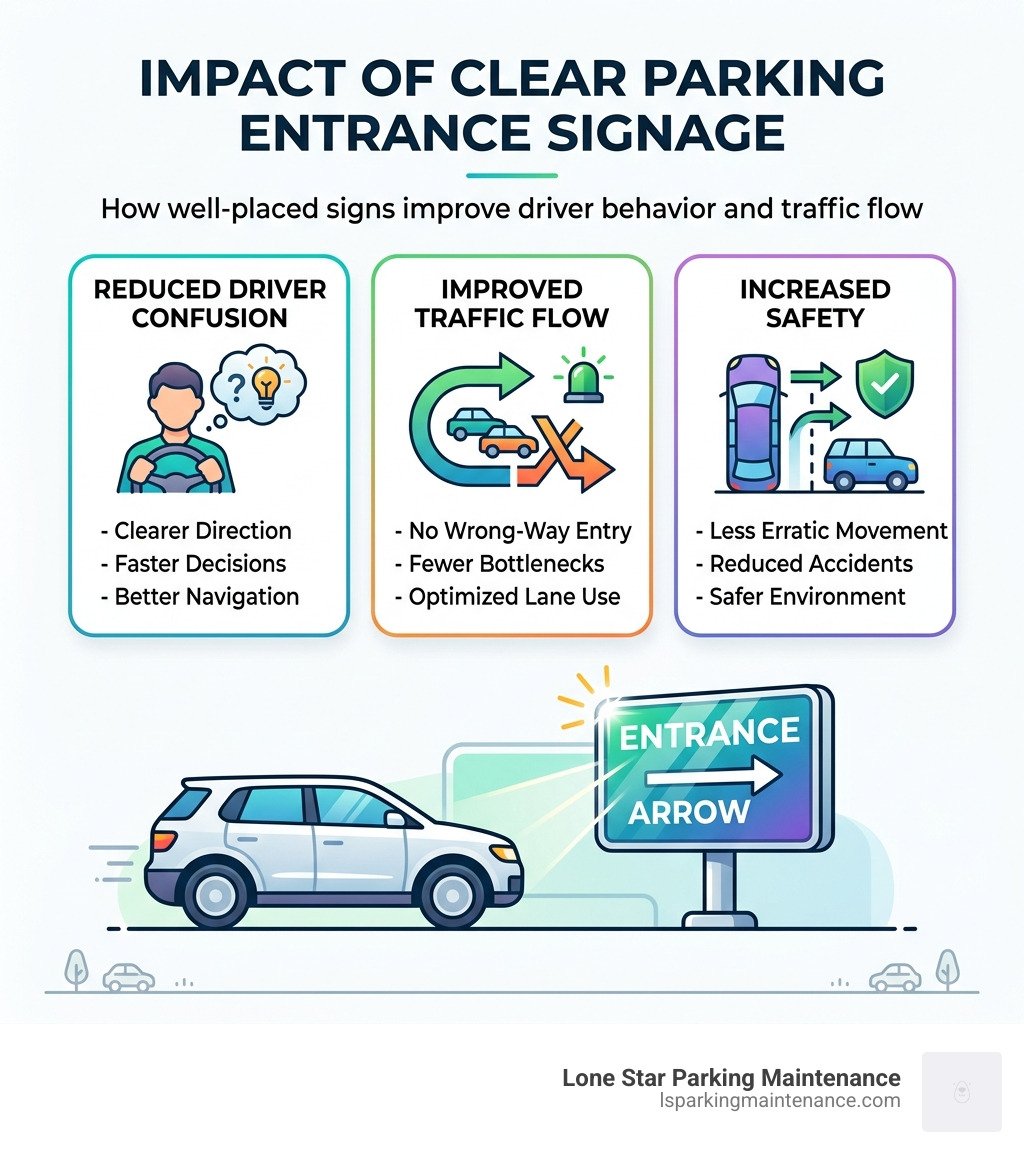
Clear signage isn’t just about looks. Poorly marked parking lots cause real problems — double parking, bottlenecks, frustrated customers, and even accidents. Research shows that directional arrows and well-placed entrance signs reduce driver confusion and prevent the kind of erratic movement that leads to fender benders.
For property managers dealing with aging, faded, or missing signage, the good news is that modern parking entrance signs come in a wide range of sizes, materials, and configurations — from basic reflective aluminum panels to fully illuminated LED systems that integrate with smart parking technology.
This guide walks you through everything you need to know to choose, install, and maintain the right signs for your property.
Essential Types of Parking Entrance and Exit Signs

When we talk about managing a facility in the DFW Metroplex, we aren’t just putting up a piece of metal and calling it a day. We are creating a communication system. The primary goal of any parking entrance sign is to regulate traffic flow and prevent the dreaded “parking lot standoff” where two cars meet nose-to-nose in a one-way lane.
The Core Signage Kit
To keep your property organized, you need a combination of the following:
- Enter Only / Entrance Only: These are your primary gatekeepers. They should be placed at every legal ingress point. Using a parking entrance sign with a directional arrow is a best practice to show drivers exactly where to turn.
- Exit Only: Essential for preventing “wrong-way” drivers. These are often paired with “Do Not Enter” signs to provide a double layer of warning.
- Do Not Enter: Usually featuring a bold red circle, these are high-impact signs meant to stop accidents before they happen.
- One-Way Signs: If your lot has angled parking, these are mandatory to ensure drivers don’t try to pull into a spot from the wrong direction, which usually results in a three-point turn nightmare.
Specialized Entrance Signs for Commercial Facilities
Every property has unique needs. A retail center in Dallas has different traffic than an industrial warehouse in Fort Worth. We often recommend specialized signage to keep specific types of traffic separated:
- Truck Entrance: Keeps heavy rigs away from tight customer parking corners.
- Visitor Parking: Usually placed right at the main parking entrance sign to guide new arrivals to designated spots.
- Delivery Zones: Prevents delivery vans from blocking the main entrance or fire lanes.
- Emergency Access: Specifically marked for fire departments and ambulances, often using red-themed signage.
- Valet Parking: Clear markers for valet drop-off points help prevent congestion at the curb.
Vertical Panels and Overhead Signage Systems
In high-traffic areas or tight parking garages, standard flat signs might not be enough.
- Vertical Panels: These are tall, thin signs (often 36″ to 48″ high) that sit on the ground or on low-profile bases. They are incredibly visible because they sit right in the driver’s line of sight.
- Overhead Clearance Bars: Often called “head bangers,” these serve as a parking entrance sign and a physical warning. Modern systems use 100% recycled rubber-tire panels or anodized aluminum rails. These are designed to be “forgiving”—if a tall truck hits them, the rubber disguises scratches and protects the vehicle while warning the driver to stop.
- Wayfinding Systems: These involve a series of signs that lead a driver from the street, through the entrance, and into a specific parking level.
Choosing Durable Materials for Your parking entrance sign
In the Texas heat, material choice is everything. We’ve all seen those faded, peeling signs that look like they’ve been through a war. To avoid that, we focus on industrial-grade materials.
- Rustproof Aluminum: This is the gold standard. Heavy-gauge aluminum (.063″ or .080″ thickness) won’t rust or bend easily. It’s light enough to mount on a post but tough enough to handle North Texas wind gusts.
- 3M Reflective Sheeting: Without reflectivity, your sign disappears at night. We use 3M materials because they are rated for at least 7 years of no-fade service.
- Recycled Rubber: Used primarily for lane separators and overhead panels, this material is eco-friendly and extremely durable against minor vehicle impacts.
- Heavy-Duty Vinyl: Best for “label form” signs that need to be applied directly to smooth surfaces like glass or painted concrete.
Weatherproofing and Anti-Graffiti Protection
Texas sun is a sign-killer. UV rays break down ink over time. To combat this, we recommend a 3M Protective Overlay Film (POF). This clear laminate can actually double the working life of a sign to about 14 years.
Beyond UV protection, these overlays make the sign “anti-graffiti.” If someone decides to spray paint your parking entrance sign, the specialized film allows you to clean off the vandalism with non-abrasive cleaners without destroying the sign’s graphics.
Standard vs. Customizable parking entrance sign Designs
While “Enter Only” is a standard message, many businesses prefer custom designs to maintain their brand identity.
- Standard Signs: These follow Federal MUTCD (Manual on Uniform Traffic Control Devices) and FHWA standards. They use specific fonts and colors that drivers recognize instantly.
- Customizable Signs: You can add property logos, specific text (e.g., “Authorized Personnel Only”), or color-coding that matches your building’s aesthetic. Custom signs are great for private lots where you want a “professional” look that goes beyond basic street signs.
Visibility and Safety: Reflective vs. LED Solutions
Visibility is the cornerstone of parking lot safety. If a driver can’t see the sign, the sign doesn’t exist.
| Feature | Reflective Aluminum | LED Illuminated Signs |
|---|---|---|
| Night Visibility | Excellent (requires headlights) | Superior (self-illuminated) |
| Daytime Visibility | Standard | High (vibrant colors) |
| Power Requirement | None | 120-277 VAC or 12-24 VDC |
| Maintenance | Minimal cleaning | Periodic electrical check |
| Best Use Case | Surface lots & general areas | Garages, 24/7 facilities, full lots |
Smart Integration for Your parking entrance sign
Modern parking management is getting “smart.” LED signs can now be integrated with vehicle detection sensors.
- Lot Full Indicators: These signs can automatically switch from “Open” to “Full” based on real-time data from the gate system.
- Blank-Out Signs: These use “hidden” LEDs on a black face. When the sign is off, it looks like a blank black panel. When triggered, it displays a bright message like “Valet Only” or “Do Not Enter.”
- Sensor Integration: We can set up signs that only light up when a vehicle is detected, saving energy while grabbing the driver’s attention more effectively.
Reflectivity Grades and Performance
Not all “reflective” signs are created equal. There are three main grades of 3M sheeting used in the DFW area:
- Engineer Grade: The standard for most parking lots. It’s reliable and cost-effective.
- High-Intensity Prismatic (HIP): Much brighter than Engineer Grade. It’s often required for official traffic signs and is highly recommended for dark parking garages.
- Diamond Grade: The highest level of reflectivity. It’s used in areas with high ambient light (like near bright streetlights) where a standard sign might get “washed out.”
Installation and Compliance for Parking Lot Entrance Signs
A sign is only as good as its installation. If it’s crooked, too low, or wobbly, it looks unprofessional and can be a safety hazard.
ADA and Regulatory Standards in Texas
In Texas, we have specific regulations for signage, especially regarding accessibility.
- Handicap Access: Signs must meet ADA (Americans with Disabilities Act) standards for height and placement. In Texas, “Van Accessible” signs are often required for specific spots.
- Fine Signs: Texas law requires specific language for disabled parking fines (typically $250-$500).
- Fire Lanes: These must be marked with specific red-and-white signage and pavement markings to ensure emergency vehicle access. Proper marking ensures your property remains compliant with local fire codes and accessible for emergency responders.
Best Mounting Options for Different Environments
We choose mounting hardware based on where the sign is going:
- U-Channel Posts: The most common choice for outdoor lots. They are made of galvanized steel and are very difficult to bend.
- Square Posts: Often used for a “cleaner” look in upscale commercial developments.
- Wall Mounts: Ideal for parking garage entrances where the sign can be bolted directly to the concrete.
- Ceiling Anchors: Used for overhead clearance bars and directional signs in garages.
- Portable Stands: Great for temporary entrances, valet stations, or special events. These are often weighted (40 lbs+) to withstand 30-40 mph winds.
To prevent theft, we use tamper-resistant hardware like break-away nuts. These nuts are designed so that the hex head breaks off once tightened, leaving a smooth surface that can’t be unscrewed with standard tools.
Frequently Asked Questions about Parking Signage
What are the most durable materials for outdoor entrance signs?
Heavy-duty, rustproof aluminum (usually .080″ thickness) combined with 3M reflective sheeting is the most durable option for the Texas climate. Adding a Protective Overlay Film can extend the life of the sign up to 14 years by protecting it from UV rays and graffiti.
How do I ensure my parking signs are MUTCD compliant?
MUTCD compliance involves using federally approved fonts, colors, sizes, and reflectivity levels. For example, a “Do Not Enter” sign must be a specific shade of red and a certain size to be considered compliant. We always recommend checking local DFW municipal codes as well, as some cities have additional requirements for fire lanes and handicap signage. Working with an experienced maintenance team ensures your signage meets all necessary legal standards.
What is the typical cost of professional parking sign installation?
Costs vary based on the sign size, material, and mounting method. Basic aluminum signs can start around $30-$50, while large LED-illuminated systems can reach $1,000 or more. Installation costs depend on whether we are drilling into concrete, setting posts in dirt, or mounting overhead. For a professional result in the Dallas area, it’s often best to consult a local service provider to ensure long-lasting durability and proper placement.
Conclusion
At Lone Star Parking Maintenance, we know that a parking entrance sign is more than just a piece of metal—it’s a critical tool for safety, organization, and property value. Whether you are managing a small retail lot in Plano or a massive parking garage in downtown Dallas, clear signage is the key to a smooth operation.
From choosing the right reflectivity grade to ensuring your fire lanes are compliant with Texas law, we are here to help. Proper signage, combined with Professional parking lot striping and signage services, ensures your property makes a great first impression while keeping drivers safe and traffic moving.
Don’t let faded signs or confusing entrances frustrate your customers. Invest in high-quality, durable signage that stands up to the Texas sun and keeps your property organized for years to come. For expert advice and installation across the DFW Metroplex, reach out to us to see how we can transform your facility’s navigation.