
Why DFW Parking Lot Repairs Matter for Your Business
DFW parking lot repairs are one of the most overlooked — and most costly — maintenance needs for commercial property owners across the Metroplex.
Here’s a quick look at the most common repair needs and when to address them:
| Repair Type | When You Need It |
|---|---|
| Crack filling | As soon as cracks appear |
| Sealcoating | Every 2-3 years |
| Pothole patching | Immediately — delays cause deeper damage |
| Line re-striping | When markings fade or become unclear |
| ADA compliance updates | Before fines or complaints arise |
| Drainage corrections | After recurring standing water |
Your parking lot is the first thing customers see. Faded stripes, crumbling asphalt, and standing water send the wrong message — and they create real liability risks.
DFW’s climate makes this worse than most places. Triple-digit summers, heavy flash floods, and occasional winter freezes all work together to break down pavement faster than in more moderate climates. Left unchecked, small cracks become potholes, potholes damage subgrades, and what could have been a $500 repair turns into a $50,000 resurfacing job.
The good news? Most of this is entirely preventable with a consistent maintenance plan.
Essential DFW Parking Lot Repairs for Extreme Texas Weather
If you’ve lived in North Texas for more than a week, you know the weather has a bit of an identity crisis. We go from 105-degree August afternoons to sudden “blue northers” that drop temperatures by 40 degrees in an hour. While we’re inside enjoying the AC, our parking lots are outside taking a beating.
Triple-Digit Heat and UV Oxidation
The Texas sun is the primary enemy of asphalt. Intense UV rays cause “oxidation,” which is a fancy way of saying the sun sucks the life-giving oils out of your pavement. When asphalt loses its oils, it turns from a rich black to a brittle gray. This brittleness leads to “alligator cracking”—those small, interconnected cracks that look like reptile skin. Once your lot reaches this stage, DFW parking lot repairs become much more urgent.
Flash Flooding and Subgrade Moisture
In DFW, when it rains, it pours. Without proper maintenance, water finds its way into the smallest cracks. Once it gets beneath the surface, it softens the subgrade—the dirt and rock foundation that actually holds up the weight of the cars. When a heavy delivery truck drives over a soft spot in the subgrade, the asphalt collapses, creating a pothole.
Freeze-Thaw Cycles
While we don’t get snow every day, our occasional ice storms are devastating. Water enters a crack, freezes, expands, and pushes the pavement apart. This is why you often see a “pothole season” in the spring after a particularly rough North Texas winter.
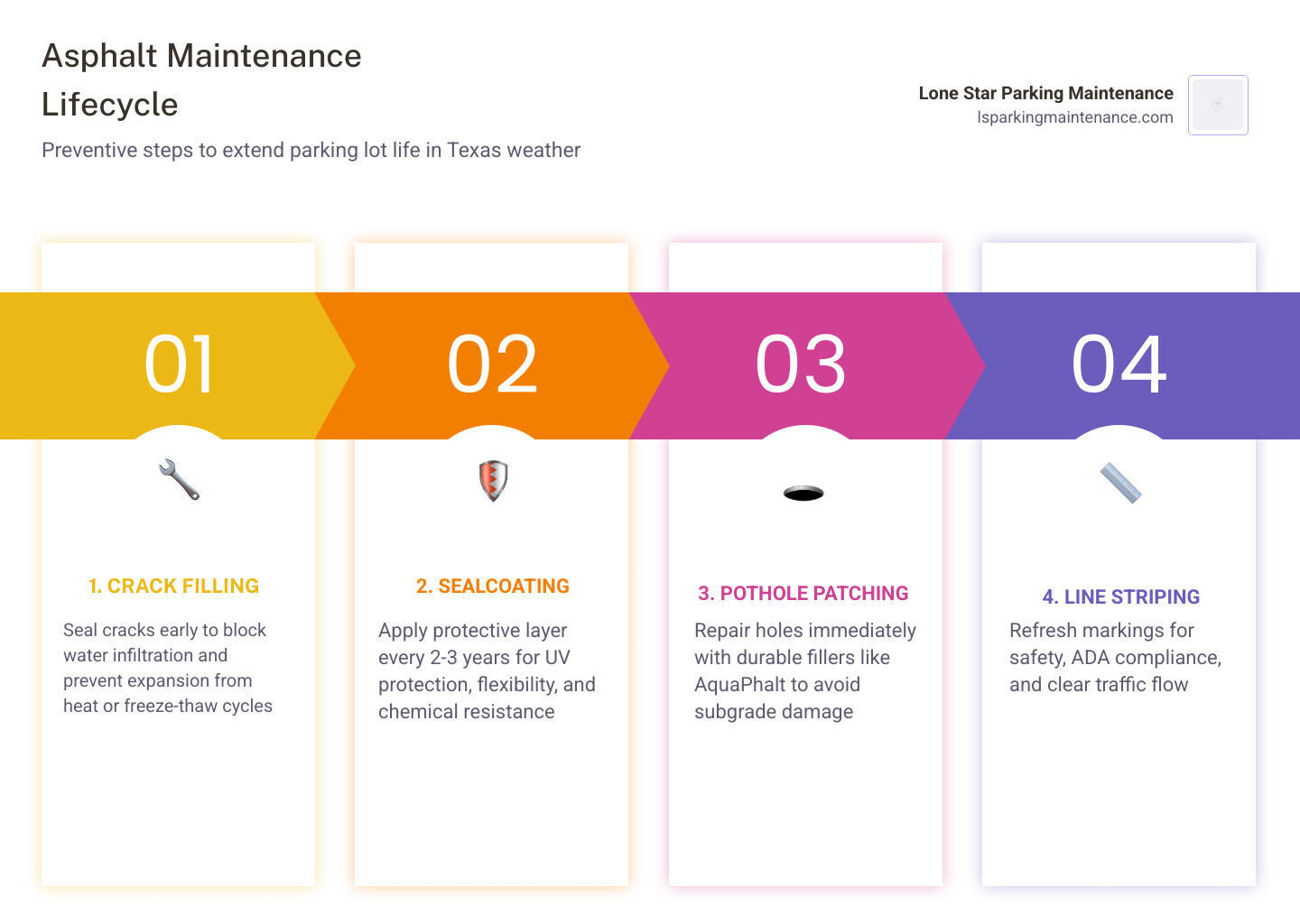
Why is parking lot sealing important? It acts as a waterproof barrier, keeping that moisture out of the subgrade. But how long does parking lot sealing last? In our climate, you’re looking at a refresh every 2 to 3 years to maintain that protective shield.

The Impact of DFW Airport Infrastructure on Local Standards
You might wonder what a massive airport has to do with your local retail center or office park. The answer is: everything. DFW International Airport is currently undergoing a massive nearly $9 billion capital improvement plan called “DFW Forward.” This project is setting a new gold standard for how we handle DFW parking lot repairs and infrastructure in the region.
The Garage C Revolution
One of the most significant moves is the $185 million parking garage overhaul. Specifically, DFW Airport is gutting one terminal’s parking garages next year, starting with the demolition and replacement of Garage C. The old garage, nearly 50 years old, is being replaced by a massive 802,707-square-foot facility.
This tells us two things:
- Even the best-built concrete has a shelf life.
- Modern standards prioritize space and safety (the new design reduces the number of structural columns from 520 to just 50!).
Sustainability and Recycling
The airport is also leading the way in sustainability. During the recent Runway 17R/35L rehabilitation, they recycled more than 300,000 cubic yards of reclaimed concrete. This material is being reused in other parking-related infrastructure. Local contractors are following suit, often using reclaimed asphalt or eco-friendly “porous asphalt” that allows water to drain directly into the soil.
As the DFW Terminal F Parking Expansion Update shows, the region is bracing for more traffic. More traffic means more wear and tear, making professional maintenance more important than ever.
Core Maintenance Services: Sealcoating, Striping, and Safety
Maintaining a parking lot isn’t just about making it look pretty; it’s about structural integrity and safety. We utilize several key methods to keep your lot in top shape.
Pothole Patching and AquaPhalt
When a pothole appears, it’s an emergency. We use high-quality materials like AquaPhalt for permanent repairs. Unlike traditional “cold patch” that might pop out after the first rain, these modern materials bond with the existing asphalt to create a water-tight seal.
The Dynamic Duo: Sealing and Striping
Parking Lot Sealing and Crack Filling are the bread and butter of pavement longevity. Think of crack filling as the “first aid” and sealcoating as the “sunscreen.” Once the surface is protected, Parking Lot Striping provides the finishing touch. Crisp, bright lines aren’t just for show—they tell drivers exactly where to go, reducing the risk of low-speed collisions on your property.
Asphalt vs. Concrete: A Comparison
Many DFW properties use a mix of both. Here is how they differ in terms of repair needs:
| Feature | Asphalt Repairs | Concrete Repairs |
|---|---|---|
| Common Issue | Cracking, potholes, fading | Joint failure, scaling, “heaving” |
| Repair Method | Patching, crack seal, overlay | Panel replacement, joint caulking |
| Maintenance | Sealcoat every 2-3 years | Joint sealing every 5-7 years |
| Cost | Lower upfront, higher maintenance | Higher upfront, lower maintenance |
| Climate Fit | Flexible (good for soil shifts) | Rigid (can crack with soil movement) |
Why Sealcoating is Vital for DFW Parking Lot Repairs
In DFW parking lot repairs, sealcoating is your best ROI. It provides:
- UV Protection: It blocks the sun from drying out the asphalt binders.
- Chemical Resistance: It prevents oil and gas leaks from vehicles from eating through the pavement.
- Pavement Flexibility: It keeps the asphalt “supple” so it can expand and contract with the Texas temperature swings without snapping.
What types of sealants do you use for parking lot sealing? We typically use high-grade refined tar or asphalt emulsion sealers, often reinforced with sand for better traction and durability.
Navigating ADA Compliance and Drainage Solutions
Safety doesn’t stop at filling holes. As a property owner, you have a legal and ethical responsibility to ensure your lot is accessible to everyone.
ADA Compliance
The Americans with Disabilities Act (ADA) isn’t a suggestion—it’s federal law. Professional DFW parking lot repairs must include a review of your handicap stalls, ramps, and signage. This includes:
- Proper number of designated van-accessible spaces.
- Correct blue and white stenciling.
- Level surfaces (no potholes or steep slopes in the “loading zone”).
- Compliant signage at the correct height.
The Battle Against Standing Water
Water is the “universal solvent” for parking lots. If you have “birdbaths” (standing puddles) after a rain, your lot is at risk. We look for “slope crowning”—ensuring the lot has at least a 1/4-inch slope per foot to move water toward catch basins. If your drainage is failing, we can perform catch basin repairs or install new drainage solutions to keep your foundation dry.
Before any major restriping or sealing, we often recommend Parking Lot Power Washing. This removes the built-up grime, oil, and Texas dust, ensuring our materials bond perfectly to the surface.
Cost Factors and Selecting a Local Contractor
We know the bottom line matters. When budgeting for DFW parking lot repairs, several factors will influence your quote:
- Square Footage: The larger the lot, the lower the cost per square foot, but the higher the total investment.
- Damage Severity: Are we filling three cracks or thirty? Is the subgrade collapsed?
- Material Quality: Using premium rubberized crack sealants and high-solids sealcoats costs more upfront but lasts twice as long.
- Mobilization Fees: This covers the cost of getting heavy equipment and crews to your site.
Selecting the Best Partner for DFW Parking Lot Repairs
Don’t just hire the guy with a truck and a bucket of “black stuff.” Look for a partner who offers:
- Free Estimates: A professional should walk your site and provide a detailed bid.
- Liability Insurance: Protecting you from accidents on your property.
- Safety Protocols: Ensuring their crew wears PPE and manages traffic flow during the job.
- Clear Timelines: Knowing exactly when your lot will be closed and when it will reopen.
How do I prepare my parking lot for striping? It’s simpler than you think: turn off the sprinklers 24 hours in advance and clear the lot of all vehicles. We handle the rest!
Frequently Asked Questions about DFW Parking Maintenance
How often should a DFW parking lot be sealcoated?
In North Texas, we recommend sealcoating every 2 to 3 years. If your lot has extremely high traffic (like a busy fast-food restaurant), you might need it every 18 to 24 months. If it’s a low-traffic storage lot, you might push it to 4 years.
What are the benefits of professional crack filling?
What are the benefits of crack filling? It is the single most cost-effective way to prevent a total parking lot failure. By sealing the crack with a flexible, rubberized material, you stop water from reaching the subgrade. This prevents potholes and keeps your lot’s foundation solid for years.
Is pressure washing necessary before re-striping?
Is pressure wash preparation necessary when striping or re-striping parking lots? While not always mandatory for every single job, it is highly recommended if your lot has heavy oil stains, mud, or mold. Paint won’t stick to dirt. Pressure washing ensures the new stripes stay bright and bonded for the long haul.
Conclusion
Your parking lot is a massive asset, and like any asset, it requires a little TLC to keep it from becoming a liability. From the high-stakes expansions at DFW Airport to the local shopping center on the corner, DFW parking lot repairs are the key to property value, safety, and customer satisfaction.
At Lone Star Parking Maintenance, we pride ourselves on using top-quality materials and industry-standard techniques to keep the Metroplex moving safely. Whether you need a few speed bumps installed, a fresh coat of sealant, or a complete ADA compliance overhaul, we’re here to help.
Don’t wait for a small crack to become a $100,000 headache. Request a professional consultation for your DFW property today and let us roll out the “red carpet” for your customers.