
Is a Parking Lot Sweeping Business Worth Starting?
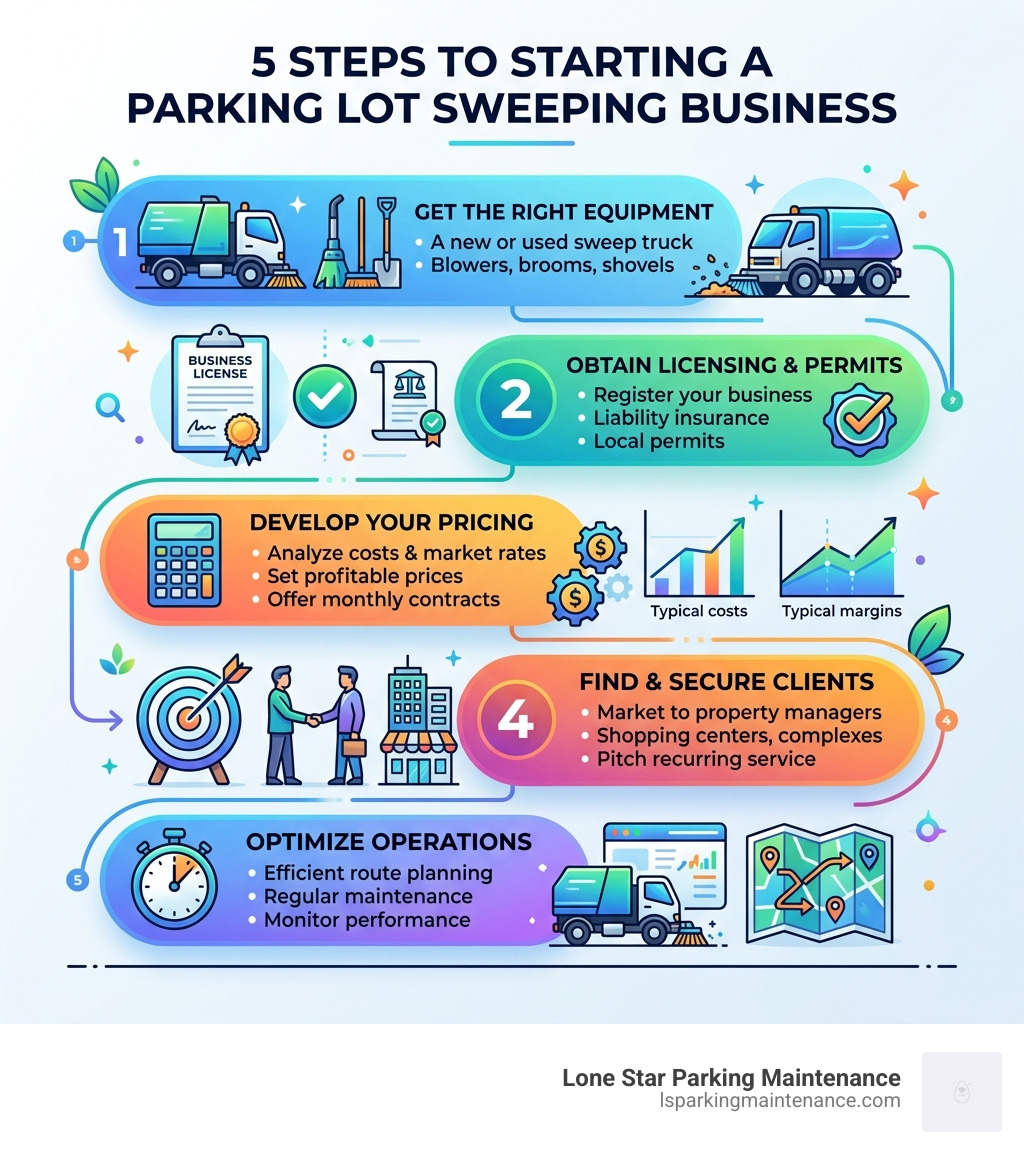
A parking lot sweeping business is one of the most accessible and profitable service businesses you can launch. Here’s a quick snapshot of what you need to know:
- Startup cost: A used sweep truck runs under $90,000; new trucks range from $90,000 to $350,000
- Profit margins: Expect 35-45% gross profit margins
- Productivity: One truck can service around 50 properties and sweep 1,000 parking spaces per hour
- Customers: Shopping centers, restaurants, hospitals, apartment complexes, and warehouses all need regular sweeping
- Revenue model: Monthly contracts with recurring, predictable income
The demand is real and it’s consistent. Every commercial property with a parking lot needs maintenance. Debris grinds into asphalt and accelerates deterioration. Slip-and-fall risks go up when lots are dirty. And property managers feel the pressure to keep their spaces clean and safe for tenants and customers.
Regular sweeping extends pavement life by up to 40% and can reduce slip-and-fall incidents by as much as 85%. Those aren’t just nice-to-have benefits — they’re the numbers property managers use to justify maintenance budgets.
The business model is straightforward: show up at night, sweep the lot, repeat. But running it profitably takes the right equipment, smart pricing, and solid operations.
This guide walks you through everything — from buying your first truck to landing contracts and scaling your routes in the DFW Metroplex and beyond.
Why Commercial Properties Prioritize Professional Sweeping
For a property manager in the DFW Metroplex, a clean parking lot is about much more than just “looking sharp.” It is a fundamental part of asset management. When we talk to clients about a parking lot sweeping business, we focus on the tangible ROI they receive.
Pavement Life and Cost Savings
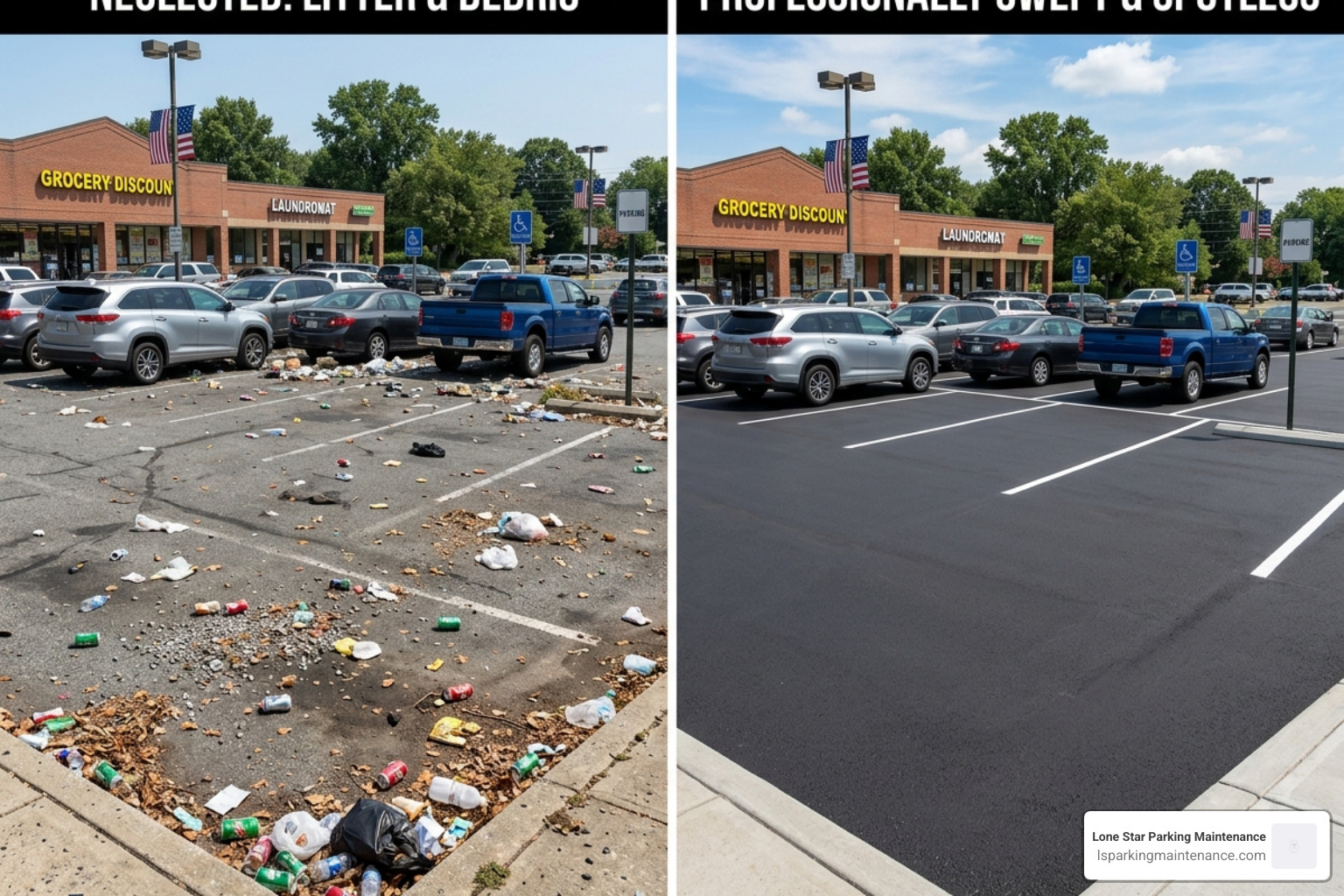
Think of sand, gravel, and trash as sandpaper. Every time a car drives over a dirty lot, those small rocks are ground into the asphalt. This friction breaks down the binder in the pavement, leading to cracks and eventually costly potholes. Research shows that regular sweeping can extend the life of pavement by 40%. For a large shopping center, that can mean saving tens of thousands of dollars in premature resurfacing costs.
Liability Reduction and Safety
Safety is a primary driver for professional sweeping. Loose gravel on a sloped entrance or a discarded soda can in a walkway are “slip-and-fall” lawsuits waiting to happen. Statistics indicate that clean, debris-free surfaces can reduce slip-and-fall incidents by a staggering 85%. By maintaining a clean lot, property owners significantly lower their liability risks.
Curb Appeal and Property Value
First impressions happen before a customer even walks through the front door. If the parking lot is covered in litter and leaves, it signals neglect. A clean lot enhances curb appeal, which keeps tenants happy and attracts high-quality customers. In a competitive market like Dallas-Fort Worth, property value is directly tied to how well the exterior is maintained.
Environmental Protection and Compliance
Sweeping is also a front-line defense for the environment. Regular cleaning prevents pollutants, heavy metals, and trash from entering the storm sewer system. This helps properties stay in compliance with local stormwater regulations and “Best Management Practices” (BMP) plans. Furthermore, removing organic debris like food waste reduces pest issues, keeping rodents and insects away from retail and restaurant spaces.
Essential Equipment and Startup Costs for Your Parking Lot Sweeping Business
Launching a parking lot sweeping business requires a specific set of tools. You aren’t just buying a truck; you are buying a mobile cleaning plant.
Vacuum Trucks vs. Mechanical Sweepers
Most parking lot contractors prefer vacuum sweepers because they are highly effective at picking up fine dust and light litter.
| Feature | Vacuum Sweepers | Mechanical Broom Sweepers |
|---|---|---|
| Best For | Light debris, dust, paper, leaves | Heavy gravel, construction debris, mud |
| Noise Level | Generally quieter (with whisper tech) | Louder mechanical components |
| Maintenance | Fewer moving parts in contact with ground | High wear on brooms and conveyors |
| Speed | Faster on large open lots | Slower, more aggressive cleaning |
Startup Capital and Equipment Options
You don’t necessarily need a brand-new $350,000 truck to start. Many successful operators begin with a used vacuum truck, often found for under $90,000. For smaller lots or niche applications, some startups use rotary brooms that fit in a standard truck bed.
Key Equipment Checklist:
- Vacuum Truck: The heart of your fleet. Look for models with “whisper wheel” technology to minimize noise in residential areas.
- Backpack Blowers: Essential for moving debris out of corners, off sidewalks, and away from curbs so the truck can pick it up.
- Safety Lighting: High-visibility strobe lights are a must for night operations.
- GPS Tracking: This allows you to provide clients with real-time work summaries and proof of service, which is a massive selling point for property managers.
Maintaining Your Fleet for Long-Term Efficiency
Your truck is only making money when it’s moving. Preventive maintenance is the difference between a 45% profit margin and a failing business.
- Hydraulic Systems: Check for leaks daily. A blown hose on a client’s lot is a nightmare to clean up.
- Wear Parts: Brooms, curtains, and hoses need regular replacement.
- The Mechanic Factor: As you grow, having a reliable mechanic on call—or eventually on staff—is vital. A dedicated fleet mechanic ensures that nightly inspections actually happen, catching small issues before they become $10,000 repairs.
Operations, Pricing, and Profitability
Running a parking lot sweeping business is a nocturnal endeavor. To be successful, you have to master the “night shift” lifestyle.
The Logistics of Night Operations
Most sweeping happens between 10:00 PM and 6:00 AM. This is when lots are empty, allowing the truck to move freely and the blower crew to clear sidewalks without disturbing customers.
However, night work comes with challenges:
- Noise Ordinances: You must be aware of local DFW noise laws, especially for lots adjacent to residential zones. This is where “whisper” technology becomes a competitive advantage.
- Waste Disposal: You cannot just dump your hopper in the client’s dumpster. You need a legal, designated place to dispose of the collected debris.
- Safety: Operators must be trained in night-safety protocols and wear high-visibility gear at all times.
How to Price Your Parking Lot Sweeping Business Services
Pricing effectively is an art. If you’re the cheapest, you’ll struggle to maintain your equipment. If you’re too expensive, you won’t win the bid.
Standard Benchmarks:
- Productivity: A standard vacuum truck can sweep approximately 1,000 parking spots per hour.
- Hourly Rates: Depending on the market and job size, rates typically range from $45 to $75 per hour. Small fast-food lots might be billed at a flat rate of $50-$60 per visit, while large malls are bid on a per-sweep or monthly contract basis.
- Profit Margins: A well-run operation should target a gross profit margin of 35% to 45%.
When bidding, always walk the property first. Look for “hidden” costs like heavy leaf fall areas, excessive trash around dumpsters, or difficult-to-reach corners that require extensive blower work.
Managing Operations and Environmental Compliance
In Texas, environmental regulations are strict regarding runoff. Regular sweeping is often written into a property’s BMP (Best Management Practice) plan to satisfy EPA and local requirements.
- Dust Control: Modern trucks use water suppression systems to keep dust down during the sweep.
- Documentation: Keep meticulous records. Providing a client with a “Before and After” photo or a GPS log of the sweep can protect them (and you) during a stormwater audit.
Marketing and Scaling Your Service
Securing contracts is about building trust with property managers. They aren’t just buying a clean lot; they are buying the peace of mind that they won’t have to deal with complaints.
Securing Contracts for Your Parking Lot Sweeping Business
Targeting the right customers is key. Focus on:
- Shopping Centers and Malls: High traffic means daily or 5x weekly sweeping.
- Industrial Warehouses: These lots take a beating from heavy trucks and need regular “scrubbing” of gravel and debris.
- Hospitals and Schools: These require high-frequency cleaning to maintain a sterile, professional image.
When pitching, don’t just say “we sweep lots.” Say, “We help you extend your pavement life by 40% and reduce your slip-and-fall liability.” Use professional invoices and branded trucks to show you are a legitimate, insured operation.
Expanding with Add-on Services
One of the fastest ways to grow a parking lot sweeping business is through “revenue diversification.” Once you have the contract for sweeping, you are the first person the manager calls when something else breaks.
Many successful companies, like Lone Star Parking Maintenance, offer a full suite of services:
- Lawn Care Integration: If you already maintain the grass, adding the lot is a natural upsell.
- Pressure Washing: For removing oil stains and gum from sidewalks.
- Striping and Sealcoating: These are high-margin projects that go hand-in-hand with a clean lot.
- Portering: This involves manual trash pickup in planters and around entrances during the day.
- Pothole Repair and Signage: Minor repairs that keep the lot functional and compliant.
Conclusion
The parking lot sweeping business is a resilient, high-demand industry. Whether you are starting with a single used truck or looking to add sweeping to an existing landscaping firm, the path to profitability is clear: focus on equipment reliability, price for your actual costs, and provide documented, high-quality service.
In the DFW Metroplex, the growth of commercial real estate shows no signs of slowing down. Every new square foot of asphalt is an opportunity for a new contract. By positioning yourself as a partner in property preservation, you can build a business that provides steady, recurring revenue for years to come.
If you’re looking for a partner to handle your facility’s needs, from striping to cleaning, start your property maintenance journey with the experts who know Texas lots best.
What are the biggest challenges for new sweeping businesses?
The most common “business killers” are equipment downtime and improper pricing. If your only truck breaks down and you don’t have a backup or a fast mechanic, you miss service windows and lose contracts. Additionally, many newcomers fail to account for the “hidden” costs of fuel, insurance, and legal waste disposal, which eats into their margins.
Can I add sweeping to my existing lawn care business?
Absolutely. This is one of the smartest ways to scale. You already have the client relationships and the “boots on the ground.” Adding a sweep truck allows you to offer a “full exterior” package. It also helps with staff utilization—your lawn crews work during the day, and your sweep crew keeps the equipment generating revenue at night.
How many properties can one truck maintain?
A single, well-routed vacuum truck can typically maintain about 50 properties on a recurring schedule. This depends on the “route density”—how close the properties are to each other—and the frequency of the sweeps. Efficient operators group properties geographically to minimize “windshield time” and maximize the time the brooms are actually on the pavement.
External Resources for Further Reading: