
Your Parking Lot Is Telling You Something — Are You Listening?
Parking lot resurfacing is the process of applying a fresh layer of asphalt over an existing surface to restore its appearance, safety, and function — without tearing everything out and starting from scratch.
Here’s what most property owners want to know upfront:
- Cost: $1–$3 per square foot (vs. $4–$10 for full replacement)
- Lifespan added: 8–15 years with proper maintenance
- Project time: 1–3 days, with traffic back in 24–48 hours
- Best candidate: Lots under 20 years old with less than 30% surface damage and a structurally sound base
- Best time to schedule: Late spring through early fall when temps stay above 50°F
Think about it this way: your parking lot is the first thing customers see before they ever walk through your door. Cracked pavement, faded lines, and uneven surfaces send a message — and it’s not a good one.
For property managers and business owners in the DFW Metroplex, a deteriorating lot isn’t just an eyesore. It’s a liability. Potholes create trip hazards. Standing water accelerates damage. Faded striping causes confusion and can put you out of ADA compliance.
The good news? You likely don’t need a full replacement. Resurfacing is a proven, cost-effective middle ground that can extend your lot’s life by over a decade — at a fraction of the cost of tearing it all out.
This guide covers everything you need to know: the process, the costs, when to act, and how to get the most out of your investment.
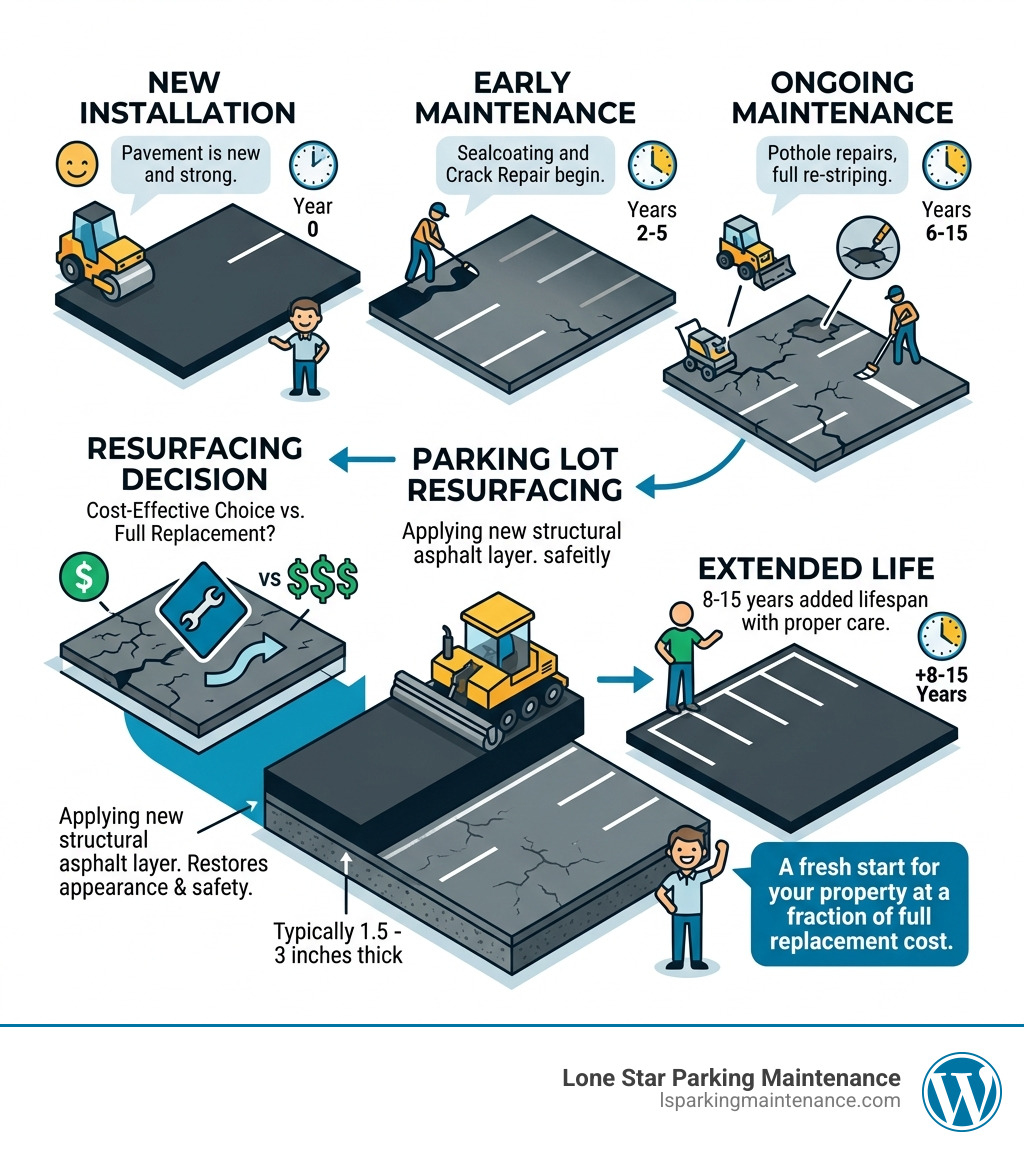
What is Parking Lot Resurfacing?
At its core, parking lot resurfacing (often called an asphalt overlay) is a major restorative procedure. Unlike a simple patch job, resurfacing involves installing a brand-new structural layer of hot-mix asphalt—typically 1.5 to 3 inches thick—directly over your existing pavement.
It is the ultimate “facelift” for a commercial property. It doesn’t just make the lot look like it was poured yesterday; it actually adds structural integrity back to the surface. By bonding a new layer to the old one, we create a seamless, durable barrier that protects the foundation from the elements. If you want to dive deeper into how we handle these materials in North Texas, check out Everything You Need to Know About DFW Metro Asphalt Sealing.
Resurfacing vs. Full Repaving
One of the common questions we get in the DFW Metroplex is: “Do I need to tear the whole thing out, or can I just overlay it?” The answer almost always depends on what’s happening underneath the surface.
If your “subgrade” (the dirt and rock foundation under the asphalt) is still strong and stable, parking lot resurfacing is usually the way to go. However, if the ground is shifting or the base has collapsed (look for deep “alligator” cracks or massive sinkholes), a full replacement might be necessary.
| Feature | Parking Lot Resurfacing | Full Repaving/Replacement |
|---|---|---|
| Cost (per sq. ft.) | $1.00 – $3.00 | $4.00 – $10.00 |
| Project Duration | 1 – 3 Days | 1 – 2 Weeks |
| Lifespan Added | 8 – 15 Years | 20 – 30 Years |
| Process | Milling & Overlay | Full Excavation & Rebuild |
| Savings | 40% – 60% cheaper | N/A |
As you can see, resurfacing is the champion of ROI. For a 10,000-square-foot lot, you might spend $15,000 on resurfacing versus $60,000 for a total replacement. That’s a lot of room left in the budget for other property improvements!
Resurfacing vs. Sealcoating and Crack Sealing
It’s easy to get these terms mixed up, but they serve very different purposes.
- Sealcoating is like sunscreen for your lot. It’s a thin, liquid layer that protects against UV rays and oil spills. It doesn’t add structural strength, but it keeps the asphalt flexible. We recommend doing this every 2–3 years to keep the lot healthy. Learn more about our process at Parking Lot Sealing and Crack Filling.
- Crack Sealing is the “first responder” of maintenance. When a crack appears, we fill it with a rubberized sealant to stop water from reaching the base. This is the single most cost-effective thing you can do to prevent a full repaving job later.
- Resurfacing is the big brother. While parking lot sealing is important for maintenance, resurfacing is for when the surface has reached the end of its aesthetic and functional life, but the “bones” of the lot are still good.
The Step-by-Step Parking Lot Resurfacing Process
We don’t just show up and start pouring. A professional parking lot resurfacing project in April 2026 requires precision and a very specific order of operations.
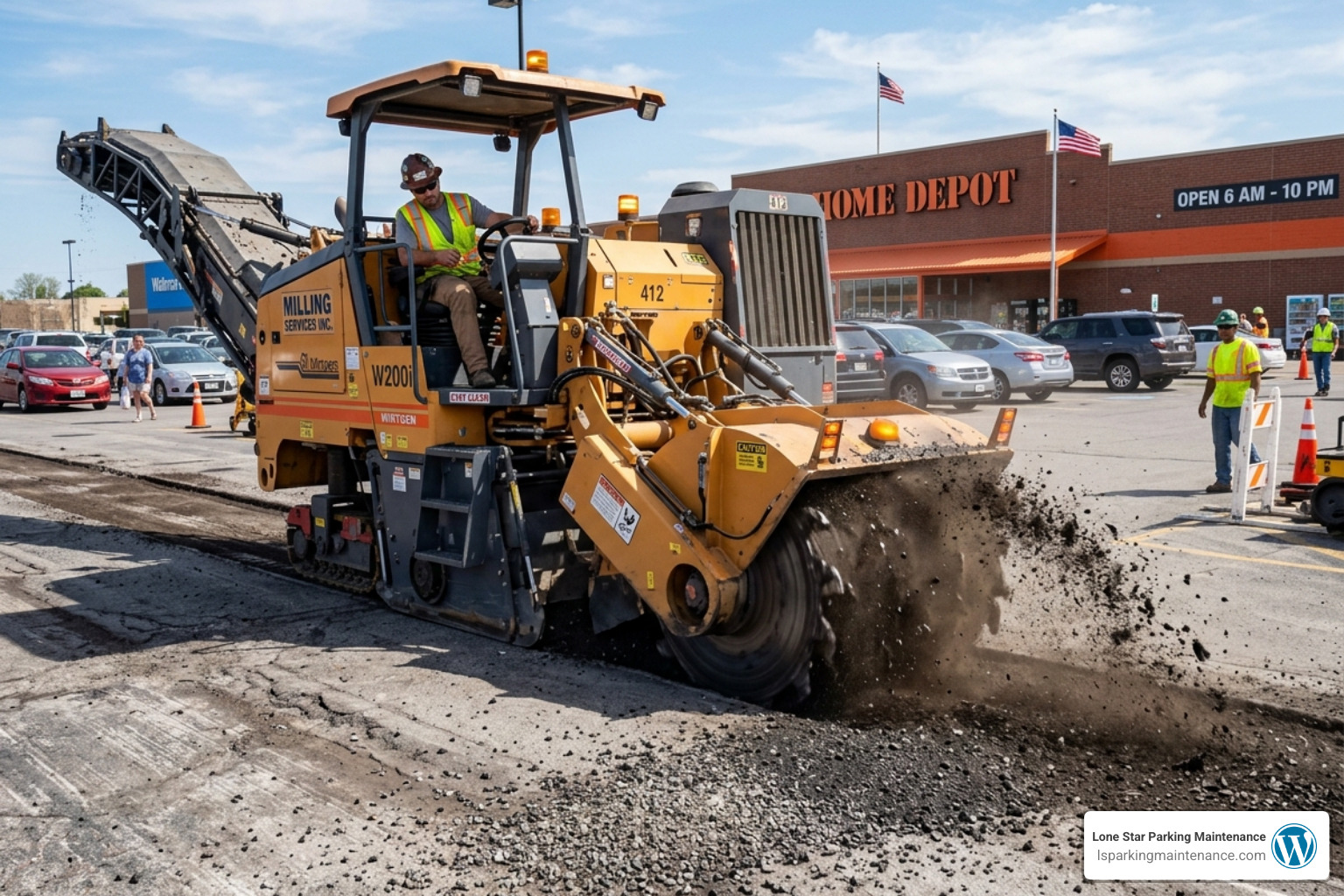
- Site Preparation & Cleaning: First, we clear the lot. This means removing all debris, dirt, and oil stains. We also work with you to ensure all cars are moved and irrigation systems are turned off.
- Milling: This is a crucial step. A milling machine grinds down the top 1.5 to 3 inches of the old asphalt. Why? It ensures the new layer stays at the correct elevation so your curbs, sidewalks, and drainage inlets still work perfectly. Plus, it creates a rough texture that the new asphalt loves to grip.
- Base Repairs: If we find any soft spots or “alligator” cracking after milling, we fix them now. Putting new asphalt over a broken base is like putting a silk sheet over a pile of bricks—it won’t stay smooth for long.
- Tack Coat: We apply a specialized “glue” (liquid asphalt) over the milled surface. This ensures the new layer bonds permanently to the old one, preventing “delamination” (where the top layer peels off).
- Paving (The Overlay): We lay down fresh, hot-mix asphalt. This material is brought in at high temperatures (usually around 300°F) to ensure it’s workable.
- Compaction: A heavy steam roller follows the paving machine, compacting the asphalt to about 92-96% density. This removes air pockets and makes the surface rock-hard and water-resistant.
- Final Touches: Once the asphalt cools, we restripe the lot with high-visibility paint and reinstall any signage or bumpers.
When to Schedule Your Parking Lot Resurfacing
In the DFW Metroplex, timing is everything. Asphalt is a temperature-sensitive material. To get the best compaction and bond, the air and ground temperatures need to be at least 50°F and rising.
While we can sometimes work in the winter during a Texas “warm spell,” the ideal window is late spring through early fall. Scheduling during these months ensures the hot-mix doesn’t cool down too fast, allowing our crews to get that perfect, smooth finish.
Downtime and Traffic Restoration
We know that closing a parking lot is a headache for any business. The good news is that parking lot resurfacing is significantly faster than a full replacement.
Most projects take between 1 and 3 days to complete. While the asphalt is technically “hard” enough to walk on within a few hours, we usually recommend keeping vehicles off the surface for 24 to 48 hours to allow it to fully cure. To minimize disruption, we often perform work in phases, closing off one section of the lot at a time so your customers always have a place to park.
Costs and Factors Affecting Your Investment
As of early 2026, the standard rate for parking lot resurfacing generally falls between $1 and $3 per square foot. However, every lot in Dallas or Fort Worth is unique.
If you’re wondering how much to seal the deal on your asphalt, you have to look at the variables. A massive, wide-open warehouse lot might be on the lower end because our machines can run long lines without stopping. A small, cramped retail lot with lots of “islands” and curbs requires more hand-work, which can drive the price up.
Signs It’s Time for Parking Lot Resurfacing
How do you know if you need a simple sealcoat or a full resurface? Your lot will give you several “cries for help”:
- Alligator Cracking: These are interconnected cracks that look like the skin of—you guessed it—an alligator. It’s a sign that the surface layer is failing.
- Standing Water: If you see “birdbaths” or puddles that don’t go away hours after a rainstorm, your lot’s slope has likely shifted.
- Fading to Gray: When asphalt turns from deep black to light gray, it has oxidized. It’s becoming brittle and is prone to cracking.
- Potholes: These are the final stage of neglect. If you have more than a few scattered potholes, patching them is just a band-aid; resurfacing is the cure.
If you aren’t sure, you might start by asking, “How do I know if my parking lot needs crack filling?” If the cracks are wider than a quarter-inch and cover more than 20% of the lot, resurfacing is likely your best move.
Regional Pricing and Permitting
In the DFW area, material costs can fluctuate based on the price of oil (since asphalt is a petroleum product). Additionally, local municipalities like Dallas, Plano, or Fort Worth may have specific requirements for drainage and ADA accessibility.
When we resurface a lot, we must ensure it meets current ADA (Americans with Disabilities Act) standards. This might mean adjusting the slope of your handicap stalls or updating the striping. It’s not just a good idea—it’s the law, and it protects you from potential lawsuits.
Maximizing the Lifespan of Your New Surface
You’ve just made a significant investment in your property. Now, how do you make it last?
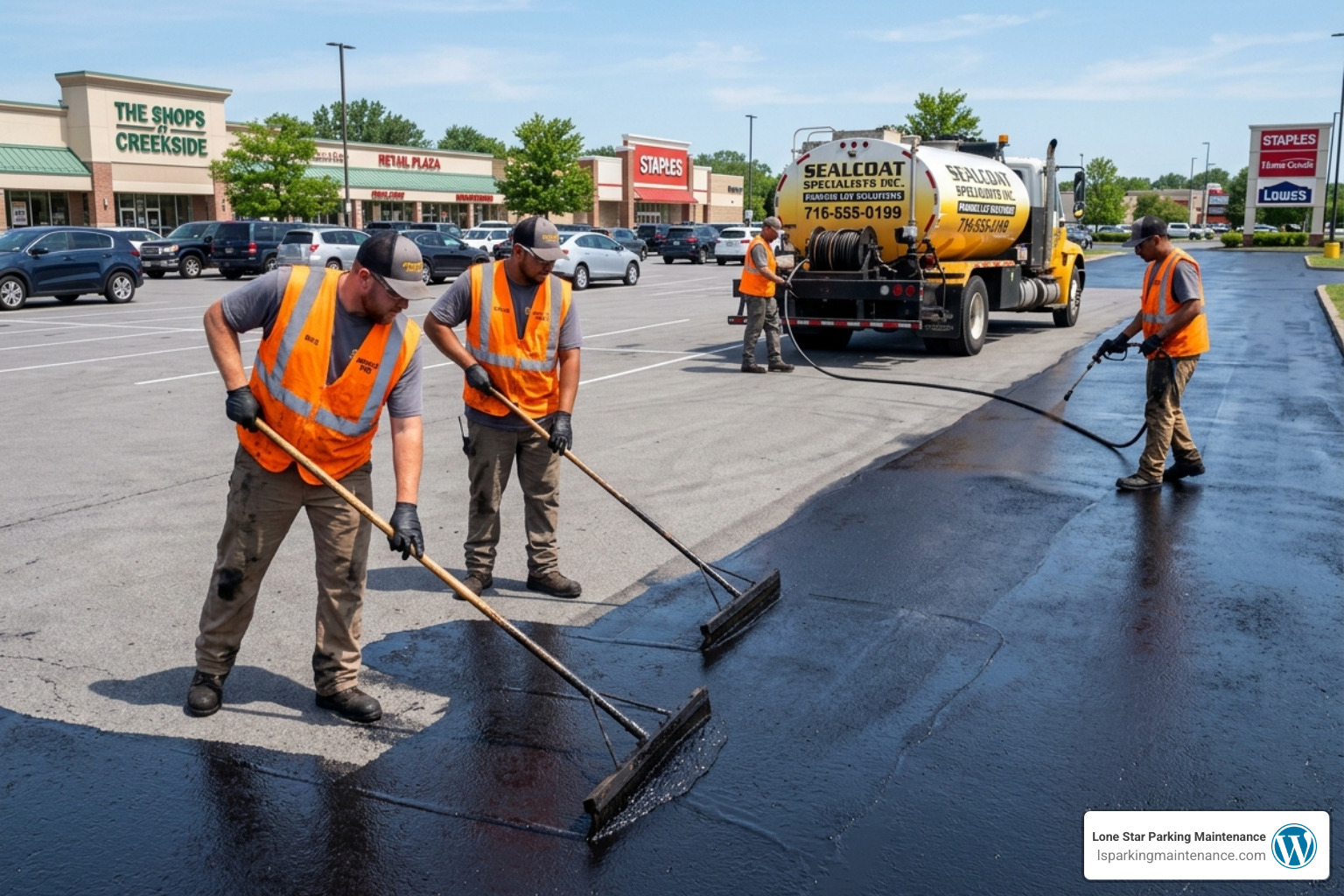
A resurfaced lot should last between 8 and 15 years, but that number depends entirely on how you treat it. We recommend a “preventative maintenance” mindset.
- Wait for the First Sealcoat: Don’t seal your new surface immediately. It needs to “breathe” and cure. We usually recommend waiting 6 to 12 months, then applying a high-quality sealcoat.
- Regular Inspections: Every spring, walk your lot. Look for new cracks. The benefits of crack filling cannot be overstated—it prevents water from getting under your brand-new overlay.
- Keep it Clean: Dirt and organic matter trap moisture against the asphalt. Regular power washing and sweeping can extend how long your parking lot sealing lasts and keep the surface from deteriorating prematurely.
Common Mistakes to Avoid
We’ve seen it all in the Texas sun. To ensure your parking lot resurfacing project is a success, avoid these common pitfalls:
- Ignoring the Base: As we mentioned, if the foundation is “mushy,” a new layer of asphalt won’t fix it. A cheap contractor will pave right over it; a good one will insist on a base repair first.
- Poor Drainage: Water is the #1 enemy of asphalt. If the resurfacing doesn’t account for how water flows off the lot, you’ll have potholes again within two years.
- Skipping the Tack Coat: Some crews cut corners by skipping the “glue” layer. This leads to the new asphalt sliding or peeling off the old layer within a few seasons.
- Hiring “Tailgate” Contractors: If a guy knocks on your door saying he has “leftover asphalt from a job down the street,” run the other way. Professional paving requires heavy equipment, precise temperatures, and a reputable company that stands by its work.
Frequently Asked Questions about Resurfacing
Can resurfacing fix drainage problems?
Yes and no. We can use the new layer of asphalt to slightly adjust the “pitch” or slope of the lot, helping water flow toward catch basins. However, if your drainage pipes are collapsed or the lot is fundamentally flat, we may need to install new drains or “curb cuts” to solve the problem permanently.
How long does resurfaced asphalt last?
In the DFW Metroplex, you can expect 8 to 15 years. High-traffic areas (like the entrance to a busy shopping center) will wear out faster than an office park where cars sit still all day. Regular maintenance can easily push you toward that 15-year mark. We are often asked what types of sealants we use to protect these surfaces; we use industrial-grade emulsions designed to withstand the Texas heat.
What should I look for in a resurfacing contractor?
Look for a company that knows the local DFW climate and regulations. They should be fully insured, have a portfolio of local commercial work, and be able to explain the “why” behind their recommendations. Most importantly, they should be experts in ADA compliance, ensuring your lot is safe for everyone.
Conclusion
Your parking lot is more than just a place to park cars—it’s a reflection of your business and a critical asset for your property. Parking lot resurfacing is the smartest way to protect that asset, providing a fresh, safe, and beautiful surface at a fraction of the cost of a full replacement.
At Lone Star Parking Maintenance, we take pride in serving the DFW Metroplex with top-quality materials and a commitment to safety that is second to none. Whether you need a complete resurface, fresh striping, or a preventative maintenance plan, we’re here to help you make a great first impression.
Ready to give your lot the facelift it deserves? Schedule your parking lot sealing and crack filling today and let’s get your property looking its best for 2026 and beyond!