
Why Your Parking Lot Drain Cover Matters More Than You Think
Choosing the right parking lot drain cover is one of the most overlooked decisions in parking lot maintenance — and one of the most costly to get wrong.
Here’s a quick answer if you need it fast:
Best parking lot drain covers by use case:
| Use Case | Recommended Cover Type | Load Rating |
|---|---|---|
| Standard car parking | Cast iron or ductile iron grate | B125 (up to 12.5 tons) |
| Heavy trucks / buses | Heavy-duty ductile iron | C250 or D400 |
| Pedestrian zones | ADA-compliant aluminum or stainless steel | A or B class |
| Spill-prone areas | Polyurethane drain seal (reusable) | N/A |
| Trench / linear drains | Galvanized or stainless steel grate | B or C class |
Parking lots cover roughly 30% of urban impervious surfaces. When it rains, all that water has to go somewhere — and if your drain covers are cracked, missing, or undersized, you end up with pooling water, hydroplaning risks, and accelerated pavement damage.
A properly drained parking lot isn’t just safer. It lasts significantly longer.
For DFW property managers dealing with Texas storms, clogged grates and failed drain covers can turn a routine rain event into a flooding problem fast. The good news: getting this right isn’t complicated once you know what to look for.
This guide walks you through everything — materials, load ratings, sizing, safety features, installation, and cost — so you can make a confident decision.
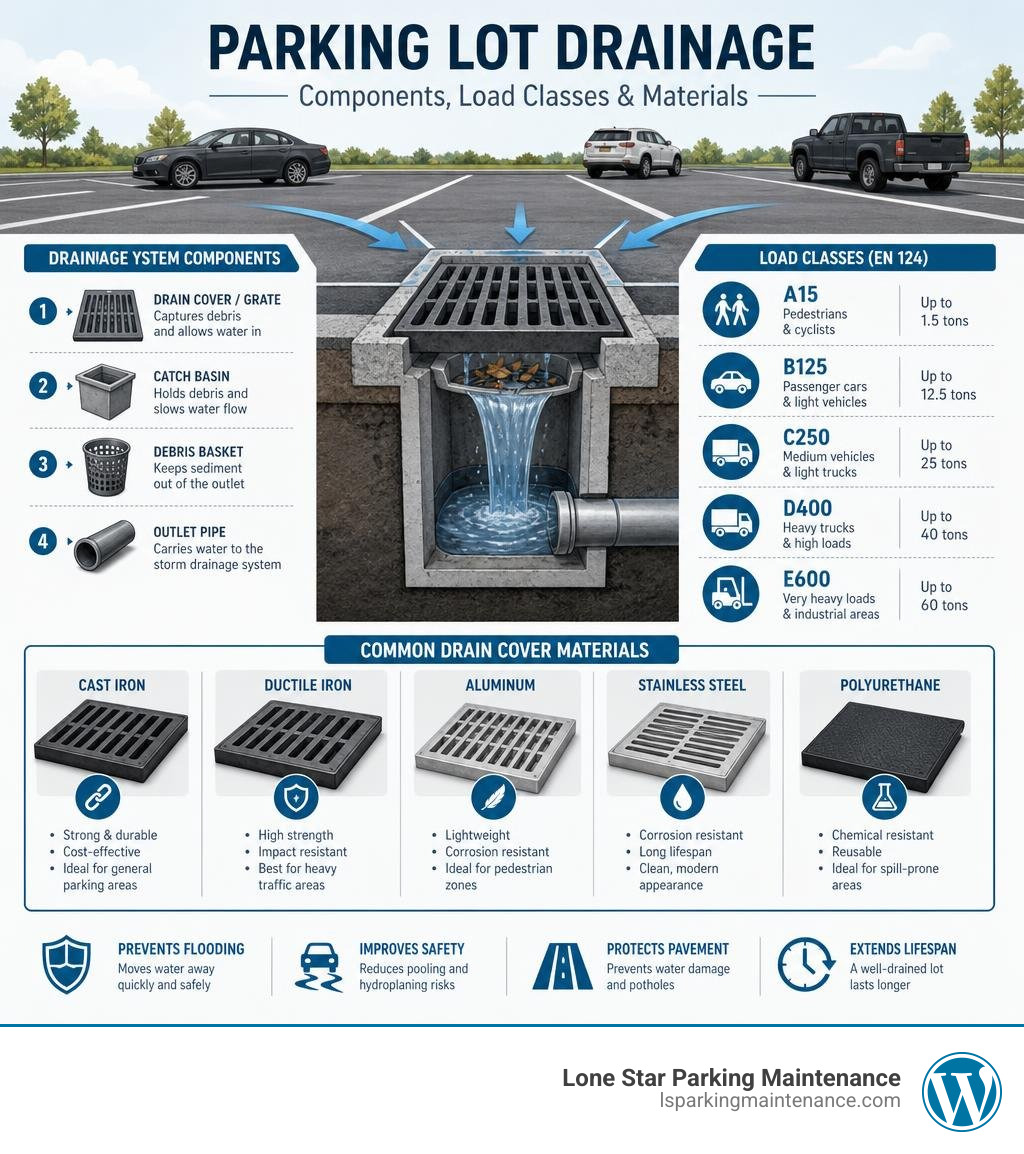
Parking lot drain cover basics:
Selecting the Right Parking Lot Drain Cover: Types and Materials
When it comes to selecting a parking lot drain cover, the material you choose dictates how long it will survive under the relentless weight of daily traffic. In a busy commercial parking lot, a weak grate is a liability waiting to happen.
Let’s break down the primary materials used for drainage grates and how they perform in the field:
- Cast Iron (Gray Iron): This is the traditional workhorse of municipal and commercial drainage. Gray iron is highly durable and naturally heavy, which helps keep it in place. Many cast iron grates feature high recycled content (often up to 80%), making them an environmentally friendly choice. However, gray iron is more brittle than its modern counterparts and can crack under extreme, sudden impacts.
- Ductile Iron: If you have high-traffic areas or heavy delivery trucks rolling through your DFW facility, ductile iron is the gold standard. During manufacturing, magnesium is added to the iron, creating a molecular structure that allows the metal to bend slightly rather than snap under pressure. It offers incredible impact resistance and a much higher strength-to-weight ratio than standard cast iron.
- Galvanized Steel: Often used for trench drains and linear drainage systems, galvanized steel offers excellent structural strength. The zinc coating protects the steel from rusting, making it a highly cost-effective, durable choice for driveways and parking lot perimeters.
- Stainless Steel: For areas where aesthetics, hygiene, or chemical resistance are top priorities, stainless steel is unmatched. It is highly resistant to corrosion and is frequently used in pedestrian zones. You can find high-quality options like the Stainless Steel Drain Cover – ADA, Heel-Proof Slotted Grate which combine clean aesthetics with heavy-duty performance.
- Aluminum: Aluminum grates offer a lightweight alternative to iron. They naturally resist corrosion and are much easier for maintenance crews to lift and clean. While highly reliable, they are typically reserved for pedestrian pathways or light-duty parking areas rather than primary drive lanes.
- Polyurethane: Unlike metal grates that allow water to flow freely, polyurethane covers are solid, flexible mats designed to seal a drain completely. These are critical tools for spill containment, temporary washdowns, or protecting storm sewers during construction projects.
Choosing the right material prevents premature pavement failure around your catch basin. To understand how these components fit into your overall pavement health, check out our guide on why Your Parking Lot Storm Drain is the Unsung Hero of Pavement.
Understanding Load Ratings and Sizing for Parking Lot Zones
Installing a light-duty grate in a heavy-traffic lane is a recipe for disaster. To prevent dangerous cave-ins, drain grates are categorized by standardized load classes.
In the United States and international markets, these ratings tell you exactly how much weight a parking lot drain cover can handle:
- Class A (Pedestrian Only): Rated for loads up to 3,300 lbs. Best for green spaces, patios, and strictly pedestrian walkways.
- Class B125 (Light Vehicle Traffic): Rated up to 12.5 metric tons (27,500 lbs). This is the standard choice for car parking spaces, suburban driveways, and areas where only light passenger vehicles travel under 30 mph.
- Class C250 (Medium/Heavy Traffic): Rated up to 25 metric tons (55,000 lbs). Ideal for main parking lot drive lanes, commercial entrances, and areas frequented by light delivery trucks.
- Class D400 (Heavy Industrial): Rated up to 40 metric tons (88,000 lbs). This heavy-duty rating is required for loading docks, gas stations, bus terminals, and any area where heavy-duty commercial vehicles operate.
- H-20 Rating: A standard developed by highway officials (AASHTO), rating a cover for a 16,000 lb single-point wheel load (designed to support a 32,000 lb axle load). This is highly recommended for parking lot entrances and low-speed public roadways.
| Load Class | Weight Capacity | Best Parking Lot Zone |
|---|---|---|
| Class A | Up to 3,300 lbs | Pedestrian plazas, sidewalks |
| Class B125 | Up to 27,500 lbs | Individual car parking stalls, light traffic |
| Class C250 | Up to 55,000 lbs | Main drive aisles, commercial entrances |
| Class D400 / H-20 | Up to 88,000 lbs | Loading docks, heavy truck lanes, delivery zones |
For linear drainage layouts, choosing the right load-rated channel is just as important as the grate itself. You can explore heavy-duty linear options through the Parking Lots – Trench Drains – Vodaland USA collection.
For a deeper dive into how proper drainage layouts protect your asphalt, read through our Parking Lot Drainage 101 resource.
Sizing and Measuring Your Parking Lot Drain Cover
You cannot buy a replacement grate based on guesswork. A loose-fitting cover will rattle, shift under tires, and eventually crack the surrounding concrete frame.
To measure an existing drain for a perfect fit, follow these steps:
- Measure the Clear Opening: Remove the old grate and measure the inside width and length of the steel frame embedded in the concrete. This is the “clear opening” where water actually falls.
- Measure the Grate Dimensions: Measure the exact length, width, and thickness (depth) of the old grate itself.
- Check the Frame Depth: Measure the lip of the frame where the grate rests. The replacement grate must match this thickness exactly so it sits flush with the surrounding asphalt or concrete pavement.
Safety, Security, and Spill Prevention Features

A modern parking lot drain cover does much more than catch water; it protects your property from liability, theft, and environmental fines. When upgrading your drainage system, consider these critical safety and security features:
Pedestrian Safety and ADA Compliance
In areas where foot traffic, wheelchairs, or bicycles cross your parking lot, standard wide-slotted grates can be dangerous. High heels can get stuck, and thin bicycle tires or wheelchair wheels can slip into the openings.
To prevent this, look for ADA-compliant and heel-proof grates. These designs feature narrow slots (typically 1/4 inch or smaller) that allow high volumes of water to pass through while keeping feet, wheels, and heels safely on the surface.
Anti-Theft and Locking Mechanisms
With scrap metal prices fluctuating, unsecured iron grates are common targets for thieves. A missing drain cover leaves a gaping hole that can destroy a car’s suspension or cause severe pedestrian injuries.
To protect your property, choose grates equipped with security features like:
- Bolted connections: Fastening the grate directly to the frame.
- Cam locks or slam locks: Quick-locking mechanisms that require a specialized tool to open.
- Hinged grates: Grates permanently attached to their frames via heavy-duty hinges, making them incredibly difficult to steal while allowing maintenance crews easy access.
Spill Prevention and Environmental Compliance
Under EPA regulations (such as SPCC and NPDES plans), commercial property owners are legally responsible for preventing hazardous chemical spills—like diesel, gasoline, or motor oil—from entering municipal storm sewers.
In the event of an active vehicle leak or a fuel transfer spill, having temporary sealing tools on hand is essential.
- The PIG® Drain Cover That Seals Tight and Won’t Rip – PLR402 – New Pig is a reusable, high-visibility polyurethane cover that deforms to create a liquid-tight seal over square drains up to 24 inches.
- For long-term outdoor deployment in spill-prone zones, the Ultra-Drain Seal Plus – Polyurethane Drain Cover – Drain-Net features a multi-layered design with a tear-resistant polyethylene top layer built to withstand extended UV exposure.
Implementing these preventative measures is a key step in keeping your property safe and compliant. To learn more about managing surface water safely, check out our article on how to Stop the Soak with These Parking Lot Drainage Tips.
Installation, Maintenance, and Cost Considerations
Properly installing and maintaining your drainage grates is the only way to ensure they reach their maximum lifespan.
Grate-Only vs. Grate-with-Frame Systems
If your existing steel frame is in perfect condition, a simple grate-only replacement is a fast and affordable fix. However, if the surrounding concrete is crumbling, or if the frame itself is warped or rusted out, you must replace the entire frame-and-grate system.
During installation, the frame must be anchored securely into the concrete basin and poured flush with the surrounding pavement to prevent tire impact damage.
Cleaning and Maintenance Schedules
A drain cover can only do its job if water can reach it. Debris like leaves, trash, and dirt naturally accumulate over grates, reducing water flow and causing localized flooding. We recommend inspecting your drains at least four times a year, with extra cleanings before major storm seasons.
For comprehensive tips on keeping your entire system flowing smoothly, see our Practical Guide to Parking Lot Drainage. If you are dealing with severe, persistent pooling water, you might also want to read about French Drains 101: Stop Sinking and Start Draining Your Lot.
Cost Ranges
The cost of a parking lot drain cover varies widely based on size, material, and weight capacity:
- Standard Cast Iron Grates (12″ to 24″): Typically range from $75 to $350 per grate.
- Heavy-Duty Ductile Iron Grates: Range from $200 to $600+ depending on the load rating and dimensions.
- Trench Drain Grates (per meter/3.3 ft): Range from $50 to $250 for galvanized steel or plastic, and up to $500+ for heavy-duty cast iron.
- Specialty Spill Covers: Reusable polyurethane sealing mats range from $150 to over $1,000 depending on size and chemical resistance.
Sourcing and Reviewing a Parking Lot Drain Cover
When sourcing replacement grates, it is important to look beyond the price tag. Here is what we recommend verifying before you purchase:
- ASTM Compliance: Ensure cast iron grates conform to ASTM A48 (for gray iron) or ASTM A536 (for ductile iron). This guarantees the metal has been tested for structural integrity.
- Nonskid Surfaces: Look for covers with textured patterns or ribs to prevent pedestrians from slipping on wet metal.
- Seller Ratings & Reviews: Look for products with high average ratings (4.7 stars or higher) that feature real-world feedback from commercial contractors. Pay attention to reviews mentioning how well the grates hold up to heavy truck traffic over time.
Frequently Asked Questions about Parking Lot Drainage
What is the difference between cast iron and ductile iron grates?
While both are made of iron, ductile iron is engineered to be much stronger and more flexible than standard cast iron (gray iron). Ductile iron contains magnesium, which prevents the material from cracking under heavy, sudden impacts. It has a higher weight capacity, making it the preferred choice for high-traffic drive lanes, whereas standard cast iron is great for static parking stalls and lighter traffic.
How do I know if my drain cover is ADA compliant?
An ADA-compliant drain cover must have slot openings no wider than 1/2 inch in the direction of pedestrian travel. For maximum safety—especially for high heels and walking canes—choose a “heel-proof” design, which typically limits slot widths to 1/4 inch or less.
How often should parking lot grates be inspected and cleaned?
At a minimum, grates should be inspected quarterly. However, you should also clear them of leaves and debris before and after major storm events. Regular maintenance prevents clogs, reduces standing water, and protects your asphalt from water-related deterioration.
Conclusion
Your parking lot drain cover is a small but critical line of defense for your commercial property. Choosing the right material, load rating, and safety features protects your pavement from water damage, keeps your visitors safe, and shields your business from liability.
For property owners in the DFW Metroplex, keeping up with drainage maintenance is essential to combatting heavy Texas rainstorms. Whether you need to repair damaged catch basins, replace worn-out grates, or schedule professional pavement upkeep, we are here to help.
Keep your property safe, dry, and looking its best. Contact us today for professional pavement maintenance and repair services across the DFW Metroplex at Lone Star Parking Maintenance Services.