
Fast, Compliant Curb Painting Debris Removal Starts With Containment
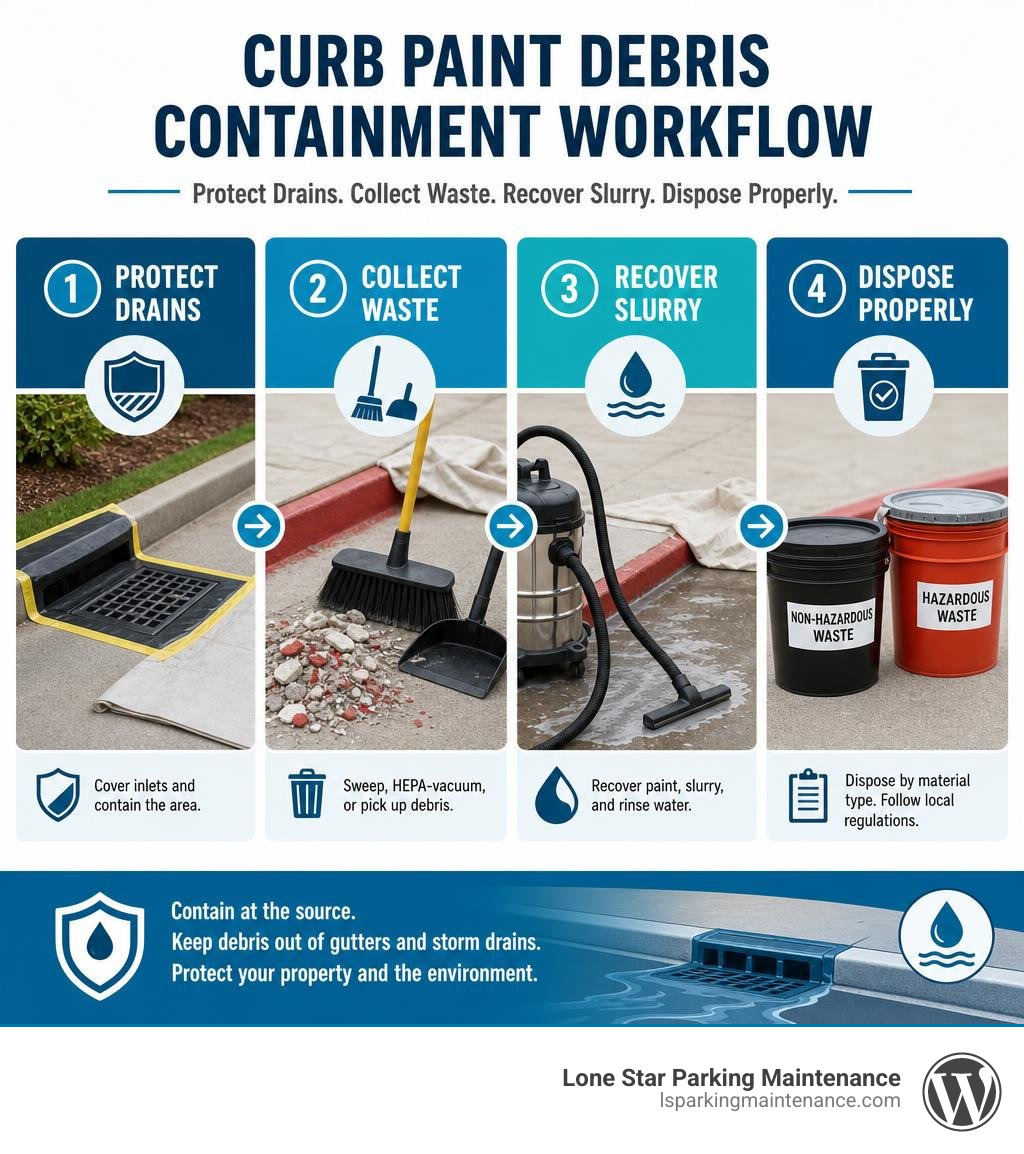
For safe curb painting debris removal, contain the work area before stripping, collect paint chips and dust as dry waste, and keep all paint, slurry, and rinse water out of gutters and storm drains. Cover nearby inlets, use drop cloths or berms where needed, sweep or vacuum debris promptly, and separate hazardous materials from regular solid waste.
A fast cleanup should follow three simple rules:
- Stop debris at the source. Mask drains, protect landscaping, and use dust control during scraping, grinding, or blasting.
- Collect, do not wash away. Sweep, HEPA-vacuum, or recover slurry rather than pushing debris down the gutter.
- Dispose by material type. Solidified non-hazardous latex residue may be accepted as solid waste locally, while solvents, oil-based paint, and suspected lead paint need hazardous-waste handling.
This matters on DFW properties because a faded or incorrectly painted curb is more than an appearance issue. Loose chips, concrete dust, masking waste, spent blast media, and contaminated wash water can create slip hazards, clog drainage paths, and pollute stormwater systems.
I am Cason, and this guide breaks down the field-ready cleanup methods that help property teams restore curbs without leaving a mess or a compliance problem behind.
Curb painting debris removal basics:
Types of Debris Generated During Curb Paint Stripping
Stripping faded fire lanes, loading zones, or address numbers generates distinct types of solid waste and particulate matter. Understanding what you are dealing with before starting makes containment much easier.
The primary waste categories include:
- Solid physical waste: Discarded painter’s tape, masking paper, plastic sheeting, and disposable drop cloths.
- Dry particulates: Dried paint chips, microscopic coating flakes, and pulverized concrete dust from surface abrasion.
- Liquid/slurry waste: Water mixed with pulverized paint chips, spent abrasive sand or glass beads, and chemical residue from strippers.
| Method | Primary Debris Generated | Dust Level | Runoff & Containment Risk | Best Cleanup Strategy |
|---|---|---|---|---|
| Dry Mechanical Scraping / Wire Brushing | Large paint chips, brittle flakes, coarse surface dust | Low to Moderate | Low; debris stays dry and concentrated | Dry sweeping, magnetic sweepers, HEPA vacuuming |
| Mechanical Grinding / Scarifying | Fine micro-particulates, heavy concrete dust, small paint fragments | High | Moderate (airborne dust can settle into inlets) | Shrouded tools with integrated HEPA vacuum extraction |
| Dustless / Wet Abrasive Blasting | Heavy wet slurry (crushed glass/garnet, water, suspended paint) | None (dust is suppressed) | High; slurry can quickly flow into storm sewers if unbermed | Sandbag dikes, drain plugs, wet-vac recovery |
| Chemical Stripping (Citrus / Solvent) | Gelatinous paint sludge, chemical wash water, softened resins | None | High; chemical runoff is strictly regulated | Direct scraping into buckets, neutralizing rinses, containment pans |
Surface Particulates and Paint Scrapings
When older curbs are prepared for recoating, physical scrapings often contain multiple layers of weathered paint. Over years of facility maintenance, commercial curbs frequently accumulate three to four thick coats of traffic-grade alkyd or acrylic paint. Scraping these layers produces brittle chips and respirable dust.
Before disturbing layers applied prior to modern standards, testing for lead-based paint is essential. If lead is detected, standard collection changes to strict containment and hazardous waste disposal protocols. In commercial facility maintenance, general paint debris management is classified under NAICS 562111 (Solid Waste Collection).
Surface prep requires care to avoid structural gouging. State transportation engineering guidelines—such as DOT curb removal and surface grinding tolerances—require concrete grinding tolerances to stay within ±1/4 inch flush with adjacent pavement to preserve substrate integrity. When dealing with fractured concrete, follow proven steps for painting cracked curbs to prevent premature peeling without degrading the curb face.
Spent Abrasive Media and Slurry
Wet abrasive blasting systems mix fine media—such as recycled crushed glass or garnet—with water directly at the blast nozzle. The water cushions the impact against the concrete surface, stripping heavy paint layers without rounding off sharp curb edges or causing deep micro-fractures.
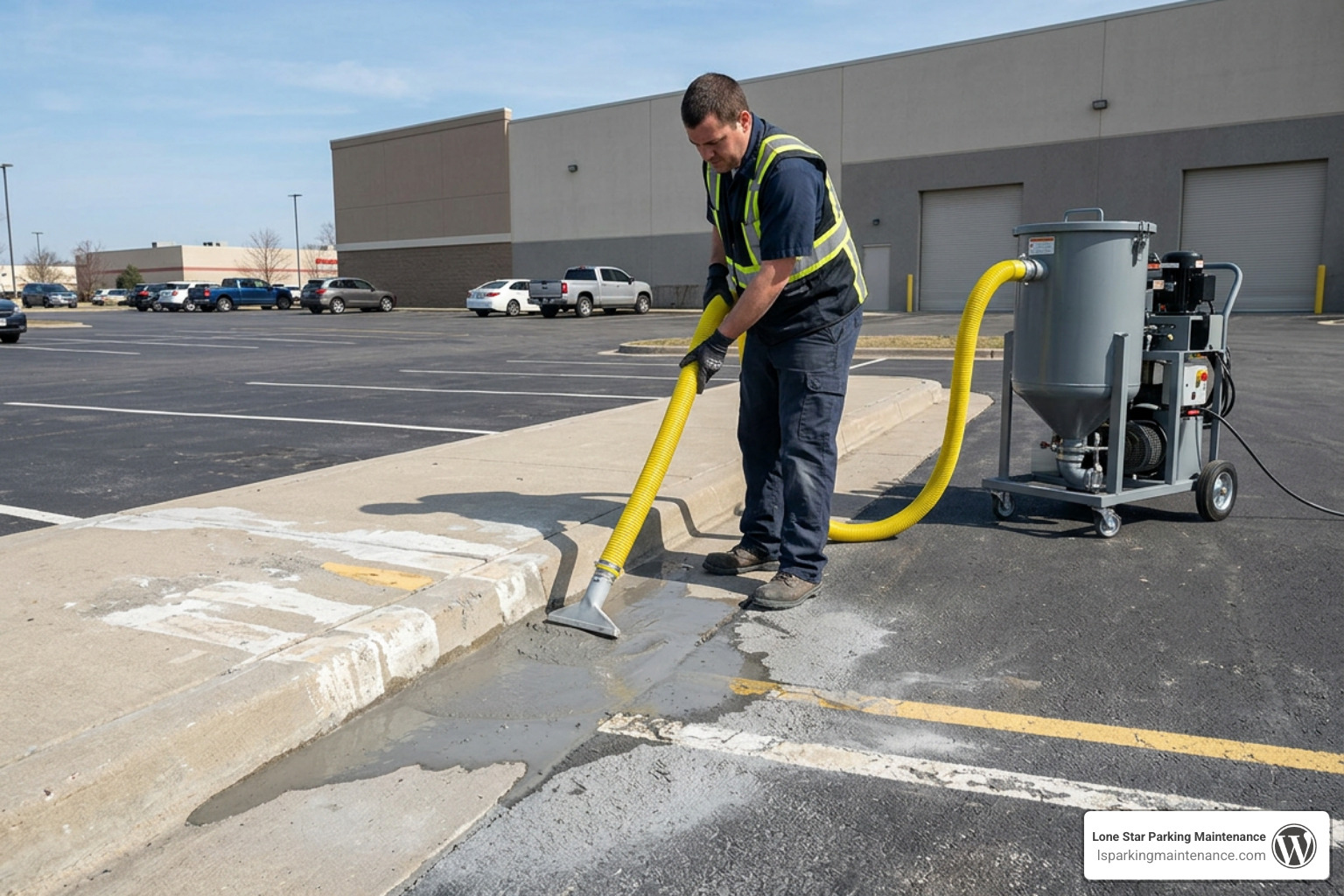
While dustless blasting suppresses airborne dust clouds, it converts the waste into a dense slurry. This wet mixture contains pulverised paint particles, spent abrasive media, and concrete fines. Left unmanaged, the slurry dries into a hardened crust along the gutter line or washes directly into parking lot catch basins during the next rainstorm. Slurry must be contained using weighted berms and extracted immediately with an industrial wet-vacuum system.
Essential Steps for Curb Painting Debris Removal
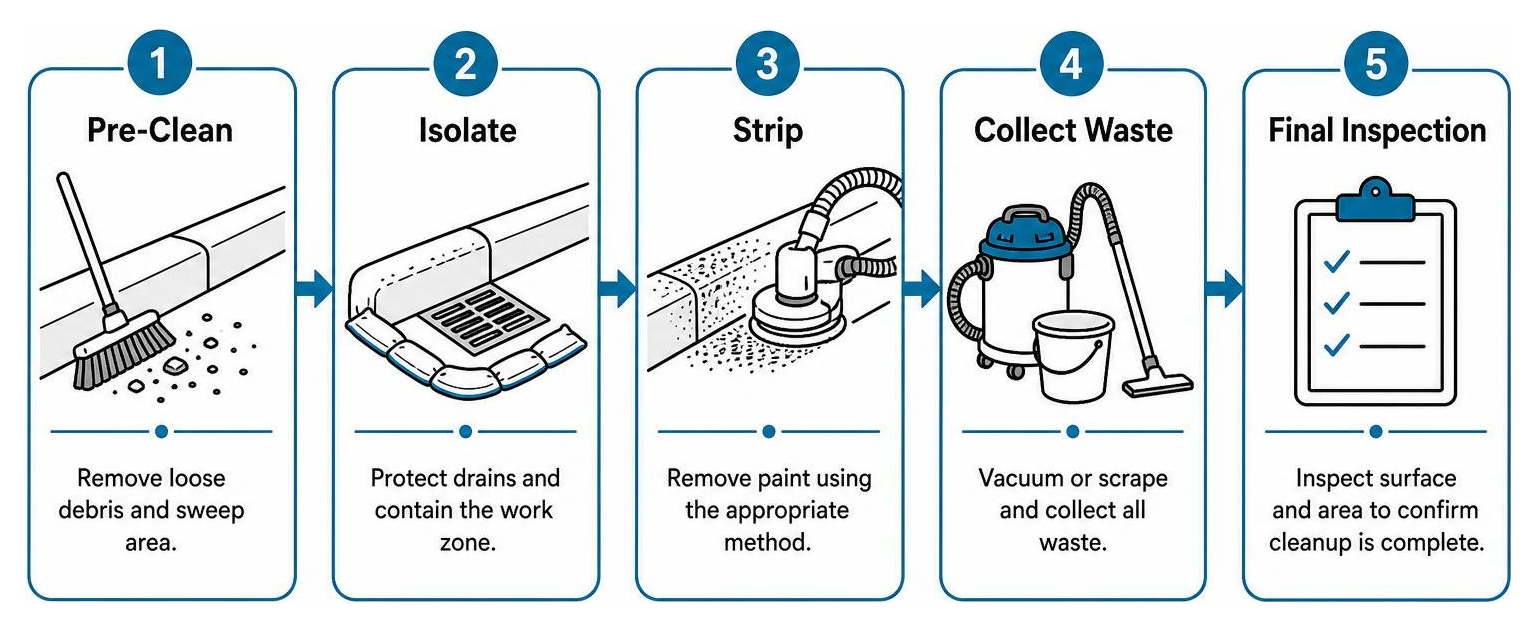
Effective curb paint cleanup is built on a methodical sequence of preparation, stripping, and immediate containment.
Contoured curb faces present unique challenges. Commercial sweepers with flat scraping blades frequently skip over the curved curb cap. Standard street sweeping blades clean only flat pavement contact areas, which led to specialized mechanical innovations like the curb cleaning implements for contoured profiles patented in US Patent 6640374. This design utilizes shaped steel scrapers and water-misted gutter brooms to sweep rounded curb tops and flowlines simultaneously.
For complete site cleanup, pairing localized curb prep with professional parking lot power washing ensures all residual dust and tire marks are washed and vacuum-recovered safely.
Pre-Cleaning and Site Preparation for Curb Painting Debris Removal
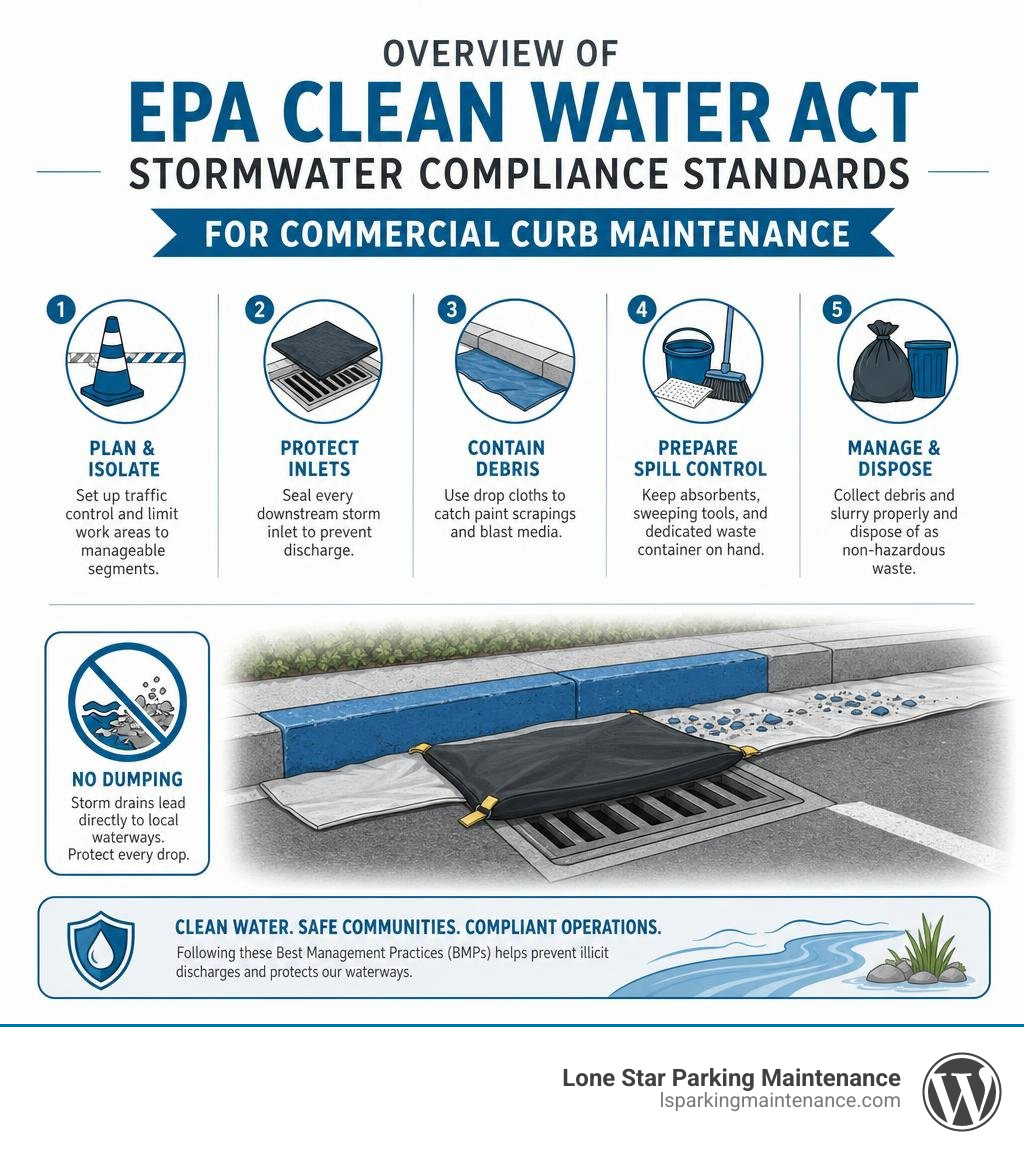
Before turning on a grinder, blaster, or pressure washer, isolate the work zone:
- Set up traffic control: Block off traffic lanes and parking stalls adjacent to the work zone with high-visibility cones and caution tape. Limit active work areas to manageable segments (typically under 500 linear feet) to keep vehicle lanes clear.
- Seal storm inlets: Cover every storm drain downstream of your work zone with heavy-duty impervious rubber drain covers, sandbag dikes, or geotextile sediment filter fabric.
- Stage drop cloths: Lay durable canvas or polypropylene drop cloths along the base of the curb to catch falling paint scrapings and blast media.
- Prepare spill containment: Keep absorbent pads, a broom, a dustpan, and a dedicated 5-gallon waste container directly on hand.
Taking these prep steps aligns with standard field practices outlined in our guide on all about curb painting services.
Mechanical Stripping and Dust Suppression Methods
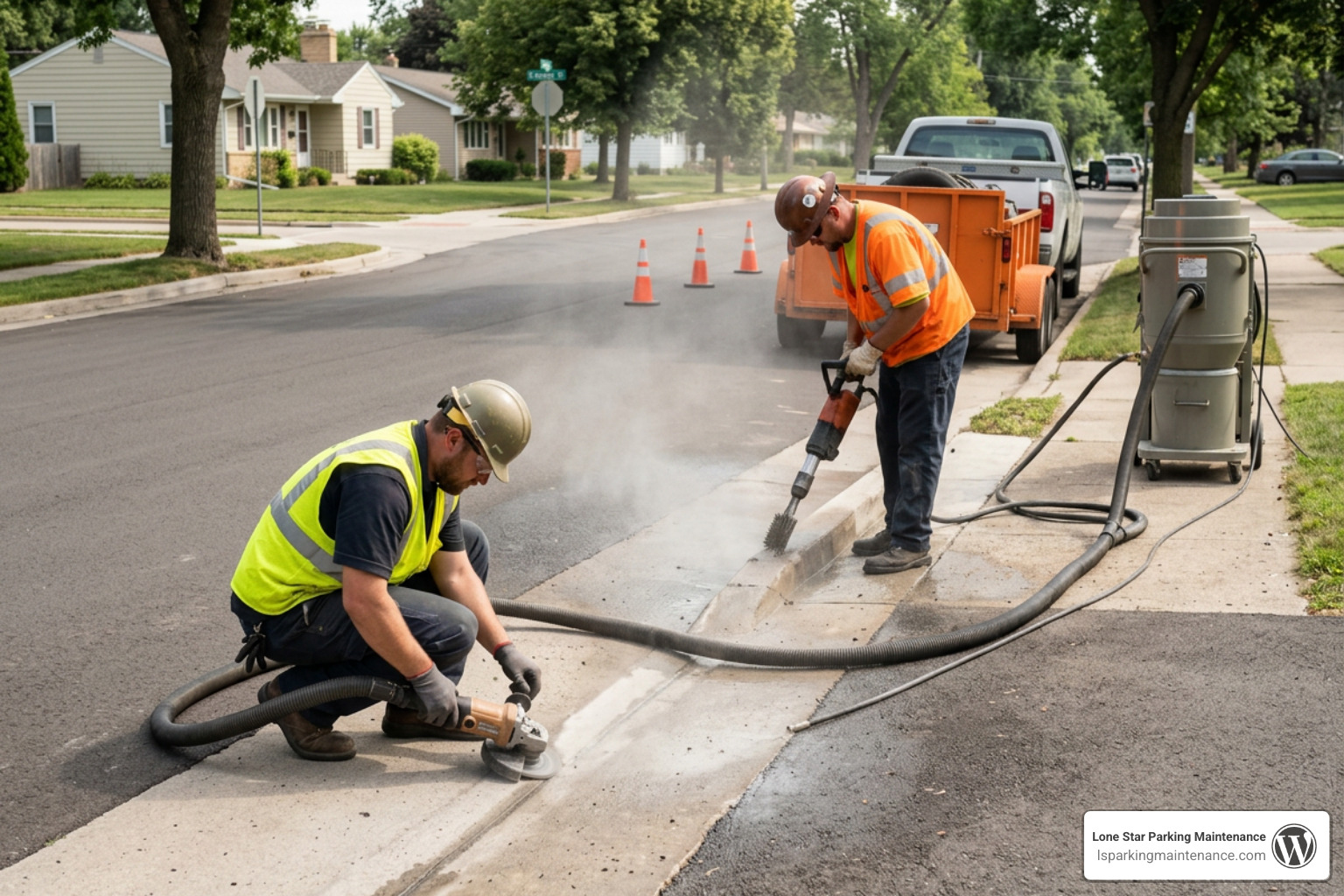
When using mechanical tools, dust management protects both operators and nearby parked vehicles:
- Shrouded angle grinders: Equip angle grinders with full dust shrouds connected directly to a HEPA-filtered vacuum system (minimum 99.97% efficiency at 0.3 microns). This captures paint dust at the point of contact.
- Needle scalers: Pneumatic needle scalers are excellent for chipping thick, brittle thermoplastic or layered paint off rough aggregate without creating airborne clouds.
- Misting systems: When dry scraping or mechanical wire brushing along curbs, apply a light water mist to prevent fine dust from becoming airborne, keeping particulates heavy enough to drop directly onto containment tarps.
Safe Disposal and Containment in Curb Painting Debris Removal
Never dump curb scraping debris into general landscape beds or wash it down the pavement.
- Solid debris: Fold drop cloths inward to concentrate paint chips and sweepings. Pour the dry waste into heavy-duty contractor trash bags (3 mil or thicker), seal them tightly, and dispose of them as non-hazardous solid waste at a local transfer station.
- Liquid slurry handling: Allow collected wet slurry to settle in containment drums. Decant the clarified surface water through a fine filter (if permitted for sanitary disposal) or mix the wet sediment with paint-hardening crystals, sawdust, or standard kitty litter until it forms a dry, solid block suitable for landfill disposal.
- Sweeping sweeps: For large commercial parking facilities, utilizing a dedicated local sweeping service ensures that incidental dust, loose gravel, and stray paint flakes across the asphalt are swept clean after major stripping projects.
Environmental Regulations, Storm Drain Protection, and Runoff Control
The Federal Clean Water Act and EPA National Pollutant Discharge Elimination System (NPDES) regulations classify paint scrapings, abrasive media, and pressure washing runoff as illicit discharges. Storm drain inlets lead directly into local creeks, rivers, and aquifers without municipal treatment. Allowing paint residue or wash water to enter a catch basin can result in significant municipal fines and project shutdowns.
We design our field operations around strict compliance and environmentally friendly wash water containment to protect North Texas waterways.
Best Management Practices for Inlet Protection
Adhering to municipal stormwater standard operating procedures requires strict Best Management Practices (BMPs) before any water or scraping begins:
- Dry scraping priority: Municipalities—such as established in municipal stormwater standard operating procedures—mandate that curb surfaces be prepared dry whenever possible to avoid generating contaminated wastewater.
- Containment berms: Place weighted urethane berms across gutter flowlines 10 to 15 feet downstream of the work area to create a holding basin for any incidental wash water.
- Sprayer flush containment: When cleaning commercial striping sprayers, never flush lines over bare concrete. Flush lines into a 5-gallon bucket filled with absorbent waste material and let it dry fully before disposal.
Essential Runoff Containment Kit Checklist:
- Heavy-duty magnetic or urethane storm drain sealing mats
- Weighted sediment filter tubes and sandbags
- Wet/dry vacuum with a minimum 12-gallon capacity and auxiliary pump
- Oil-absorbent booms and granular spill absorbent
- Heavy 3-mil contractor clean-up bags and sealable 5-gallon waste pails
Proper Handling of Hazardous Waste and Excess Paint
Disposal methods vary depending on the chemical composition of the coating:
- Water-based latex/acrylic paint: Liquid latex paint cannot be placed into standard commercial dumpsters. Solidify leftover liquid by stirring in paint hardener crystals, sand, or kitty litter until completely firm. Once hardened, it can be disposed of in standard solid waste streams.
- Oil-based paints and thinners: Categorized as hazardous waste due to flammability and VOC content. These must be stored in airtight metal safety cans and delivered to a certified commercial hazardous waste facility.
- Usable leftover paint: Whenever possible, donate clean, usable architectural latex paint to local community non-profit reuse organizations rather than sending it to landfills.
Frequently Asked Questions About Curb Paint Cleanup
How do you clean paint slurry and debris from rounded curbs?
Rounded curb contours (such as bullnose or roll curbs) require tools that match their profile. Use curved hand scrapers or specialized contoured brush attachments paired with a fine misting nozzle. For slurry cleanup, position a flexible suction berm or wet-vac squeegee along the base of the curb where the radius meets the flat asphalt flowline to capture all liquid as it drains down.
Can latex paint scrapings and leftover liquid be thrown in standard trash bins?
Dry paint chips and scrapings from non-lead paints can generally be disposed of in standard solid waste containers. However, liquid paint is strictly prohibited in regular commercial trash carts and dumpsters. You must first mix liquid latex paint with an absorbent drying agent (like kitty litter or paint hardener) until it solidifies completely.
How much does professional curb paint removal and debris cleanup cost?
Professional curb paint stripping costs depend on total linear footage, paint layers, and containment requirements. Mobile dustless abrasive blasting or mechanical grinding typically involves a mobilization/minimum charge (often starting around $500–$600 for small jobs) with larger commercial projects quoted at a competitive per-linear-foot rate.
Conclusion
Proper curb paint removal requires balanced surface preparation, complete dust containment, and responsible waste management. Taking the time to mask storm drains, capture dry particulates, and recover wet slurry keeps your property looking sharp while staying fully compliant with environmental regulations.
Lone Star Parking Maintenance provides professional curb stripping, striping, power washing, and facility maintenance throughout the DFW Metroplex. In addition to complete curb and pavement markings, we offer dedicated solutions including protective pole covers and curb stop installation to keep your commercial property protected and visually appealing. Contact our team today for a free project assessment!