
Types of Curb Paints: Comparing Formulas and Performance
When selecting the best paint for curbs, understanding the chemical composition of the coating is essential. Concrete and asphalt present vastly different surface characteristics: concrete is non-porous, alkaline, and susceptible to moisture migration, while asphalt is petroleum-based and flexible.
Not all traffic paints perform equally on both substrates. Using an incompatible formula leads to premature peeling, cracking, or severe color fading within months of application.
To simplify your selection process, we have broken down how the primary curb paint formulations perform across key operational metrics:
| Feature / Metric | Water-Based Acrylic Latex | Solvent-Based Alkyd Coatings | Inverted Aerosol Cans |
|---|---|---|---|
| Primary Use | High-traffic parking lots, general striping | Heavy-wear zones, cold weather application | Stenciling, address numbers, quick touch-ups |
| Drying Time (Touch) | 15 to 30 minutes | 30 to 45 minutes | 5 to 10 minutes |
| Time to Heavy Traffic | 1 to 2 hours | 1 to 2 hours | 15 to 30 minutes |
| VOC Level | Very Low (<50 g/L) | High (Solvent-based) | Moderate to High |
| Cleanup Method | Soap and water | Paint thinner / solvents | N/A (Disposable can) |
| Substrate Bond | Excellent on concrete & cured asphalt | Excellent on bare concrete & aged asphalt | Good on localized, clean concrete |
| Average Coverage | ~110–330 lin. ft./gal (4″ stripe) | ~400 lin. ft./gal (4″ stripe) | ~200–300 lin. ft. per can |
Products like Traffic & Zone Marking Paint demonstrate how modern 100% acrylic formulas balance rapid drying times with strong adhesion to cured concrete and asphalt surfaces.
Water-Based Acrylic Latex: The Best Paint for Curbs in High-Traffic Areas
Water-based acrylic latex traffic paint is the industry standard for commercial parking facilities across the DFW Metroplex. Formulated with 100% acrylic polymer resins, these paints offer flexibility, outstanding UV resistance, and excellent adhesion to concrete curb faces.
Key advantages of acrylic latex curb coatings include:
- Fast Drying Times: Acrylic latex paints dry to the touch in 15 minutes and accept foot or vehicular traffic in 1 to 2 hours under standard ambient conditions (77°F and 50% relative humidity).
- Low Environmental & Safety Impact: Containing less than 50 g/L of Volatile Organic Compounds (VOCs), acrylic latex coatings comply with stringent environmental standards and minimize chemical fumes during application.
- Easy Cleanup: Equipment, airless spray tips, and minor spills clean up quickly with warm soap and water.
- Asphalt Compatibility: Water-borne acrylics will not lift or bleed into asphalt binders, making them safe for curb edges tied directly into fresh or aged pavement.
For high-volume retail locations, healthcare centers, and educational campuses, fast drying times are critical. Using high-build acrylic latex prevents vehicle tire pickup and allows lot sections to reopen almost immediately after application. Learn more about professional application techniques in our guide on All About Curb Painting Services. Top-rated consumer choices in this category include INSL-X Acrylic Latex Traffic Paint, which holds a 4.5 out of 5-star rating across hundreds of professional reviews.
Solvent-Based Alkyd Coatings: The Best Paint for Curbs Needing Heavy-Duty Wear
Solvent-based alkyd coatings (often referred to as oil-based traffic paints) utilize synthetic alkyd resins dissolved in organic solvents. Formulations such as High Performance Alkyd Traffic Paint meet Federal Specification TTP-115 Type II, delivering extreme durability under heavy commercial traffic.
Major performance benefits include:
- Superior Chemical & Oil Resistance: Alkyd paints resist gasoline, motor oil, grease, de-icing chemicals, and standing water far better than standard waterborne paints.
- Low-Temperature Application: Solvent-based coatings can be applied in cold weather conditions (down to 40°F) where water-based paints would fail to cure properly.
- Pavement Penetration: The solvent vehicle allows the paint to penetrate deep into porous concrete pores, creating an impenetrable mechanical bond.
- Hot Tire Pickup Resistance: High-solids alkyds resist tire scuffing and rubber transfer from turning vehicles—a common failure point in fast-food drive-thrus and parking garage turns.
However, solvent-based paints require specialized cleanup using paint thinners, have higher VOC levels, and should never be applied directly over freshly laid asphalt or brand-new sealcoat, as the solvents can dissolve soft asphalt binders. For industrial facilities, delivery hubs, and severe-weather environments, heavy-duty options like ROAD CURB PAINT SB – USSC Products offer rugged protection against continuous tire impact.
Inverted Aerosol Striping Spray Cans
For small-scale touch-ups, stenciling address numbers, or marking short curb sections, inverted aerosol striping cans offer unmatched convenience. Specially engineered nozzles allow these cans to spray upside down without clogging, delivering a sharp 2-inch to 4-inch line width.
Popular commercial choices include Rust-Oleum Professional Inverted Striping Spray Paint (rated 4.5 out of 5 stars with thousands of customer reviews) and Rust-Oleum Professional 2X Distance Inverted Marking Spray. Contractors and property managers rely on aerosol spray cans for:
- Quick curb address numbering and house stencil work.
- Fire hydrant clearance box markings.
- Directional arrow touching and spot repairs on commercial curbs.
While aerosol spray cans are perfect for localized touch-ups, they lack the wet film thickness (typically 3 to 5 mils vs. 15 mils for commercial liquid paint) needed for broad commercial curbs subject to constant vehicle scraping.
Application Methods: Spraying vs. Brushing and Rolling
The method you choose to apply curb paint directly impacts line crispness, wet film thickness, labor speed, and coating longevity.
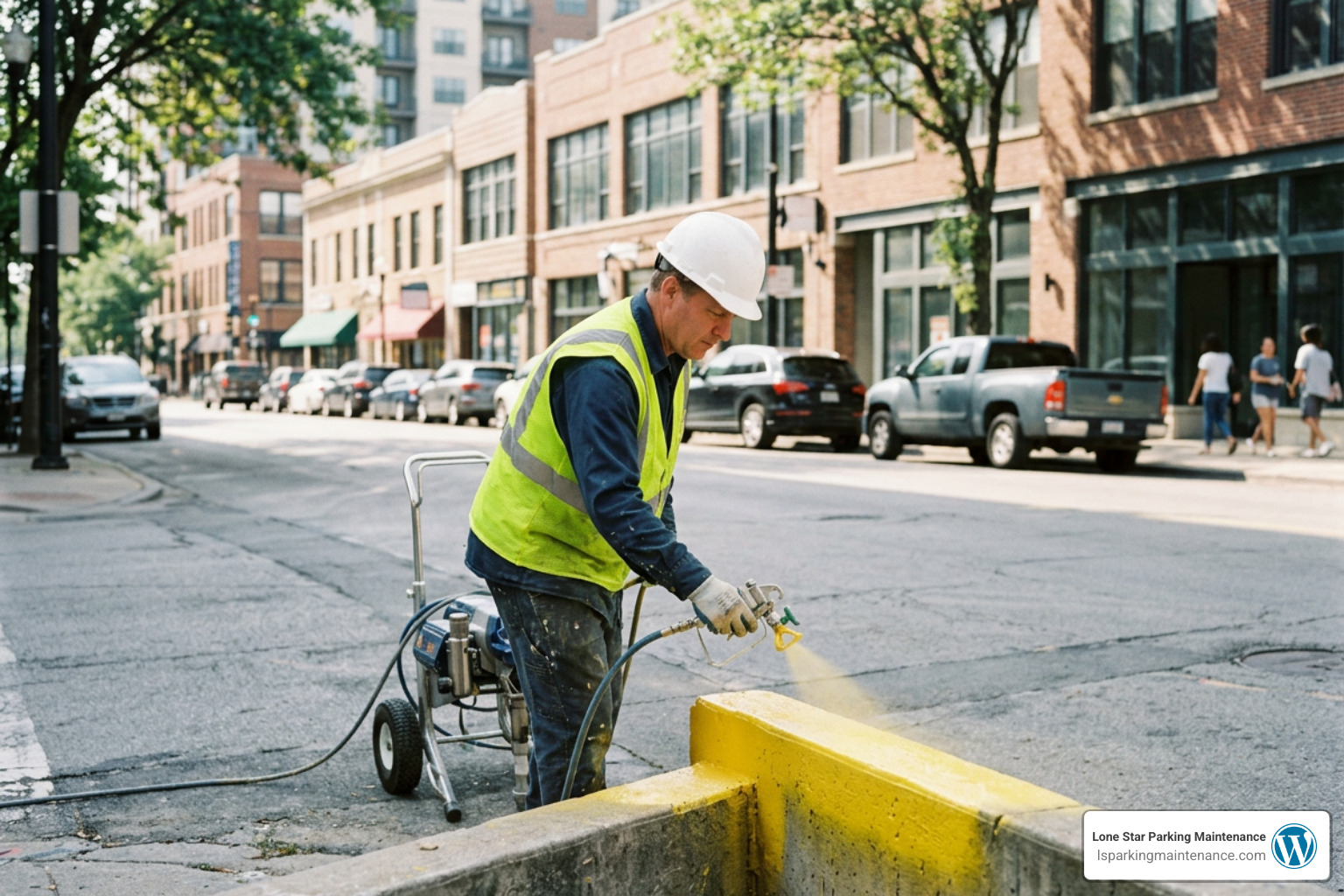
Here is how the main application techniques compare:
Airless Spray Equipment
Commercial airless sprayers operate at pressures between 1,800 and 2,700 PSI, forcing paint through small tungsten carbide spray tips (.015 to .017 inch).
- Efficiency: Airless spraying is up to 5 times faster than manual rolling, making it the standard for commercial property maintenance across Fort Worth and Dallas.
- Uniformity: Delivers a precise wet film thickness of 15.0 mils (resulting in approximately 9.3 mils dry film thickness), ensuring consistent coverage over rough or aggregate-heavy concrete.
- Edge Precision: When paired with spray shields or masking guards, airless sprayers create razor-sharp edges along curb caps and gutter pans.
Manual Brush and Roller Application
Applying paint with a 4-inch heavy-nap roller or dense synthetic brush is common for small residential jobs or tight architectural curbs where spray drift must be avoided.
- Adhesion: Rolling forces paint deep into heavy concrete textures and pitted surfaces.
- Control: Ideal for precise stencil work, such as applying “NO PARKING – FIRE LANE” lettering or house address numbers on curb faces.
- Drawbacks: Slower application speed and variable film thickness if the painter pushes the roller too dry.
For detailed advice on selecting contractors who utilize proper professional equipment, see our guide on How to Find the Best Curb Painting Services in Fort Worth.
How to Select the Best Paint for Curbs Based on Project Requirements
Selecting the best paint for curbs requires aligning your coating performance with municipal regulations, local building codes, and parking facility safety standards.
Standard curb color codes used throughout Texas include:
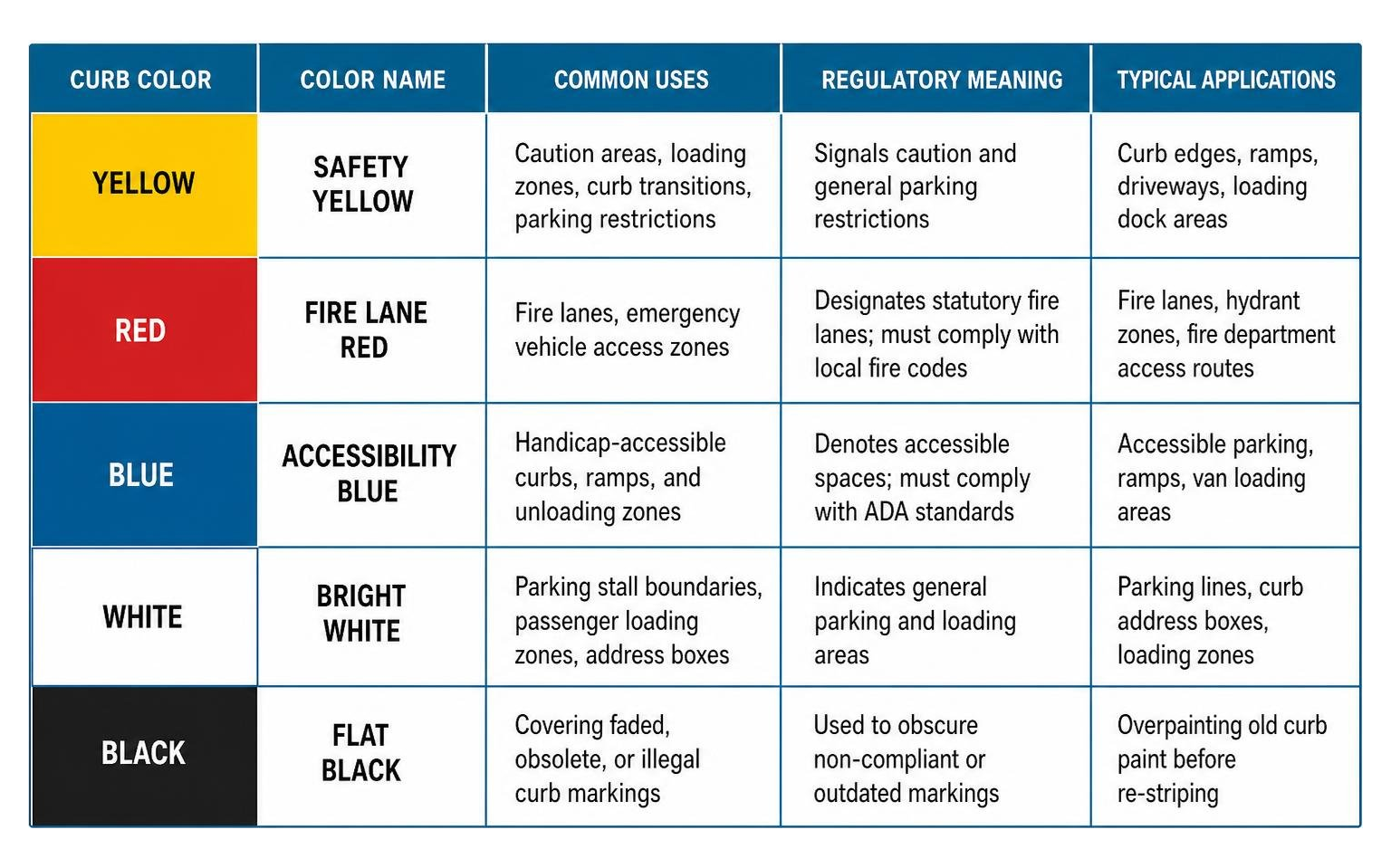
- Safety Yellow: Signals caution, loading zones, curb transitions, or general parking restrictions. Highly visible under headlight illumination.
- Fire Lane Red: Designates statutory fire lanes and emergency vehicle access zones. Must comply with local municipal fire codes and often requires stenciled warnings like “FIRE LANE NO PARKING”.
- Accessibility Blue: Marks designated handicap-accessible curbs, ramps, and unloading zones in compliance with ADA standards.
- Bright White: Used for general parking stall boundaries, passenger loading zones, and residential curb address background boxes.
- Flat Black: Applied to cover up faded, obsolete, or illegal curb markings before re-striping.
Failing to maintain compliant curb colors can result in code violations or municipal fines. Property owners should consult Don’t Get Fined for Your Lines to ensure all parking lot markings meet current legal standards. Product options such as Frazee Paint CURB PAINT 100% Acrylic Semi-Gloss | Sherwin-Williams provide high-visibility semi-gloss finishes specifically formulated for color retention on concrete curbs.
Reflective Glass Beads for Nighttime Visibility
For parking facilities, hospital driveways, and commercial centers operating 24/7, nighttime visibility is a critical safety consideration. Standard traffic paint reflects headlight beams poorly at night, especially during rainstorms.
To achieve retroreflectivity, specialized reflective glass beads (such as AASHTO Type I or Type III airport-grade beads) are embedded into the fresh paint film.
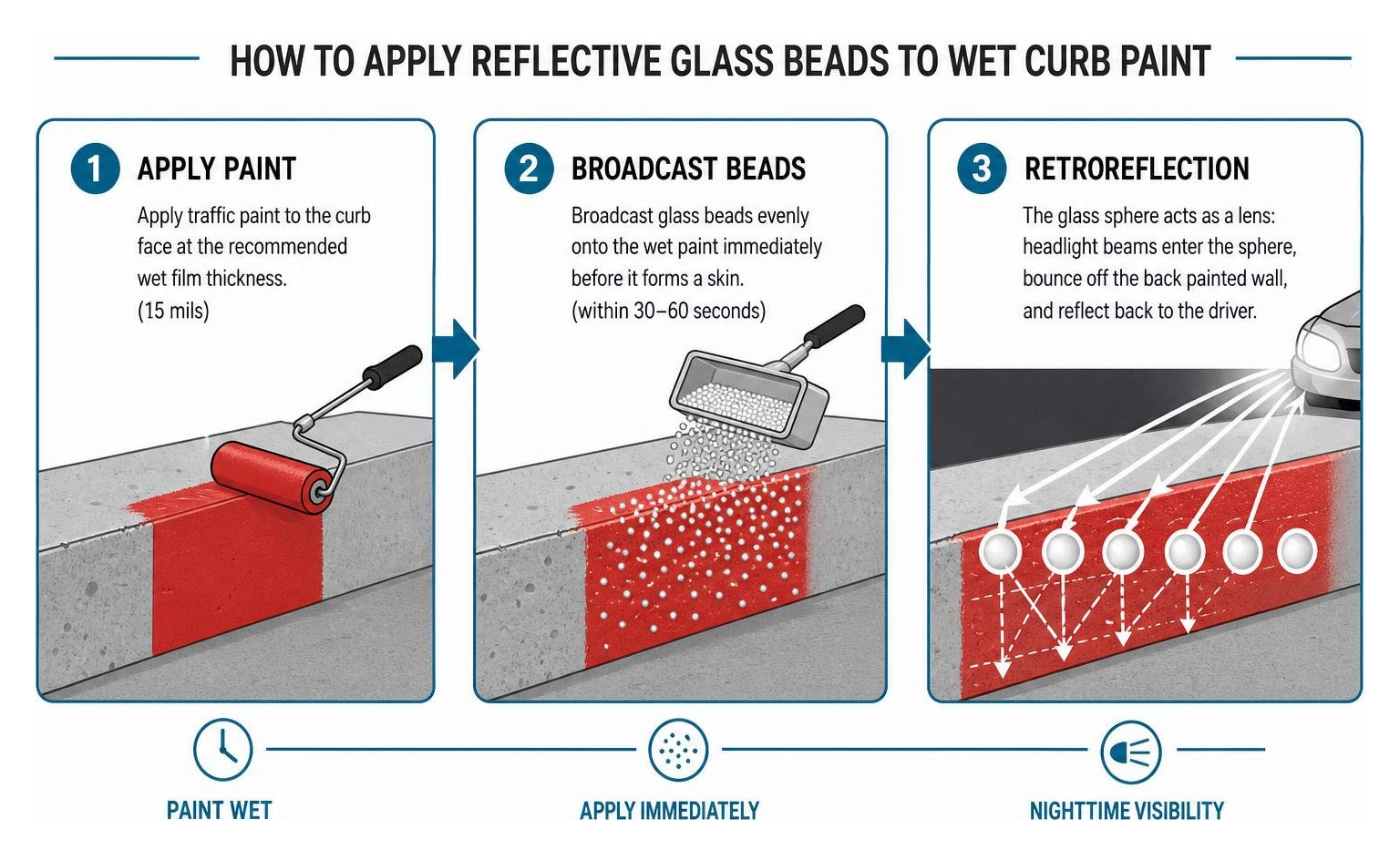
How to Apply Reflective Glass Beads:
- Apply traffic paint to the curb face at the recommended wet film thickness (15 mils).
- Broadcast glass beads evenly onto the wet paint immediately before it forms a skin (usually within 30 to 60 seconds of painting).
- The glass sphere acts as a lens: incoming vehicle headlight beams enter the sphere, bounce off the back painted wall, and reflect directly back to the driver’s eyes.
Proper bead drop rate is typically 6 to 8 pounds of glass beads per gallon of traffic paint.
Anti-Slip Coatings and Slip Resistance
Curb tops, raised pedestrian medians, and curb ramps are heavy foot-traffic areas. Wet paint on smooth concrete creates a serious slip hazard for pedestrians.
Incorporating anti-skid aggregates (such as fine silica sand, polypropylene beads, or aluminum oxide) into curb paint dramatically increases traction. Anti-slip coatings such as INSL-X TuffCrete or textured acrylics are engineered to exceed ADA static coefficient of friction guidelines (0.6 for level surfaces, 0.8 for ramps).
Applying textured anti-slip coatings on pedestrian curb crossings reduces premises liability while maintaining visual warning boundaries. Facility owners managing high-risk environments can review detailed compliance guidelines in How to Master Hospital Lot Line Painting and ADA Compliance.
Step-by-Step Surface Preparation and Painting Process
Even the best paint for curbs will peel rapidly if applied over dirt, grease, loose concrete laitance, or flaking legacy paint. Thorough surface preparation accounts for 80% of coating longevity.
Follow this professional step-by-step process for maximum paint adhesion:
Step 1: Mechanical Cleaning & Wire Brushing
Use a heavy-duty wire brush or mechanical scraper to scrub the concrete curb face. Remove all flaking paint, loose dirt, moss, and surface chalk. If a curb has more than 10 built-up layers of old paint, scrape or pressure-wash it back down to bare concrete according to recommendations on What paint to use on curbs?.
Step 2: High-Pressure Power Washing
Power-wash the concrete curb using 3,000 to 3,500 PSI water pressure to blast away embedded dust, sand, and grease. For oil stains from parked vehicles, apply a commercial degreaser or citrus cleaner prior to pressure washing. Allow the concrete to dry thoroughly for at least 24 hours (moisture content must be below 12%).
Step 3: Masking and Stencil Setup
Tape off asphalt edges, sidewalk joints, and drainage grates using heavy-duty duct tape or masking paper. Lay out stencil kits for fire lane lettering or address numbers, securing them tightly against the curb face to avoid paint bleed.
Step 4: Paint Application
Apply your chosen water-borne acrylic latex or solvent alkyd traffic paint using an airless sprayer or 4-inch heavy-nap roller. Maintain a uniform wet film thickness of 15 mils. If applying reflective glass beads, broadcast them immediately into the wet coating.
Step 5: Cure Time & Inspection
Allow the paint to cure undisturbed. Water-based traffic paints dry to touch in 15 to 30 minutes, but full cure against vehicular abrasion requires 2 hours. Inspect lines for uniform color density and crisp edge separation.
Curb Paint Longevity and Maintenance Factors
In standard commercial parking environments throughout the DFW Metroplex, professionally applied curb paint lasts between 12 and 24 months. However, several environmental and mechanical factors affect longevity:
- Sunlight & UV Exposure: Intense Texas summer heat degrades low-quality paint binders, causing yellow and red pigments to fade.
- Hot Tire Pickup: Hot vehicle tires coming off highway driving can soften fresh or low-grade latex paint, pulling the coating clean off the concrete face.
- Vehicle Scuffing: Commercial delivery trucks, street sweepers, and tight-turning passenger cars mechanically wear paint off raised curb edges.
- Concrete Hydrostatic Pressure: Moisture rising through unsealed concrete pushing against non-breathable oil coatings can cause blistering.
Establishing a scheduled re-striping plan ensures your curbs remain bright, professional, and compliant. For complete budgeting guidance, refer to The Complete Guide to Lot Line Painting and review bidding strategies in Painting the Town Red: How to Bid on Annual Curb Painting Contracts.
Additionally, review comparative reviews on Best Concrete Curb Paints for Safer, Visible Edges and Durable Finish – Archie Remodels.
Frequently Asked Questions About Curb Paint
How long does paint typically last on concrete or asphalt curbs?
Under standard weather and traffic conditions, professional acrylic latex or solvent-based traffic paint lasts 1 to 2 years on concrete curbs. In high-impact zones—such as fast-food drive-thrus, commercial loading docks, or tight turning radii—curb paint may require touch-ups every 6 to 12 months due to tire friction.
What is the main difference between spray paint and brush-on paint for curbs?
Spray paint (especially high-pressure airless spraying) delivers a uniform film thickness, sharp stencil edges, and extremely fast coverage over large commercial distances. Brush-on or roller-applied paint forces material deep into rough concrete pores and is ideal for small localized projects, but takes significantly longer to apply over long property perimeters.
Can you add glass beads to water-based curb paint?
Yes. Reflective glass beads can be added to both water-based acrylic latex and solvent-based alkyd paints. The key is broadcasting the beads immediately into the wet paint right behind the applicator before the top layer skims over or dries (usually within 30 to 60 seconds).
Conclusion
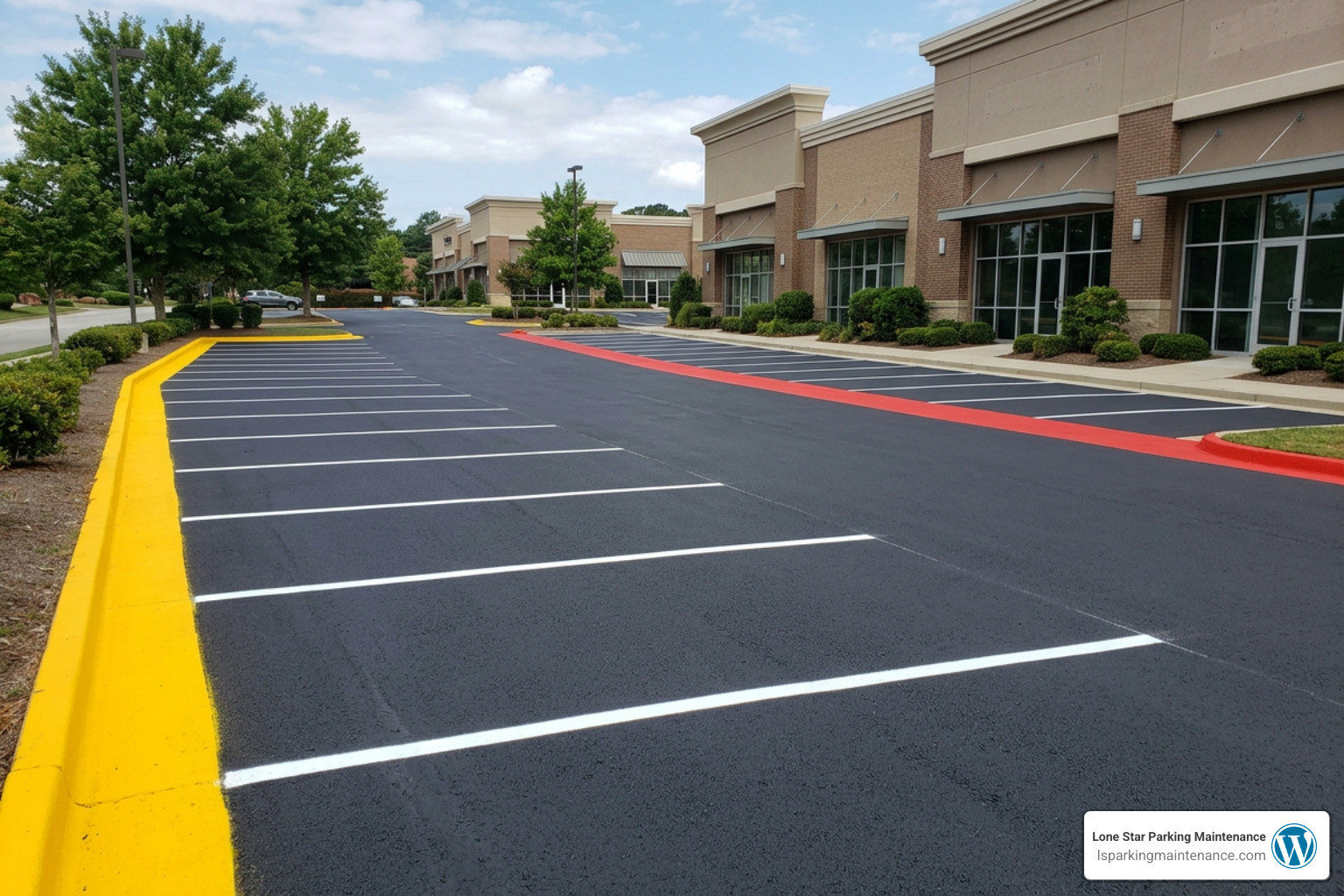
Choosing the best paint for curbs comes down to matching your property’s specific demands—whether that means fast drying times, heavy-duty tire resistance, or high nighttime visibility. High-build acrylic latex coatings deliver the ideal balance of fast drying, easy cleanup, and strong concrete adhesion for most commercial properties, while solvent-based alkyds handle heavy industrial wear.
Investing in high-quality materials and professional surface preparation protects your property against compliance liabilities, enhances driver safety, and keeps your curb appeal looking sharp year-round.
At Lone Star Parking Maintenance, we deliver top-tier parking lot striping, curb painting, wheel stop installation, power washing, and pavement repair across the entire DFW Metroplex. Contact our expert team today for a free estimate on your next project, or visit our page on Professional Curb Stop Installation and Parking Maintenance to see how we can keep your facility safe and compliant.