
Choose Parking Sign Posts That Last and Keep Your Lot Safer
Choose galvanized or coated steel posts for long-term strength, flexible posts for stalls with frequent bumper hits, and portable weighted stands for temporary traffic control. The right parking sign posts also need the correct base for the surface – in-ground for soil, properly rated anchors for concrete or asphalt – plus a mounting height that keeps signs visible and accessible.
A parking sign is only as reliable as the post holding it up. Bent steel, rusted hardware, loose anchors, and poorly placed signs can create safety issues, hurt curb appeal, and lead to repeat repair costs.
For property managers across DFW, the practical goal is simple: select a post system that fits the sign size, traffic exposure, wind conditions, surface material, and applicable ADA or roadway requirements. That means looking beyond the post itself to the base, brackets, fasteners, and installation method.
I’m Cason, and this guide will help you choose and install a parking sign post system built for safer, better-maintained commercial properties.
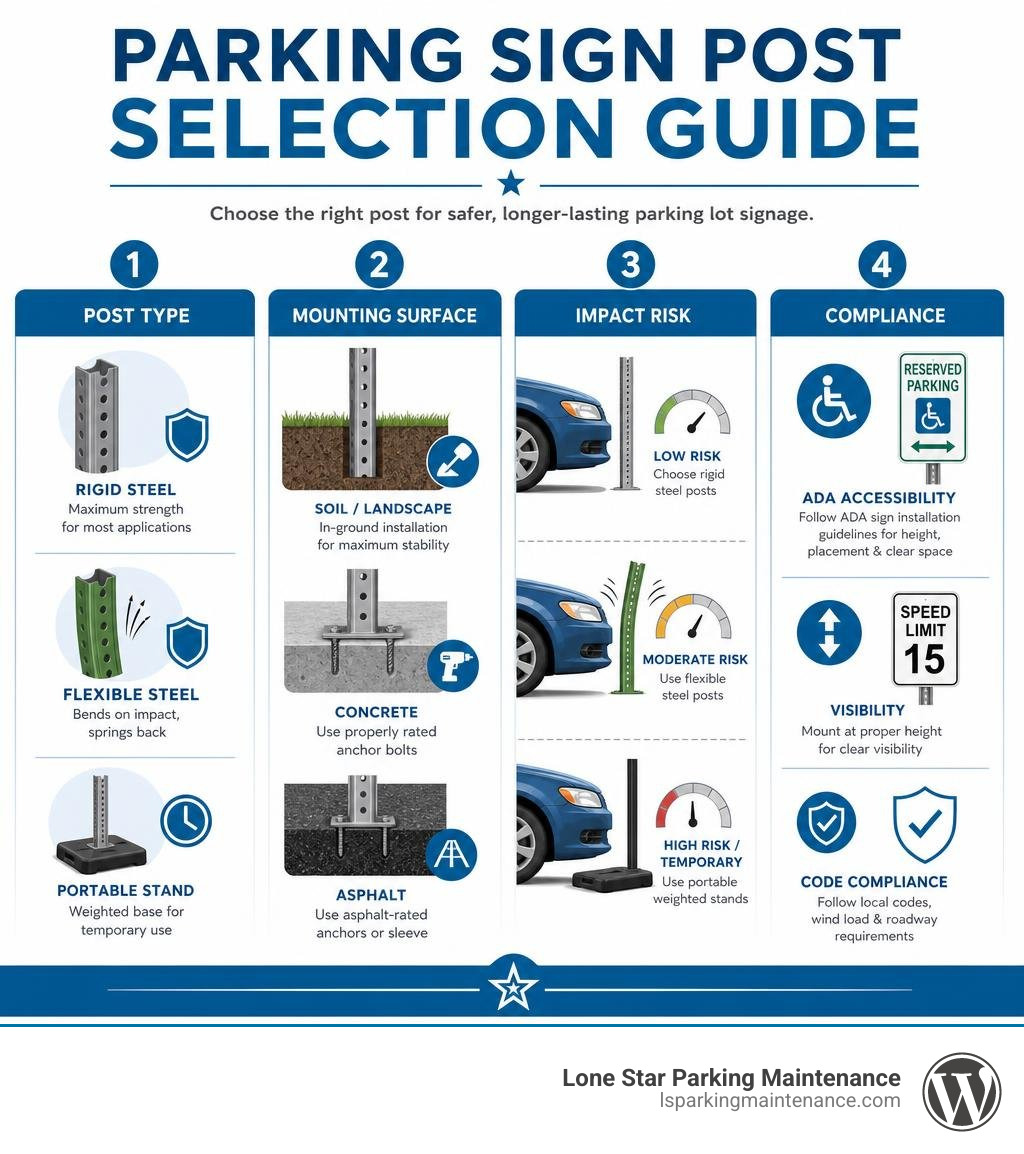
Parking sign posts word list:
Major Types of Parking Sign Posts and Their Applications
Choosing the right post profile prevents expensive structural failures, vehicle damage, and recurring maintenance headaches. In busy commercial facilities, different zones require distinct hardware solutions to handle pedestrian movement, perimeter security, and tight maneuvering. Equipping your facility with durable parking lot signage begins with matching structural supports to daily traffic demands.
| Post System Type | Primary Materials | Impact Response | Best Applications | Typical Height Range |
|---|---|---|---|---|
| U-Channel Posts | Rail steel (baked enamel or galvanized) | Yielding or rigid base | Perimeter signs, stop signs, reserved stalls | 6 ft – 10 ft |
| Square Telespar Posts | Galvanized steel with 7/16″ perforations | High rigidity / multi-directional | Multi-way signs, high-wind corridors, main drives | 8 ft – 10 ft |
| Round Galvanized Posts | Schedule 40 or 1-5/8″ to 2-3/8″ steel pipe | Rigid structure / sleeve mounting | Street-adjacent signage, bollard dual-mounts | 6 ft – 10 ft |
| Flexible / Reboundable Posts | Polyethylene / steel reactive spring core | 360° impact rebound | High-turnover stalls, compact spaces, EV bays | 78 in – 108 in |
| Portable Sign Stands | Cast iron or heavy rubber base + metal/PVC post | Mobile / tip-resistant | Valet stations, dynamic lane control, lot closures | 4 ft – 8 ft |
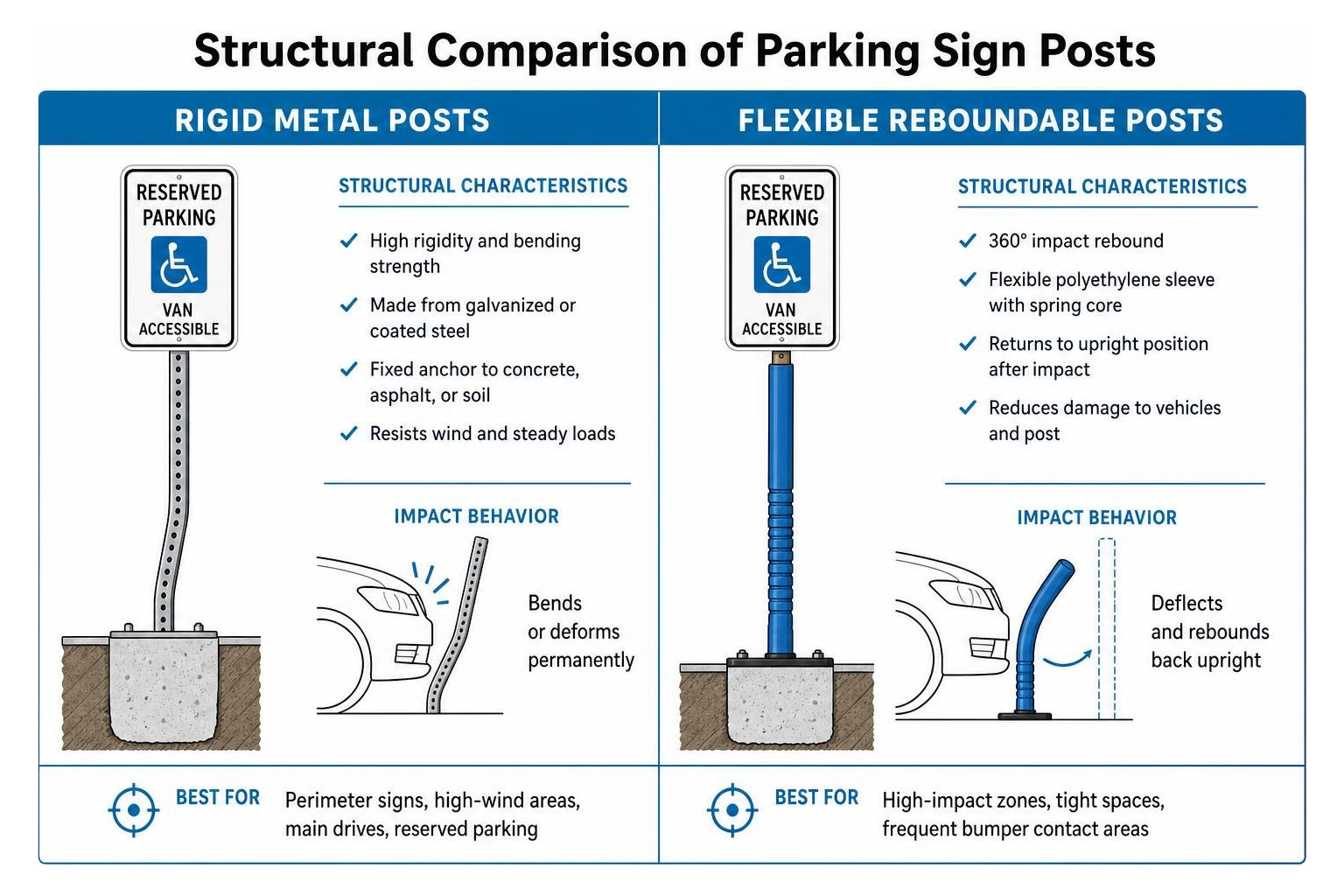
Rigid Steel Parking Sign Posts: U-Channel, Square, and Round Profiles
Rigid metal supports remain the backbone of permanent traffic control across commercial real estate. When determining how to choose the perfect parking spot sign for your lot, structural stability dictates post selection:
- U-Channel Posts: Formed from high-tensile rail steel, these workhorse posts are available in standard 2 lb/ft or 3 lb/ft weights. Standard U-channels feature 3/8-inch holes punched at 1-inch on-center intervals along the spine. Finished with hot-dip galvanization or baked green/black enamel, they offer high bending strength along entry drives and outer curbs.
- Square Perforated Posts (Telespar): Offering four flat mounting surfaces, 1-3/4″, 2″, or 2-1/4″ square posts resist torsional twisting under severe wind loads. Their four-sided hole patterns make corner installations and multi-sign configurations simple.
- Round Galvanized Posts: Standard 2-3/8″ outside diameter round steel posts provide clean lines for municipal-style regulatory signs. They use wrap-around aluminum or steel collar brackets to secure panels without drilling directly through the pipe.
Selecting Impact-Resistant and Flexible Parking Sign Posts
In busy retail lots and compact spaces, vehicle bumpers inevitably strike sign posts during parking attempts. Rigid posts often bend, crack concrete surfaces, and damage customer vehicles. Modern impact-resistant systems solve this problem completely:
- Heavy-Duty Spring Assemblies: Systems like the Concrete Model FlexPost Sign Post – 8 Ft Tall Flex Sign Posts utilize heavy carbon steel torsion springs integrated into a 7-gauge steel base plate, enabling complete 360-degree deflection upon impact.
- Integrated Bollard Signposts: The FlexBollard with 8ft Parking Signpost | Choose Color, SKU: K2-0124 combines an 8-foot galvanized post with a 52-inch high-density polyethylene bollard sleeve, giving drivers visual delineation while protecting underground foundations from vehicle strikes.
- Heavy-Traffic Rebound Systems: For properties handling high-speed traffic, the Flexpost XL Signpost Parking System with 9 ft Post, SKU: K2-4417 features a 5/16-inch thick internal spring that absorbs heavy vehicle strikes and returns to vertical every time.
- Thermoplastic Lightweight Posts: Engineered polymer units, such as Parking Lot Signposts – Pexco, use internal X-tube or Y-tube cross-beam geometry to absorb bumper impacts without denting hoods or chipping vehicle paint.
Portable and Temporary Sign Stands
Temporary traffic flow and special event routing require movable signage that stays stable in open parking lots:
- Cast Iron and Stamped Steel Bases: Ranging from 23 to 48 pounds, these circular stands accept standard 4-foot to 6-foot metal posts to manage curbside drop-off zones and temporary valet areas.
- Heavy Recycled Rubber Bases: Octagonal and round rubber bases weighing 30 lb, 60 lb, or 90 lb provide stability against wind gusts up to 40 mph without scratching finished concrete garage decks.
- Mobile Wheeled Posts: Pyramid bases and Roll-A-Post systems allow facility staff to move notifications like “Lot Full,” “Valet Only,” and “No Parking – Maintenance” quickly across properties.
Safety Standards, Breakaway Systems, and Clear Zone Compliance
Installing parking posts near roadways or high-speed access aisles requires strict adherence to federal safety and accessibility standards to protect vehicle occupants during collisions.
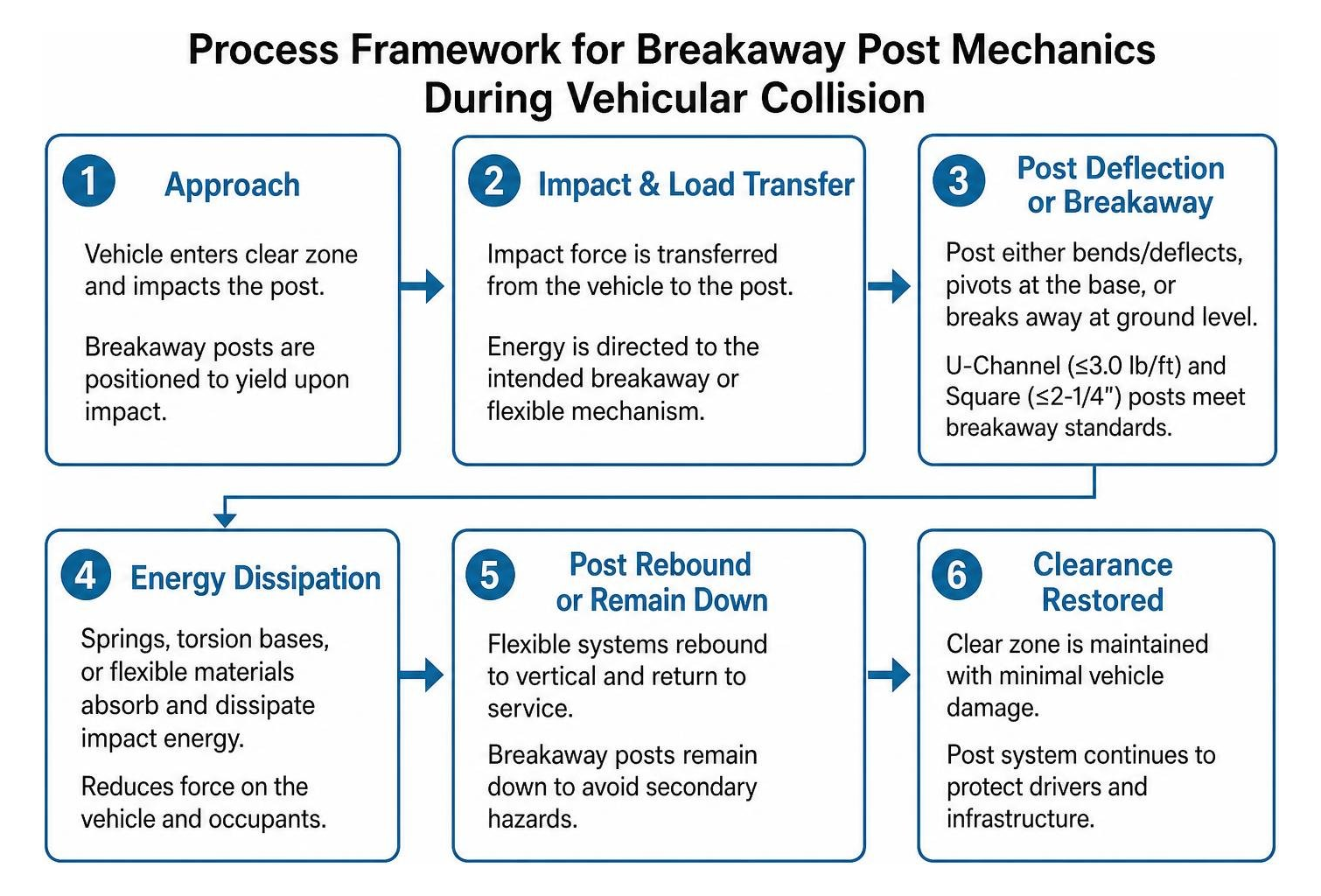
MUTCD and AASHTO Crashworthiness Mandates
The Federal Highway Administration (FHWA) and the Manual on Uniform Traffic Control Devices (MUTCD) require sign supports in designated roadside clear zones to be yielding or crashworthy under NCHRP Report 350 or AASHTO MASH testing:
- Inherent Breakaway Dimensions: U-channel posts weighing 3.0 lbs/ft or less and square posts measuring 2-1/4 inches or less meet breakaway safety standards when driven into soil.
- Breakaway Hardware Assemblies: Heavier posts require breakaway couplings (such as SNAP’n SAFE couplers) or base-bolted slip plates. Upon collision, the fasteners shear cleanly near ground level, allowing the post to detach without turning the vehicle over or impaling the cabin.
- Regulatory Message Hierarchy: Federal MUTCD guidelines govern standard visual design. As specified in the Design of Parking, Standing, and Stopping Signs | UpCodes, prohibitive signs (red legend) must always sit above or to the left of permissive signs (green legend) on the same post.
ADA Clearance and Mounting Height Specifications
Ensuring accessible stalls meet legal standards prevents costly code violations. In our guide covering everything you need to know about ada parking signs, we emphasize exact vertical clearance standards:
- Accessible Height Thresholds: The bottom edge of an accessible parking sign must sit at least 60 inches (5 feet) above the finished grade to remain visible over parked SUV and truck roofs.
- Pedestrian Walkway Clearances: When a sign post is placed in a sidewalk, walkway, or accessible route, the bottom edge must sit at least 84 inches (7 feet) above the pavement to prevent head-strike hazards for visually impaired pedestrians.
- Engineered ADA Post Solutions: Specialized units like the 78″ Flex Sign Post – Fixed and Drivable Base – Orders Over $49 Ship Free are factory-sized to place standard 12×18-inch handicap signs at the 60-inch minimum height.
- Texas Specific Signage: Texas accessibility codes require tow-away warnings or statutory penalty notices, such as the TEXAS – $250-500 Fine Sign | ADA Parking Signs or the standard Texas Reserved Parking Sign – Get 10% Off Now, mounted directly beneath the international symbol of accessibility.
Base Mounting and Anchoring Methods Across Different Surfaces
Securing sign posts requires matching the anchor method to the underlying substrate. Our team applies techniques from our buying guide for compliant parking lot signs to deliver durable installations across commercial properties.
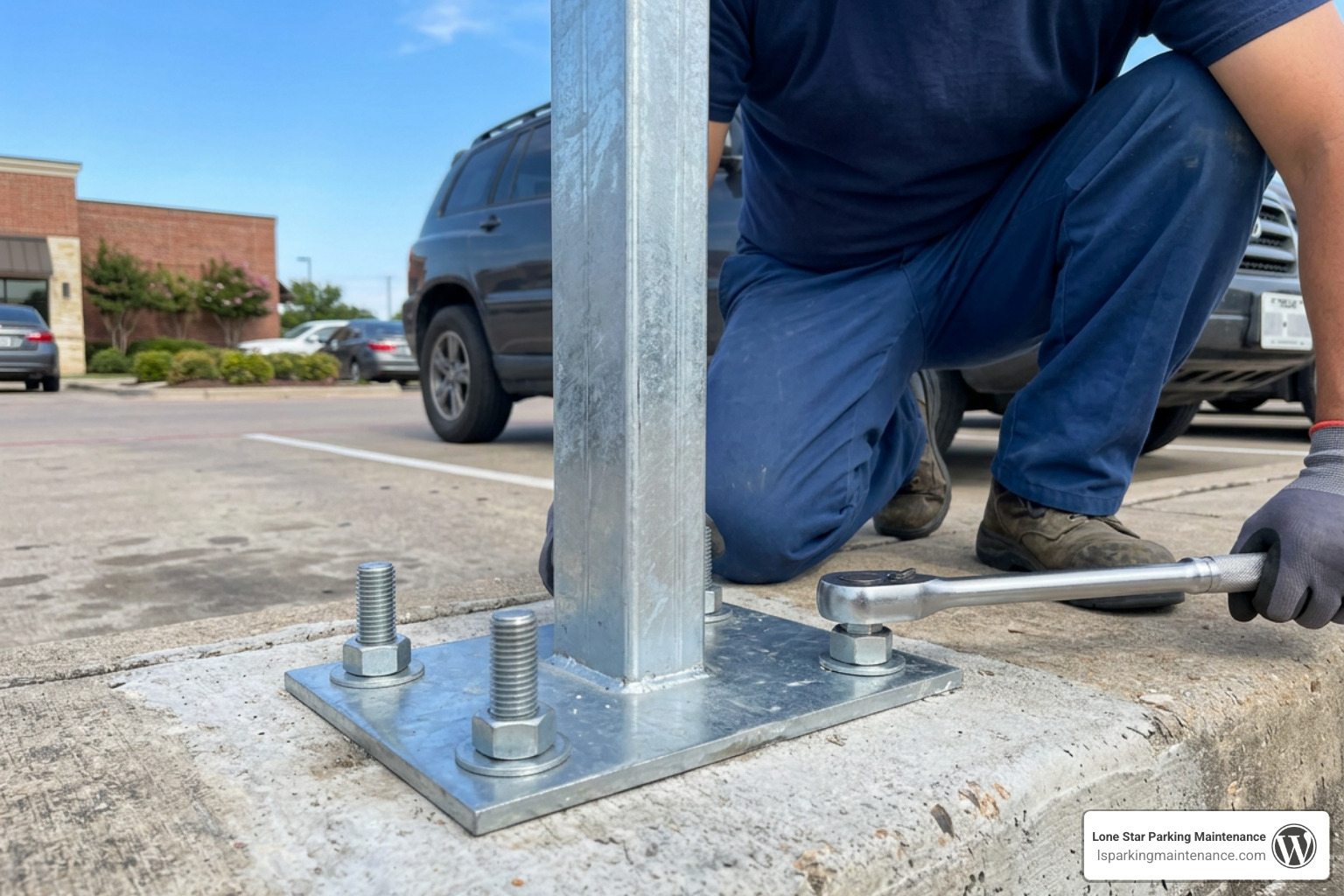
In-Ground and Direct-Burial Post Installation
Direct-burial in natural soil or landscaping islands is the most reliable method for long-term outdoor stability:
- Embedment Depth: Posts should be driven 3.0 to 3.5 feet deep into undisturbed ground. Driving deeper makes removing bent posts difficult after collisions; embedding less than 3 feet compromises wind resistance.
- Installation Tools: Use manual post drivers (such as a 32-lb steel pounder) fitted with dedicated U-channel drive caps. Driving bare steel tops mushrooms the metal, making sign attachment impossible.
- Ground Sleeves: Inserting a 3-foot square or U-channel anchor sleeve flush with the soil line allows maintenance crews to slip a new sign post into place within minutes after an impact without re-driving the base.
Surface-Mount Anchoring for Concrete and Asphalt
When core drilling is impractical or when installing signage on parking decks, surface-mounted bases provide a rigid, clean installation:
- Concrete Surface Installations: Heavy 7-gauge or 3/8-inch steel base plates are secured using 3/8″ or 1/2″ zinc-plated concrete wedge anchors, masonry screw anchors, or drop-in expansion shields.
- Asphalt Anchoring Mechanics: Because asphalt lacks the tensile strength of concrete, never use standard expansion anchors on asphalt surfaces. Install specialized asphalt anchor kits featuring heavy lag bolts, wide-body receiver plugs, and two-part structural epoxy adhesive.
- Pedestrian Safety Hardware: Base assemblies placed near parking stalls should feature beveled base edges and countersunk or capped bolts to eliminate pedestrian tripping hazards.
Essential Mounting Hardware, Brackets, and Installation Accessories
A sign support system depends directly on quality mounting hardware to stay stable and legible over time. Using components detailed in the ultimate guide to custom made parking lot signs keeps panels securely fastened in all conditions.
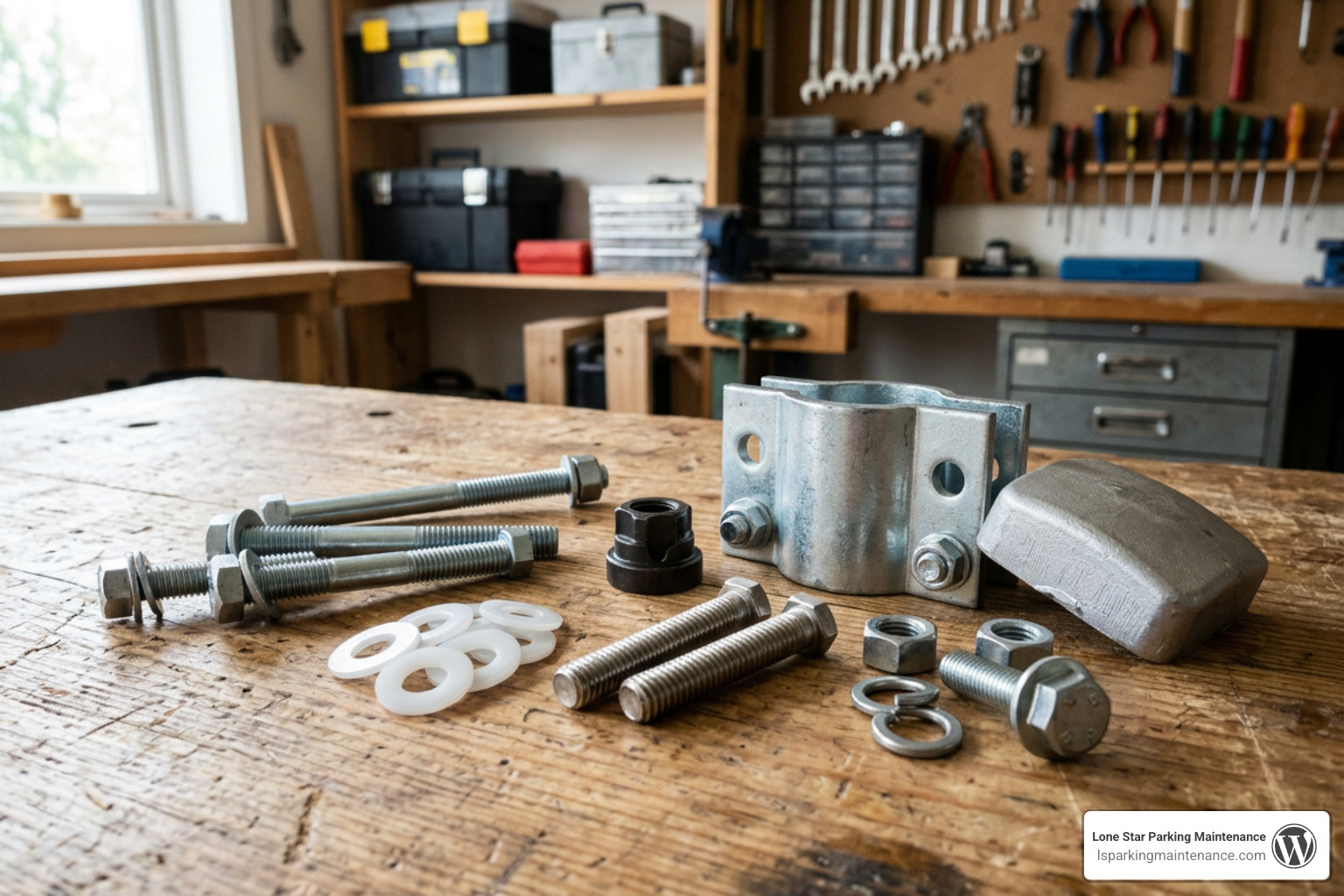
- Fasteners and Bolts: High-grade 5/16″ x 2″ zinc-plated or stainless steel hex bolts are the industry standard for U-channel and square posts.
- Protective Nylon Washers: Placing UV-resistant nylon or neoprene washers between the steel bolt head and the aluminum sign face prevents the metal fastener from scratching the sign’s reflective sheeting, stopping corrosion before it starts.
- Tamper-Resistant Security Hardware: Utilizing vandal-proof breakaway shear nuts, one-way fasteners, or BoltGuard enclosures stops unauthorized sign removal on commercial lots.
- Multi-Sign Brackets: Specialized clamp kits allow dual back-to-back sign mounting on round or square posts without requiring extra field drilling.
- Protective Post Caps: Heavy-duty aluminum acorn caps or pyramid caps on open round and square posts keep out rain, ice, and nesting insects.
Key Buying Factors: Material, Wind Load, and Long-Term Maintenance
Selecting the right post materials protects your capital investment and maintains clear commercial branding. Many property managers also coordinate posts with branding your asphalt custom parking signs with logo to maintain a polished property image.
- Corrosion Protection Systems: Hot-dip galvanization provides superior long-term corrosion resistance in extreme heat and humidity. Baked enamel coatings deliver a clean aesthetic but require touch-ups if the paint is scratched down to bare metal.
- Wind-Load Resistance: In high-wind areas across North Texas, large regulatory panels (such as 24×30-inch stop signs) require 2-1/4″ square steel posts or heavy 3 lb/ft U-channel posts to resist wind deflection.
- Total Lifecycle Economics: While flexible spring-loaded posts cost more initially than standard steel posts ($260–$450 vs. $35–$70), they pay for themselves after the first avoided vehicle collision by preventing post replacement and pavement damage.
Frequently Asked Questions About Parking Lot Sign Supports
What is the standard depth for driving in-ground sign posts?
In natural soil or turf islands, sign posts should be driven between 36 and 42 inches (3.0 to 3.5 feet) deep. This depth provides sufficient lateral stability against 60+ mph wind loads while allowing crews to extract damaged posts without using heavy excavation machinery.
How do flexible sign posts rebound after vehicle impact?
Flexible sign posts use high-tensile carbon steel reactive springs, industrial elastomer cores, or reinforced flexible polymer shafts housed within a heavy-gauge surface-mount base. When struck by a vehicle bumper, the internal spring mechanism deflects up to 360 degrees, absorbing impact energy before pulling the post back to its vertical position.
Which sign post type provides the best resistance in high-wind conditions?
Perforated square galvanized steel posts (such as 2″ or 2-1/4″ Telespar systems) offer the highest torsional resistance under high wind loads. Their four flat exterior walls provide structural support that stops sign panels from twisting during heavy gusts.
Conclusion
Keeping your parking lot safe, compliant, and visually sharp requires sign posts built for long-term durability. From ADA-compliant accessible stalls to dynamic valet lanes, matching the right post, base, and mounting hardware protects your property and minimizes ongoing maintenance costs.
Our team at Lone Star Parking Maintenance provides complete parking lot solutions across the DFW Metroplex. Whether you need turnkey post installation, damaged hardware replacements, or full-service parking lot striping, we deliver quality materials installed to exacting industry standards. Reach out to our crew today to schedule an on-site property evaluation.