
Why the Right Parking Spot Sign Matters More Than You Think
A parking spot sign does more than mark a space — it keeps drivers safe, prevents legal headaches, and tells people your property is well-managed.
Here’s a quick look at the most common types and what they’re used for:
| Sign Type | Primary Purpose |
|---|---|
| Handicap / ADA | Mark accessible spaces required by law |
| Reserved Parking | Designate spots for specific people or roles |
| No Parking | Prevent unauthorized or unsafe parking |
| Fire Lane | Keep emergency access routes clear |
| Visitor Parking | Direct guests to approved areas |
| Tow-Away | Warn drivers of enforcement consequences |
| EV Charging | Reserve spots for electric vehicles |
For DFW property managers, getting signage right isn’t optional. Faded, missing, or non-compliant signs can expose you to ADA violations, liability claims, and general chaos in your lot.
The good news? Choosing the right sign is straightforward once you understand the basics — materials, reflectivity, size, compliance, and installation hardware.
This guide covers everything you need to make a confident decision.
Explore more about parking spot sign:
Choosing the Right Parking Spot Sign for Your Facility
To design a highly functional and organized layout, we must understand the specific roles different signs play. Every commercial facility has unique operational demands, and deploying a targeted mix of signage is the best way to keep drivers informed and traffic moving smoothly.
Let’s look at the primary categories of parking signs you will need to consider:
- Handicap Parking Signs: These are the most critical signs in any lot. They must feature the international symbol of accessibility and comply with strict federal and state guidelines. To ensure you meet all legal benchmarks, check out our buying guide for compliant parking lot signs.
- Reserved Parking Signs: Perfect for securing spots for executives, tenants, employee of the month, or specific unit numbers.
- Visitor Parking Signs: Placing clear visitor markers near your main entrance creates a warm, welcoming environment. To optimize your entrance flow, read about the best parking lot entrance signs to keep your property organized.
- Fire Lane Signs: These keeping critical emergency routes clear. In Texas, fire lanes must be marked with highly visible, red-and-white reflective signs to comply with local municipal fire codes.
- Tow-Away Signage: If you plan to enforce parking rules by towing unauthorized vehicles, Texas has incredibly strict rules regarding the layout, text size, and placement of these signs. Failing to meet these requirements can land property owners in hot legal water. You can review the exact state guidelines on the Tow-Away Signage in Parking Facilities – Texas.gov resource page.
For a deeper dive into organizing your property’s entire traffic flow, check out our parking lot signage ultimate guide.
Designing a Custom Parking Spot Sign for Branding
While generic signs get the basic job done, custom signs offer distinct psychological and branding advantages. Did you know that drivers actually obey a custom parking spot sign more frequently than a generic one? A sign that displays a company logo or specific local regulations commands more authority and respect from visitors.
When you customize your signs, you can easily integrate:
- Your corporate logo and brand colors.
- Personalized text (e.g., “Reserved for Dr. Smith” or “Tenants of Suite 200 Only”).
- Specific directional arrows to navigate tricky corners.
For a premium look, many DFW businesses opt for a sleek, high-end design template. For example, a Custom Reserved Parking Spot Sign featuring a black-and-white color scheme provides a modern, upscale aesthetic that elevates the visual appeal of retail centers and corporate offices alike.
If you are planning to customize your property, we recommend reading our resources on branding your asphalt custom parking signs with logo and exploring the ultimate guide to custom made parking lot signs.
In terms of timelines, custom signs are typically made to order. Once a design proof is approved, production takes about 3 to 5 business days, with the final signs delivered to your property within 7 to 10 working days. Prices generally range from $20 to $68 per sign depending on the size, thickness, and reflectivity options you select.
Understanding Material Durability and Weather Resistance
The North Texas climate is notoriously brutal on outdoor assets. Between intense summer heat waves that routinely cross triple digits and sudden severe storms, cheap signs will quickly warp, fade, or peel.
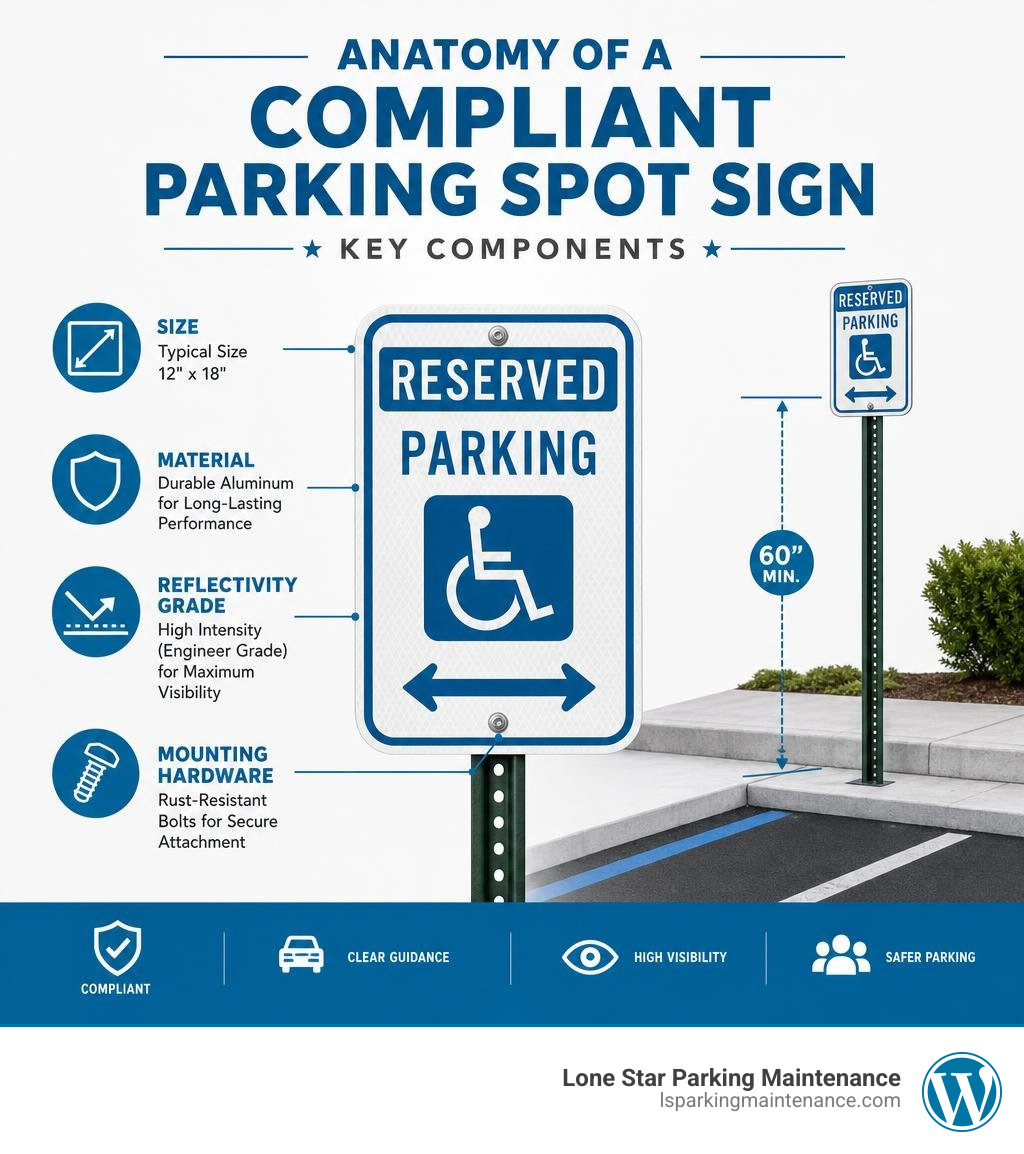
To get the best return on your investment, we recommend selecting heavy-duty, rust-free aluminum. Aluminum signs are lightweight, highly durable, and completely immune to rust. Standard professional signs are available in two primary thicknesses:
- 63 mil (0.063 inches) Aluminum: The standard thickness for most commercial parking lot applications. It provides excellent structural integrity and wind resistance.
- 80 mil (0.080 inches) Aluminum: A heavier, municipal-grade thickness ideal for high-impact areas, high-wind zones, or locations prone to vandalism.
To ensure your custom graphics last through years of intense UV exposure, always opt for signs with a protective laminate coating (such as 3M SmartShield or ProShield). This specialized lamination acts as a shield against weather damage, prevents fading, and allows you to easily wipe away graffiti or spray paint with a simple cleaner.
Reflective vs. Non-Reflective Parking Spot Sign Options
Choosing between reflective and non-reflective materials is one of the most important decisions you will make. Non-reflective signs (often made of steel or plastic) are budget-friendly but only suitable for daytime-only use or highly illuminated indoor parking garages. For any outdoor parking lot accessible to the general public, reflective signs are legally required under federal traffic standards.
Reflective signs use specialized retroreflective sheeting that bounces light from vehicle headlights directly back to the driver’s eyes. There are three primary grades of reflectivity:
- Engineer Grade (EG): This is the entry-level reflective option. It offers decent low-light visibility and a standard outdoor lifespan of around 7 to 10 years. A classic example is the Lavex 18″ x 12″ Engineer-Grade Reflective Aluminum “Reserved Parking / Blank” Safety Sign, which provides a cost-effective reflective surface with space to add custom text or numbers.
- High-Intensity Prismatic (HIP): This grade is three times more reflective than Engineer Grade. It features a microprismatic design that provides exceptional visibility from sharp angles, making it perfect for busy commercial lots. It carries a 10+ year outdoor durability rating.
- Diamond Grade (DG): The gold standard of reflectivity. Diamond Grade is three times more reflective than High-Intensity Prismatic (and a whopping nine times more reflective than Engineer Grade). It returns nearly 60% of available light to the driver. It is highly recommended for municipal roads, dark parking facilities, or high-traffic areas, and boasts a 12+ year outdoor lifespan.
| Reflectivity Grade | Relative Brightness | Outdoor Lifespan | Best Use Case |
|---|---|---|---|
| Non-Reflective | 0x (No reflection) | 5-7 Years | Indoor garages, daytime-only lots |
| Engineer Grade (EG) | 1x (Baseline) | 7-10 Years | Standard low-speed parking lots |
| High-Intensity Prismatic | 3x brighter than EG | 10+ Years | Busy commercial retail centers |
| Diamond Grade (DG) | 9x brighter than EG | 12+ Years | Municipal roads, high-risk intersections |
Regulatory Compliance: ADA, MUTCD, and Texas State Laws
Operating a parking lot in the DFW Metroplex means adhering to a strict web of federal, state, and local ordinances. Failing to install compliant signs can result in hefty fines, towing lawsuits, and potential accessibility lawsuits.
The primary regulatory frameworks you must follow include:
- ADA (Americans with Disabilities Act): Federal law mandates that accessible parking spaces must be clearly designated with a sign featuring the international symbol of accessibility. These signs must be mounted at a specific height so they remain visible even when a vehicle is parked in the space.
- MUTCD (Manual on Uniform Traffic Control Devices): This federal manual dictates the exact colors, shapes, fonts, and sizes required for traffic control signs (including “No Parking” and “Stop” signs) to ensure universal driver recognition.
- Texas State Laws: The state of Texas has specific requirements that build upon federal standards. For instance, Texas handicap signs often require specific penalty language (e.g., “$250-$1000 Fine”) printed on the sign or on a supplemental plaque mounted below it. For a comprehensive breakdown of state guidelines, consult the TEXAS – State Specific Signs compliance bulletin.
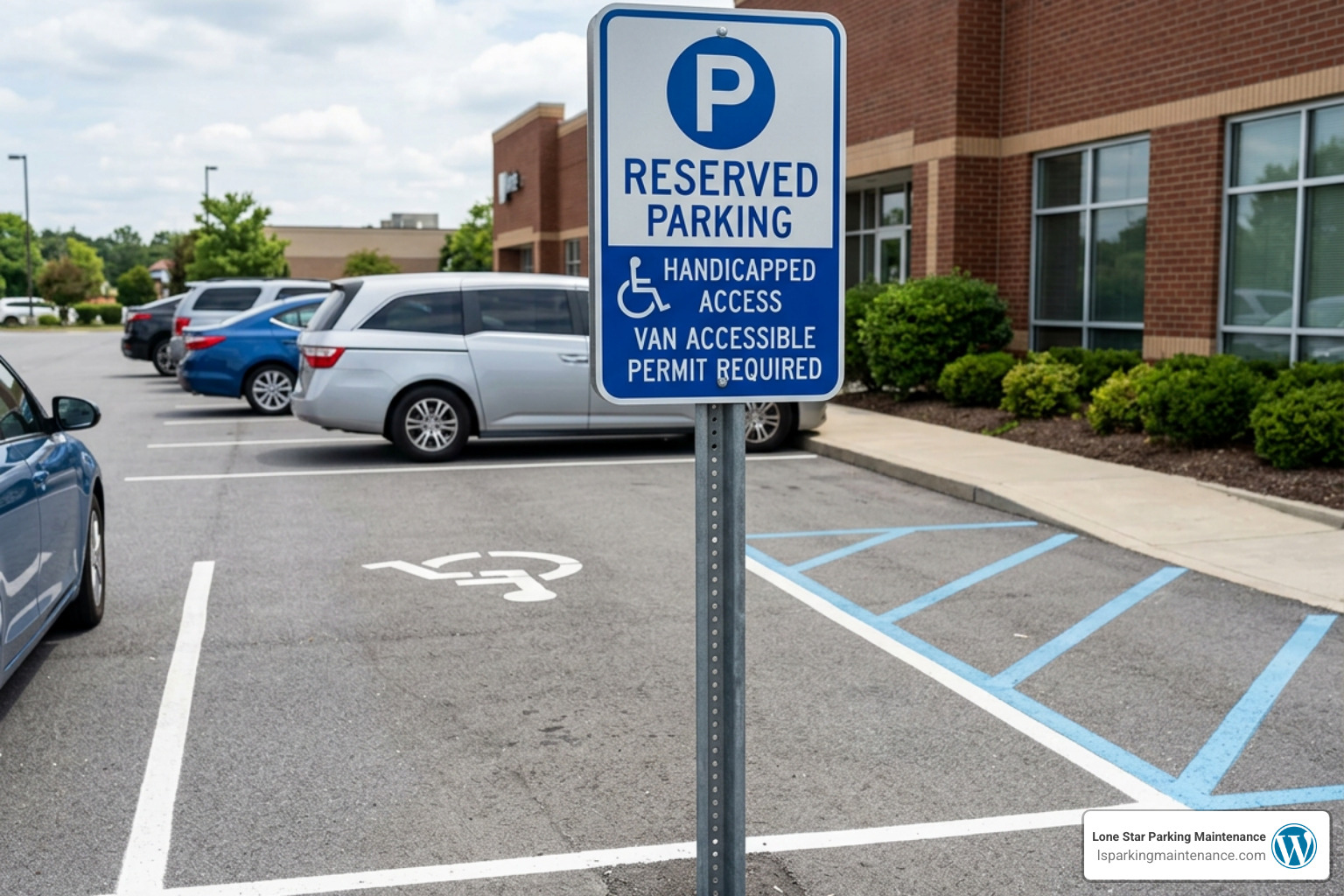
Ensuring your property meets these standards is a core part of professional property management. To learn more about keeping your lot fully compliant, read our guides on everything you need to know about ada parking signs and our comprehensive buying guide for compliant parking lot signs.
Installation Hardware and Placement Best Practices
A high-quality parking spot sign is only as good as its installation. If a sign is mounted too low, it becomes a safety hazard for pedestrians. If it is mounted on a flimsy post, a minor bumper tap or a strong Texas windstorm will knock it flat.
When planning your installation, you must first select the right post type:
- U-Channel Posts: The industry standard for parking lots. Made of heavy-duty steel, these posts feature a “U” shape with pre-drilled holes spaced 1 inch apart, making sign mounting quick and secure. They are highly durable and can be driven directly into the ground or mounted to concrete surfaces.
- Round Posts: These offer a clean, seamless look often preferred for modern office parks and upscale retail developments.
- Square Posts: Extremely rigid and resistant to twisting, making them ideal for large signs or high-wind areas.
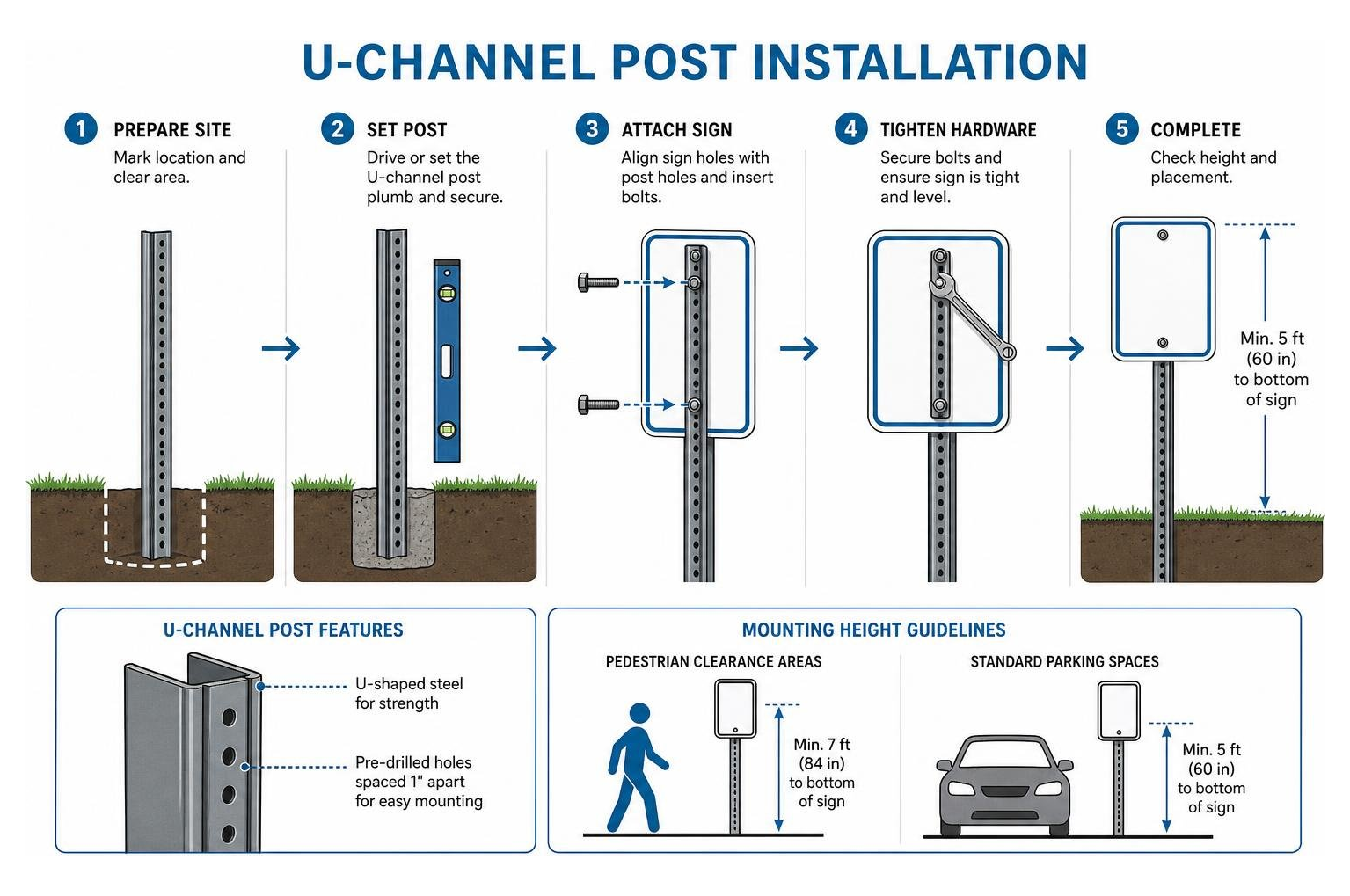
For proper placement and safety, follow these industry-standard mounting heights:
- Pedestrian Clearance Areas: If a sign is installed near a sidewalk or pedestrian walkway, the bottom of the sign must be mounted at least 7 feet (84 inches) from the ground. This prevents pedestrians from accidentally bumping their heads on the metal corners.
- Standard Parking Spaces: In non-pedestrian areas, signs can be mounted at a minimum height of 5 feet (60 inches) from the ground to the bottom of the sign, ensuring they remain visible over the hood of a parked vehicle.
For step-by-step instructions on mounting your hardware correctly, refer to our guide on mounting your ada signs the right way and explore our general parking lot signage services page.
Temporary and Portable Signage Solutions
Not every parking situation requires a permanent metal post driven into concrete. For events, seasonal traffic, construction zones, or dynamic parking policies, portable signage is the perfect flexible solution.
Here are the best temporary parking sign accessories:
- A-Frame Signs: Double-sided plastic stands that can be weighted with sand or water. They are perfect for directing event parking, marking valet zones, or displaying “Lot Full” messages.
- Weighted Rubber Bases: These heavy recycled rubber bases (typically weighing 30, 60, or 90 lbs) hold a portable sign post securely in place. They are highly resistant to tipping over in strong winds but can be rolled away when no longer needed.
- Stenciled Traffic Cones: Using 18-inch or 28-inch traffic cones with stenciled messages (like “Reserved” or “No Parking”) is an easy, highly visible way to temporarily block off specific spaces.
- Vertical Sign Panels: Standing at 45 inches tall, these slim panels are excellent for high-visibility lane dividing or temporary directional arrows.
Frequently Asked Questions About Parking Signs
What is the standard size for a parking spot sign?
The most common standard sizes for commercial parking signs are 12″ x 18″ and 18″ x 24″.
- 12″ x 18″ is the standard size for ADA handicap parking, reserved parking, and visitor parking in typical low-speed parking lot environments.
- 18″ x 24″ (or larger) is used for critical regulatory signs, like stop signs or speed limit signs, or in high-traffic, higher-speed areas where drivers need to read the sign from a greater viewing distance.
- Smaller sizes, like 6″ x 12″ or 10″ x 14″, are ideal for low-speed indoor garages or as supplemental plaques mounted directly beneath a larger sign. For instance, a Custom 6″ x 12″ Parking Sign Reserved Space (blue) or an alphanumeric marker like the Parking Space Sign A-7, SKU: K-6259-A7 can be added to designate specific stall numbers without taking up too much vertical space.
How long do outdoor aluminum parking signs last?
A high-quality, heavy-duty aluminum sign (63 mil or 80 mil) finished with a protective laminate coating will easily last 7 to 12+ years outdoors. Unlaminated signs or cheap plastic/steel alternatives will often begin to fade, crack, or rust within 2 to 3 years due to intense UV exposure and rain. Investing in premium 3M inks and protective laminates ensures your signs remain bright, legible, and professional-looking for a decade or more.
Are reflective signs legally required for private lots?
Yes, if your private parking lot is open to the general public (such as a retail center, medical office, restaurant, or apartment complex), it must comply with federal MUTCD and ADA standards. These regulations mandate that all traffic control and accessible parking signs must be reflective to ensure safe navigation at night. Operating a public-access lot with non-reflective signs can expose property owners to severe liability claims in the event of a nighttime accident.
Conclusion
Choosing and installing the perfect parking spot sign is a critical step in keeping your property safe, organized, and legally compliant. From selecting the right reflectivity grade to ensuring your posts are mounted at the correct height, every detail matters.
While you can purchase signs online, managing the compliance codes, drilling into concrete, and ensuring perfect structural alignment can be a daunting DIY task. That is where we come in.
At Lone Star Parking Maintenance, we provide professional turnkey signage installation, repair, and layout planning across the entire DFW Metroplex. We use only top-quality, industry-standard materials to ensure your signs withstand the harsh Texas weather and keep your property safe and beautiful.
Ready to upgrade your parking lot? Contact us today to discuss your signage needs, and don’t forget to pair your new signs with our professional parking lot striping services to give your facility a clean, brand-new look!