
No Parking in Front of a Driveway: The Rule and the Safe Next Step
In most places, do not park across a driveway entrance, even if it is your own driveway. The street and curb area are usually public right-of-way, so ownership of the home or business does not automatically create a parking exception.
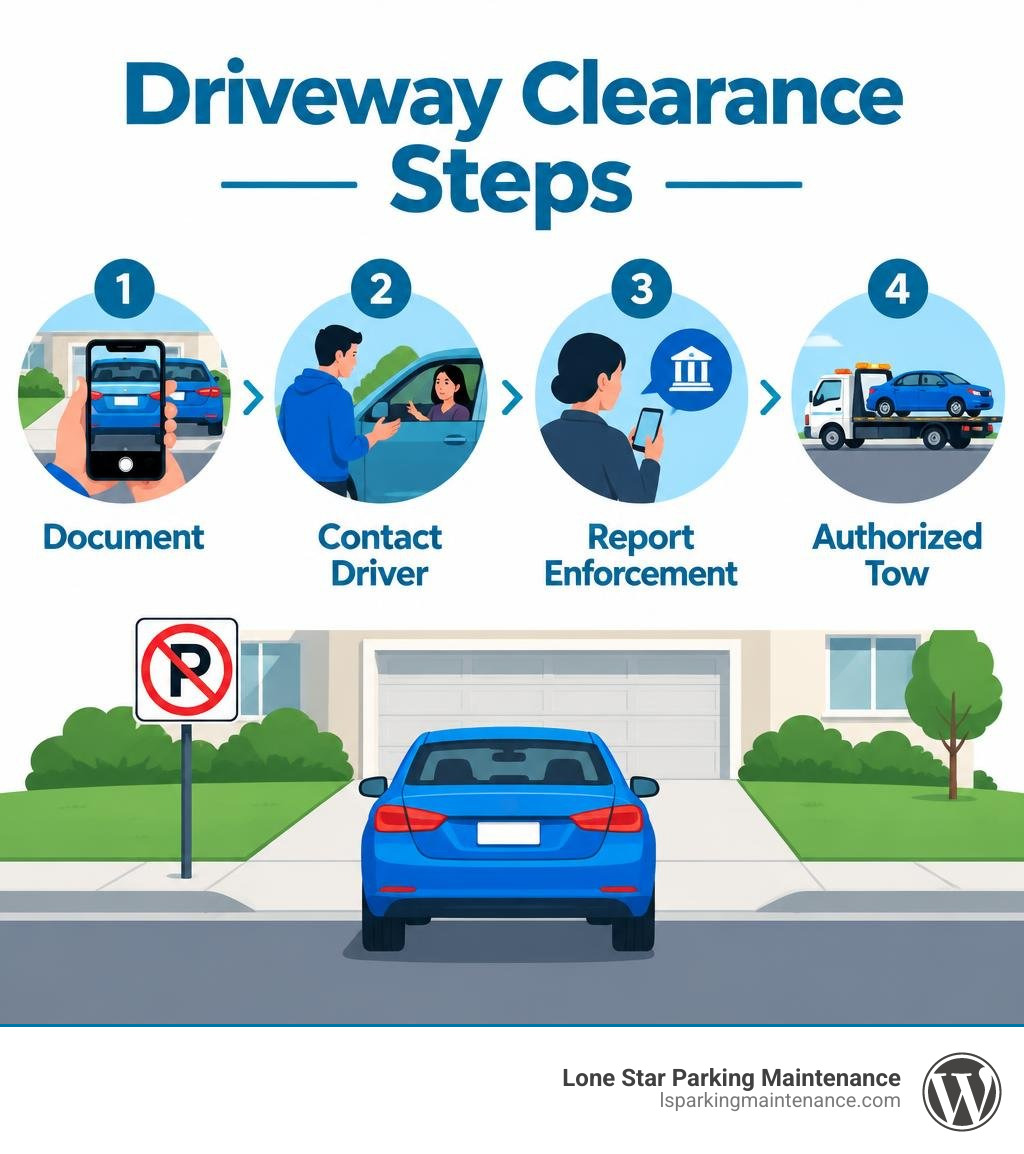
If a vehicle blocks your exit or entrance:
- Take clear photos showing the vehicle, driveway, plate, and time.
- Ask the driver to move if it is safe and practical.
- Report it through local parking enforcement, 311, or the non-emergency police line.
- Do not arrange a private tow from a public street unless local authorities authorize it.
A driveway blockage can lead to a citation, towing, and storage costs. It can also restrict pedestrian access at the curb cut or slow emergency access. Exact rules vary by city, so check the local parking code before relying on a driveway, permit, sign, or painted curb.
I am Cason, and this guide explains the practical rules that help keep driveway exits clear and properties safer.
Understanding the Legal Rules: Can You Park in Front of Your Own Driveway?
It feels entirely counterintuitive: you own the home, pay property taxes, and use the driveway every day. Yet, leaving a vehicle parked on the street across the entrance can still land you a citation. The reason comes down to property boundaries versus municipal control.
While your private driveway sits squarely on your property, the street, curb, and driveway apron belong to the public right-of-way. The moment your tires rest on the roadway, you are subject to the same traffic and parking ordinances that govern any visitor.
Why Public Right-of-Way Prohibits Blocking Your Own Driveway
Municipalities regulate curb space to keep roads navigable, accessible, and safe. When a car parks in the roadway blocking a curb cut, enforcement officers see an obstruction, not your deed of ownership.
Enforcement officers generally cannot determine who owns which vehicle parked along a curb, making uniform enforcement necessary to protect:
- Pedestrian Access: Blocking the sidewalk or apron forces wheelchair users, strollers, and pedestrians onto active traffic lanes.
- Emergency Response: Firefighters and paramedics need unobstructed access to driveways and hydrants.
- Traffic Flow: Narrow neighborhood streets require clear visual lines for turning and oncoming traffic.
Under statutes like California Vehicle Code 22500(e) and municipal guidelines outlined by agencies like the SFMTA, stopping or parking in front of any public or private driveway remains unlawful unless a local exemption explicitly says otherwise.
Municipal Exceptions, Permits, and Curb-Cut Allowances
A few cities provide narrow exceptions, but they are the exception rather than the standard. For example, San Francisco allows residents to park parallel to their own curb cuts on buildings with two or fewer units, provided the vehicle does not encroach onto the sidewalk or into designated “daylighting zones” within 20 feet of crosswalks.
In most jurisdictions, homeowners must apply for temporary street-occupation permits for construction, moving trucks, or dumpsters. Without an official permit, parking on the street across a curb cut remains a citable offense.
Penalties and Fines for No Parking in Front of Driveway Violations
Parking enforcement treats blocked access points seriously. The exact financial penalty depends on local schedules, towing impound rates, and daily storage fees.

Citations and Towing Risks by City
Fines for driveway blocking violations range from $50 to $300 in most US cities, with major metropolitan areas seeing base fines and storage fees easily exceeding $500 for a single incident.
| Jurisdiction / City | Typical Base Fine | Towing Authority | Potential Total Out-of-Pocket Cost |
|---|---|---|---|
| New York City, NY | $95 – $180 | Immediate tow upon complaint | $350 – $700+ (Includes city tow + impound) |
| San Francisco, CA | $108 base citation | Tow under CVC 22651(d) | $400 – $650+ |
| Los Angeles, CA | $60 – $70 base fine | Tow if blocking access | $300 – $550+ |
| Texas Municipalities (DFW) | $50 – $150 | Tow under Transportation Code | $250 – $500+ |
Can Neighbors Call the Police or Order a Tow?
Yes. Parking enforcement is largely complaint-driven. If your vehicle is parked across a driveway—even your own—a neighbor can call the local non-emergency dispatch or 311 line.
Officers verify the street violation directly. Because they cannot confirm owner consent on the spot, they will write a citation or dispatch a city-contracted tow truck. However, neighbors cannot legally call a private tow truck to remove a vehicle from a public street; only authorized law enforcement or parking officials can impound vehicles on public roads.
What to Do When a Vehicle Blocks Your Driveway Exit
Finding an unknown vehicle parked across your driveway can disrupt your entire day. Handling the situation systematically ensures a fast resolution without creating unnecessary neighborhood friction or legal liability.
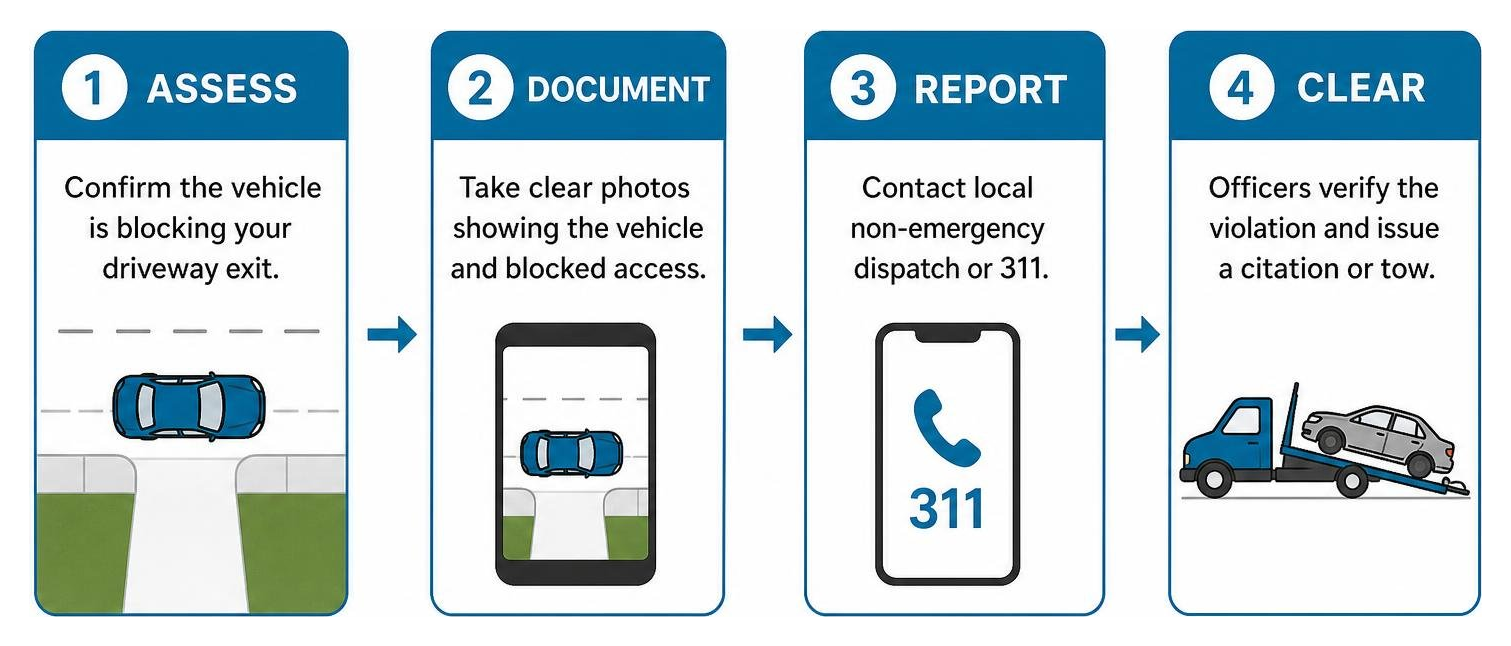
Step-by-Step Resolution for a No Parking in Front of Driveway Issue
If a vehicle blocks your driveway:
- Locate the Driver: If safe and practical, check nearby homes or businesses. Often, delivery drivers or service contractors can move within seconds.
- Document the Obstruction: Take clear, timestamped photos showing the car, license plate, curb cut, and full street perspective.
- Contact Local Enforcement: Call the municipal non-emergency police dispatch or submit a report via your city’s 311 system.
- Let Authorities Dispatch the Tow: Never attempt to physically push, tow, or tamper with an unauthorized vehicle yourself, as this can expose you to civil liability for vehicle damage.
Civil Parking Enforcement vs. Private Property Trespassing
The legal framework shifts based on where the vehicle is sitting:
- On the Public Street (Across the Apron): Governed by municipal traffic codes. Officers issue citations and dispatch contracted municipal towing services.
- On Your Private Driveway Surface: This is considered civil trespassing rather than a municipal street parking violation. Depending on local ordinances, police may not issue a standard parking ticket on private residential land, but property owners can coordinate with licensed private property towing operators where permitted by law.
Driveway Obstruction Laws Across the US, Canada, and the UK
Driveway obstruction laws differ between regions, though all prioritize clear access corridors.
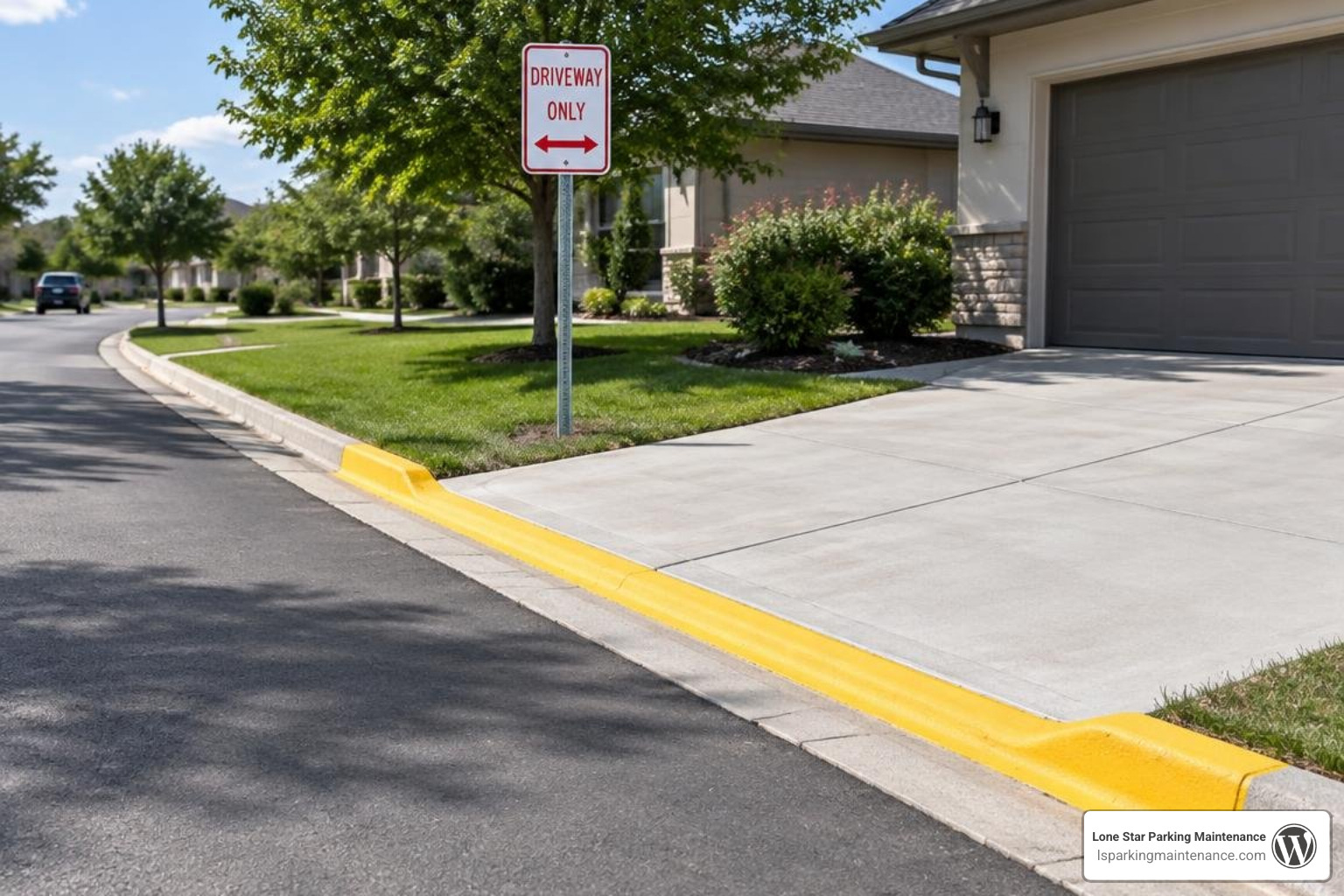
Dropped Kerb and No Parking in Front of Driveway Regulations in the UK
In the UK, driveway access centers on the presence of a “dropped kerb” (a lowered pavement section allowing vehicles to cross the footway). Under the Traffic Management Act 2004, parking across a dropped kerb is an actionable contravention enforced by local councils through Civil Parking Enforcement (CPE).
According to UK dropped kerb parking regulations, parking across a dropped kerb without authorization can lead to a Penalty Charge Notice (PCN). If a driveway lacks a council-approved dropped kerb, driving across the footway is technically unauthorized, limiting the legal protections a resident has when someone parks along that curb line.
Canadian Municipal Bylaws and Toronto’s Three-Hour Rule
In Canadian cities like Toronto, municipal bylaws treat driveway obstruction strictly. According to municipal parking guides for parking in front of your own driveway in Toronto, property owners enjoy no personal exemption for blocking a curb cut.
Furthermore, Toronto enforces an unsigned three-hour parking limit on all public streets unless signage or permits say otherwise. Boulevard and front-yard parking also require explicit permits and zoning compliance.
US Vehicle Codes and Texas Emergency Clearance Mandates
In the United States, driveway blocking is uniformly regulated under state motor vehicle codes. For instance, Texas Transportation Code § 545.302 explicitly makes it illegal to stop, stand, or park a vehicle in front of a public or private driveway.
Beyond basic access, driveways serve as critical corridors for emergency personnel. Municipalities across the DFW Metroplex and Texas enforce International Fire Code standards, treating blocked driveways as serious safety hazards. Reviewing fire lane and emergency vehicle access regulations highlights how driveway obstructions directly compromise first responder access during structure fires and medical emergencies.
Preventing Driveway Obstructions with Signage and Markings
Clear visual markers help deter unauthorized parking before it creates an access problem. Commercial properties, multi-family communities, and residential driveways benefit significantly from visible, compliant markings.
Proper Curb Painting and Visual Indicators
Applying visual paint markers clearly defines driveway borders for oncoming motorists. However, curb painting must comply with local municipal codes:
- Official Paint Standards: Cities establish specific guidelines for red curb (no parking), yellow (loading), and white (passenger pickup) zones.
- Professional Application: High-traffic aprons require durable, weather-resistant materials applied to standard dimensions. Applying compliant curb line striping and markings ensures drivers clearly see driveway transition lines day and night.
- Avoid Unauthorized Markings: Painting a public curb without municipal approval can result in fines for defacing city property.
Installing Compliant Entrance Signage
High-visibility signage provides an immediate, unambiguous deterrent against blocked entrances. Posted notices warn drivers of enforcement zones and tow-away policies before they leave their vehicles unattended.
Deploying clear parking area signs ensures your property boundaries, private entrances, and access lanes remain visible and legally enforceable.
Frequently Asked Questions About Driveway Parking Rules
Can you legally park across your own driveway if you own the house?
In the vast majority of jurisdictions, no. The street surface and curb cut are public right-of-way. Because traffic enforcement officers cannot cross-reference every vehicle’s registration with property deeds, municipal parking codes prohibit blocking driveway entrances regardless of property ownership.
How do emergency vehicle access and fire codes impact driveway parking?
Driveways serve as secondary access points and equipment positioning zones for fire apparatus and ambulances. Blocking these pathways violates municipal safety ordinances and International Fire Code standards, exposing violators to immediate towing and elevated fines.
How long can an unauthorized car park in front of my house without moving?
If a vehicle is parked legally along the curb without blocking a driveway or fire hydrant, most residential ordinances allow parking up to 72 consecutive hours before the car is classified as abandoned and subject to towing. In cities like Toronto, the default limit is much shorter at three hours unless permitted otherwise.
Conclusion
Keeping driveways and property access corridors clear is essential for traffic flow, neighborhood accessibility, and emergency readiness. The golden rule of curb management remains straightforward: avoid parking across any driveway entrance, keep pedestrian pathways accessible, and use official municipal reporting channels if an unauthorized vehicle blocks your exit.
For commercial facilities, residential complexes, and property managers looking to eliminate access issues, professional property markings and clear directional boards make all the difference. Explore compliant parking lot entrance signs from our team at Lone Star Parking Maintenance to keep your facilities organized, accessible, and safe.