
What Mobile Valet Parking Is and Why It Matters in 2026
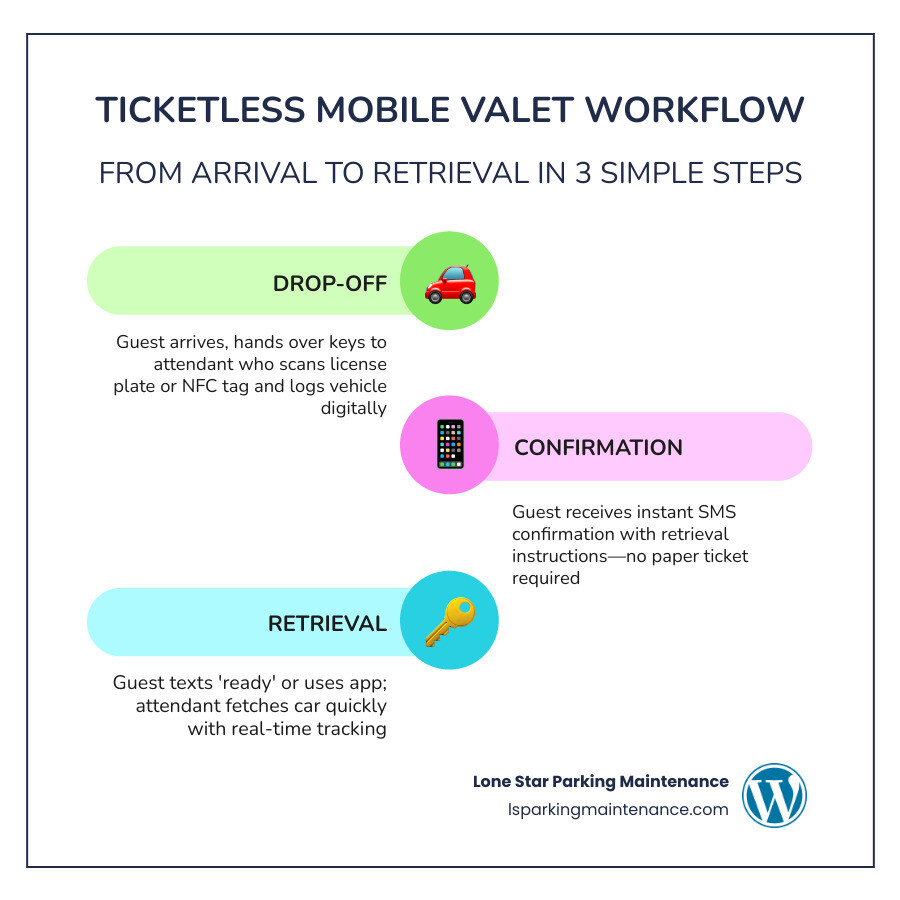
Mobile valet parking is a modern parking service where attendants use smartphones, SMS, and cloud-based software to manage vehicle drop-off, storage, and retrieval — replacing paper tickets with a fully digital workflow.
Quick answer:
- A guest pulls up and hands over their keys
- The attendant logs the vehicle digitally (often via NFC or license plate scan)
- The guest gets a text confirmation — no paper ticket needed
- When ready, the guest texts to request their car
- The attendant retrieves it, and payment happens on a mobile device
It works at hotels, hospitals, restaurants, events, and commercial properties of all sizes.
Parking has always been one of the first and last impressions a guest has of your property. And for a long time, that impression involved a paper stub, a long wait, and a hope that nothing went wrong.
That’s changing fast.
Modern mobile valet systems have replaced the clipboard-and-ticket model with cloud platforms, two-way texting, and real-time vehicle tracking. Industry platforms now process tens of millions of transactions annually — a clear sign that property owners and operators are making the switch at scale.
For property and business owners in the DFW Metroplex, understanding how mobile valet parking works isn’t just about staying current. It’s about protecting your investment, reducing liability, and delivering the kind of arrival experience that keeps guests coming back.
This guide covers everything: the technology, the costs, the insurance standards, the vehicle accommodations, and how it all fits into a well-run commercial property.
Mobile valet parking vocabulary:
The Evolution and Technology of Mobile Valet Parking
The transition from paper to digital hasn’t just been a minor upgrade; it’s a total reimagining of how vehicles move through a facility. In the past, a valet operation relied on “key tags” and “stubs.” If a guest lost their stub, the process ground to a halt. If an attendant’s handwriting was illegible, a car might be “lost” in a sea of 500 vehicles.
In 2026, mobile valet parking utilizes several key technologies to eliminate these friction points:
- Ticketless Systems: By using the guest’s mobile phone number as the unique identifier, the “ticket” is now a digital record stored in the cloud.
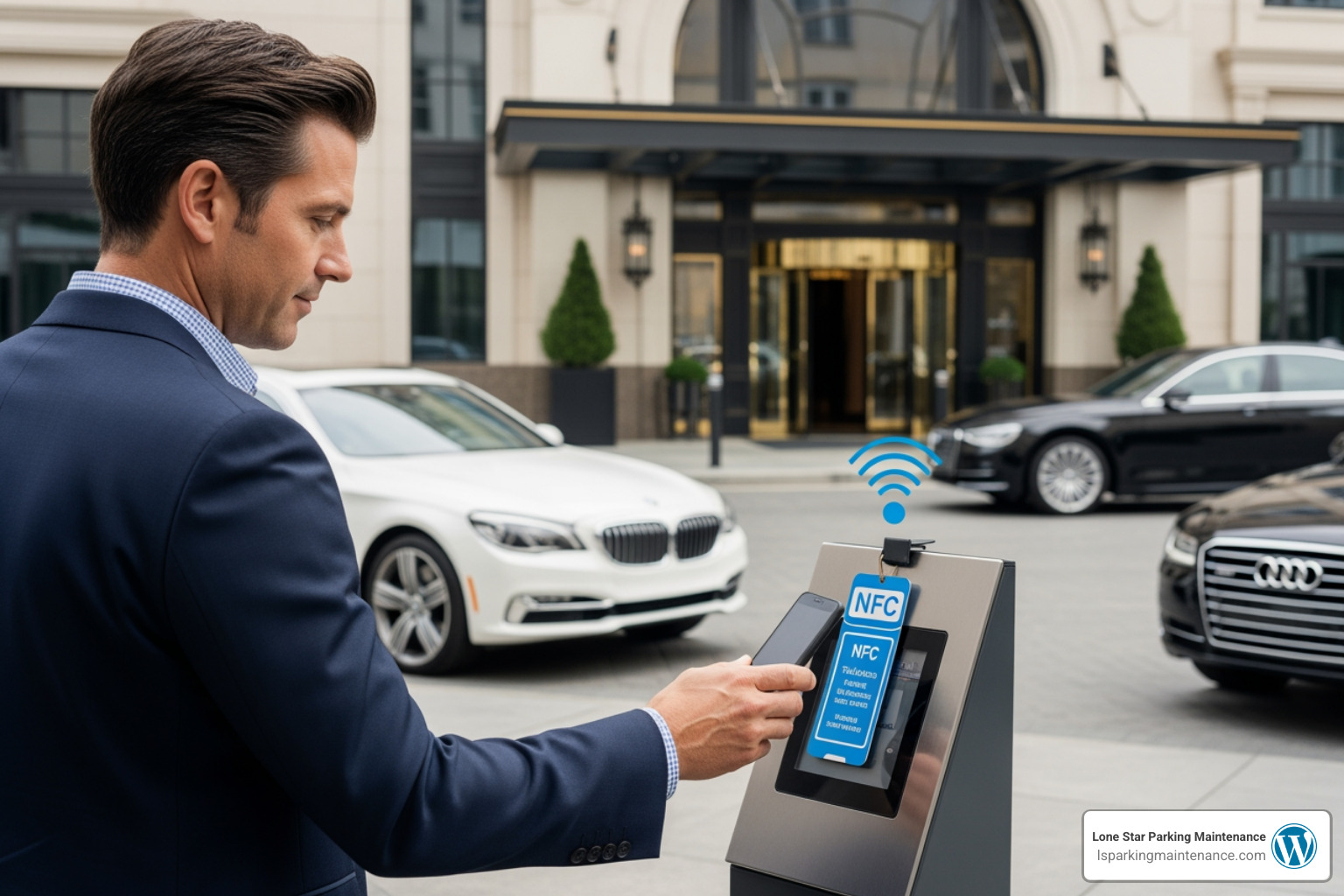
- NFC (Near Field Communication): Many modern stands use NFC tags. A guest simply taps their phone against a sign or a handheld device to instantly launch the valet interface — no typing required.
- SMS-Based Requests: Instead of standing in a drafty lobby waiting for a car to be pulled around, guests send a text message. The system provides an automated ETA, allowing the guest to finish their coffee or close out their bill inside.
- Cloud Platforms: All data is synced in real-time. This means managers can see exactly how many cars are on-site, how long retrieval times are taking, and which staff members are most efficient.
- IoT Connectivity: High-end facilities now integrate with gate arms and sensors, ensuring that every vehicle entry and exit is recorded with timestamped precision.
Enhancing Guest Experience with Mobile Valet Parking
The primary goal of any valet service is hospitality. In the DFW Metroplex, where the sun can be brutal and the rain can be sudden, nobody wants to wait on a curb.
Modern mobile valet parking solutions prioritize an “app-free” interface. We’ve found that guests are hesitant to download a new app just to park their car for two hours. Instead, they receive an SMS with a secure web link. This link allows them to:
- Request their vehicle.
- Pay for the service via Apple Pay, Google Pay, or credit card.
- Add a digital tip for the attendant.
- View a digital receipt for expense reporting.
This two-way communication reduces “wait-time anxiety.” When a guest knows their car will be at the front in exactly seven minutes, they feel in control of their schedule.
Real-Time Auditing and PARCS Integration
For the property owner, the “magic” happens behind the scenes. mobile valet parking systems often integrate directly with PARCS (Parking Access and Revenue Control Systems). This creates a unified record of every vehicle on the property, whether it’s a self-parker or a valet guest.
Key benefits of this integration include:
- Revenue Visibility: Owners can see live data on collections, preventing the “shrinkage” or theft that sometimes plagues cash-heavy paper systems.
- License Plate Capture: Many systems use cameras or handheld scanners to log plates. This ensures that even if a phone number is entered incorrectly, the vehicle is always identifiable.
- Transaction Tracking: Every move is logged. If a car is moved from a staging area to a long-term garage, the system records which runner moved it and when.
For a deeper look at how these systems compare, you can check out Detailed Reviews Of The Top 10 Valet Parking Services.
Strategic Benefits for Modern Property Owners
Adopting mobile valet parking isn’t just a “nice to have” for luxury hotels; it’s a strategic business move that impacts the bottom line. Last year alone, major platforms like TEZ facilitated more than 18,000,000 transactions across the Americas, proving that digital is the new standard.
| Feature | Traditional Paper Valet | Modern Mobile Valet |
|---|---|---|
| Ticket Loss | High risk; requires manual verification | Zero; digital record tied to phone/plate |
| Revenue Fraud | Vulnerable to “lost ticket” scams | Virtually impossible; real-time auditing |
| Labor Management | Based on “gut feel” | Driven by real-time queue data |
| Guest Communication | None (guest must walk to the stand) | Instant SMS updates and ETAs |
| Payment Options | Mostly cash or physical card | Mobile, NFC, and digital wallets |
Operational Efficiency and Damage Tracking
One of the biggest headaches for any parking operator is the “pre-existing damage” claim. We’ve all seen it: a guest discovers a dent and insists it happened while the car was in the valet’s care.
Digital damage tracking has revolutionized this. When a vehicle arrives, attendants use their mobile devices to take high-resolution photos of all four sides of the car. These photos are timestamped and attached to the digital ticket.
- Liability Reduction: If a claim arises, the operator has instant proof of the vehicle’s condition upon arrival.
- Digital Logs: Every incident, from a minor scrape to a mechanical issue, is logged immediately, providing property owners with a clear paper trail for insurance purposes.
- Real-Time Car Counts: Operators can see exactly how many spaces are left in the garage, allowing them to pivot to “Team Directed” self-parking or off-site overflow before a logjam occurs.
Versatile Applications Across Industries
In the DFW Metroplex, we see mobile valet parking being used in diverse environments:
- Medical Centers: Hospitals use valet to assist patients with mobility issues. Digital systems allow staff to prioritize “patient-ready” retrievals.
- Shopping Malls: High-end retail centers use mobile valet to encourage longer stays; guests can request their car while they are still finishing their last purchase.
- Private Events: From weddings in Plano to corporate galas in downtown Dallas, mobile systems allow for “customized parking plans” that handle 100+ cars with a small, efficient team.
- Luxury Residential: Condominiums use these systems to manage resident vehicles and guest parking through a single, streamlined interface.
When you hand over the keys to a $100,000 vehicle, trust is the only currency that matters. Reputable mobile valet parking companies maintain rigorous standards to protect both the guest and the property owner.
$1M Insurance Coverage Standards
In the parking industry, not all insurance is created equal. A “professional” valet company should provide a comprehensive package. The industry benchmark for top-tier providers currently sits at an $1M insurance package. This isn’t just a big number; it’s a collection of specific protections:
- Garage Liability: Covers bodily injury or property damage caused by an accident in the parking area.
- Personal Injury: Protects against claims of libel, slander, or wrongful eviction.
- Full Workman’s Compensation & Disability: Ensures that if an employee is hurt on the job, the property owner isn’t held liable for medical bills.
- Garage Keepers Fire, Theft, and Collision: This is the big one. It covers damage to the guest’s vehicle specifically while it is in the operator’s “care, custody, and control.”
Managing EVs and Oversized Vehicles in Mobile Valet Parking
The automotive landscape is changing. In 2026, a valet stand that can’t handle an Electric Vehicle (EV) or a massive dually truck is essentially obsolete.
- EV Charging Coordination: Many mobile valet parking services now offer “Charge & Park” options. The valet monitors the charging status and moves the car to a standard spot once it’s full, freeing up the charger for the next guest.
- Height Restrictions: Urban garages in Dallas often have strict height limits, frequently around 6’8″. Mobile systems can flag oversized vehicles during the intake process, alerting the runner to park the vehicle in a designated surface lot area instead of a low-clearance garage.
- Specialized Staging: For exotic “supercars,” operators often use “neutral-park workflows” to ensure the vehicle is handled according to manufacturer specs.
Security Protocols and Professional Standards
A digital system is only as good as the people running it. Professional valet operations in the DFW area emphasize:
- Attended Facilities: 24/7 staffing ensures that the lot is never left vulnerable.
- Background Checks: Rigorous screening for all “runners” and supervisors.
- Key Management: Keys are stored in secure, coded lockboxes, with every access event logged digitally.
- Professional Signage: Clear, well-maintained signage is vital for safety. At Lone Star Parking Maintenance, we know that clear parking lot signage and bright lot lighting are the first line of defense against accidents and theft.
Frequently Asked Questions about Mobile Valet
How does ticketless valet work for the guest?
The guest simply provides their phone number to the attendant. They receive a text message with a link that serves as their “digital ticket.” They use this link to request their car and pay when they are ready to leave. No apps, no paper, no hassle.
What are the typical costs and pricing models in 2026?
Pricing varies based on the location. In high-traffic urban areas like the Dallas Flatiron District, valet can start around $29/hour. For events, companies usually charge a flat fee based on the number of guests and the duration of the event. Property owners may also choose a “subsidized” model where the business pays a monthly management fee to keep the service free for their customers.
How do mobile systems prevent parking fraud?
Because every transaction is logged in a cloud-based dashboard, there is a “digital paper trail” for every dollar. Managers can compare the number of cars logged in the system against the revenue collected. Furthermore, license plate recognition prevents guests from claiming they “lost” a ticket to avoid paying for overnight stays.
Conclusion
As we move through 2026, the “Park It Like It’s Hot” mentality is all about speed, security, and sophistication. Mobile valet parking has turned a once-clunky process into a seamless digital experience that benefits everyone involved—from the guest who wants their car in minutes to the property owner who needs to minimize liability and maximize revenue.
However, even the most advanced digital system can’t fix a crumbling parking lot. The physical foundation of your parking operation is just as important as the software. A valet runner can’t safely navigate a lot with faded lines, dim lighting, or dangerous potholes.
At Lone Star Parking Maintenance, we specialize in making sure your DFW Metroplex facility lives up to the high standards of your valet service. From crisp parking lot striping that guides traffic flow to professional sealing and power washing that keeps your property looking its best, we provide the essential maintenance that keeps your parking operation running smoothly.
Whether you are managing a luxury hotel in Fort Worth or a busy medical center in Dallas, your parking lot is your “welcome mat.” Make sure it’s safe, clean, and ready for the future of parking.
For more information on how to keep your facility in top shape, visit https://www.lsparkingmaintenance.com/.