
Why the Right Wheel Stopper Can Make or Break Your Parking Lot
A wheel stopper is one of the simplest — and most overlooked — safety tools in any parking lot.
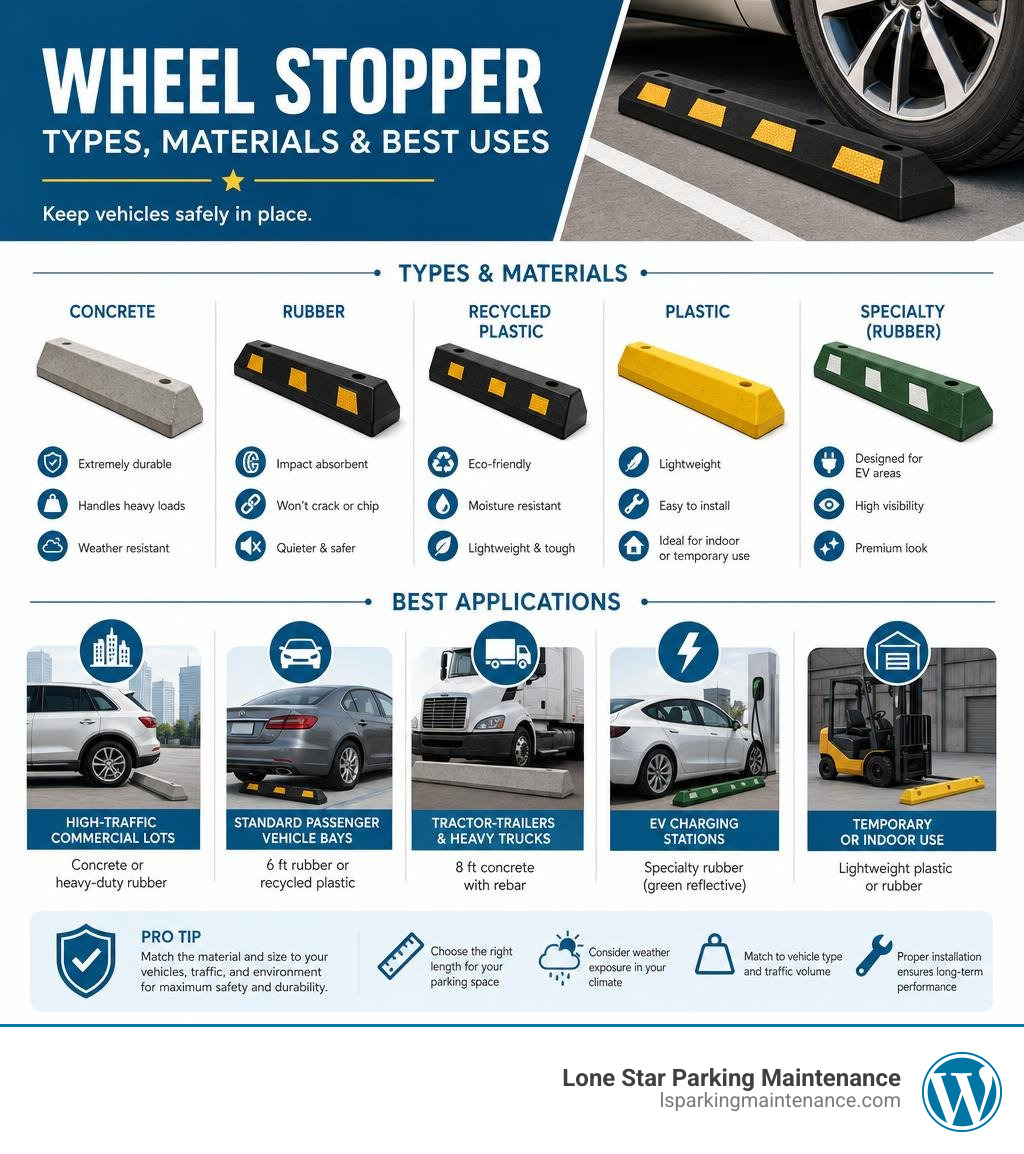
If you manage a commercial property in the DFW Metroplex, here’s a quick answer to help you choose the right one:
Quick Guide: Choosing a Wheel Stopper
| Need | Best Option |
|---|---|
| High-traffic commercial lot | Concrete or heavy-duty rubber |
| Standard passenger vehicle bays | 6 ft rubber or recycled plastic |
| Tractor-trailers and heavy trucks | 8 ft concrete with rebar |
| EV charging stations | Specialty rubber (green reflective) |
| Temporary or indoor use | Lightweight plastic or rubber |
Every year, parking lots across the country see preventable damage — vehicles rolling into storefronts, jumping curbs, or encroaching on pedestrian walkways. Wheel stoppers prevent exactly that.
They’re also known as parking blocks, curb stops, parking chocks, and parking bumpers. Different names, same job: keep vehicles firmly in place.
The challenge most property managers face isn’t knowing they need wheel stops. It’s knowing which type to buy, what size fits their lot, and what materials hold up in Texas heat and weather.
This guide covers all of it.
Discover more about wheel stopper:
What is a Wheel Stopper and How Does It Work?
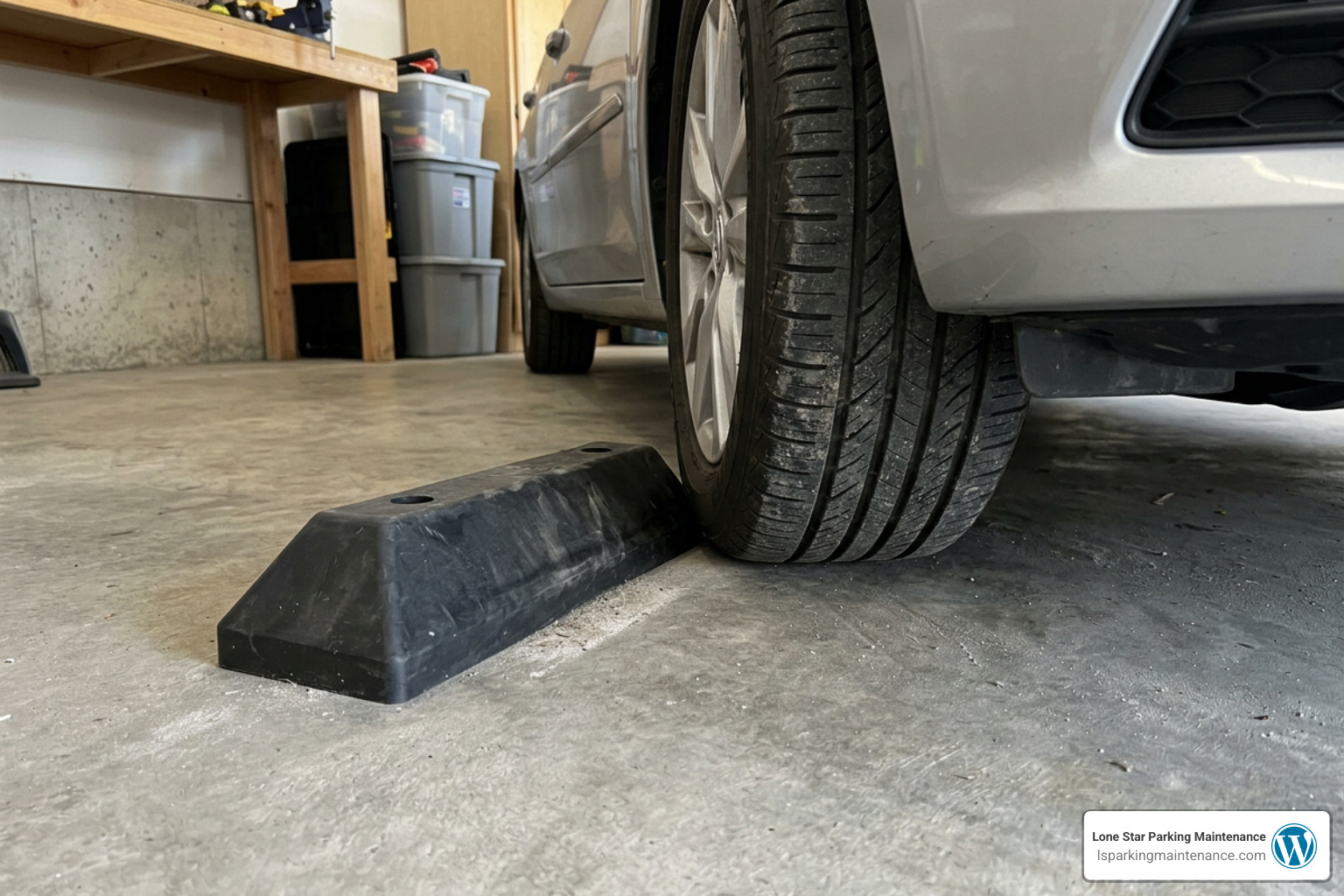
At its core, a wheel stopper is a physical barrier installed at the end of a parking space. It is designed to limit the forward travel of a vehicle as it pulls into a bay.
The mechanics are incredibly simple. As a driver slowly steers into a parking spot, the tires eventually make contact with the raised block. This contact provides immediate, physical resistance feedback to the driver. It tells them, “Hey, stop right here! You’ve reached the limit of your space.”
By stopping the vehicle’s tires, these blocks prevent the front bumper from overhanging sidewalks, landscaping, or adjacent parking spots. They also prevent vehicles from rolling forward or backward due to brake failure or driver forgetfulness.
In indoor garages and residential setups, smaller versions of these blocks keep cars from dinging drywall, workbenches, or hot water heaters.
Vehicle Wheel Stops vs. Heavy-Duty Wheel Chocks
While they sound similar, vehicle wheel stops and heavy-duty wheel chocks serve entirely different purposes and operate under different regulatory frameworks.
- Vehicle Wheel Stops (Parking Blocks): These are permanent or semi-permanent fixtures anchored directly into the asphalt or concrete surface of a parking lot. They are designed for daily, low-speed traffic control.
- Heavy-Duty Wheel Chocks: These are portable, temporary wedge-shaped blocks placed tightly against a stationary vehicle’s tires. They are primarily safety devices used during loading, unloading, maintenance, or emergency roadside stops to prevent accidental rolling.
For industrial facilities, warehouses, and loading docks, using portable wheel chocks is often a strict regulatory requirement. Under OSHA and FMCSA regulations, chocks must be placed under the rear wheels of commercial trucks and trailers to prevent “trailer creep” or accidental movement while forklifts are loading goods.
While parking blocks organize the traffic flow of your lot, chocks are what you keep on hand for heavy-duty safety during active operations. If you want to learn more about how permanent concrete fixtures compare to other lot safety measures, check out our guide on how Precast Concrete Wheel Stoppers Stop Cars in Their Tracks.
Comparing Wheel Stopper Materials and Types
Choosing the right material for your parking lot safety infrastructure depends on your budget, traffic volume, and the local climate. In the DFW Metroplex, our intense summer heat can quickly degrade low-quality plastics, while heavy downpours require durable anchoring.
Here is how the three most common materials stack up against one another:
| Feature | Concrete | Recycled Rubber | Recycled Plastic |
|---|---|---|---|
| Durability | Extremely high (3,500 – 8,000 PSI) | High (shatter-proof) | Moderate to High |
| Weight | Very heavy (220 – 500 lbs) | Lightweight (~35 lbs) | Lightweight (~30 lbs) |
| Installation | Requires heavy lifting & pins | Simple (one-person job) | Simple (one-person job) |
| Weather Resistance | Excellent (can chip over decades) | Exceptional (UV & heat resistant) | Good (can warp under extreme heat) |
| Visibility | Requires regular repainting | Molded-in reflective tape | Molded-in safety colors |
| Best For | Commercial lots, heavy trucks | Retail parking, indoor garages | ADA pathways, temporary lots |
Concrete and Metal Parking Blocks
Concrete is the traditional gold standard for parking lots. High-quality commercial concrete blocks are manufactured with a compressive strength of 3,500 to 8,000 PSI. To ensure they don’t crack or shear under the weight of heavy vehicles, they are reinforced with internal steel rebar (often a double-spine #3 rebar) and advanced fiber additives.
Because a standard 6-foot concrete block weighs well over 200 pounds, it stays firmly in place even if nudged by an SUV. This makes them ideal for high-impact industrial zones, busy retail centers, and fleet parking. However, because of their extreme weight, they require professional installation and specialized equipment to deliver and pin down safely.
Metal parking stops (usually made of heavy-duty steel or iron pipes) are less common but are occasionally used in heavy industrial facilities. They offer unmatched resistance to massive impacts but lack the forgiving nature of rubber or concrete, meaning they can cause significant alignment and bumper damage to standard passenger cars.
Rubber and Recycled Plastic Curb Stops
If you are looking for a highly visible, eco-friendly, and cost-effective alternative, recycled rubber and plastic are fantastic options.
- Recycled Rubber: Made from 100% recycled car and truck tires, rubber wheel stops are incredibly resilient. They are flexible enough to mold to the natural imperfections of uneven asphalt or concrete surfaces. Weighing only about 35 pounds for a 6-foot strip, they can be easily installed by a single technician. They don’t chip, rust, or crack, and they come with molded-in reflective yellow chevrons that never require repainting.
- Recycled Plastic: These are lightweight, solid-color blocks that offer excellent resistance to chemicals, oils, and salt. They are easy to transport and install, making them popular for quick lot upgrades or temporary parking arrangements.
Key Benefits of Installing Wheel Stops in Parking Lots
Why invest in professional wheel stopper installation for your commercial property? The benefits extend far beyond simply keeping cars lined up neatly.
- Pedestrian Safety: By preventing vehicles from pulling too far forward, wheel stops keep sidewalks and pedestrian pathways completely clear. This is crucial for maintaining safe ADA-compliant access routes around your property.
- Structural Protection: A runaway car or an distracted driver can easily coast into a storefront, utility pole, or dumpster enclosure. Strategic wheel stops act as a reliable last line of defense for your physical assets.
- EV Charging Station Safety: Electric vehicle charging pedestals are expensive, high-voltage investments. Installing specialty rubber wheel stops with bright green reflective strips ensures drivers park at the exact distance required to plug in safely without risking a costly collision with the charger itself.

Preventing Property and Vehicle Damage
The cost of repairing a damaged storefront, replacing a cracked concrete curb, or settling a premises liability claim dwarf the minor cost of parking lot maintenance.
When installed correctly, wheel stops protect your landscaping from being torn up by front bumpers, keep vehicles from blocking fire lanes, and prevent cars from scraping their undercarriages on high concrete curbs.
If you are planning to upgrade your facility’s safety layout, we’ve put together a practical, step-by-step walkthrough on How to Install Wheel Stops in 5 Simple Steps to help you visualize the process.
How to Choose the Right Stopper for Your Needs
Not all parking spots are created equal. To select the perfect wheel stop, you must evaluate the types of vehicles that frequent your property and the layout of your facility.
Choosing a Wheel Stopper for Vehicles and RVs
The size of the vehicle dictates the size of the block:
- 6-Foot Standard Stops: This is the industry standard for passenger cars, SUVs, and light trucks. It fits perfectly centered within a standard 9-foot wide parking space.
- 8-Foot Heavy-Duty Stops: Designed for tractor-trailers, RVs, and heavy commercial vehicles. These blocks are taller (usually 5 to 6 inches) and heavier (up to 500 lbs for concrete models) to stop large wheels without being rolled over.
- Compact 3-Foot (900mm) Stops: Excellent for tight residential garages, motorcycle parking, or specialized compact-car spots where a full-sized block would create a tripping hazard.
Selecting a Wheel Stopper for Commercial Properties and Industrial Facilities
If you are managing a commercial property, you need to think about the big picture.
In active warehouse loading zones, heavy-duty concrete blocks are essential to handle the sheer force of delivery trucks. For retail storefronts, choosing highly visible rubber stops with bright yellow chevrons helps prevent pedestrians from tripping over them in dark or rainy conditions.
Professional layout planning is critical. Placing stops too close to a sidewalk violates ADA clearance guidelines, while placing them too far back can leave the rear of the vehicle sticking out into active driving lanes.
Frequently Asked Questions about Wheel Stoppers
Are wheel stops required by ADA or local building codes?
Yes, in many jurisdictions. Under the Americans with Disabilities Act (ADA), accessible routes must remain completely free of vehicle protrusions. If a parked vehicle’s bumper overhangs a sidewalk and reduces its clear width to less than 36 inches, you are out of compliance. Wheel stops are the most common solution used to enforce this boundary.
Can rubber wheel stops be installed on both asphalt and concrete?
Absolutely! Rubber wheel stops are highly versatile. The key is using the right anchoring hardware. For concrete surfaces, we use heavy-duty expansion bolts or lag screws. For asphalt, we use longer steel rebar spikes that drive deep into the sub-base to prevent shifting over time.
How do I maintain and inspect my parking lot wheel stops?
We recommend inspecting your wheel stops at least twice a year. Check for loose anchoring pins, severe cracking, or shifting. For concrete blocks, keep them highly visible with a fresh coat of high-durability traffic paint. For rubber and plastic blocks, check that the reflective tape or panels remain securely attached and free of dirt accumulation.
Conclusion
At the end of the day, a high-quality wheel stopper is one of the smartest, most cost-effective investments you can make to protect your property, your customers, and your peace of mind.
At Lone Star Parking Maintenance, we are proud to serve property owners and managers across the DFW Metroplex. Whether you need to outfit a newly paved retail lot, replace cracked concrete bumpers, or install protective barriers for your brand-new EV charging stations, our team brings top-quality materials, strict adherence to safety standards, and unmatched local expertise to every project.
Ready to secure your parking lot? Contact us today to learn more about our comprehensive Protective Pole Covers and Curb Stop Installation services and get a free estimate for your property!