
Why Every DFW Parking Lot Needs a Concrete Wheel Stopper
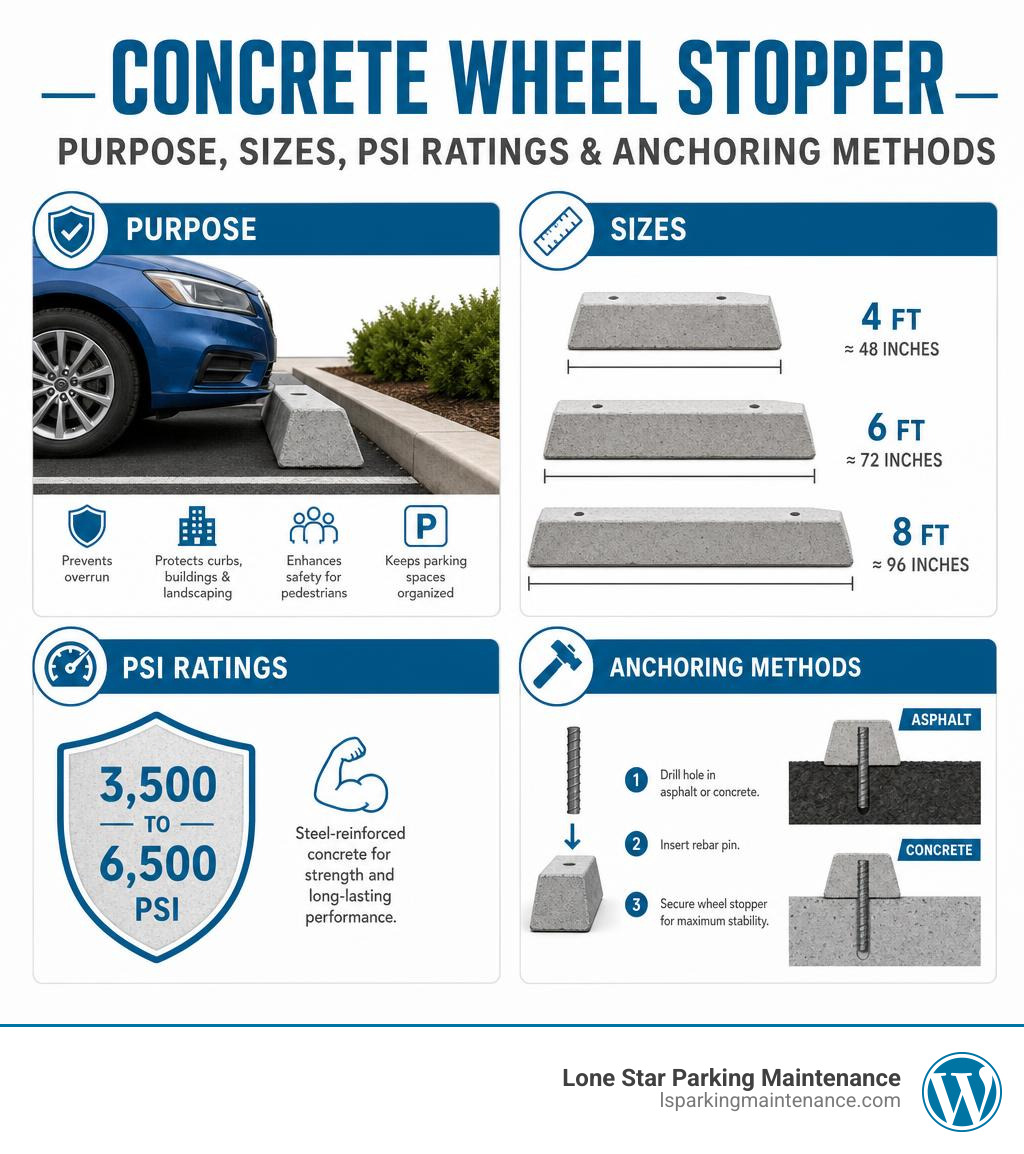
A concrete wheel stopper — also called a parking block, parking curb, or bumper block — is one of the simplest, most cost-effective ways to protect your property, your customers, and your parking lot infrastructure.
Quick answer: What is a concrete wheel stopper?
- A precast concrete block placed at the front of a parking space
- Stops vehicle tires from rolling too far forward
- Protects sidewalks, curbs, landscaping, and pedestrians
- Typically made from steel-reinforced concrete rated between 3,500 and 6,500 PSI
- Available in standard lengths of 4 ft, 6 ft, and 8 ft
- Anchored to asphalt or concrete with rebar pins
If you manage a commercial property in the DFW Metroplex, you already know how fast a parking lot takes a beating. Cracked pavement, faded stripes, scraped curbs — it adds up. Wheel stops are a small investment that prevents a lot of that damage before it starts.
They also keep your lot organized, reduce liability, and signal to customers that your property is well-maintained.
The right concrete parking block for your lot depends on your vehicle types, surface material, and traffic volume. This guide walks you through everything you need to know before you buy.
What is a Concrete Wheel Stopper and Why Do You Need One?
At its core, a concrete wheel stopper serves as a physical barrier that tells drivers exactly where their vehicle needs to stop. Without these sturdy blocks, drivers frequently misjudge the front of their vehicles, leading to bumper overhangs that block pedestrian sidewalks or, worse, direct collisions with building facades, utility poles, and landscaping.
Implementing high-quality wheel stops is a foundational element of commercial lot design. By physically limiting vehicle travel, you protect your physical assets from expensive structural repairs. Concrete Wheel Stops protect people & property from damage vehicles.
In high-traffic retail centers, office parks, and industrial warehouses across the DFW Metroplex, organizing the flow of traffic is essential to keeping operations running smoothly. Properly positioned wheel stops prevent drivers from “pulling through” double parking spaces, which can disrupt the safety of the entire lot. If you are currently designing or updating a commercial facility, integrating wheel stops should go hand-in-hand with your overall traffic flow strategy. To learn more about optimizing your space, check out our guide on Mastering the Art of Industrial Parking Lot Layouts.
Standard Dimensions, Weights, and Material Specifications
Precast concrete parking blocks are not a “one-size-fits-all” product. They are highly engineered safety devices manufactured to strict industrial standards to ensure they do not crumble under the weight of heavy vehicles.
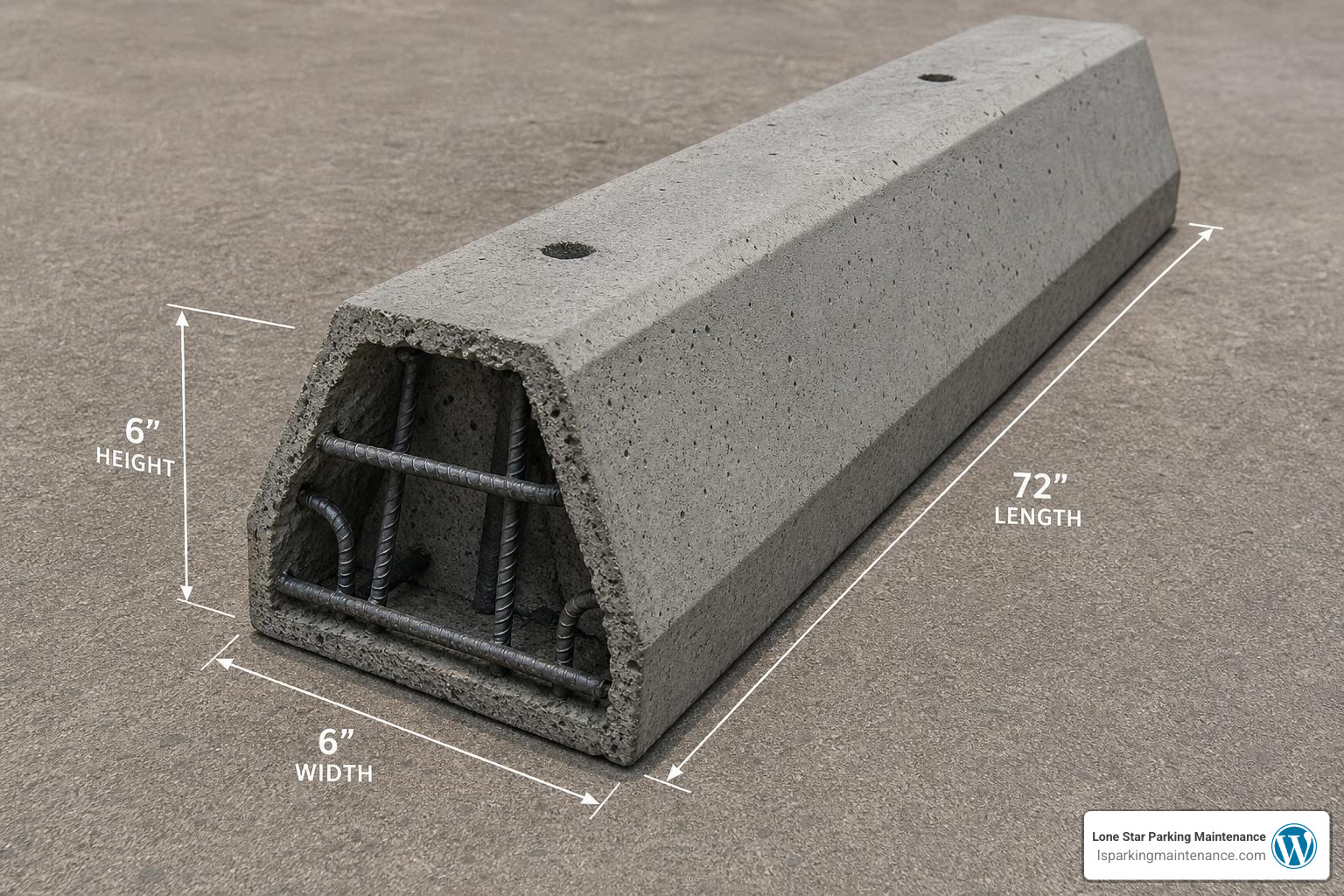
When selecting a concrete wheel stopper, you must look closely at three primary technical specifications: dimensions, weight, and compressive strength (measured in PSI).
- Compressive Strength: Standard commercial blocks generally range from 3,500 PSI to 5,500 PSI. For heavy-duty industrial environments, you can find premium blocks engineered up to 6,500 PSI or even 8,000 PSI with specialized fiber reinforcement (such as FiberLock).
- Internal Reinforcement: High-quality concrete blocks contain internal steel rebar (typically two pieces of #3 or #4 rebar running the length of the block). This steel core ensures that even if the concrete develops a hairline surface crack over time, the block remains structurally whole and does not break into hazardous fragments.
The following table outlines the standard differences between typical passenger car wheel stops and heavy-duty truck stops:
| Specification | Standard Car Parking Stop | Heavy-Duty Truck Wheel Stop |
|---|---|---|
| Common Lengths | 6 feet (72 inches) | 8 feet (96 inches) |
| Height | 4 to 5 inches | 7 to 9 inches |
| Width/Depth | 6 to 8 inches | 10 to 12 inches |
| Average Weight | 125 to 240 lbs | 500 to 1,100 lbs |
| Concrete Strength | 3,500 to 5,500 PSI | 6,000 to 8,000 PSI |
| Internal Reinforcement | Two #3 steel rebar pieces | Four #4 steel rebar pieces |
| Primary Use Case | Retail, offices, apartments | Warehouses, freight yards, loading docks |
Choosing the Right Concrete Wheel Stopper Size for Your Lot
Selecting the right size prevents premature damage to both the wheel stop and the vehicles parking in your lot.
- 4-Foot Blocks: These compact blocks are ideal for tight spaces, motorcycle parking, or unique lot configurations where a standard 6-foot block would crowd the adjacent spaces.
- 6-Foot Blocks (Standard): This is the gold standard for passenger vehicles, SUVs, and light trucks. Weighing between 185 and 233 lbs, they are highly visible, easy to install, and fit perfectly within standard 9-foot-wide parking stalls.
- 8-Foot Blocks & Heavy-Duty Truck Stops: If your DFW facility accommodates delivery box trucks, flatbeds, or 18-wheelers, standard car stops will quickly crush under their massive weight. Heavy-duty truck wheel stops are engineered from the ground up to handle these extreme industrial loads. They stand much taller (up to 9 inches) to prevent large truck tires from easily rolling over them, and they weigh up to 1,100 lbs to withstand repeated heavy impacts.
Material Strength and PSI Specifications
PSI (Pounds per Square Inch) measures the compressive strength of the concrete. A higher PSI means the concrete is denser, stronger, and more resistant to physical impacts and environmental wear.
For standard commercial use in Texas, we recommend a minimum of 3,500 PSI to 4,000 PSI. However, for high-traffic environments or areas subject to heavy commercial vehicles, upgrading to a 5,500 PSI or 6,500 PSI mix is highly beneficial. These stronger mixes are often cylinder-tested at 7-day and 28-day intervals during manufacturing to guarantee their load-bearing capacity.
Furthermore, high-strength precast concrete is designed with low water absorption rates. This is crucial because even though DFW is known for its intense summer heat, we still experience sudden freeze-thaw cycles in the winter. Low absorption prevents water from seeping into the concrete, freezing, expanding, and causing the block to spall or crack.
Installation and Anchoring Methods for Parking Blocks
A concrete wheel stopper is only as reliable as its anchoring system. If a 200-pound block is not properly pinned down, a single bumper impact can slide it out of alignment, creating a severe tripping hazard for pedestrians and leaving your infrastructure completely unprotected.
The installation process varies slightly depending on whether your parking lot surface is asphalt or concrete:
- Layout and Alignment: Before drilling, we carefully mark the placement of each block to ensure uniform alignment across the entire parking row. This maintains a clean, professional aesthetic for your property.
- Drilling Anchor Holes: Precast wheel stops come manufactured with two or three pre-formed vertical anchor holes. We use heavy-duty rotary hammer drills to drill through these guide holes directly into the pavement substrate.
- Choosing the Right Anchors:
- For Asphalt Surfaces: We drive heavy-duty steel rebar spikes (typically 1/2″ or 5/8″ diameter and 12″ to 18″ long) through the block and deep into the asphalt and underlying base rock. The textured ridges of the rebar grip the asphalt, preventing the block from shifting.
- For Concrete Surfaces: Because concrete is much harder than asphalt, driving spikes can crack the surrounding pavement. Instead, we drill precise holes and secure the blocks using heavy-duty concrete anchor bolts or threaded lag bolts combined with industrial adhesive or epoxy for a permanent hold.
Professional installation ensures that the impact load from a vehicle tire is transferred safely into the ground substrate rather than shearing the anchor pins. If you want to make sure your parking lot is fully compliant and securely anchored, you can read more about our professional Protective Pole Covers and Curb Stop Installation services.
Concrete vs. Plastic and Rubber Alternatives
When shopping for parking blocks, you will undoubtedly come across plastic and rubber alternatives. While these lightweight options are easy to ship, they simply cannot match the long-term performance and durability of traditional precast concrete.
For property managers focusing on long-term value, the differences are stark:
- Weight and Stability: A standard rubber stop weighs only 30 to 35 lbs. While this makes it easy for a single person to carry, it also means it lacks structural mass. A vehicle hitting a rubber stop places immense shear stress directly on the anchor pins. A 200+ lb concrete block, however, uses its own massive weight to absorb and dissipate the impact energy, protecting both the pavement and the anchors.
- Extreme Texas Heat: DFW summers are brutal, with pavement temperatures easily exceeding 140°F. Under these extreme conditions, plastic and rubber blocks can soften, warp, expand, and bow. Over time, UV exposure degrades the chemical binders in recycled rubber, causing them to crumble or crack. Concrete is completely unaffected by UV rays and maintains its structural integrity regardless of how high the summer temperature climbs.
- Lifecycle Cost: While plastic or rubber blocks might have a slightly lower initial purchase price or cheaper shipping costs, they frequently require replacement every 2 to 3 years due to warping, cracking, or anchor failure. A high-strength, steel-reinforced concrete block can easily last 15 to 25+ years with virtually zero maintenance, making it the most cost-effective choice over time.
Investing in durable, high-quality concrete infrastructure is key to keeping your business parking lot safe and inviting. To explore how to maintain a pristine, hassle-free commercial property, check out our guide on Smooth Operations for Your Business Parking Lot.
Frequently Asked Questions about Parking Lot Bumpers
How long do concrete wheel stops last?
In a standard commercial parking lot, high-quality precast concrete wheel stops can easily last 15 to 25 years or more. Their lifespan depends largely on the traffic volume, the weight of the vehicles using the lot, and weather exposure. To maximize their lifespan, some property owners apply a concrete sealer or conditioner to protect against oil spills, chemical runoff, and moisture penetration.
What is the standard weight of a concrete parking block?
The weight depends on the length and design of the block. A standard 6-foot passenger car stop typically weighs between 185 and 233 lbs. Smaller 4-foot blocks weigh around 105 to 125 lbs, while heavy-duty 8-foot tractor-trailer blocks weigh 500 to 1,100 lbs. Because of this extreme weight, professional equipment is required to safely deliver and install these units.
Do concrete wheel stops require regular maintenance?
Yes, but the maintenance is minimal. We recommend performing an annual visual inspection of your lot. Look for:
- Hairline cracks that have expanded into deep structural breaks.
- Loose or protruding rebar pins (which present a major tripping hazard for customers and can damage snowplows or vehicles).
- Faded paint or concrete staining.
To keep your lot safe and ADA-compliant, you should periodically repaint your wheel stops. Applying high-visibility safety yellow or bright white traffic paint ensures drivers and pedestrians can easily see them in low-light conditions.
Additionally, keeping your entire parking lot clearly marked is essential for safety. If your parking stripes are starting to fade alongside your wheel stops, it might be time to read up on The Best Compliant Safety Line Striping for High Traffic Zones. If you are also managing other physical structures in your lot, such as light poles or signposts, you can protect them similarly by understanding Everything You Need to Know About Parking Lot Poles.
Secure Your DFW Parking Lot Today
Managing a commercial property in the Dallas-Fort Worth Metroplex is a major responsibility. From retail strip malls in Plano to industrial warehouses in Arlington, keeping your facility safe, organized, and structurally protected is a top priority.
Installing a high-strength concrete wheel stopper system is one of the most effective, set-it-and-forget-it upgrades you can make for your business.
At Lone Star Parking Maintenance, we specialize in providing top-tier parking lot solutions designed to withstand heavy traffic and harsh Texas weather. Whether you need to install brand-new precast concrete wheel stops, replace old cracked blocks, or repaint your existing bumpers for maximum visibility, our team has the local expertise and specialized equipment to get the job done right.
Ready to protect your property and improve your lot’s safety? Schedule your professional curb stop installation with Lone Star Parking Maintenance today, and let us help you keep your business running smoothly.