
Small Cracks, Big Problems: Why Blacktop Crack Filler Matters
Using a black top crack filler is one of the most cost-effective ways to protect your asphalt before minor damage turns into a major repair bill. Here’s a quick look at your options:
Quick Answer: Black Top Crack Filler at a Glance
| Type | Best For | Lasts | Traffic Ready |
|---|---|---|---|
| Cold pour (liquid) | DIY, small cracks up to ½ inch | 1-2 years | 24-48 hours |
| Hot rubberized | Professional, cracks up to 1 inch | Up to 10 years | 10-40 minutes |
| Rope/stick filler | Mid-size cracks ½ to 1 inch | Long-term | After cooling |
That small crack running across your DFW parking lot or driveway might look harmless today. But left untreated, it won’t stay small for long.
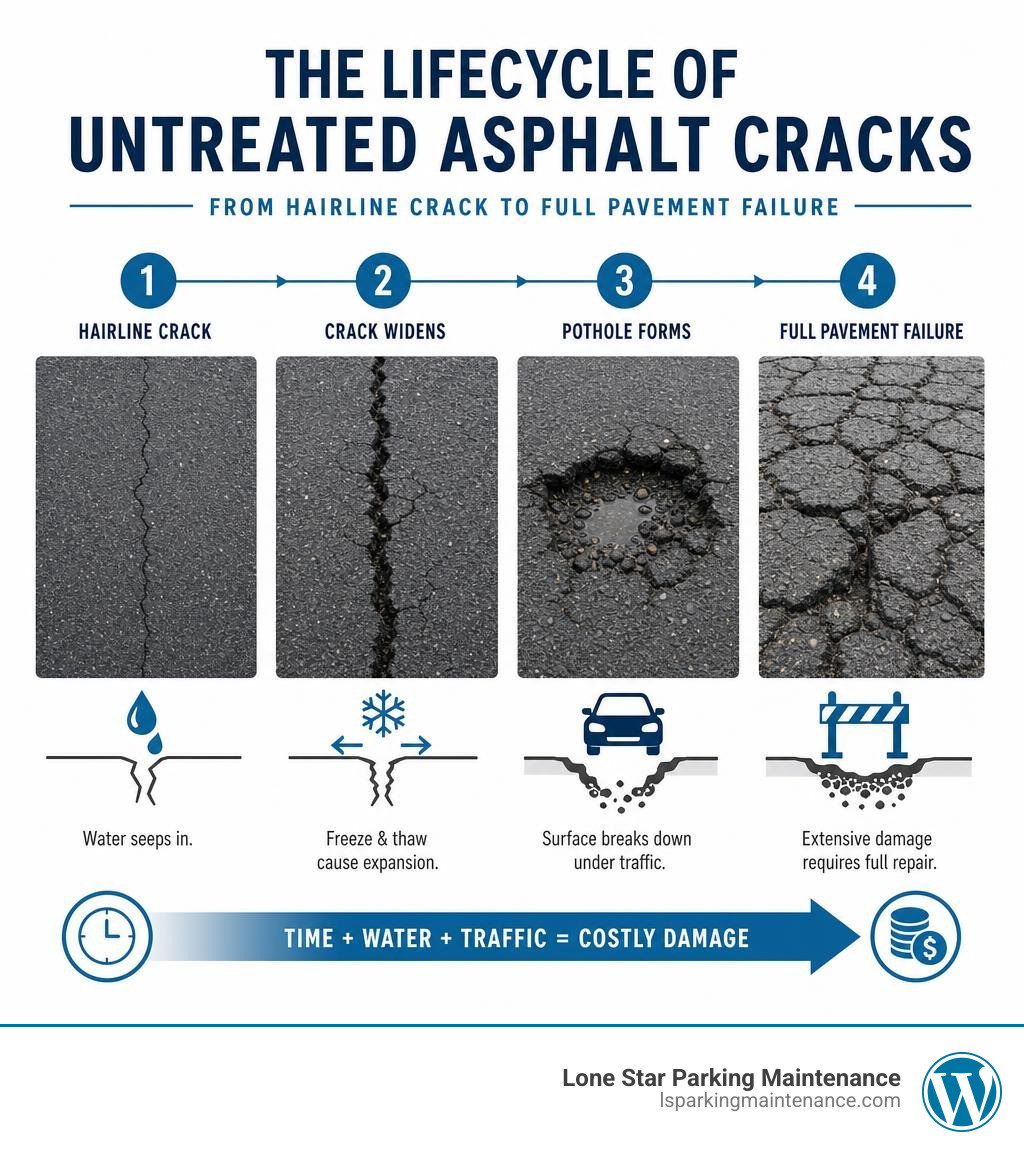
Water seeps in. In winter, it freezes and expands. The crack widens. Then comes the pothole — and a repair bill that dwarfs what early maintenance would have cost.
Neglecting cracks leads to premature asphalt failure that can require full repaving. That’s an outcome every property manager and business owner wants to avoid.
This guide walks you through everything you need to know about choosing and applying the right crack filler — from product types to step-by-step application.
What is Black Top Crack Filler and How Does It Work?
At its core, black top crack filler is a specialized compound designed to seal gaps that naturally develop in asphalt pavements. Think of it as a waterproof adhesive shield for your driveway or parking lot. When asphalt is exposed to the harsh Texas sun and heavy traffic, it loses its natural oils, becomes brittle, and begins to crack.
Once a crack opens up, it becomes an open invitation for water, dirt, and chemical spills to penetrate deep into the subbase. The subbase is the structural foundation of your pavement. If water gets down there, it softens the soil. In areas experiencing temperature fluctuations, this trapped water undergoes freeze-thaw cycles. As water freezes, it expands with incredible force, pushing the asphalt upward. When it melts, it leaves a hollow void underneath. The next heavy vehicle that drives over this weakened spot will collapse the asphalt, forming a pothole.
By injecting a high-quality crack filler into these gaps, you create a flexible, elastomeric seal. This barrier prevents water infiltration, keeps out incompressible materials like rocks and dirt (which prevent the asphalt from expanding naturally in hot weather), and stops existing damage from spreading. Understanding What Are the Benefits of Crack Filling? is the first step toward establishing a robust, preventative pavement maintenance schedule that saves you thousands of dollars in the long run.
Hot Pour vs. Cold Pour: Choosing the Right Black Top Crack Filler
Selecting the right product can feel overwhelming with so many options lining the shelves of home improvement stores. However, most crack fillers fall into two primary categories: cold pour and hot pour. The choice between them depends entirely on your project’s scale, your budget, and how long you want the repair to last.
To help you decide, we have broken down the primary differences below:
| Feature | Cold Pour Crack Filler | Hot Pour (Rubberized) Crack Filler |
|---|---|---|
| Application Method | Poured cold directly from the bottle | Heated to 380°F–400°F and applied molten |
| Equipment Needed | None (squeeze bottle or pour pot) | Asphalt melter kettle or propane torch |
| Durability | 1 to 2 years | Up to 10 years |
| Cure Time | 24 to 48 hours | 10 to 40 minutes (upon cooling) |
| Max Crack Width | Up to 1/2 inch | Up to 1 inch |
| Flexibility | Moderate (can crack in extreme cold) | High (stretches with thermal cycles) |
If you are wondering whether your commercial property requires a professional touch or a simple patch-up, you can read more about diagnosing pavement health in our guide on How Do I Know If My Parking Lot Needs Crack Filling?.
Understanding Cold Pour Black Top Crack Filler
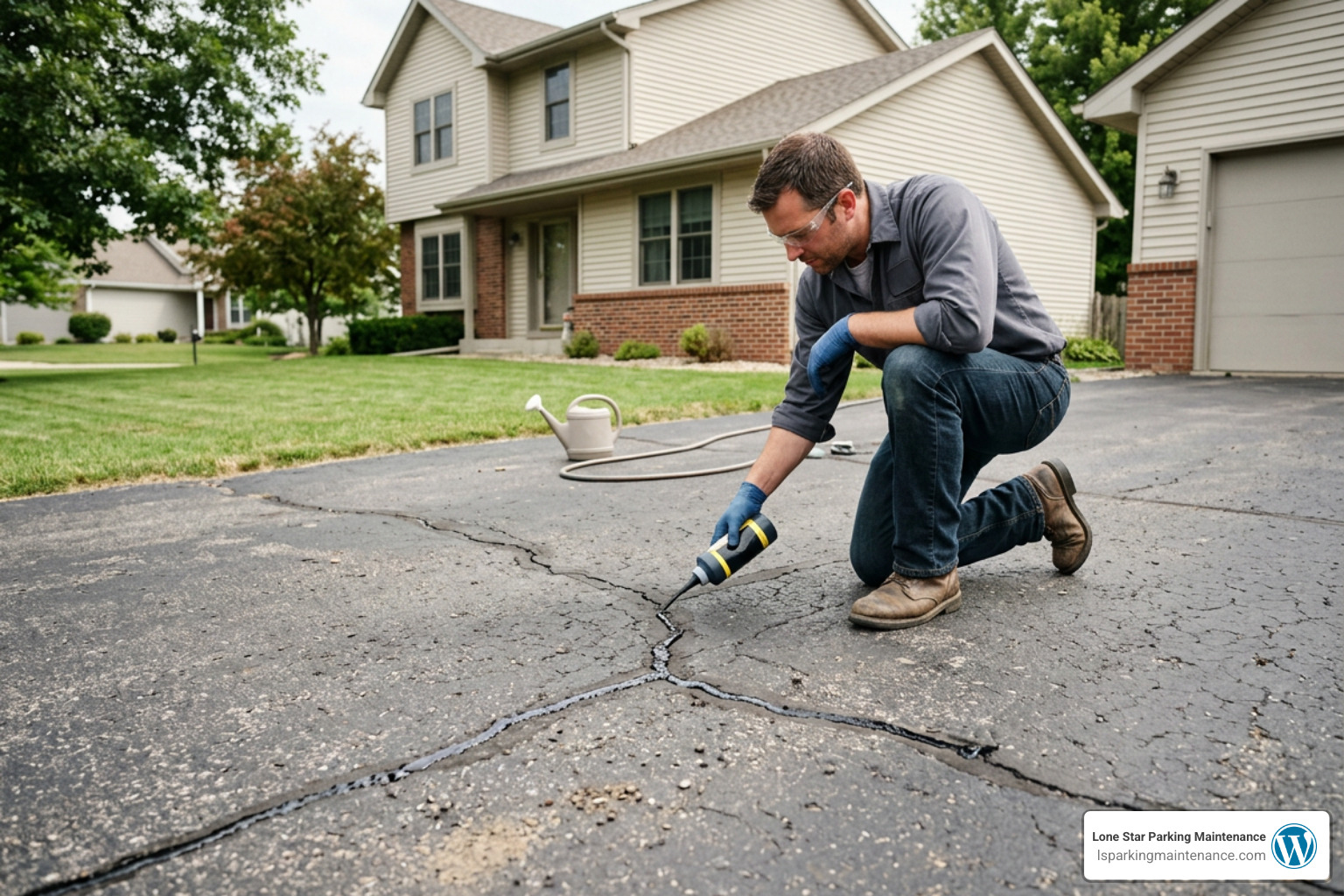
Cold pour crack filler is the go-to choice for DIY enthusiasts looking to touch up small residential driveways. These liquid emulsions are typically formulated with asphalt binders, acrylic latex, or vinyl polymers. They are incredibly user-friendly because they require absolutely no heating or specialized equipment. You simply shake the container, snip open the nozzle, and squeeze the product directly into the crack.
Premium options, like 1 Gal. 2X Premium Blacktop Crack Filler or its smaller counterpart, 1 Qt. 2X Premium Blacktop Crack Filler, feature rubberized additives that help the material remain pliable even after it dries. Another excellent option for homeowners is SealBest Acrylic-Modified Pourable Blacktop Crack Filler – 0.9 gal., which dries to a deep black finish and provides a strong, flexible seal.
While cold pour products are convenient and highly accessible, they do have limitations. They typically last only 1 to 2 years before they require reapplication, and they take anywhere from 24 to 48 hours to fully cure. This extended drying time can be a major headache if you need to restore traffic quickly to a busy commercial parking lot.
The Power of Hot Rubberized Black Top Crack Filler
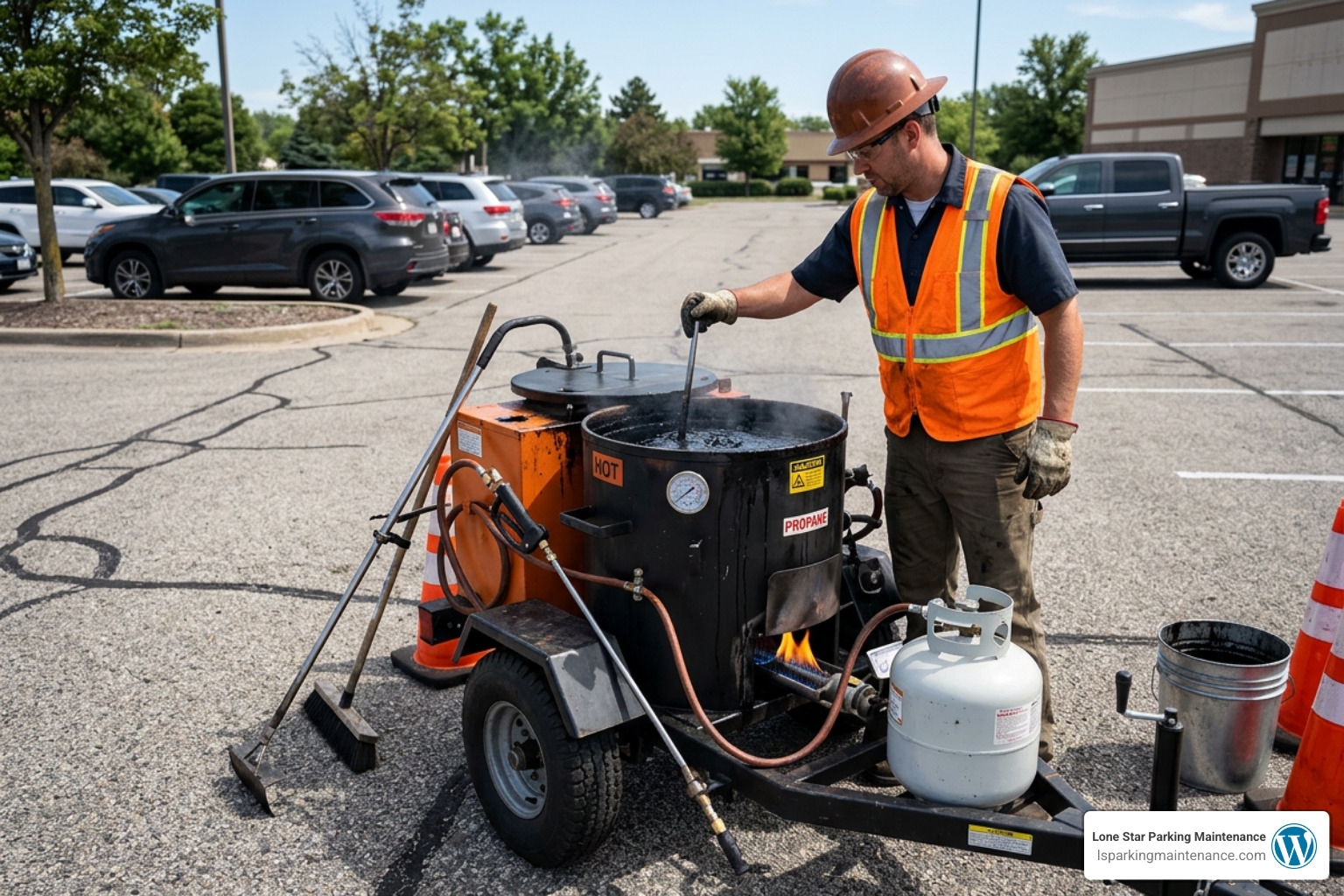
For commercial parking lots, high-traffic roads, and long-lasting residential repairs, hot rubberized crack filler is the undisputed champion. This is the exact same material used by highway departments and professional maintenance crews. It consists of elastic rubber polymers and asphalt binders that must be melted down at high temperatures (typically between 380°F and 400°F).
Once heated, the molten rubberized compound is poured into the crack, where it forms an incredibly strong, waterproof bond with the asphalt sidewalls. As it cools back down to ambient temperature, it retains supreme stretchability. This elasticity is crucial in places like the DFW Metroplex, where rapid temperature swings cause pavement to expand and contract violently. Because hot-pour rubber stretches and compresses along with the pavement, a single professional application can easily last up to 10 years.
If you are a homeowner who wants professional-grade durability without investing in a massive 200-gallon melter kettle, rope-style fillers offer a fantastic middle ground. Products like 30ft. Pli-Stix Permanent Blacktop Crack & Joint Filler or 10 lb. 125 ft. Medium Black Permanent Blacktop Crack Filler allow you to pack a flexible rope-like filler into the crack and melt it in place using a simple handheld propane torch. This melt-away plastic wrapper design provides a permanent, professional-grade seal using basic household tools.
Step-by-Step: How to Prepare and Apply Blacktop Crack Filler
No matter how expensive or high-performance your black top crack filler is, it will fail prematurely if the surface is not prepared correctly. In fact, professional pavement contractors will tell you that 90% of crack-filling success comes down to preparation.
Here is our tried-and-true process to ensure a flawless, long-lasting application. For an in-depth visual breakdown, check out How to Repair Asphalt Cracks in 5 Easy Steps.
Step 1: Clean the Cracks Thoroughly
Use a stiff wire brush, a heavy-duty broom, or a gas-powered leaf blower to blast away all dirt, dust, weeds, grass, and loose asphalt pieces from inside the crack. If there is vegetation growing inside, spray it with a weed killer a few days prior, or scrape it out entirely. The filler must bond directly to solid, clean asphalt.
Step 2: Wash and Dry
If the cracks are packed with stubborn mud, flush them out with a high-pressure garden hose or pressure washer. However, you must make sure the asphalt is completely dry before applying any filler. Applying sealant to damp asphalt will trap moisture, preventing the compound from bonding and causing it to peel away.
Step 3: Address Deep Cracks (Use Backer Rod or Sand)
If you have cracks deeper than 1/2 inch, do not fill the entire gap with liquid sealant. It will sink, crack, and take forever to dry. Instead, insert a foam backer rod into the crack, or pack it with clean silica sand or stone dust up to 1/2 inch from the surface. This creates a solid “floor” for your filler.
Step 4: Apply the Crack Filler
- For Cold Pour: Shake the bottle of 1 Gal. 2X Premium Blacktop Crack Filler thoroughly. Snip the nozzle to match the width of your crack. Squeeze the liquid into the crack, filling it slightly below the top edge to allow for expansion.
- For Rope Fillers (Crack-Stix / Pli-Stix): Unroll the rope and pack it tightly into the crack using a screwdriver or rubber mallet. Once in place, heat it with a propane torch, moving the flame back and forth in slow, even motions until the material liquefies and flows into the joint.
- For Hot Pour Blocks: Melt the blocks in a direct-fire melter kettle to 380°F–400°F. Carefully pour the molten material into the cracks using a pour pot or wheeled applicator.
Step 5: Smooth and Level the Surface
Use a U-shaped squeegee or a scraper to strike off any excess material, creating a flat, flush seal with the surrounding asphalt. This prevents snowplows or heavy tires from catching and peeling up the repair.
Safety Precautions for Hot Rubberized Applications
Working with hot rubberized asphalt requires extreme caution. Because these materials must be heated to nearly 400°F to melt, they can cause severe, third-degree burns upon contact with skin.
- Wear Proper PPE: Always wear safety goggles, heavy-duty heat-resistant work gloves, a long-sleeved shirt, thick pants, and closed-toe work boots. Never wear synthetic fabrics like polyester, which can melt onto your skin if hot tar splashes.
- Avoid Overheating: Keep a close eye on your melter kettle’s thermometer. Do not let the temperature exceed 500°F. Prolonged exposure to extreme heat will oxidize and degrade the asphalt, ruining its flexibility and causing it to fail prematurely.
- Ensure Adequate Ventilation: Only melt and apply hot crack filler outdoors. The fumes can be hazardous in enclosed spaces.
Estimating Your Project: How Much Crack Filler Do You Need?
Before you run out to the store or call in a professional team, it is essential to estimate exactly how much material your project will require. Underestimating means making multiple trips to the store, while overestimating leaves you with heavy, expensive leftover materials.
To get an accurate estimate, measure the total linear feet of the cracks you plan to repair and note their average width. Here are some industry-standard material coverage guidelines to help you calculate:
- Rope/Stick Fillers: A standard package of 2 Gal. 250 ft. Small Black Permanent Blacktop Crack Filler covers exactly 250 linear feet of small, 1/4-inch cracks.
- Hot Pour Blocks: Each pound of hot rubberized crack filler typically covers about 7 to 8 linear feet of medium-width cracks.
- Bulk Hot Pour Blocks: A standard 20 lb block of hot-melt asphalt crack filler melts down to approximately 2.5 gallons of liquid. One block will cover roughly 150 linear feet of medium cracks (1/2 inch wide) or up to 200 linear feet of smaller cracks.
- Project Estimates: A typical residential driveway usually requires about 6 blocks of hot crack filler. A long driveway or a small commercial parking lot will generally need around 12 blocks.
For a comprehensive guide on measuring your driveway and choosing the right quantities, explore The Ultimate Guide to Filling Every Crack in Your Driveway.
Frequently Asked Questions about Blacktop Crack Repair
To ensure your driveway or commercial lot remains in pristine condition, we have answered some of the most common questions property owners ask about asphalt maintenance. For more tips on keeping your pavement strong, check out Don’t Let Cracks Win with These Asphalt Patching and Sealing Best Practices.
How long does blacktop crack filler last?
The lifespan of your repair depends heavily on the type of product used, local weather conditions, and traffic volume. Cold pour fillers typically last 1 to 2 years before they dry out, shrink, or pull away from the crack walls. In contrast, professional-grade hot rubberized crack filler can last up to 10 years. Its high rubber content allows it to expand and contract during extreme Texas temperature swings without losing its adhesive bond.
How soon can you drive on newly filled cracks?
If you use hot rubberized crack filler, it is traffic-ready in just 10 to 40 minutes after application, as soon as the material cools down to ambient temperature. Cold pour crack fillers, however, require 24 to 48 hours to fully dry and cure.
The Sand Trick: If you need to open up a cold-pour driveway sooner, you can sprinkle a light layer of clean silica sand directly over the fresh sealant. The sand sticks to the wet surface, preventing the filler from tracking onto tires, shoes, or garage floors.
Can you sealcoat over filled cracks, and how soon after?
Yes, sealcoating over filled cracks is highly recommended because it adds an extra layer of UV and moisture protection. However, timing is everything. If you are using a standard cold pour filler, you should wait at least 24 to 48 hours for the filler to fully cure before applying a sealcoat. If you sealcoat too early, the solvents in the sealer can soften the crack filler, preventing it from drying. For hot rubberized professional applications, you can typically sealcoat almost immediately after the material has cooled.
To learn more about coordinating these two vital maintenance steps in the Dallas-Fort Worth area, read Everything You Need to Know About DFW Asphalt Sealing.
Conclusion
Taking care of asphalt cracks early is the single best way to protect your investment and avoid the massive headaches of premature repaving. Whether you choose a simple DIY cold-pour squeeze bottle for minor driveway touch-ups or opt for permanent, professional-grade hot rubberized solutions, regular maintenance is key to long-term pavement durability.
If you manage a commercial property, HOA, or large residential estate in the DFW Metroplex, handling hot-melt equipment and managing traffic flow can be a daunting task. That is where we come in. At Lone Star Parking Maintenance, we bring top-quality materials, strict adherence to industry standards, and an unwavering commitment to safety and customer satisfaction to every job. From parking lot striping and repairs to professional sealing, we have your asphalt covered.
Ready to protect your property and extend the life of your pavement? Contact us today to learn more about our professional Parking Lot Sealing and Crack Filling services!