
Why the Right Parking Lot Striping Tools Make or Break Your Pavement Markings
The parking lot striping tools you choose directly determine how sharp, durable, and professional your lines look — and how long they last.
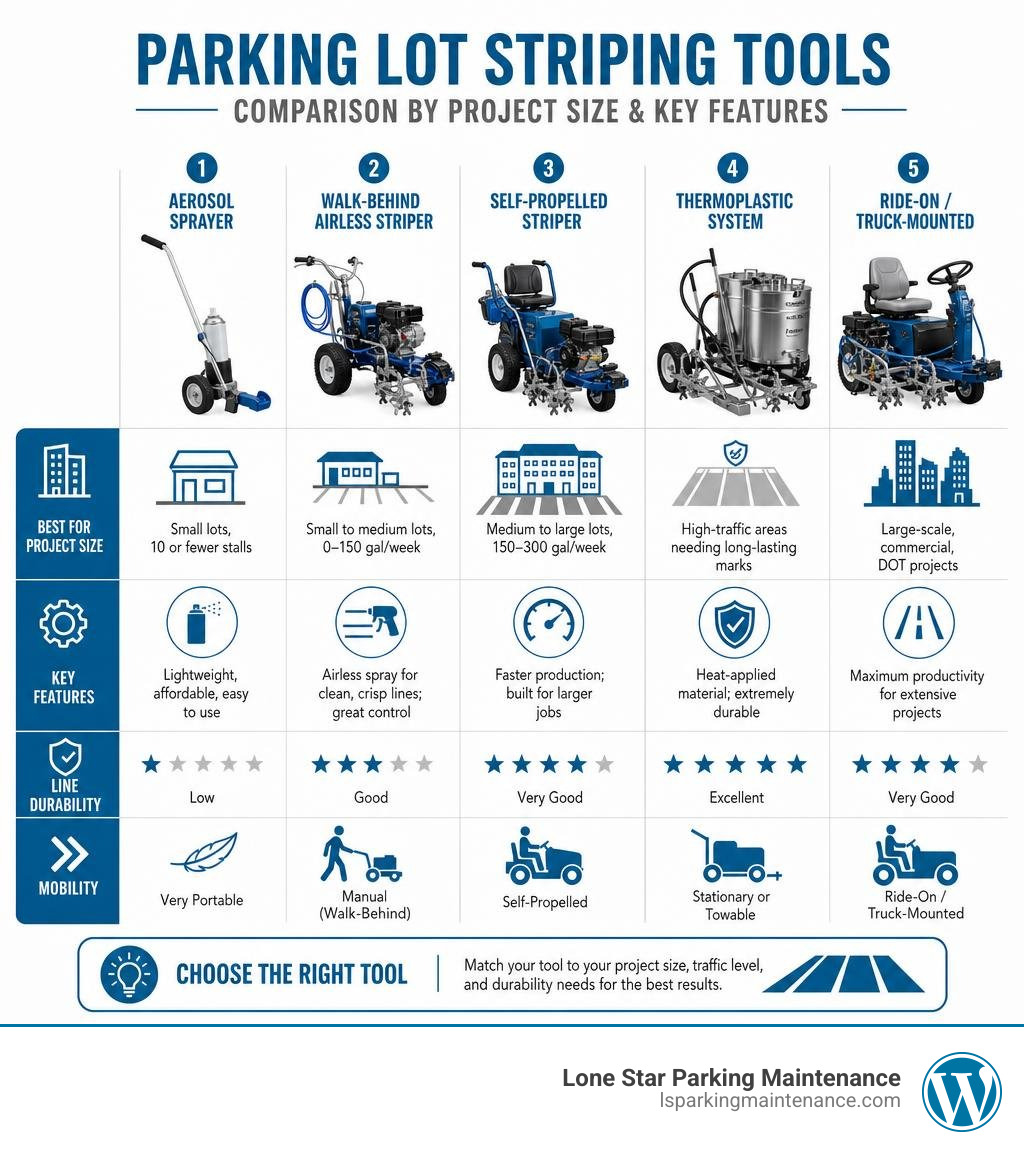
Here’s a quick look at the main types:
| Tool Type | Best For | Typical Cost Range |
|---|---|---|
| Aerosol sprayer | Small lots, 10 or fewer stalls | Low (under $500) |
| Walk-behind airless striper | Small to medium lots, 0–150 gal/week | $2,900–$6,500 |
| Self-propelled striper | Medium to large lots, 150–300 gal/week | $6,500–$12,800+ |
| Thermoplastic system | High-traffic areas needing long-lasting marks | Premium pricing |
| Ride-on / truck-mounted | Large-scale, commercial, DOT projects | $15,000+ |
Faded parking lot lines aren’t just an eyesore. They create real safety hazards — confused drivers, pedestrian risks, and potential ADA compliance violations.
For property managers and business owners in the DFW Metroplex, staying on top of pavement markings is part of protecting your property’s value and keeping your tenants and customers safe.
The problem? There are dozens of striping machines on the market, ranging from simple aerosol wands to heavy-duty self-propelled units with Honda engines and pressurized glass bead systems. Picking the wrong one means wasted money, uneven lines, or a machine that can’t keep up with your job size.
This guide breaks down every major category of striping equipment — so you can compare them side by side and make a confident choice.
Similar topics to parking lot striping tools:
Choosing the Right Parking Lot Striping Tools for Your Project
Selecting the right equipment comes down to matching the tool to the scale and frequency of your pavement projects. If you are marking out a tiny boutique storefront in Plano or a massive commercial distribution center in Fort Worth, your choice of machine will dictate your speed, precision, and overall profitability.
Let’s break down the three primary categories of line striping systems:
- Aerosol Sprayers: These are basic, lightweight machines that hold inverted aerosol paint cans. They are highly portable and require zero engine maintenance. If you only need to paint 5 to 10 stalls once a year, an aerosol cart gets the job done. However, they lack pressure control, and the paint is thin, meaning it will fade quickly under the hot Texas sun.
- Airless Paint Stripers: This is the gold standard for professional contractors and dedicated maintenance crews. Airless stripers draw paint directly from a 5-gallon pail or a large hopper and pump it through a high-pressure spray gun. This atomizes the paint, delivering razor-sharp edges and thick, consistent coverage that binds deeply to asphalt and concrete.
- Thermoplastic Systems: Rather than spraying liquid paint, thermoplastic equipment melts solid plastic blocks or powder at temperatures exceeding 400°F and extrudes or sprays the molten material onto the pavement. As it cools, it fuses with the surface to create a incredibly durable, thick line that can withstand heavy traffic for years.
To help you choose between the two most popular professional methods, here is a direct comparison:
Airless Paint vs. Thermoplastic Striping
| Feature | Airless Paint Striping | Thermoplastic Striping |
|---|---|---|
| Primary Material | Water-based or oil-based traffic paint | Solid plastic blocks/powder (alkyd or hydrocarbon) |
| Application Method | High-pressure hydraulic or mechanical spray | Heat-melted extrusion or specialized spray |
| Line Thickness | Typically 15 mils (wet) | 90 to 120 mils |
| Drying / Curing Time | 15 to 45 minutes | 2 to 5 minutes (cools to solid) |
| Durability | 1 to 3 years depending on traffic | 5 to 8+ years |
| Initial Tool Cost | Moderate ($3,000 – $12,000) | High to Very High ($15,000 – $50,000+) |
| Best Used For | Re-striping, parking lots, stencils, and curbs | Crosswalks, stop bars, highways, and high-impact zones |
If you want a deeper dive into the specific brands and models dominating the market today, check out our guide on More info about top striping machines.
Walk-Behind vs. Ride-On Parking Lot Striping Tools
For airless paint stripers, you must also decide how you will move the machine across the pavement.
Walk-Behind Models
Walk-behind stripers are pushed manually by the operator. They are highly maneuverable, making them perfect for tight corners, complex stencils, and smaller parking lots. Many walk-behind units feature a front swivel wheel that can be locked straight for long, crisp lines or unlocked for smooth radii and curved lines.
However, pushing a 150-to-200-pound machine full of paint on a humid, 100-degree July afternoon in Dallas will quickly exhaust even the toughest crew.
Ride-On Attachments and Self-Propelled Systems
To combat operator fatigue and skyrocket productivity, contractors turn to ride-on attachments or self-propelled systems. A ride-on attachment, such as a hydrostatic driver seat, connects to the back of a compatible walk-behind striper. Powered by its own gas engine, it transforms your walk-behind unit into a ride-on machine capable of speeds up to 10 mph.
For massive jobs, self-propelled units or palletized truck systems are the ultimate solution. For example, heavy-duty setups like the ROADMASTER B10 Line Striping Truck (DC) – VEZOS allow operators to stripe miles of roadway or massive airport runways from a comfortable, motorized platform. By reducing physical exertion, your crew can complete projects up to four times faster while maintaining flawless line consistency from the first stripe to the last.
Power Sources for Powered Parking Lot Striping Tools
When investing in a powered line striper, you have three primary power sources to choose from:
Gas-Powered
Gas-powered engines (most notably the Honda GX120, GX160, or GX200 series) are the workhorses of the pavement marking industry. They offer unmatched reliability, high power output, and can run continuously all day as long as you have fuel on hand. The main drawbacks are noise, engine maintenance (oil changes, spark plugs), and exhaust emissions, which prevent them from being used indoors.
Battery-Powered
Electric, battery-powered stripers have surged in popularity. They run completely silent and produce zero emissions, making them the absolute best choice for indoor parking garages, warehouses, and overnight striping near residential zones or hospitals. While modern lithium-ion batteries can easily last for a full day of striping, they do require recharging overnight and carry a higher upfront cost for the batteries and charging docks.
Propane-Powered
Propane-powered stripers offer a middle ground. They produce significantly lower emissions than gas engines, allowing them to be used in well-ventilated indoor spaces, while still delivering the continuous run-time of an engine-driven pump. However, sourcing and transporting propane tanks requires extra logistics.
Key Specifications to Look For in a Line Striper
Before purchasing or renting a line striper, you must understand the technical specifications that dictate how the machine performs on the job site.

- Operating Pressure (PSI): Most professional airless stripers operate at pressures ranging from 3,000 to 3,350 PSI. High pressure is critical for atomizing heavy traffic paints and ensuring they bond securely to the pavement.
- Maximum Gallons Per Minute (GPM): This metric tells you how much paint the pump can deliver per minute. A machine with a 0.75 to 0.85 GPM rating can easily support a single spray gun with a standard tip. If you want to run a dual-gun setup to paint double lines simultaneously, you will need a higher-output pump delivering 1.5 to 2.5 GPM or more.
- Spray Width Capability: A quality striper will allow you to adjust the spray gun height to paint lines anywhere from 2 inches to 12 inches wide.
- Maximum Tip Size: The spray tip controls the width and flow rate of your line. Ensure your machine’s pump can support tip sizes of at least 0.027″ or 0.030″ so you can spray thick, unthinned traffic paint without constant clogging.
Professional-Grade vs. Consumer-Grade Equipment
It is tempting to buy a cheap, consumer-grade paint sprayer from a local big-box home improvement store, bolt it to a cart, and call it a day. However, there is a massive divide between DIY tools and professional-grade machinery.
Professional-grade stripers are built with heavy-duty hydraulic piston pumps or continuous-stroke mechanical pumps designed to handle the abrasive solids found in traffic paint. They feature vibration-reduction systems to prevent “wavy” lines, robust steel frames, and heavy-duty wheels that roll smoothly over rough, cracked asphalt.
A great way to determine what class of machine you need is by looking at your weekly paint volume:
- 0–50 Gallons per Week: A compact, professional entry-level machine (weighing around 65 to 70 lbs) is perfect. These units are highly portable, can often fit into the trunk of a standard car, and are ideal for property managers handling their own small striping touch-ups.
- 50–150 Gallons per Week: This range requires a mid-sized professional striper. These units feature larger engines, more durable pumps, and can support longer hoses for hand-stenciling.
- 150–300+ Gallons per Week: High-volume contractors require heavy-duty dual-gun airless stripers or self-propelled units with large 15-to-22-gallon paint hoppers to minimize refill downtime.
Sourcing Materials and Deciding to Rent vs. Buy
To get professional results, your parking lot striping tools must be paired with commercial-grade materials.
First, you need high-quality traffic paint. Water-based acrylic paint is the industry standard due to its fast dry times, easy cleanup, and environmentally friendly profile. However, some municipal codes or specific commercial properties require oil-based (alkyd) paint, especially in colder temperatures. Be sure to verify local DFW regulations before purchasing paint.
Next, you will need stencils for handicap stalls, “No Parking” zones, fire lanes, and directional arrows. Heavy-duty, 1/8-inch thick LDPE (Low-Density Polyethylene) stencils are the choice of professionals because they lay flat, resist paint buildup, and can be cleaned and reused hundreds of times.
For high-visibility zones, you will also need reflective glass beads. These are dropped directly into the wet paint line using a pressurized bead system or a gravity-fed dispenser, allowing the lines to reflect headlights at night.
If you are only restriping your property once every few years, buying a professional machine rarely makes financial sense. Instead, renting is a highly cost-effective option. Local rental houses in the DFW Metroplex offer high-quality, gas-powered airless units. For example, you can look into parking lot striper rentals – Dallas – AA Rental or check out the Parking Lot Striper Gas – Sunbelt Rentals to secure a commercial-grade machine for a weekend project.
If you are planning a complete overhaul of your property’s layout, check out our guide on Restriping Your Parking Lot for a Fresh New Look to make sure you get the layout right.
Safety Best Practices and Equipment Maintenance
Operating heavy-duty high-pressure machinery always comes with risks. Safety should always be your top priority on any active job site.

When striping, always wear the proper Personal Protective Equipment (PPE):
- Eye Protection: High-pressure paint spray can cause permanent eye damage. Always wear safety glasses.
- High-Visibility Vests: Parking lots are active driving zones. Wearing ANSI Class 2 or 3 high-visibility vests ensures distracted drivers see you.
- Respirators / Masks: When spraying in enclosed areas (like parking garages) or handling fine glass beads, a respirator protects your lungs from airborne particulates.
Beyond physical safety, you must also ensure your lines comply with local and federal laws, such as the Americans with Disabilities Act (ADA) and municipal fire codes. For a breakdown of how to design compliant layouts, read about The Best Compliant Safety Line Striping for High Traffic Zones and make sure you Dont Get Fined for Your Lines.
Cleaning and Maintaining Your Striping Equipment
If you do not clean your line striper properly, the leftover paint will dry inside the pump, hoses, and spray gun, ruining your expensive equipment. Follow these steps after every single job:
- Flush the Pump: Run water (for water-based paints) or mineral spirits (for oil-based paints) through the system until the fluid runs completely clear.
- Clean the Spray Tip: Remove the spray tip and guard, and scrub them with a soft brush. Store tips in a sealed container of cleaning solvent to prevent tiny paint particles from drying inside the orifice.
- Use Throat Seal Liquid (TSL): Add a few drops of TSL to the wet cup of your pump piston before every job. This lubricates the throat packings and prevents dried paint from scratching the piston rod.
- Storage Prep: If storing your machine for more than a couple of weeks, pump a specialized pump-armor fluid through the system to prevent rust, corrosion, and freezing.
Frequently Asked Questions About Line Striping Equipment
How do thermoplastic striping systems compare to traditional airless paint machines?
Thermoplastic striping is incredibly durable, lasting up to 5 to 8 times longer than traditional paint because it fuses directly to the pavement at high temperatures. However, it requires highly specialized, expensive melting kettles and application shoes. Traditional airless paint machines are far more affordable, faster to set up, and are the best choice for standard parking lot stalls and detailed stenciling.
Is it better to rent or buy parking lot striping equipment?
If you are a property manager with one or two locations that only need touch-ups once a year, renting is much more practical. It saves you from upfront capital costs and storage/maintenance headaches. However, if you manage dozens of properties or are starting a pavement maintenance business, buying your own professional machine will quickly pay for itself.
What are the most common maintenance issues with line stripers?
The most common issues are clogged spray tips, worn pump packings, and pressure loss. Clogged tips are usually caused by failing to strain your paint before pouring it into the hopper. Pressure loss is typically the result of worn-out throat packings or debris stuck in the pump’s intake check valve.
Conclusion
Having the right parking lot striping tools is the difference between a messy, crooked DIY job and a beautiful, crisp, code-compliant parking lot that elevates your property’s curb appeal.
While small touch-ups can be tackled with rental equipment, large-scale striping, fire lane compliance, and complex ADA layouts require professional precision.
At Lone Star Parking Maintenance, we bring the absolute best commercial-grade striping tools, premium materials, and years of local expertise to every property we service across the DFW Metroplex. Let us handle the hard work so your lot looks flawless and stands up to the heavy Texas traffic.
Ready to transform your parking facility? Schedule Professional Parking Lot Striping with our expert team today!