Why Sealcoating Is the Most Important Thing You Can Do for Your Asphalt
Sealcoating is a protective liquid layer applied over asphalt pavement to shield it from water, UV rays, oil, and everyday wear.
Quick answer: What is sealcoating?
- It is a thin coating (1/16 to 1/8 inch) of bituminous or acrylic emulsion applied over existing asphalt
- It blocks water, sunlight, and chemicals from breaking down the asphalt binder underneath
- It restores the deep black appearance of faded, oxidized pavement
- Applied every 2-3 years, it can more than double the lifespan of asphalt — from 15-20 years to 25-30 years
- Cost: roughly $0.15-$0.30 per square foot professionally applied, versus thousands for full replacement
Asphalt is not as tough as it looks. The moment it is laid down, the elements start working against it. Sun bleaches it gray. Rain seeps into tiny cracks. Motor oil dissolves the binder that holds everything together.
Think of sealcoating as sunscreen for your pavement. Without it, the surface becomes brittle, cracks spread, and what started as a small maintenance issue turns into a costly repaving project.
For property managers and business owners across the DFW Metroplex, a cracked, faded parking lot sends the wrong message — and creates real safety risks. Sealcoating is the most cost-effective way to protect that investment before small problems become expensive ones.
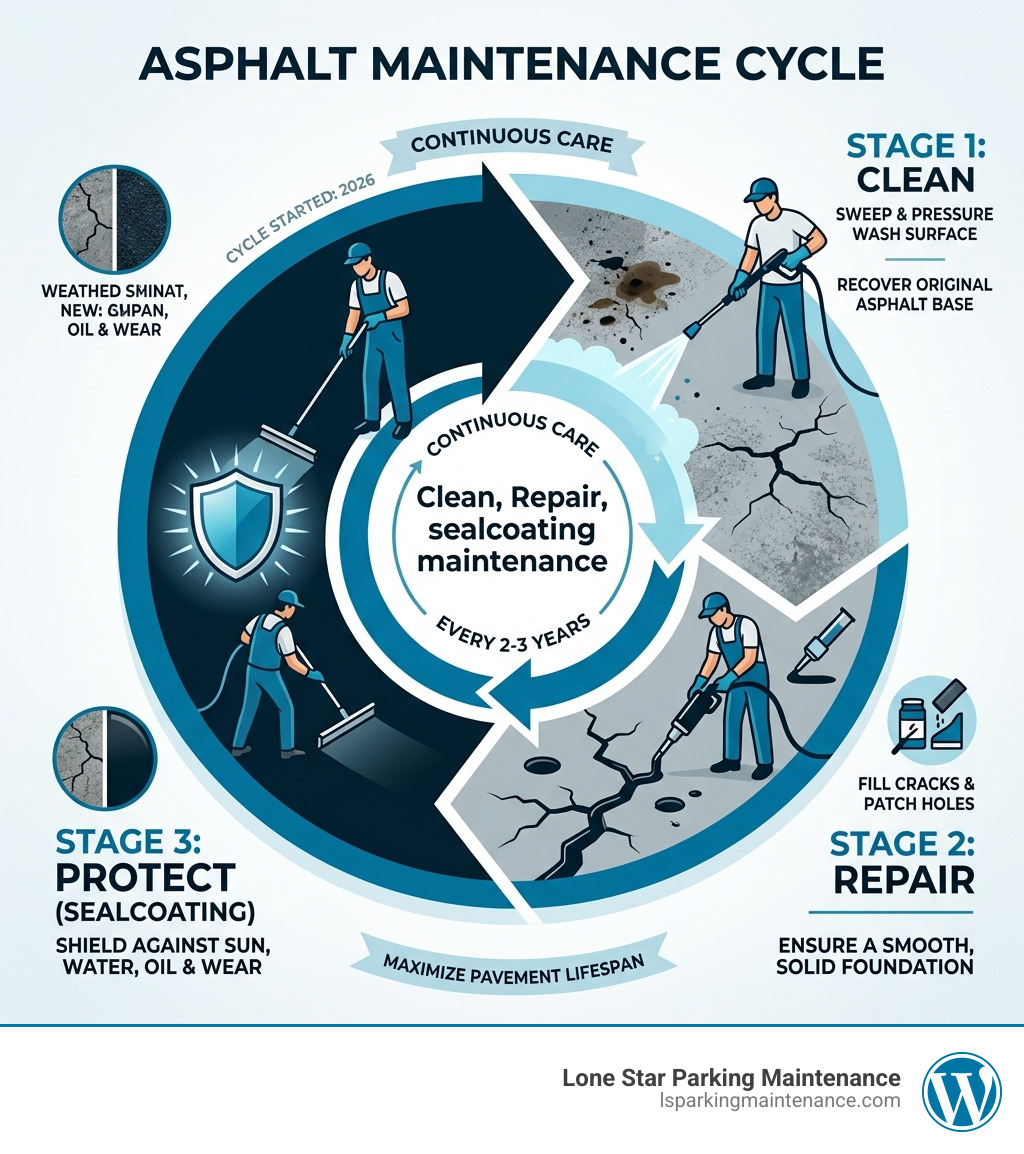
Glossary for sealcoating:
What is sealcoating and How Does It Protect Your Pavement?
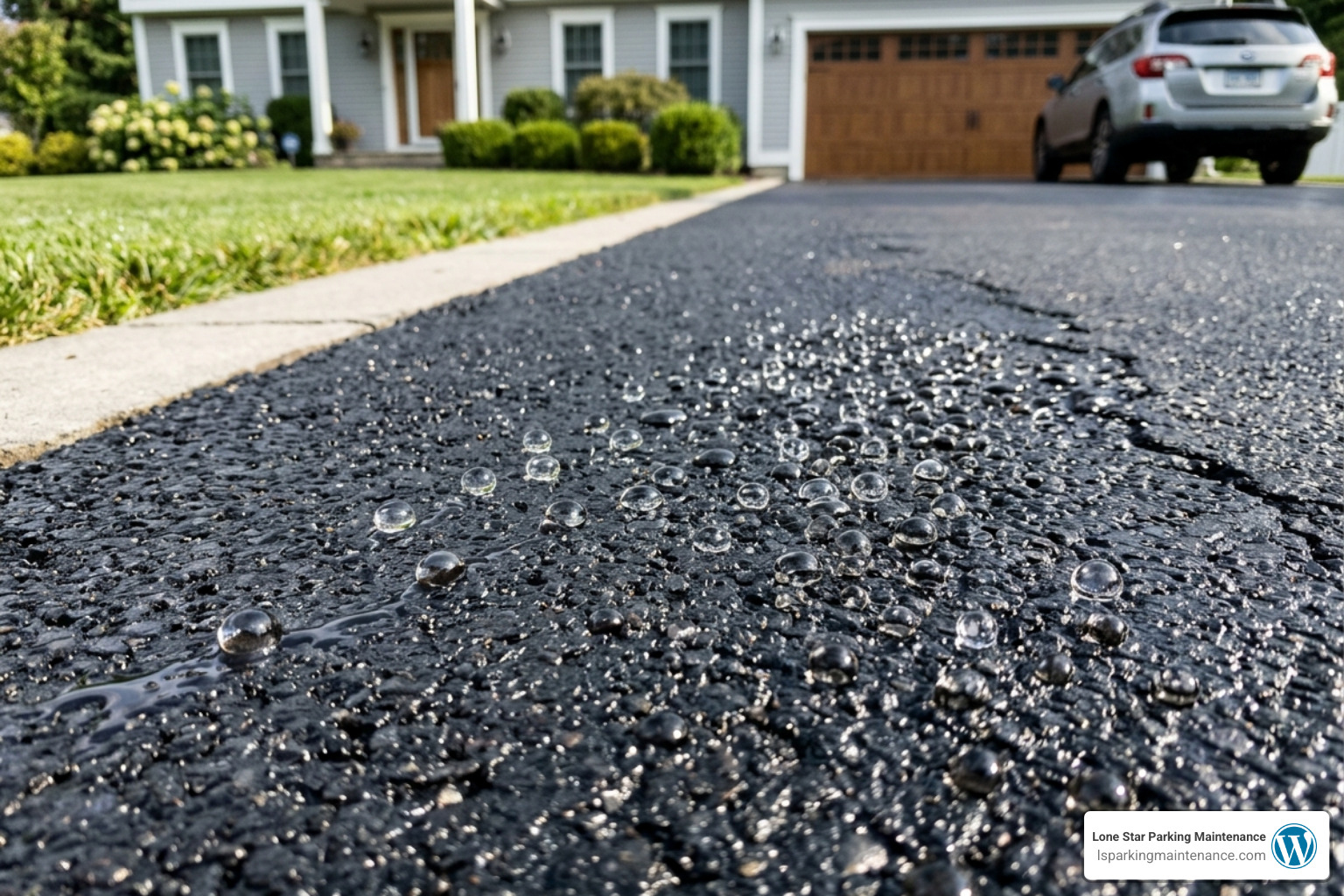
At its core, sealcoating is a liquid formulation designed to act as a “sacrificial barrier.” This means the sealer takes the beating from the environment so your expensive asphalt doesn’t have to.
Asphalt is made of aggregate (stones and gravel) held together by a binder called asphalt cement. This binder is a byproduct of crude oil distillation, and it is surprisingly fragile. When left exposed, the sun’s UV rays trigger a process called oxidation. This chemical reaction breaks down the molecular bonds in the binder, turning your flexible, black pavement into a gray, brittle mess. Once the binder fails, the stones start to pop out (raveling), and cracks begin to spiderweb across the surface.
By applying a sealcoat, we are essentially “resetting the clock” on that UV damage. The sealer fills the surface pores and creates a waterproof shield. Why Is Parking Lot Sealing Important boils down to one word: preservation. It keeps the moisture out and the oils in, ensuring the pavement remains flexible enough to handle the weight of vehicles without snapping.
The Science of sealcoating: How It Works
Modern sealcoating materials are high-tech emulsions. Most professional-grade sealers are either bituminous-based (asphalt emulsion) or acrylic-based. These liquids are mixed with water, silica sand for traction, and polymer additives for extra durability.
When we spread this mixture over your lot, the water evaporates, leaving behind a hard, protective film. This film is resistant to the “solvency” of gasoline and motor oil. Because asphalt is petroleum-based, any leaked oil from a car will actually dissolve the binder on contact. A quality Sealcoat acts as a chemical-resistant layer that prevents these spills from eating holes in your driveway.
Why Your Driveway Needs sealcoating
If you own a home or manage a property in the DFW area, you know how intense the Texas sun can be. Without protection, an asphalt driveway might only last 15 to 20 years before it requires a total (and very expensive) tear-out and replacement.
However, statistics show that a regular maintenance program can extend that lifespan to 25 or even 30 years. When asking what is sealcoating and why does your driveway need it, the answer is simple math. By spending a few hundred dollars every few years on a sealcoat, you delay a five-figure paving bill by a decade or more. It keeps the “glue” of your pavement healthy, preventing water from seeping into the base layers where it could cause potholes or structural failure.
Choosing the Right Sealcoating Products
Not all sealers are created equal. Depending on your environmental priorities and the specific needs of your lot, we choose between several material types.
| Sealer Type | Best For | Pros | Cons |
|---|---|---|---|
| Asphalt Emulsion | Residential & Eco-conscious Commercial | Low VOCs, no “burnt” smell, deep black color. | Slightly less resistant to heavy fuel spills than coal tar. |
| Coal Tar | High-traffic Commercial | Extreme durability, best fuel resistance. | High PAHs, skin irritant during application, banned in many areas. |
| Acrylic | High-visibility areas | Color-stable, very durable, eco-friendly. | Most expensive option. |
| Oil-Based | Extremely old, brittle asphalt | Penetrates and softens (rejuvenates) old binder. | Can cause adhesion issues for future water-based sealers. |
Environmental concerns have shifted the industry significantly. Coal tar sealants contain high levels of Polycyclic Aromatic Hydrocarbons (PAHs), which can wash into waterways and harm aquatic life. Because of this, more than 100 government units in the U.S. have banned coal tar, and Canada is implementing strict PAH limits starting in 2025.
Asphalt Emulsion and Eco-Friendly Alternatives
As we move through 2026, asphalt emulsion has become the industry standard for those seeking a balance between performance and planet-friendliness. These sealers are petroleum-based, just like your pavement, making them highly compatible.
What Types Of Sealants Do You Use For Parking Lot Sealing usually depends on local regulations and the client’s needs. Asphalt emulsions are user-friendly, emit almost no odors, and don’t cause the “burning” sensation on the skin that traditional coal tar can. They provide a beautiful, non-toxic finish that is safe for neighborhoods and pets.
Traditional Coal Tar and Oil-Based Rejuvenators
Coal tar remains popular in some commercial settings like gas stations because it is naturally resistant to chemicals. It is a byproduct of the steel manufacturing process and creates a very hard surface. However, its strong scent and environmental footprint are leading many to switch to “hybrid” emulsions that offer similar fuel resistance without the toxic PAHs.
Oil-based rejuvenators work differently. Instead of sitting on top, they soak into the asphalt to replenish the oils that have evaporated over time. While great for “bringing back to life” a neglected lot, they require expert application to ensure the surface doesn’t become too soft or slippery.
The Professional Application Process
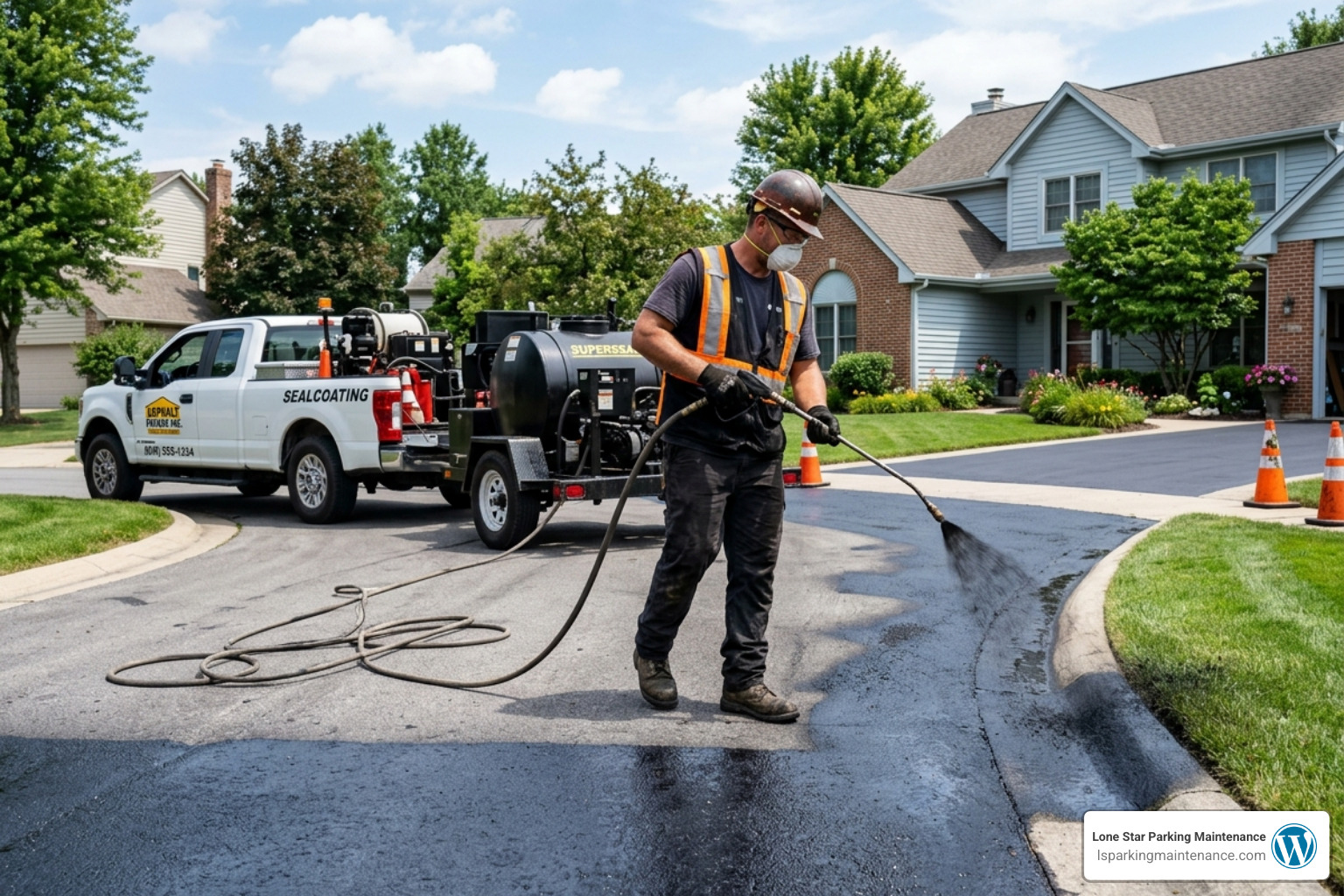
Applying sealcoating isn’t just about “painting” the ground black. It is a technical process that requires precision. At Lone Star Parking Maintenance, we follow a strict protocol to ensure the sealer bonds correctly. Parking Lot Sealing And Crack Filling are two halves of the same coin; you can’t have a successful seal without a stable surface.
Step 1: Cleaning and Surface Prep
The number one reason sealcoat fails is poor preparation. If there is dust, sand, or oil on the surface, the sealer will peel off like old nail polish.
- Power Blowers: We use industrial-strength blowers and wire brooms to remove every speck of dirt.
- Vegetation Removal: Grass growing in cracks must be removed and treated so it doesn’t push through the new finish.
- Oil Spot Priming: We scrub oil spots with degreasers and apply a specialized primer. This prevents the oil from “bleeding” through the new sealcoat.
Step 2: Crack Repair and Pothole Filling
Sealcoat is not a filler. It won’t fix a pothole or hide a wide crack. Before the first drop of sealer hits the ground, we must address structural issues.
- Crack Sealing: We use hot-pour rubberized filler for cracks wider than 1/4 inch. This material stays flexible, expanding and contracting with the Texas heat.
- Alligator Cracking: Clusters of small cracks (looking like alligator skin) indicate a base failure. We often use a polymer-modified “mastic” or “Gator Patch” to stabilize these areas before sealing.
Step 3: Application and Curing Requirements
We typically apply two coats. The first coat is often “squeegeed” into the pavement to fill the tiny nooks and crannies, followed by a second coat applied via a pressurized spray for a uniform, “like-new” look.
Timing is everything. For a successful cure, we need:
- Temperature: At least 50 degrees Fahrenheit and rising for 24 hours.
- Weather: Zero rain in the forecast for at least 24 hours.
- Humidity: Ideally below 75% to allow the water in the emulsion to evaporate.
How Long Does Parking Lot Sealing Last? A professional application typically lasts 2 to 3 years, depending on traffic volume.
Maintenance and ROI: Maximizing Your Investment
Sealcoating is one of the few property maintenance tasks that actually pays for itself. When you look at the How Much To Seal The Deal On Your Asphalt, the “pennies per square foot” spent now save “dollars per square foot” in future repairs.
Frequency and Timing
We recommend a sealcoating cycle every 2 to 3 years. In the DFW Metroplex, the best time for application is between April and October when the overnight temperatures stay reliably warm.
If you have brand-new asphalt, don’t rush! New pavement needs to “cure” and allow its light oils to evaporate. We generally recommend waiting 6 to 12 months before applying the first coat of sealer.
Residential vs. Commercial Cost Breakdown
- Residential: A standard two-car driveway (roughly 20’ x 24’) typically costs between $100 and $190 for a professional seal.
- Commercial: For larger parking lots, pricing is often done by the acre or square foot. A typical commercial lot might range from $7,400 to $10,400 per acre. This includes the cost of labor, high-volume materials, and the necessary logistics of cordoning off sections of the lot.
Frequently Asked Questions
How long should I stay off my driveway after sealing?
You can usually walk on the surface after 24 hours, but we strictly recommend keeping vehicles off for 48 hours. Even if it looks dry, the sealer is still tender underneath. For the first two weeks, avoid “hard wheel cutting” (turning your steering wheel while the car is stationary), as this can scuff the fresh sealer.
Can I apply sealcoat if rain is in the forecast?
No! If it rains within 24 hours of application, the sealer can wash off, potentially staining your curbs, lawn, or ending up in the storm drain. We constantly monitor local DFW weather patterns to ensure a clear “dry window” for every project.
Is DIY sealcoating as effective as professional service?
While you can buy buckets of sealer at a hardware store, there are major differences. Professional contractors use commercial-grade emulsions that aren’t available to the public. We also mix in specific amounts of silica sand and polymer additives. DIY jobs often skip the sand, resulting in a driveway that is dangerously slippery when wet. Our specialized equipment ensures a consistent, even thickness that a hand-roller just can’t match.
Conclusion
Your asphalt is the “welcome mat” to your property. Whether it’s a private driveway or a massive commercial lot, the state of your pavement speaks volumes about how you maintain your investment.
At Lone Star Parking Maintenance, we take pride in serving the DFW Metroplex with top-tier materials and a commitment to safety. We don’t just “paint it black”—we provide a comprehensive Parking Lot Sealing and Crack Filling service that protects your pavement from the inside out.
Ready to put the “Magic Shield” on your asphalt? Give us a call today for a free assessment!