
Dependable Curb Painting Starts With Preparation and the Right Paint
For curb painting dependable results, choose a contractor that cleans and dries the concrete, removes oil and loose coating, uses commercial-grade weather-resistant paint, and applies crisp markings during suitable weather. Those steps matter more than a fast spray-over. They help curb addresses, safety zones, fire lanes, and parking curbs stay visible through sun, rain, traffic scuffs, and routine cleaning.
Curb painting is more than a cosmetic upgrade. Clear, bright markings make a property easier to navigate, improve curb appeal, and help drivers see boundaries and address numbers. But concrete is tough on paint. UV exposure breaks down color, moisture can weaken adhesion, and tire contact quickly wears thin or poorly bonded coatings away.
Quick DIY aerosols and surface-only renewal products may look better for a short time, but they often fail when dirt, grime, oil, or moisture remains below the paint. A professional approach focuses on the surface underneath the color – because lasting paint needs a clean, sound surface to bond to.
I’m Cason, and this guide explains what separates a temporary curb touch-up from curb markings that look sharp and hold up longer.
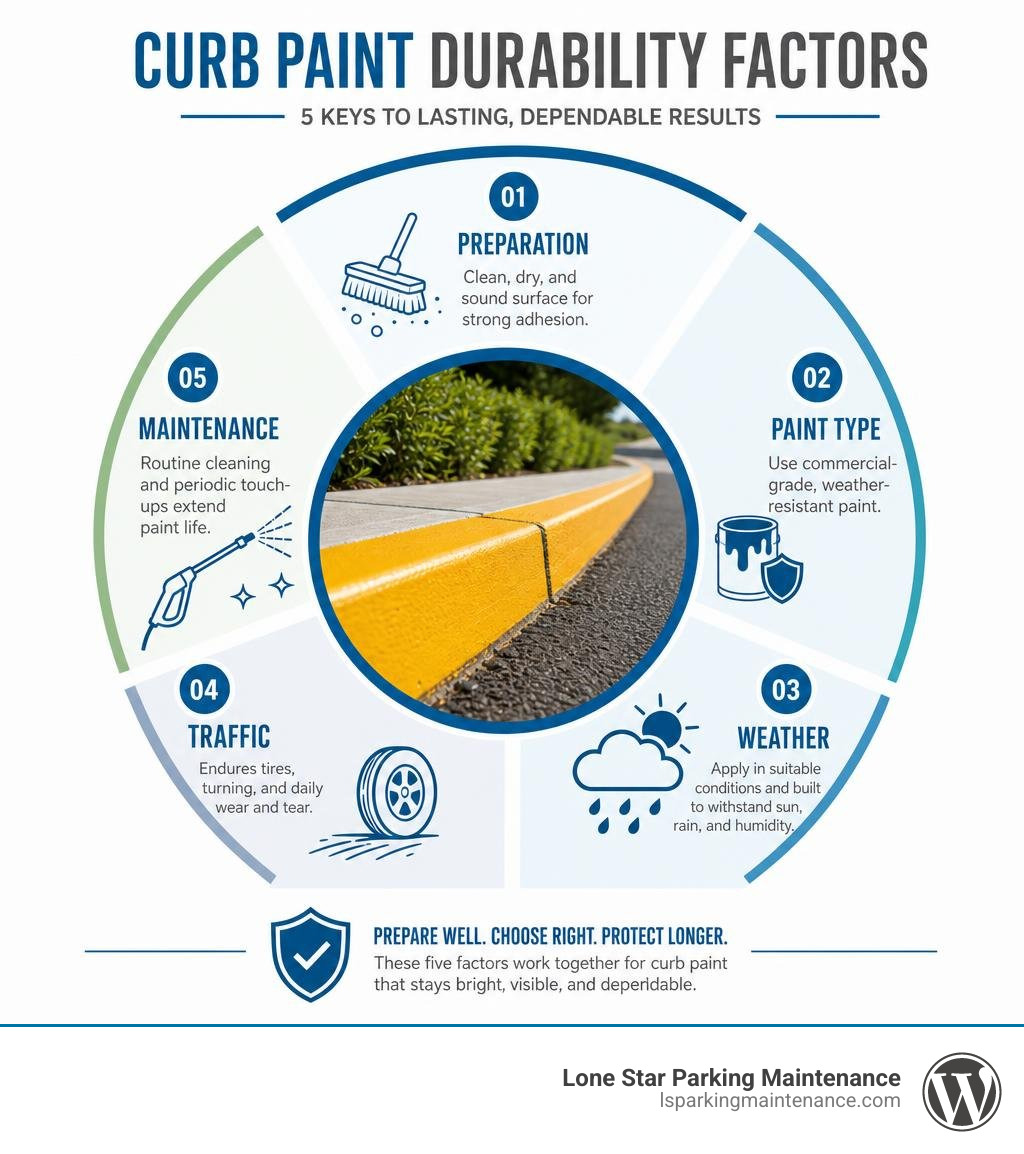
Important curb painting dependable results terms:
Why Curb Markings Fail: Environmental and Physical Wear Factors

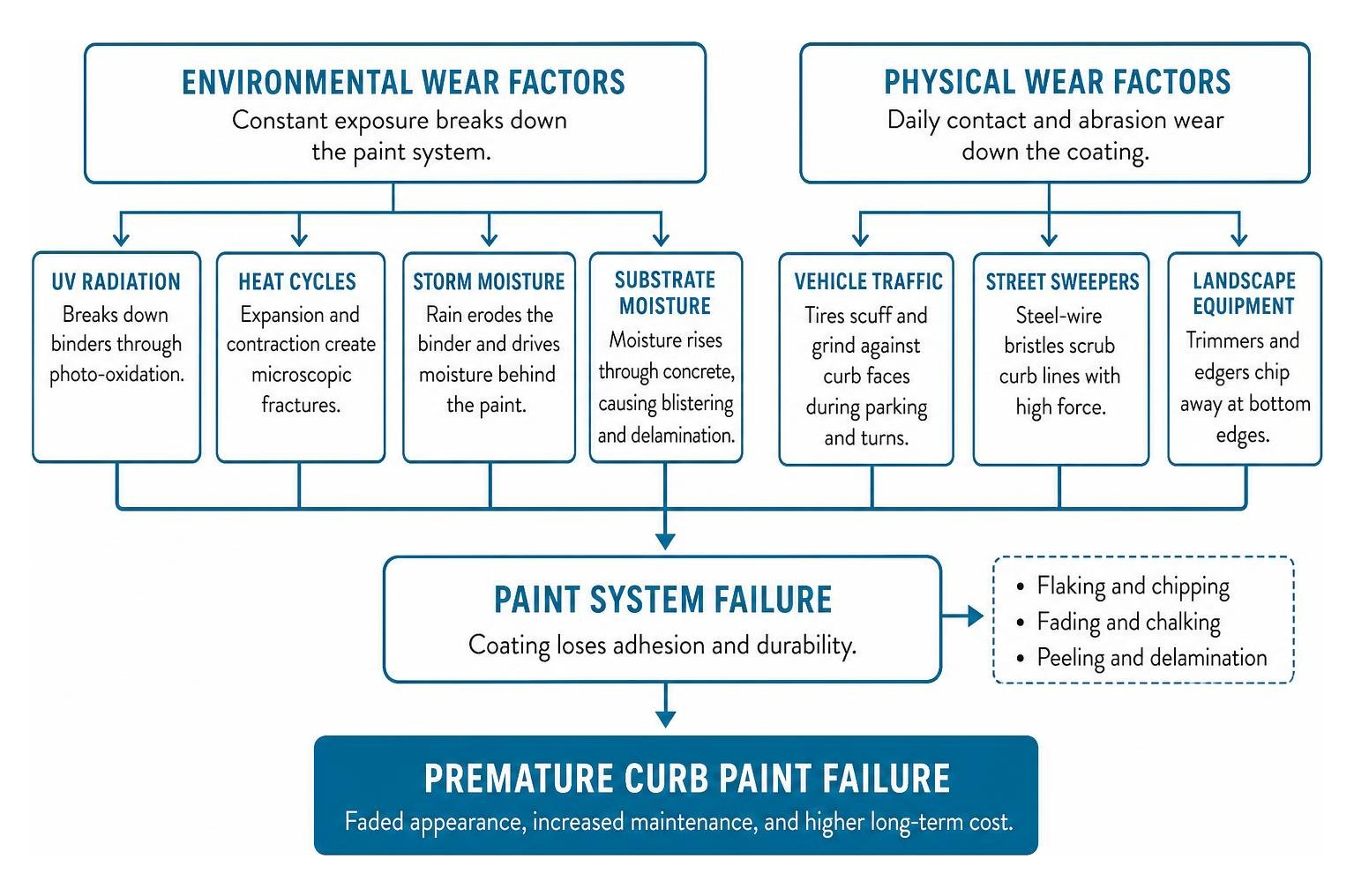
When painted curbs begin to flake, chip, or turn dull gray within weeks of application, the root cause is rarely just “bad paint.” Concrete is an active, porous material exposed to relentless environmental stress and physical punishment. In commercial properties, residential neighborhoods, and retail parking facilities across the DFW Metroplex, concrete curbs endure some of the harshest conditions imaginable.
Understanding why coatings degrade is the first step toward preventing premature failure. When an untrained worker or an unsolicited handyman sprays over dirty concrete, they leave behind dirt, road oil, and loose aggregate that prevent true mechanical adhesion. Before long, property owners find themselves wondering whether that $20 curb painting solicitor was a scam or a steal.
UV Radiation and Severe Weather Degradation
Solar radiation is one of the primary drivers of coating failure. Ultraviolet (UV) rays bombard exterior surfaces constantly, breaking down chemical binders within low-grade paints through photo-oxidation. When these binders degrade:
- Pigments lose their vibrancy, turning deep red fire lanes into washed-out pinks and crisp black address numbers into faint outlines.
- The paint film becomes brittle, losing its elasticity and its capacity to expand and contract alongside concrete during intense Texas heat cycles.
- Thermal expansion causes microscopic fractures throughout the paint film, allowing storm moisture to penetrate behind the surface.
- Heavy seasonal rainstorms erode the chalking binder, stripping layers of color with every downpour.
Substrate Moisture and Mechanical Abrasion
Concrete acts like a sponge. Ground moisture migrates upward through concrete curbs via capillary action, creating hydrostatic pressure directly beneath the paint film. If the paint is not formulated to breathe or if it was applied over damp concrete, this trapped vapor forces the paint away from the substrate, causing blistering, bubbling, and premature delamination.
On top of moisture pressures, curbs face severe mechanical abrasion:
- Vehicle tires scuff and grind against curb faces during parallel parking and tight turns.
- Commercial street sweepers with steel-wire bristles scrub curb lines with high mechanical force.
- Lawn maintenance equipment like line trimmers and edgers chip away at bottom edges.
Without industrial-grade resins formulated for heavy impact, standard coatings quickly wear away under daily vehicle friction.
DIY Fixes vs Professional Curb Painting Dependable Results
Many property managers and homeowners attempt to address faded curbs using off-the-shelf hardware store products. While a can of standard spray paint or a topical restorer seems like an economical weekend project, the performance gap between DIY attempts and professional application is substantial.
| Feature / Metric | DIY Aerosol / Quick-Fix | Professional Traffic Coating |
|---|---|---|
| Surface Preparation | Basic broom sweep or quick hose rinse | Deep pressure washing, degreasing, and mechanical etching |
| Coating Type | Standard consumer-grade enamel/aerosol | Commercial-grade waterborne acrylic or chlorinated rubber traffic paint |
| Dry Film Thickness (DFT) | 1.0 to 1.5 mils (thin, uneven) | 12 to 15 mils (uniform, durable) |
| UV & Fade Resistance | Minimal (fades within 2–4 months) | High-load UV inhibitors (maintains vibrant color for years) |
| Retroreflectivity | None (standard flat finish) | Optional drop-on glass beads for night visibility |
| Edge Precision | Prone to stencil underspray and bleeding | Laser-cut commercial stencils with crisp, clean borders |
| Debris Management | Loose chips left on asphalt/storm drains | Full compliant curb paint debris removal |
| Expected Lifespan | 3 to 6 months under light use | 2 to 4+ years depending on traffic exposure |
The Pitfalls of Quick-Fix Aerosols and Topical Coatings
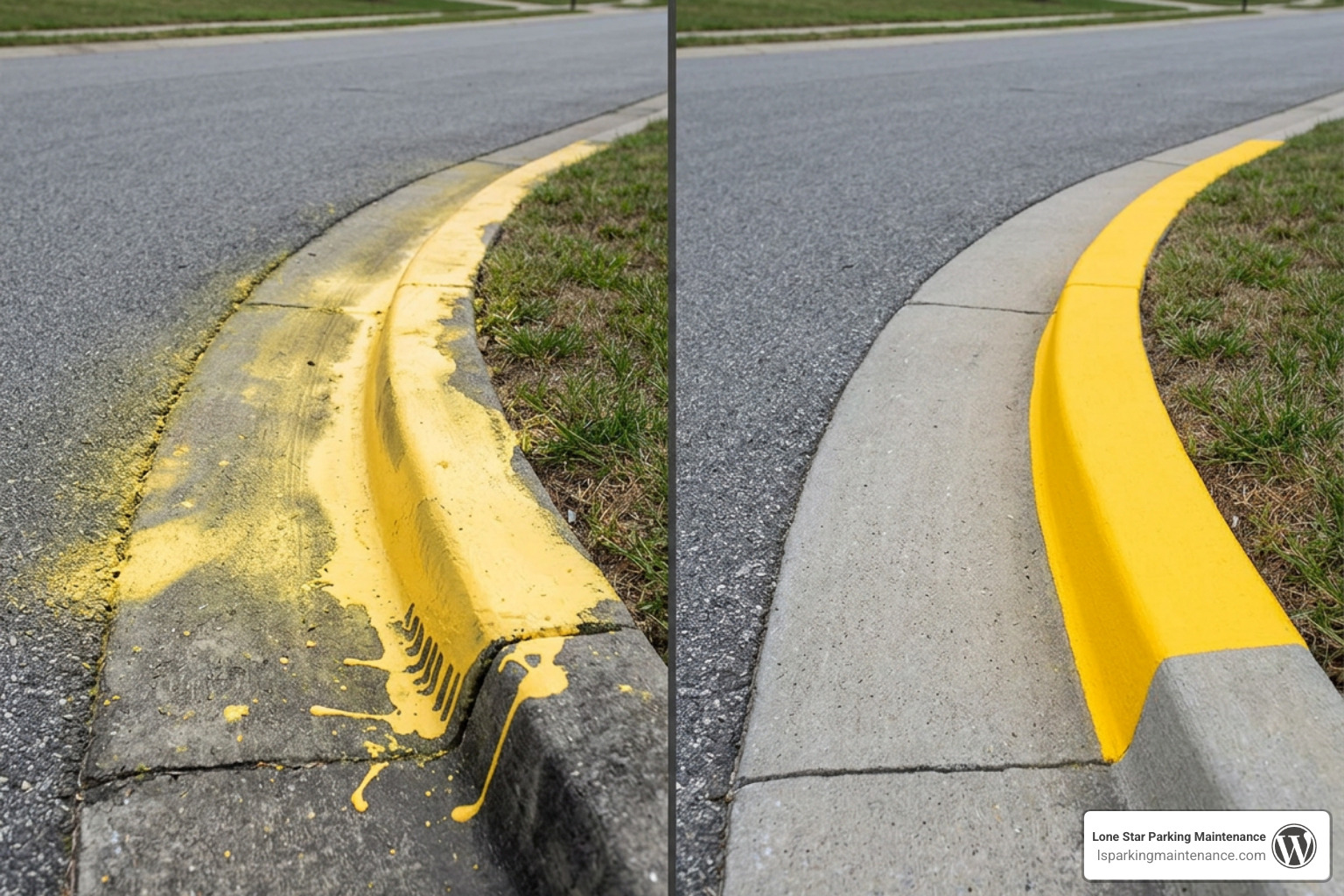
Aerosol cans deliver convenience, but they carry distinct chemical limitations. Hardware store spray cans consist mostly of propellants and thin solvents, containing very low concentrations of solid resin and pigment. When sprayed onto porous concrete, the thin liquid soaks into microscopic voids without building the proper film thickness needed to withstand vehicle tires and weather.
Topical “renew” or “rejuvenator” solutions often suffer from a similar flaw: they temporarily darken oxidized concrete and old paint, but they lack chemical bonding agents and UV blockers. After a few weeks of direct sun exposure and rain, the carrier oils wash away, leaving the curb looking just as weathered as before.
Furthermore, DIY applications frequently result in messy overspray, bleeding beneath flimsy cardboard stencils, and uneven color density that detracts from property curb appeal.
Key Factors for Curb Painting Dependable Results Across Properties
Achieving clean, durable curb markings across diverse properties requires strict adherence to standardized application protocols. Whether managing an HOA community, an apartment complex, a retail shopping center, or an industrial park, consistency is paramount.
To secure curb painting dependable results, we evaluate key structural and visual criteria:
- Uniform Font and Sizing: Standard 4-inch to 6-inch reflective numbering ensures that emergency services, delivery drivers, and visitors can easily locate addresses from the roadway day or night.
- Color Code Compliance: Strict alignment with municipal fire safety codes for red curbs, loading zones, and ADA accessibility standards.
- Edge Sealing: High-tack industrial masking prevents paint bleed along textured, broom-finished, or poured aggregate concrete surfaces.
- Substrate Compatibility: Matching paint chemistry directly to the underlying concrete or previous non-peeling coatings ensures optimal cross-linking.
The Technical Execution Behind High-Durability Curb Markings
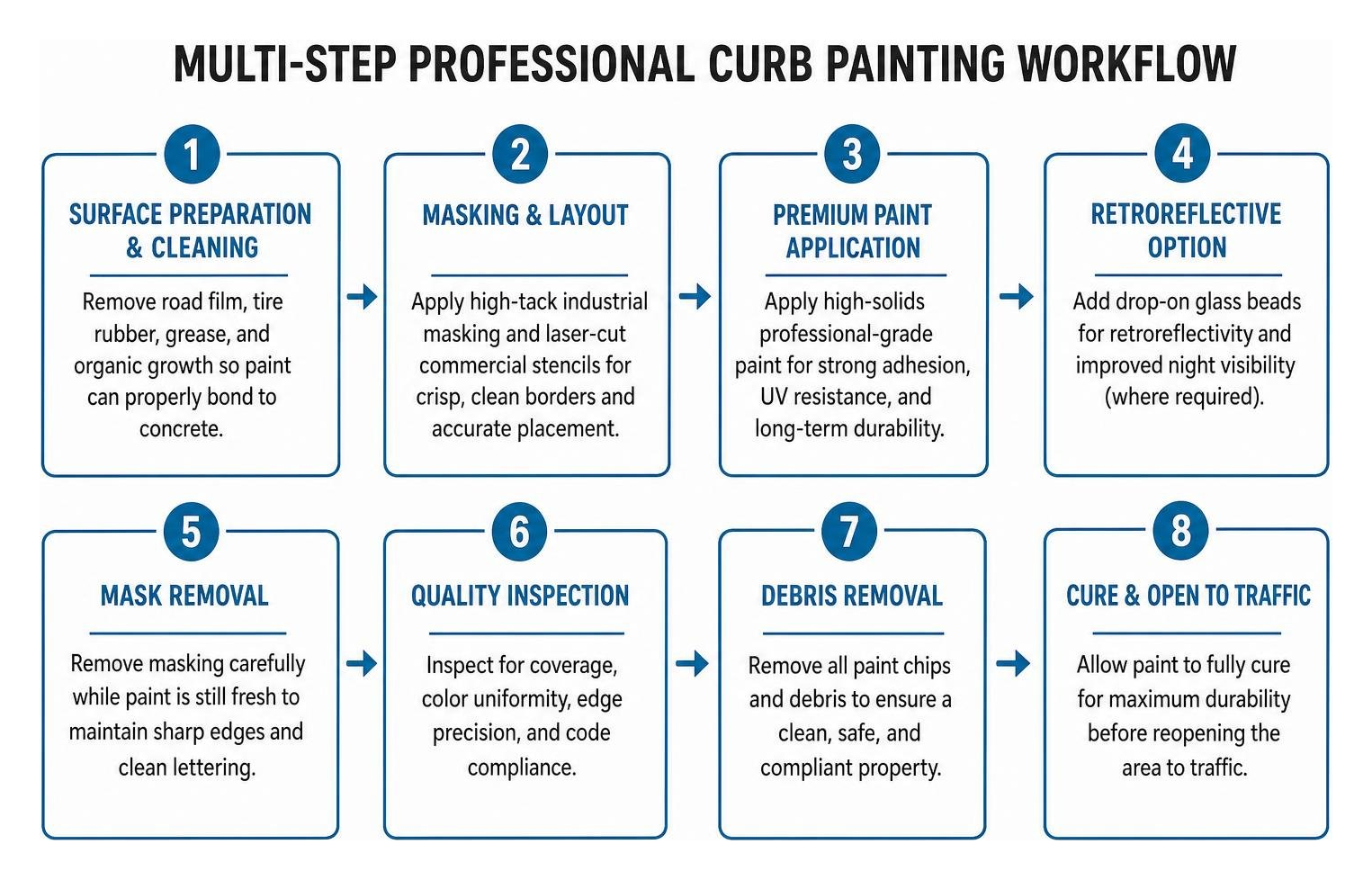
Dependable curb painting is not just about the final stroke of paint; it is an engineered, multi-step process. High-traffic commercial facilities require meticulous attention to detail to ensure markings endure heavy daily use.
Multi-Step Surface Preparation and Cleaning Protocols
Paint cannot bond to concrete it cannot touch. If road film, tire rubber, grease, or organic growth sits on the concrete, the paint bonds only to the contaminant layer, leading to rapid peeling.
Our preparation sequence includes:
- Mechanical Debris Removal: Scraping away loose, flaking layers of old paint to establish a sound foundation.
- Deep Degreasing: Applying specialized cleaning agents to lift motor oil, hydraulic fluids, and grease spots common along curb drops.
- High-Pressure Washing: Power washing the curb face and top edge to flush out embedded dirt, mildew, and loose sand from concrete pores.
- Concrete Profiling and Repair: Addressing structural issues and painting cracked curbs without the peeling by filling deep spalls and mechanical fractures before color application.
- Moisture Content Verification: Ensuring the concrete is completely dry to prevent trapping water vapor behind fresh traffic paint.
Selecting Industrial Traffic Paints for Curb Painting Dependable Results
Using the correct paint chemistry makes all the difference between a coating that lasts a single season and one that stands up to years of wear.
We utilize heavy-duty traffic marking paints specifically formulated for parking facilities:
- High-Solids Waterborne Acrylics: Fast-drying, low-VOC formulations engineered with heavy resin loads. They offer exceptional UV stability, retain vibrant color under direct sunlight, and resist tire scuffing.
- Chlorinated Rubber and Solvent Coatings: Specialized options utilized in industrial environments where resistance to oils, fuel drippings, and chemical de-icers is essential.
- Retroreflective Glass Beads: Embedded directly into the wet paint film during application, these microscopic spheres reflect vehicle headlights back toward drivers, dramatically improving nighttime visibility for emergency services and visitors.
To dive deeper into matching paint formulas with specific commercial environments, explore our detailed guide on the best paint for curbs.
Climate Considerations and Application Timing
Applying paint during improper weather conditions is an invitation for coating failure. Environmental factors dictate curing times, chemical adhesion, and overall finish longevity:
- Surface Temperature: Concrete temperatures must remain within manufacturer-specified windows (typically between 50°F and 90°F). Concrete that is too hot can cause the paint carrier to flash dry before the resins fully bond, while cold surfaces drastically extend cure times.
- Dew Point Spread: Paint should never be applied unless the surface temperature is at least 5°F above the dew point to prevent microscopic condensation from forming beneath the film.
- Drying and Cure Windows: Scheduling application during clear, stable weather ensures waterborne acrylics achieve complete film coalescence before exposure to rain, sprinkler systems, or morning dew.
How to Select a Qualified Commercial Curb Painting Contractor
Hiring the right contractor protects your budget and your property’s appearance. With many transient operators offering quick, unlicensed spray services, property managers must carefully vet their service providers. Selecting the right team ensures you don’t face unexpected repainting costs within months.
Essential Qualifications, Insurance, and Equipment Verification
When evaluating a parking facility maintenance contractor, verify the following credentials:
- Commercial General Liability and Workers’ Compensation: Protects your commercial property and HOA board from liability in the event of on-site accidents or overspray damage.
- Commercial Application Equipment: Look for contractors utilizing specialized airless striping machines, precision line drivers, and laser-cut aluminum or heavy-gauge polymer stencils rather than handheld spray cans or flimsy plastic templates.
- Proven Local Track Record: Check recent commercial portfolio examples and customer reviews across the DFW Metroplex to ensure consistent, high-quality results.
For more tips on finding dependable professionals in North Texas, read our complete guide on how to choose the best curb painting company.
Transparent Project Scoping and Warranty Coverage
A reputable contractor provides complete clarity before work begins:
- Detailed Written Proposals: Clear line items detailing square footage, linear footage of curb lines, surface prep procedures, and exact paint product specifications.
- Turnaround and Scheduling Flexibility: The ability to perform services during off-peak hours or weekends to avoid disrupting tenant traffic and customer parking.
- Bulk HOA and Multi-Property Programs: Streamlined rates and clear timelines for large-scale communities, business parks, and multi-family complexes.
- Photo Verification: Automated digital proof of completion sent upon project sign-off, allowing property managers to verify clean, accurate results remotely.
Frequently Asked Questions About Curb Painting Durability
Do property owners need to be on-site during curb painting services?
No. As long as our crews have clear physical access to the curb lines, parking bays, and address locations, property managers and homeowners do not need to be present. We coordinate scheduling in advance to ensure vehicles are cleared from the work zone, and we provide comprehensive photo verification upon completion so you can inspect the crisp results remotely.
How long does commercial-grade curb paint typically last?
Under standard exterior conditions with proper surface preparation, commercial-grade traffic paint typically lasts between 2 to 4 years. Curbs subject to high-frequency tire rubbing, heavy street sweeping, or direct chemical runoff may require maintenance touch-ups sooner, whereas low-traffic residential curb addresses often maintain strong visibility and color retention even longer.
What makes industrial traffic paint superior to hardware store spray paint?
Industrial traffic coatings contain significantly higher concentrations of durable solid resins, specialized UV-blocking pigments, and tough binders engineered specifically to adhere to dense, alkaline concrete substrates. Consumer aerosol cans contain high volumes of propellants and thinners with minimal solids, creating a thin, fragile layer that breaks down rapidly under sun exposure, moisture, and vehicle friction.
Conclusion
Crisp, vibrant curb markings are vital for property safety, navigation, and overall curb appeal. Achieving long-lasting results requires far more than a quick coat of aerosol paint—it demands thorough mechanical surface preparation, professional-grade traffic coatings, precision stenciling, and ideal application conditions.
At Lone Star Parking Maintenance, we deliver top-tier parking lot striping, curb painting, power washing, and concrete maintenance solutions across the DFW Metroplex. Whether you need curb address updates for an entire HOA, fire lane compliance markings for a retail shopping center, or comprehensive parking facility upgrades, our experienced team provides the durable, high-visibility results your property deserves.
Ready to protect your concrete assets and keep your curb lines looking sharp? Explore our full range of parking lot solutions, including curb stop installation and parking facility protection, and contact Lone Star Parking Maintenance today for a free, transparent project estimate.