
Build a Parking Lot Maintenance Schedule That Prevents Bigger Repairs
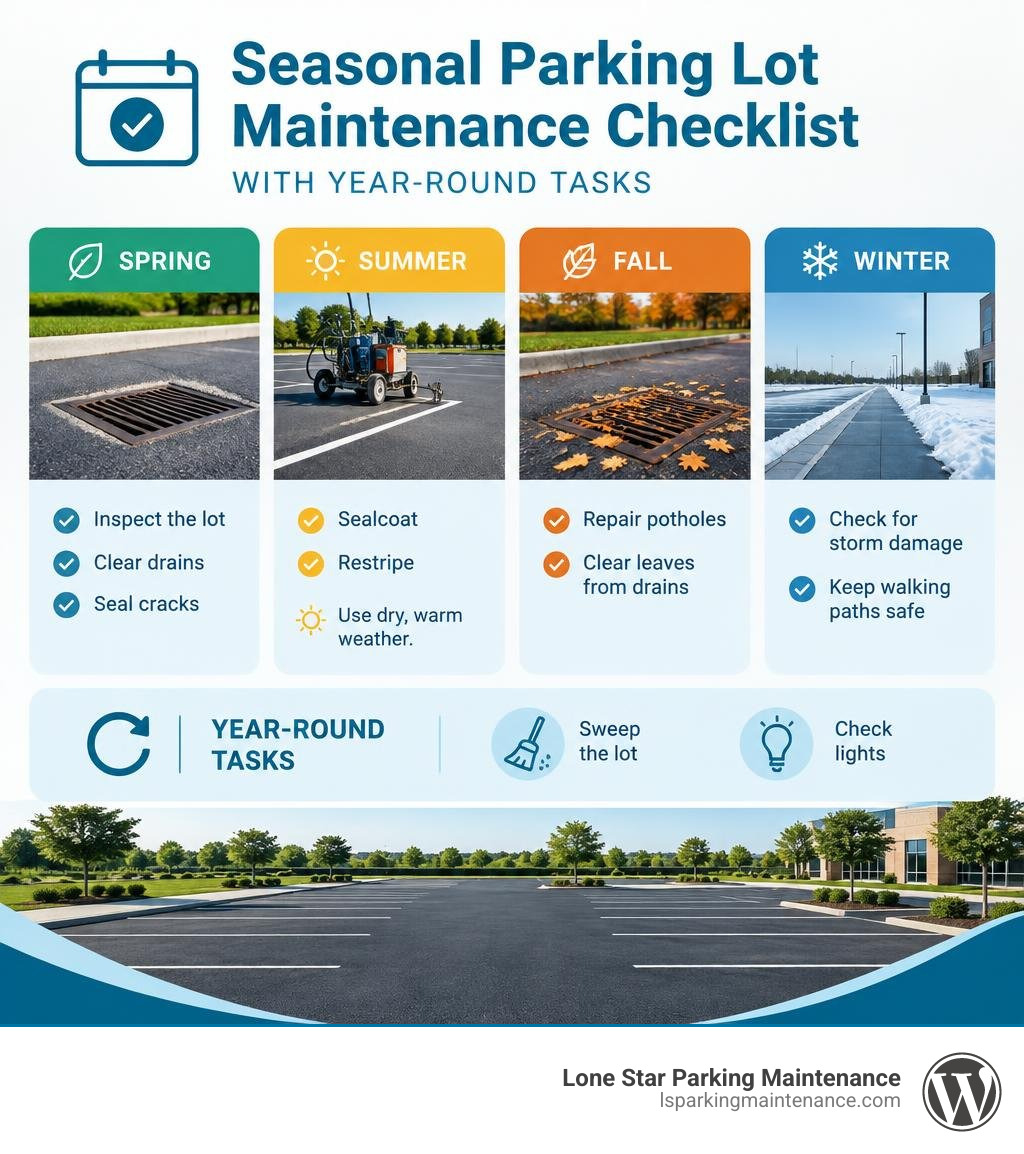
Start with a written plan: Inspect the lot each spring, then clear drains and seal cracks before water reaches the pavement base. Use dry, warm weather for sealcoating and restriping. In fall, repair potholes and clear leaves from drains. In winter, check for storm damage and keep walking paths safe. Sweep and check lights year-round.
For DFW property managers, this schedule is a starting point, not a fixed rule. Add inspections after heavy rain, and move repairs forward when cracks, standing water, or faded markings create a safety risk. Small, planned repairs are easier to budget for than a failing lot.
I’m Cason, and I’ll walk you through how to tailor that plan to your pavement.
Explore more about parking lot maintenance schedules:
The Four-Season Pavement Preservation Framework
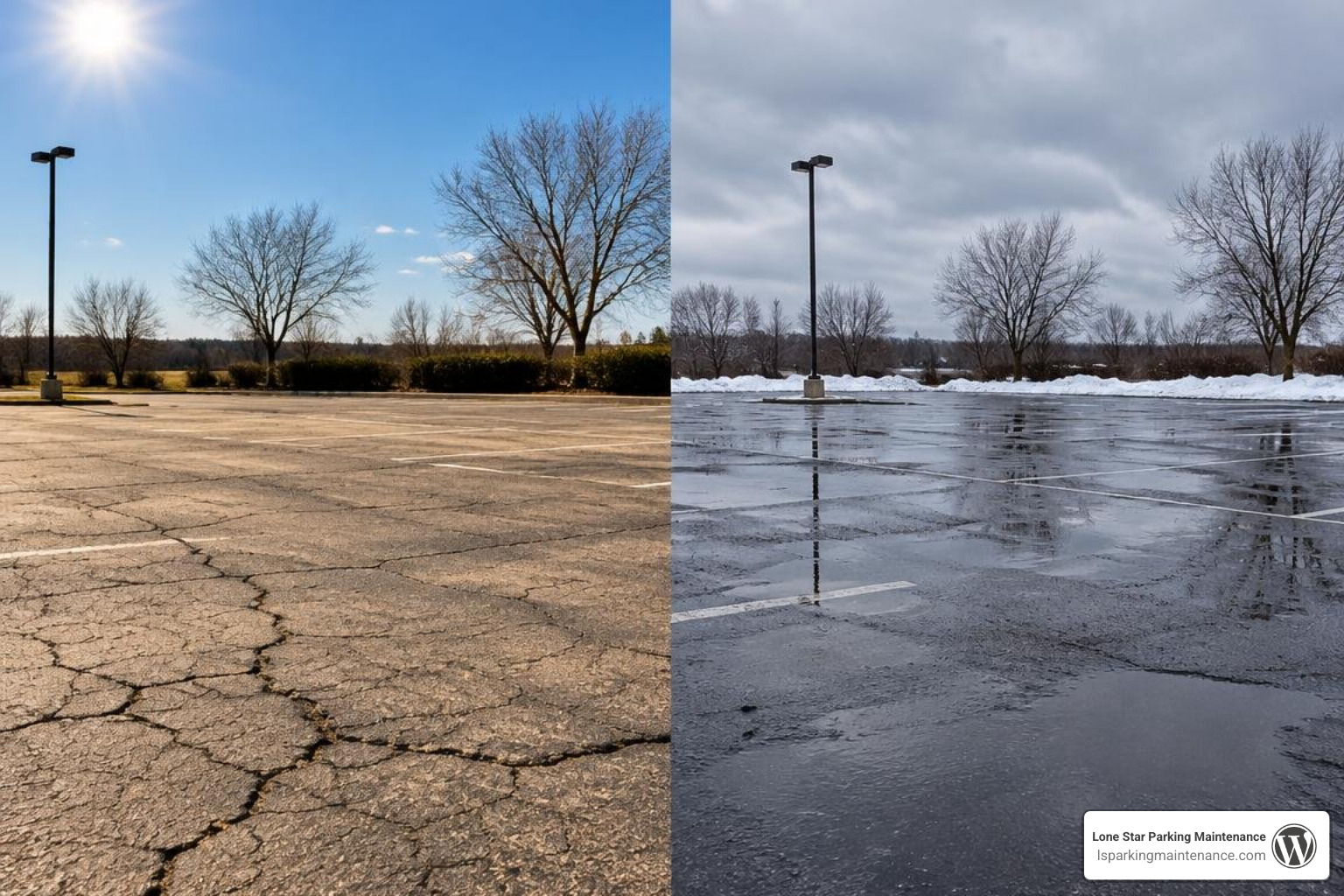
Preserving commercial asphalt requires working with seasonal weather shifts rather than fighting them. Asphalt is a flexible pavement system composed of mineral aggregate bound together by petroleum-based asphalt cement. This structure naturally expands during extreme summer heat and contracts during cold snaps. When maintenance activities are misaligned with these environmental shifts—such as applying sealcoat in freezing temperatures or skipping post-winter crack repairs—pavement deterioration accelerates exponentially.
By establishing structured parking lot maintenance schedules, property managers align interventions with proper atmospheric moisture and ground temperature windows.
| Season | Optimal Temp Window | Primary Tasks | Inspection Focus Areas |
|---|---|---|---|
| Spring | 45°F – 70°F | Post-thaw audit, drainage clearance, hot-pour crack sealing | Hairline cracking, standing water, catch basin blockages |
| Summer | 65°F – 95°F+ | Pavement sealcoating, line striping, curb painting | Surface oxidation, aggregate loss, ADA stall compliance |
| Fall | 50°F – 75°F | Pre-freeze crack sealing, pothole patching, leaf removal | Catch basins, perimeter edges, structural depressions |
| Winter | Varies / Above freezing | Storm inspections, ice safety, curb and signage checks | Freeze-thaw heaving, deicer residue, plow scrapes |
Spring: Post-Thaw Audits, Drainage, and Crack Sealing
Spring marks the critical recovery period for commercial asphalt. Winter weather subjects pavement to moisture intrusion and subgrade movement. When trapped water freezes, it expands by roughly 9 percent, generating massive hydraulic pressure that forces cracks wider and fractures aggregate.
Our first objective in spring is conducting a comprehensive post-thaw walk-through. We inspect drainage inlets, check for standing water, and locate newly formed surface fissures. Catch basins and drainage paths must be cleared of accumulated silt, gravel, and winter debris. Standing water is an asphalt surface’s worst enemy; unmitigated pooling can accelerate localized pavement failure by four to six times compared to properly sloped surfaces.

Once the surface is dry and ambient temperatures reliably hold above 40°F to 50°F, crack treatment begins. We route, clean, and seal cracks between 1/4-inch and 1-inch wide using an elastomeric, hot-pour rubberized sealant. Understanding the benefits of crack filling helps property owners prioritize this step before minor fissures expand into structural failures. Knowing the exact indicators for detecting early asphalt cracks ensures that repairs occur while the surrounding subgrade remains completely stable.
Summer: Surface Sealing and Restriping Windows
Summer brings consistent heat, low humidity, and extended daylight—the ideal conditions for applying protective coatings and traffic paint. During hot Texas summers, solar ultraviolet (UV) radiation aggressively oxidizes the asphalt binder. This oxidation turns rich, flexible black asphalt into a brittle, gray surface prone to raveling and surface erosion.
Applying a commercial-grade sealcoat creates a resilient barrier against UV rays, motor oils, coolant drips, and moisture. Reviewing why parking lot sealing is important makes it clear that sealcoating is proactive surface preservation, not a cosmetic cover-up. Depending on daily traffic volume and sunlight exposure, understanding how long parking lot sealing lasts allows property managers to plan re-applications on a reliable 2-to-3-year cycle.
Once the sealcoat cures (typically 24 to 48 hours), restriping restores safe traffic management. Properly preparing your lot for striping ensures strong paint adhesion and crisp lines. This window is also the time to audit Americans with Disabilities Act (ADA) stalls, verifying that access aisles, slopes, and van-accessible spaces meet federal and municipal standards.
Fall: Pre-Winter Sealing and Pothole Mitigation
Fall maintenance is your final opportunity to waterproof pavement before cold weather sets in. As autumn temperatures drop, asphalt contracts, causing unsealed cracks to open wider. If autumn rain enters these voids and freezes during sudden cold snaps, sub-base failure is inevitable.
During September, October, and November, maintenance crews must systematically eliminate every path water can take into the pavement base:
- Clean leaves, branches, and trash from catch basins and retention basins to prevent backup during heavy rains.
- Perform a secondary crack-sealing pass on any new expansion cracks that opened during late-summer cooling.
- Cut out localized alligator cracking and patch emerging potholes using full-depth asphalt patching rather than temporary cold patches.
- Grade gravel transitions and inspect concrete curb interfaces where water tends to seep beneath asphalt edges.
Following the complete guide to parking lot repairs ensures minor surface defects are properly resolved with permanent repairs before winter weather makes asphalt plants switch to seasonal schedules.
Winter: Snow, Ice, and Surface Protection
Winter maintenance focuses on tenant safety, ice mitigation, and protecting the pavement from mechanical damage. Even in milder southern climates, unexpected winter storms and sub-freezing temperatures require quick action to manage slip hazards.
Plow operations must be planned to protect the asphalt surface. Drivers should use poly-edged or rubber-tipped plow blades adjusted to avoid catching raised utility lids, expansion joints, or curbs. Snow piles must never be placed on top of catch basins, storm drains, or low-lying pavement corners. Piling heavy, dirty snow on drainage points blocks meltwater runoff, creating recurrent freeze-thaw puddles that break down the asphalt edge.
Chemical selection is equally important. Overusing aggressive deicing chemicals like rock salt (sodium chloride) or calcium chloride can accelerate binder deterioration and corrode concrete curbs. Property managers should also align sweeping and maintenance schedules with regional standards, such as statewide seasonal maintenance and street sweeping protocols, to keep driving lanes and walkways clear of abrasive winter grit.
Developing Comprehensive Parking Lot Maintenance Schedules

A functional maintenance program transforms ad-hoc repairs into an organized operational routine. Creating an effective schedule requires combining day-to-day cleaning with multi-year preservation projects based on traffic load and pavement age.
Recurring Routine Tasks That Run All Year
Major seasonal milestones protect the pavement structure, but routine operational tasks maintain daily safety and cleanliness.
- Sweeper Truck Operations (Weekly to Bi-Weekly): Regular sweeping does more than improve appearance. Sand, small stones, and broken glass act like sandpaper under vehicle tires, grinding down sealcoats and striping. Sweeping stops this abrasive wear.
- Debris and Trash Removal (Daily to Weekly): Clearing organic matter prevents decaying leaves and standing dirt from holding moisture against the asphalt binder.
- Oil Stain Remediation (Monthly): Engine oil, transmission fluid, and diesel soften asphalt’s petroleum binder. Power washing and degreasing neutralize these spots before the aggregate dislodges. Knowing how often to pressure wash surfaces keeps commercial parking lots clean without eroding surface coatings.
- Exterior Lighting and Electrical Audits (Monthly): Checking that all wall packs, canopy lights, and pole fixtures operate at full capacity protects safety and limits liability. Understanding maintaining parking lot lights helps facility managers avoid dark zones that invite security risks.
- Catch Basin and Drainage Flushing (Quarterly): Inspecting drop inlets and underground retention lines ensures storm runoff clears the lot immediately during cloudbursts.
How Climate, Traffic, and PCI Shape Parking Lot Maintenance Schedules
Every commercial property experiences unique wear patterns. A quiet suburban office park has vastly different maintenance requirements than a 24-hour retail distribution center carrying delivery trucks and heavy traffic.
To build an accurate schedule, engineers use the Pavement Condition Index (PCI)—a standardized numerical rating from 0 (failed) to 100 (good):
- PCI 85–100 (Good): The asphalt is structurally sound with minimal aging. Maintenance focuses on regular sweeping, clearing drainage, and sealing hairline cracks.
- PCI 70–84 (Satisfactory): Minor surface oxidation and narrow cracks appear. This stage triggers routine sealcoating, crack sealing, and line restriping.
- PCI 55–69 (Fair): Pavement shows shallow rutting, medium cracks, and isolated raveling. Interventions include deep hot-pour crack sealing, infrared asphalt patching, and localized skin patching.
- PCI 40–54 (Poor): Base deterioration, widespread alligator cracking, and recurring potholes emerge. The pavement requires structural mill-and-overlay work.
- PCI 0–39 (Failed): The subgrade has failed. Full-depth reclamation or complete structural reconstruction is necessary.
Learning how to properly manage your sealcoat maintenance schedules based on actual PCI ratings ensures you invest in preventative maintenance while the pavement is in the upper tiers—avoiding the steep costs of structural reconstruction.
Financial Blueprint: Budgeting, Sinking Funds, and ROI
Treating parking lot maintenance as an unavoidable capital loss is a common operational mistake. Pavement preservation is a high-yield investment. Industry studies show that every dollar spent on timely crack sealing saves $4.00 to $6.00 in future structural repairs by stopping water before it damages the base.
Property owners who manage pavement reactively spend four to five times more over the life of a facility than those who follow a scheduled preventive maintenance program.
| Strategy Type | 25-Year Maintenance Scope | 25-Year Total Cost (50,000 SF Lot) | Average Annual Cost |
|---|---|---|---|
| Preventive Maintenance Calendar | Annual crack sealing, 3-year sealcoating & striping cycles, routine sweeping, minor patching | $125,000 – $175,000 (includes deferred overlay) | $5,000 – $7,000 / yr |
| Reactive / Run-to-Failure | Zero crack sealing, no sealcoating, emergency pothole cold patches, full replacement at Year 12 & Year 24 | $450,000 – $650,000 (two full reconstructions) | $18,000 – $26,000 / yr |
Incorporating Parking Lot Maintenance Schedules into Capital Operating Budgets
Budgeting for pavement care requires balancing annual Operating Expenses (OpEx) with long-term Capital Expenditure (CapEx) sinking funds.
Routine annual maintenance—including sweeping, annual crack sealing, localized minor patching, drainage servicing, and lighting checks—generally runs $0.10 to $0.30 per square foot annually. For a standard 100-space commercial parking lot (approximately 30,000 to 35,000 square feet), properties should budget between $3,000 and $9,000 annually for operational care.
Sealcoating and restriping add roughly $0.15 to $0.25 per square foot every two to three years. Prudent property managers hold a reserve of 10 to 15 percent of their annual maintenance budget to handle unexpected storm damage, plumbing cuts, or localized utility repairs.
In addition to routine OpEx, managers should establish a sinking fund for a mill-and-overlay project every 15 to 20 years. Setting aside funds annually avoids sudden special assessments when the pavement eventually needs a new wearing course.
Maintaining Documentation for Liability Defense and Asset Valuation
Detailed maintenance documentation provides essential financial and legal protection. Slip-and-fall and vehicle damage claims represent significant liability risks for commercial properties. If a pedestrian trips in an unaddressed pothole or a driver damages an axle in a depression, a well-documented maintenance history is critical for showing proactive property care.
Every inspection, repair invoice, contractor scope, and site photograph should be cataloged in a digital facility record:
- Date-stamped high-resolution photos of every quarterly walk-through.
- Written contractor work orders detailing the hot-pour crack sealant specifications, application temperatures, and square footage completed.
- ADA compliance certifications demonstrating stall slope, proper signage height, and access aisle striping.
- Sweeping logs and storm drainage clearance sign-offs.
Prioritizing concrete and asphalt maintenance safety protects visitors from injury while establishing verifiable due diligence that strengthens liability defense and supports property asset valuations.
Contract Specifications, Compliance, and Safety Protocols
When outsourcing maintenance, clear contractual scopes are essential for getting quality work and keeping your property fully compliant.
Municipal and commercial contracts follow strict environmental and safety regulations. In public scopes like municipal parking facility contract standards, contractors must provide dedicated traffic control plans and follow clear environmental safeguards.
Contractors must implement Best Management Practices (BMPs) to prevent sealants, loose asphalt, and wash water from entering municipal storm sewer systems. Failing to protect stormwater inlets can trigger immediate Stop Work Orders and steep municipal fines.
Clear contracts also protect your business continuity. Require contractors to phase projects in sections, schedule high-impact work during off-peak hours or weekends, and clearly post directional detour signage so customers and tenants always have safe, uninterrupted parking access.
Frequently Asked Questions About Parking Lot Maintenance Schedules
What is the single highest-return activity in asphalt maintenance?
Hot-pour crack sealing is universally recognized across the pavement industry as the single highest-return maintenance task. Water that enters open cracks softens the subgrade, causes depressions, and creates potholes during cold weather. Crack sealing keeps moisture out of the structural base for roughly $0.50 to $1.50 per linear foot, preventing deep structural repairs that cost significantly more per square foot.
How much should a property manager budget annually per square foot?
A commercial property manager should budget between $0.10 and $0.30 per square foot per year for routine maintenance, including sweeping, crack filling, minor patching, and drainage care. Applying sealcoat and restriping every 2 to 3 years adds an amortized cost of approximately $0.05 to $0.10 per square foot annually, bringing the total comprehensive maintenance budget to $0.15 to $0.40 per square foot per year.
How long does a well-maintained asphalt lot last compared to a neglected one?
A properly maintained asphalt parking lot lasts 25 to 30 years or more before requiring full-depth structural replacement. A neglected lot where cracks, drainage issues, and surface oxidation go unaddressed often suffers base failure in as few as 10 to 15 years. Following a preventive schedule defers capital replacement costs by 10 to 15 years, saving commercial properties hundreds of thousands of dollars over the life of the asset.
Conclusion
Protecting your commercial asphalt is an active management strategy. By moving from reactive repairs to a structured seasonal maintenance schedule, you prevent unexpected base failures, lower long-term capital costs, keep tenants safe, and maintain an attractive property exterior year after year.
Managing a commercial parking facility involves balancing multiple responsibilities, but you don’t have to handle pavement preservation alone. At Lone Star Parking Maintenance, we deliver end-to-end pavement care—including crack filling, sealcoating, concrete repair, pressure washing, and code-compliant professional parking lot striping throughout the DFW Metroplex. Contact our team today to schedule an on-site pavement audit and build a customized maintenance plan that protects your investment for decades to come.