
Choose Parking Lot Painting Equipment That Fits the Job
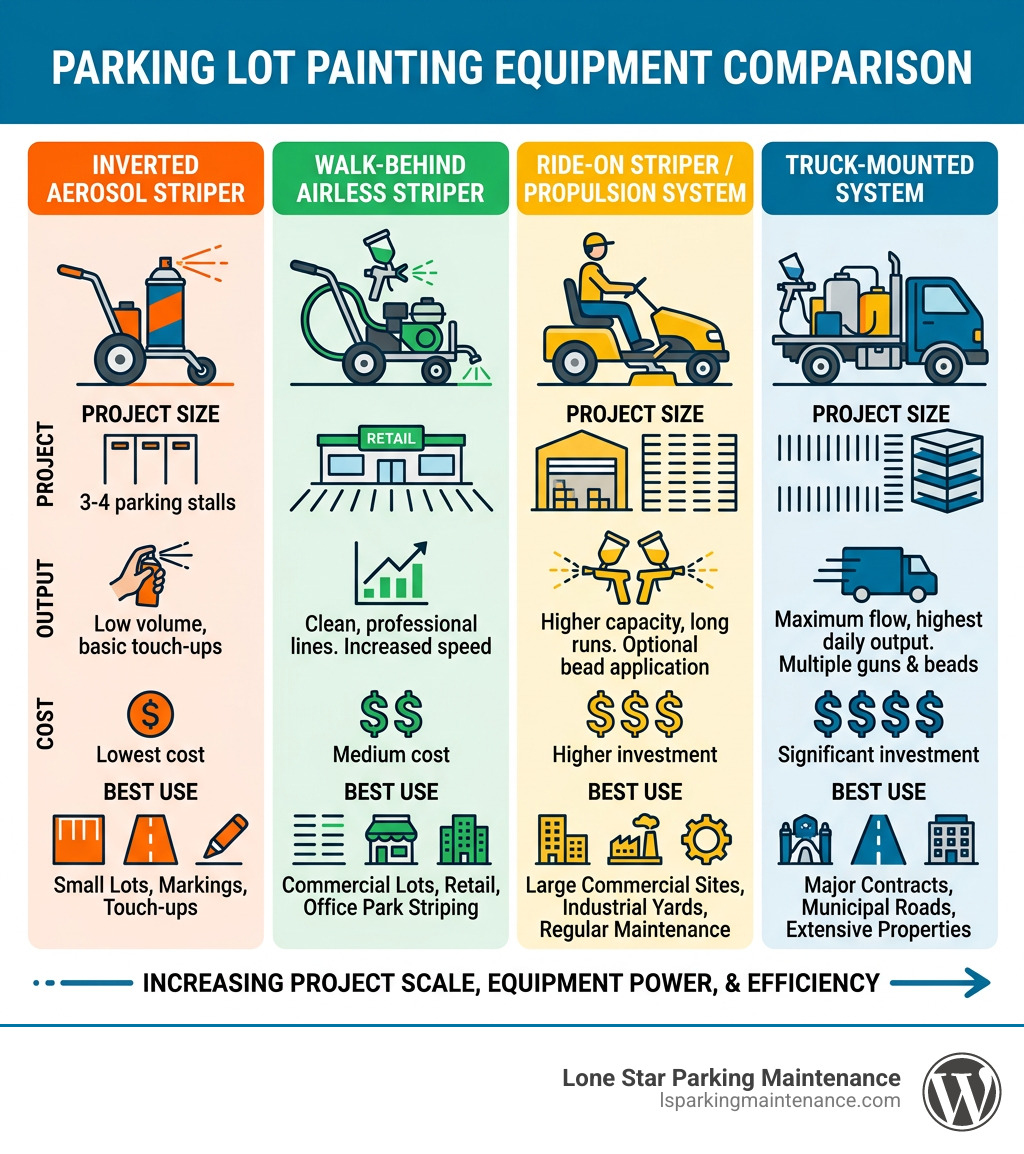
The right parking lot painting equipment depends on your lot size, line volume, paint type, and how often you re-stripe. For quick touch-ups, an inverted aerosol striper is the lowest-cost choice. For most commercial lots, a walk-behind airless striper offers the best mix of clean lines, speed, and control. For large properties with long runs and frequent repainting, self-propelled, ride-on, or truck-mounted systems can cut labor time and keep work moving.
Start with these basics:
- Small touch-ups and a few stalls: Use an aerosol striping machine and compatible inverted marking paint.
- Typical retail, office, or multifamily lots: Use a walk-behind airless striper with an adjustable spray width, usually suitable for lines from 2 to 24 inches wide.
- Large lots or recurring commercial work: Consider a self-propelled or ride-on unit with higher paint capacity, multiple guns, and optional glass-bead delivery.
- Symbols, arrows, and accessible spaces: Add durable stencils, a chalk line or laser guide, and the right spray gun setup.
Clear stripes are not just cosmetic. They help drivers move safely, support accessible parking layouts, and make a property look cared for. The gap between a basic striping machine and professional airless equipment can also be substantial: entry-level aerosol machines may cost well under $200, while high-output professional stripers can cost many thousands.
I’m Cason, and this guide will help you compare the equipment, accessories, and practical choices behind sharper, longer-lasting parking lot markings.
Core Categories of Parking Lot Painting Equipment
Choosing the right machinery requires matching the scale of your facility with the output capacity of the machine. The table below outlines how manual units compare against entry-level airless, self-propelled, and commercial rigs.
| Equipment Category | Drive Type | Operating Pressure (PSI) | Max Flow Rate (GPM) | Approximate Price Range | Recommended Application |
|---|---|---|---|---|---|
| Manual Aerosol | Manual Push | Can-pressurized | N/A | $100 – $250 | Small business lots, 5–20 stalls, light spot repairs |
| Walk-Behind Airless | Push / Hand Guided | 3,000 – 3,350 PSI | 0.75 – 2.2 GPM | $5,000 – $14,500 | Retail centers, schools, churches, warehouses |
| Self-Propelled / Ride-On | Hydrostatic / Motorized | 3,300 – 3,350 PSI | 2.2 – 2.5 GPM | $9,000 – $22,000 | Multi-acre logistics hubs, large shopping malls |
| Truck-Mounted Rig | Palletized Vehicle | 2,900 – 3,000 PSI | 5.0+ GPM (Dual Pump) | $25,000+ | Long continuous roadways, major municipal complexes |
Manual and Inverted Aerosol Striping Machines
Manual aerosol machines represent the most straightforward entry point into line marking. Units like the Rust-Oleum 2395000 striping machine, priced around $144.99, feature a lightweight four-wheel chassis designed to hold inverted paint cans upside down. When you squeeze the handlebar trigger, a mechanical cable depresses the aerosol nozzle, releasing an even fan pattern onto the asphalt.
These tools are best suited for small commercial properties with fewer than 20 stalls or for minor spot touch-ups. While affordable and easy to store, they lack mechanical paint atomization. Because inverted cans hold limited volume and deliver a thinner film build, aerosol lines wear down much faster under constant tire traffic and intense Texas sun compared to bulk liquid coatings applied under hydraulic pressure.
Walk-Behind Gas and Battery-Powered Stripers
When you need professional edge definition and high film thickness, walk-behind airless stripers become essential. These units draw liquid traffic paint directly from a 5-gallon pail or an onboard hopper, pressurizing the material between 3,000 and 3,350 PSI using mechanical or hydraulic piston pumps. Rental-ready units, such as a parking lot striper gas model, deliver flow rates between 0.75 and 0.85 GPM, powered by reliable Honda GX engines.
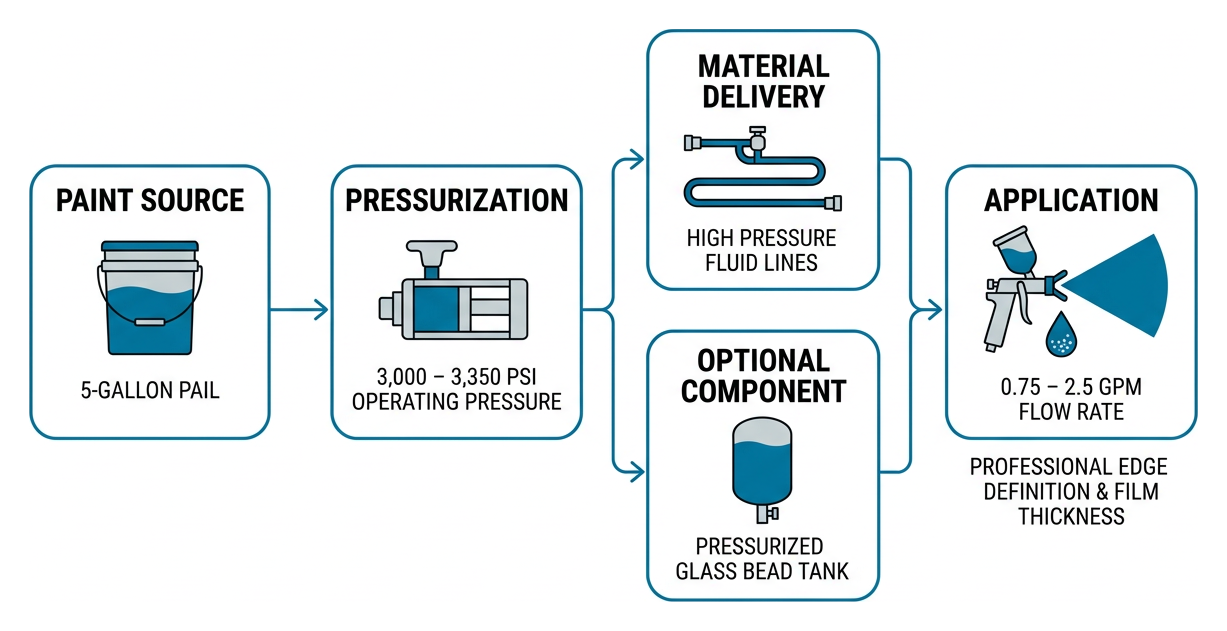
High-performance models like the PROSTRIPE 300 HD LINEMATIC walk behind line striper by VEZOS feature a 22-gallon paint hopper and an 80-pound pressurized glass bead tank. These machines easily spray line widths from 2 to 24 inches.
Investing in a dedicated walk-behind system is one of the best ways to upgrade your property lines using a professional parking lot paint striper. For indoor facilities, underground parking structures, or properties with strict noise rules, battery-powered cordless airless rigs deliver the exact same high-pressure atomization without gas exhaust.
Self-Propelled and Ride-On Striping Systems
Pushing a 200-pound machine across a five-acre retail complex quickly causes operator fatigue, which leads to wavy lines. Self-propelled units and ride-on attachments solve this problem by introducing motorized traction drives. Systems such as the PROSTRIPE 300 SP self propelled line striper with FLIPDRIVE allow operators to stripe from either a standing platform or a seated sulky, providing an unobstructed panoramic view of the layout.
For dual-color configurations, the PROSTRIPE 400 SP LINEMATIC DC self propelled line striper offers a massive 40-gallon hopper with dual suction inlets, a 13 HP Honda engine, and an internal alternator capable of powering auxiliary LED work lights and laser guidance kits. Ride-on systems increase application speed up to 8–10 mph, cutting project turnaround times by more than 30% on expansive commercial properties.
High-Output Truck-Mounted Striping Units
For large corporate campuses, municipal roadways, and multi-acre logistics centers, truck-mounted equipment delivers unmatched production speed. The ROADMASTER A2.5 line striping pickup truck system mounts directly into standard truck beds on a retractable palletized skid.
Equipped with dual hydraulic pumps delivering 5.0 GPM combined output and a 330-pound glass bead tank, a single operator can control multiple pneumatic spray guns from inside the cab. This approach ensures maximum safety while striping long continuous stall lines and roadway corridors.
Essential Accessories and Stenciling Tools
A high-powered striping machine is only half the equation; precision marking also requires layout tools, stencils, and safety materials.
Stencils, Pointers, and Guidance Tools
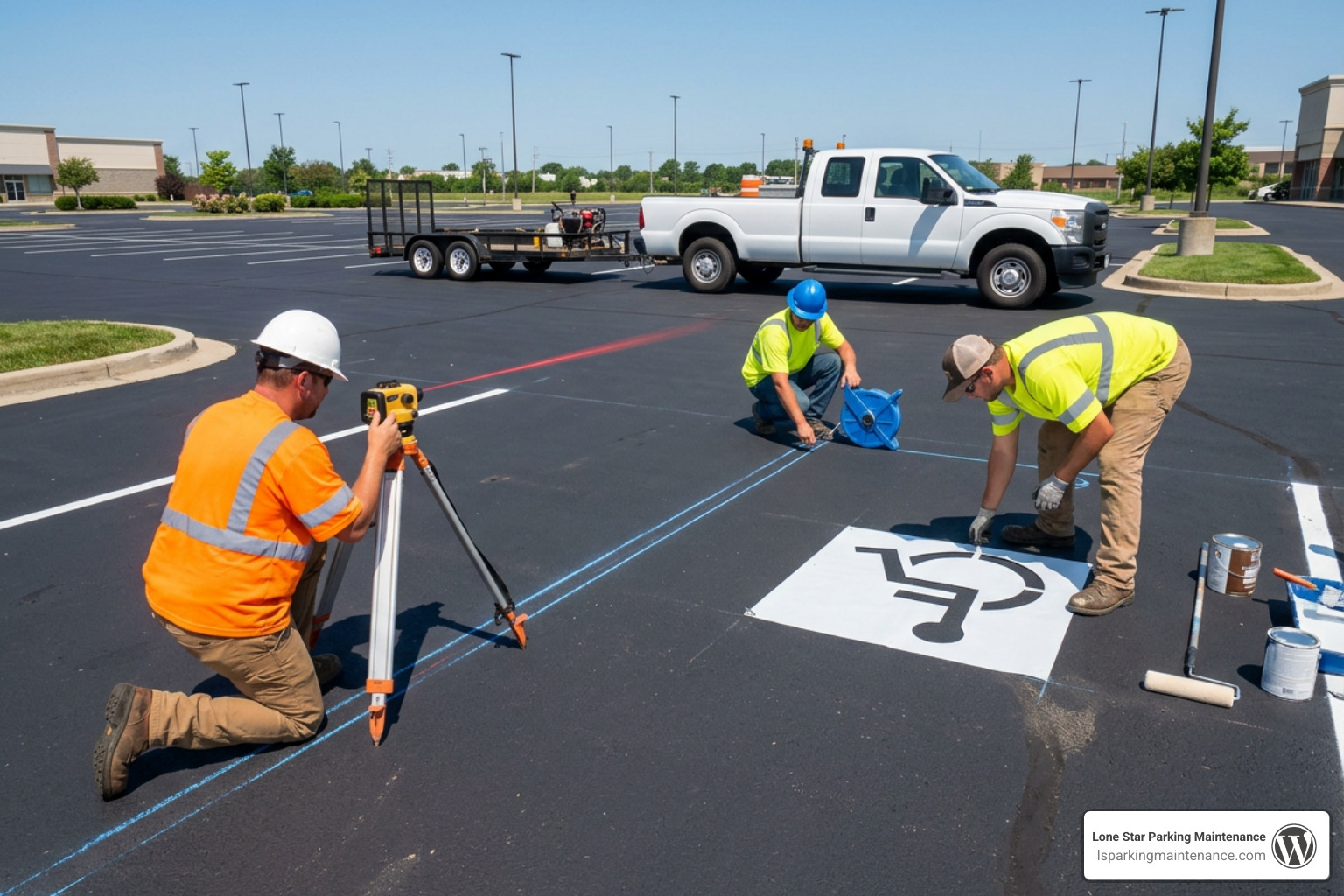
Clean pavement marking relies on accurate preliminary layout. Layout crews use heavy-duty braided chalk lines and commercial laser pointers to establish straight baseline references. Specialized machines like the PROSTRIPE 300 DC self propelled line striper integrate mechanical re-striping pointers and gravity bead systems to track existing faded lines effortlessly.
Standard stenciling accessories include:
- ADA Stencils: Pro-grade 39-inch and 34-inch handicap symbols ensure compliance with accessibility laws. Understanding hospital lot line painting and ADA compliance helps property managers avoid expensive municipal penalties and re-work.
- Directional Markings: 42-inch and 90-inch turn arrows direct one-way and two-way parking aisle traffic.
- Lettering and Number Kits: 6-inch and 12-inch alphabet and number sets mark reserved, visitor, and compact stalls.
For an in-depth look at mapping out stall angles and drive lanes, review the complete guide to lot line painting.
Paint Types and Material Delivery Attachments
Professional striping rigs spray fast-drying waterborne acrylic coatings, such as Aexcel latex striping paint (typically starting around $185 per 5-gallon pail), or specialized solvent-based paints. Managing these heavy coatings requires high-pressure hoses (like BlueMax II 1/4-inch or 3/8-inch lines), RAC 5 spray tips (.027 to .030 orifice sizes), manifold filters, and throat seal liquid (TSL) to lubricate pump packings.
Curb painting presents distinct coating challenges compared to flat pavement. Reviewing curb painting services alongside recommendations for selecting the best curb paint ensures bright yellow and red curbs resist peeling and tire scuffing over time.
How to Select the Right Parking Lot Painting Equipment
Choosing machinery requires balancing project scope, facility type, and equipment longevity.
Evaluating Surface Scale and Project Speed
Small facilities with under 50 stalls rarely justify the maintenance costs or transport requirements of large hydraulic piston sprayers. Conversely, attempting to stripe a 500-stall regional distribution center with an aerosol machine or an undersized push striper will burn through labor hours and produce uneven lines.
Reviewing advice on how to avoid high parking lot painting costs can help facility managers weigh equipment purchasing against contract services. If you decide to purchase internal equipment, consult our guide to top striping machines to match the chassis design to your pavement layout.
Power Source Comparison: Gas, Battery, and Manual
- Manual Push Stripers: Best for occasional touch-ups on private lots; zero engine maintenance, but requires proprietary aerosol cans.
- Gasoline Hydraulic Stripers: The industry workhorse for outdoor lots; delivers continuous 3,300 PSI pressure, high flow rates, and all-day runtimes powered by Honda engines.
- Battery-Powered Electric Rigs: Essential for enclosed parking garages, hospitals, and residential developments where exhaust fumes and engine noise violate safety codes.
Setup, Operation, and Maintenance Best Practices
To achieve razor-sharp line edges without overspray, your equipment must be properly calibrated:
- Pressure Calibration: Set your hydraulic pump between 2,800 and 3,300 PSI. Insufficient pressure causes “tails” (heavy outer edges), while excessive pressure creates overspray fog.
- Tip Selection & Gun Alignment: Use clean .027″ to .030″ reversible spray tips. Position the gun height so the spray fan matches your target line width (typically 4 inches).
- Paint Filtration: Always pour bulk latex through a fine mesh strainer bag to remove dried paint skins that clog spray nozzles.
- Routine Pump Care: Flush waterborne paints with clean water and solvent paints with mineral spirits after every shift. Add throat seal liquid to the pump throat packing nut to keep pistons moving freely.
When striping operations exceed your in-house team’s capacity, hiring a team that specializes in parking lot striping guarantees clean lines that meet all municipal codes and DFW traffic safety standards.
Frequently Asked Questions About Parking Lot Painting Equipment
What is the most cost-effective parking lot painting equipment for small businesses?
For small businesses with under 20 parking stalls, a four-wheel aerosol striping machine is the most affordable initial purchase. The applicator costs under $200, requires zero engine maintenance, and uses standard inverted marking cans. However, for properties requiring annual re-striping across dozens of stalls, renting a walk-behind gas airless striper is more economical over time because bulk 5-gallon paint is far cheaper per linear foot than aerosol cans.
How do airless stripers compare to aerosol line stripers in durability and coverage?
Airless stripers atomize liquid traffic paint at 3,300 PSI, forcing paint deep into asphalt pores and laying down a consistent 15-mil wet film build. This creates sharp line edges and long-lasting durability. Aerosol stripers apply a much thinner coating that sits on the asphalt surface, making it prone to fading within 3 to 6 months under regular traffic and weather exposure.
What equipment is necessary to apply retroreflective glass beads?
Applying retroreflective glass beads requires either a pressurized bead delivery tank with an automated pneumatic dispensing gun or a gravity-assisted bead hopper mounted directly behind the paint spray tip. The dispenser drops glass spheres into wet paint at a specified rate (typically 6 to 8 pounds per gallon), embedding the beads so headlights reflect clearly at night.
Conclusion
Choosing the right parking lot painting equipment comes down to your property’s square footage, your layout complexity, and your desired line durability. While aerosol applicators handle quick touch-ups, commercial facilities across the DFW Metroplex demand the high-pressure atomization, straight-line tracking, and rapid application rates of professional airless and ride-on equipment.
At Lone Star Parking Maintenance, we provide comprehensive parking facility solutions—from precision line striping and sealcoating to ADA re-configurations, power washing, and signage installation. If you are assessing tools for your own property or planning an upcoming facility upgrade, explore our complete 2026 parking lot striping tools guide to ensure your pavement markings remain sharp, visible, and fully compliant.