
Why Asphalt Patching Services Are Your First Line of Defense Against Costly Pavement Failure
Asphalt patching services are professional repair solutions that fix localized pavement damage — like potholes, cracks, and sunken areas — before they spread into larger, far more expensive problems.
Quick answer: What do asphalt patching services include?
- Pothole repair — removing broken asphalt and filling with fresh material
- Crack filling — sealing surface and structural cracks to block water infiltration
- Surface patching — restoring worn or raveled asphalt layers
- Full-depth patching — replacing damaged asphalt and repairing the base underneath
- Infrared patching — heating and seamlessly bonding new asphalt to existing pavement
If you manage a parking lot or commercial property in the DFW Metroplex, you’ve probably seen it happen: a small crack appears, gets ignored, and within a season or two it’s a pothole big enough to damage a customer’s tire — or worse, cause a trip-and-fall.
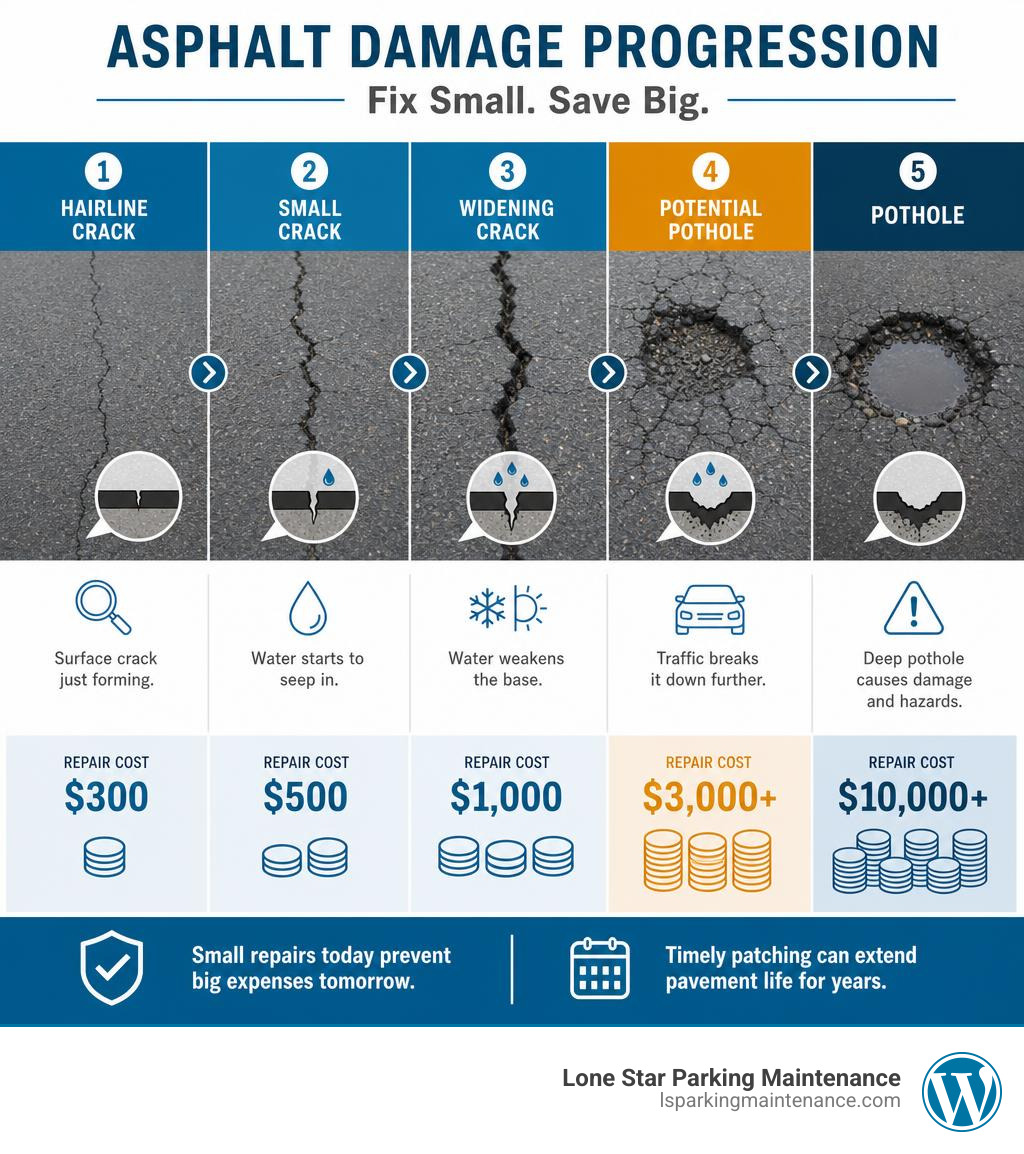
Asphalt doesn’t fail all at once. It fails gradually. Water seeps into tiny cracks, weakens the base, and freeze-thaw cycles (yes, even in Texas, temperature swings matter) do the rest. What starts as a $300 patch job can quietly grow into a $30,000 resurfacing project.
The good news? Timely patching can extend pavement life by 5 to 10 years and costs a fraction of full replacement. This guide walks you through everything — from choosing the right patching method to maintaining your repair so it lasts.
What is Asphalt Patching and When Do You Need It?

At its core, asphalt patching is a targeted maintenance strategy. Instead of ripping out an entire driveway or commercial parking lot, we focus strictly on the compromised sections. Think of it like getting a dental filling instead of a full root canal; it stops the decay in its tracks while preserving the surrounding healthy structure.
Many property owners wonder how localized patching differs from other options like resurfacing or full replacement. While full resurfacing places a new layer of asphalt over the entire existing surface, and complete replacement rebuilds the pavement from the dirt up, patching isolates and cures specific, localized damage.
For commercial properties in the DFW Metroplex, keeping up with these minor repairs is essential. There are 10 Reasons Why You Will Love Asphalt Repair Services, but the most important ones boil down to safety, liability reduction, and protecting your bottom line. When you address localized issues early, you prevent water from destroying the subgrade base, which is the structural foundation of your entire parking lot.
Common Types of Asphalt Damage
Before you can fix your pavement, you need to understand what you are up against. Asphalt in Texas has to survive brutal summer heat waves, heavy seasonal rainstorms, and occasional winter freezes. This intense climate cycle leads to several distinct types of damage:
- Potholes: These bowl-shaped depressions develop when water penetrates the asphalt surface, softens the underlying soil base, and vehicle traffic breaks the unsupported surface layer.
- Alligator Cracking: Also known as fatigue cracking, this looks like a web of interconnected cracks resembling reptile skin. It is a classic sign of structural fatigue or base failure, meaning the asphalt can no longer support the weight of the traffic rolling over it.
- Longitudinal and Transverse Cracks: Linear cracks that run parallel or perpendicular to the pavement’s centerline. They are often caused by temperature fluctuations, shrinkage, or poor joint construction.
- Raveling: The progressive disintegration of the asphalt mix from the surface downward. This happens when the liquid asphalt binder degrades, leaving loose gravel and a rough, pitted texture.
- Depressions (Low Spots): Sunken areas where water collects after a rainstorm. These are usually caused by subgrade settlement or improper compaction during initial installation.
If you spot these issues early, Finding the Best Asphalt Crack Repair Service for Your Property should be your next step before a simple crack turns into a deep base failure.
Patching vs. Full Replacement: Making the Right Choice
How do you know if your parking lot is a candidate for a quick patch job, or if it is time to call in the heavy machinery for a complete overhaul? It all comes down to structural integrity.
Here is a quick rule of thumb: if the damage is limited to less than 25% to 30% of the total pavement area, and the underlying base layer is still dry and structurally sound, patching is highly cost-effective. It restores the surface integrity, keeps water out, and extends the overall pavement life.
However, if you are dealing with widespread alligator cracking, deep base failures, or severe shifting across more than a third of your property, patching will only act as a temporary band-aid. In these cases, the subgrade has lost its load-bearing capacity. Continuing to patch a failed base is a waste of money because the surface will simply crack again.
When structural damage is widespread, property owners must look at more comprehensive options. You can learn All About Parking Lot Resurfacing to see if an overlay can save your lot, or if a complete replacement is unavoidable.
Choosing the Right Asphalt Patching Services for Your Property
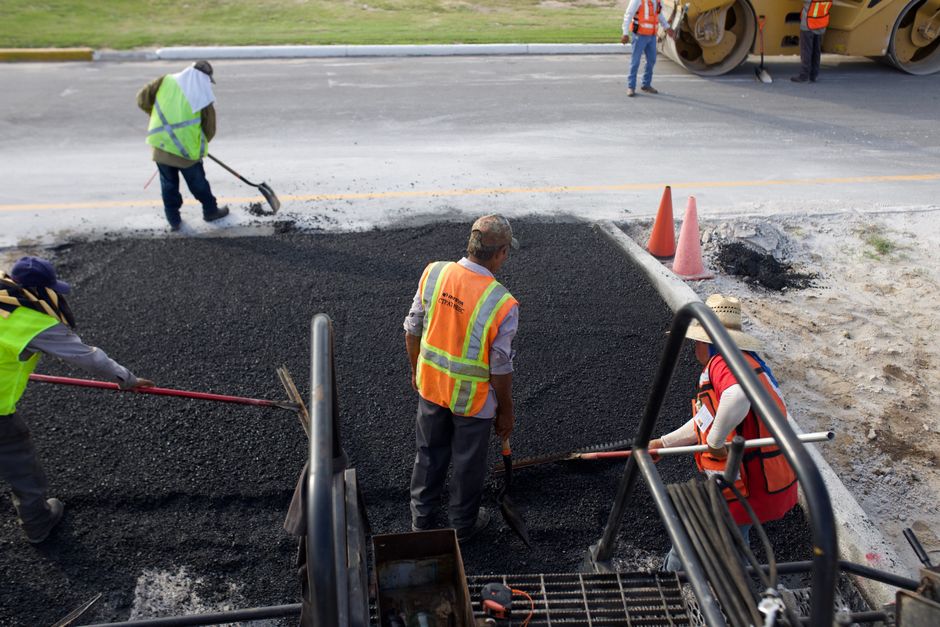
When selecting asphalt patching services, there is no “one-size-fits-all” solution. The right method depends on the season, the depth of the damage, your budget, and how quickly you need to reopen the area to traffic.
While contractors in colder climates face severe winter freeze-thaw cycles that dictate their repair seasons, our team in the DFW Metroplex designs patching strategies to withstand intense Texas UV exposure and heavy vehicle loads, adhering to high standards similar to those set by the Texas Department of Transportation for regional pavement durability. For commercial properties in our region, scaling projects correctly requires understanding local soil conditions and temperature swings.
For localized surface issues that have not yet compromised the subgrade, an overlay might be recommended. We suggest reading Everything You Need to Know About DFW Asphalt Overlays to understand how this middle-ground option fits into your long-term plan.
Hot Mix vs. Cold Patch Methods
The two most common materials used in everyday repairs are hot mix asphalt and cold patch. Understanding their differences is key to managing your expectations for durability and cost.
| Feature | Hot Mix Asphalt Patching | Cold Patch Asphalt Repair |
|---|---|---|
| Durability | Permanent repair (lasts 5 to 10+ years) | Temporary/Emergency fix (lasts 1 to 2 years) |
| Application Temp | Requires hot temperatures (ideally 50°F and rising) | Can be applied in freezing temperatures |
| Cost | Higher initial cost due to equipment and labor | Lower material cost; very fast to install |
| Compaction | High compaction required with heavy rollers | Medium compaction (often compacted with a hand tamper) |
| Best Used For | High-traffic parking lots, drive lanes, and permanent fixes | Emergency winter pothole repairs |
Hot mix asphalt is the gold standard for permanent repairs. It is manufactured at high temperatures and must be laid and compacted while it is still hot. Once cooled, it forms a dense, strong, and highly water-resistant bond with the surrounding pavement.
On the other hand, cold patch is a pre-mixed material that remains pliable at low temperatures. It is incredibly convenient for quick, emergency repairs during cold winter snaps when hot mix plants are closed. However, because it doesn’t cure into a rigid, structural bond, it should eventually be replaced with hot mix when the weather warms up.
Advanced Infrared and Mill & Overlay Asphalt Patching Services
For properties requiring top-tier aesthetics or facing unique drainage challenges, advanced patching technologies offer incredible benefits:
- Infrared Patching Services: This process uses infrared rays to heat the existing, damaged asphalt to over 300°F until it becomes workable. Fresh hot mix is then added, mixed with the recycled material, and compacted. Because it melts the old and new asphalt together, it creates a seamless repair with no joints. Without a seam, water cannot penetrate the patch, making it one of the most durable repair methods available. This seamless technology prevents future water infiltration, a standard we proudly uphold in our local Texas projects.
- Mill & Overlay Patching: When a section of asphalt is depressed or causing drainage issues, we use specialized milling machines to grind down the top 1.5 to 2 inches of the damaged surface. We then lay a fresh asphalt layer over the milled area. This is the secret to fixing standing water and uneven transitions. If you want to know more about this process, read Why Asphalt Milling is the Secret to a Smooth Texas Road.
The Step-by-Step Professional Patching Process and Costs
A high-quality asphalt patch is only as good as the preparation that goes into it. Cutting corners on prep work is the number one reason cheap repairs fail within a few months. When we perform professional repairs, we follow a strict multi-step process to ensure structural bonding and long-term durability.
If you are curious about the technical details behind professional paving, you can read How to Patch Pavement Like a Pro. Here is the step-by-step process our crews follow in the field:
- Thorough Site Evaluation: We inspect the damaged section to determine the depth of the failure and ensure the subgrade is dry and stable.
- Saw-Cutting and Cleaning: We use a diamond-tipped saw to cut a neat, square perimeter around the damaged area. We then excavate and remove the broken asphalt.
- Base Repair and Compaction: If the underlying gravel base is soft or wet, we remove the compromised material, add fresh aggregate, and compact it thoroughly to create a rock-solid foundation.
- Applying the Tack Coat: We apply a sticky, liquid asphalt binder (tack coat) to the edges of the cut and the base. This acts as an adhesive, ensuring the new hot mix bonds tightly to the old pavement.
- Asphalt Application: We pour fresh, commercial-grade hot mix asphalt into the hole, leveling it slightly above the surrounding pavement to allow for compaction.
- Final Compaction: Using heavy vibratory rollers or plate compactors, we compress the asphalt until it is perfectly flush with the surrounding surface.
- Clean-Up: We sweep up any loose debris, leaving your parking lot clean, safe, and ready for action.
Timeline and Weather Considerations for Asphalt Patching Services
Time is money, especially when a repair blocks parking spaces or drive lanes. Fortunately, most localized asphalt patching projects can be completed in a few hours to a single day.
However, weather plays a massive role in the timeline. Hot mix asphalt requires dry conditions and warm outdoor temperatures (typically 50°F and rising) to compact and cure properly. Rain is the ultimate enemy of hot asphalt; if water gets trapped under the mix, it will steam, prevent the tack coat from bonding, and lead to premature failure. In the DFW Metroplex, we plan our primary hot-mix patching schedules around dry weather windows to guarantee a permanent cure.
Factors Influencing Asphalt Patching Costs
Because every parking lot is unique, patching costs can vary. According to regional pricing data, small localized repairs generally range from $200 to $1,000, while larger, multi-site commercial repairs are priced per square foot.
Several factors influence the final estimate:
- Size and Depth of the Damage: Shallow surface patches require less material and labor than deep, full-depth base repairs.
- Material Choice: Advanced techniques like infrared patching or specialized hot mixes may cost more upfront but save money over time due to their extended lifespan.
- Mobilization and Setup: Bringing heavy machinery, rollers, and hot-mix transport trucks to a job site represents a fixed cost, which is why patching multiple areas during a single visit is highly cost-effective.
- Site Accessibility: Parking lots with heavy traffic, tight corners, or night-shift scheduling requirements may require additional traffic control measures.
For property owners looking for detailed regional guides on paving costs and options, working with a local specialist ensures you get accurate estimates tailored to the DFW Metroplex’s unique soil and climate conditions.
How to Maximize the Lifespan of Your Asphalt Patch
Once your new patch is laid, a proactive maintenance plan will protect your investment. To get the maximum 5 to 10 years of service out of your patch, follow these best practices:
- Sealcoat Regularly: Wait at least 90 days to 6 months for a new hot mix patch to fully cure (allowing its light oils to escape) before applying a protective sealcoat. Sealcoating shields the patch from UV rays and oil spills.
- Crack Sealing: Keep water from sneaking under the edges of your new patch by sealing any hairline cracks that develop in the surrounding pavement. Learn more by reading The Ultimate Guide to Filling Every Crack in Your Driveway.
- Keep the Surface Clean: Sweep away dirt, leaves, and standing water. Avoid letting vehicles leak motor oil or gasoline onto the patch, as petroleum products dissolve the asphalt binder.
- Routine Inspections: Catching small issues early is the key to affordable property management. For a complete safety checklist, check out our guide on Concrete and Asphalt Maintenance Keeping Your Lot Safe.
Frequently Asked Questions about Asphalt Patching
Why should I hire a professional contractor instead of using a DIY patch kit?
While home improvement stores sell quick cold-patch bags, these retail products are designed for temporary, residential fixes. They lack the structural bonding properties of commercial-grade hot mix asphalt.
Professional contractors use heavy compaction rollers, high-temperature hot mix, and commercial tack coats to create a permanent, structural bond with the existing pavement. Furthermore, professional repairs eliminate the liability risks of uneven seams, which can quickly turn into trip-and-fall hazards on commercial properties.
How long does a typical asphalt patch last?
A professionally installed hot-mix asphalt patch can last anywhere from 3 to 10 years, depending on the stability of the subgrade and your local maintenance routine. If you pair your patching with regular crack sealing and professional sealcoating, you can easily push the patch’s lifespan to the upper end of that range.
Can asphalt patching be performed during the winter?
Yes, but the method changes. During cold winter months when hot-mix plants are shut down, we utilize high-quality cold patching materials or emergency infrared techniques to fill hazardous potholes. This prevents freeze-thaw cycles from expanding the damage. Once warm spring weather returns, permanent hot-mix patching can be scheduled for long-term durability.
Conclusion
Your parking lot is the gateway to your business. Leaving cracks and potholes unaddressed doesn’t just hurt your curb appeal—it actively destroys your property’s value and exposes you to costly liability risks.
At Lone Star Parking Maintenance, we specialize in helping commercial property owners in the DFW Metroplex protect their pavement investments. From high-quality asphalt patching and crack sealing to parking lot striping, power washing, and signage installation, we ensure your facility remains safe, beautiful, and compliant with all local standards.
Don’t let minor cracks turn into major financial headaches. Schedule professional parking lot maintenance with Lone Star Parking Maintenance today and keep your pavement strong for years to come!