
Why Asphalt Patch Repairs Can’t Wait
Asphalt patch repairs are one of the most cost-effective ways to protect your pavement — and your bottom line.
If you manage a parking lot or driveway in the DFW Metroplex, here are the top products for fast, durable fixes:
- QUIKRETE Asphalt Cold Patch — Best for DIY pothole and crack repair; covers ~6 sq ft per 50 lb bag at 1 inch depth; open to traffic immediately after compaction
- QUIKRETE Permanent Blacktop Repair — Commercial-grade cold patch with superior bonding in cold or damp conditions
- FASTPATCH DPR Pourable Repair — Fast-setting pourable formula; traffic-ready in ~1 hour at 75°F; made from 80% recycled materials
- Liquid Rubber Asphalt Patch — No-mix, all-weather formula; good for potholes over ½ inch deep; apply with a shovel and tamper
- Top Patch Small Kit — Compact kit for spot repairs; sets in 30–60 minutes; covers 6–7 sq ft
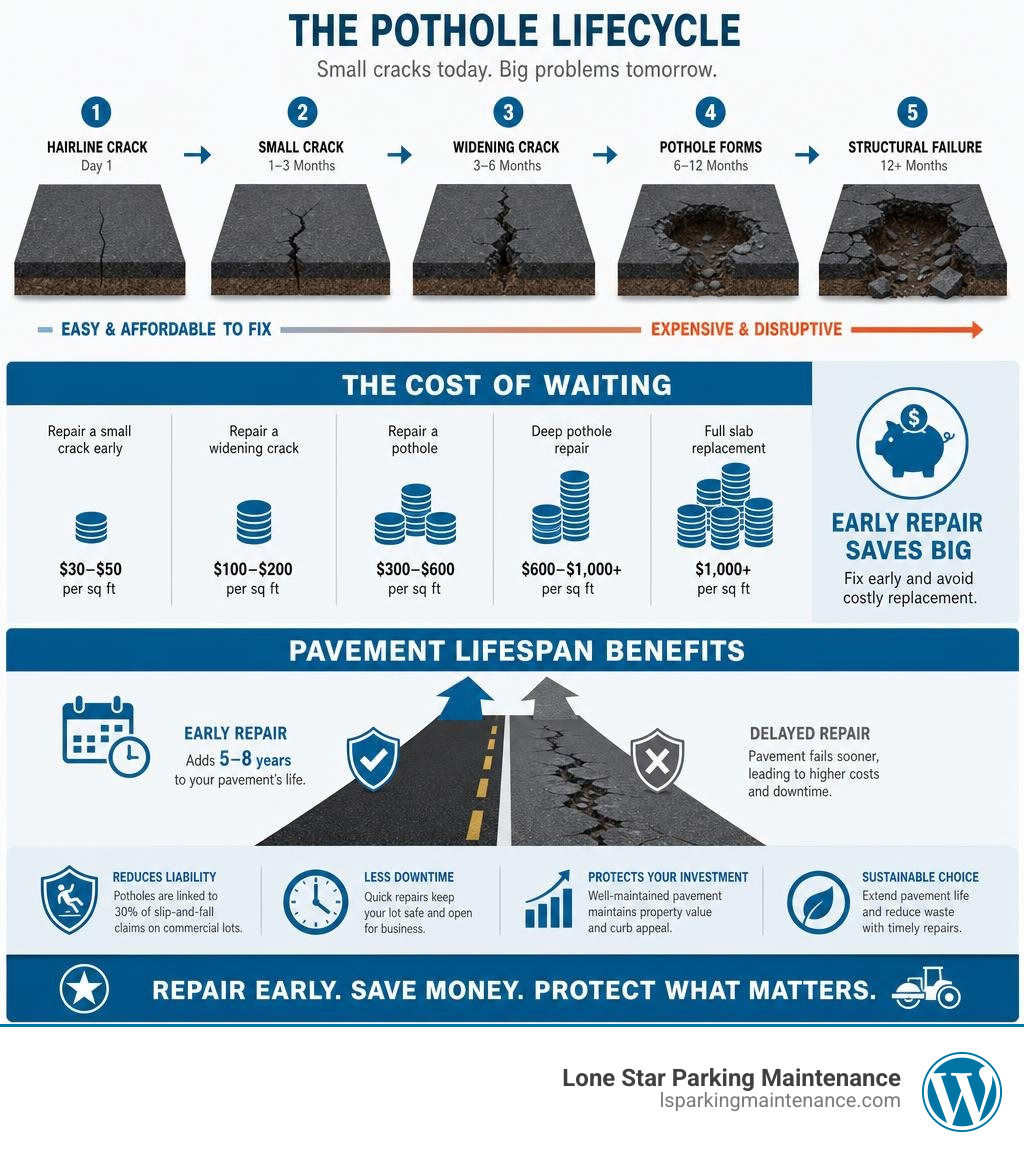
A crack that’s just 1 inch wide today can spread to 6 inches within six months. Left longer, it becomes a pothole. Left even longer, it becomes a full slab replacement — which can cost $1,000 or more compared to just $30–$50 to fix a single square foot early.
For commercial properties, the stakes are even higher. Potholes are linked to 30% of slip-and-fall claims on commercial lots. That’s a liability no property manager wants.
The good news? The right asphalt patch product — applied correctly — can add 5 to 8 years to your pavement’s life.
Below, we break down the best products available and exactly how to use them.
Glossary for asphalt patch repairs:
Understanding Asphalt Patching Materials: Cold Patch vs. Hot Mix
When it comes to asphalt patch repairs, you generally have two main paths: cold-mix asphalt and hot-mix asphalt. Understanding the differences between these materials is essential for choosing the right solution for your project.
Cold-Mix Asphalt
Cold-mix asphalt is the ultimate champion of DIY usability. It remains pliable at ambient temperatures, meaning you can buy it in a bag, pour it directly into a pothole, and compact it without any heating equipment.
- Ease of Use: Extremely high. No special heaters or rapid-fire timing required.
- Durability: Traditionally considered a temporary or semi-permanent fix, though modern polymer-modified formulas can last for years under moderate traffic.
- DIY Suitability: Excellent. It is the go-to choice for homeowners and facility managers handling localized repairs.
- Cost: Very affordable for small areas, costing roughly $5 to $10 per 50-lb bag.
Hot-Mix Asphalt
Hot-mix asphalt is the industry standard for highways, municipal roads, and large-scale commercial parking lots. It must be applied hot (typically between 300°F and 350°F) and requires heavy, specialized compaction equipment to set before it cools.
- Ease of Use: Low for DIYers. It requires specialized thermal transport and rapid application.
- Durability: Extremely high. It provides a permanent, structural repair that can last 20+ years.
- DIY Suitability: Poor. Because of the burn risks and rapid cooling time, it is strictly a professional-grade material.
- Cost: Highly cost-effective for large projects (typically $80 to $120 per ton installed), but impractical and expensive for small spot repairs.
| Feature | Cold Patch Asphalt | Hot Mix Asphalt |
|---|---|---|
| Durability | Semi-permanent (adds 5–8 years) | Permanent (lasts 20+ years) |
| Curing Time | Instantly driveable; cures over 30–90 days | Ready for traffic once cooled (a few hours) |
| Application Effort | Low (pour, pack, and go) | High (requires heating and heavy rollers) |
| Best For | Driveways, spot repairs, DIY projects | Large parking lots, roads, structural overlays |
Top-Rated Asphalt Patch Products for Quick Fixes
If you are heading to a major retailer like Lowe’s or Home Depot, you will find several highly rated options. Choosing the right one depends on your specific damage, budget, and timeline.
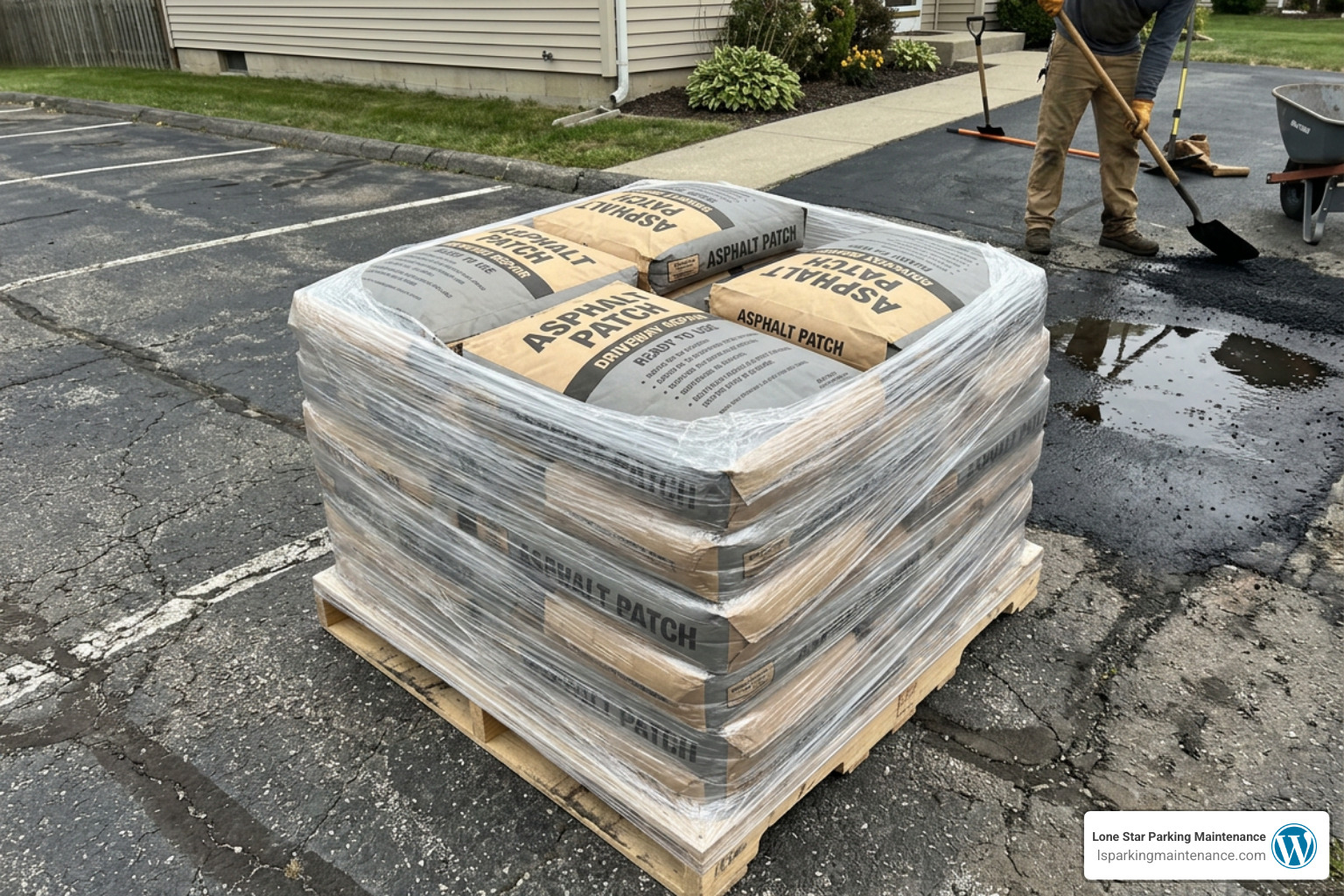
1. QUIKRETE Asphalt Cold Patch
This is one of the most reliable and widely available cold-mix products on the market. It is formulated with a high-performance asphalt binder and graded aggregates.
- Coverage: Each 50 lb bag of QUIKRETE Asphalt Cold Patch covers approximately 6 sq ft at a 1-inch thickness.
- Key Specifications: According to the QUIKRETE Asphalt Cold Patch Specifications, it is designed for repairing potholes and cracks over 1 inch wide. It features a low-VOC formulation that meets strict air quality standards, making it environmentally friendly.
- Performance: It uses a unique formulation that allows it to remain flexible while gradually hardening over time through repeated vehicle traffic compaction.
2. QUIKRETE Permanent Blacktop Repair
For heavy-duty applications, this commercial-grade product is a step up from standard cold patches.
- Key Features: It incorporates advanced modifier technology that ensures superior bonding even in cold and damp conditions.
- Application: It is ideal for high-traffic driveways or commercial aprons where traditional cold patches might shift. Like the standard cold patch, it requires a minimum of 30 days (ideally 90 days) of curing before you apply a driveway sealer, as detailed in the QUIKRETE Permanent Blacktop Repair Product Guide.
3. FASTPATCH DPR Pourable Asphalt Repair
If you want to skip the heavy tamping altogether, a pourable, rapid-curing kit is an exceptional alternative.
- Key Features: The FASTPATCH DPR Pourable Asphalt Repair 5-Gal Kit is a polymer-based, pourable repair material. It consists of a resin blend that you mix with aggregate (such as pea gravel) and pour directly into the distressed pavement.
- Performance: It cures incredibly fast. At 75°F, it is fully traffic-ready in about 1 hour. It is also highly sustainable, utilizing 80% recycled and renewable materials in its formulation.
4. Liquid Rubber Asphalt Patch
For homeowners looking for an effortless, flexible seal that stands up to weather extremes, this is a top-tier choice.
- Key Features: Liquid Rubber offers a flexible, water-based, non-toxic asphalt patch. It is designed to provide a highly flexible bond that moves with the natural expansion and contraction of your driveway.
- Application: According to the Liquid Rubber Asphalt Patch Application Guide, it is perfect for repairing potholes over ½ inch deep, as well as surface pitting and spalling. It requires 24 to 48 hours of drying time before parking vehicles on the repaired area.
5. Top Patch Small Kit
If you only have a few localized cracks or a single small pothole, buying a massive 50-lb bag is overkill. The Top Patch Small Kit is a convenient, pre-measured solution.
- Key Features: It contains everything you need to mix and pour a durable patch that covers 6 to 7 square feet. It sets within 30 to 60 minutes without requiring specialized heavy tamping tools.
How to Apply Asphalt Patching Materials Like a Pro
Even the highest-quality asphalt patch will fail prematurely if the installation is rushed. In fact, poor compaction and inadequate surface preparation cause up to 60% of premature patch failures.
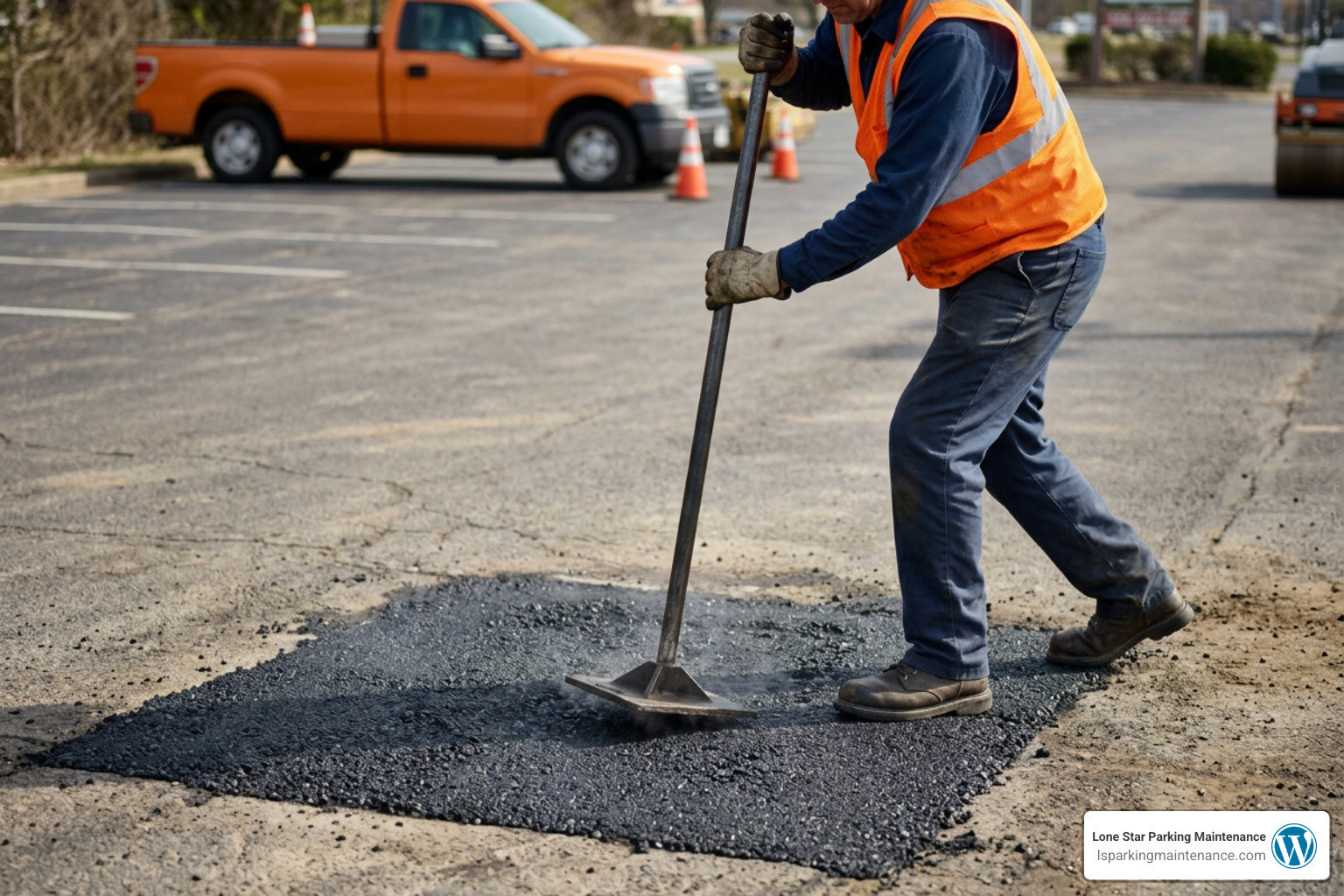
Before you begin, gather the necessary tools and safety equipment:
- Safety Gear: Heavy-duty work gloves, safety glasses, and steel-toed boots.
- Preparation Tools: A stiff-bristle broom, a wire brush, a chisel or asphalt saw, and a high-velocity leaf blower or shop vac.
- Application Tools: A square shovel or trowel to distribute the material.
- Compaction Tools: A heavy steel hand tamper (for small areas) or a rented vibrating plate compactor (highly recommended for areas larger than 3×3 feet).
Step-By-Step Guide to Executing Asphalt Patch Repairs
Follow this proven workflow to ensure your asphalt patch repairs stand the test of time. For more advanced tips, check out our comprehensive guide on How to Patch Pavement Like a Pro.
Step 1: Clean and Inspect the Damaged Area
Remove all loose gravel, dirt, weeds, and standing water. Moisture is the enemy of adhesion; if water is trapped beneath your patch, it will weaken the bond strength by up to 40%. Use a wire brush to scrub away stubborn dirt, and blow the area completely dry.
Step 2: Cut and Square the Edges
Do not simply pour cold patch into a bowl-shaped pothole. The thin edges of the patch will quickly crumble under tire traffic. Use a chisel, hammer, or asphalt saw to cut vertical, squared-off edges around the perimeter of the pothole. Having a vertical wall of solid asphalt gives the patching material a firm shoulder to lock against.
Step 3: Choose and Pour Your Asphalt Mix
Pour your selected cold-mix asphalt into the hole. If the pothole is deeper than 2 inches, do not fill it all at once. Apply the material in 1-inch to 2-inch “lifts” (layers), compacting each layer thoroughly before adding the next. This prevents the middle of the patch from remaining soft and unstable.
Step 4: Overfill and Compact
For your final layer, overfill the pothole so the loose material sits about ½ inch above the surrounding pavement. As you compact it, the material will compress down to match the level of the driveway.
Use your hand tamper or plate compactor to pack the material firmly. Start from the outer edges and work your way toward the center. You will know you have achieved proper compaction when the patch resembles the surrounding asphalt’s tight, interlocking aggregate pattern, with no loose stones or visible voids.
Step 5: Apply a Curing Aid (Optional)
If you need to drive over the patch immediately but are worried about tires scuffing the fresh surface, scatter a thin layer of clean, dry sand over the top. This prevents tracking and allows immediate traffic release.
Best Practices for Maintaining Your Asphalt Patch Repairs
Once your patch is installed, your maintenance duties aren’t quite finished. To keep the repair secure and prevent new damage from forming nearby, implement these proactive care tips:
- Keep Off Hot Patches on Warm Days: On hot Texas summer days, fresh cold patches can soften. Avoid turning your steering wheel while parked directly on top of a fresh patch.
- Follow a Strict Sealcoating Schedule: Wait at least 30 to 90 days for your cold patch to fully cure (meaning the oils have evaporated and the material has hardened). Once cured, apply a high-quality driveway sealer across the entire surface. This seals out moisture and protects the patch from harsh UV rays. For a deep dive into protective coatings, read our guide on Don’t Let Cracks Win with These Asphalt Patching and Sealing Best Practices.
- Fill Nearby Cracks Immediately: A tiny 1-inch crack near your patch can quickly let water seep under your new repair, ruining all your hard work. Keep a bottle of rubberized crack filler handy to seal small gaps before they expand.
When to Choose Professional Asphalt Patch Repairs vs. DIY
While DIY cold patching is a fantastic weekend project for minor potholes and shallow driveway depressions, it has its limits.
You should step back and call in the professionals if you notice any of the following signs:
- Alligator Cracking: If your asphalt looks like scaly crocodile skin, this is a sign of deep structural base failure. Simply putting a cold patch over alligator cracks is like putting a band-aid on a broken bone. The entire section must be cut out, the base re-compacted, and hot-mix asphalt installed.
- Large-Scale Damage: If the damaged area is larger than 3 feet by 3 feet, or deeper than 4 inches, manual tamping tools will not provide sufficient compaction. The area will quickly sink and fail under vehicle loads.
- Complex Drainage Issues: If your driveway has standing puddles of water that refuse to drain, simple patching won’t solve the problem. The surface grade must be professionally re-engineered.
In the DFW Metroplex, our clay soils shift constantly with seasonal moisture changes, and our blistering summers put immense thermal stress on asphalt. This makes professional-grade compaction and high-quality hot-mix asphalt essential for long-term commercial durability.
If your property is showing widespread distress, read The Ultimate Guide to Resurfacing Asphalt Parking Lots to understand your options, including full overlays and structural repairs.
Frequently Asked Questions About Asphalt Patching
How long does it take for cold patch asphalt to cure?
While you can drive over most cold patches immediately after thorough compaction, they do not fully “cure” right away. Cold patch asphalt cures through a process of solvent evaporation, which can take anywhere from 30 to 90 days depending on the weather. Avoid applying driveway sealers during this window, as trapped solvents will soften the patch.
Why is compaction so critical for asphalt repairs?
Compaction is the single most critical factor in asphalt repair durability. Insufficient compaction is the number-one cause of patch failure. Proper compaction forces the aggregate stones to interlock, creating a dense, waterproof barrier. Without it, water will quickly penetrate the loose material, freeze-thaw cycles will disrupt it, and vehicle tires will tear the patch apart.
Can I apply asphalt patch in the rain or cold weather?
Most standard asphalt patches require dry conditions and temperatures above 50°F to bond properly. Moisture reduces bond strength by up to 40%. However, specialty commercial-grade products like QUIKRETE Permanent Blacktop Repair feature advanced polymer additives designed to bond in damp or cold conditions, making them ideal for emergency winter repairs.
Conclusion
Taking care of your driveway or parking lot doesn’t have to be a stressful chore. By acting quickly and addressing cracks and potholes when they first appear, you can save thousands of dollars in premature replacement costs and protect your property from liability.
Whether you decide to tackle your repair this weekend with a bag of high-performance cold patch or realize your project requires heavy-duty commercial equipment, we are here to help. To learn more about the incredible benefits of professional maintenance, explore 10 Reasons Why You Will Love Asphalt Repair Services.
For property owners in the DFW Metroplex who want the job done right the first time with top-quality materials and industry-standard safety compliance, contact the experts at Lone Star Parking Maintenance. We provide expert parking lot striping, sealing, cleaning, power washing, and structural repairs to keep your pavement smooth, safe, and beautiful for years to come.