
The Pothole Problem Costing DFW Property Owners Thousands Every Year
Infrared asphalt repairs are one of the fastest, most cost-effective ways to fix damaged pavement — and they’re changing how parking lots and roads get maintained across the country.
Quick answer: What is infrared asphalt repair?
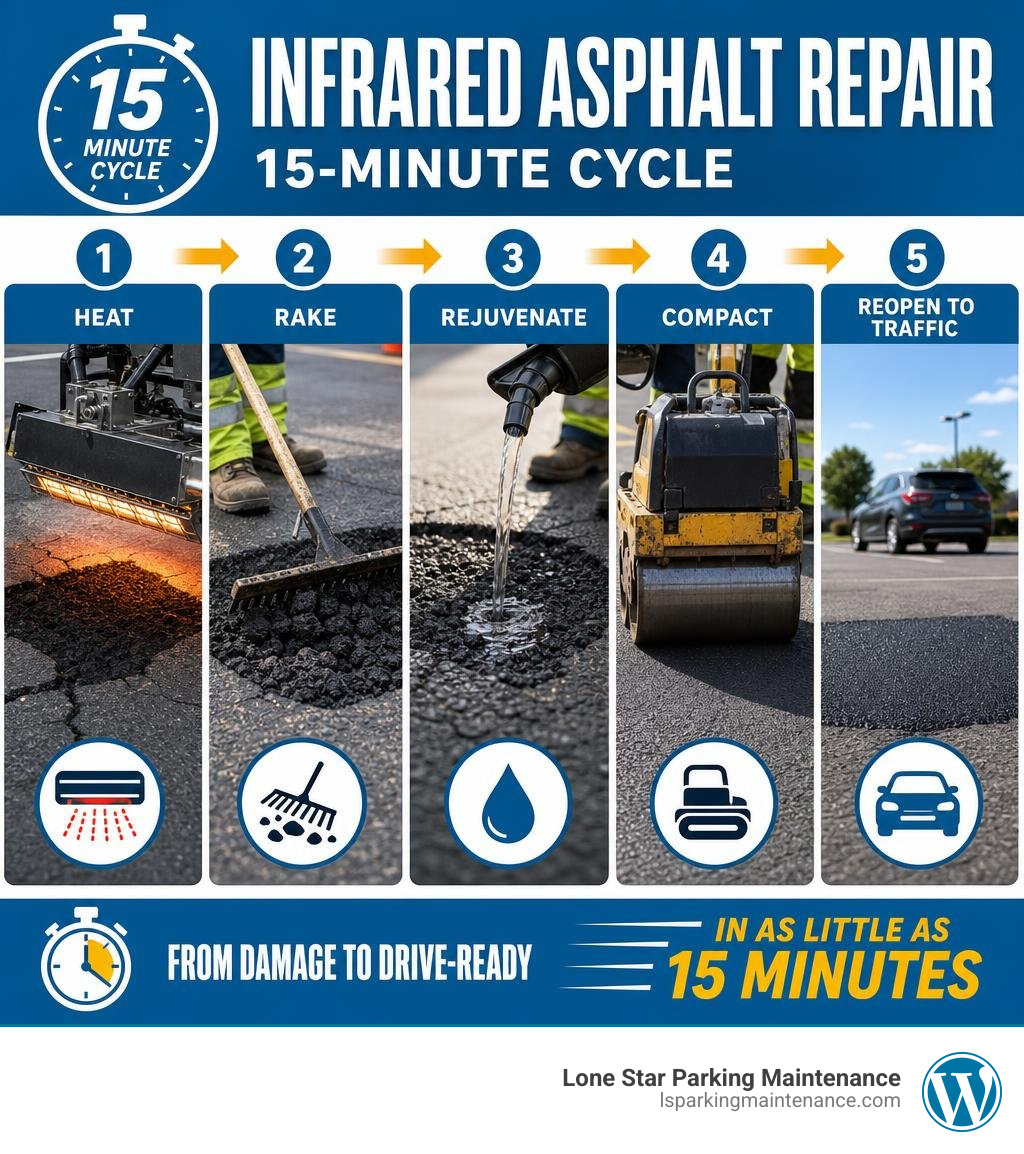
- An infrared heater softens existing asphalt to 300–350°F
- The damaged material is raked, scarified, and blended with fresh hot-mix asphalt
- A rejuvenator is applied to restore lost binders
- The area is compacted with a vibratory roller or plate compactor
- The repaired surface is ready for traffic — often within 30 minutes
For property managers and business owners in the DFW Metroplex, damaged asphalt isn’t just an eyesore. Cracks, potholes, and uneven surfaces create real liability risks — from vehicle damage claims to pedestrian injuries. And traditional repair methods? They’re slow, expensive, and often leave behind seams that fail again within months.
Infrared technology flips that script. A typical pothole can be fixed in as little as 15–20 minutes, with no sawcutting, no jackhammering, and almost zero wasted material. Operating costs run as low as $1.50 per hour — a fraction of what full cut-and-replace jobs demand.
This guide covers everything you need to know about infrared asphalt repair equipment and the process behind it — so you can make a smart buying decision or choose the right contractor for your property.
Essential infrared asphalt repairs terms:
The Science and Process Behind Infrared Asphalt Repairs
To understand why infrared asphalt repairs are so incredibly effective, we have to look at the molecular level of how asphalt behaves. Pavement isn’t just a solid block of black rock; it is a flexible matrix of aggregates (stone, sand, and gravel) bound together by asphalt cement (bitumen). Over time, exposure to the harsh Texas sun, oxygen, and water causes the light oils—known as maltenes—to evaporate. This leaves behind the hard, brittle asphaltenes, making the pavement prone to cracking and pothole formation.
Traditional repair methods treat old asphalt as waste, cutting it out and throwing it away. Infrared technology, however, uses thermal energy to reverse this aging process temporarily. By projecting high-density infrared radiation directly onto the damaged area, the heater excites the molecules within the existing pavement.
This heat transfer relies heavily on the thermal conductivity of the asphalt mixture. Because asphalt is a natural insulator, the heat must penetrate slowly and deeply without burning the surface. When done correctly, infrared waves safely penetrate up to 3 inches deep, raising the internal temperature of the pavement to a workable 300°F to 350°F.
However, heating asphalt is a delicate balancing act. If you blast the pavement with too much direct heat too quickly, the surface will oxidize and burn. Asphalt begins to oxidize rapidly above 375°F and will physically burn around 500°F, destroying the bitumen binder entirely.
To prevent this, modern systems utilize a dynamic heating method. According to Scientific research on dynamic pre-heating methods, applying dynamic (moving or cycled) infrared heating for approximately 10 minutes yields significantly better heat distribution. This technique minimizes the possibility of overheating the surface layer while ensuring the heat reaches the bottom of the excavation depth.
Once the target temperature is reached, the scarifying process begins. Technicians use specialized asphalt rakes to break up the softened pavement, effectively turning it back into loose, workable hot-mix. Because the surrounding pavement is also hot, this creates an ideal environment for applying a maltene-based rejuvenating agent. The rejuvenator replaces the light oils lost to years of UV exposure and weathering, restoring the asphalt’s original flexibility and binding properties. Finally, fresh hot-mix is added to replace any lost volume, and the entire patch is compacted into a single, seamless structure.
Step-by-Step Execution of Infrared Patching
Executing a flawless infrared patch requires precision, timing, and the right sequence of steps. Here is how professional crews achieve a permanent, seamless repair:
- Surface Preparation: The process starts by sweeping away loose aggregate, dirt, standing water, and debris from the target area. Moisture is the enemy of infrared heating; any water trapped in the pavement will evaporate during heating, causing localized steam pockets that can damage the asphalt structure.
- The Heating Cycle: The infrared heater is positioned directly over the damaged section. The heating elements are activated, bringing the pavement temperature up to 300–350°F over a period of 5 to 10 minutes.
- Raking and Luting: Once the asphalt is soft and pliable, the crew uses heavy-duty asphalt rakes to scarify the area. They rake about 1.5 to 2 inches deep, breaking up the old material and pulling it away from the edges to create a squared-off, clean workspace.
- Rejuvenation: A professional-grade liquid rejuvenator is sprayed over the raked asphalt. This replenishes the chemical binders and ensures the old material blends seamlessly with the new.
- Adding Fresh Hot-Mix: Fresh hot-mix asphalt is brought in from a hot box reclaimer and added to the repair zone. The crew uses an asphalt lute to level and grade the mixture, ensuring a slight crown to allow for compaction.
- Compaction: While the entire area is still hot, a vibratory roller or plate compactor is run over the patch. Crews always compact the outer edges first to lock in the thermal bond with the surrounding pavement before compacting the center.
For more insights on standard pavement repair methodologies, check out this guide on More info about professional patching.
Key Benefits of Infrared Patching vs. Traditional Methods
When comparing pavement maintenance strategies, it helps to look at how different methods stack up against each other. The primary advantage of infrared patching is the creation of a thermal bond.
Traditional cut-and-replace repairs leave behind a “cold joint”—a physical seam where the new, hot asphalt meets the cold, existing pavement. This cold joint is highly vulnerable to water intrusion. When water gets into these seams, freeze-thaw cycles expand the gap, quickly destroying the repair. Infrared patching eliminates this joint entirely by heating the surrounding pavement, fusing the old and new materials into a single, continuous sheet.
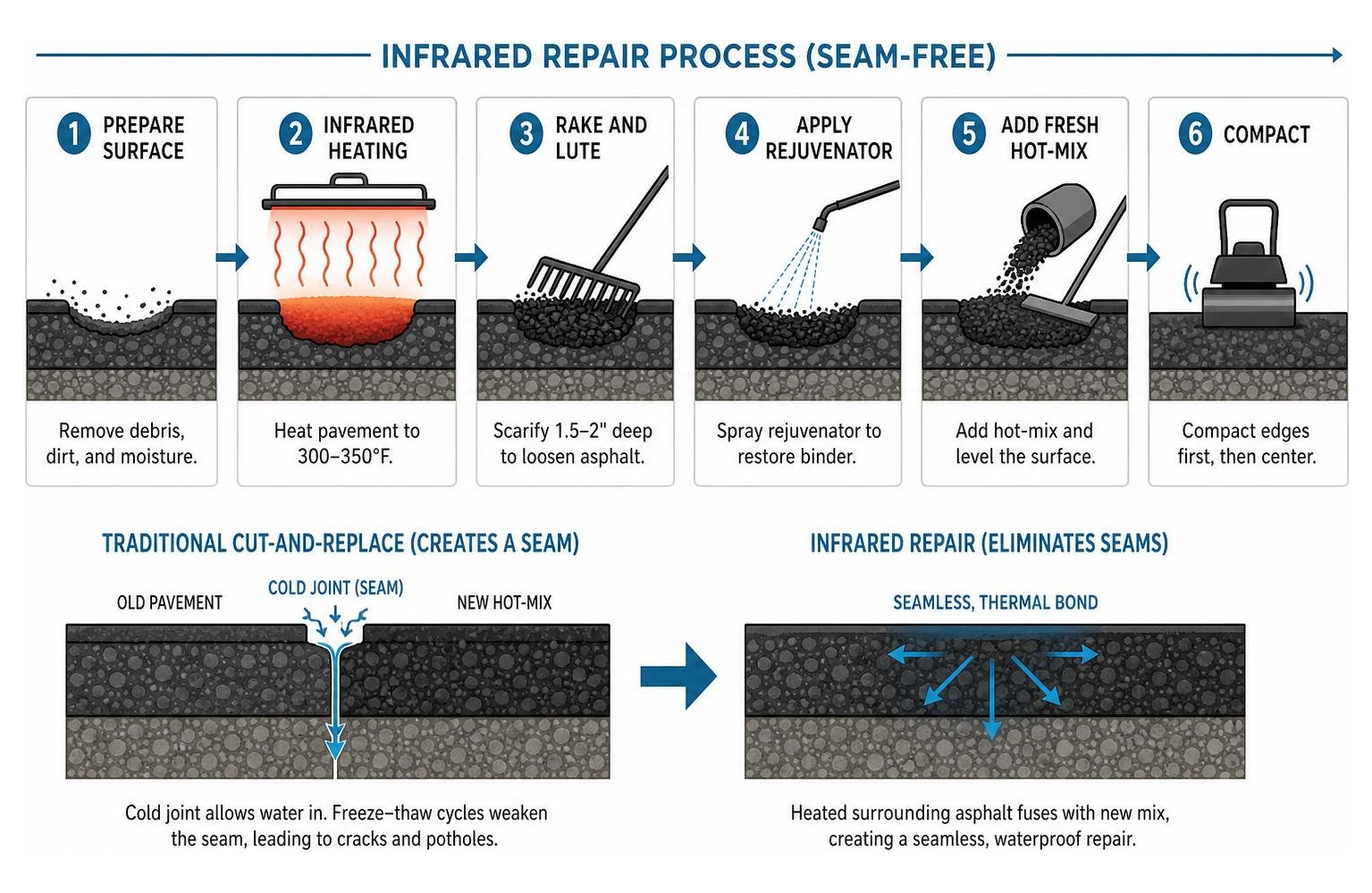
This seamless design provides incredible water resistance, preventing future potholes from forming in the exact same spot. Additionally, because the process recycles the existing pavement in-place, there is zero material waste. This translates to massive time efficiency: while traditional repairs can take hours or days, an infrared patch is completed in under an hour, allowing the area to reopen to traffic within 30 minutes of compaction.
Here is a direct comparison of the three most common patching methods:
| Feature | Infrared Patching | Cold Patching | Traditional Cut-and-Replace |
|---|---|---|---|
| Permanence | Long-term (lasts several years) | Temporary (weeks to months) | Permanent (if base is stable) |
| Seamless Joints | Yes (fully fused thermal bond) | No (loose aggregate) | No (leaves vulnerable cold joints) |
| Water Resistance | Excellent | Poor | Moderate (requires joint sealing) |
| Traffic Reopen Time | 30 minutes | Immediate (but unstable) | several hours to 24 hours |
| Material Waste | Zero (recycles existing asphalt) | Low | High (requires disposal of old asphalt) |
| Winter Usability | Excellent | Moderate | Very Poor |
Why Infrared Asphalt Repairs Outperform Cold Patches
Property owners are often tempted to use cold patch bags from the local hardware store for quick fixes. While cold patches are cheap and fast to apply, they are strictly temporary band-aids. Cold patch asphalt does not bond with the surrounding pavement; it simply relies on mechanical compaction to stay in place.
As vehicles drive over a cold patch, the loose aggregate shifts. Rainwater easily penetrates the edges, and during DFW’s winter temperature swings, the trapped water freezes, expands, and pops the patch right out of the hole. This constant cycle of failure and re-application actually costs more over time and leaves property owners open to trip-and-fall liability.
Infrared repairs, on the other hand, deliver a long-term solution. By thermally bonding the patch to the host pavement, it becomes an aggregate part of the original surface. This durability keeps parking lots safe and looking pristine for years. For best practices on keeping your pavement intact, read More info about asphalt patching best practices.
Environmental and Cost Advantages of Thermal Restoration
In today’s commercial landscape, sustainability and cost-efficiency go hand in hand. Traditional repairs require heavy machinery to saw-cut, excavate, load, and transport old asphalt to a landfill, followed by hauling fresh hot-mix from an asphalt plant. This process consumes massive amounts of fuel and virgin materials.
Infrared restoration is a “green” technology. By utilizing reclaimed asphalt pavement (RAP) directly inside the patch, we slash the need for new raw materials. The carbon footprint of the repair is dramatically reduced because there is no trucking of waste material to landfills.
Furthermore, the operating costs are incredibly low. Propane-powered infrared heaters can run for as little as $1.50 per hour, and a typical 5’x7′ repair requires only a two-man crew and a single utility truck. As detailed in Infrared Asphalt Repair: The Smart Fix That Sticks, this streamlined labor and material efficiency makes infrared patching the smartest, most budget-friendly option for long-term pavement health.
Best Applications and Structural Limitations
While infrared asphalt repair is highly versatile, it is not a magic wand for every single pavement issue. Understanding where it excels—and where it falls short—is key to protecting your investment.
When Infrared is the Ideal Solution
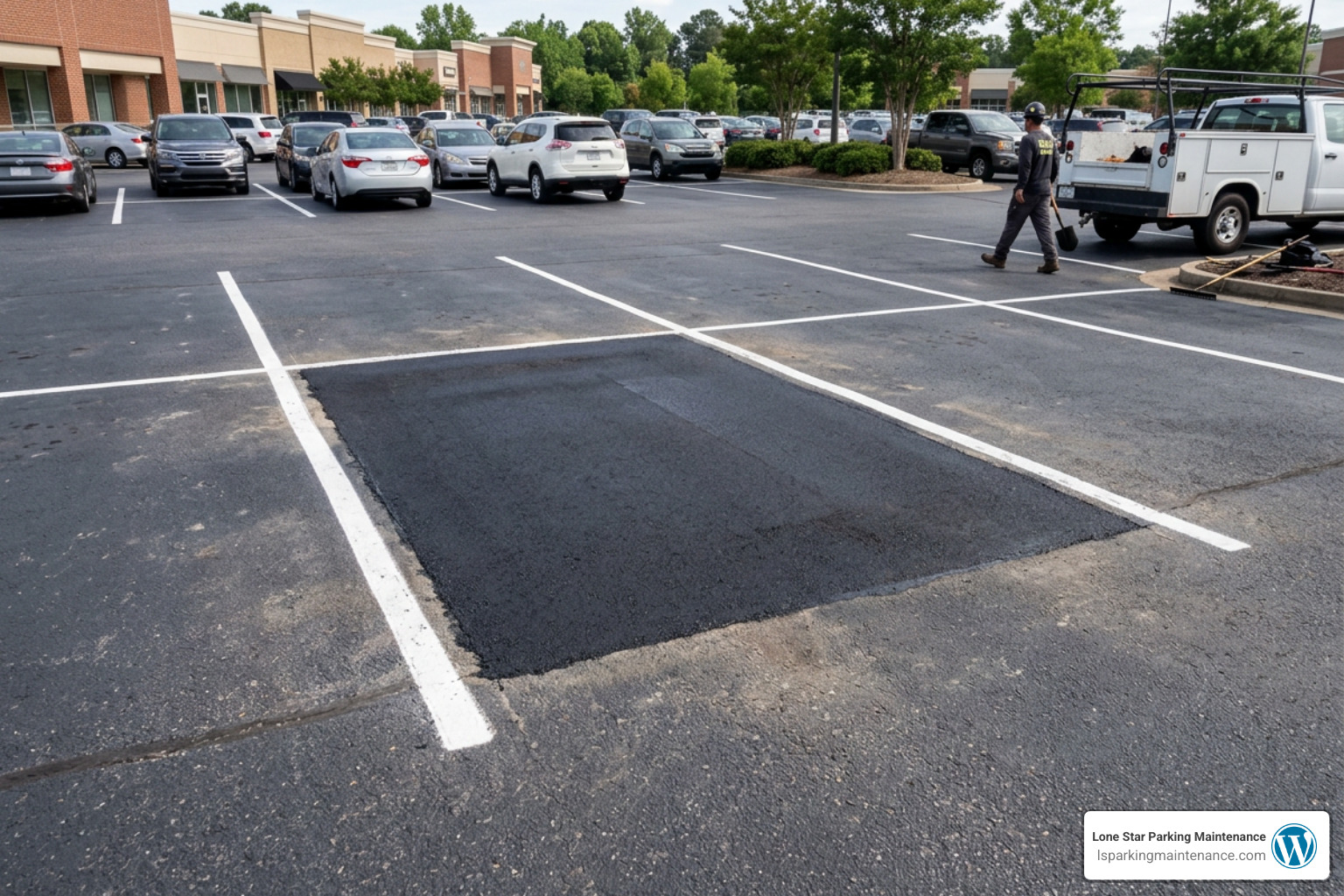
Infrared is the absolute best choice for surface-level defects that have not yet compromised the deeper stone base of the pavement. Excellent applications include:
- Potholes: Fast, seamless repairs that prevent water from reaching the subgrade.
- Bird Baths and Depressions: Low spots in parking lots where water pools can be heated, raked, leveled with fresh mix, and compacted to match the surrounding grade.
- Utility Cuts and Trench Seams: Eliminates the rough, bumpy seams left behind by utility installations.
- Manhole and Catch Basin Adjustments: Perfect for leveling the asphalt around concrete collars and utility covers.
- Speed Bump Bonding: Ensures a permanent, molecular bond between a newly installed speed bump and the existing parking lot surface.
- Early-Stage Alligator Cracking: Surface cracking caused by top-down weathering can be completely rejuvenated and sealed before water penetrates deeper.
To learn more about prioritizing your parking lot repairs, read More info about parking lot repair in 2026.
Limitations: When Traditional Excavation is Required
Infrared repair works on the asphalt layers (the top 2 to 3 inches of the pavement). It cannot fix structural failures occurring in the crushed stone base or subgrade underneath.
If your parking lot has deep, rutted tire tracks, severe “alligator cracking” accompanied by sinking, or soft, muddy spots under the pavement, you are dealing with a subgrade failure. In these scenarios, heating the surface will do nothing; the patch will fail again almost immediately under traffic loads. These areas require traditional excavation, base stabilization, and full-depth replacement.
Additionally, heavily oxidized, “white” asphalt that is extremely old and brittle has very little bitumen left to save. It does not absorb infrared heat effectively and may require complete resurfacing or an overlay. For professional guidance on navigating these complex choices, see More info about finding the best repair service.
Essential Equipment and Supplies for Asphalt Contractors
For contractors looking to add infrared patching to their service offerings, or property owners looking to purchase equipment for in-house maintenance, investing in the right tools is critical.

Essential Equipment for Professional Infrared Asphalt Repairs
To perform high-quality, efficient infrared repairs, you need a specialized fleet of equipment:
- Infrared Asphalt Heaters: These units range from small, highly portable walk-behind heaters to large, truck-mounted modular systems. Portable units like the RYX2X 2′ heater cover up to 4 square feet and are perfect for small potholes and tight spaces. Larger modular systems (such as the R2, R3, or R4 heaters) feature high BTU outputs (typically 75,000 BTU or more) and allow you to adjust the heating footprint to match the repair size.
- Asphalt Hot Box Reclaimers: To add fresh asphalt to your repairs, you need a way to keep it hot. Hot boxes (like the AK4000) use propane heat to maintain hot-mix asphalt at workable temperatures (around 300°F) for days, preventing waste and allowing for winter operations.
- Rejuvenating Agents: High-quality maltene-based rejuvenators (such as Cyclogen LE) are essential to restore the chemical balance of the heated, recycled asphalt.
- Compaction Tools: A heavy plate compactor or a walk-behind vibratory roller is required to achieve the high density needed for a long-lasting, watertight finish.
- Hand Tools: Heavy-duty, heat-resistant asphalt rakes and lutes are used to scarify and level the material.
Frequently Asked Questions About Infrared Asphalt Patching
Can infrared asphalt repairs be performed in the winter?
Yes! This is one of the biggest advantages of the technology. Traditional hot-mix patching is incredibly difficult in cold weather because the hot asphalt cools down too quickly when it touches cold pavement, preventing a proper bond. Because infrared heaters warm up the surrounding “host” pavement to over 300°F, you can achieve a perfect thermal bond even in freezing winter conditions.
How long do infrared asphalt repairs typically last?
When performed on a structurally sound sub-base, a professional infrared repair is considered a permanent fix. It will typically last as long as the surrounding pavement—often several years. The patch is fully integrated into the existing driveway or parking lot, meaning it wears, expands, and contracts at the exact same rate as the rest of the surface.
How much does it cost to operate infrared repair equipment?
Operating costs are remarkably low. Because the heaters run on standard liquid propane, fuel costs can be as low as $1.50 per hour of operation. Furthermore, because the process recycles the existing pavement and requires a much smaller crew (often just 2 people) compared to traditional excavation, overall labor and material costs are cut by up to 50%.
Conclusion
Infrared asphalt repairs represent the future of parking lot and road maintenance. By combining cutting-edge thermal science with eco-friendly recycling practices, this method delivers seamless, watertight, and highly durable repairs in a fraction of the time required by traditional methods.
Whether you are a commercial property manager in the DFW Metroplex looking to eliminate trip hazards, or a contractor wanting to scale your business with high-margin services, infrared technology is a smart, efficient investment.
At Lone Star Parking Maintenance, we are dedicated to keeping your paved surfaces safe, smooth, and beautiful. From precision parking lot striping and sealcoating to state-of-the-art asphalt repairs, our team delivers top-quality materials and unmatched customer service across the DFW Metroplex. Contact us today to schedule a consultation and keep your property looking its best!