
Why Parking Lot Asphalt Repair Can’t Wait
Parking lot asphalt repair is one of the most important – and most overlooked – maintenance tasks for commercial property owners in the DFW Metroplex.
Here’s a quick answer to what you need to know:
The most common parking lot asphalt repairs, from least to most intensive:
| Repair Type | Best For | Typical Lifespan |
|---|---|---|
| Crack sealing | Early-stage cracks | 3-5 years |
| Pothole patching | Localized damage | 5-10 years |
| Resurfacing / overlay | Widespread surface wear | 10-15 years |
| Full-depth reconstruction | Base or structural failure | 25-30 years |
The good news? You don’t always need a full replacement. In many cases, targeted repairs and a consistent maintenance plan are all it takes to keep your lot safe, functional, and looking sharp. For broader industry context on long-term pavement care, the Federal Highway Administration pavement preservation resources explain why timely maintenance is critical to extending pavement service life.
Neglect is where costs spiral. Crack sealing costs 20 to 30 times less than replacing asphalt that’s been left to deteriorate. And a well-maintained parking lot can last 25 to 30 years – compared to just 15 years without regular upkeep.
For DFW property managers, the stakes are real. Cracked pavement, potholes, and standing water aren’t just eyesores – they create liability risks, drive customers away, and quietly erode your property’s value.
This guide covers everything: how to identify damage, choose the right repair method, time your repairs correctly, and build a maintenance plan that protects your investment long-term.
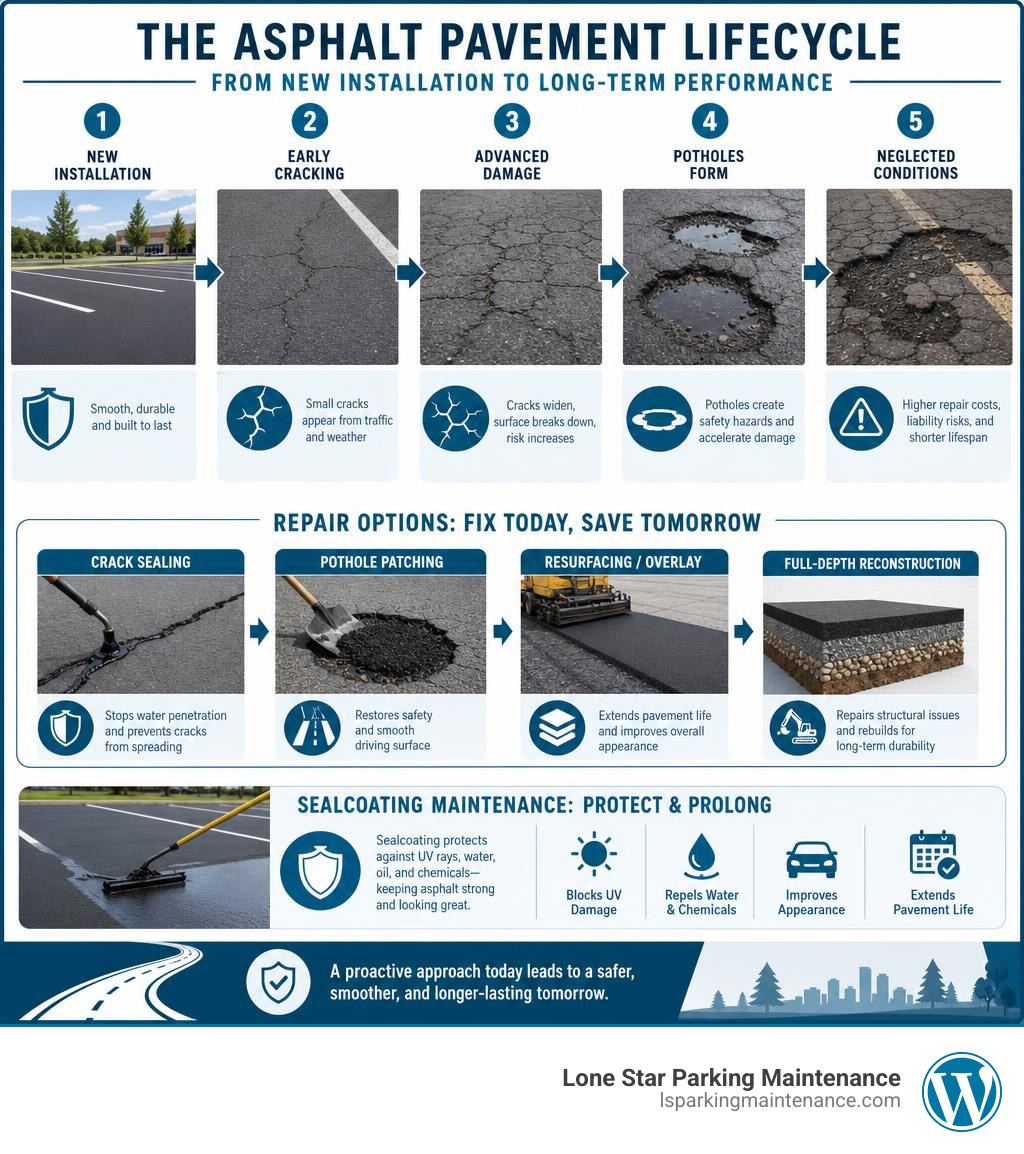
Similar topics to parking lot asphalt repair:
Identifying Damage and Choosing the Right Repair Method
Before jumping into a repair project, we must accurately evaluate the condition of the pavement. Failing to diagnose the root cause of asphalt damage is like putting a band-aid on a structural wall crack — it might look better for a week, but the underlying issue will inevitably break through.
Professional pavement evaluation relies on systematic frameworks to determine the health of your parking lot. One of the most trusted systems we use is the PASER (Pavement Condition and Serviceability Rating) system, which rates asphalt on a scale of 1 to 10:
- Excellent (9-10): Brand new or recently resurfaced pavement requiring no immediate maintenance.
- Good (7-8): Minor surface wear requiring routine preventive maintenance like crack sealing.
- Fair (5-6): Sound subgrade but visible surface distress, making the lot an ideal candidate for an overlay or strategic patching.
- Poor to Very Poor (1-4): Severe structural distress, extensive alligator cracking, and deep ruts indicating subgrade failure. These areas require deep-strength patching or full-depth reconstruction.
A critical factor in this evaluation is determining subgrade stability. Asphalt is a flexible pavement; it relies entirely on the stone base and compacted soil underneath to support vehicle loads. If water penetrates the surface and softens this base, the asphalt will flex beyond its limits and crack.
To help you understand your options, we’ve broken down the three primary restoration methods in the table below:
| Feature | Localized Patching | Resurfacing (Overlay) | Full-Depth Replacement |
|---|---|---|---|
| Primary Indication | Isolated potholes, localized base failures, utility cuts. | Widespread surface raveling, oxidation, hairline cracks. | Alligator cracking over >35% of the lot, base failure. |
| Subgrade Condition | Stable (except directly under the localized failure). | Structurally sound and stable. | Severely compromised, soft, or saturated. |
| Process Complexity | Low to Moderate (sawcut, excavate, fill, compact). | Moderate to High (milling top layer, applying tack coat, overlay). | High (excavation, soil stabilization, new base, multi-layer paving). |
| Cost Efficiency | Extremely high for minor damage (saves 70-80% vs reconstruction). | Highly cost-effective for extending life by 10-15 years. | High initial investment, but resets pavement life to 25-30 years. |
When deciding which route to take, reviewing The Ultimate Guide to Resurfacing Asphalt Parking Lots can help you weigh the long-term return on investment for your specific property. For comprehensive regional assessments, property owners also consult professional Dallas and Fort Worth paving guidelines to align their repair plans with local soil and weather expectations.
When to Choose Localized Parking Lot Asphalt Repair
Localized parking lot asphalt repair is the smartest choice when your parking lot is generally in good shape but has a few isolated problem areas. If less than 20% to 25% of your total pavement surface is damaged, localized repairs will save you thousands of dollars while keeping your business fully operational.
Common localized issues include:
- Isolated Potholes: Formed by localized water intrusion and traffic loads.
- Depressions (Birdbaths): Low spots in the pavement where water pools, often caused by minor subgrade settlement under heavy wheel loads.
- Skin Patching: A surface-level repair where a thin layer of fine-aggregate hot mix is feathered over a depressed area. While skin patches are highly economical and work well for light-traffic zones, they typically only last 2 to 3 years and should not be used to fix deep structural issues.
By targeting only the failing zones, you prevent moisture from spreading to adjacent, healthy areas. This strategic intervention can extend your overall pavement life by 5 to 10 years, saving commercial properties 70% to 80% compared to the cost of complete reconstruction. To learn more about how localized repairs protect your bottom line, explore the 10 Reasons Why You Will Love Asphalt Repair Services.
The Role of Asphalt Overlays and Resurfacing
When surface-level wear becomes widespread but your underlying base remains structurally sound, an asphalt overlay (or resurfacing) is the ideal solution. This process bridges the gap between minor patching and expensive reconstruction.
The resurfacing process typically involves:
- Milling: We use specialized milling machines to grind off the top 1.5 to 2 inches of damaged, oxidized asphalt. This preserves the curb line profile, ensures proper drainage flow to catch basins, and removes surface imperfections.
- Base Repairs: Any localized base failures revealed after milling are repaired.
- Tack Coat Application: A liquid asphalt emulsion is sprayed over the milled surface to act as a binding agent.
- Asphalt Overlay: We lay and compact a fresh, 1.5- to 2-inch layer of hot mix asphalt, creating a seamless, brand-new driving surface.
Resurfacing is highly effective at correcting widespread surface raveling, minor block cracking, and rough textures. To understand how overlays are tailored to the unique climate of North Texas, read our detailed guide on Everything You Need to Know About DFW Asphalt Overlays. For additional details on Texas-specific paving standards, you can review the Texas parking lot repair and maintenance guidelines.
Full-Depth Reconstruction for Structural Failures
When a parking lot has been severely neglected, or if the subgrade was poorly constructed from the start, full-depth reconstruction is the only viable path forward.
The telltale sign of structural base failure is widespread alligator cracking — a pattern of interconnected cracks that resembles the skin of an alligator. Once alligator cracking spreads across more than 30% to 35% of your parking lot, patching and overlays are no longer effective. The new asphalt would simply mirror the cracks from the failed base below within a few months.
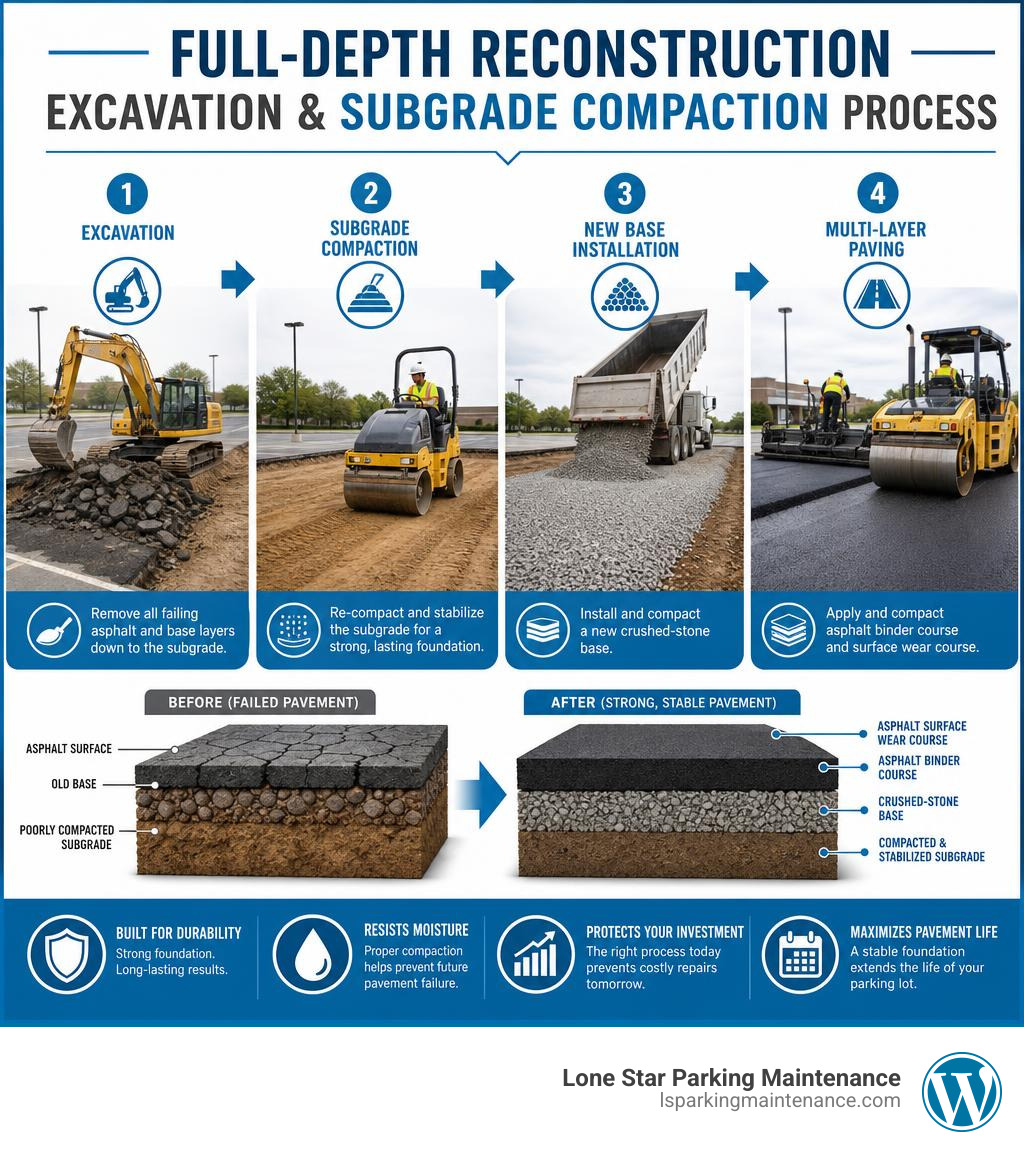
Full-depth reconstruction requires:
- Excavation: Removing all failing asphalt layers down to the subgrade.
- Subgrade Compaction: Re-compacting the underlying soil. In the DFW Metroplex, the heavy clay soils expand and contract dramatically with moisture changes. Soil stabilization (often using lime or cement treatment) is critical to building a stable foundation.
- New Base Installation: Laying and compacting a fresh crushed-stone base.
- Multi-Layer Paving: Applying a thick asphalt binder course followed by a durable surface wear course.
While this process represents a significant initial investment, it resets your pavement’s lifespan to a full 25 to 30 years. If you suspect your lot has structural issues, our team at Lone Star Parking Maintenance Services can perform a comprehensive evaluation. You can also read more about DFW-specific commercial parking lot services to see how local soil conditions impact reconstruction design.
Key Differences in Parking Lot Asphalt Repair Techniques
Choosing the right repair technique is just as important as choosing the right material. Modern pavement technology offers several methods to address localized damage, each with its own advantages in terms of durability, cost, and speed.
Infrared Asphalt Repair is an advanced method that excels in high-traffic commercial environments. We use an infrared heater to heat the damaged asphalt to approximately 325°F. This softens the existing material back to a workable, plastic state. We then rake the heated asphalt, add a rejuvenator to restore lost oils, mix in a small amount of fresh hot mix, and compact the area.
Because infrared repair melts the patch area into the surrounding pavement, it creates a seamless bond. There are no cold joints where water can penetrate, making the repair highly water-resistant. Infrared repairs can last 5+ years, take only 30 to 45 minutes per location, and allow the area to reopen to traffic almost immediately.
Traditional Sawcut Patching (or cut-and-patch) is the preferred choice for deeper base failures. We use a pavement saw to cut a clean, vertical boundary at least 12 inches beyond the visible damage. We excavate the failed material, repair and re-compact the base, apply a tack coat to the vertical edges, and fill the area with fresh hot mix in compacted 2-inch layers (lifts). This method is highly durable but takes longer to complete than infrared patching.
To find out which method is best for your property’s budget and traffic patterns, dive into the 10 Reasons Why You Will Love Asphalt Repair Services.
Crack Sealing vs. Crack Filling
It is common to hear “crack sealing” and “crack filling” used interchangeably, but they are actually two distinct maintenance procedures designed for different types of pavement distress.
- Crack Sealing: This is a preventive maintenance treatment designed for active cracks (cracks that expand and contract with temperature changes, usually less than 0.75 inches wide). We use a specialized router to create a clean, uniform reservoir, blow out all debris with compressed air, and inject a highly flexible, hot-applied rubberized polymer sealant. This sealant remains elastic, stretching in the winter and compressing in the summer to maintain a watertight seal. It typically lasts 3 to 5 years.
- Crack Filling: This is a lower-cost treatment used for non-working, static cracks (such as longitudinal or block cracks that do not move significantly). We clean the crack and fill it with a more rigid sealant or asphalt emulsion. While economical, crack filling does not accommodate significant pavement movement.
Preventing moisture intrusion through crack sealing is the single most cost-effective pavement maintenance task you can perform. Properties with routine crack sealing programs experience 60% to 70% fewer potholes over time. For a deeper look at choosing the right service, read about Finding the Best Asphalt Crack Repair Service for Your Property. You can also explore Texas-specific asphalt repair techniques to see how climate cycles influence material selection.
Pothole Repair and Patching Methods
Potholes are the ultimate parking lot enemy. They form when water seeps through cracks in the asphalt and settles into the underlying base. During temperature swings, this trapped moisture weakens the subgrade. As heavy vehicles drive over the weakened spot, the asphalt flexes, cracks, and eventually collapses into the void below, creating a pothole.
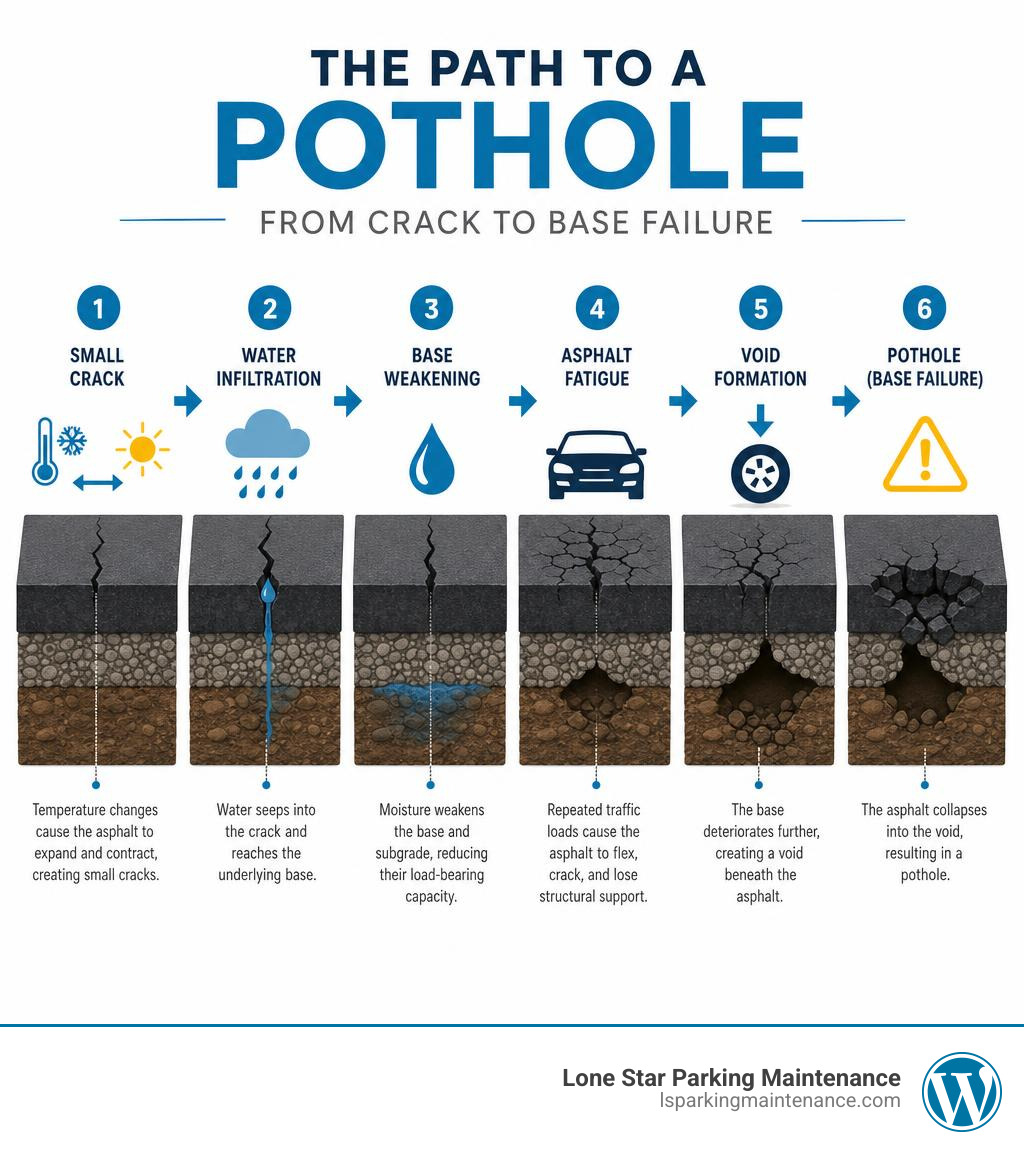
To repair potholes permanently, we follow a strict multi-step process:
- Debris Removal: All loose asphalt, dirt, and standing water must be completely cleared from the hole.
- Edge Preparation: We sawcut or jackhammer the edges to create vertical walls in sound pavement.
- Tack Coat Application: We spray a liquid asphalt binder on the bottom and sides of the hole to ensure strong adhesion.
- Layering and Compaction: We fill the pothole with hot mix asphalt. For holes deeper than 2 inches, we apply the asphalt in 2-inch lifts, compacting each layer individually using a vibratory plate compactor or roller to achieve a target compaction density of 92% to 95%. Compaction is critical; uncompacted patches will quickly settle and fail.
For step-by-step instructions on professional patching techniques, read our guide on How to Patch Pavement Like a Pro.
Hot Mix vs. Cold Patch for Parking Lot Asphalt Repair
When it comes to the material used for repairing potholes and utility cuts, you will generally choose between hot mix asphalt and cold patch asphalt.
- Hot Mix Asphalt (HMA): This is the industry standard for permanent repairs. Sourced directly from local asphalt plants at temperatures between 275°F and 325°F, hot mix contains high-quality binders and graded aggregates. It compacts beautifully and cools into a highly durable, flexible, and permanent structure that lasts 8 to 15 years.
- Cold Patch Asphalt: This material is designed for temporary or emergency repairs. It can be applied cold, directly from a bag or stockpile, making it highly convenient for winter repairs when hot mix plants are closed. However, cold patch remains somewhat pliable and has a limited lifespan of 6 to 18 months under commercial traffic.
While cold patch is an excellent tool for keeping a parking lot safe during freezing winter months, we always recommend replacing temporary cold patches with permanent hot mix once weather conditions allow. To learn more about our permanent repair options, visit our page on Asphalt Repair Services by Lone Star Parking Maintenance.
Best Practices for Surface Preparation and Weather Timing
The success of any parking lot asphalt repair project depends heavily on two factors: surface preparation and weather timing. No matter how high the quality of your asphalt mix, it will not bond to a dirty, wet, or cold surface.

Before any material is laid, the repair area must undergo rigorous cleaning. We use high-velocity air blowers, wire brooms, and industrial pressure washers operating at 2,000 to 4,000 PSI to strip away dirt, dust, and loose aggregate.
Once clean, we apply a tack coat (a specialized liquid asphalt emulsion). The tack coat acts as an adhesive, creating a strong mechanical bond between the existing pavement and the new asphalt patch. Skipping the tack coat leads to “slippage failures,” where the new patch slides and cracks along the boundary of the old pavement.
To understand why clean pavement is essential for long-term lot safety, read our article on Concrete and Asphalt Maintenance: Keeping Your Lot Safe.
Preparing the Surface for Maximum Adhesion
Beyond general dirt removal, successful asphalt adhesion requires addressing chemical contaminants. Engine oil, transmission fluid, and gasoline are highly destructive to asphalt; these petroleum-based fluids dissolve the liquid asphalt binder, reducing the pavement to loose sand and gravel.
Our preparation process includes:
- Oil Stain Treatment: We scrub oil-saturated areas with biodegradable degreasers and seal them with specialty primers before paving or sealcoating.
- Crack Routing: Routing cracks to a uniform width (typically 0.5 inches) and depth creates a clean reservoir that allows the rubberized sealant to bond securely to the crack walls.
- Debris Evacuation: Using heat lances to dry out and clean cracks simultaneously, ensuring 100% moisture removal.
Taking these meticulous prep steps ensures your repairs stand up to heavy traffic. For more tips on crack preparation, check out The Ultimate Guide to Filling Every Crack in Your Driveway.
How Weather and Temperature Affect Asphalt Curing
Asphalt is highly sensitive to weather conditions during installation and curing. To achieve proper compaction and density, hot mix asphalt must be laid and rolled while it is still hot. If the mix cools too quickly, it becomes stiff and impossible to compact properly, leading to premature failure.
Ideal weather conditions for permanent asphalt repairs include:
- Ambient Temperature: At least 50°F and rising, with optimal conditions between 60°F and 80°F.
- Surface Temperature: The existing pavement must be warm enough to prevent the hot mix from chilling instantly upon contact.
- Dry Conditions: Absolutely zero rain or standing moisture. Water turns to steam when it contacts hot asphalt, creating voids in the mix and ruining the bond.
In the DFW Metroplex, our prime paving season runs from late spring through autumn. While we can perform repairs year-round, winter repairs require careful planning and specialized techniques to ensure long-term durability. For more information on timing your paving projects, read Everything You Need to Know About DFW Asphalt Overlays.
Cost Factors, Lifespan, and Preventive Maintenance
Understanding the financial variables of asphalt repair helps commercial property owners budget effectively and avoid unexpected expenses.

Several factors influence the overall cost of a parking lot asphalt repair project:
- Total Square Footage and Depth: Larger projects benefit from volume pricing on materials, while deeper repairs require more excavation, base stone, and multiple asphalt lifts.
- Mobilization Charges: The cost of transporting heavy paving equipment, rollers, and crew to your job site.
- Night Work Premiums: Performing repairs overnight (typically between 10 PM and 6 AM) minimizes business disruption for retail centers and offices but may carry a premium due to nighttime labor rates.
To explore how these costs fit into your overall maintenance budget, read our pricing breakdown in How Much to Seal the Deal on Your Asphalt.
Understanding the Financial Variables of Pavement Repair
When reviewing bids for asphalt repair, it’s important to look beyond the bottom-line number. A low-cost bid that skips critical steps — like proper subgrade compaction, tack coat application, or vertical sawcutting — will cost you far more in repeat repairs down the road.
A professional, high-quality bid should clearly detail:
- The thickness of the compacted asphalt (typically 2 inches for light duty, 3 to 4 inches for heavy-duty truck lanes).
- The type of asphalt mix design being sourced from the plant.
- Surface preparation steps, including cleaning and weed removal.
- Traffic control measures, including barricades, cones, and flaggers to keep your customers safe during the project.
At Lone Star Parking Maintenance, we provide transparent, detailed proposals so you know exactly what to expect.
How Long Do Professional Asphalt Repairs Last?
When installed correctly by an experienced team, professional asphalt repairs offer excellent longevity:
- Permanent Hot-Mix Patches: 8 to 15 years.
- Infrared Seamless Repairs: 5 to 10 years.
- Rubberized Crack Sealing: 3 to 5 years.
- Temporary Cold Patches: 6 to 18 months.
The actual lifespan of your repairs will depend on your property’s daily traffic load (especially heavy delivery trucks) and environmental wear. For example, loading dock approaches that handle 80,000-pound semi-trucks will require heavier-duty mix designs and more frequent inspections than standard visitor parking stalls. To learn more about maximizing the lifespan of your pavement, refer to The Ultimate Guide to Resurfacing Asphalt Parking Lots.
Protecting Your Investment with Proactive Maintenance
The best way to save money on asphalt repairs is to prevent damage from occurring in the first place. A proactive, scheduled maintenance program is the key to extending your pavement’s lifespan to 30 years.
A comprehensive maintenance program includes:
- Sealcoating Every 3 Years: Applying a protective coal-tar or asphalt emulsion sealer blocks destructive UV rays, prevents water penetration, and resists oil and chemical spills. A well-sealed parking lot can last up to twice as long as untreated asphalt.
- Biannual Inspections: Walking your property every spring and fall to identify and seal new cracks before they develop into potholes.
- Prompt Line Striping: Maintaining clear markings to organize traffic flow and prevent vehicles from driving over delicate pavement edges.
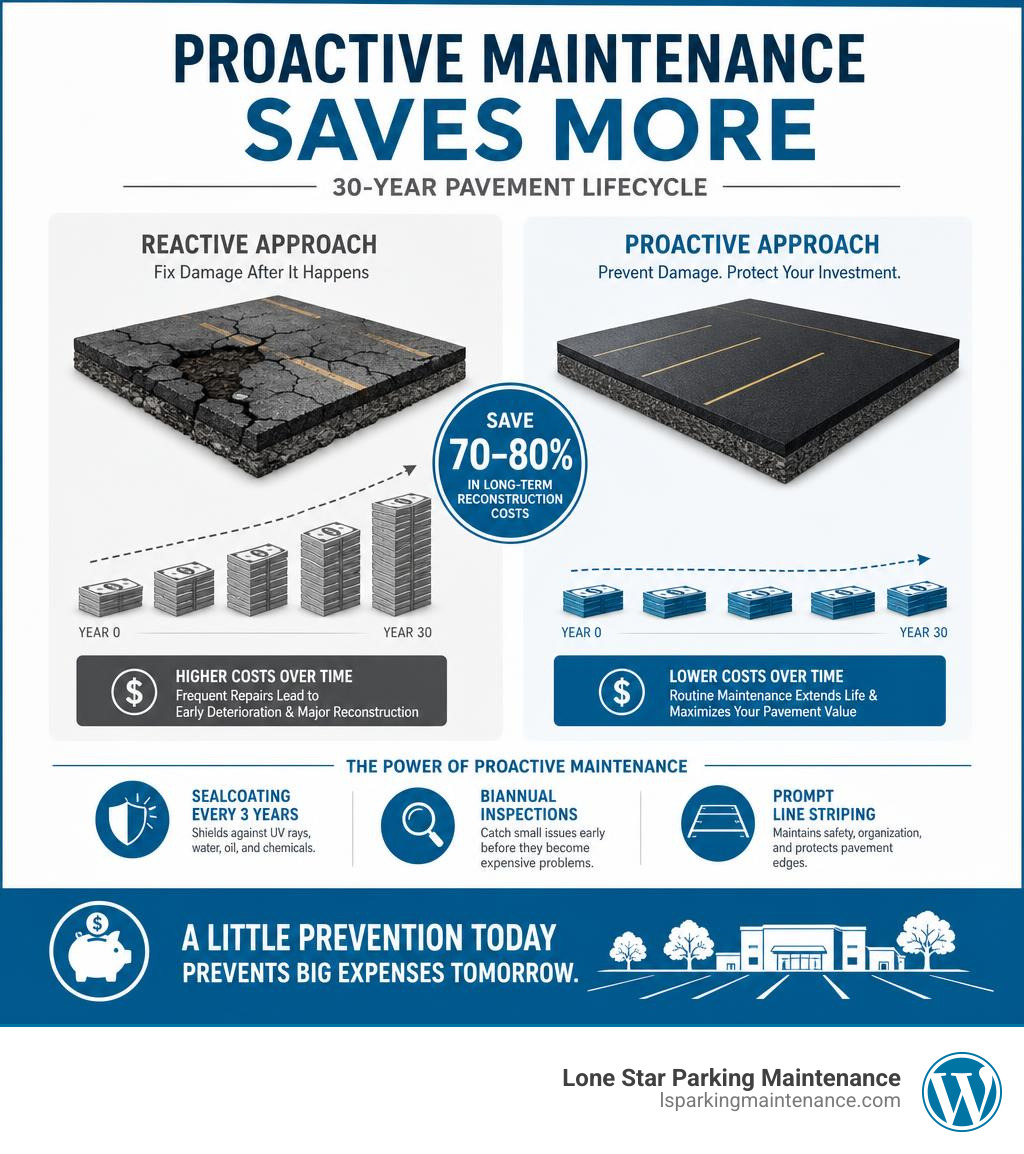
Implementing these simple steps will save your property 70% to 80% in long-term reconstruction costs. For more details on protecting your pavement, read our guide on concrete and asphalt maintenance. You can also check out Texas-wide parking lot striping and repair standards to see how aesthetic upgrades complement structural maintenance.
Frequently Asked Questions about Parking Lot Maintenance
How often should commercial parking lots be inspected?
We recommend performing a comprehensive parking lot walkthrough at least twice a year — once in the spring to assess winter freeze damage, and once in the autumn to prepare the pavement for cold weather.
Additionally, you should inspect your lot immediately following major weather events, such as heavy Texas rainstorms or sudden freeze-thaw cycles. Early detection of cracks and drainage issues allows you to address them before they turn into costly liabilities.
Can parking lot repairs be done in sections to maintain business operations?
Yes, absolutely. We specialize in phased repairs designed to keep your business fully operational. We can divide your parking lot into distinct zones, working on one section at a time while routing traffic and parking to other areas of the lot.
By utilizing clear barricades, directional signage, and scheduling work during off-peak hours or overnight, we ensure your customers and employees experience minimal disruption.
Why is standing water so damaging to asphalt parking lots?
Standing water is asphalt’s number-one enemy. When water pools on the surface due to depressions or poor grading, it slowly seeps through microscopic pores and cracks in the asphalt.
Once water reaches the subgrade, it softens the stone base and soil. When heavy vehicles drive over these saturated areas, the flexible asphalt bends under the weight and cracks, leading to rapid pothole formation and base failure. Maintaining a proper 1% to 2% slope toward catch basins is critical to preventing standing water damage.
Conclusion
Taking care of your parking lot doesn’t have to be a stressful or overly complicated process. By staying ahead of minor cracks, addressing potholes quickly with permanent hot mix, and keeping up with a regular sealcoating schedule, you can easily double the lifespan of your pavement and save thousands of dollars in the process.
At Lone Star Parking Maintenance, we are proud to serve commercial property owners and managers throughout the DFW Metroplex. Whether you need precise crack sealing, durable pothole patching, or a complete parking lot refresh, our team is committed to delivering top-quality materials, professional safety standards, and exceptional customer service.
Ready to restore your parking lot’s safety and curb appeal? Contact Lone Star Parking Maintenance for a Free Estimate today, and let’s build a maintenance plan that works for your property and your budget. For additional technical standards on regional commercial pavement repair, you can also review general Texas asphalt guidelines.