
Asphalt Patching in Hickory Creek: Fix the Cause, Not Just the Pothole
For a lasting asphalt patch in Hickory Creek, have a pavement contractor check the damaged area and the base beneath it. A pothole may need more than fresh asphalt: loose material must be removed, the base made firm, and the new patch compacted. If water keeps collecting there, address the drainage too.
For a busy parking lot, ask how the crew will keep drivers and pedestrians away from the work and when the patch can reopen. I’m Cason, and I’ll walk you through what to look for before you hire a repair team.
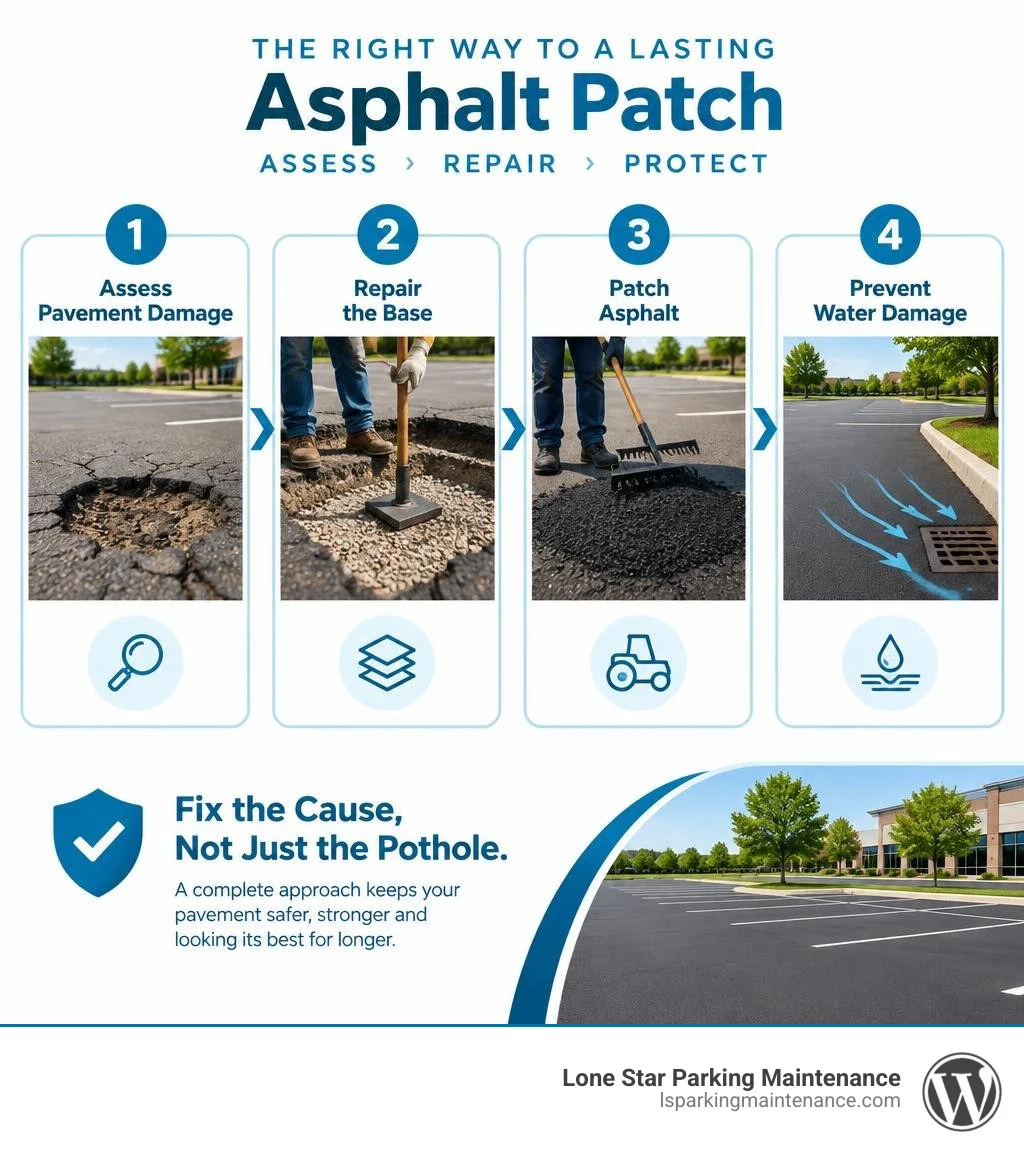
Quick look at asphalt patch Hickory Creek:
Comprehensive Asphalt Patch Hickory Creek Solutions for Commercial Pavements
Commercial pavements across North Texas experience punishing conditions. Between triple-digit summer heat, sudden winter freeze-thaw cycles, and heavy delivery truck traffic, asphalt surfaces are under constant stress. When moisture infiltrates tiny surface cracks, it softens the underlying aggregate base. Over time, traffic flexes the weakened asphalt until it shatters into an alligator pattern, eventually dislodging completely to create a hazardous pothole.
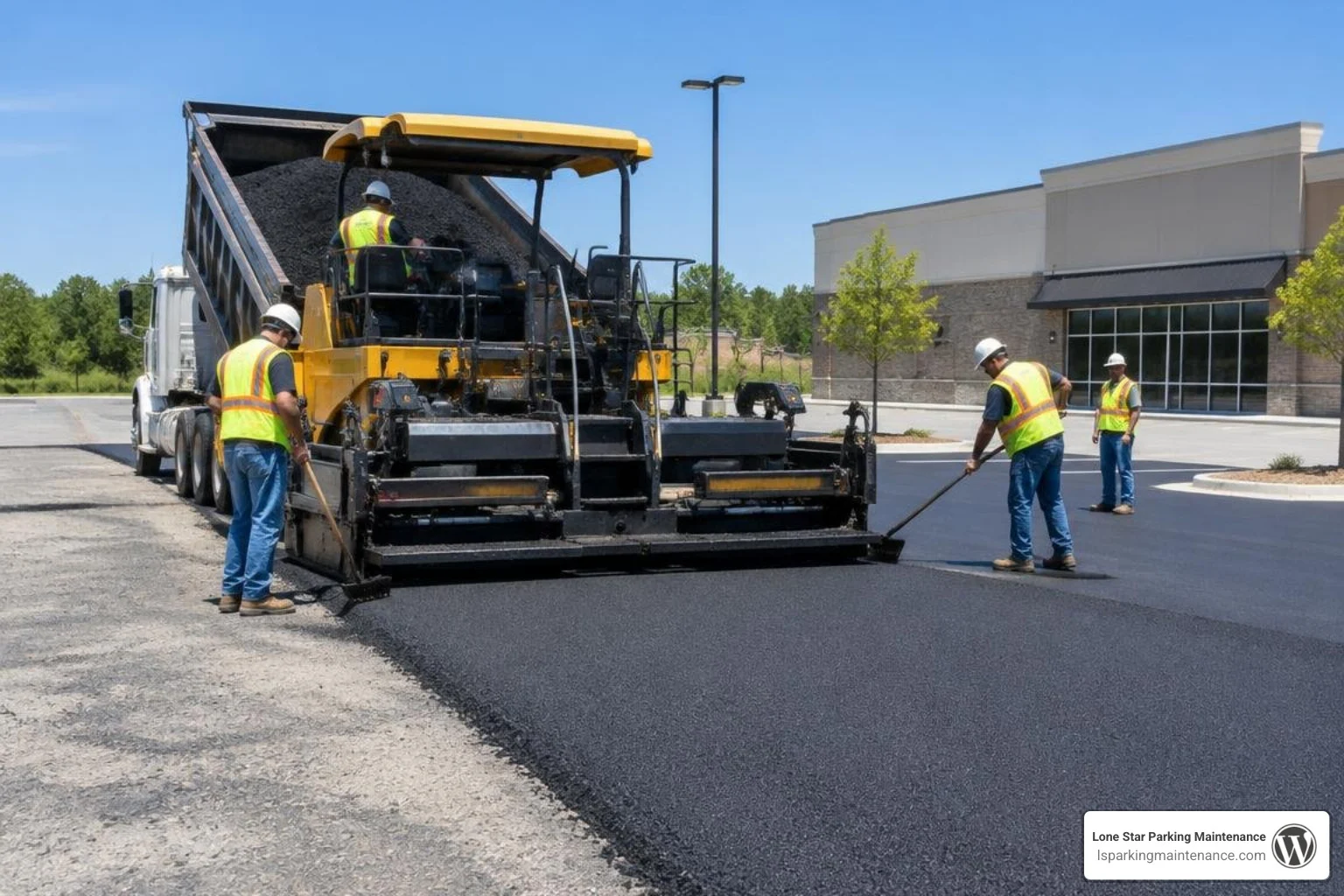
Temporary cold patches might hide the problem for a week or two, but they rarely survive a hard rain or heavy traffic. To truly protect your property, you need a commercial-grade repair designed to restore structural integrity from the foundation up. Depending on the depth of the failure, repairs range from surface milling and overlaying to deep-lift full-depth patching.
| Patch Classification | Typical Depth | Structural Purpose | Traffic Load Capacity |
|---|---|---|---|
| Class D Type I | Up to 2 Inches | Surface layer defects, shallow raveling | Light vehicular, passenger parking |
| Class D Type II | 2 to 4 Inches | Surface course wear, moderate rutting | Standard commercial drive lanes |
| Class D Type III | 4 to 8 Inches | Intermediate base failure, deep cracking | Medium delivery trucks, frequent traffic |
| Class D Type IV | 8 to 13+ Inches | Full structural restoration, subbase repair | Heavy logistics, garbage trucks, transit |
Class D Asphalt Patch Hickory Creek Standards and Specifications
When engineering teams and municipal agencies design reliable pavement restoration programs, they rely on standardized classifications. In professional roadwork and bridge approach rehabilitation, Class D patches are standard for localized repairs. Public infrastructure contracts often call out strict volumetric requirements, such as those published in the Illinois DOT letting specifications, where specific square yard allocations—from 22 square yards of Type I up to 88 square yards of Type IV patches—are precisely calculated based on structural load requirements.
In commercial parking lots and local roadways, using these same rigorous Class D standards ensures that patches do not settle or rut under pressure. A heavy-duty Type IV patch, reaching depths of 13 inches, replaces damaged subbase and asphalt layers simultaneously, giving busy loading docks and commercial driveways the load-bearing capacity needed to prevent repeat failures.
Selecting the Right Asphalt Patch Hickory Creek Solution for Your Property
Choosing the right repair method begins with a comprehensive pavement evaluation. If the underlying rock base remains solid and dry, milling out 2 inches of surface material and cutting clean butt joints allows for a seamless hot-mix asphalt (HMA) surface course.
However, if the base beneath has shifted or turned to mud, simply paving over the surface guarantees that the new asphalt will sink within months. Learning how to patch pavement like a pro means understanding that the subgrade dictates the repair strategy. We assess traffic volumes, turning radiuses, and structural stress points across your commercial lot to select the ideal mix design and patch depth.
Essential Engineering: Subbase Stability and Drainage Integration
Asphalt is flexible by nature, relying entirely on the strength of the subgrade and aggregate base beneath it to support vehicle weight. When water penetrates the foundation, the load-bearing capacity drops drastically.
Municipal Drainage, Culverts, and Base Stabilization
In growing communities across the DFW Metroplex, pavement preservation goes hand-in-hand with municipal storm management. Major roadway and subdivision rehabilitation plans—similar to ongoing Hickory Creek municipal infrastructure projects—regularly pair extensive asphalt paving with thousands of linear feet of roadside ditch regrading, culvert replacements, and reinforced concrete pipe installations.
These comprehensive infrastructure projects demonstrate a core truth of pavement engineering: an asphalt patch is only as good as the drainage system surrounding it. By incorporating cement-treated subgrade layers—often 4 to 8 inches thick—contractors stabilize native soils before placing 2 to 3 inches of compacted hot-mix asphalt, preventing moisture-induced shifting over decades of service.
Concrete Curbs, Joints, and Structural Tie-Ins
Parking lots and access roads rarely consist of asphalt alone; they connect with concrete drainage aprons, dumpster pads, and combination curb-and-gutter systems. When repairing asphalt adjacent to concrete structures, crews must address transitions carefully.
- Curb and Gutter Integration: Removing damaged concrete curbs and reinstalling standard B-6.24 curb profiles ensures water channels directly into storm inlets rather than pooling along the edge of your new asphalt patch.
- Longitudinal Joint Sealing: The seam between existing concrete and newly laid asphalt is the most vulnerable point for water entry. Applying preformed joint strip seals or hot-poured longitudinal joint sealants stops water infiltration at the boundary.
- Protective Coats: Applying protective coats across surrounding concrete infrastructure shields slabs from deicing chemicals and oil degradation, maintaining the clean aesthetics of local properties following regional DFW pavement standards.
Best Practices for Long-Term Pavement Restoration
Achieving a flush, durable repair requires precision at every stage of the paving process. Following comprehensive parking lot repair strategies guarantees that patches resist raveling, moisture damage, and surface distortion.
Precision Milling, Butt Joints, and Tack Coat Application
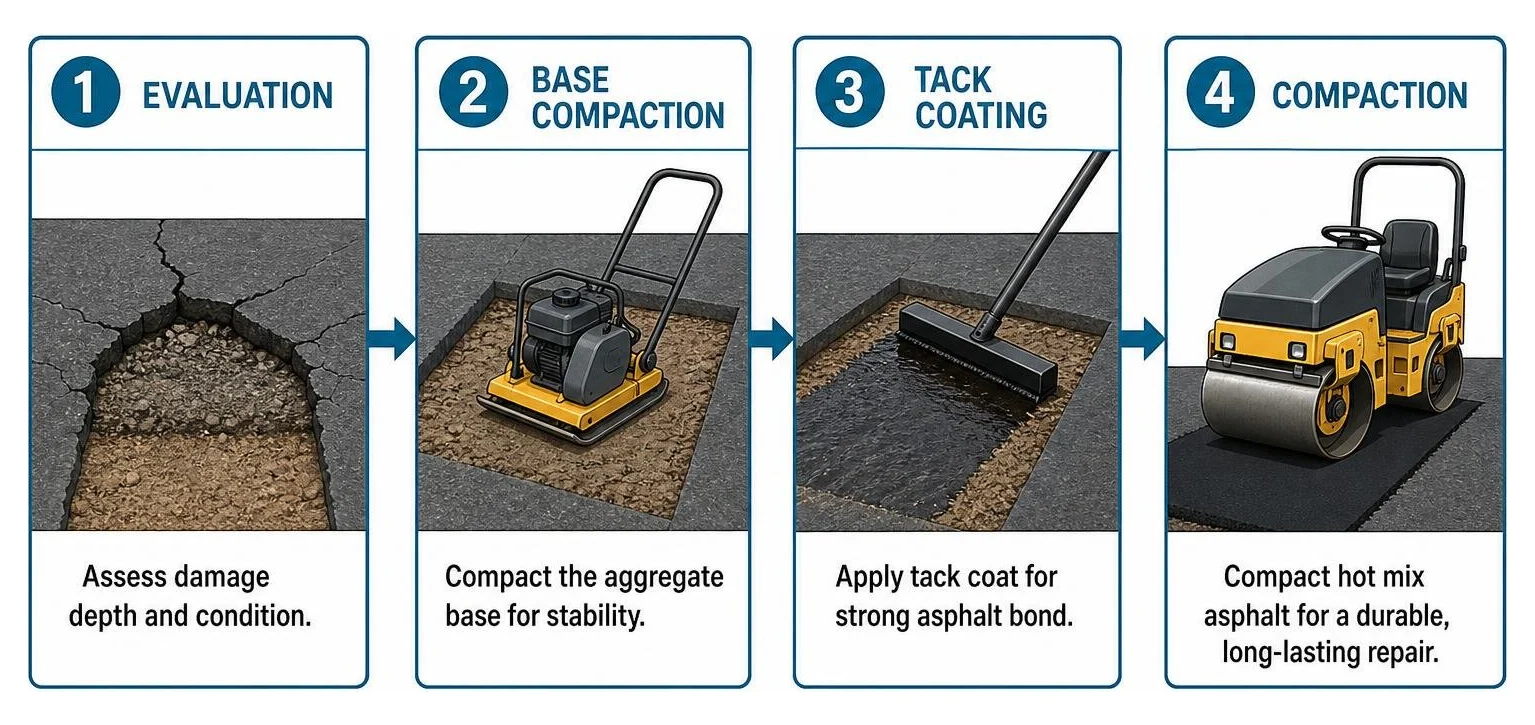
To prevent thin, feathered edges that break apart under traffic, professional crews use cold milling machines or pavement saws to cut vertical, square edges around the damaged zone. This creates a solid butt joint that locks the new asphalt in place.
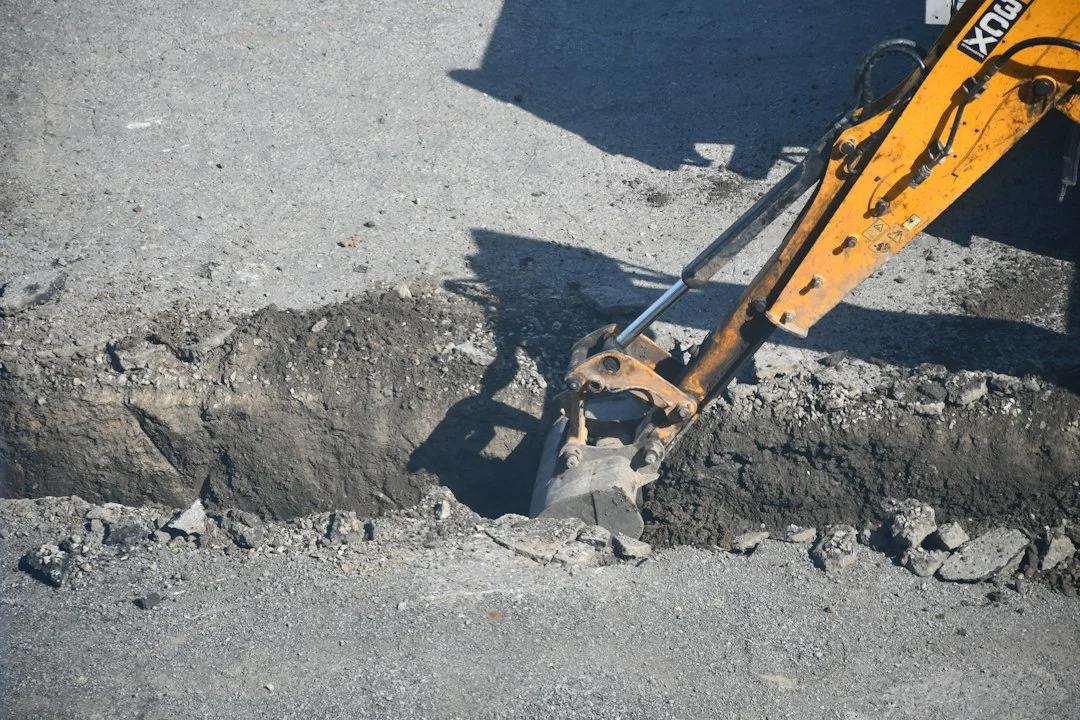
- Excavation & Cleaning: All deteriorated asphalt, loose base material, and debris are excavated and removed from the site.
- Subbase Compaction: The granular subbase is graded, treated if necessary, and compacted to high-density standards.
- Prime and Tack Coating: Liquid asphalt tack coat is sprayed uniformly across the base and along all vertical edges. This specialized binder acts as a heavy-duty glue, ensuring complete thermal and mechanical adhesion between old and new layers. Combining these methods with sealing and crack maintenance best practices prevents water from sneaking beneath the joint seams.
Compaction, Thermal Bonding, and Traffic Protection
Hot-mix asphalt must be delivered at temperatures between 275°F and 300°F and compacted immediately. Using vibratory steel-wheel and pneumatic rollers, crews press the material until air voids are minimized, creating an impermeable, dense mat.
During commercial repairs, keeping traffic off warm asphalt is critical. Using temporary concrete barriers, traffic cones, and clearly designated detour lanes protects the fresh patch while curing. Once cooled, durable traffic paint and thermoplastic striping can be applied to restore safe vehicle flow.
Frequently Asked Questions About Hickory Creek Asphalt Repairs
What is the difference between Class D Patch Types I through IV?
Class D patch classifications correspond to the depth and structural demand of the repair. Type I covers shallow surface repairs (typically under 2 inches), Type II addresses moderate wear (2 to 4 inches), Type III resolves deeper base distress (4 to 8 inches), and Type IV provides deep structural restoration (8 to 13+ inches) for heavy-load corridors.
How long does a commercial asphalt patch typically last?
A professionally installed full-depth asphalt patch can last 10 to 15 years or more when supported by a stable, well-drained aggregate base. Surface-level skin patches, by comparison, often fail within 1 to 2 years if underlying base moisture is ignored.
Why are drainage improvements necessary alongside asphalt patching?
Asphalt is permeable to standing water over long periods. When water pools on a lot, it seeps through micro-fissures and saturates the subgrade, causing the soil to lose its load-bearing strength. Addressing standing water, cleaning culverts, and regrading slopes ensures the new patch stays dry from below.
Conclusion: Restore and Protect Your Hickory Creek Pavement
Potholes and cracked pavement create liability hazards, damage customer vehicles, and detract from your commercial property’s curb appeal. Addressing localized pavement failures early prevents minor surface cracks from escalating into full structural replacements.
At Lone Star Parking Maintenance, we deliver commercial parking lot striping, sealing, cleaning, power washing, signage, lighting, and heavy-duty repairs across the DFW Metroplex. We utilize top-quality materials and adhere strictly to industry engineering standards to keep your surface lots and parking garages safe, compliant, and durable.
Explore our top-rated asphalt patch solutions or contact our team today to schedule an on-site pavement evaluation for your property.