
Asphalt Patch Flower Mound: Fix Damage Before It Spreads
For an asphalt patch in Flower Mound, start by having the damaged area assessed for depth, drainage, and base failure. Small potholes and shallow depressions may need a compacted surface patch or leveling course. Cracking, rutting, or soft pavement often calls for a full-depth repair, where failed asphalt and damaged base material are removed and rebuilt.
Fast action matters. Water can enter cracks, weaken the gravel foundation, and turn a manageable repair into a larger replacement project. For commercial properties, a sound patch also helps reduce trip hazards, vehicle damage, and drainage problems.
Typical local pricing for a small 215-square-foot asphalt repair is reported around $347 to $418, while more extensive professional repairs can run $1,400 to $2,100. Final cost depends on the repair depth, access, pavement thickness, drainage needs, and whether the base has failed.
I am Cason, and this guide will help you choose the right repair method, plan for local conditions, and protect your Flower Mound pavement investment.
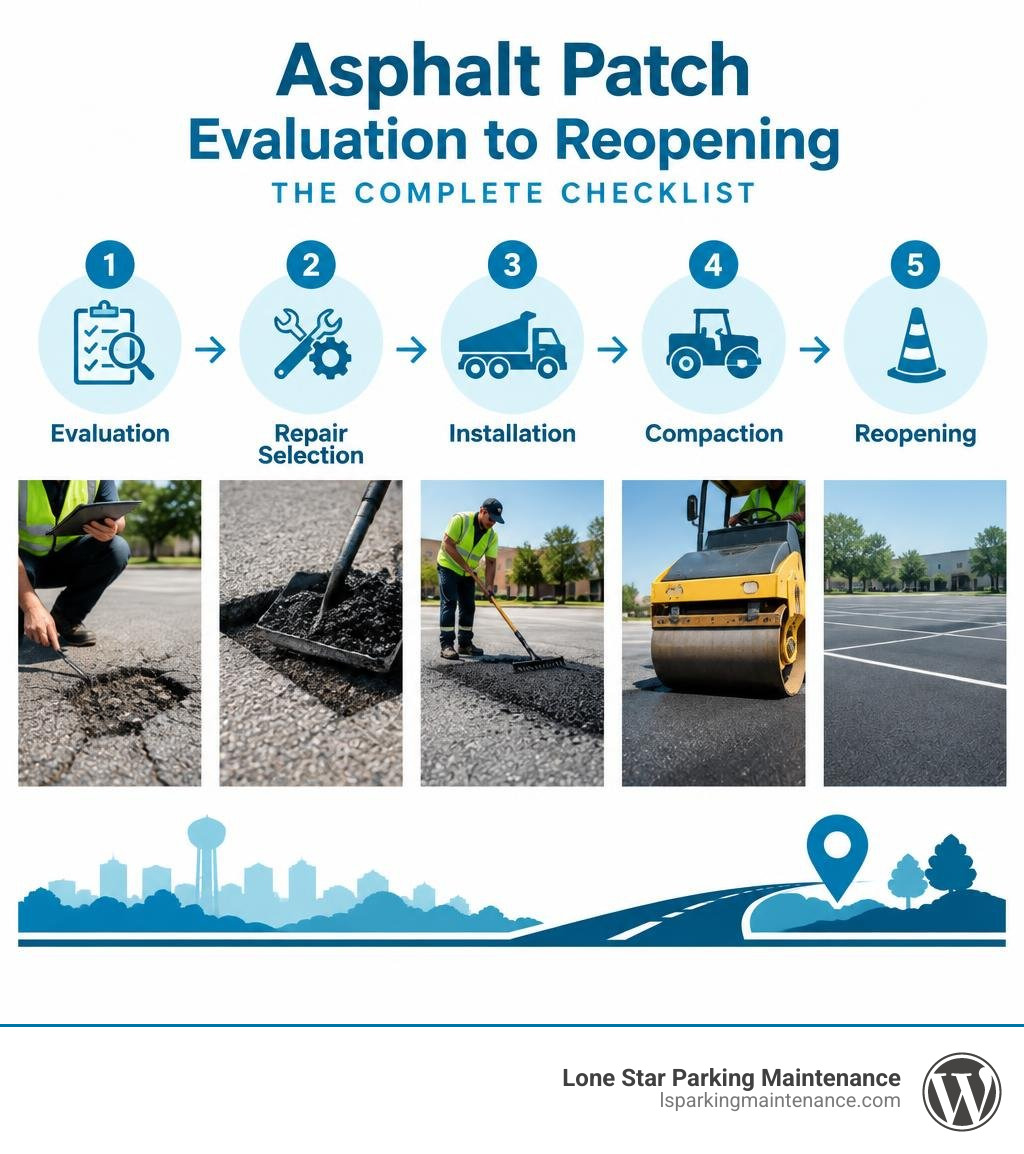
Types of Asphalt Repairs and Surface Maintenance Methods
Every commercial property or residential facility experiences wear and tear. In the Dallas–Fort Worth Metroplex, pavement faces baking summer sun, heavy rainfall, and shifting clay soil. Choosing the right repair technique ensures you do not waste resources patching symptoms while underlying issues deteriorate.
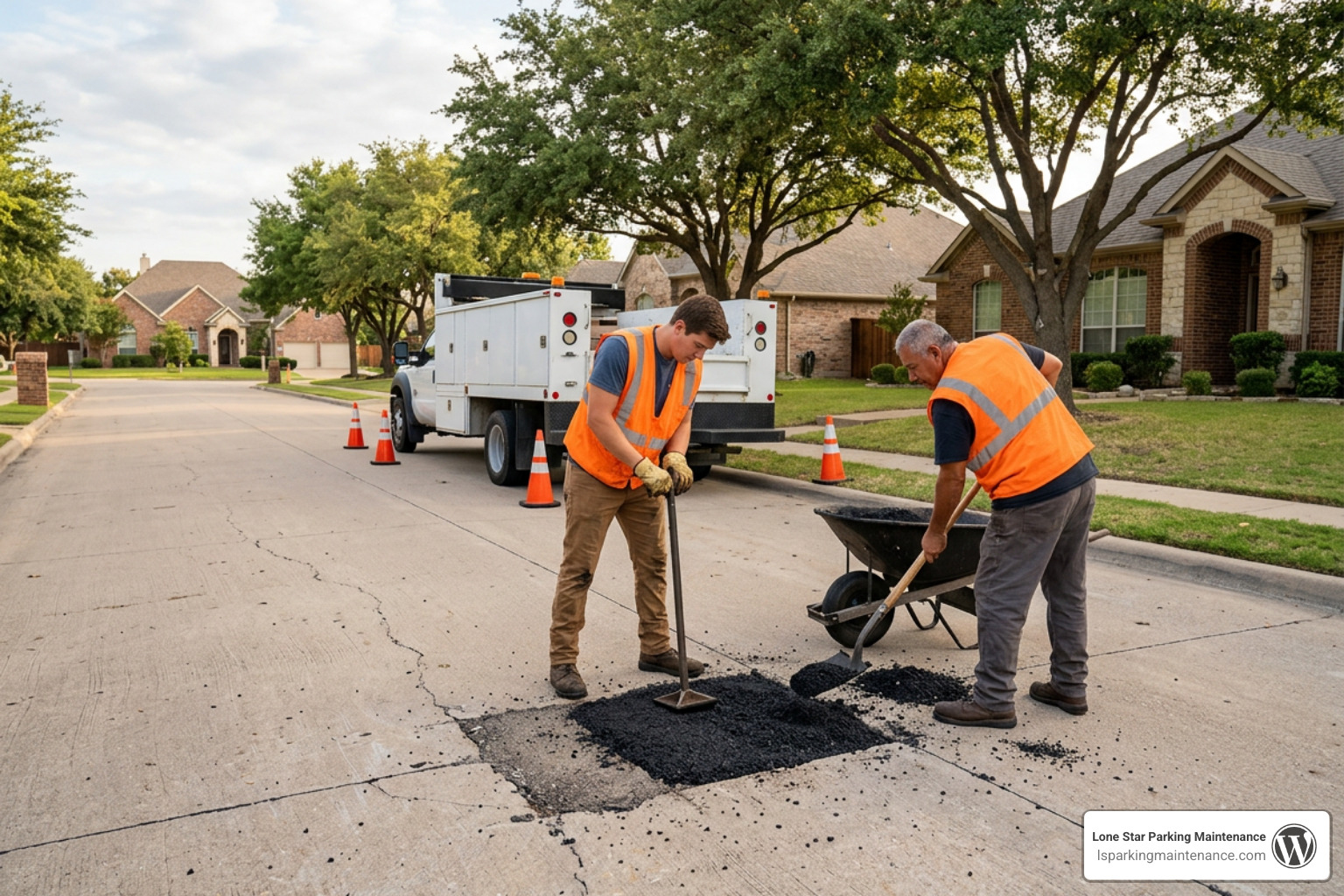
When selecting the correct maintenance method, it helps to understand how to patch pavement like a pro by matching the specific pavement distress to the appropriate engineering solution.
| Repair Type | Expected Lifespan | Structural Impact | Optimal Pavement Conditions |
|---|---|---|---|
| Surface Leveling / Skin Patch | 1–2 Years | Low (Cosmetic & Minor Leveling) | Shallow birdbaths, minor depressions (<1" deep), sound base |
| Pothole Patching (Hot-Mix) | 2–4 Years | Moderate (Localized restoration) | Isolated breaks, intact surrounding pavement, dry subbase |
| Slurry Seal Application | 3–5 Years | Low (Protective & Friction layer) | Intact asphalt matrix, minor oxidation, high-traffic friction loss |
| Asphalt Overlay | 8–12 Years | High (Adds structural load capacity) | Stable subgrade, widespread surface aging, minimal base failure |
| Full-Depth Repair | 10–15+ Years | Maximum (Complete structural rebuild) | Alligator cracking, soft subbase, subgrade pumping, deep rutting |
Pothole Patching and Surface Leveling
Potholes typically occur when surface water penetrates tiny fractures, softens the supporting soil underneath, and collapses under vehicle weight. Pothole repair involves removing loose debris, cleaning the cavity, applying a bituminous tack coat, and compacting hot-mix asphalt in lifts.
Minor depressions—often referred to as birdbaths—can collect standing water after rain. To resolve these before they soften the pavement, we apply a leveling course. This process uses a fine aggregate asphalt mix feathered at the edges to restore the proper slope. If you are dealing with early signs of separation, learning how to repair asphalt cracks in 5 easy steps can keep moisture out of the foundation before deep potholes develop.
Asphalt Overlays vs. Slurry Seal Applications
Property owners often confuse an overlay with a seal coat. They serve very different roles:
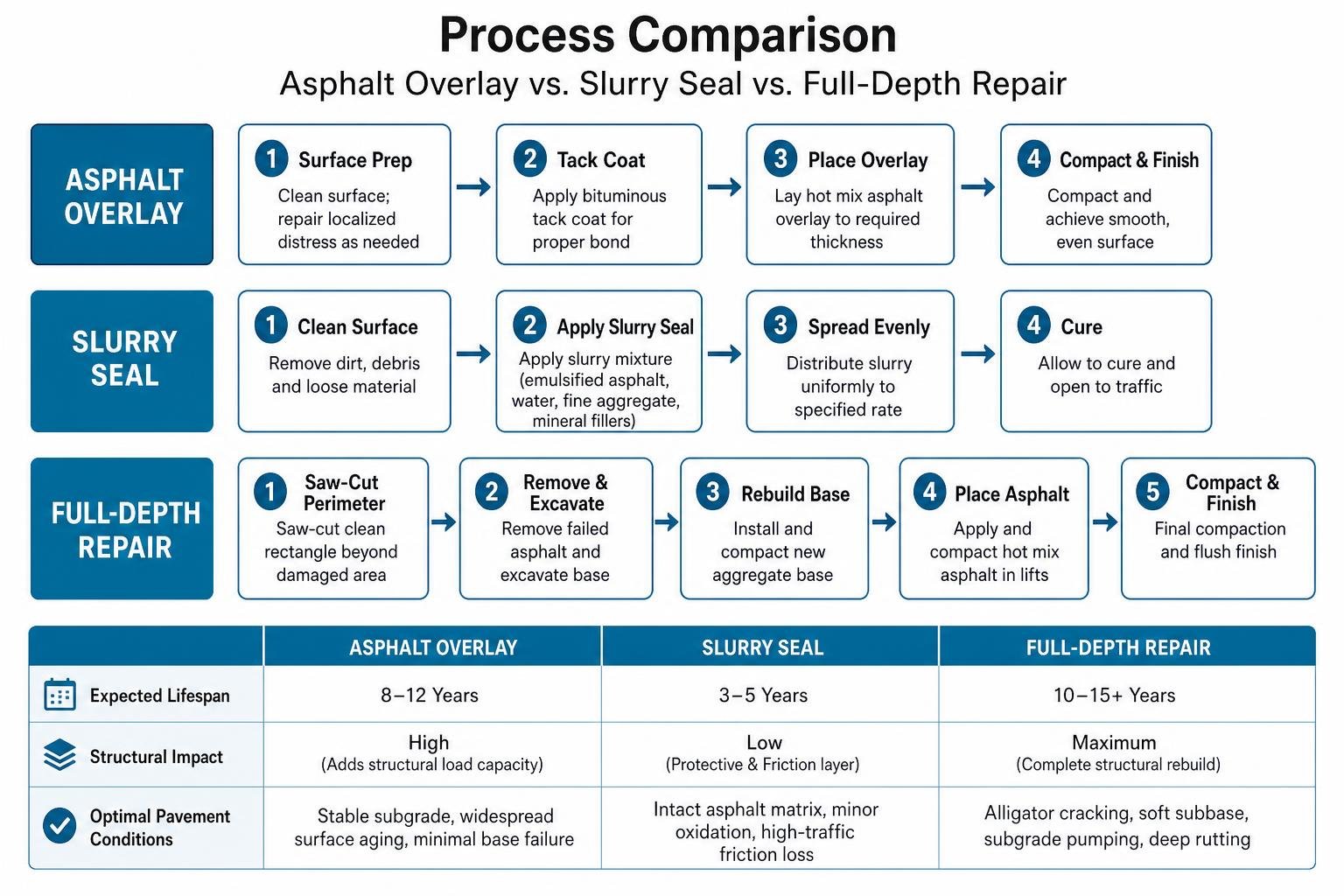
- Asphalt Overlay: A structural application of hot bituminous paving applied over an existing surface. An overlay adds substantial load-bearing capacity, restores smoothness, and extends pavement life by 8 to 12 years without requiring complete demolition.
- Slurry Seal: A preventative maintenance treatment composed of emulsified asphalt, water, fine aggregate, and mineral fillers. A slurry seal does not add structural strength; instead, it shields the surface against UV oxidation, seals non-working micro-cracks, stops water intrusion, and significantly enhances tire skid resistance.
Understanding the essential guide to asphalt repair and protection helps property owners alternate between preventative coatings and structural restorations to maximize pavement life.
Full-Depth Patching for Subbase Failure
When the gravel foundation or native clay underneath fails, standard surface repairs are only temporary. Full-depth patching addresses root-cause structural problems.
- Saw-Cutting Perimeter: We saw-cut a clean, vertical rectangle at least one foot beyond the damaged boundary into structurally sound asphalt.
- Excavation: The deteriorated asphalt and compromised subbase are excavated until reaching a solid subgrade foundation.
- Base Stabilization: We replace the failed base with crushed aggregate or cement-treated base, compacting it with heavy vibratory equipment.
- Hot-Mix Installation: High-grade hot-mix asphalt is placed in uniform layers (lifts), with each lift rolled and compacted to proper density.
For a thorough breakdown of full-depth reconstruction procedures, consult our asphalt parking lot repair guide 2026.
Complete Cost Breakdown for Asphalt Patch Flower Mound Services
Understanding commercial asphalt pricing lets you budget effectively for ongoing maintenance.

Investing in regular pavement upkeep offers tangible economic benefits, as outlined in our overview of 10 reasons why you will love asphalt repair services.
Average Pricing for an Asphalt Patch Flower Mound Project
Asphalt repair costs in Flower Mound vary based on the project’s scale, the equipment needed, and site accessibility:
- Small Isolated Repairs (approx. 215 sq. ft.): Typically range from $347 to $418, or an average of roughly $365 to $400.
- Extensive Structural Repairs: Moderate to severe pavement failure requiring saw-cutting, subbase stabilization, and multi-lift compaction usually runs between $1,400 and $2,100.
- Protective Post-Repair Sealants: Adding commercial-grade sealcoats across the patched section and surrounding pavement adds $300 to $500, but extends total lifespan by protecting new seams.
Ignoring a minor crack can result in costs two to three times higher later. A small fissure left unsealed allows water to erode the subbase, turning a straightforward $350 repair into an extensive full-depth restoration.
Key Factors Influencing Local Asphalt Repair Estimates
Several variables influence asphalt repair quotes in Denton and Tarrant Counties:
- Damage Depth: Surface leveling uses minimal material, whereas deep subgrade failure requires excavation, hauling fees, and backfill.
- Gravel Foundation Condition: If subgrade clay has mixed with base gravel, the foundation must be excavated, re-graded, and re-compacted.
- Asphalt Thickness: Heavy-duty commercial zones handling delivery freight need thicker asphalt sections (4–6 inches) than standard parking stalls (2–3 inches).
- Drainage and Slope: Sites with standing water may require regrading or catch-basin adjustments to prevent immediate re-failure.
Adhering to proper maintenance protocols—such as those found in don’t let cracks win with these asphalt patching and sealing best practices—ensures your investments hold up over time.
Flower Mound Regulations, Seasonal Timing, and Weather Factors
Executing a successful pavement repair requires coordination with municipal standards and local weather patterns.
Navigating Municipal Guidelines and Town Coordination
When performing asphalt work on commercial properties adjacent to public right-of-ways, or when handling utility cuts that interface with municipal streets, contractors must align with municipal guidelines.
The Town of Flower Mound maintains an active infrastructure division. For municipal road concerns, right-of-way tie-ins, or questions regarding public maintenance programs, property owners can consult the Town of Flower Mound Street Services department or reach them directly by phone at 972.874.6400.
Public streets undergo planned maintenance via annual overlay and slurry seal contracts. Commercial property managers should maintain their private drives and entrances to meet local grading and safety codes.
Best Time of Year and Weather Impacts on Texas Asphalt
The ideal window for hot-mix asphalt patching in North Texas spans from late spring through early autumn, when ambient temperatures remain consistently above 50°F (and ideally above 70°F). Warm weather keeps hot-mix asphalt workable, allowing our crews to achieve full compaction before the material cools below rolling temperatures.
Winter repairs are feasible using specialized warm-mix or high-performance cold-mix formulations. However, major structural overlays and slurry seals are best scheduled outside cold weather snaps.
Frequently Asked Questions About Pavement Maintenance
Can rain ruin an asphalt patch during installation?
Yes. While light morning mist is manageable, steady rain compromises an asphalt repair. Rain introduces moisture into the base and cools the hot-mix too quickly, preventing proper compaction. Trapped water turns to steam beneath the hot mix, stripping the bituminous binder from aggregate stones and causing the patch to unravel. When sudden Texas storms roll through, professional crews pause paving, cover exposed excavations, and resume once the base dries thoroughly.
When to Choose Full-Depth Repair Over a Standard Asphalt Patch Flower Mound
A simple surface patch will not fix interconnected alligator cracking, deep wheel-rutting depressions, or areas where wet mud pumps up through fissures. These symptoms point to subbase failure. In these cases, a standard surface patch will crack again within months. Full-depth repair is the right call when the subgrade deflects under load, ensuring new aggregate and asphalt are properly supported from the base up.
How long does a typical asphalt repair project take to cure?
Most commercial asphalt patching projects take between 24 and 48 hours for complete installation and vehicle turnover:
- Initial Set Time: Hot-mix asphalt cools and solidifies within 1 to 4 hours after final vibratory rolling.
- Foot and Vehicle Traffic: Light passenger vehicle traffic can typically resume within 12 to 24 hours depending on ambient temperatures.
- Full Curing Cycle: While functional within hours, asphalt takes 6 to 12 months to fully cure and harden. Heavy delivery trucks should avoid sharp, stationary wheel-turns during high summer heat during the initial weeks.
Conclusion
Well-maintained asphalt protects your property’s curb appeal, improves vehicular safety, and helps prevent small maintenance items from turning into costly replacements. Whether you need isolated pothole leveling, protective slurry sealing, or full-depth base stabilization, addressing pavement wear early saves time and money.
At Lone Star Parking Maintenance, we serve properties across the DFW Metroplex with professional striping, asphalt repairs, sealcoating, power washing, and signage. We use commercial-grade materials that meet rigorous industry standards to keep your surfaces smooth, durable, and safe.
Explore top-rated asphalt patches to fix your pavement fast or contact our team today to schedule an on-site pavement evaluation.