
Which Curb Painting Materials Last Longest?
For high-traffic curbs, MMA and heavy-duty hybrid coatings are the most durable choices. They cost more up front but can last longer between repaints. Water-based acrylic is a practical, lower-odor choice for standard parking lots. Solvent-based traffic paint offers another option where its product specifications and local VOC rules allow it.
When evaluating durable materials for curb painting, property managers need solutions that withstand continuous vehicle wear and intense weather. Even the best coating still needs a clean, dry curb to stick. Tire scuffs, Texas sun, and standing water can shorten the life of any coating. I’m Cason, and I’ll help you compare these options by wear, application needs, and long-term cost.
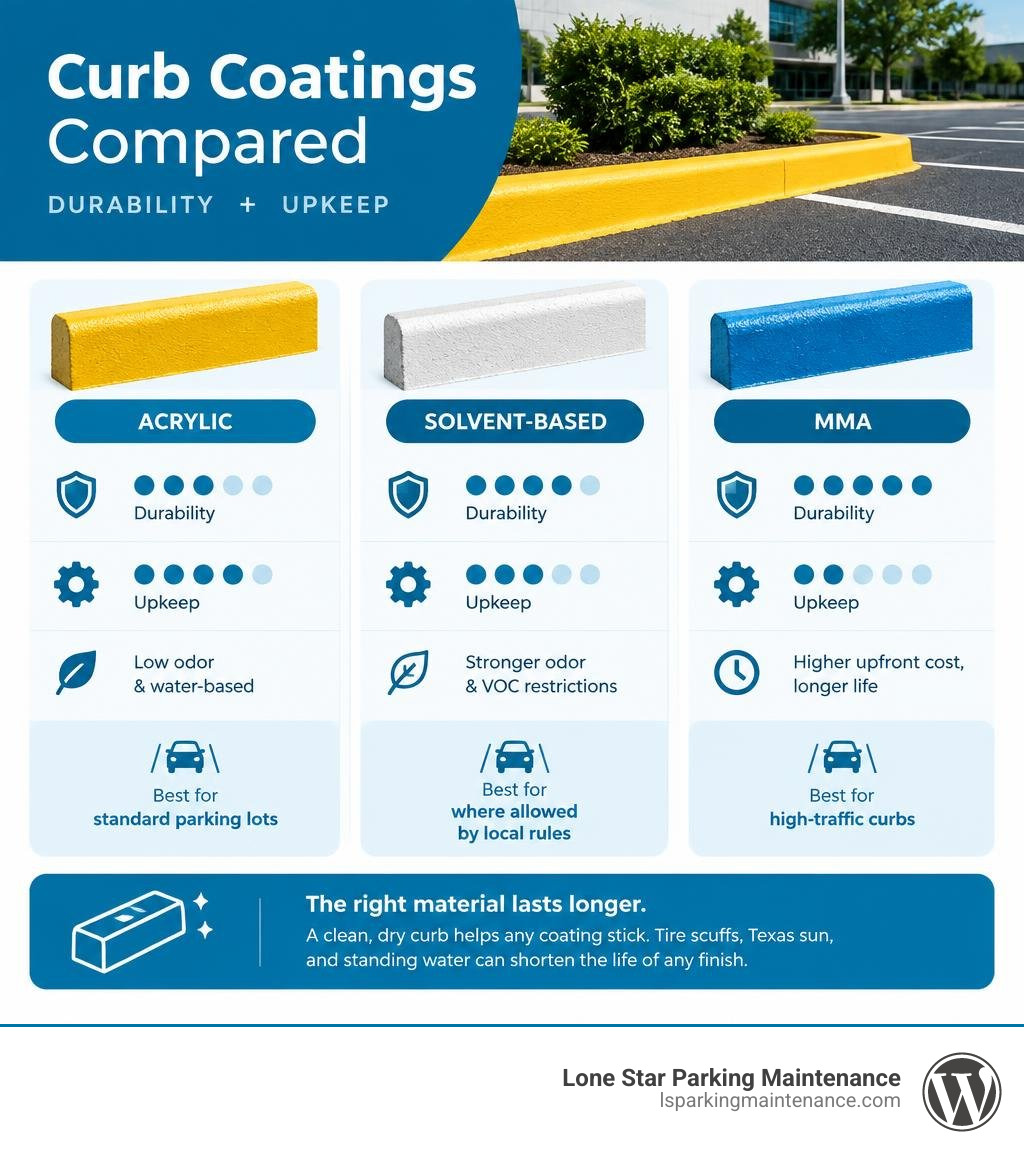
Durable Curb Painting Materials: Comparing Water-Based, Solvent, and High-Performance Resins
Commercial parking lots in the DFW Metroplex take a real beating. Between searing summer heat, heavy delivery truck traffic, and the occasional driver who treats a curb like a suggestion rather than a barrier, curb markings face constant abuse. Choosing the right coating system is the difference between sharp, compliant lines and peeling, faded concrete that looks neglected within months.
When evaluating coatings, we look closely at resin chemistry, binder durability, and environmental compliance. Selecting the best paint for curbs requires balancing your facility’s traffic volume against curing windows and long-term performance expectations. For high-wear areas, durable materials for curb painting such as MMA and polymer hybrids provide the longest service life.
| Coating System | Expected Lifespan | Dry / Recoat Time | Full Traffic Cure | VOC Level | Best Application Area |
|---|---|---|---|---|---|
| Water-Borne Acrylic | 1 – 2 Years | 30 – 60 min dry; 2 hr recoat | 4 – 8 Hours | Low (< 50 g/L) | Low-to-medium traffic retail, standard parking stalls |
| Solvent-Based Alkyd | 1 – 3 Years | 15 – 30 min dry; 1 hr recoat | 2 – 4 Hours | Moderate to High | Industrial facilities, non-freeze weather zones, restripes |
| MMA (Methyl Methacrylate) | 3 – 5+ Years | 30 – 45 min set | 2 – 3 Hours | Very Low (< 50 g/L) | High-volume drive-thrus, loading docks, fire lanes |
| Polymer Hybrid Systems | 3 – 5 Years | 30 – 60 min recoat | 12 – 24 Hours | Low (< 50 g/L) | Multi-family walkways, safety transitions, stamped concrete |
Acrylic Water-Based Formulations
Water-borne acrylic traffic paints are the workhorses of standard commercial property maintenance. Modern acrylic emulsions utilize cross-linking resin technology that provides solid film integrity while maintaining strict environmental standards.
These coatings dry rapidly via simple water evaporation. In warm, low-humidity conditions, they dry to the touch in roughly 30 to 60 minutes and can be recoated in about two hours. High-solids options—such as those detailed in the low-VOC semi-gloss technical data—contain roughly 38.6% solids by volume and 51.5% solids by weight, achieving a dry film thickness of 2.5 to 3.5 mils from an 8-mil wet application.
Water-based formulas are non-flammable, offer easy water cleanup, and easily satisfy SCAQMD Rule 1113 requirements with VOC levels under 50 g/L. While they deliver exceptional performance on standard retail perimeter curbs, they will wear down faster when exposed to direct tire scuffing and standing water compared to specialized resins.
Solvent-Based Traffic Coatings
Solvent-based alkyd paints rely on solvent evaporation followed by oxidative cross-linking. These formulas are known for deep penetration into porous concrete and aged asphalt surfaces.
Products built under high-solids curb and brick coating specifications feature high pigment volume concentrations (often up to 55% volume solids and 76% mass solids). This formulation creates dense, high-sheen barriers that resist dirt pickup and alkali attack. Solvent-borne systems also dry exceptionally fast—often ready for traffic in under an hour.
However, solvent paints are sensitive to moisture trapped within the curb substrate; moisture levels must be under 4% to prevent bubbling and delamination. They also release stronger odors and carry higher VOC ratings, making them less suitable for indoor parking structures or facilities with strict green-building standards. Where permitted, they serve well on exterior fire lane curbs that require crisp, highly visible edges.
Methyl Methacrylate (MMA) and Hybrid Polymer Systems
When maximum longevity is non-negotiable, methyl methacrylate (MMA) and advanced hybrid polymer systems represent the pinnacle of coating technology. Unlike traditional paints that dry by evaporation, MMA is a cold, two-component reactive system that cures via internal chemical polymerization.
Advanced MMA colored pavement marking technology forms an unbreakable mechanical and chemical bond with concrete and asphalt. MMA systems maintain flexibility across dramatic temperature swings (from -40°F to 175°F) without cracking or chalking.
Similarly, high-performance water-based polymer hybrids (like nanotechnology-modified resin coatings) roll on easily while delivering up to 20 times the functional service life of standard latex paint. They build a dry film thickness of 20 to 25 mils per coat, creating an impervious shield against tire grinding, oil spills, and sun exposure.
Critical Performance Features for Heavy-Traffic Curbs
Curbs do not just sit there looking pretty—they are physical barriers that endure direct mechanical stress from tires, shopping carts, and service equipment. Understanding curb painting services requires looking at how raw chemistry translates into real-world durability on your property.
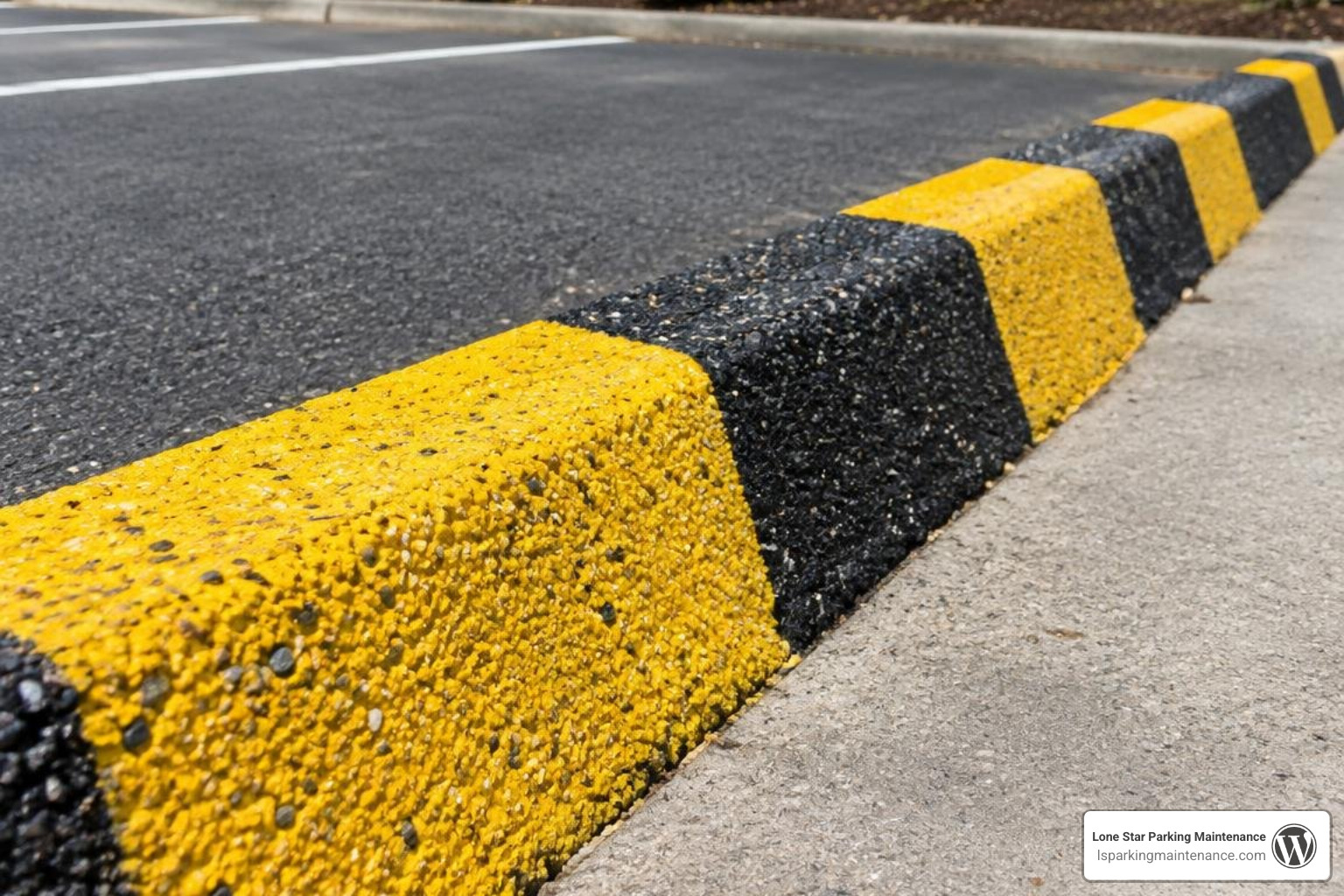
Core Performance Factors in Durable Curb Painting Materials
When engineers test the toughness of traffic coatings, two metrics stand out: Taber abrasion resistance and pull-off adhesion strength.
Standard traffic paints often lose between 150 mg and 250 mg of material per 1,000 cycles during ASTM D4060 Taber abrasion testing. In contrast, heavy-duty MMA and specialized hybrid systems demonstrate an abrasion loss of less than 100 mg per 1,000 cycles. That means the coating stays on the concrete instead of wearing away onto passing tires.
Adhesion is equally critical. Standard traffic paints typically provide pull-off adhesion ratings between 1.5 and 2.5 MPa. High-performance wear-resistant concrete and asphalt coatings and specialized polymer coatings can achieve pull-off values exceeding 5.2 MPa. At this strength, the bond between the paint and the curb is stronger than the concrete itself—meaning the concrete will fail before the paint delaminates.
Anti-Skid Additives and Pedestrian Safety
Curbs in commercial centers are frequent step points for pedestrians getting out of vehicles. A smooth, glossy painted curb can turn into a slick slip hazard when wet.
To prevent slips and falls, durable curb coatings integrate anti-skid aggregates directly into the matrix or broadcast them across a wet base coat. High-grade materials utilize:
- Calcined Bauxite: An extremely hard mineral that maintains sharp edges under continuous pedestrian and vehicle wear.
- Aluminum Oxide: A high-purity aggregate that delivers exceptional skid resistance without darkening vibrant yellow or red coatings.
- Graded Silica Sand: A budget-friendly option for light-traffic sidewalk transitions.
These systems achieve British Pendulum Numbers (BPN) exceeding 70 and international DIN 51130 slip ratings of R10 to R11. This guarantees slip resistance even during heavy downpours.
UV Stability and Chemical Resistance
The Texas sun is notorious for breaking down cheap paint binders through photo-oxidation. When UV rays break molecular bonds in lower-grade resins, the paint chalks, and the color fades rapidly.
Durable curb systems utilize UV-stable, non-fading pigments that maintain a Delta E (color change) value of less than 3.0 even after 2,000 hours of accelerated weathering. Safety Yellow, Fire Lane Red, and Accessible Blue stay bright and easily identifiable from a distance.
Furthermore, durable coatings must resist automotive fluids, including motor oil, antifreeze, brake fluid, and gasoline. Standard latex softens and dissolves when exposed to fuel leaks, whereas cross-linked resins and MMA polymers remain completely unaffected.
Application Methods and Adhesion Preparation for Long-Lasting Curbs
Even the most expensive, high-tech coating on the market will fail within weeks if applied over dirt, grease, or peeling layers of old paint. Achieving multi-year durability requires disciplined preparation and proper application mechanics.
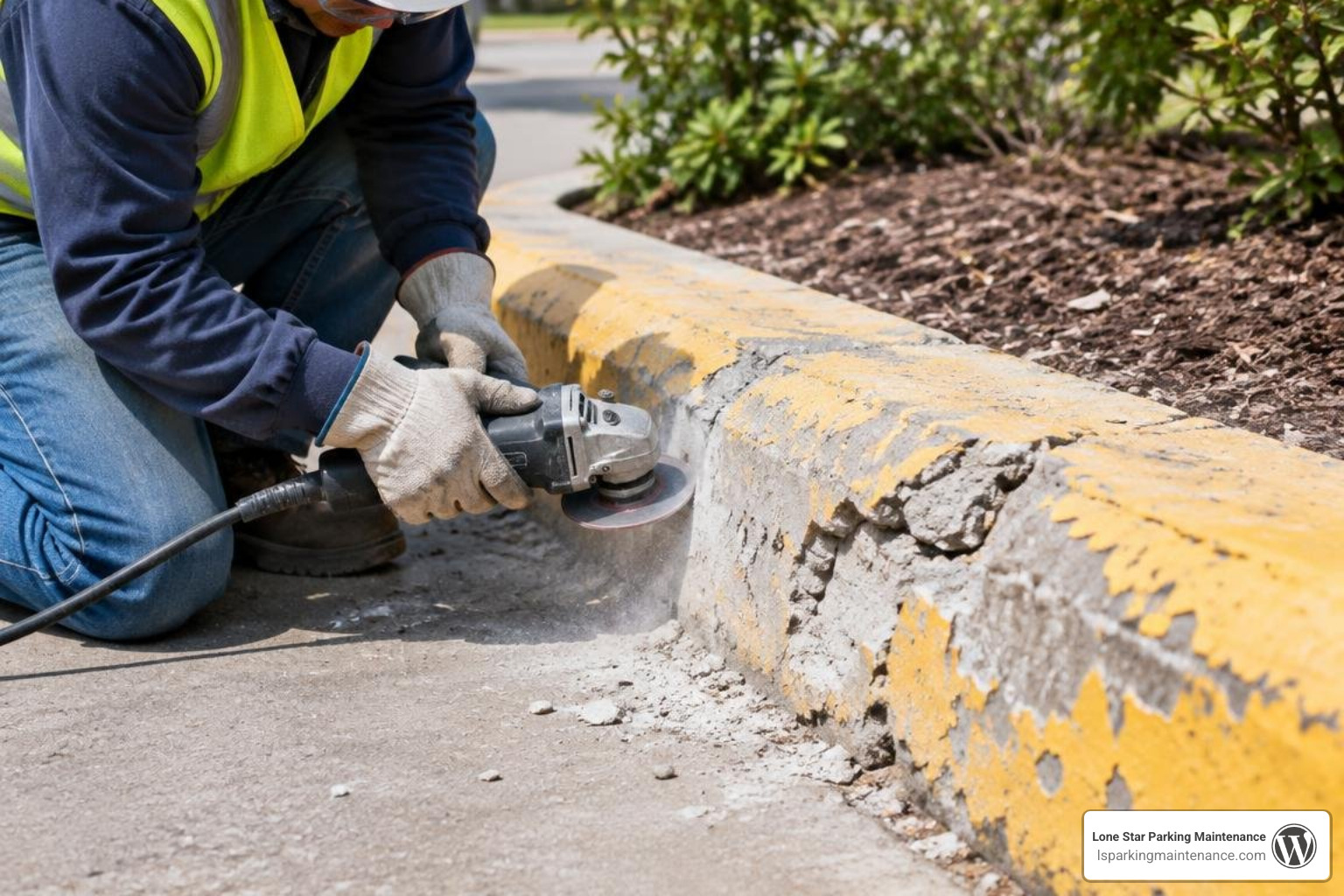
Surface Preparation Protocols for Durable Curb Coatings
Before opening a single paint can, we follow a strict preparation sequence to create an optimal profile for mechanical adhesion:
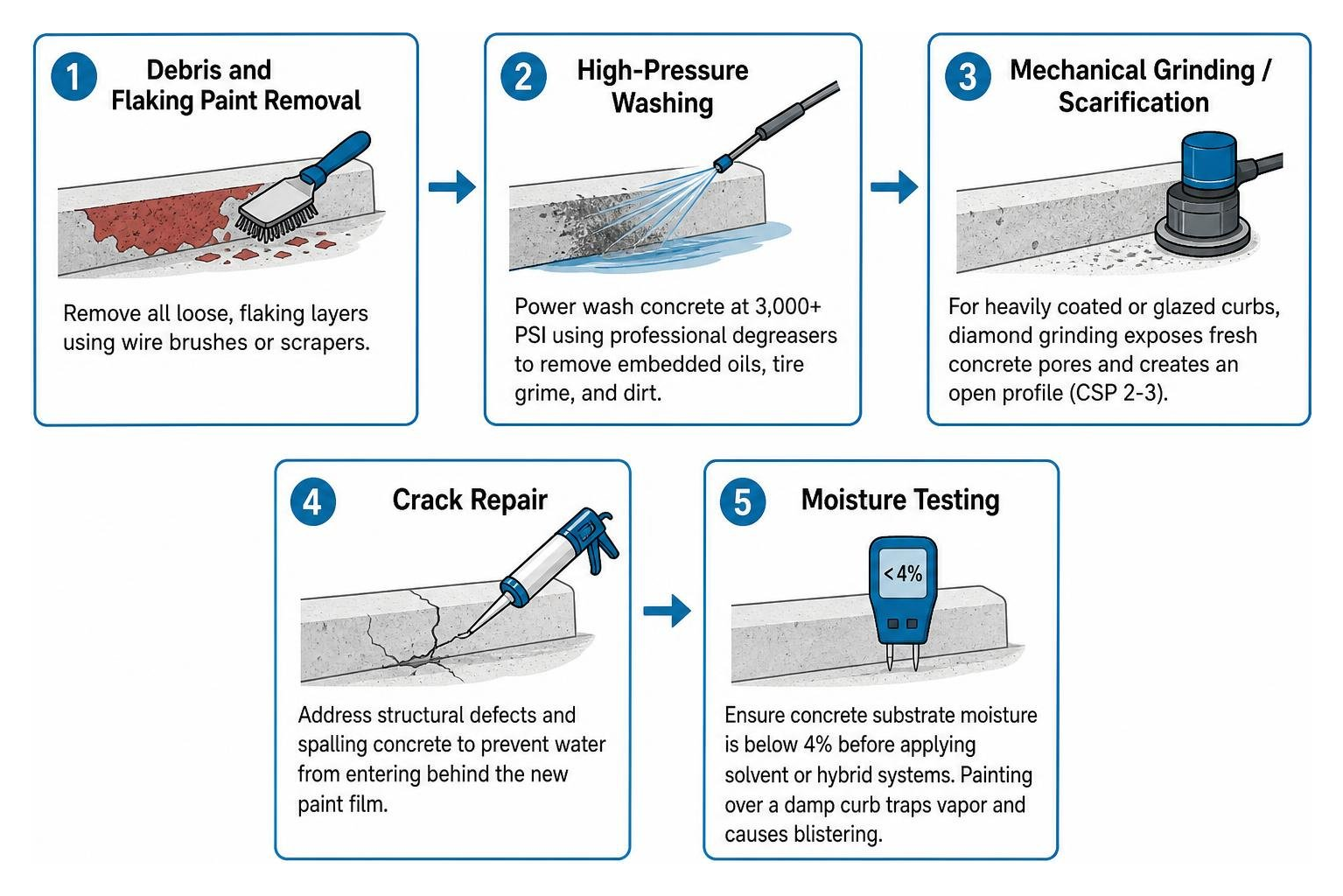
- Debris and Flaking Paint Removal: Remove all loose, flaking layers using wire brushes or scrapers. Reviewing our guide to compliant curb paint debris removal ensures the workspace remains clean and environmentally compliant.
- High-Pressure Washing: Power wash concrete at 3,000+ PSI using professional degreasing agents to draw out embedded motor oils, tire grime, and dirt from the pores.
- Mechanical Grinding / Scarification: For heavily coated or glazed curbs, diamond grinding exposes fresh concrete pores and creates an open profile (CSP 2-3).
- Crack Repair: Address structural defects and spalling concrete. Following our guide to painting cracked curbs prevents water from entering behind the new paint film.
- Moisture Testing: Ensure concrete substrate moisture is below 4% before applying solvent or hybrid systems. Painting over a damp curb traps vapor, causing blistering when the concrete warms in the sun.
Brush, Roller, and Spray Techniques
Applying curb coatings requires matching the tool to the specific product formulation:
- Airless Spray Application: Ideal for long, continuous fire lanes and perimeter curbs. Airless sprayers running at 2,000 to 2,500 PSI deliver a uniform wet film thickness (typically 8 to 15 mils wet). Spray tips sized between .017″ and .021″ handle high-solids traffic paints without clogging.
- Phenolic Core Rollers: When working around parked vehicles or tight pedestrian spaces where overspray is a hazard, 1/2″ to 3/4″ nap heavy-duty rollers apply thick, uniform coats across rough concrete textures.
- Precision Stenciling: For numbering, “NO PARKING,” and “FIRE LANE” curb markings, we use heavy-gauge, non-porous polyethylene stencils. Securing stencils tightly against the curb face prevents edge bleeding and yields crisp, professional lettering.
A wet film thickness gauge should be used regularly during application to ensure the coating meets the manufacturer’s exact build specifications.
Lifecycle Cost Analysis and Maintenance Schedules
Property managers are often tempted to choose the lowest initial bid for curb painting. However, looking at the total cost of ownership over a 5-year period reveals that high-durability materials are significantly more economical.
When we look at how to bid on annual curb painting contracts, the real expense of property maintenance is not the paint in the bucket—it is the recurring labor and operational disruptions.
Total Cost of Ownership: Short-Term Paint vs. Multi-Year Coatings
| Cost Component (Over 5 Years) | Standard Traffic Paint (Annual Repaint) | High-Performance MMA / Hybrid System |
|---|---|---|
| Initial Application (Materials & Labor) | $2.50 – $4.00 per linear foot | $8.00 – $14.00 per linear foot |
| Year 2 Maintenance / Repaint | $2.50 – $4.00 per linear foot | $0.00 (Routine Wash Only) |
| Year 3 Maintenance / Repaint | $2.50 – $4.00 per linear foot | $0.00 (Routine Wash Only) |
| Year 4 Maintenance / Repaint | $2.50 – $4.00 per linear foot | $0.00 (Routine Wash Only) |
| Year 5 Maintenance / Repaint | $2.50 – $4.00 per linear foot | $1.50 – $2.50 (Clear Topcoat Refresh) |
| 5-Year Total Estimated Cost | $12.50 – $20.00 / linear ft | $9.50 – $16.50 / linear ft |
| Disruption to Tenants & Traffic | 5 Mobilizations | 1-2 Mobilizations |
While standard traffic paint carries a lower upfront price tag, repainting annually rapidly inflates maintenance budgets. Choosing high-performance coatings reduces labor frequency, eliminates repeated parking stall closures, and delivers a much higher return on investment.
Recoating Schedules and Inspection Protocols
To maximize the life of your curbs, we recommend establishing a consistent inspection and care routine:
- Quarterly Visual Inspections: Check high-impact zones (dumpster enclosures, drive-thru lanes, loading bays) for mechanical damage or tire gouges.
- Biannual Power Washing: Clean surface road film, dirt, and oil deposits using low-pressure warm water and mild detergents. This restores reflectivity and keeps colors bright.
- Intercoat Refreshing: High-performance coatings can be refreshed after 3 to 4 years with a simple surface scrub and a light topcoat, revitalizing the existing polymer structure without requiring a full strip-down.
Following these practices ensures you achieve dependable curb painting results year after year.
Frequently Asked Questions About Durable Curb Coatings
What is the most durable material for painting high-traffic concrete curbs?
Methyl Methacrylate (MMA) and high-solids hybrid polymer coatings are the most durable options available. MMA forms a chemical cross-link with concrete, delivering exceptional resistance to tire scuffing, de-icing salts, automotive oils, and extreme weather.
How long should professional curb paint last before needing a touch-up?
Standard water-based or solvent-based traffic paints generally last 1 to 2 years under regular commercial traffic. Heavy-duty MMA and multi-resin hybrid systems routinely provide 3 to 5+ years of service life before requiring recoating or touch-ups.
Can durable curb paint be applied in cold or damp conditions?
Most standard acrylic paints require temperatures of at least 50°F (10°C) and completely dry surfaces. However, specialized low-temperature MMA formulations can cure in temperatures as low as 23°F (-5°C). Substrate moisture should always be below 4% to guarantee proper adhesion.
Conclusion
Curbs are one of the first features customers, tenants, and visitors see when entering your property. Crisp, vibrant curb markings define traffic flow, safeguard pedestrians, and keep your property fully compliant with local fire and accessibility codes.
Investing in high-durability coatings, proper mechanical preparation, and professional application methods protects your concrete and saves substantial maintenance capital over the long run. At Lone Star Parking Maintenance, we deliver industry-standard striping, coating, and concrete maintenance solutions across the entire DFW Metroplex.
Ready to upgrade your property’s curb appeal and safety markings? Schedule professional curb stop installation and curb maintenance with our team today to ensure your markings are built to last.