
Commercial Lot Water Management Starts With Controlling Water at the Source
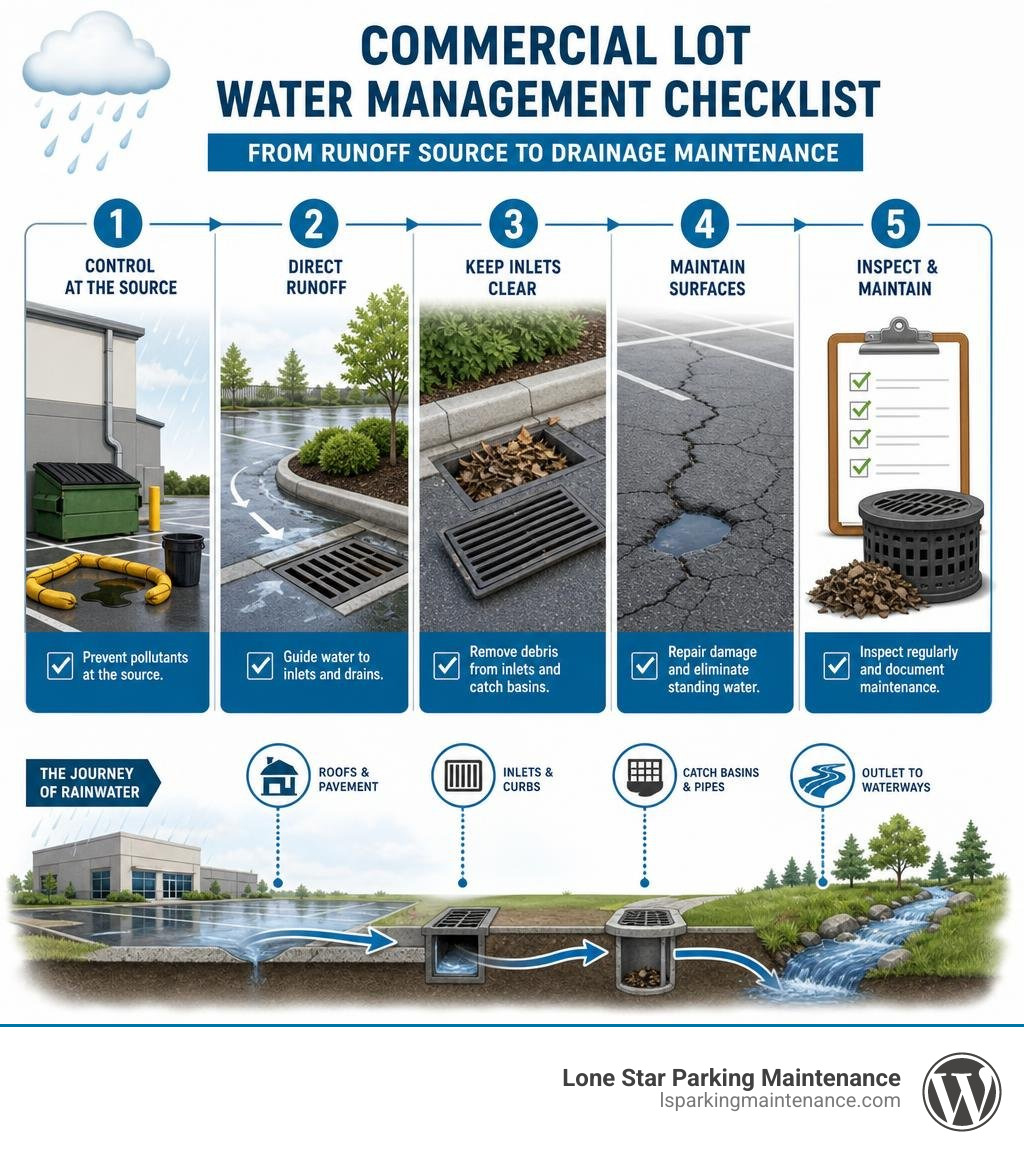
Effective commercial lot water management means keeping water from damaging pavement, overwhelming drains, or carrying pollutants off-site. Start by inspecting how rain moves across the property, clearing catch basins and inlets, fixing low spots that hold water, and removing oil, trash, and sediment before a storm can wash them into the drainage system.
For a practical first step, property managers should:
- Inspect parking lots and drainage inlets after heavy rain.
- Schedule sweeping and catch basin cleanouts to remove sediment and debris.
- Repair cracks, failed joints, and sinking areas that let water reach the pavement base.
- Use spill controls, covered dumpsters, and proper wash-water containment.
- Document inspections and maintenance for local stormwater compliance.
Parking lots, roofs, and drive lanes are impervious surfaces. Instead of soaking rain into the ground, they send it quickly toward inlets, curbs, neighboring properties, and local waterways. That runoff can soften the subgrade beneath asphalt, create trip and slip hazards, erode landscaping, and carry oil, metals, sediment, and trash into storm drains. Areas with more than 11% impervious cover have documented water-quality risks, which makes proactive drainage and surface maintenance a business issue, not just a landscaping concern.
I’m Cason, and the rest of this guide explains how to protect your DFW commercial property from water-related damage, waste, and compliance risk.
Commercial lot water management helpful reading:
Why Commercial Lot Water Management Protects Property Assets
Every commercial lot across the DFW Metroplex represents a significant capital investment. When rain hits an unmanaged parking surface, it does not just disappear—it seeks every hairline fissure, pooling in low spots and undermining pavement integrity. Preserving these assets requires strict moisture control.
Uncontrolled water infiltrates the underlying subbase of your parking areas. Once water penetrates the subgrade, the foundational soil softens and shifts under vehicular traffic. This causes base failure, potholes, and severe rutting. In winter freeze-thaw cycles, trapped water expands, accelerating structural destruction.
Beyond asphalt degradation, standing puddles create severe slip-and-fall hazards for pedestrians and vehicle hydroplaning risks. Protecting your lot requires proactive maintenance that prevents water from ever settling beneath the surface. Keeping water moving off your asphalt and concrete surfaces through regular concrete and asphalt maintenance: keeping your lot safe prevents premature pavement reconstruction while maintaining property curb appeal and safety.
The True Cost of Runoff, Standing Water, and Facility Leaks
Commercial real estate relies on heavy impervious cover—such as large roofs and expansive parking facilities—that prevents natural rainfall infiltration. When heavy storms sweep through North Texas, this imperviousness creates massive volumes of fast-moving runoff that overload local storm networks and disrupt natural watersheds.
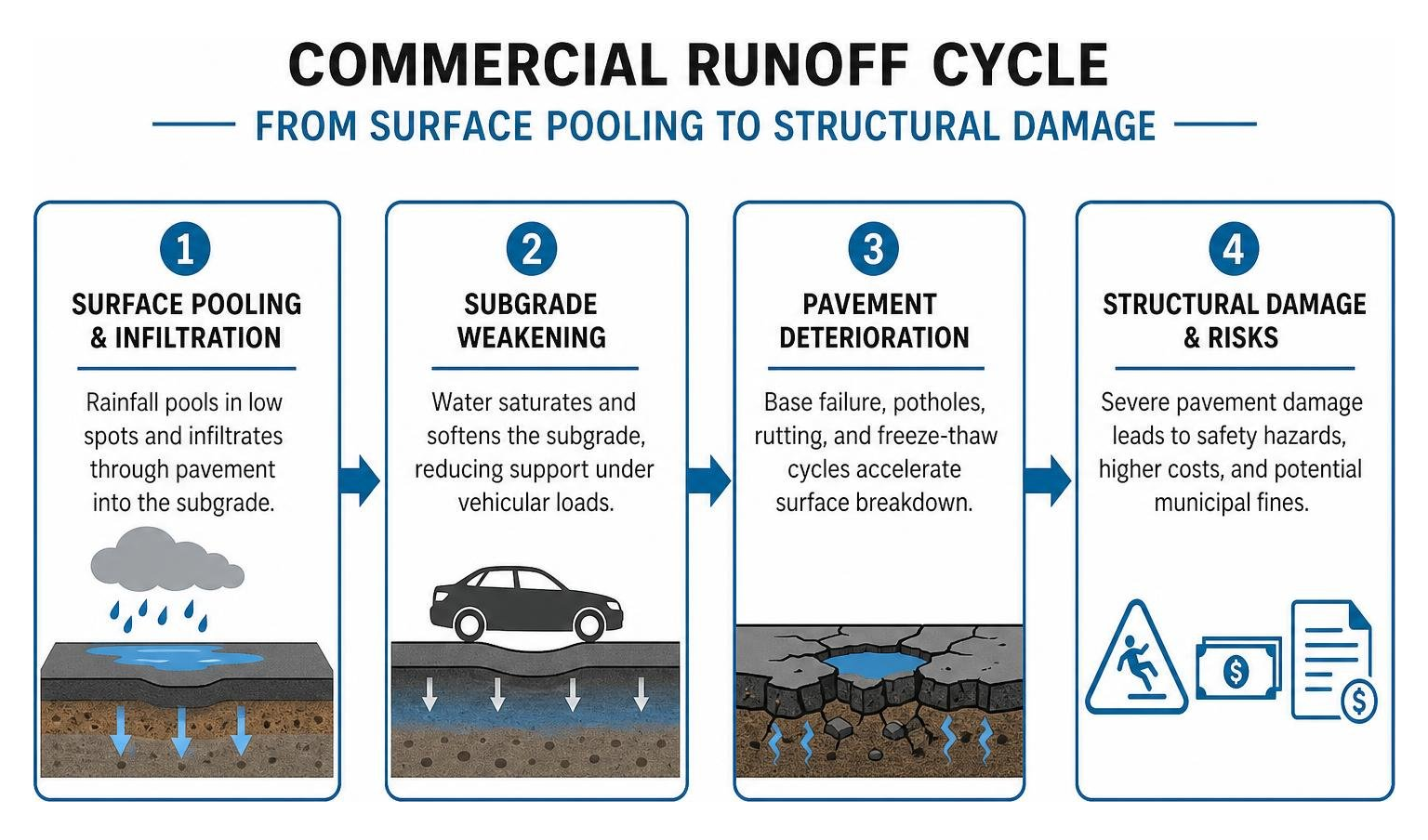
When water ponds on asphalt surfaces for more than 24 to 48 hours, it softens the bitumen binder, expediting surface raveling and subgrade saturation. Meanwhile, undetected exterior plumbing leaks or malfunctioning irrigation lines quietly inflate overhead. A single plumbing fixture leaking at just one drip per second wastes approximately 3,000 gallons of water annually. Implementing structured water conservation strategies—like those detailed in the Texas Water Development Board’s Commercial & Institutional BMP Guide—helps commercial operators identify unseen leaks, lower utility expenses, and mitigate costly subgrade water damage.
Environmental Risks and Runoff Contaminants
Stormwater running across commercial lots collects dangerous surface pollutants. Unlike municipal sanitary wastewater, parking lot runoff generally flows directly into local streams, rivers, and retention zones without biological treatment.
Primary pollutants generated on commercial surfaces include:
- Sediments and Particulates: Dirt and aggregate that carry bound toxins, clouding waterways and suffocating aquatic habitats.
- Petroleum Hydrocarbons: Motor oil, grease, fuel, and transmission fluids dropped by parked vehicles.
- Heavy Metals: Microscopic copper, zinc, lead, and cadmium particles from brake pad wear and tire degradation.
- De-icing Chlorides: Salts used for winter safety that wash off and raise aquatic salinity.
- Excess Nutrients: Nitrogen and phosphorus from landscape over-fertilization, which cause harmful algal blooms.
Regulators enforce strict standards under the Clean Water Act. State and federal guidelines, such as the NPDES commercial stormwater general permit standards, emphasize that commercial properties with large impervious footprints must manage runoff to prevent toxic discharges into receiving waters.
Regulatory Compliance and Commercial Stormwater Mandates
Commercial property owners operate under stringent federal, state, and local water management regulations. The Clean Water Act regulates point-source and non-point-source discharges via the National Pollutant Discharge Elimination System (NPDES) and Municipal Separate Storm Sewer System (MS4) frameworks.
Commercial operations with significant impervious surfaces must often establish and maintain a Stormwater Pollution Prevention Plan (SWPPP). Municipal inspectors frequently audit commercial properties for illicit discharges, sediment accumulation, and neglected drainage structures. Failing to maintain compliant stormwater infrastructure can trigger severe municipal penalties, stop-work orders, or statutory fines reaching thousands of dollars per day of violation. Understanding local municipal stormwater management codes ensures your property avoids legal liability and costly municipal citations.
Permitting Standards and Inspection Checklists
Commercial properties exceeding defined impervious surface thresholds (typically five acres, or local triggers as low as 5,000 square feet) face mandatory stormwater permits. Engineering criteria frequently dictate that drainage systems detain and control runoff up to 25-year or 100-year design storm events without surcharging catch basins or flooding adjacent parcels.
Property managers should follow structured operational checklists:
- Pre-Storm Review: Inspect all perimeter inlets, curb cuts, and grates to ensure they are free of leaves, trash, and accumulated silt.
- Post-Storm Assessments: Conduct visual site walks within 24 hours of major rainstorms to identify standing water, pipe blockages, or slope erosion.
- Mandatory Repair Windows: Many municipal codes enforce a strict 14-day turnaround window to complete repairs on failing drainage infrastructure once a deficiency is cited.
- Maintenance Logs: Maintain documented digital records of all lot sweepings, inlet cleanouts, and drainage repairs to present during compliance audits.
To keep water flowing efficiently across paved areas, property owners should review practical surface drainage techniques and stop the soak with these parking lot drainage tips to maintain unimpeded runoff pathways.
Source Control BMPs to Prevent Facility Fines
Source control Best Management Practices (BMPs) focus on eliminating contaminants before rainfall touches them. Preventing pollutants at the surface level is far more cost-effective than remediating contaminated downstream runoff.
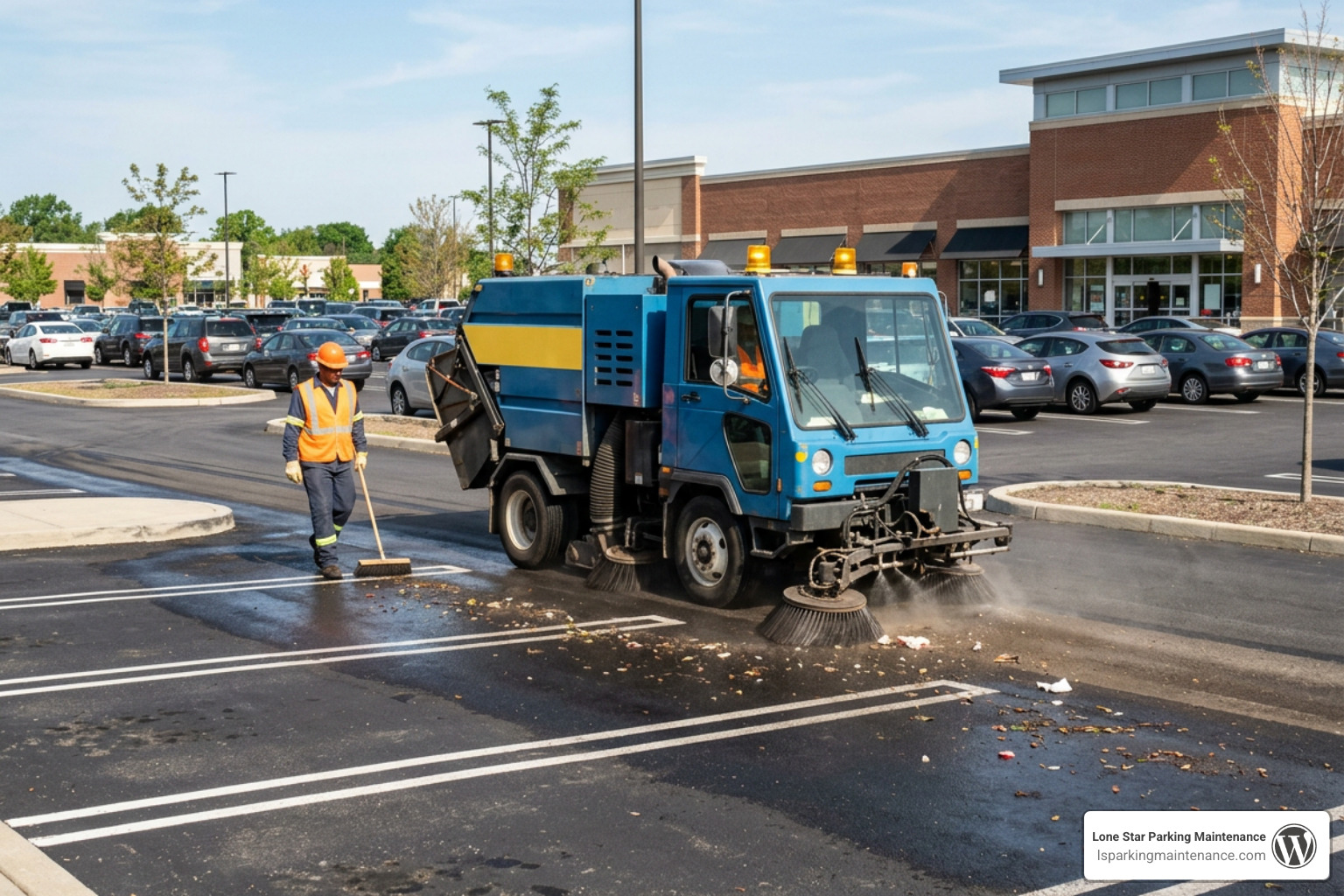
Essential operational BMPs include:
- Routine Parking Lot Sweeping: Regularly scheduled mechanical sweeping removes abrasive sediments, metal shavings, and organic litter before they wash into catch basins.
- Covered Dumpster Enclosures: Keep outdoor waste receptacles tightly covered and bermed to stop grease, liquids, and leachate from escaping into the storm system during downpours.
- Spill Containment Readiness: Equip outdoor loading docks and fueling bays with dedicated spill containment kits, training personnel on immediate cleanup protocols.
- Wash Water Containment: Strictly prohibit open-lot equipment or vehicle washing that directs soapy, greasy water into storm drains. All power washing wastewater should be contained or routed to sanitary sewers under approved discharge permits.
Mastering site grading, slope orientation, and routine source control is essential; dive into a practical guide to parking lot drainage for deeper structural recommendations.
Engineered Drainage Systems for Commercial Pavement
Gravity-fed drainage systems form the backbone of commercial stormwater management. These systems capture sheet flow across expansive asphalt surfaces and channel it safely into municipal mains or regional detention facilities.

A functional system relies on precise surface grading. Asphalt pavements must maintain a minimum 1% to 2% slope toward engineered collection points. Improper slopes or localized depressions cause ponding that weakens asphalt binders. We design and install gray infrastructure systems that balance surface flow with subterranean capacity, ensuring zero structural ponding. For a solid technical grounding, review parking lot drainage 101 to understand slope dynamics and inlet designs.
Catch Basins, Grates, and Interceptors
Catch basins serve as the primary access points for commercial lot drainage. They feature subterranean concrete sumps that trap heavy sediments, rocks, and debris below the outflow pipe elevation, preventing downstream clogs.
Choosing the right components ensures both drainage capacity and physical durability under commercial traffic:
- Traffic-Load Ratings: All catch basins and grates positioned within parking stalls or heavy delivery truck routes must meet AASHTO H-20 or HS-20 load-bearing ratings to prevent catastrophic structural collapse. Discover the process for choosing traffic-rated catch basins to handle daily fleet impacts.
- Bicycle-Safe and Debris Grates: Grate openings must balance hydraulic intake volume with pedestrian and cyclist safety. Code-compliant grates feature clear openings restricting clear spacing to prevent wheel trapping while filtering large debris. Select ideal hardware using a comprehensive guide to parking lot drain covers and grates.
- Oil-Water Interceptors: High-traffic retail lots, automotive bays, and industrial logistics yards benefit from inline oil-grit separators that mechanically isolate hydrocarbons and floating debris from clear runoff before municipal discharge.
French Drains, Trench Systems, and Underground Retention
When sheet flow overwhelms traditional point-source catch basins, continuous linear collection systems bridge the gap. Trench drains feature narrow, surface-mounted grates that intercept wide sheets of water across drive aisles, parking garage portals, and loading docks.
For subterranean water tables and landscape-pavement boundaries, subsurface French drains utilize perforated pipes wrapped in geotextile filter fabric and surrounded by washed gravel to intercept underground moisture before it migrates into the pavement base. Learn how to implement french drains 101 to drain your lot alongside comprehensive installation tips in a guide to installing parking lot drains.
On space-constrained commercial parcels where open detention ponds consume valuable buildable square footage, underground modular retention systems offer a modern engineering solution.
| Feature | Surface Trench Drains | Underground Modular Detention Systems |
|---|---|---|
| Primary Function | Captures fast-moving sheet flow across surfaces | Stores massive runoff volumes beneath pavement |
| Space Footprint | Narrow surface footprint along grade breaks | Fully subterranean beneath parking bays |
| Land Use Impact | Zero impact on usable parking spaces | Replaces retention ponds, maximizing lot capacity |
| Load Bearing | Surface traffic-rated frames (H-20/HS-20) | Engineered backfill over AASHTO structural chambers |
| Maintenance | Surface grate removal and manual trench cleanout | Vacuum truck access via integrated sediment rows |
| Peak Attenuation | Direct conveyance to outfalls (no storage) | Controlled throttling via internal weir plates |
Case studies demonstrate that utilizing underground stormwater retention systems for commercial lots allows commercial operations to satisfy strict stormwater retention ordinances without sacrificing a single parking space to open retention ponds.
Green Infrastructure and Smart Water Technologies
Modern commercial lot management pairs conventional gray concrete infrastructure with Low-Impact Development (LID) strategies. Integrating green infrastructure allows commercial properties to filter runoff naturally, recharge regional groundwater, and reduce urban heat island effects across vast asphalt expanses. Case studies documented by the ULI resilient commercial stormwater case studies highlight how combining bioretention cells and underground storage helps commercial developments capture 98% of annual site runoff on highly impervious lots.
Green Infrastructure in Commercial Lot Water Management
Green infrastructure mimics natural hydrology by capturing, filtering, and infiltrating stormwater on-site:
- Linear Bioswales: Vegetated, gently sloped channels situated along parking lot perimeters or median islands that slow runoff, trap suspended solids, and remove hydrocarbons via biofiltration.
- Permeable Asphalt and Pavements: Porous pavement surfaces that allow rainwater to pass through an open-graded friction course into an underlying stone reservoir for natural subgrade infiltration.
- Bioretention Basins (Rain Gardens): Engineered shallow depressions filled with permeable soil mixes and drought-tolerant native plants that filter first-flush runoff.
- Rainwater Harvesting Cisterns: Above-ground or subterranean storage tanks that capture roof runoff for landscape irrigation and facility reuse.
Strategically balancing green infrastructure with heavy-duty drainage hardware ensures reliable flow control; remember to view your parking lot storm drain as the unsung hero of pavement performance.
Smart Submetering, Analytics, and Irrigation Efficiency in Commercial Lot Water Management
Smart water technologies deliver immense financial and operational value for commercial facilities. Real-time consumption monitoring and submetering systems transform commercial water management from a passive overhead utility into an optimized, data-driven operational asset.
Commercial property managers can save up to 30% on overall water costs by implementing smart commercial monitoring and submetering hardware.
Key technologies driving commercial facility savings include:
- Advanced Metering Infrastructure (AMI): Cellular-enabled submeters that record high-granularity flow data at 60-second intervals, providing instant alerts for abnormal flow spikes and underground line breaks.
- Tenant Utility Allocation: Submetering individual commercial tenant spaces allocates exact utility consumption, eliminating billing disputes and incentivizing tenant conservation.
- Cooling Tower Evaporation Credits: By submetering cooling tower make-up and blowdown lines, commercial facilities document water lost to evaporation. Because this water never enters the municipal sewer, properties can claim substantial municipal sewer charge rebates—in some cases reducing domestic sewer fees by up to 90%.
- Smart Weather-Based Irrigation Controllers: Commercial smart controllers dynamically adjust watering schedules based on real-time evapotranspiration (ET) data and rain sensors, eliminating overwatering and reducing landscape runoff.
Preventive Maintenance and Operational Best Practices
A reactive approach to lot drainage leads to costly asphalt reconstruction, emergency plumbing bills, and regulatory fines. Implementing an ongoing preventive maintenance program preserves infrastructure, extends pavement lifespans, and maintains continuous stormwater compliance.
Our team at Lone Star Parking Maintenance delivers full-service parking lot upkeep throughout the DFW Metroplex—including sweeping, sealcoating, crack sealing, concrete repairs, and power washing with complete wastewater recovery.
Routine Maintenance Schedules for Parking Drainage
Establishing clear, scheduled inspections keeps commercial drainage operating at peak hydraulic capacity:
- Quarterly Catch Basin Cleaning: Clean out accumulated silt, trash, and leaf litter from catch basin sumps before debris reaches outlet pipe elevations.
- Porous Pavement Vacuum Sweeping: Regularly vacuum porous asphalt or permeable interlocking pavers to remove fine dust particles that clog surface pores.
- High-Pressure Jetting: Periodically jet underground conveyance pipes to scour mineral scale, grease buildup, and sediment accumulation.
- Post-Heavy-Rain Audits: Walk the property following heavy precipitation events to locate slow-draining areas, sediment washouts, or structural grate shifting.
- Documented Maintenance Logs: Maintain meticulous digital records and dated photos of all cleaning activities to prove compliance during MS4 audits.
Long-Term Asset Protection and Capital Planning
Managing water on commercial lots directly impacts the long-term balance sheet. Moisture intrusion into the subbase is the leading cause of premature asphalt failure. When you prevent water from settling along curb lines or penetrating cracks, you extend the functional lifespan of asphalt by years, deferring major repaving expenses.
Proactive water management also provides direct financial benefits:
- Tax and Appraisal Incentives: In Texas, properties incorporating certified water conservation modifications or stormwater infrastructure may qualify for property tax exemptions and equipment sales tax exemptions.
- Mitigated Flood Damage: Correctly sized and maintained conveyance systems protect ground-floor tenant suites, inventory warehouses, and parking structures from flash-flood damage.
- Enhanced Property Valuation: A clean, structurally sound, well-drained commercial lot increases property valuation, satisfies tenant expectations, and minimizes capital expenditure risk.
Frequently Asked Questions About Commercial Stormwater and Drainage
How does water submetering reduce commercial operating costs and tenant disputes?
Submetering isolates consumption by tenant space and utility application. It enables fair, usage-based billing that eliminates estimated billing disputes. Submeters capturing granular flow data instantly pinpoint hidden leaks, while application-specific meters track cooling tower evaporation to secure substantial municipal sewer fee rebates.
What are the primary warning signs that a commercial parking lot drainage system is failing?
Key indicators include persistent standing water 24 hours after a storm, severe asphalt “alligator” cracking, sinking or cracked concrete around catch basin frames, sediment buildup near inlets, and structural erosion along landscaped curb cuts.
What source control practices best prevent stormwater permit violations?
The most effective source control practices are regular mechanical lot sweeping, keeping dumpster lids and waste enclosures closed, storing hazardous fluids in covered and bermed containment zones, maintaining on-site spill kits, and documenting routine maintenance for municipal SWPPP audits.
Conclusion
Commercial lot water management is an operational imperative that protects property valuation, ensures regulatory compliance, and extends the life of physical pavement assets. Allowing unmanaged runoff to pool on surfaces, infiltrate subbases, and carry contaminants into municipal waterways risks structural failures, costly litigation, and heavy regulatory fines.
By combining well-graded asphalt surfaces, heavy-duty catch basins, smart submetering, and green infrastructure, property managers can reduce operating costs and safeguard their investments. Lone Star Parking Maintenance provides top-tier lot maintenance, surface sweeping, sealcoating, asphalt repairs, and power washing services engineered to keep your commercial property safe, compliant, and pristine. Explore comprehensive property preservation strategies on the Lone Star Parking Maintenance facility solutions homepage and ensure your commercial lot is built to weather any storm.