
Emergency Curb Painting and Repairs: What to Do First
For curb painting emergency repairs, secure the area first. Keep vehicles and people away from broken concrete, and do not let debris block a fire lane or driveway. If emergency access is blocked, call 911. Then photograph the damage, confirm whether the curb is on private property or in a city right-of-way, and contact the responsible property manager or city department. Repair the curb before repainting it so the new marking has a sound surface and remains clear.
In this guide, I’m Cason, and I’ll walk through how to handle the repair safely and check local marking rules before work begins.
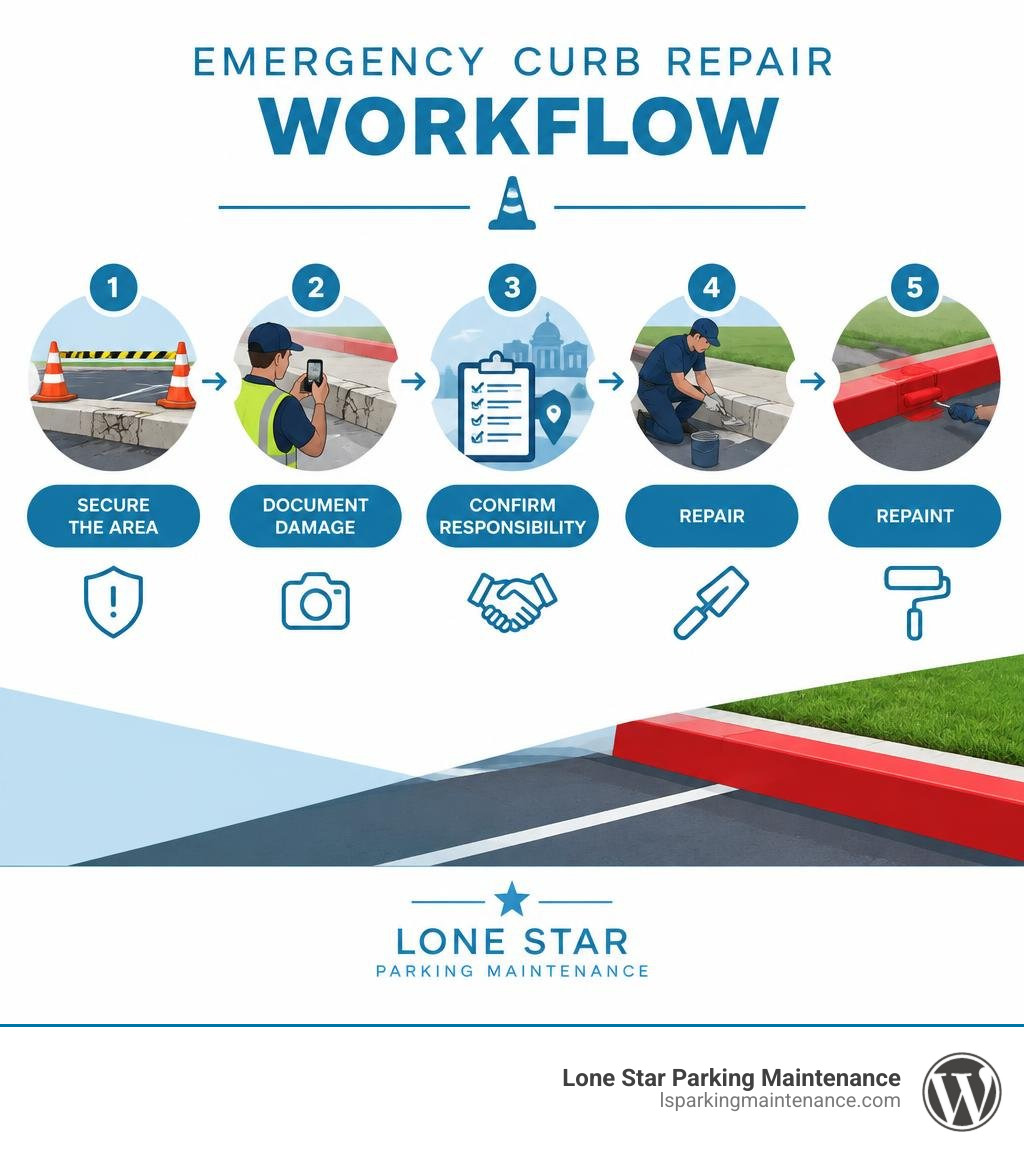
Curb painting emergency repairs terms to learn:
Assessing Sudden Curb Damage and Safety Risks
When sudden property damage strikes—whether from an errant delivery truck, severe weather, or heavy construction equipment—curbs often take the brunt of the impact. Cracked concrete, crushed edges, and obliterated paint markings do not merely hurt your property’s curb appeal; they introduce immediate liability hazards, structural risks, and compliance violations.
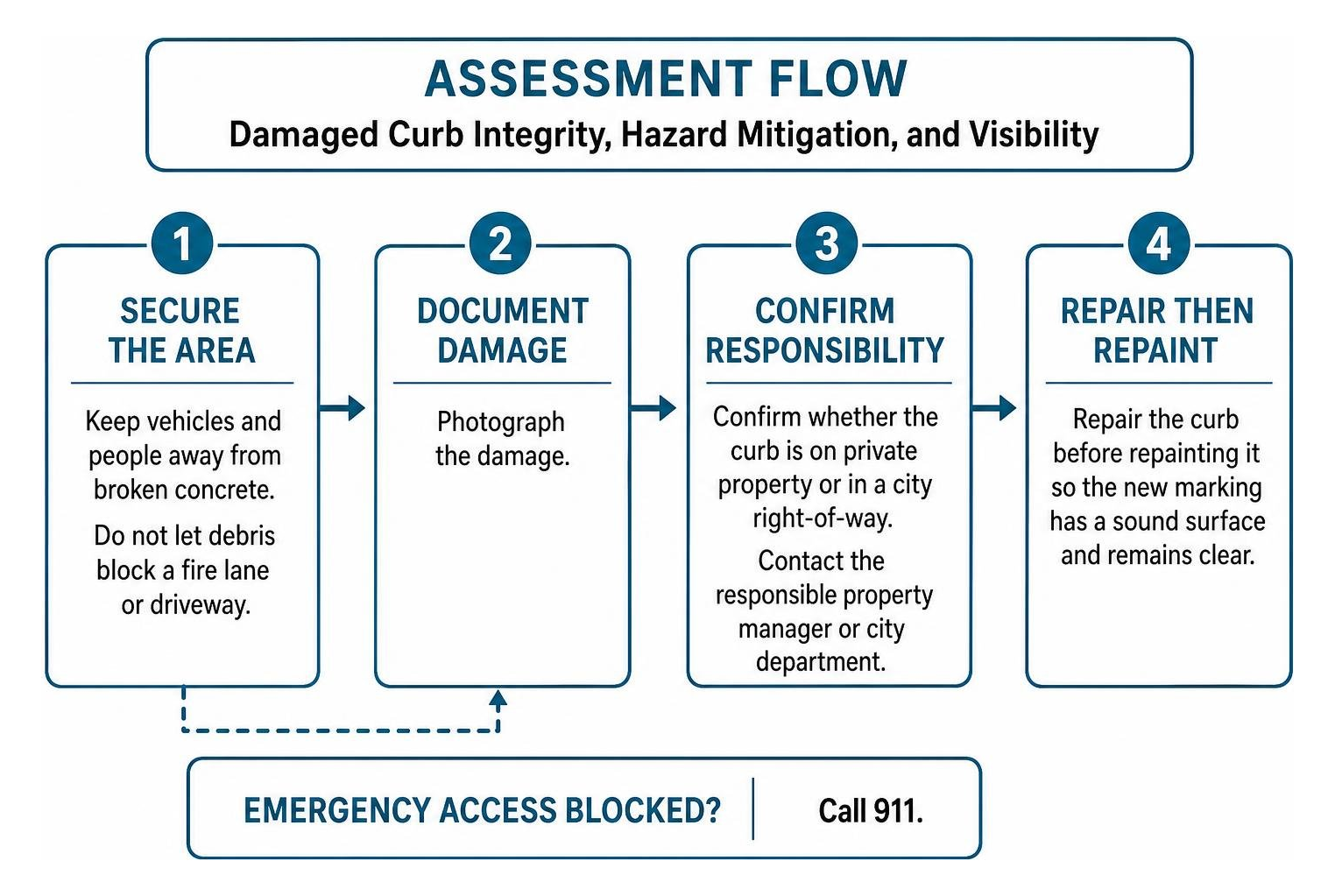
Broken chunks of concrete can damage vehicle tires, puncture oil pans, or create dangerous trip hazards for pedestrians. Furthermore, when curb markers, yellow loading zones, or address numbers are wiped out, the functional navigation of your facility breaks down. Understanding how to mark curbs for maximum emergency vehicle visibility is essential for keeping traffic flowing safely while preventing costly accidents on your commercial lot or residential street.
How Damaged Markings Delay Emergency Response
During a critical incident, every single second counts. Paramedics, firefighters, and police officers rely heavily on high-visibility curb markings to locate addresses, identify dedicated fire lanes, and position their apparatus without obstruction.
When curb numbers are pulverized or faded into obscurity, first responders lose precious moments searching for building entries. The Fort Worth Police Department guidelines on address visibility emphasize that maintaining prominently displayed address numbers is not a municipal service—it is up to property owners to ensure homes and commercial spaces can be swiftly identified by emergency personnel, visitors, and delivery drivers alike. Clear numbering also facilitates everyday logistics, from package deliveries to helping neighbors return lost pets safely.
Evaluating Responsibility: Property Owner, HOA, or Municipality
Determining who must foot the bill and perform the repairs depends entirely on property lines and local jurisdiction:
- Private Commercial Lots and Facilities: Property owners and facility managers hold full responsibility for repairing damaged curbs, ADA access ramps, and fire lane markings within their parcel boundaries.
- Homeowners Associations (HOAs): In master-planned or gated communities, the HOA typically oversees common-element curbs, private roadways, and standardized address stenciling.
- Public Municipal Streets: Curbs located within the city right-of-way are generally managed by local public works departments. In many jurisdictions, similar to standard City of Reno street maintenance protocols, citizens must submit service requests through municipal hotlines for public street repairs, whereas on-site parking lots remain private responsibility.
Step-by-Step Guide to Curb Painting Emergency Repairs
Restoring a demolished curb requires a systematic process. Applying paint over shattered, crumbling concrete is a recipe for instant peeling. We always ensure structural repairs are executed and fully cured before laying down high-visibility coatings.
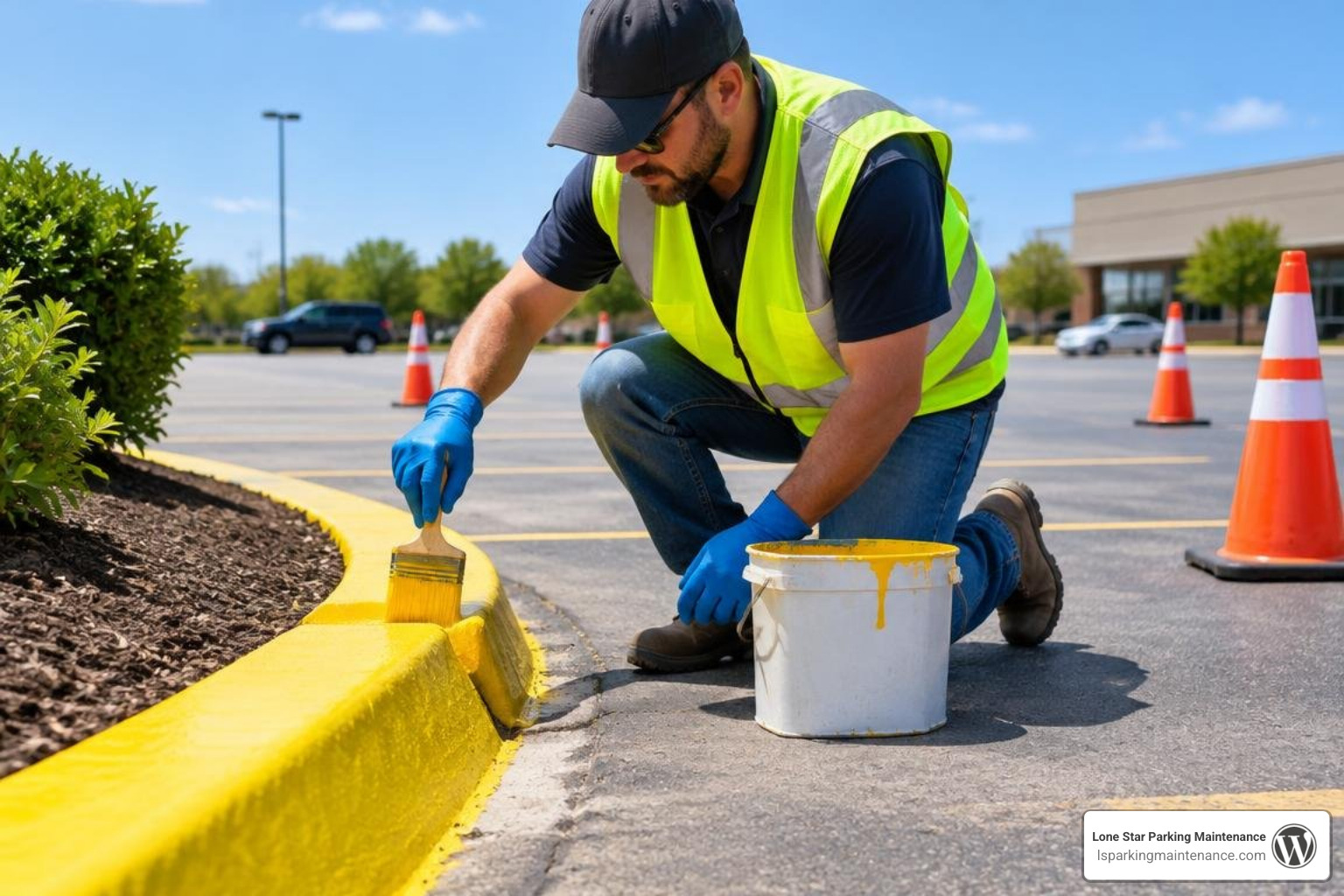
- Secure the Hazard: Set up high-visibility traffic cones or barricades around the damaged section to redirect vehicles and protect foot traffic.
- Clear the Rubble: Chip away loose aggregate and remove broken chunks from the immediate roadway or gutter.
- Rebuild the Concrete Profile: For fast emergency fixes, apply rapid-setting, high-strength commercial concrete patching compound or hydraulic cement formulated to withstand vehicular traffic.
- Cure and Shape: Form the curb edge cleanly to meet ADA and water-drainage grade requirements, ensuring the surface is smooth and stable.
- Prime and Coat: Once moisture levels allow, apply industrial traffic-grade coatings with high-contrast stenciling and retroreflective elements.
For detailed steps on fixing damaged masonry, review our guide to painting cracked curbs without peeling.
Surface Preparation and Debris Removal for Urgent Repairs
Paint cannot bond to dirt, motor oil, or crumbling concrete dust. Urgent repairs demand rigorous surface preparation to prevent premature failure.
We utilize heavy-duty wire brushing, mechanical concrete grinding, and commercial power washing to strip away old, flaking paint layers and roadway grime. Capturing runoff and collecting pulverized concrete debris is essential to avoid clogging municipal storm sewers or violating environmental regulations. Following fast and compliant curb paint debris removal ensures your substrate is completely dry, clean, and mechanically profiled for maximum chemical adhesion.
Executing Curb Painting Emergency Repairs with Reflective Coatings
Once the concrete substrate has set and dried, the application phase begins. Standard house paint or generic aerosol cans won’t cut it against vehicle tires, intense UV rays, and heavy rain.
- Apply the Base Layer: Lay down a thick, even coat of 100% acrylic waterborne or chlorinated rubber traffic paint using crisp, heavy-gauge stencils.
- Embed Optical Glass Beads: While the binder paint is still wet, evenly broadcast retroreflective glass micro-beads onto the surface. These optical beads catch vehicular headlights and bounce the light directly back to drivers and first responders at night.
- Maintain Contrast: Ensure crisp contrast—such as brilliant white or safety yellow digits framed against an opaque black background panel.
Selecting the best paint for curbs guarantees crisp lines that won’t fade under heavy summer heat.
Legal Compliance and Municipal Restrictions
Curb markings are tightly governed by municipal fire codes, property maintenance standards, and traffic safety regulations across Texas. You cannot simply paint any color you choose.
Many municipal departments—such as those operating City of Raleigh street maintenance services—strictly delineate between public right-of-way repairs and private lot obligations. Ensuring compliance keeps your property safe and free from code enforcement penalties.
Municipal Ordinances and Regulatory Restrictions
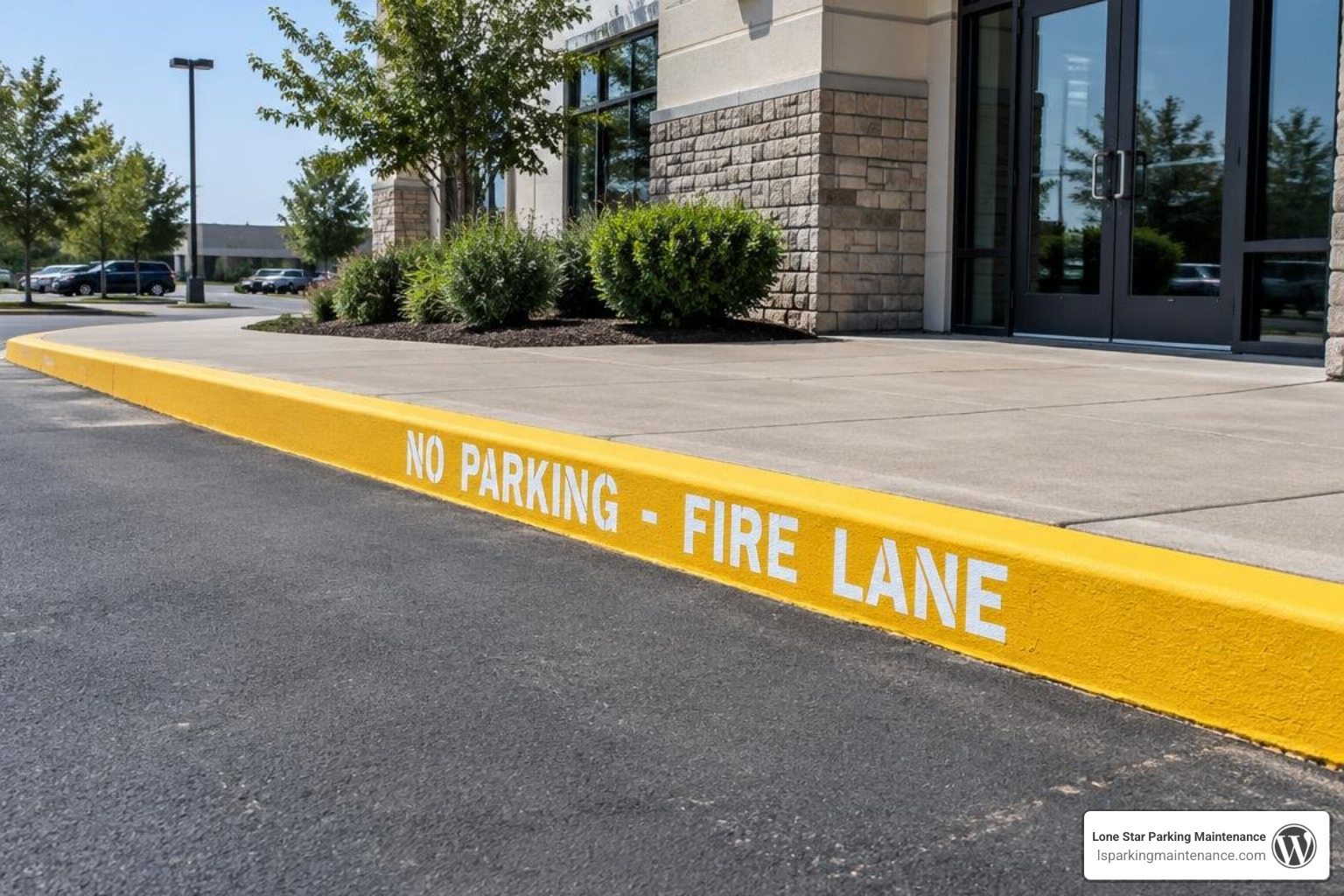
Fire lane curbs must strictly adhere to local fire marshal specifications, typically requiring safety yellow or vibrant red backgrounds coupled with contrasting 3-inch to 4-inch white stenciled lettering reading “NO PARKING – FIRE LANE” at mandatory intervals.
In some dense metropolitan areas outside our state (such as New York City), local DOT ordinances prohibit private citizens from painting curbs altogether to prevent visual confusion on public streets. Conversely, in places like Lewistown, Montana, municipalities explicitly mandate yellow curb painting to reinforce strict no-parking designations. Here in the DFW Metroplex, private commercial parking lots must maintain clear, code-compliant fire lanes, accessible loading zones, and directional markers at all times to prevent municipal citations.
Professional Standards vs DIY Curb Painting Kits
While hardware stores sell basic DIY address painting kits, they fall short when compared to commercial-grade emergency repairs.
| Feature / Metric | Commercial Emergency Service | DIY Curb Painting Kits |
|---|---|---|
| Concrete Repair Strength | High-strength rapid structural mortar | Basic temporary vinyl patch |
| Coating Formulation | Industrial traffic-grade acrylic/thermoplastic | Standard consumer spray paint |
| Nighttime Visibility | Drop-on retroreflective glass beads | Flat or basic gloss paint |
| Expected Lifespan | 3 to 5 Years | 6 to 12 Months |
| Code Compliance | Guaranteed fire marshal & ADA standards | Variable / Non-standardized |
| Equipment Used | Airless sprayers & heavy-duty stencils | Cardboard or thin plastic stencils |
Investing in professional execution avoids messy overspray, crooked numbers, and rapid peeling. To explore full service capabilities, learn all about curb painting services.
Durability, Costs, and Ongoing Maintenance
Outdoor curbs face constant environmental punishment: intense Texas UV exposure, sudden downpours, oil runoff, and tire scuffing. Maintaining these assets protects your concrete investment and keeps your property looking sharp.
Using premium coatings designed to stop fading away with dependable curb painting results ensures your address markers and safety lines remain vibrant year after year.
Scheduling Emergency Curb Painting and Repairs for Rapid Response
When vehicle impacts or sudden property damage occur, time is of the essence. Getting an estimate involves:
- Damage Assessment: Submitting site photos and linear footage measurements of the broken curb section.
- Rapid Quote Delivery: Professional maintenance crews evaluate the structural requirements and provide transparent estimates within 24 hours.
- Mobilization: Technicians arrive equipped with rapid-setting mortars, commercial paint rigs, and required safety stencils to restore compliance immediately.
Longevity Factors and Subscription Refresh Plans
With professional-grade materials and proper surface preparation, a high-quality reflective curb application will last between 3 and 5 years. However, high-traffic commercial drive-thrus, loading bays, and dumpster enclosures may experience heavier wear.
Many property managers and HOAs opt for scheduled refresh programs. These arrangements automate touch-ups, power washing, and seasonal inspections so your property never falls out of compliance or safety standards.
Frequently Asked Questions About Emergency Curb Restoration
Who is legally responsible for repairing and painting damaged curbs?
Property owners are legally responsible for all curbs, fire lanes, and parking stops located within their private property boundaries. For curbs along public streets, the city or municipal public works department generally manages structural maintenance, though homeowners and businesses are often responsible for displaying visible address numbers.
How long does reflective curb paint last under heavy traffic and weather?
High-grade commercial traffic paint infused with retroreflective glass beads typically lasts 3 to 5 years. Lifespan depends on sun exposure, rainfall, snowplow contact, and whether vehicles frequently scrape the curb during parking maneuvers.
What is the typical cost for emergency curb repair and address painting?
Standard curb address repainting typically starts between $25 and $45 for basic applications, with reflective upgrades ranging from $40 to $60. Structural concrete curb repairs on commercial properties are generally priced per linear foot (often $50 to $80 per foot depending on damage depth and reinforcement needs). Some HOAs negotiate subsidized rates for entire neighborhoods.
Conclusion
When sudden property damage shatters your curbs or wipes out vital safety markings, prompt action is critical. Restoring your curbs protects vehicles from costly undercarriage damage, prevents tripping accidents, keeps your business compliant with local fire codes, and guarantees that emergency responders can locate your facility in an instant.
At Lone Star Parking Maintenance, we deliver fast, reliable parking lot repairs, striping, power washing, and protective installations across the DFW Metroplex. Don’t leave your property’s safety to chance—schedule protective pole covers and curb stop installations with our expert team today!