
Legal Requirements to Make a Private No Parking Sign Enforceable
A private no parking sign becomes legally enforceable when it includes clear prohibitive wording, the international towing symbol, a 24/7 tow-operator retrieval phone number, high-contrast reflective lettering, and is mounted at every vehicle entrance at the required height. Installing a sign is the first step toward reclaiming your property, but simply buying a generic placard and nailing it to a tree does not give you immediate authority to tow. When dealing with unauthorized vehicles on commercial or residential parcels in the Dallas-Fort Worth area, legal enforceability hinges strictly on statutory compliance.
Under the Texas Transportation Code – TRANSP § 545.302, stopping, standing, or parking an unauthorized vehicle in designated safety zones, in front of public or private driveways, or on private property without permission is unlawful. However, before a property owner or parking manager can legally authorize a non-consent tow, state law establishes precise prerequisites.
According to Texas Tow-Away Signage Regulations enforced by the Texas Department of Licensing and Regulation (TDLR), private property owners must post unambiguous notifications. If these legal criteria are ignored, towing an unauthorized vehicle can expose a property manager or HOA board to civil liability, fines, and mandatory reimbursement of all towing and storage fees. Consulting a dedicated buying guide for compliant parking lot signs ensures your notices adhere strictly to regional mandates from day one.
Essential Elements on a Private No Parking Sign for Tow-Away Compliance
To satisfy legal criteria for non-consent towing on private property, your sign must present distinct information in a specific format:
- Clear Prohibitive Statement: The top of the sign must state the explicit restriction, such as “NO PARKING,” “UNAUTHORIZED VEHICLES PROHIBITED,” or “RESIDENT PARKING ONLY.”
- International Towing Symbol: State rules require a visual indicator—typically the international tow-truck graphic depicting a vehicle being hoisted—positioned prominently near the top.
- Tow Warning Statement: Clear wording indicating that unauthorized vehicles will be towed at the vehicle owner’s or operator’s expense.
- 24/7 Telephone Contact: A working, continuously monitored telephone number where the vehicle owner can locate their towed car at any time of day or night.
- High-Contrast Lettering: The layout must feature high-contrast color combinations (traditionally red lettering on a white background, or white on red) to guarantee instant readability.
While international jurisdictions handle private parking enforcement differently, clear communication remains universal. In the UK, private parking management relies heavily on contract law and standards set by the Health and Safety at Work Act (HSWA 1974) or ISO 7010 signage guidelines. In the US, property access control is regulated at the state and municipal levels under traffic and administrative codes.
| Requirement Feature | United States (Texas / TDLR & MUTCD) | United Kingdom (HSWA & Private Property Law) |
|---|---|---|
| Primary Governing Body | TDLR / Local Municipal Codes / MUTCD | BPA / IPC Codes of Practice / HSE Guidance |
| Enforcement Mechanism | Non-consent towing, vehicle booting, police citation | Parking Charge Notices (PCNs), private ticketing |
| Mandatory Phone Number | Yes (24/7 towing retrieval dispatch number) | Optional (Contact details for appeals/operator) |
| Reflectivity Standard | Retroreflective (3M Engineer / High-Intensity) | BS EN 12899-1 or standard outdoor sign grade |
| Graphic Symbol Mandate | International Towing Symbol required for tow zones | ISO 7010 standardized prohibition symbols |
| Core Legal Basis | Statutory notice under property & transportation codes | Contract formation via clear terms & conditions |

Height, Visibility, and Mounting Location Rules
A compliant sign is useless if it is hidden behind an overgrown oak tree or mounted so low that a parked pickup truck blocks the view.
In commercial lots and residential facilities across North Texas, signs designating a tow-away zone must be installed at each designated vehicular entrance to the property. If there is no curb-cut entrance (such as an open continuous lot), signs must be placed around the perimeter at intervals no greater than specified by local city ordinances.
Key installation parameters include:
- Mounting Height: The bottom edge of the sign should sit between 7 and 10 feet above the ground in pedestrian and vehicular areas. This prevents head injuries for pedestrians and ensures the sign remains visible over parked SUVs.
- Line of Sight: Signs must face the driver entering the parking facility. They must be permanently mounted, upright, and positioned so headlights illuminate the reflective face directly.
- Structural Durability: Signs must be firmly attached to rigid metal poles, masonry walls, or permanent bollards using anti-theft hardware. Reviewing a practical guide to parking sign posts from base to bolt will help you select the proper post gauge, anchor depth, and base types for stable installations.
How to Select and Position Signs to Eliminate Unauthorized Parking
Unauthorized parking causes headaches for businesses, residential managers, and private residents alike. Research indicates that clear resident and private parking signage can reduce unauthorized parking by up to 50% in driveways and commercial access lanes. Furthermore, displaying an explicit “Private Property No Parking” notice reduces active parking disputes by up to 40% in residential and mixed-use complexes.
Strategic placement is essential to achieving these deterrence numbers:
- Driveways and Loading Docks: Placing signs at the property line directly facing oncoming traffic protects fire lanes, freight bays, and residential garage access. You can pair these with targeted hardware, such as a No Parking Private Drive sign or a prestige exterior notice, to immediately alert delivery drivers and trespassers.
- Property Entrances: Installing clear notices at the primary vehicular gateway establishes expectations before a driver leaves their vehicle. Property managers often rely on solutions covered in our guide to the best parking lot entrance signs to keep your property organized.
- Specific Restricted Spaces: For reserved spots, executive bays, or dedicated customer spaces, individual post-mounted signs directly centered in front of the parking stall reinforce the rule. You can effectively stop the chaos with clear parking area signs to keep visitors from straying into reserved tenant stalls.
How to Choose the Right Materials for Your Private No Parking Sign
The brutal Texas summer heat, heavy rainstorms, and intense UV exposure will quickly degrade low-grade signs. Faded, cracked, or rusted signs reflect poorly on your property and fail legal visibility requirements.
When choosing signage, evaluate the following material standards:
- Base Substrate: Heavy-duty aluminum is the industry standard. Look for .063-gauge or .080-gauge rust-proof aluminum. Heavy-gauge .080 aluminum provides superior rigidity against strong winds and physical impact. For environmentally conscious developments, high-grade recycled aluminum options fulfill sustainability goals while delivering industrial-strength performance.
- Reflective Sheeting: Standard unreflective paint fails after dark. Retroreflective sheeting returns light from vehicle headlamps directly back to the driver:
- Engineer Grade Prismatic (EGP): High-quality standard reflective surface, offering dependable nighttime visibility and lasting 7 to 10 years outdoors.
- High-Intensity Prismatic (HIP): Up to 3x more reflective than standard engineer-grade films, making it ideal for poorly lit commercial backlots, private drives, and high-traffic entrances.
- Protective Overlaminates: Quality signage uses specialized fluoropolymer or POF protective laminates (like SmartShield). These transparent layers prevent UV fading, guard against moisture, and allow graffiti or paint to be wiped away without damaging the underlying graphics.
Customization vs Standard MUTCD Templates
Property owners often wonder whether they should install generic off-the-shelf regulatory signs or invest in customized architectural options.
Standard signs built according to the Manual on Uniform Traffic Control Devices (MUTCD) provide instant, universal recognition. Drivers instantly register the classic red-and-white color scheme, capitalized block lettering, and standard prohibitive symbols.
However, high-end residential communities, corporate headquarters, and upscale retail centers may prefer customized signage that complements the property’s architectural aesthetic. Tailored signage—such as a Personalized No Public Parking sign or a specialized Private Community restriction sign—allows you to add community branding, company logos, and specific rules (like “Tenant Parking Only from 8 AM to 6 PM”).
When planning custom signage, make sure you do not sacrifice legal compliance for style. In our guides explaining how to choose the perfect parking spot sign for your lot and the ultimate guide to custom made parking lot signs, we show how to blend custom fonts and colors while keeping the mandatory legal towing notices, contrast ratios, and reflective backing required by law.
Step-by-Step Enforcement Process for Property Owners
Having the right signs up is half the battle; knowing how to act when someone violates them ensures clean, drama-free enforcement.
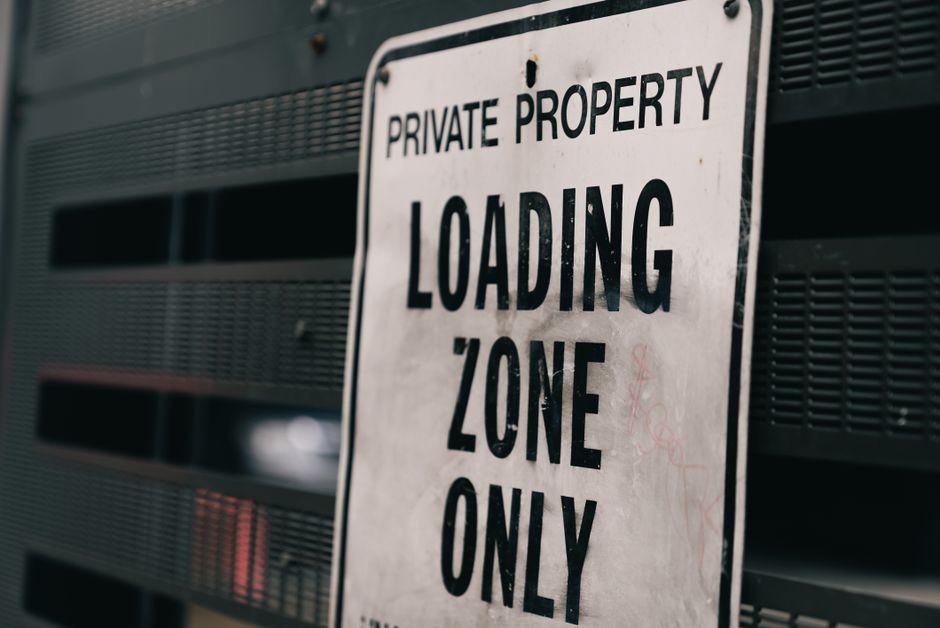
Here is the standard, legally sound procedure for managing parking violations on private property:
- Establish an Agreement with a Licensed Tow Operator: Before any parking issues arise, partner with a TDLR-licensed towing company. State rules require that your signs display the direct telephone number of the contracted tow company holding your authorized agreement.
- Document the Infraction Thoroughly: When an unauthorized vehicle parks on your property, take clear photographs before calling for enforcement. Document the license plate, vehicle make and model, exact position of the vehicle, and its proximity to the clearly posted parking sign.
- Log the Timeline: Record the time the vehicle arrived (or was first spotted) and the duration of the infraction. For non-emergency zones, some private properties choose to place a polite printed warning on the windshield first. For blocked fire lanes, accessible aisles, or private driveways, immediate removal is often necessary.
- Initiate the Tow Request: Contact your designated towing partner. As the property owner or authorized agent, you must grant permission for the non-consent tow. The tow operator will hook up the vehicle and safely transport it to a licensed vehicle storage facility.
- Keep Clear Records: Retain incident logs, tow dispatch confirmation numbers, and timestamped photos for at least 90 days. If a vehicle owner disputes the action, this documentation provides immediate legal proof that your comprehensive parking lot signage was compliant and the vehicle was parked in direct violation.
Frequently Asked Questions About Enforcing Parking on Private Property
Can I legally tow a vehicle without a posted warning sign?
Under Texas law, you generally cannot authorize a non-consent tow from a private commercial parking lot or multi-family residential facility unless statutory warning signs are posted at all vehicle entrances, or the vehicle is directly blocking an emergency access route, fire lane, or active driveway. For single-family residential properties, you can prevent direct blockages of your private driveway, but posting a clear notice eliminates disputes and provides clear legal backing.
What is the standard size required for a legal tow-away sign?
For commercial facilities and managed lots, tow-away warning signs are typically required to be at least 18 inches wide by 24 inches tall (or 12 by 18 inches for individual stall markers). The text must meet statutory letter height requirements—often requiring 1-inch to 2-inch lettering for primary words like “TOWING ENFORCED”—to ensure easy readability from moving vehicles.
How much does displaying a private parking sign reduce unauthorized vehicles?
Industry data shows that installing visible, reflective private parking signage reduces unauthorized vehicle incursions by up to 50%. Clear signage removes the “I didn’t know” excuse, deterring casual violators and reducing confrontational parking disputes with tenants and customers by up to 40%.
Conclusion
A well-planned, legally compliant private parking sign protects your property, keeps access points open, and gives you the legal authority to take action when rules are ignored. By choosing durable, reflective materials, adhering to state and local mounting standards, and working with licensed enforcement partners, you create a safer and more organized facility.
At Lone Star Parking Maintenance, we help commercial property owners, HOAs, and facility managers across the DFW Metroplex design, install, and maintain compliant signage layouts. From custom post-mounted signs to full-facility parking lot striping and maintenance services, we ensure your property remains safe, attractive, and fully compliant with Texas regulations. Reach out to our team today to evaluate your parking facility and implement a long-lasting signage strategy.