
Types and Materials of Parking Space Number Signs
When you begin searching for parking space number signs, you will quickly discover that the market offers everything from paper-thin vinyl decals to heavy-gauge metal plates. Choosing the right physical sign material depends on where you intend to mount the sign, local weather conditions, and how long you want the investment to last.
For high-traffic commercial lots across the DFW Metroplex, material strength is non-negotiable. Signs in surface lots take a beating from severe summer heat, occasional ice storms, constant UV exposure, and the unexpected bump from a bumper or car door. Selecting the wrong material can leave you with cracked, faded, or warped signs in less than two years.
To make an informed decision for your facility, check out our detailed guide on How to Choose the Perfect Parking Spot Sign for Your Lot or review the specific material comparisons below.
Metal vs. Vinyl Materials for Outdoor Durability
The three most common material categories used for numbering parking bays are solid aluminum, aluminum composite material (ACM), and adhesive reflective vinyl.
- Solid Rustproof Aluminum (63 mil to 80 mil): Solid sign-grade aluminum (such as ASTM 5052-H38 alloy) is the undisputed gold standard for outdoor parking control. Standard commercial signs generally feature a 0.063-inch (63 mil) thickness—roughly 50% thicker than cheap consumer retail plates—while heavy-duty municipal signs use 0.080-inch (80 mil) gauge aluminum. Heavy-gauge aluminum never rusts, resists bending under wind pressure or mild impact, and handles high ambient temperatures up to 168°F without warping. When paired with protective coatings, high-grade aluminum carries a 10- to 12-year outdoor service life.
- Aluminum Composite Material (ACM): Consisting of a solid polymer or polyethylene core bonded between two thin sheets of exterior aluminum (typically 3mm total thickness), ACM offers an exceptional strength-to-weight ratio. Products like modern Reserved Parking Unit Number Signs utilize aluminum composite to achieve a smooth, architectural aesthetic. ACM is inherently rustproof, highly rigid, and less prone to bending than thin sheet metal, making it an excellent choice for multi-family residential garages and upscale executive spots.
- Adhesive Reflective Vinyl: High-tack adhesive vinyl numbers can be applied directly to curbs, walls, or metal backing plates. While vinyl is cost-effective and easy to install for temporary spots, it is vulnerable to peeling, cracking from tire scuffs, and fading under intense sunlight. Vinyl works best as a short-term fix or for indoor, covered parking structures.
To protect physical signs against vandalism and environmental aging, many commercial property owners opt for premium clear laminates, such as 3M SmartShield or POF (Polyolefin Film) overlays. These protective films allow spray paint, permanent marker, and road grime to be wiped off easily with standard solvents without stripping the underlying printed graphics.
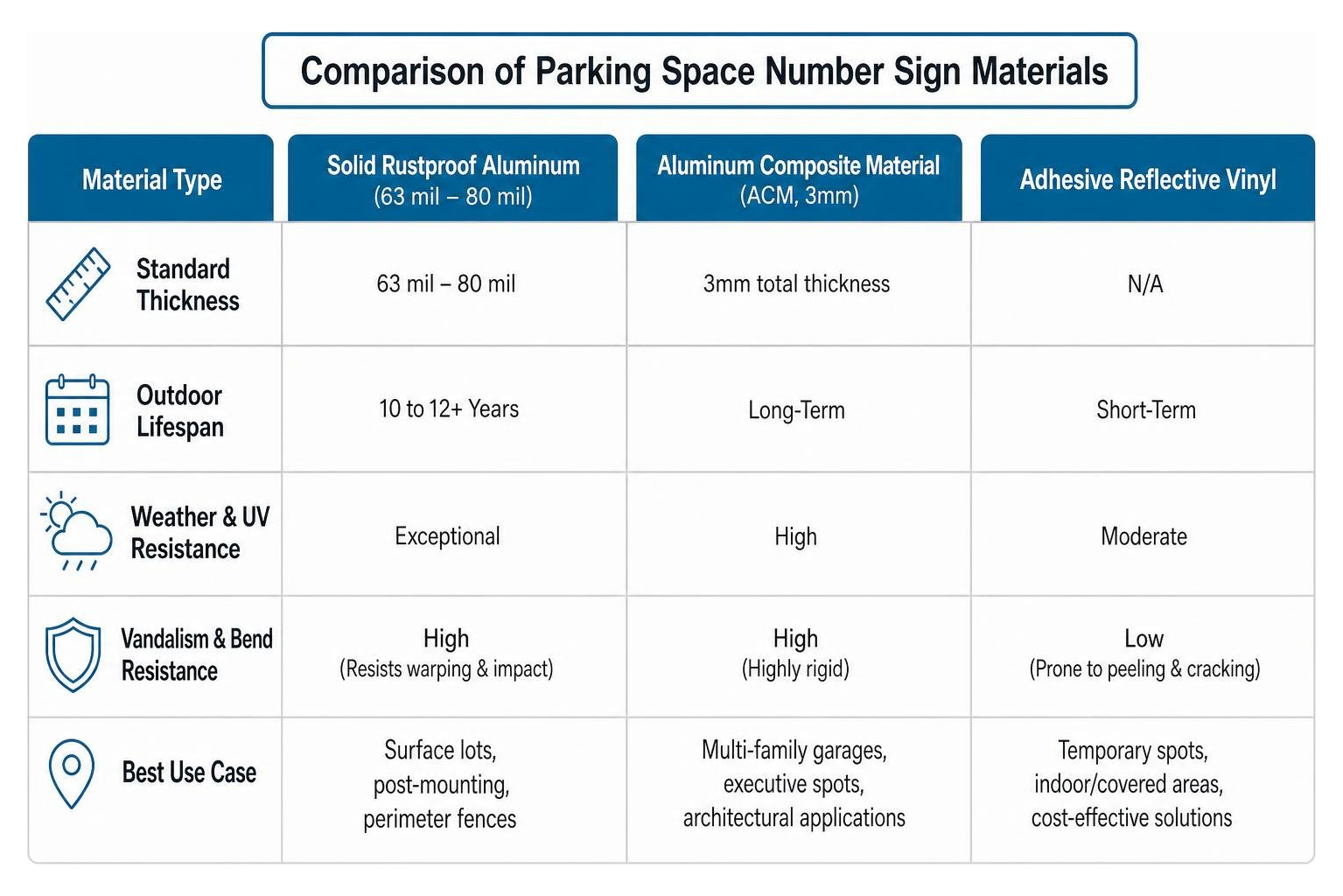
Below is a direct comparison of how these primary sign materials stack up for commercial parking lot management:
| Material Type | Standard Thickness | Outdoor Lifespan | Weather & UV Resistance | Vandalism & Bend Resistance | Best Use Case |
|---|---|---|---|---|---|
| Solid Rustproof Aluminum | 63 mil – 80 mil | 10 to 12+ Years | Exceptional | High (Resists warping & impact) | Surface lots, post-mounting, perimeter fences |
| Aluminum Composite (ACM) | 3mm (Polymer Core) | 7 to 10 Years | Very High | Moderate to High | Parking garages, apartment unit numbers, wall mounts |
| Adhesive Reflective Vinyl | 4 mil – 6 mil | 2 to 5 Years | Moderate | Low (Prone to peeling/scuffing) | Indoor garages, curb applications, temporary spots |
Sizes, Visibility, and Reflective Sheeting Options
Selecting the proper size and reflectivity level ensures that your parking numbers remain instantly readable day or night. Standard square sign dimensions include 10″ x 10″, 11″ x 11″, 12″ x 12″, and up to 24″ x 24″ for long-distance viewing across large lots. Vertical rectangular formats commonly come in 6″ x 12″, 12″ x 18″, and 18″ x 24″ configurations.
For specialized fence mounting, products like 11″ x 11″ Reflective Parking Spot Number Signs fit neatly between fence rails while providing clear contrast. Smaller 6″ x 12″ plates—such as a standard Parking Space Sign A-50—are perfect for mounting directly to concrete wheel stops or low curb walls.
Reflectivity is crucial for nighttime navigation and security camera performance. Standard retroreflective sheeting levels include:
- Engineer Grade (Type I): The standard baseline for commercial lot management. Utilizing micro-prismatic glass beads, Engineer Grade sheeting offers reliable nighttime illumination when struck by vehicle headlights and carries a 7- to 10-year durability rating.
- High-Intensity Prismatic (HIP): Up to three times brighter than standard Engineer Grade sheeting. HIP signs are engineered for dark surface lots or high-traffic commercial centers and offer a 10+ year outdoor rating.
- Diamond Grade (DG): Offers ultimate retroreflectivity—roughly three times brighter than High Intensity and nine times brighter than Engineer Grade. Designed for maximum visibility from wide entrance angles and at severe distances, carrying a 12+ year rating.
Using retroreflective backgrounds ensures your facility remains compliant with federal standards like Title 23 CFR Part 655.603 and the Manual on Uniform Traffic Control Devices (MUTCD), which apply to private lots open to public travel. For more context on regulatory compliance, read our guide on Buying Guide for Compliant Parking Lot Signs.
Mounting Options and Installation Methods
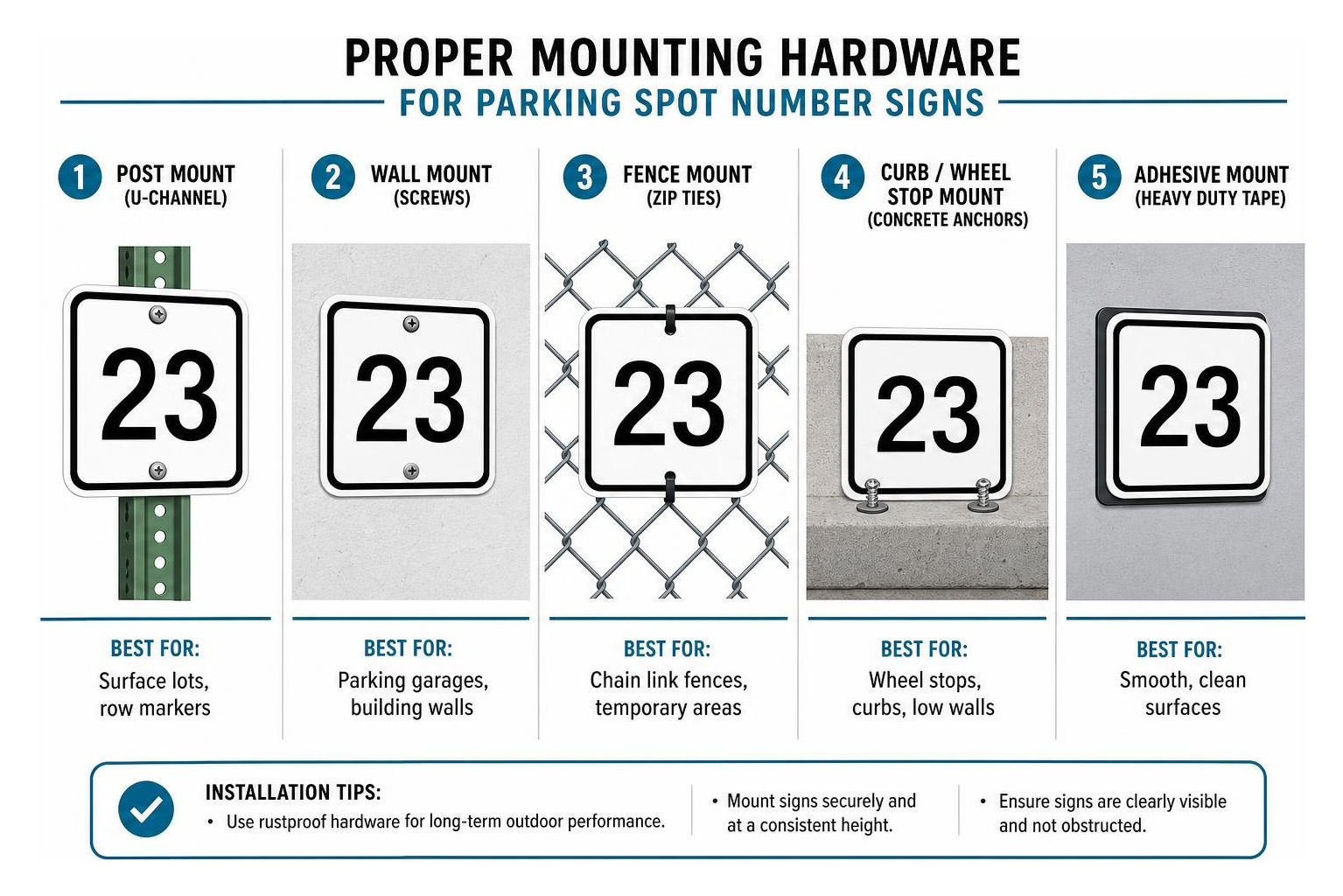
Purchasing high-quality signs is only half the battle; installing them securely determines whether they stay upright or end up laying on the asphalt. To keep your property looking organized, learn more about Organizing Your Lot with High Visibility Parking Lot Number Signs.
Customizing Commercial Parking Space Number Signs
Modern commercial properties rarely settle for generic, plain numbers. Property managers frequently require alphanumeric sequence configurations (such as “A-1” through “A-50”), unit-specific designations (“Unit 104 Resident”), or business brand integration.
Through options like Custom Parking Lot Numbers Signs, facilities can order custom sequential numbers, select corporate color palettes, or feature custom logos directly on the metal face. Adding clear branding transforms a basic traffic sign into an extension of your property’s overall visual identity. For step-by-step branding strategies, check out our guide on Branding Your Asphalt Custom Parking Signs with Logo.
Fence Brackets, Posts, and Surface Mounts
The structure you choose to attach your signs to dictates the pre-drilled hole patterns and hardware needed:
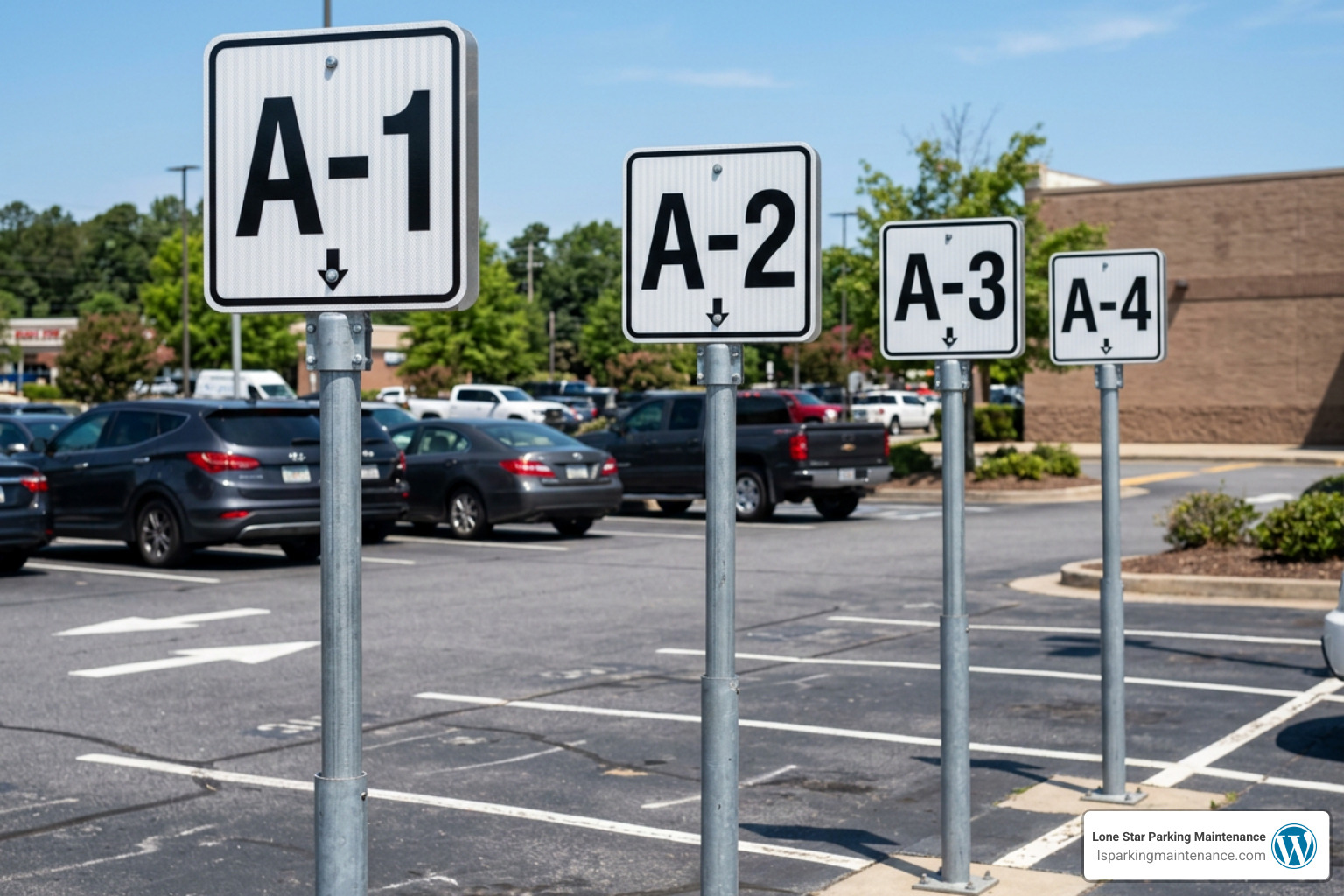
- Post Mounting (U-Channel & Square Posts): Standard metal signs typically feature two pre-punched 5/16-inch or 3/8-inch holes centered at the top and bottom edge. This vertical 2-hole pattern aligns directly with standard 1.12 to 2 lb/ft green enamel or galvanized U-channel posts, as well as FHWA-compliant square steel signposts. Using tamperproof nut-and-bolt sets prevents unauthorized removal.
- Chain-Link Fence Mounting: If your parking lot perimeter is enclosed by chain-link fencing, opt for square or rectangular signs pre-drilled with a 4-corner hole layout. Specialized fence brackets—such as ribbed aluminum SignGuardian™ clips or tamper-resistant chain-link clamps—securely sandwich the fence mesh without needing to drill directly through fence rails.
- Wall & Concrete Anchor Mounting: For concrete parking garages or brick wall surfaces, signs can be mounted using masonry anchors and stainless steel screws. Alternatively, lightweight 3mm aluminum composite signs often feature high-tack double-sided exterior foam adhesive tape for smooth indoor wall applications.
- Curb & Asphalt Mounts: Small 6″ x 12″ signs or low-profile plates can be anchored directly into concrete parking blocks or wheel stops using heavy-duty masonry expansion bolts.
For detailed instructions on post and wall placement standards, refer to our article on Mounting Your ADA Signs the Right Way.
Cost Analysis and Bulk Purchasing Guidelines
Managing parking signage costs requires understanding how volume pricing, material gauges, and reflectivity add-ons impact your bottom line.
Bulk Purchasing Guidelines for Parking Space Number Signs
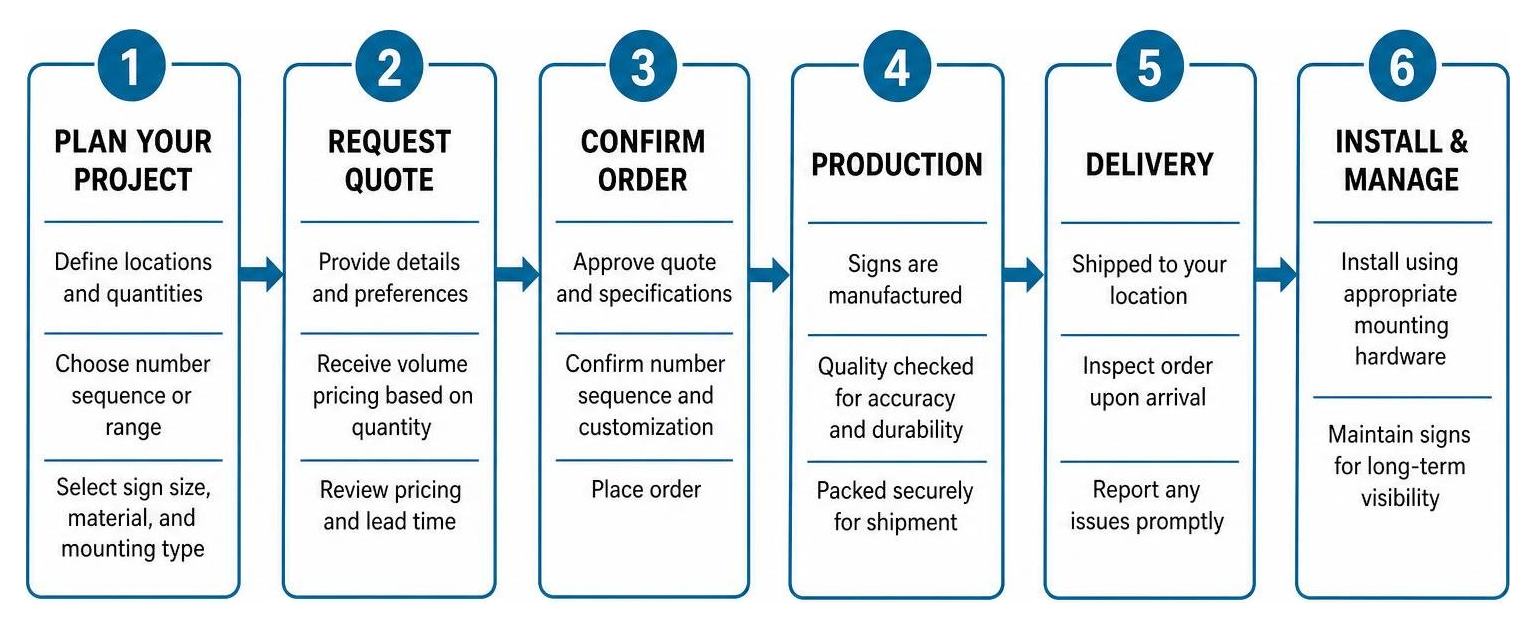
If you are outfitting a newly striped surface lot or replacing outdated signage across an entire apartment complex, buying individual signs piece-by-piece quickly becomes expensive. Commercial sign manufacturers structure pricing into clear volume discount tiers.
When ordering sequential sets (such as numbers 1–25, 1–99, or block sets A–Z), unit costs drop significantly at specific bulk thresholds:
- 1 to 2 Units: Standard retail pricing ($25.00 – $38.00 per sign)
- 3 to 9 Units: 5% to 10% discount ($21.00 – $24.00 per sign)
- 10 to 49 Units: 15% to 25% discount ($15.00 – $19.00 per sign)
- 50 to 99 Units: 30% to 35% discount ($10.00 – $14.00 per sign)
- 100+ Units: Up to 40%–46% volume discount ($7.77 – $9.99 per sign)
For large commercial garage fitouts, vendors supply pre-packaged sequential sets that eliminate the need to enter every individual digit manually during checkout. Be sure to factor in total lot capacity and account for 5% to 10% extra replacement signs to handle future vehicle impact damage.
Additionally, accessible stalls require dedicated legal signage; review our comprehensive article on Everything You Need to Know About ADA Parking Signs to ensure complete compliance across all designated bays.
Average Price Ranges and Material Cost Differences
To budget accurately for your facility, consider how options affect per-unit prices:
- Standard Non-Reflective / 40 mil Aluminum: Base pricing starts between $7.77 and $12.00 per unit in volume. Best suited for brightly lit parking structures.
- Standard 63 mil Engineer Grade Reflective Aluminum: Commercial-grade workhorses—like a classic Parking Lot Number 24 Sign—typically average $15.00 to $22.00 per unit for individual orders, dropping below $12.00 in volume.
- Heavy-Duty 80 mil High Intensity / Diamond Grade Aluminum: Premium grade options like a Numbered Spaces Reserved Sign carry base prices between $25.00 and $38.00 each due to thick metal substrates and advanced micro-prismatic sheeting.
- Protective Anti-Graffiti Laminates: Adding an anti-graffiti POF or 3M SmartShield overlay generally adds $3.00 to $12.95 per sign face, a worthwhile upgrade for urban properties exposed to high vandalism risks.
- Mounting Accessories: Factor in extra hardware costs, such as standard 6 ft to 8 ft U-channel posts ($15–$25 each), fence mounting brackets ($4–$8 per set), or portable 30 lb to 60 lb rubber base stands ($45–$95 each). Specialty state-specific options like a Texas Reserved Parking Sign can also be paired with these hardware kits for complete lot compliance.
Frequently Asked Questions About Parking Spot Signage
What size sign is recommended for commercial parking lots?
For standard outdoor commercial parking lots, the most recommended size is 12 x 18 inches for vertical orientation or 12 x 12 inches for square formats. These dimensions accommodate 4-inch to 6-inch tall numbers, which provide clear legibility from a driving distance of 50 to 75 feet.
If your signs are mounted low on concrete wheel stops or curbs, smaller 6 x 12 inch plates work well. For long-distance viewing along high-speed interior access drives or large multi-acre logistics yards, upgrade to 18 x 24 inch or 24 x 24 inch signage to ensure drivers can identify their assigned stall without slowing down traffic flow.
Are private parking lots required to use reflective number signs?
Yes, in most cases. Under Federal Highway Administration guidelines (Title 23 CFR Part 655.603), MUTCD retroreflectivity standards extend to privately owned parking lots and commercial properties that are open to public travel without strict gate access restrictions.
Even where non-reflective signs are technically allowed in gated or private spaces, utilizing retroreflective sheeting (such as Engineer Grade or High-Intensity Prismatic) is strongly recommended. Reflective signs ensure assigned numbers are clearly visible on night security camera feeds and help prevent accidental vehicle collisions in low-light conditions.
How do I clean and maintain reflective parking space number signs?
Maintaining reflective signs requires simple, periodic care:
- Regular Cleaning: Wash sign faces twice a year using warm water, mild non-abrasive soap, and a soft microfiber cloth or sponge. Avoid abrasive scrub pads or harsh chemical cleansers, which can scratch the reflective prismatic micro-beads.
- Power Washing Precautions: If power washing your parking lot walls or sidewalks, keep high-pressure water nozzles at least 24 inches away from sign faces and edges. High-pressure steam or jet streams can lift graphic edges or delaminate reflective vinyl.
- Graffiti Removal: If your signs feature a protective POF or 3M SmartShield anti-graffiti laminate, spray paint or permanent marker can be wiped away using isopropyl alcohol, citrus-based adhesive removers, or mild paint thinners without damaging the underlying printed numbers.
For complete facility care strategies, explore our full Parking Lot Signage Ultimate Guide.
Conclusion
Well-maintained parking space number signs bring instant structure, safety, and professionalism to any commercial facility. By selecting rustproof 63 mil or 80 mil aluminum, choosing retroreflective sheeting for nighttime visibility, and utilizing tamperproof mounting hardware, you protect your property against resident disputes, unauthorized parking, and premature sign replacement.
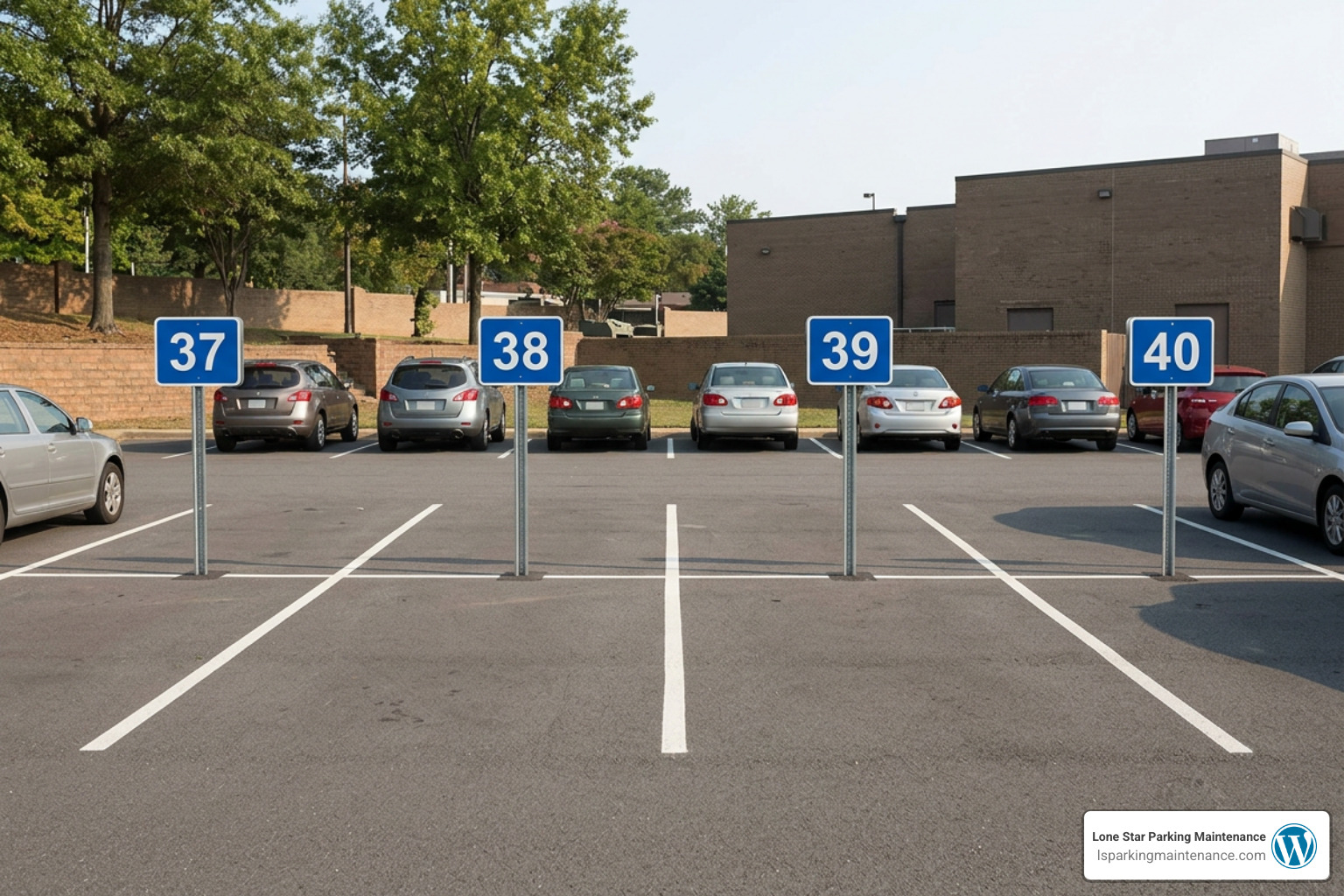
At Lone Star Parking Maintenance, we specialize in complete facility management across the DFW Metroplex—from high-durability sign installation and custom post mounting to fresh asphalt striping, sealcoating, and power washing. Whether you are renumbering a residential garage or organizing a sprawling commercial surface lot, our team delivers top-quality materials built to handle Texas weather.
Ready to organize and upgrade your parking facility? Contact us today at Lone Star Parking Maintenance to schedule a consultation and keep your lot running smoothly!