
Is Chip Seal Right for Your Parking Area?
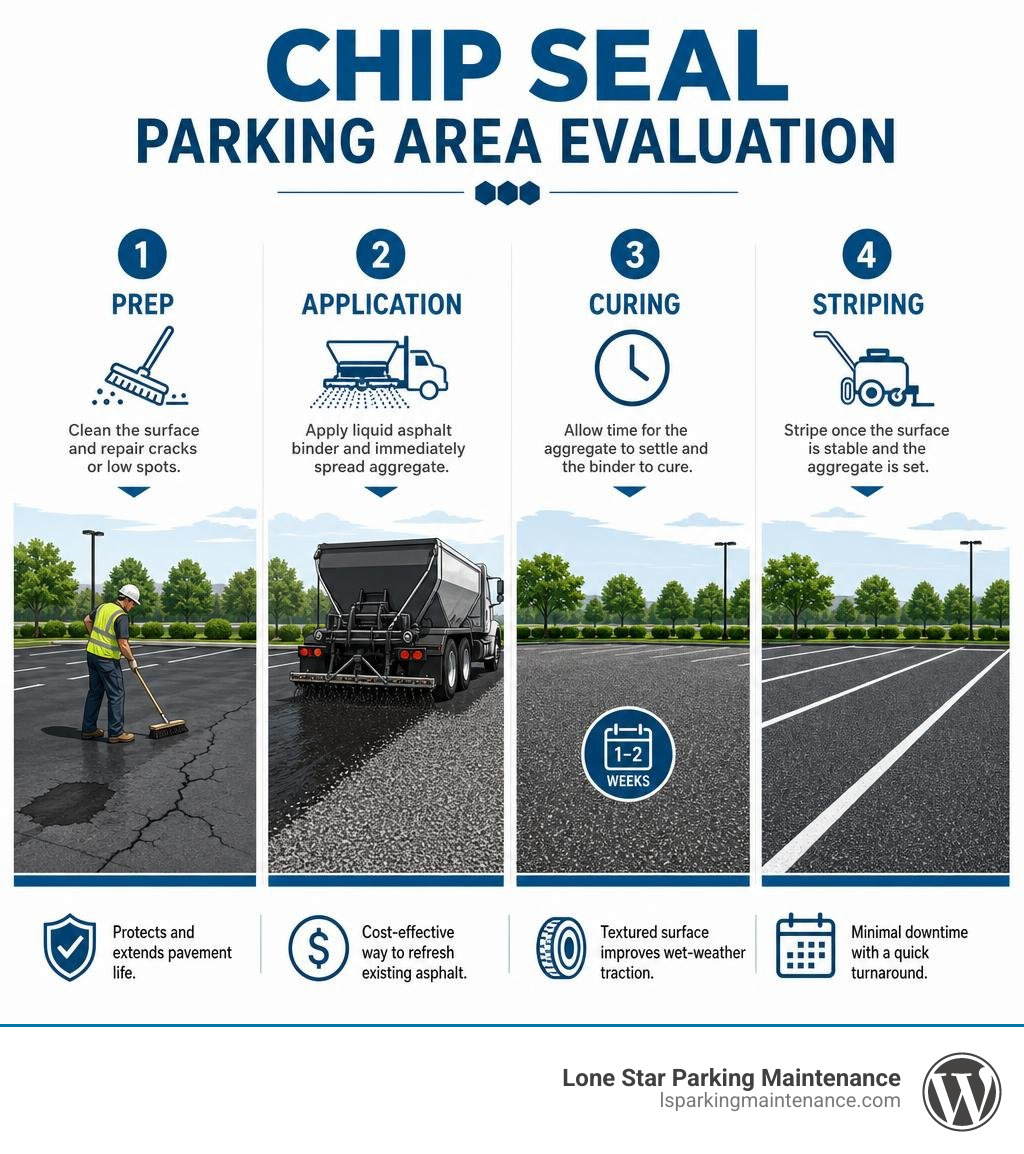
Chip seal parking areas are a practical, lower-cost way to protect sound asphalt that has faded, oxidized, or developed minor cracking. They work best on small to mid-size lots with light to moderate traffic, a stable base, and good drainage. Before choosing chip seal, repair failed pavement and low spots, clean the surface, and plan for short-term traffic controls while the new stone surface settles.
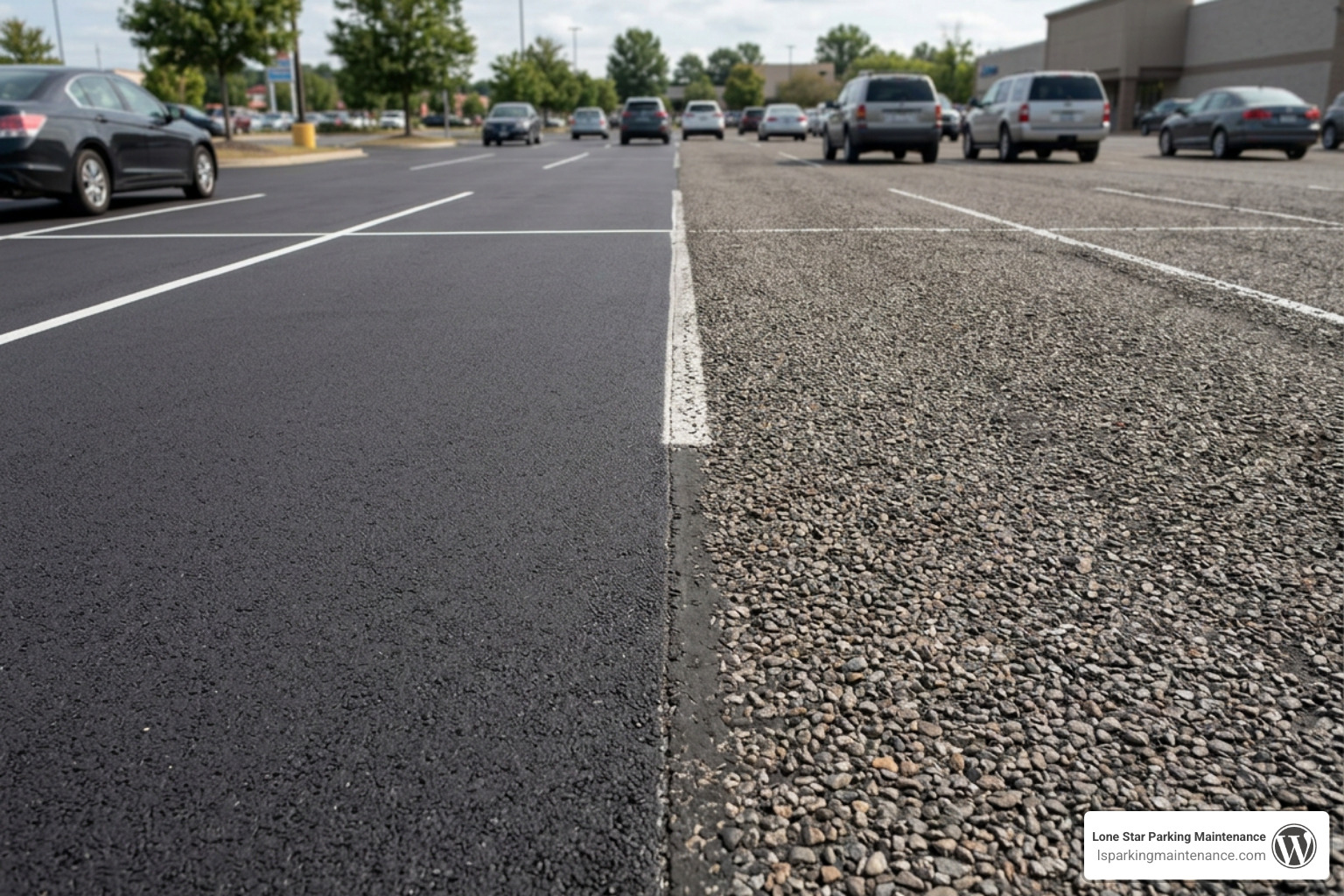
Chip seal is not a full asphalt replacement. It combines a liquid asphalt binder with crushed aggregate, creating a textured surface with strong wet-weather traction. It can help slow sun and water damage while extending the useful life of existing pavement.
For lots with frequent heavy trucks, tight delivery turns, shopping carts, or ADA walking routes, hot-mix asphalt may be the better fit in those high-stress areas. A hybrid plan can often deliver better value: chip seal for broad parking sections and asphalt reinforcement where turning and loading are toughest.
Expect some loose rock during the first one to two weeks. Drivers should use low speeds and avoid hard braking or turning the wheel while stopped. Striping should wait until the aggregate has seated and the surface is stable.
I’m Cason, and this guide will help you assess whether chip seal fits your property’s pavement condition, traffic needs, and maintenance budget.
Chip seal parking areas terms simplified:
Understanding Chip Seal Paving and How It Compares
When managing commercial facilities, pavement preservation is a balancing act between lifecycle economics, upfront capital expense, and everyday durability. Many facility owners ask us how chip seal fits alongside traditional paving methods. The reality is that Why Chip Sealing Is the Best Kept Secret in Paving lies in its unique layering structure.
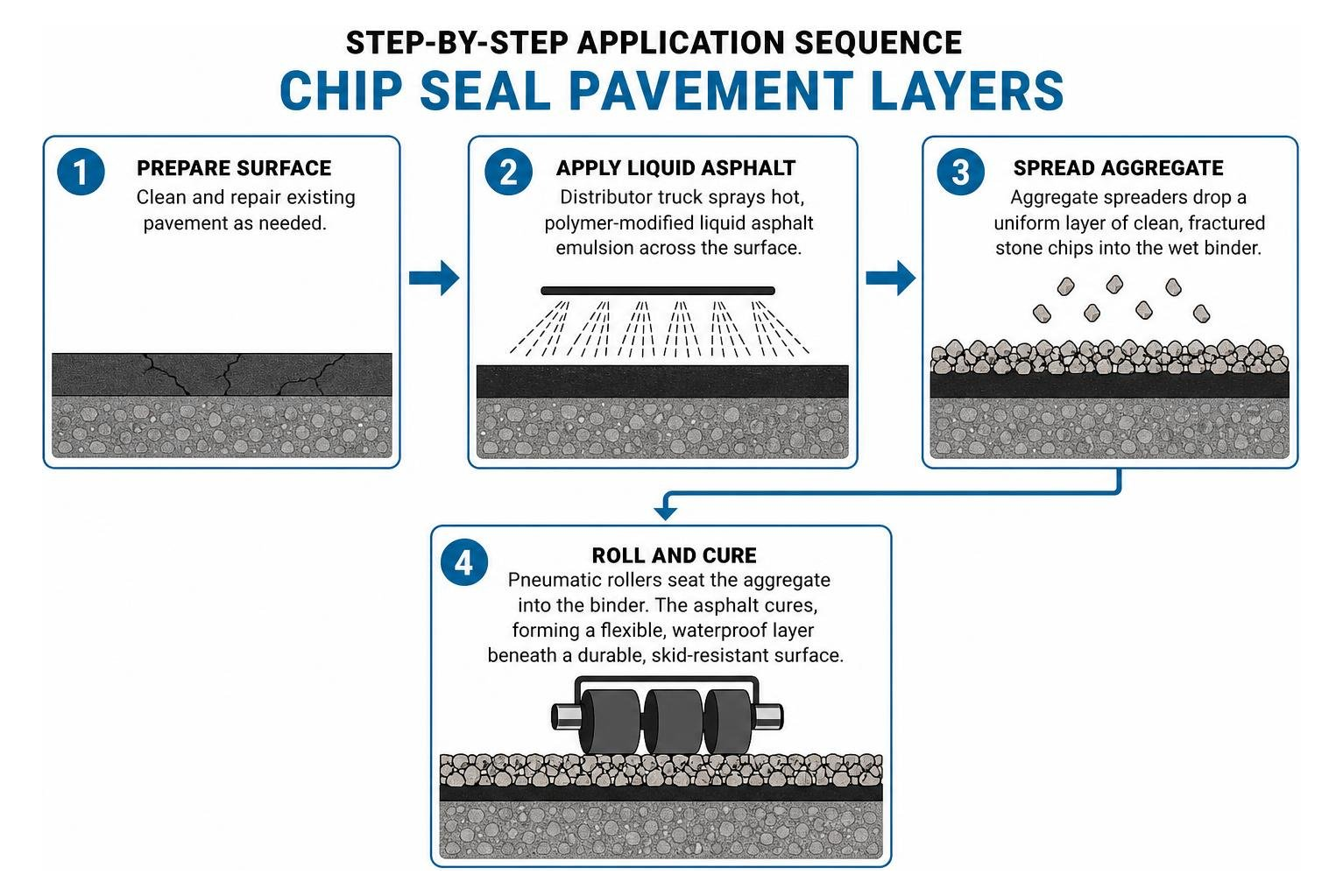
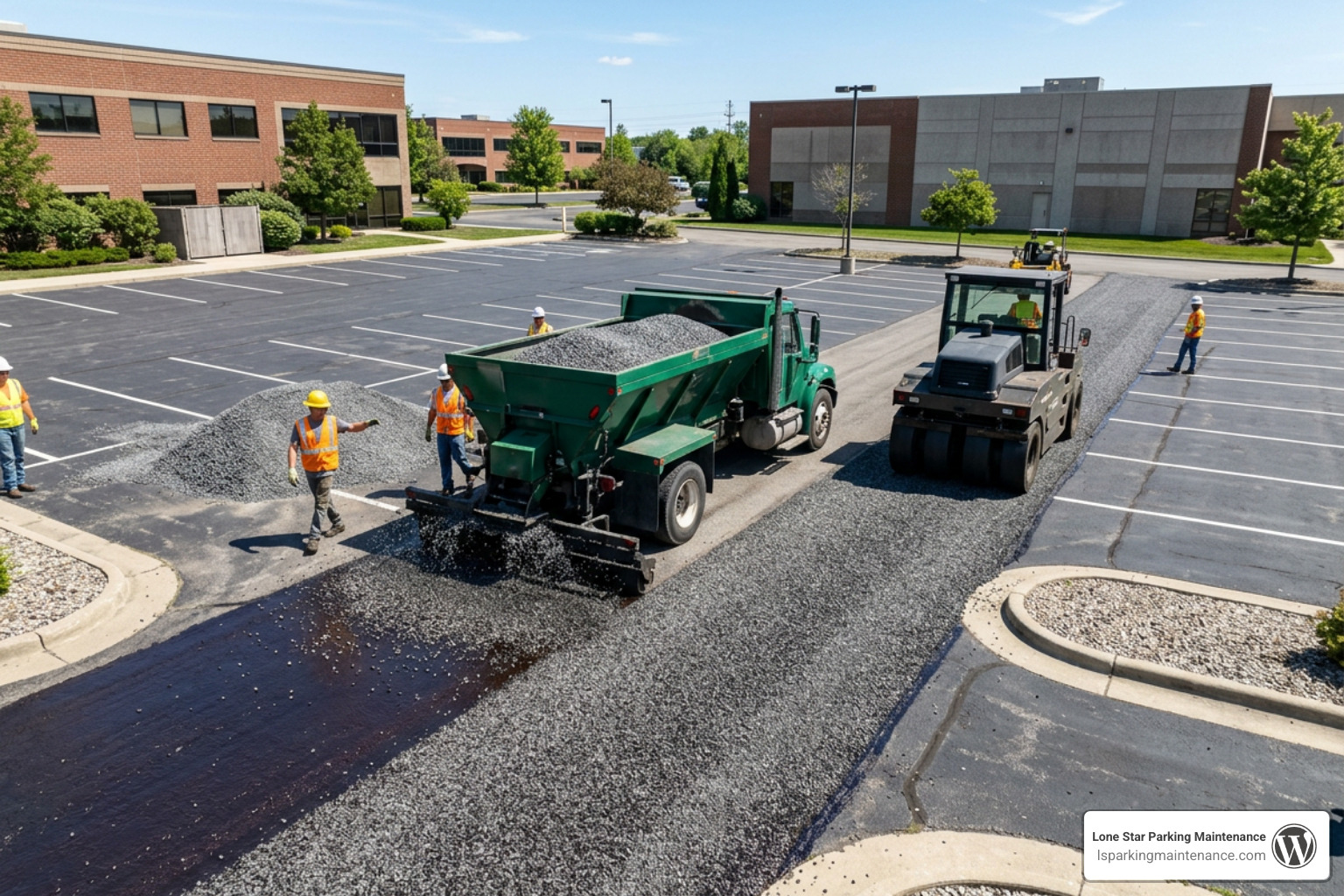
Rather than mixing stone and liquid bitumen in an off-site plant and hauling hot asphalt to your lot, chip sealing builds the pavement layer directly on your existing surface. A distributor truck first sprays a hot, polymer-modified liquid asphalt emulsion across the prepped foundation. Immediately afterward, specialized aggregate spreaders drop a uniform layer of clean, fractured stone chips directly into the wet binder. Heavy pneumatic rollers then seat the aggregate firmly into the liquid bed.
The liquid asphalt binder cures into a flexible, waterproof membrane beneath the stone. This provides surface elasticity that can bridge minor hairline stress fractures while offering an aggressive, all-weather wear layer.
| Pavement Treatment | Application Thickness | Primary Function | Ideal Application | Typical Lifespan |
|---|---|---|---|---|
| Chip Seal | 3/8″ to 1/2″ | Waterproofing, skid resistance, sun protection | Small to mid-size commercial lots, churches, storage | 5 – 8+ Years |
| Slurry Seal | 1/8″ to 1/4″ | Surface smoothing, minor crack sealing, cosmetic renewal | Light-traffic streets, HOA drive aisles, retail plazas | 3 – 5 Years |
| Hot-Mix Asphalt Resurfacing | 1.5″ to 2″+ | Structural load bearing, leveling, complete rehabilitation | High-turnover retail centers, heavy delivery lanes | 15 – 20 Years |
Chip Seal vs. Slurry Seal and Hot-Mix Asphalt
Choosing between preservation methods requires understanding layer thickness, structural load capability, and aggregate gradation.
A slurry seal is a cold-mix blend of fine aggregate, asphalt emulsion, water, and mineral fillers mixed on-site in a specialized truck. It creates a smooth, uniform black finish that fills superficial hairline cracks and halts minor raveling. However, slurry seal adds no structural capacity and does not offer the heavy stone wear armor provided by chip seal.
Hot-mix asphalt (HMA) is a structural paving material applied in thick lifts (typically 1.5 to 3 inches) to handle heavy vehicle point loads. If your underlying pavement structure is crumbling, rutting, or bottoming out under wheel loads, a full structural overlay is required. Consult The Ultimate Guide to Resurfacing Asphalt Parking Lots to evaluate full mill-and-overlay solutions versus surface preservation treatments.
Assessing Ideal Use Cases for Chip Seal Parking Areas
Chip seal delivers exceptional return on investment under the right conditions. It thrives in commercial environments with light-to-moderate passenger traffic patterns, such as:
- Commercial office parks where vehicles park for extended daytime hours without rapid turnover.
- Places of worship and community centers characterized by intermittent, weekly traffic peaks.
- Self-storage facilities and contractor yards where durability and dust control are vital, but smooth pedestrian walkways are not a top priority.
- Private access roads and HOA common parking bays.
However, chip seal is not universally suited for every section of a commercial property. ADA-accessible paths, shopping cart corridors, and tight dumpster approach pads demand ultra-smooth surfaces or enhanced structural strength. In these zones, traditional hot-mix asphalt or concrete remains the preferred standard.
The Core Advantages of Chip Seal Parking Areas
Property owners choose chip seal because it solves multiple pavement problems at a fraction of the cost of new asphalt. If you want to understand how preventative maintenance shields your pavement from extreme summer heat and oxidation, review Everything You Need to Know About DFW Metro Asphalt Sealing.
Traction, Durability, and All-Weather Performance
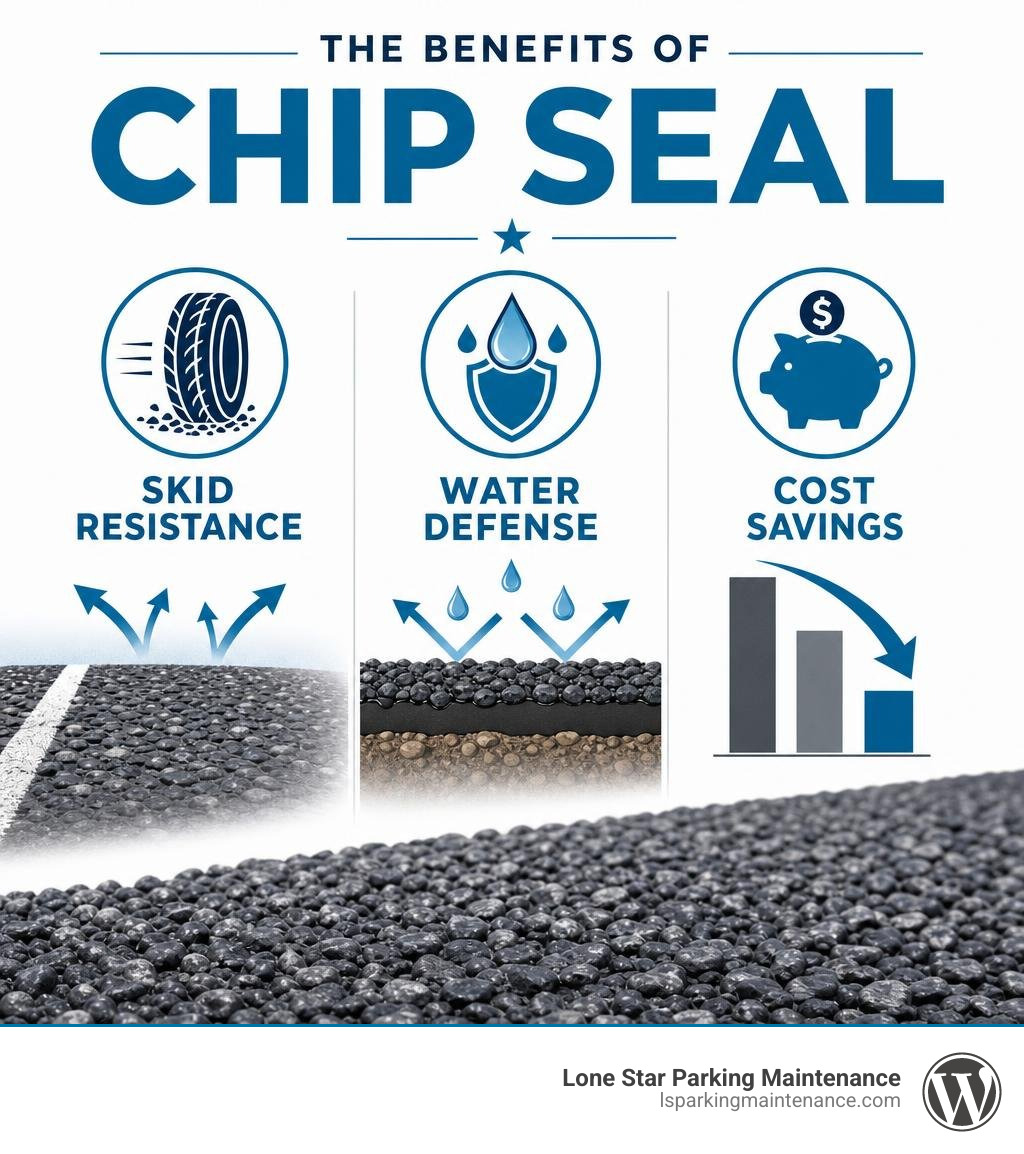
The textured stone matrix of a chip seal surface provides superior skid resistance and tire traction. Smooth asphalt surfaces can develop a slick film during sudden rainstorms as surface oils mix with water. In contrast, the angular fractured aggregate in a chip seal breaks the surface tension of water, significantly reducing hydroplaning risks and shortening wet-weather braking distances.
Furthermore, the continuous membrane of hot liquid asphalt binder acts as an impermeable moisture barrier. In regions subject to moisture shifts and temperature swings, preventing water from penetrating into the base gravel is the single most effective way to halt alligator cracking, base pumping, and subgrade deterioration.
Cost-Efficiency and Municipal Project Benchmarks
From a financial standpoint, chip seal is one of the most cost-effective pavement preservation treatments available. Installing a full hot-mix asphalt overlay can strain capital expenditure budgets. Chip seal delivers a durable wear layer at 20% to 30% of the cost of hot-mix repaving. For a deeper breakdown of surface maintenance budgeting, explore How Much to Seal the Deal on Your Asphalt.
Municipal infrastructure projects frequently highlight these cost advantages. In large-scale capital improvement programs, public works departments routinely allocate dedicated funds—such as pairing $20,000 in preparatory crack sealing with $180,000 in chip seal applications—to preserve entire street and facility networks without triggering multi-million-dollar reconstruction bills. By using the same municipal-grade methods on commercial lots, private property owners capture the same lifecycle efficiencies.
Essential Preparation and Installation Stages
A chip seal installation is only as reliable as the foundation beneath it. Simply spraying liquid asphalt over a failing, uncleaned parking lot guarantees premature aggregate loss and surface delamination.
For a complete look at subgrade maintenance, see The Essential Guide to Asphalt Repair and Protection.
Base Repairs, Drainage, and Surface Sweeping
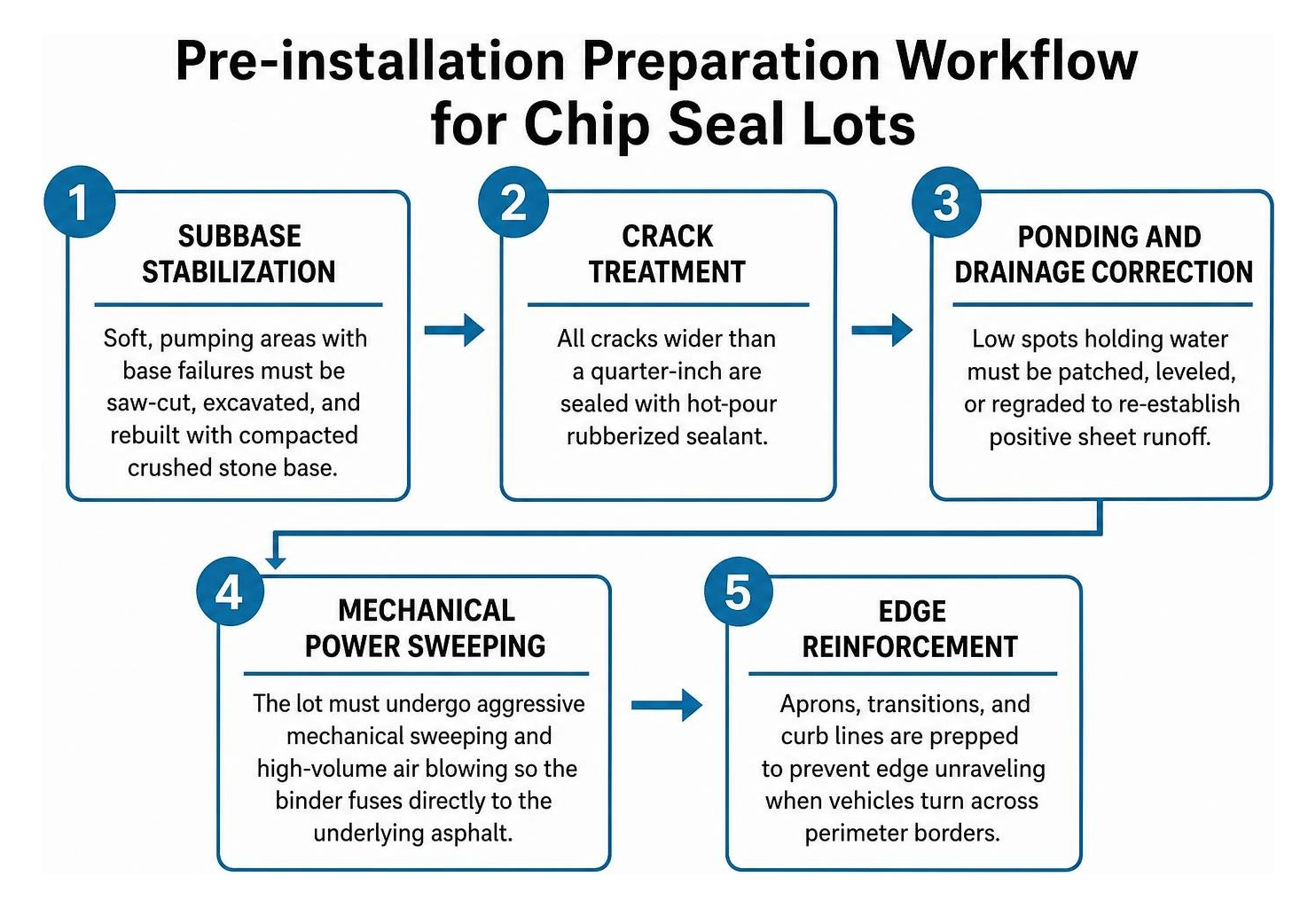
Before any liquid binder touches the ground, our crew executes thorough site preparation:
- Subbase Stabilization: Soft, pumping areas with base failures must be saw-cut, excavated, and rebuilt with compacted crushed stone base material.
- Crack Treatment: All cracks wider than a quarter-inch are sealed with hot-pour rubberized sealant. Learn more about stabilizing cracks prior to resurfacing in our guide on Parking Lot Sealing and Crack Filling.
- Ponding and Drainage Correction: Standing water destroys pavement. Low spots holding water must be patched, leveled, or regraded to re-establish positive sheet runoff before chip sealing.
- Mechanical Power Sweeping: Dust, loose sand, and tree debris act as bond breakers. The lot must undergo aggressive mechanical sweeping and high-volume air blowing so the binder fuses directly to the underlying asphalt.
- Edge Reinforcement: Aprons, transitions, and curb lines are prepped to prevent edge unraveling when vehicles turn across perimeter borders.
Application, Compaction, and Warranty Standards
Once prepped, application moves swiftly:
- Binder Application: A computer-calibrated distributor sprays asphalt emulsion at high temperatures (typically between 150°F and 185°F) to ensure uniform coverage without streaks or holidays.
- Aggregate Spreading: Within seconds of binder contact, the aggregate spreader applies a single, tight layer of clean, pre-sized crushed stone chips.
- Pneumatic Compaction: Rubber-tired pneumatic rollers make multiple overlapping passes. Unlike rigid steel-drum rollers that can crush angular aggregate, rubber tires knead and orient the stones into the liquid binder without fracturing them.
- Contractor Accountability & Quality Assurance: Commercial standards should mirror municipal quality controls, where contracts establish concrete timelines (such as 60-day substantial completion windows and $300/day liquidated damage clauses for delays) and require two-year warranty periods ensuring final acceptance is tied to performance and aggregate retention.
Curing, Striping, and Ongoing Maintenance Guidelines
After installation, proper post-care determines the long-term success of your lot. Proper traffic phasing and clear communication with tenants prevent early scuffing while the binder develops its full mechanical grip.
Managing Early Traffic and Loose Aggregate
A newly chip-sealed parking lot requires a settling and seating phase of approximately one to two weeks. During this early window:
- Loose Aggregate is Normal: Even with precision spreading and rolling, some loose aggregate will remain on the surface until vehicular traffic completes the final bedding process.
- Staged Lot Reopening: Controlled, slow-moving passenger traffic can typically re-enter within several hours or the next day, but temporary speed limits (5 to 10 mph) should be enforced.
- Post-Installation Mechanical Sweeping: Within 48 to 72 hours—or after the initial seating period—commercial rotary brooms sweep up excess dislodged aggregate, leaving a clean, uniform stone surface.
Protecting Chip Seal Parking Areas from Surface Scuffing
Because the aggregate rests in a flexible binder, high torsional forces can dislodge stones before the surface is fully cured. Protect your lot by addressing these common risk factors:
- Prevent “Dry Steering”: Educate drivers and post signage discouraging stationary wheel turning (turning power steering while the vehicle is completely stopped), which can grind and scuff young chips.
- Isolate High-Stress Zones: Delivery trucks making tight pivot turns around dumpster enclosures will damage fresh stone seals. Install reinforced concrete pads at dumpster approaches and loading bays.
- Equip Snow Removal Machinery: When plowing snow in winter, require contractors to use protective rubber or polyurethane shoes on plow blades. Steel cutting edges running flush against aggregate can shear chips off the binder.
- Routine Inspections: Periodically inspect high-traffic entry aprons and address minor wear spots before base moisture intrusion occurs.
Frequently Asked Questions About Chip Seal Paving
How long does a chip seal parking lot typically last?
A professionally installed chip seal parking lot on a sound, well-drained base typically lasts between 5 and 8 years—and often longer with light traffic. Longevity depends heavily on proper subbase stability, climate exposure, and whether cracks were filled before binder application. Applying a fog seal or preventative surface treatment down the road can extend that service life even further.
When can line striping be applied after chip sealing?
Line striping should be delayed until the stone matrix has fully seated and any excess loose aggregate has been mechanically swept—typically 7 to 14 days post-application. Applying traffic paint too early over unseated chips results in paint overspray, blurred stall markings, and paint loss as loose stones shift under vehicle tires.
Can chip seal handle heavy delivery trucks and snow plows?
Chip seal easily handles standard passenger cars, light commercial delivery vans, and occasional municipal utility trucks. However, frequent heavy multi-axle freight traffic and tight pivot turns will shear the stone matrix. For high-impact industrial facilities, hot-mix asphalt or concrete is recommended for main thoroughfares, while chip seal remains ideal for secondary parking bays. Snow plows can operate safely over chip seal, provided blades are fitted with rubber edge guards or raised slightly on skid shoes.
Conclusion
Pavement preservation is not a one-size-fits-all proposition. For property managers, commercial facility directors, and business owners across the DFW Metroplex, chip seal parking areas offer a dependable, heavy-traction, and budget-conscious alternative to full asphalt overlays. By prioritizing structural base preparation, correcting drainage flaws, and protecting the surface during its initial seating phase, you can secure years of dependable service while keeping capital improvements well within budget.
At Lone Star Parking Maintenance, we help property owners maximize asset longevity with top-quality materials, experienced crews, and industry-leading standards. Whether you need a comprehensive site evaluation, base repairs, protective sealing, or complete parking lot maintenance, our team is ready to assist. Contact us today to evaluate your pavement and design a tailored maintenance strategy for your commercial facility.