
What Type of Crack Filler for Blacktop Do You Actually Need?
Choosing the right crack filler for blacktop comes down to three things: crack size, project scale, and how long you need the repair to last.
Quick answer — match your filler to your crack:
| Crack Width | Best Filler Type | Durability |
|---|---|---|
| Up to 1/2 inch | Cold-pour liquid filler | 1-2 years |
| Up to 1/2 inch (larger jobs) | Hot-pour rubberized filler | 3-10 years |
| 1/2 inch to 1 inch | Rope-style elastomeric filler | Long-term |
| Over 2 inches / alligator cracking | Mastic or patch compound | Varies |
Now, here’s why this matters more than most property owners realize.
A small crack in your blacktop driveway or parking lot looks like a minor annoyance. It isn’t. Water gets in, expands during temperature swings, and turns that hairline crack into a pothole faster than you’d expect. 75% of unsealed cracks develop into potholes within three years — while only 1% of sealed cracks do the same.
In the DFW Metroplex, where summer heat and occasional freezes put asphalt through brutal stress cycles, a crack left untreated today can mean a full resurfacing bill tomorrow.
This guide breaks down every major type of blacktop crack filler, when to use each one, and how to apply them correctly — so you can protect your pavement before a small problem becomes a very expensive one.
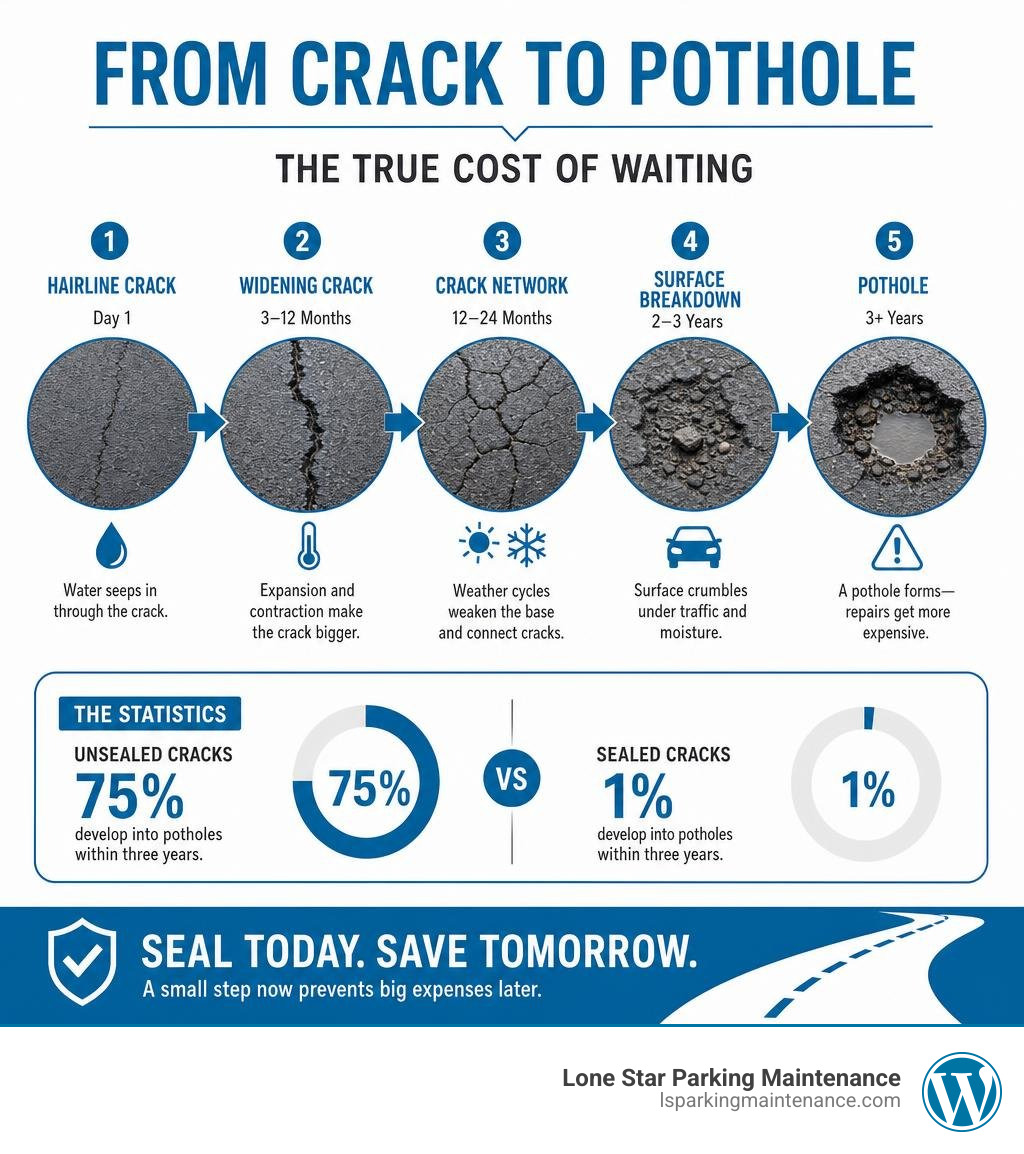
Easy crack filler for blacktop glossary:
Why Immediate Crack Repair is Essential for Asphalt Longevity
Ignoring cracks in your asphalt is like ignoring a small leak in your roof. It might not seem like a big deal today, but water is patient, and water always wins.
In the DFW Metroplex, our weather plays a major role in how quickly pavement fails. During our blazing hot summers, the sun oxidizes and weakens the asphalt binder, making it brittle. When we get heavy rains, water seeps directly into any open cracks. If we experience a sudden winter freeze, that trapped water expands, breaking apart the surrounding aggregate. This freeze-thaw dynamic is the primary catalyst for structural pavement failure.
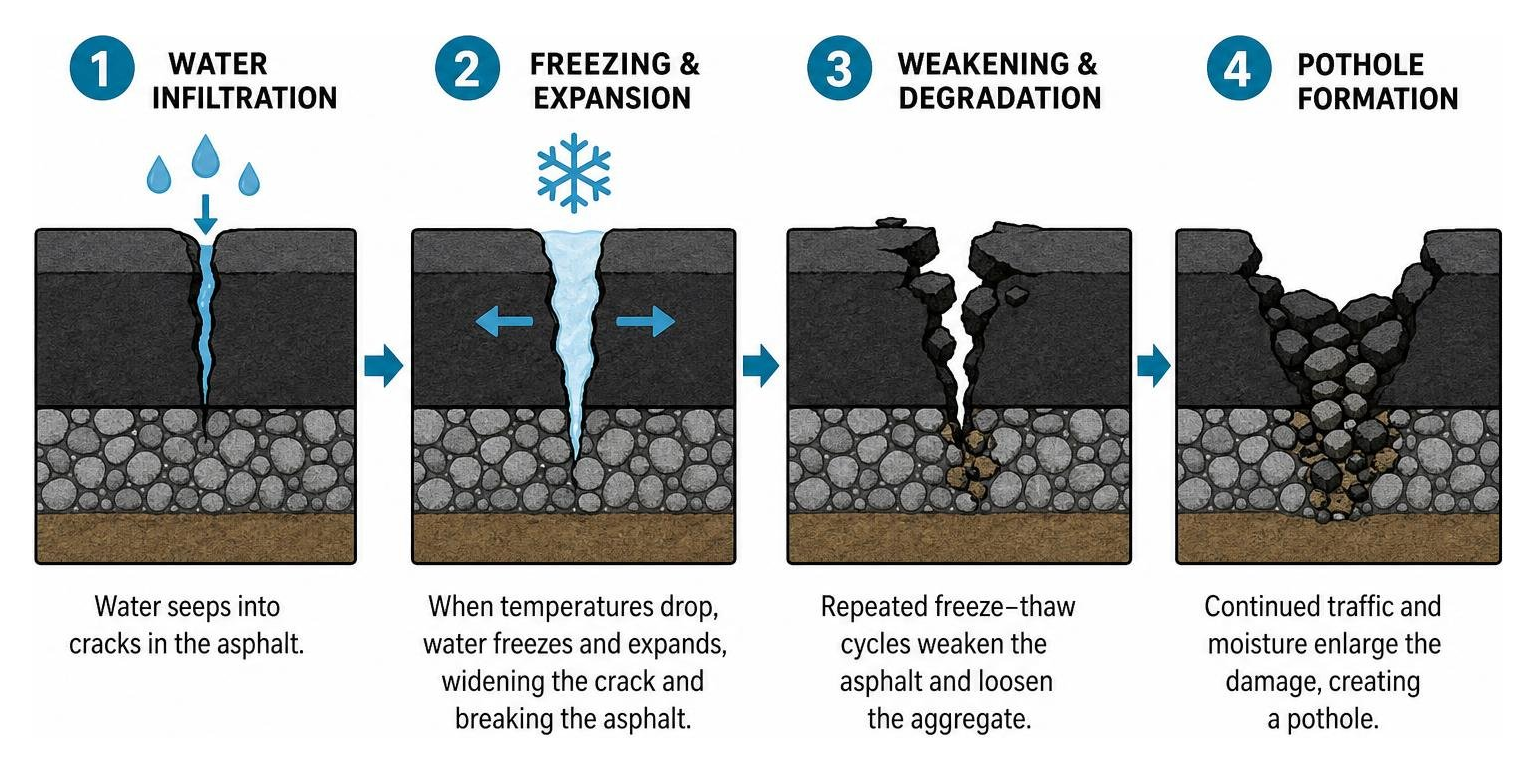
By sealing cracks early, you prevent water from reaching the subgrade base beneath the asphalt. Once the subgrade gets soft and washed out, the heavy weight of vehicles will cause the surface to sink and crack further, eventually forming a pothole.
Understanding the benefits of crack filling is key to managing any commercial property or residential driveway. Regularly filling cracks can extend your pavement’s overall lifespan by three to five years per application. It is easily the most cost-effective preventative maintenance task you can perform.
If you are managing a commercial property, you should ask yourself: How do I know if my parking lot needs crack filling? Generally, if you see active cracks wider than 1/8 inch that are not yet accompanied by severe base failure or crumbling, your pavement is a prime candidate for immediate crack sealing.
Choosing the Right Crack Filler for Blacktop
When deciding on a crack filler for blacktop, you must evaluate the width and depth of the cracks, the overall traffic volume of the area, and your budget.
If you are new to pavement maintenance, starting with a beginner’s guide to black top crack filler can help clarify the terminology. One of the most common points of confusion is the difference between crack sealing and crack filling.
According to the industry distinction between asphalt crack sealing vs filling, sealing involves using highly flexible, hot-applied elastomeric sealants designed to expand and contract with the pavement’s thermal movements. Filling, on the other hand, typically uses more rigid cold-applied materials for non-working cracks.
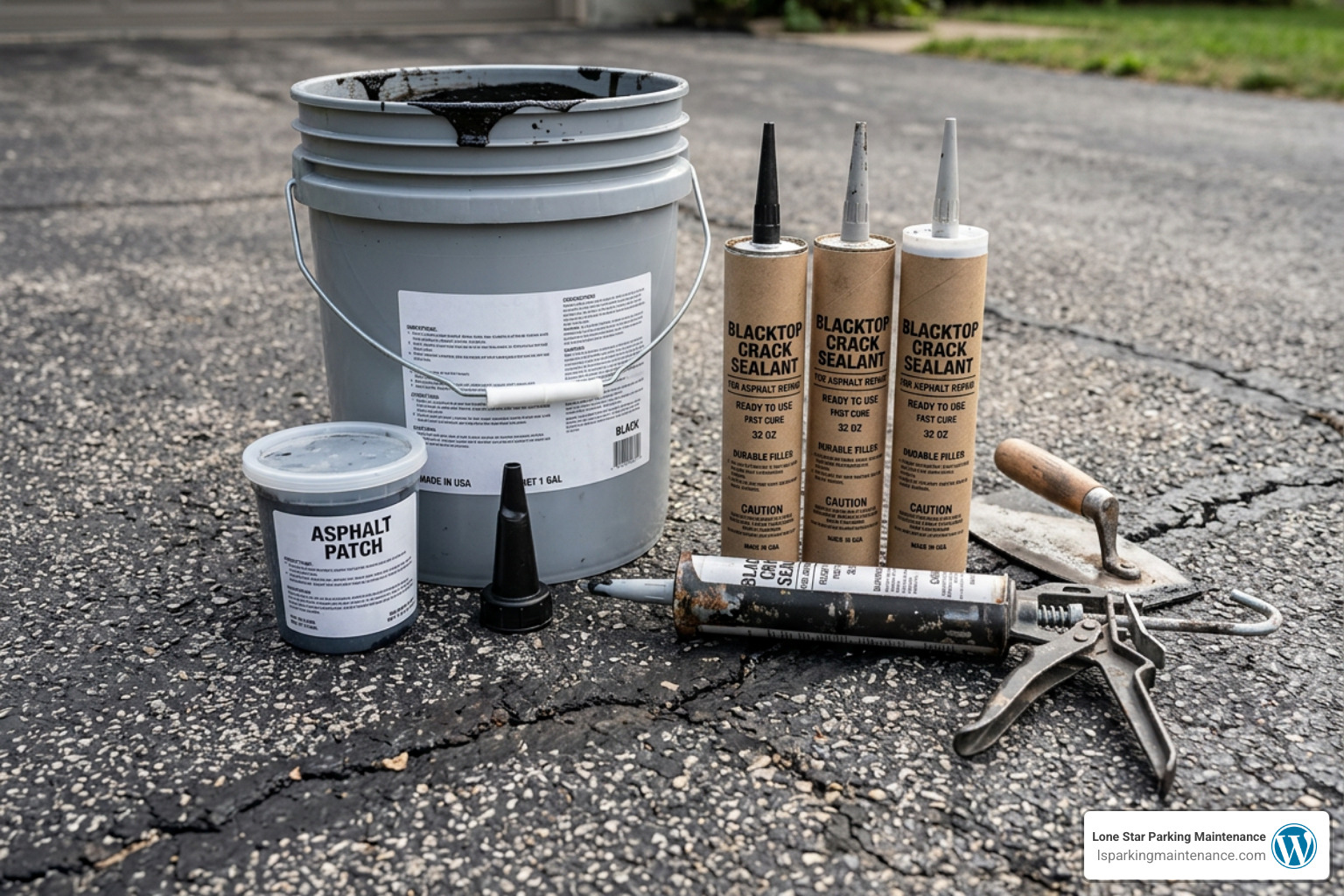
Here is a closer look at the four primary categories of crack fillers available on the market:
Cold-Pour Liquid Crack Filler for Blacktop
Cold-pour liquid crack fillers are incredibly popular for DIY projects and minor residential driveway repairs because they require no specialized heating equipment. These products typically come in pourable bottles or jugs and have a consistency resembling thick pancake batter.
Most high-quality cold-pour formulas are made of an asphalt emulsion or an acrylic latex rubber-vinyl polymer blend. For example, Latex-ite 1 Gal. 2X Premium Blacktop Crack Filler 2XCFC is a premium rubberized formula that dries black (though it may look slightly brown when wet) and remains pliable after application to accommodate light pavement shifts.
Another excellent option is Gardner® Blacktop Crack & Joint Filler, which features a fast-drying, non-shrink formula designed to seal and waterproof joints up to 1 inch wide. For larger commercial surfaces or property managers looking for bulk cold-pour maintenance solutions, Pourable Crack Filler – Asphalt & Concrete Crack Repair – TRC offers professional-grade durability in an easy-to-apply liquid format.
While cold-pour fillers are user-friendly, they are generally considered temporary repairs. They typically last 1 to 2 years before they begin to shrink, crack, or pull away from the sidewalls of the pavement.
Hot-Pour Rubberized Crack Filler for Blacktop
If you want a permanent, commercial-grade repair, hot-pour rubberized crack filler is the gold standard. This material is made from a blend of asphalt, synthetic rubber polymers, and chemical additives. It is sold in solid blocks or cubes that must be melted down in a specialized melter kettle or pour pot to temperatures between 380°F and 400°F.
A prime example of this professional-grade material is Flex-A-Fill 30 lb. Box Black Pavement Crack Repair Sealant. This hot-applied sealant is incredibly flexible, allowing it to withstand extreme thermal expansion and contraction cycles without failing.
Hot rubberized crack filler is highly durable and can last up to 10 years, even in high-traffic commercial parking lots and highways. Another massive benefit is its curing speed: while cold-pour fillers take 24 to 48 hours to dry, hot-pour rubberized sealant is traffic-ready in just 10 to 40 minutes once it cools to ambient temperature.
To estimate your material needs, keep in mind that each pound of hot crack filler covers approximately 7 to 8 linear feet of medium-width cracks.
Rope-Style and Mastic Fillers for Large Joints
For cracks between 1/2 inch and 1 inch in diameter, liquid pourable fillers can easily sink or run out before curing. This is where rope-style elastomeric fillers shine. These products are flexible, rope-like asphalt compounds wrapped in a melt-away plastic wrapper.
To use them, you simply pack the rope into the crack and melt it in place using a handheld propane torch. The 30ft. Pli-Stix®Permanent Blacktop Crack & Joint Filler | Super Seal is a popular residential choice because it delivers a professional-grade hot-pour bond without the need for an expensive industrial melter. For slightly larger residential projects, the 2 Gal. 250 ft. Small Black Permanent Blacktop Crack Filler (Crack-Stix) offers a highly reliable, permanent seal with a lifetime guarantee.
For cracks wider than 2 inches, standard sealants will sag and fail. These wide gaps, often indicating severely neglected pavement, require a heavy-duty mastic sealant. Mastic is a thick, aggregate-reinforced hot-pour material designed to fill wide voids and shallow depressions.
If your pavement exhibits “alligator cracking” — a network of shallow, interconnected cracks resembling alligator skin — standard crack fillers will not work. Alligator cracking indicates deep structural base failure. For a temporary aesthetic and protective hold, a specialized trowel-on patch compound (like Gator Patch) can be applied with a squeegee to seal the surface until a proper asphalt patch repair can be scheduled.
Step-by-Step Application Guide and Best Practices
To achieve a repair that lasts, you must follow correct application techniques. Simply pouring filler over a dirty crack will guarantee that the product peels up within a few weeks.
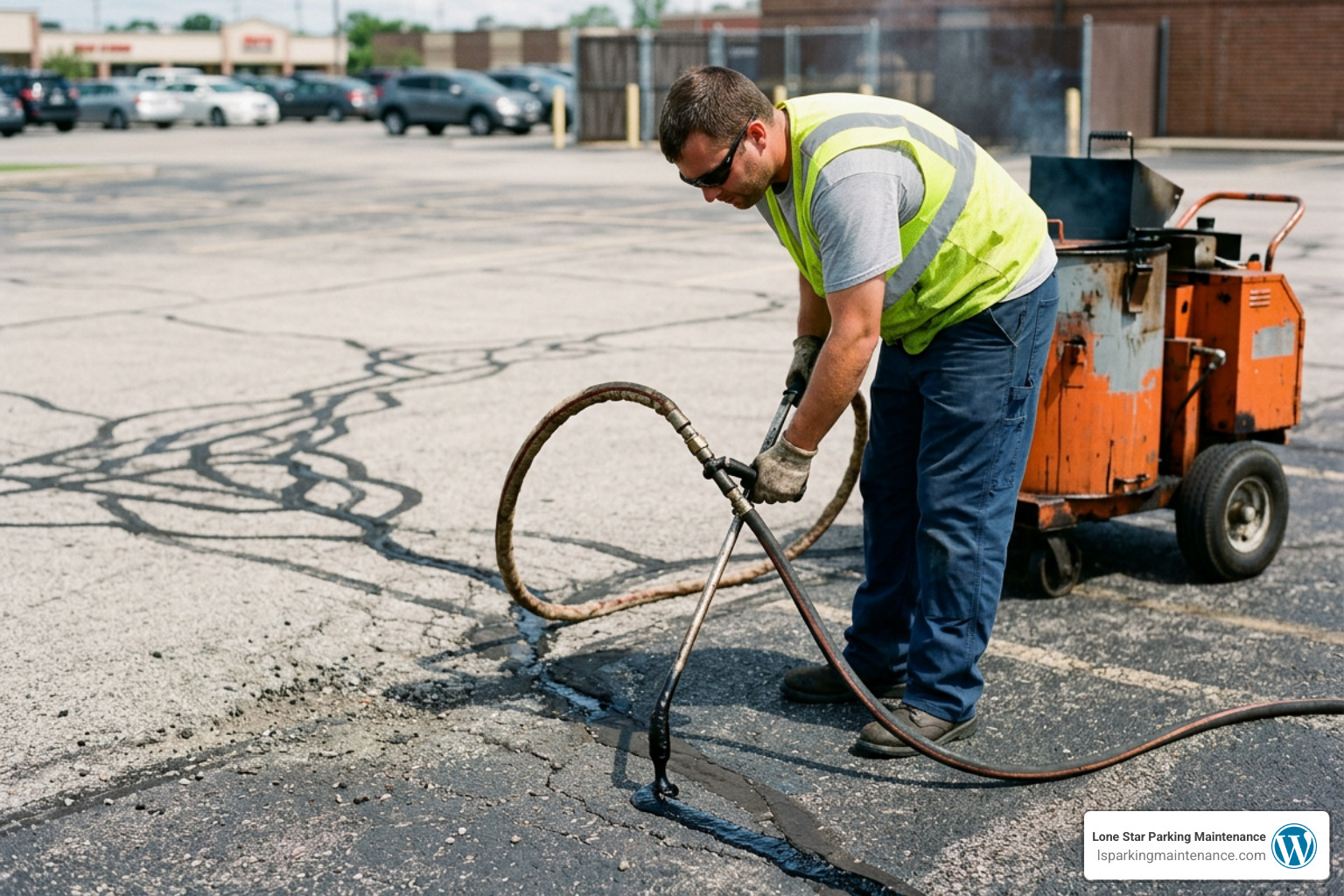
If you want to learn how to fill cracks quickly, the secret is efficiency in preparation. Our ultimate guide to filling every crack emphasizes that preparation represents 90% of the work. Following asphalt patching and sealing best practices ensures that your repairs remain intact through changing Texas seasons.
Essential Tools and Surface Preparation
Before you begin, gather the following tools:
- Safety gear (PPE): safety glasses, heavy-duty work gloves, long pants, a long-sleeved shirt, and closed-toe shoes.
- A stiff-wire brush or a gas-powered crack-cleaning machine.
- A high-pressure leaf blower or compressed air (minimum 90 psi is recommended for commercial jobs).
- A propane torch or hot air lance (to dry out moisture).
- Foam backer rod (for deep cracks).
- Your chosen crack filler for blacktop.
- A U-shaped or V-shaped squeegee.
According to the technical guidelines found in the Red Devil Asphalt Crack Filler TDS, you must remove all old caulking, dirt, weeds, oil, and loose debris from the crack before application.
Here is the step-by-step preparation process:
- Clean out the crack: Use your wire brush to scrape away packed dirt, vegetation, and loose asphalt from inside the crack.
- Blow out the debris: Use compressed air or a leaf blower to blow all dust and loose particles out of the crack. Work from one end to the other, directing the air stream deep into the gap.
- Remove moisture: Pavement must be completely dry. If there is dew or trapped water, use a propane torch or hot air lance to dry the sidewalls of the crack. Applying filler to a damp crack will trap moisture and prevent the adhesive from bonding.
- Install a backer rod (if needed): If a crack is deeper than 1/2 inch, do not fill the entire depth with crack filler. Pack a foam backer rod into the bottom of the crack, leaving a 3/8-inch deep reservoir at the top for the filler.
Application Techniques and Curing Times
Once the crack is clean and dry, it is time to apply the filler.
For cold-pour liquids, shake the bottle thoroughly, snip the applicator tip to match the width of your crack, and squeeze the material directly into the crack from the bottom up.
For hot-pour materials, heat the block in your melter to the manufacturer’s recommended temperature (usually 380°F to 400°F). Be careful not to overheat the material or keep it hot for more than 12 to 15 hours, as this can break down the rubber polymers.
We recommend using the overband method for application. This involves filling the crack flush to the surface and using a V-squeegee to strike off the excess, leaving a thin, clean 2-to-4-inch wide band centered over the crack. The overband should be no more than 1/8 inch thick.
If you are applying hot-pour filler in an active driveway or parking lot and want to open it to traffic immediately, you can lightly dust the wet sealant with fine silica sand or a specialized de-tacking agent. This prevents tires from tracking the warm material.
Allow cold-pour fillers to cure for a full 24 to 48 hours before driving on them. If you plan to sealcoat your blacktop, you must wait for the crack filler to fully cure. Most cold-pour fillers require a minimum of 24 to 72 hours of curing time, while hot-applied sealants should ideally cure for at least two weeks before you apply a protective sealcoat over them.
Frequently Asked Questions About Blacktop Maintenance
Pavement maintenance can feel overwhelming, but keeping up with a few simple guidelines can save you thousands of dollars. For a quick refresher, check out our guide on easy blacktop crack sealing.
How long does blacktop crack filler last?
The durability of your repair depends entirely on the type of material used and the traffic volume of the pavement. Cold-pour liquid fillers typically last 1 to 2 years because they lack the polymer flexibility required to survive heavy traffic and temperature swings. Professional-grade hot-pour rubberized sealants easily last 3 to 10 years because they form a permanent, flexible bond with the asphalt sidewalls.
Can you use asphalt crack filler on concrete surfaces?
Generally, asphalt crack fillers are not recommended for concrete surfaces. Concrete and asphalt expand and contract at different rates, and asphalt-based fillers often fail to adhere properly to concrete. However, certain specialized products, like grey Crack-Stix, are specifically formulated with gray pigments and binders designed to work on concrete joints and expansion cracks.
How soon can you drive on newly filled cracks?
For hot-pour rubberized crack fillers, you can drive on the repaired surface within 10 to 40 minutes, as soon as the material cools down to the ambient temperature. For cold-pour liquid fillers, you must wait at least 24 to 48 hours under dry, warm conditions before allowing vehicle traffic.
Conclusion
Pavement preservation is all about timing. Investing a small amount of effort and money into applying a high-quality crack filler for blacktop today will protect your asphalt subgrade, prevent potholes, and add years to your pavement’s lifespan.
While DIY methods work well for small residential driveways, large commercial parking lots and complex repairs require specialized industrial equipment, high-volume melters, and professional expertise to ensure a flawless finish.
At Lone Star Parking Maintenance, we serve the entire DFW Metroplex with top-tier commercial parking lot maintenance. From high-pressure crack cleaning and professional hot rubberized crack sealing to parking lot striping, sealing, and complete surface repairs, we use only top-quality materials that meet the highest industry standards.
Let our team of Texas asphalt crack repair experts handle the hard work for you. Discover how we can protect your commercial property by exploring The Ultimate Guide to Texas Crack Sealing and Repair Services, or visit our Parking Lot Sealing and Crack Filling service page today to request a free professional consultation for your DFW property!