
Choose the Right Blacktop Driveway Crack Filler Before Water Spreads the Damage
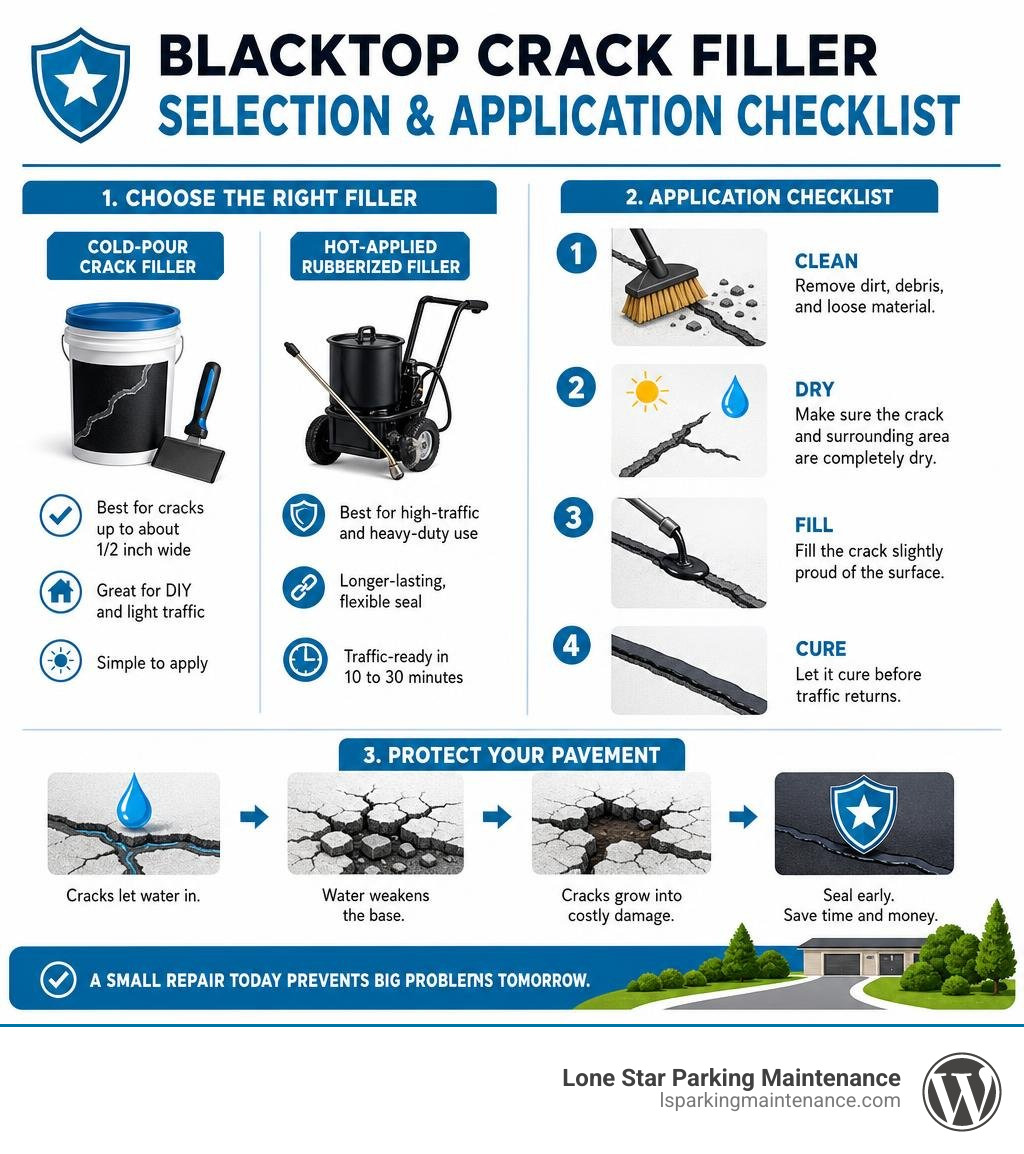
Use a cold-pour blacktop driveway crack filler for clean, dry cracks up to about 1/2 inch wide when you need a simple DIY repair. Choose a hot-applied rubberized filler for high-traffic pavement or cracks that need a longer-lasting, flexible seal. In either case, clean out debris, make sure the crack is dry, fill it slightly proud of the surface, and let it cure before traffic returns.
Small cracks are not just cosmetic. They let water reach the pavement base, where it can weaken the asphalt and turn a narrow line into broken edges, potholes, or larger repairs. Prompt crack sealing helps protect a driveway or parking area that could otherwise last 20 years or more with proper maintenance.
The right product depends on crack size, traffic, weather exposure, and how long you need the repair to last. Cold-pour fillers are convenient but may need regular touch-ups. Hot rubberized filler takes more equipment and care, yet it can be traffic-ready in 10 to 30 minutes and may last far longer when applied correctly.
I am Cason, and next we’ll look at why sealing cracks early is one of the most cost-effective ways to protect blacktop pavement.
Quick blacktop driveway crack filler terms:
Why Prompt Crack Sealing Protects Your Asphalt Investment
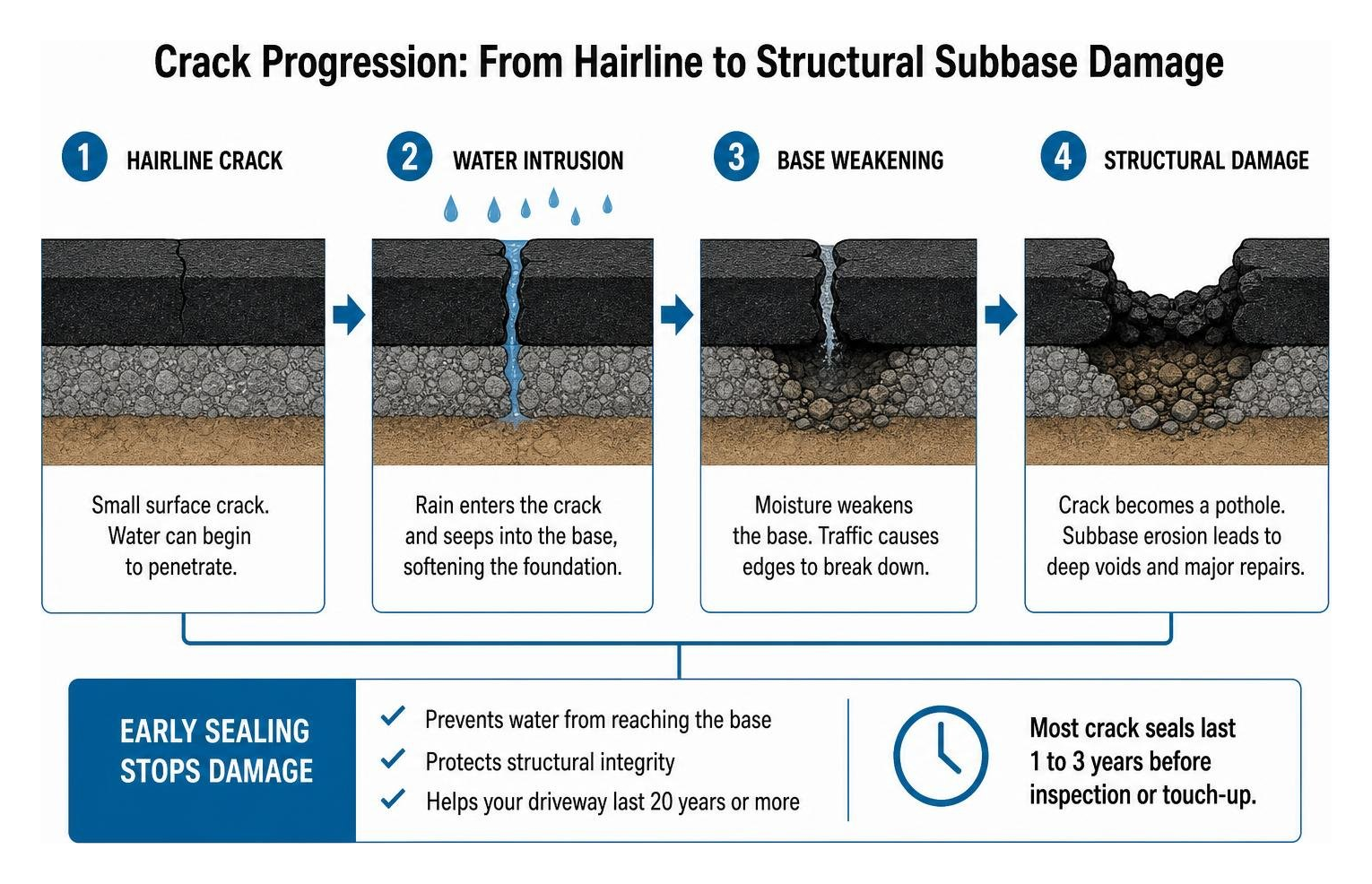
When moisture enters a surface crack, it begins working against the structural integrity of your pavement. Here in the DFW Metroplex, intense summer heat followed by sudden cold snaps accelerates subbase erosion beneath unprotected blacktop. Rain seeps past the asphalt surface layer and softens the aggregate base beneath it. Over time, recurring traffic causes the weakened edges to cave in, converting hairline fissures into deep voids and potholes.
Understanding the direct benefits of crack filling allows you to stop moisture intrusion before severe foundation damage occurs. A well-maintained asphalt driveway can last 20 years or more, but skipping crack repairs cuts that lifespan drastically. Most standard crack seals last between one and three years before needing an inspection or a minor touch-up, whereas industrial hot pour options can endure substantially longer.
| Feature / Metric | Cold-Pour Crack Filler | Hot-Applied Rubberized Filler |
|---|---|---|
| Primary Formula | Polymer-modified asphalt emulsion / acrylic | Direct-fire or kettle-melted rubberized polymer |
| Typical Lifespan | 1 to 2 years (often cracks by next season) | Up to 10 years with proper installation |
| Drying / Traffic Time | 24 to 48 hours for full cure | 10 to 30 minutes once cooled |
| Equipment Needed | Squeegee, caulking gun, pour spout | Melter kettle, direct torch, or heat wand |
| Ideal Crack Width | 1/8″ to 1/2″ wide | 1/4″ to 1″ wide (including expansion joints) |
| Shelf Life | 1 to 2 years (protect from freezing) | 10+ years in solid block form |
| Average Coverage | ~150 linear ft per 0.9–1 gal (1/2″ x 1/4″ crack) | ~150 linear ft per 20 lb block (~7–8 ft/lb) |
Choosing the Best Blacktop Driveway Crack Filler for Your Pavement
Selecting the ideal product depends on the crack widths you are addressing, your timeline, and your comfort level with different application tools. Reviewing the essential guide to asphalt repair and protection makes it clear that polymer-modified formulas outperform basic water-based alternatives because they provide the necessary elasticity during extreme thermal shifts.
Modern formulations also focus on low VOC content to ensure environmentally conscious repairs around your home or commercial building. If you are handling the job yourself, visual guides like How To Fill Asphalt Gaps and Cracks – Ace Hardware can help you master the necessary pouring angles and trowel strokes.
Cold-Pour Blacktop Driveway Crack Filler Options
Cold-pour fillers are emulsion-based liquids designed for direct application straight out of the bottle or cartridge. They provide an accessible DIY solution for minor surface flaws without requiring torches or commercial melting kettles.
- Cartridges and Tubes: Products like the 10 oz. Blacktop Crack and Joint Filler fit standard caulking guns, making them precise options for sealing narrow hairline cracks and joints up to 1/4 inch wide.
- Pourable Jugs: Formulas such as the 1 Qt. 2X Premium Blacktop Crack Filler or larger bulk containers like Latex-ite 4.75 Gal. 2X Premium Blacktop Crack Filler allow you to address extensive webs of shallow cracking across larger surface areas.
While cold pour products are easy to apply, they dry via moisture evaporation. They typically take 24 to 48 hours to cure fully and must be applied in temperatures consistently above 50°F.
Hot-Applied Rubberized Blacktop Driveway Crack Filler
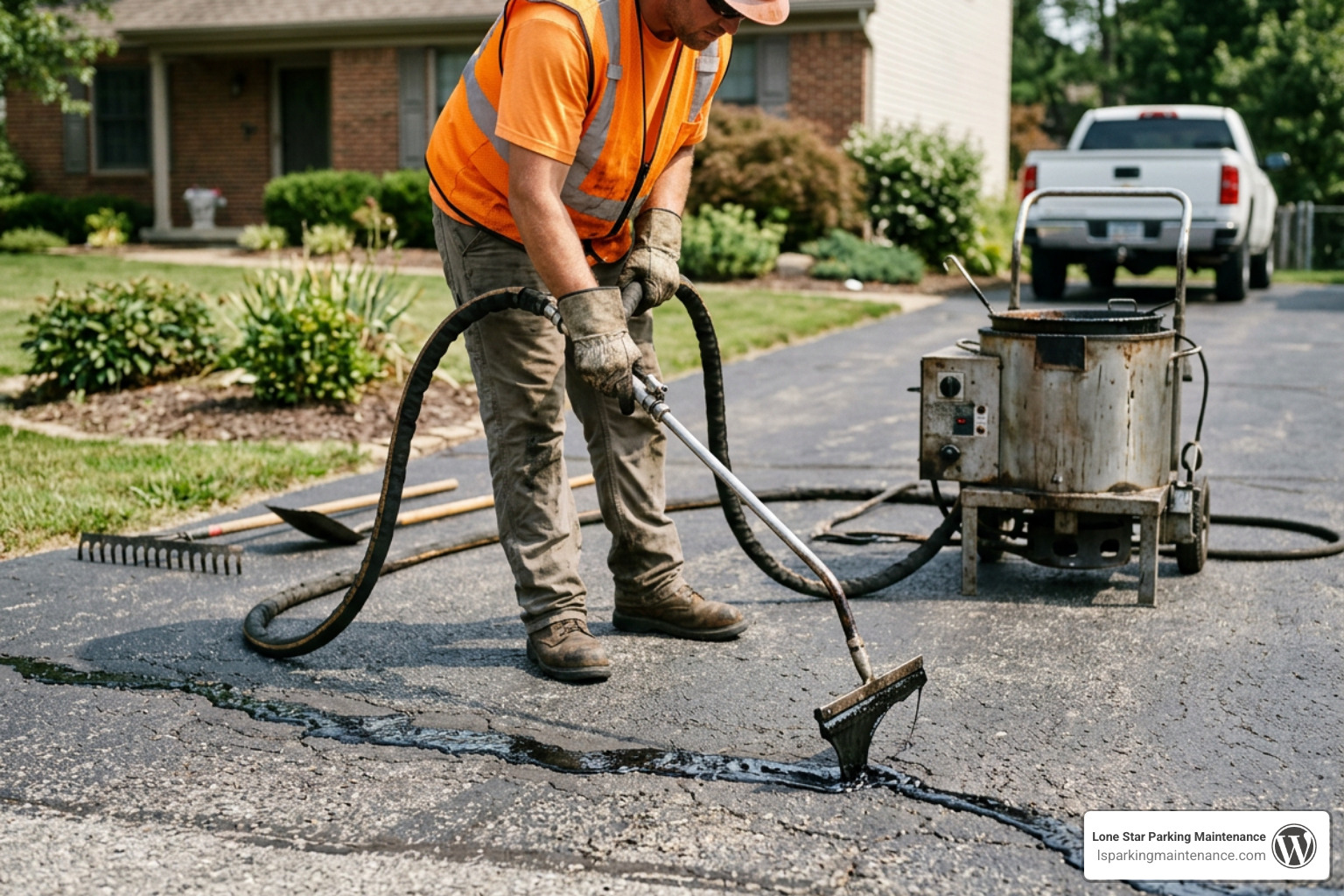
Hot-applied rubberized fillers represent the commercial standard for long-term blacktop maintenance. These products combine vulcanized rubber polymers with asphalt binder to create a waterproof, highly elastic seal that stretches as pavement shifts during temperature swings.
- Commercial Blocks: Heavy-duty products like the Flex-A-Fill 30 lb. Box Black Pavement Crack Repair Sealant are melted inside direct-fire or oil-jacketed kettles at 380°F to 400°F. A hot filled crack can last up to 10 years, compared to cold emulsion fills that frequently split the following season.
- Torch-Applied Rope: For homeowners who want hot-pour performance without commercial kettles, rope-style fillers like 30ft. Pli-Stix®Permanent Blacktop Crack & Joint Filler | Super Seal or 2 Gal. 250 ft. Small Black Permanent Blacktop Crack Filler can be pushed directly into cracks and melted in place with a standard propane torch.
Hot rubberized filler cools and becomes traffic-ready in just 10 to 30 minutes, minimizing vehicle downtime while delivering industrial-grade protection.
Step-by-Step Guide to Applying Blacktop Driveway Crack Filler
Applying crack filler correctly requires thorough preparation. Even premium sealants will fail prematurely if applied over loose dirt, standing moisture, or decaying asphalt aggregate. Follow this workflow to ensure maximum adhesion:
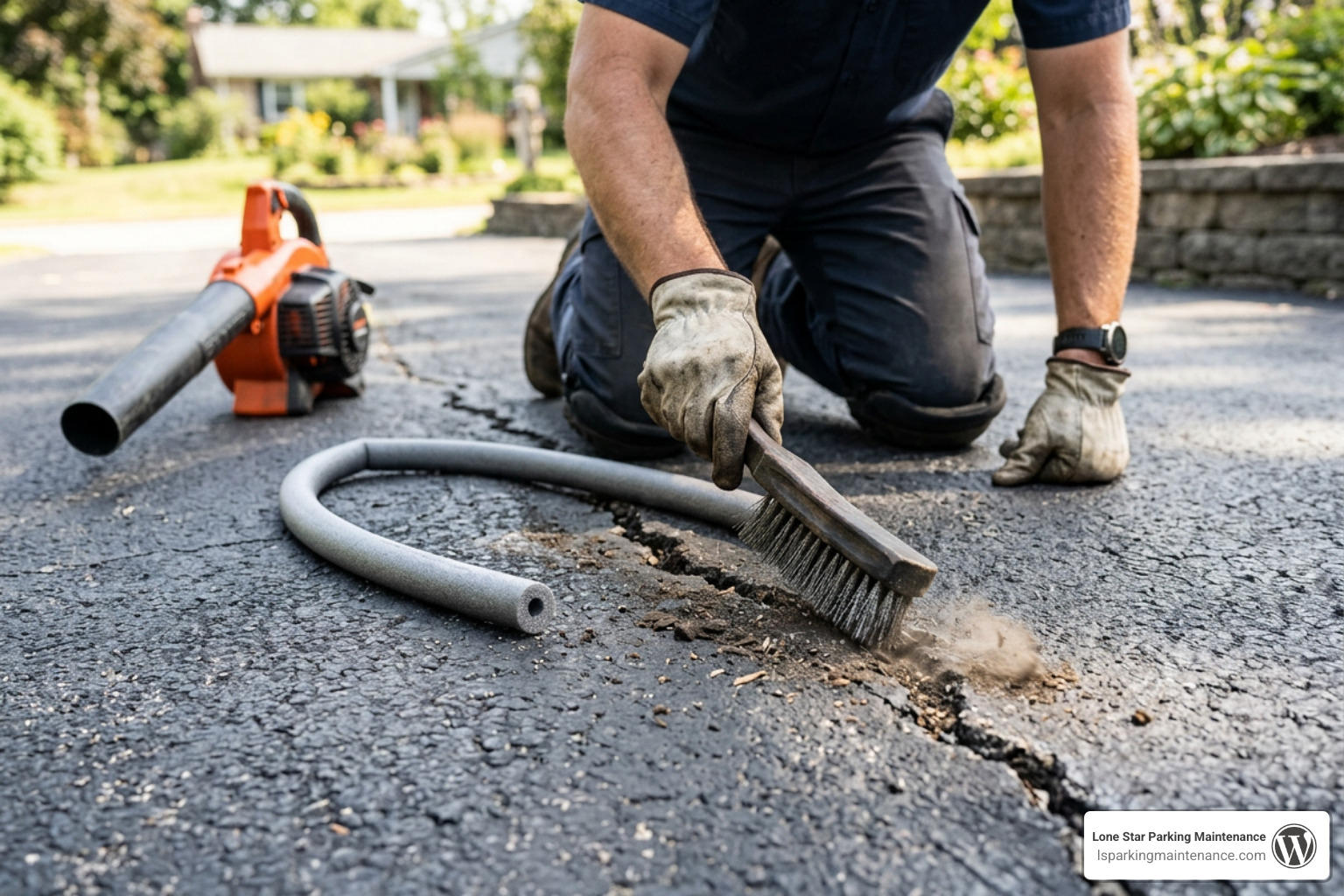
- Clear Out Debris: Use a stiff wire brush or rotary crack-cleaning wheel to dislodge embedded soil, weeds, and loose asphalt stones from inside the fissure.
- Blow the Surface Clean: Use a leaf blower or compressed air line to remove fine dust from the crack walls. Ensure the pavement is completely dry before moving forward.
- Install Backer Rod in Deep Cracks: For cracks deeper than 1/2 inch, insert foam backer rod or clean silica sand to within 1/2 inch of the surface. This prevents excessive filler consumption and prevents deep settling.
- Apply the Filler Material:
- If using cold pour, shake the container thoroughly, snip the spout, and pour the liquid steadily into the gap until it sits slightly above the surface level.
- If using hot melt rope, push the material firmly into the joint and sweep a torch flame back and forth at a 45-degree angle until the compound liquefies and bonds with the sidewalls.
- Strike Off and Level: Drag a rubber U-squeegee or metal scraper over the wet repair to leave a smooth, flush overband that seals the outer pavement edges. For a clear breakdown of every step in the process, check out how to repair asphalt cracks in 5 easy steps.
Post-Application Care and Ongoing Asphalt Maintenance
Once your repairs are in place, protect the uncured material from early foot and vehicle traffic. Cold-pour formulas skin over within a few hours but require up to two full days to harden completely against power steering scuffs. Hot-poured rubber can be driven on within half an hour, though dusting hot repairs with a light sprinkle of dry silica sand prevents warm tires from tracking the tacky binder across clean pavement.
To keep your pavement looking pristine, follow parking lot and driveway maintenance best practices. Plan an annual inspection each spring and autumn to catch new hairline separations early. Once all structural cracks are sealed, applying a top sealcoat every two to three years seals the aggregate against oxidation, automotive fluids, and UV breakdown.
Frequently Asked Questions About Driveway Crack Repair
How long does blacktop crack filler take to dry before you can drive on it?
Hot rubberized crack filler cools into a durable, non-tracking solid that is traffic-ready in 10 to 30 minutes. In contrast, cold-pour asphalt emulsions rely on ambient air drying and need 24 to 48 hours to reach full strength, depending on outdoor temperature and humidity levels.
Can you sealcoat over fresh blacktop crack filler?
Yes, but you must let the crack filler cure completely first. Cold-pour fillers should cure for at least 24 to 48 hours so the volatile water base evaporates; otherwise, the topcoat may blister or fail to bond. Hot-applied rubberized sealants can generally be sealcoated much sooner once they cool flush with the pavement surface, as outlined in our blacktop crack filler guide 2026.
When should you hire a professional instead of DIY crack filling?
DIY crack filling works well for isolated linear cracks under 1/2 inch wide. However, if your pavement displays interconnected alligator cracking, deep base sinking, crumbling edges, or extensive commercial acreage, you should partner with an experienced contractor. Our team at Lone Star Parking Maintenance delivers full-service parking lot sealing and crack filling using commercial-grade melters, routing equipment, and DOT-approved hot polymers.
Conclusion
Routine crack sealing is the single most affordable way to protect your asphalt pavement and preserve your property’s curb appeal. By choosing the right filler and following proper prep and application steps, you stop water damage in its tracks and extend the life of your blacktop by years.
When you need professional help managing large driveways, surface lots, or parking facilities across North Texas, trust the experienced crew at Lone Star Parking Maintenance. Reach out today for our specialized commercial parking lot sealing and crack filling services, and keep your pavement smooth, safe, and looking brand new.