
Stop Driveway Cracks Before Water Makes Them Worse
Use a tar driveway crack filler as soon as cracks are clean and dry. Remove weeds, dirt, and loose asphalt first. Then choose a flexible cold-pour filler for small cracks or a hot-applied rubberized filler for heavy traffic and longer-lasting repairs. Fill the crack slightly proud of the surface, smooth it level, and keep vehicles off until the product is no longer tacky.
Cracks are more than a surface problem. Water can enter through them, weaken the base beneath the asphalt, and turn a low-cost repair into a patching or replacement project. Fast crack repair helps protect drainage, appearance, and safety at DFW homes, driveways, and parking areas.
I’m Cason, and I’ll walk you through choosing and applying the right crack filler before the damage spreads.
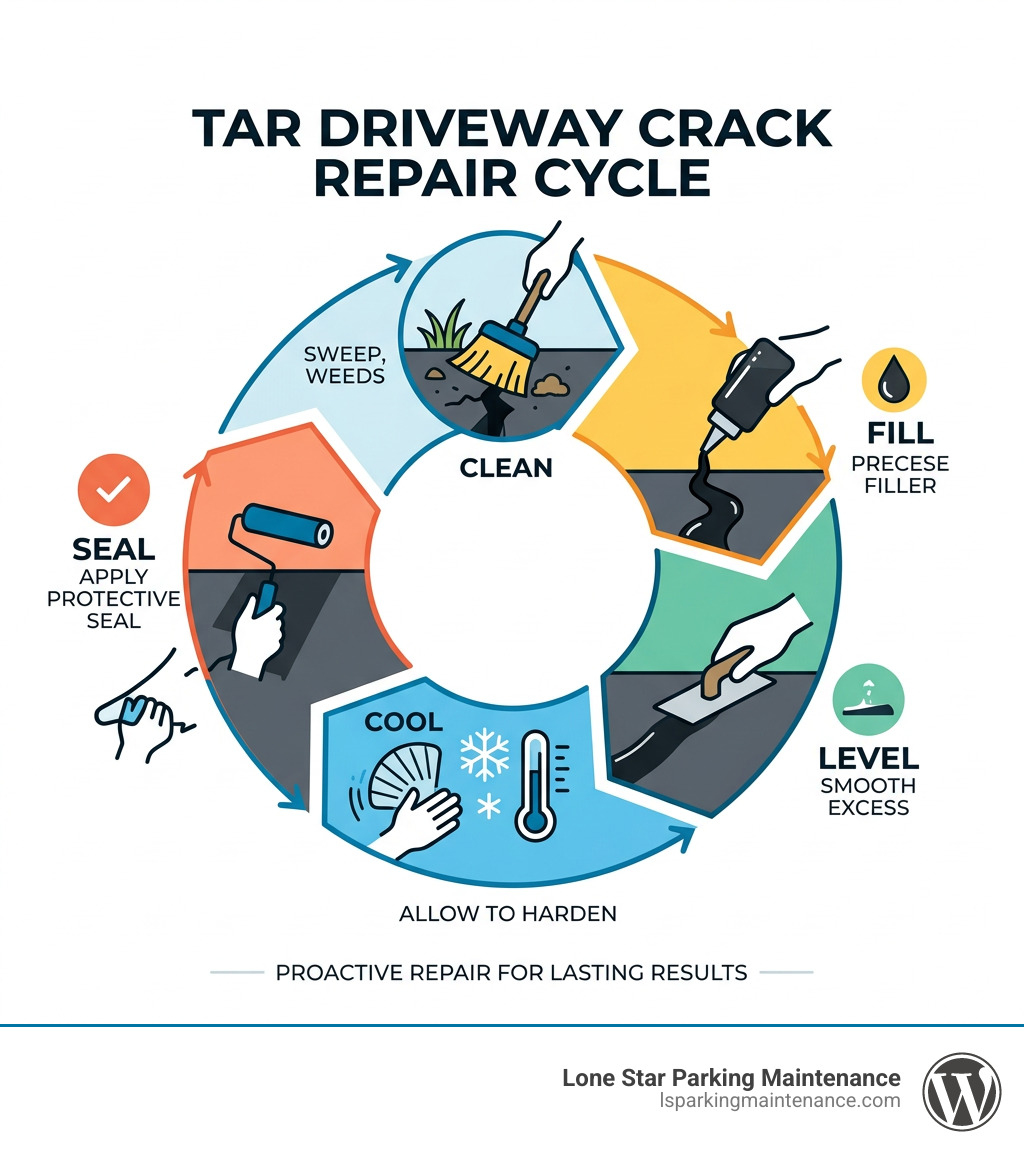
Terms related to tar driveway crack filler:
Understanding Your Options for Tar Driveway Crack Filler
Choosing the right compound depends on the width, depth, and structural condition of your pavement fractures. When asphalt ages under the intense Texas sun, UV oxidation breaks down the essential asphalt binder that glues the stone aggregate together. The surface loses its natural flexibility, leading to tensile stress and fissures.
Different products use distinct chemical designs to bridge these gaps:
- Elastomeric Bitumen Emulsions: Water-based liquid carriers blended with synthetic polymers and asphalt solids. They cure through ambient moisture evaporation, making them convenient for minor residential maintenance.
- Refined Coal Tar and Polymer Blends: Formulations that chemically cross-link high-molecular-weight polymers with refined tar bases to deliver high chemical resistance against standing water, gasoline drips, and automotive engine oils.
- Hot-Applied Polymer-Modified Asphalts: High-viscosity formulations designed to be melted and poured at high temperatures. These cure by cooling and deliver unmatched tensile elasticity across severe weather shifts.
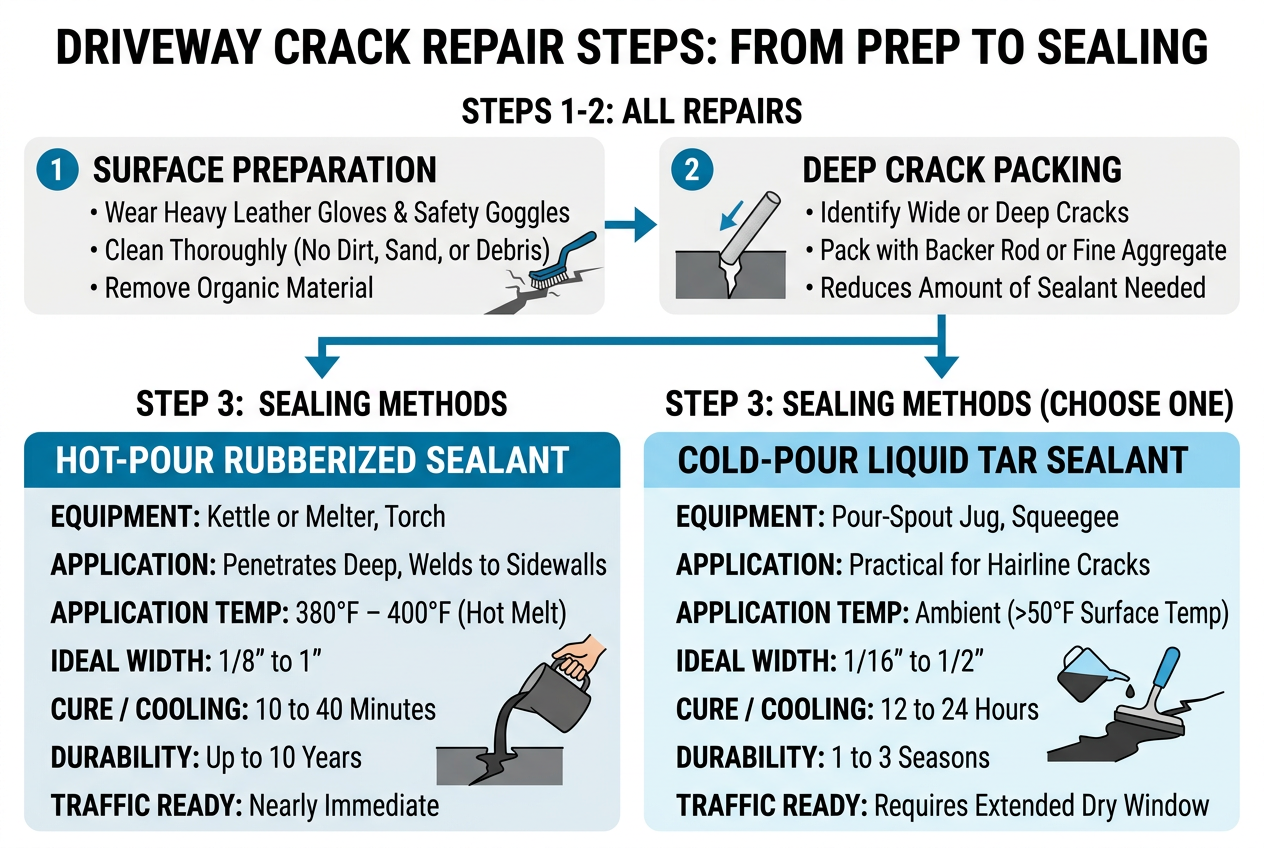
| Feature | Hot-Applied Rubberized Tar | Cold-Pour Liquid Tar Emulsion |
|---|---|---|
| Application Temperature | 380°F – 400°F (Hot Melt) | Ambient (>50°F Surface Temp) |
| Ideal Crack Width | 1/8″ to 1″ (and larger with mastic) | 1/16″ to 1/2″ |
| Cure / Cooling Time | 10 to 40 minutes | 12 to 24 hours |
| Expected Durability | Up to 10 years | 1 to 3 seasons |
| Traffic Readiness | Nearly immediate | Requires extended dry window |
| Equipment Needed | Direct-fire/oil-jacket kettle, torch | Pour-spout jug, handheld squeegee |
Hot-Pour Rubberized Tar Driveway Crack Filler
Hot-pour rubberized sealant is the industrial benchmark for pavement rehabilitation, meeting strict highway specifications such as ASTM D-6690. These heavy-duty blocks consist of virgin asphalt binder reinforced with synthetic polymers, virgin rubber, and specialized plasticizers.
When heated in a kettle or melter to 380°F–400°F, the material becomes a molten fluid that penetrates deep into asphalt voids, welding directly to the sidewalls. As it cools back to ambient temperature, it creates a flexible, rubber-like joint that stretches with winter freeze cycles and compresses during extreme Texas summer heat without tracking onto car tires.
A single 20-lb commercial block can seal up to 200 linear feet of typical cracks. Homeowners tackling DIY projects can also use torch-applied rope products like 30ft. Pli-Stix® Permanent Concrete Joint & Crack Filler, which melt directly into the pavement using a standard handheld propane torch without requiring a commercial melter. For severe, wide fractures, professional materials like DURA-FILL® MASTIC T2 bridge wide voids without requiring full pavement milling. Knowing these material differences is a fundamental part of the essential guide to asphalt repair and protection.
Cold-Pour Liquid Tar Driveway Crack Filler Formulations
Cold-pour formulations offer a practical alternative for small-scale DIY driveway maintenance and hairline cracks. Packaged in ready-to-use pour-spout jugs (often 0.9 to 1 gallon) or 29-oz caulking cartridges, these products require no heating equipment.
A standard 0.9-gallon jug covers approximately 150 linear feet of cracks measuring 1/2-inch wide by 1/4-inch deep. These water-based asphalt emulsions feature polymer additives to boost elasticity, but they rely on evaporation to solidify.
Because they cure from the outside in, cold-pour sealers often form a protective top skin within 1 to 4 hours while remaining soft underneath. They need a full 12 to 24 hours of warm, dry weather before handling vehicle traffic, as outlined in our blacktop crack filler guide.
Step-by-Step Guide to Applying Hot and Cold Tar Crack Sealants
Proper technique ensures the repair bonds securely and lasts for years. Rushing through the setup is the most common reason crack repairs fail prematurely.
Surface Preparation and Deep Crack Packing
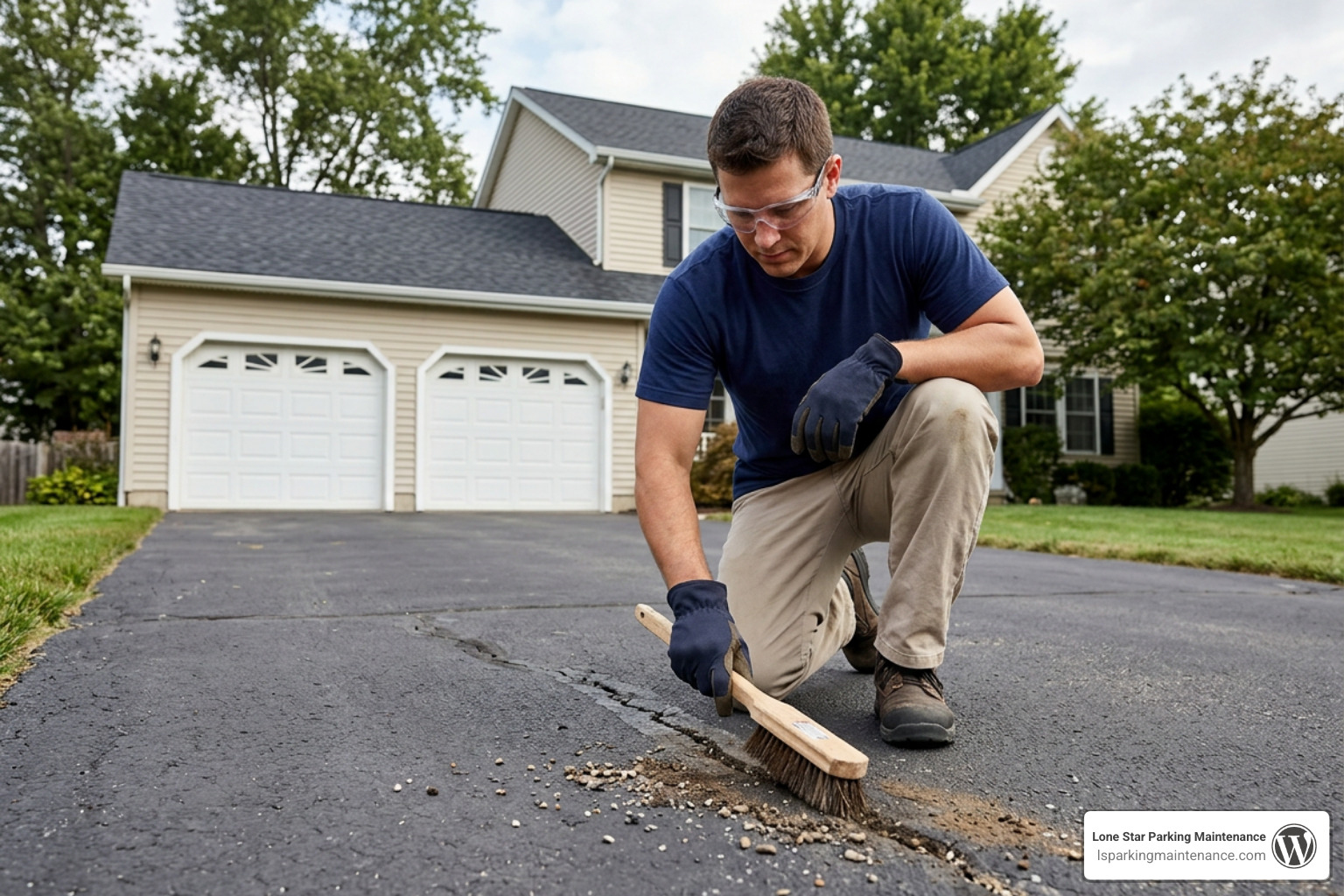
Before applying any sealant, clean the pavement thoroughly. Filler applied over loose sand, dirt, or organic debris will pull away from the crack sidewalls within a single season.
- Safety First: Put on heavy leather or heat-resistant gloves, ANSI-rated safety goggles, long work pants, and closed-toe work boots.
- Vegetation and Debris Removal: Scrape out weeds, root systems, and loose asphalt using a mechanical crack-chasing wheel, a rigid rotary wire brush, or a handheld crack scraper.
- Moisture and Dust Extraction: Use high-pressure compressed air or an industrial walk-behind blower to clear dust and grit. If the pavement is damp, run a propane weed burner torch gently along the crack channel to evaporate residual moisture and pre-warm the asphalt binder.
- Deep Void Packing: For cracks deeper than 1/2 inch, do not fill the entire cavity with liquid sealant; it will settle, slump, and waste material. Pack the bottom with closed-cell foam backer rod or clean silica sand until the gap is roughly 1/4 to 1/2 inch below the asphalt surface.
For maximum bonding on oxidized asphalt, applying a specialized primer such as those used with PolyTar Heavy Duty Pavement Sealer ensures the compound adheres firmly to old aggregate. To learn more about this process, review our practical guide on how to repair asphalt cracks in 5 easy steps.
Application, Leveling, and Banding Methods
Once your crack channel is dry, clean, and packed, apply your chosen filler:
- Hot-Pour Application: Draw molten rubberized tar (heated to 380°F–400°F) into a pour pot with a duckbill spout. Pour the material directly into the crack channel.
- Cold-Pour Application: Shake the container thoroughly for 60 seconds to suspend all settled solids. Snip the pour spout to match the crack width and pour the emulsion steadily into the gap.
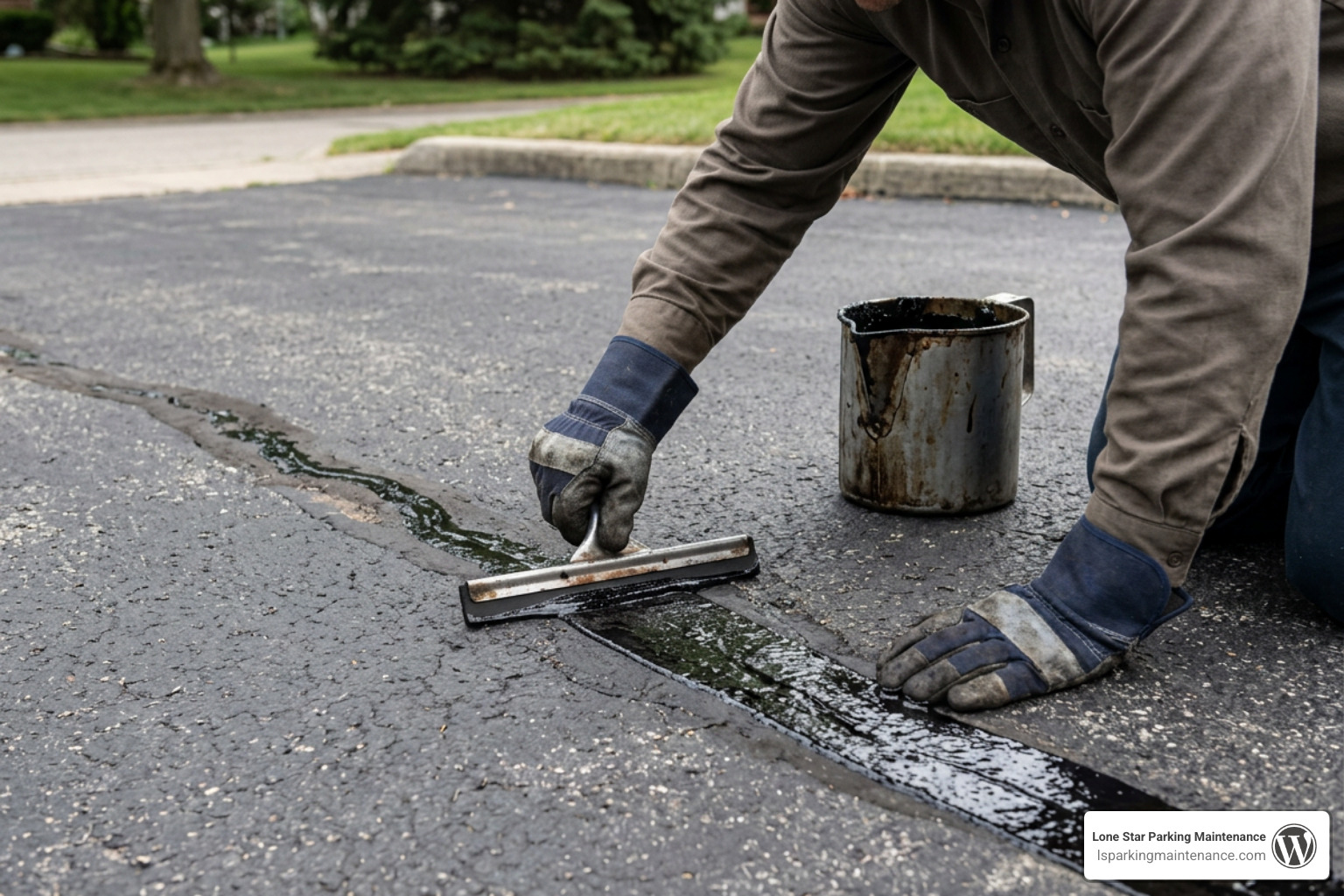
Follow the pour immediately using a heavy-duty rubber U-channel squeegee or hot overband iron. Strike off the excess material to create a flush, 2-to-3-inch wide surface band centered directly over the crack. This overband seals the vulnerable aggregate edges on either side of the fracture.
If tracking is a concern on high-traffic residential driveways, broadcast a light dusting of 40–70 mesh clean silica sand over the fresh band to improve initial traction, a technique detailed in our guide on how to fill cracks quickly.
Large Gap and Mastic Repair Solutions for Severe Damage
Standard pourable crack fillers are engineered for fissures up to 1 inch wide. When driveways develop wide gaps, sunken joints, or localized alligator cracking, pouring standard liquid tar often leads to settling and deep surface depressions.
For gaps between 1 and 2 inches wide, hot-applied polymer-modified mastic compounds provide an ideal fix. Formulated with flexible asphalt binder mixed with graded mineral aggregate, mastic fills large structural voids without requiring full hot-mix repaving.
- Heat the mastic compound in an oil-jacketed melter to 375°F–400°F.
- Apply the aggregate-filled material directly into the broad fracture or depressed joint.
- Smooth and compact the repair using a heated finishing iron to match the surrounding grade.
- Allow the patch to cool for 30 to 60 minutes into a stable, load-bearing repair that supports vehicle weight, similar to our methods for patching pavement like a pro.
Post-Repair Maintenance and Preventative Driveway Sealing
Filling cracks stops active water intrusion, but comprehensive pavement care requires protecting the entire surface. After your crack repairs have fully set, applying a protective sealcoat shields the driveway from oxidation, chemical spills, and surface wear.
A high-performance sealer acts as a protective barrier over your asphalt binder. For hot-applied rubberized repairs, you can apply sealcoat once the band cools completely. Cold-pour fillers require 24 to 48 hours to release internal water before sealing.
Regular maintenance helps property owners avoid costly structural repairs, as highlighted in our resources on DFW crack maintenance and reviving weathered blacktop.
Frequently Asked Questions about Driveway Crack Repair
How long after applying hot tar crack filler can vehicles drive over the repair?
Hot-pour rubberized tar cools rapidly and is typically traffic-ready in just 10 to 40 minutes. Once the compound drops to ambient temperature and feels firm to the touch without surface tackiness, passenger vehicles can drive across it without tire scuffing or tracking.
Can tar crack filler be applied over damp pavement or during cold weather?
No. Ambient and surface temperatures should be at least 40°F and rising for hot materials (and above 50°F for cold emulsions). Applying tar over damp pavement traps steam or moisture, creating air voids that cause the filler to lose adhesion and pop out during the next freeze-thaw cycle.
How soon after crack filling should a protective sealcoat be applied?
Wait at least 24 to 48 hours after cold-pour application so the emulsion can cure and evaporate all water carriers. With hot rubberized filler, sealcoating can begin as soon as the material cools completely, usually within a few hours.
Conclusion
Taking care of cracks early is the most practical way to protect your asphalt, stabilize the underlying base, and avoid costly resurfacing. Whether you manage hairline splits with cold-pour emulsions or choose industrial hot rubberized sealants for lasting durability, proper surface prep and correct application make all the difference.
If your commercial parking lot or residential property in the DFW Metroplex needs professional surface care, we are here to help. Lone Star Parking Maintenance delivers industry-grade pavement solutions, crisp layout striping, and complete surface protection.
Contact our team today for a free consultation on our parking lot sealing and crack filling services, and keep your pavement smooth, safe, and protected year-round.