
Why DFW Asphalt Crack Maintenance Can Save You Thousands
DFW asphalt crack maintenance is one of the most cost-effective investments a property owner or manager can make — and one of the most overlooked until it’s too late.
Here’s a quick summary of what you need to know:
- Crack filling seals individual cracks to stop water infiltration and slow deterioration
- Crack sealing uses flexible, polymer-modified sealant for cracks that move with temperature changes
- Sealcoating follows crack treatment to protect the entire surface from UV rays and moisture
- Alligator cracking signals structural failure — it requires patching or full-depth repair, not simple filling
- Schedule maintenance every 2–3 years to stay ahead of damage in North Texas conditions
- Cost ranges from $0.50 to $2.00 per linear foot for professional crack sealing in the DFW area
Fresh asphalt looks great. But in the Dallas–Fort Worth Metroplex, it doesn’t stay that way for long. The combination of brutal summer heat, freezing winter snaps, expansive clay soils, and heavy traffic puts constant stress on paved surfaces. What starts as a hairline crack can quickly become a pothole — and a liability.
The numbers back this up. Over 72% of asphalt pavement damage starts as small cracks less than 6 mm wide. Left untreated, those tiny cracks allow water to seep into the base layer, weaken the foundation, and spread across the surface. Repair costs climb fast once that process starts.
The good news? Timely crack maintenance can reduce overall repair costs by nearly 39% compared to untreated pavement — and extend pavement life by up to 47 months on average.
This guide walks you through everything you need to know: what causes cracks in DFW, which crack types need which treatments, what the professional repair process looks like, and how to build a maintenance schedule that protects your property’s value.
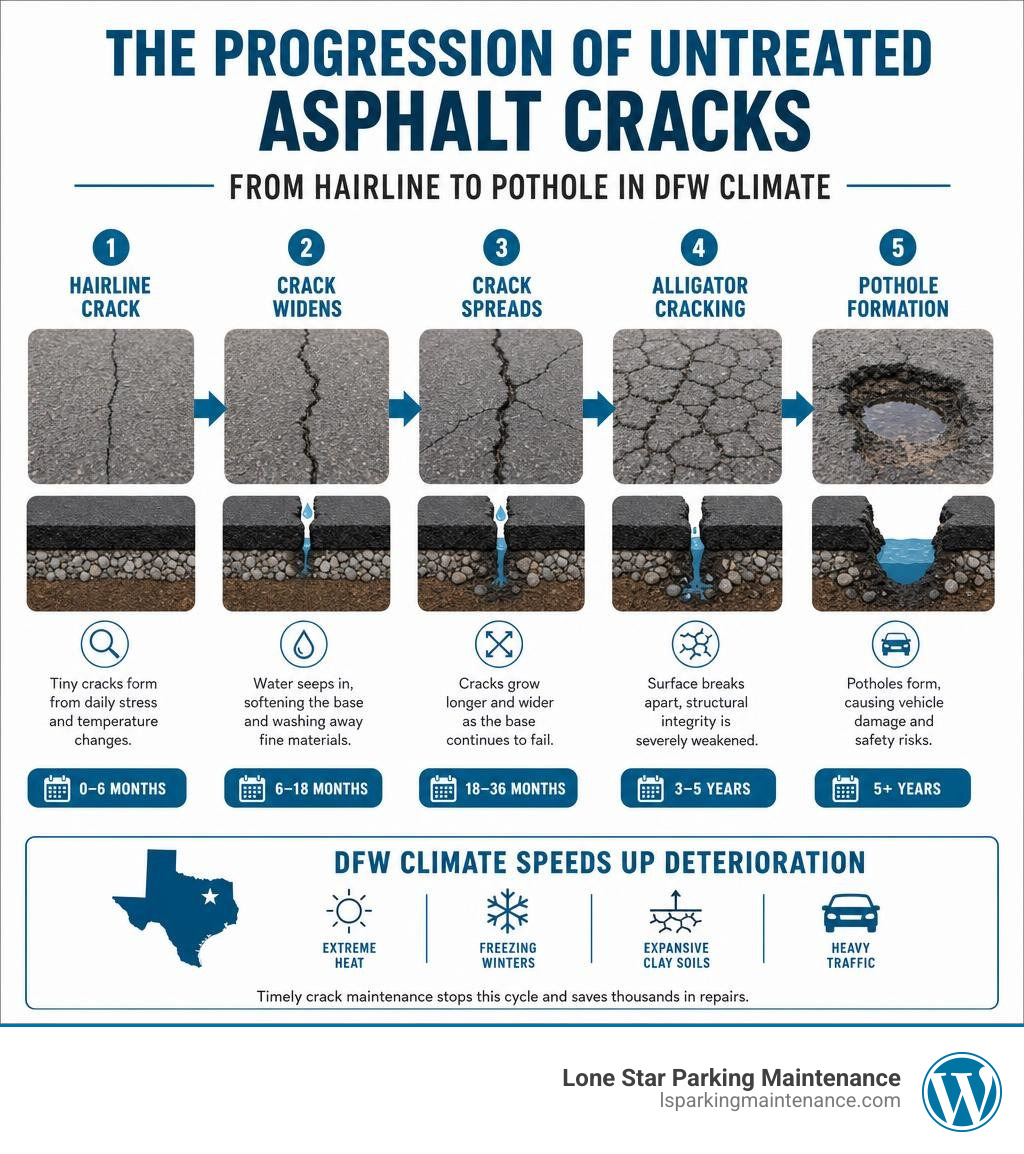
DFW asphalt crack maintenance word roundup:
Understanding DFW Asphalt Crack Maintenance and Repair Options
When it comes to keeping your pavement in top shape, it helps to understand the vocabulary of the trade. Property managers often confuse crack filling, crack sealing, resurfacing, and full-depth repair. However, each serves a very distinct purpose in your pavement management strategy.
To make the best decision for your property, let’s break down how these methods differ:
- Crack Sealing: This is a preventive maintenance technique designed for “working” cracks—cracks that expand and contract with temperature changes. We use a highly flexible, polymer-modified hot-pour rubberized sealant. It stretches during freezing winter temperatures and compresses during blistering July heat waves without losing its bond.
- Crack Filling: This is typically used for “non-working” cracks that experience very little movement. It fills the void to keep debris out but lacks the elastomeric properties of true crack sealing.
- Asphalt Resurfacing (Overlay): When the surface of your parking lot is heavily worn but the underlying base is still structurally sound, we mill off the top layer and apply a fresh 1.5- to 2-inch layer of hot-mix asphalt.
- Full-Depth Repair: This is an intrusive, structural repair. If water has completely compromised the sub-grade, we must cut out the failed section, repair the base materials, and lay entirely new asphalt.
By focusing on proactive Texas crack sealing and repair services, you can avoid the massive capital expenditure of early resurfacing or full-depth reconstruction. Think of crack maintenance as changing the oil in your car—do it regularly, and you’ll avoid a complete engine failure down the road. For more complex pavement issues, professional asphalt repair can address localized structural failures before they spread.
Why Do Asphalt Cracks Form in the DFW Metroplex?
Asphalt pavement is essentially a flexible, petroleum-based liquid with high viscosity that naturally shifts over time. While it is highly durable, the environment in North Texas is uniquely hostile to asphalt surfaces.
Several key factors accelerate pavement damage in our region:
- Expansive Clay Soils: The DFW Metroplex is famous (or infamous) for its heavy black clay soil. This soil acts like a sponge—expanding dramatically when wet and shrinking to form deep fissures when dry. This constant subterranean shifting causes the overlying asphalt base to flex, warp, and crack.
- Extreme Temperature Fluctuations: In North Texas, we regularly swing from triple-digit summer heat to freezing winter ice storms. This extreme thermal cycling causes asphalt to expand and contract rapidly, leading to thermal cracks.
- Oxidation from UV Rays: The intense Texas sun bakes the essential oils out of the asphalt binder. This process, known as oxidation, turns your deep black pavement into a brittle, gray surface that is highly susceptible to cracking under load.
- Heavy Traffic Loads: Busy retail centers, apartment complexes, and shipping hubs in DFW handle heavy delivery trucks and high daily traffic volumes. When heavy loads roll over brittle, dry asphalt, structural cracks form quickly.
Common Crack Types and When to Use DFW Asphalt Crack Maintenance
Not all cracks are created equal. Identifying the pattern of cracking on your property is the first step in determining whether you need simple maintenance or a more extensive structural intervention.
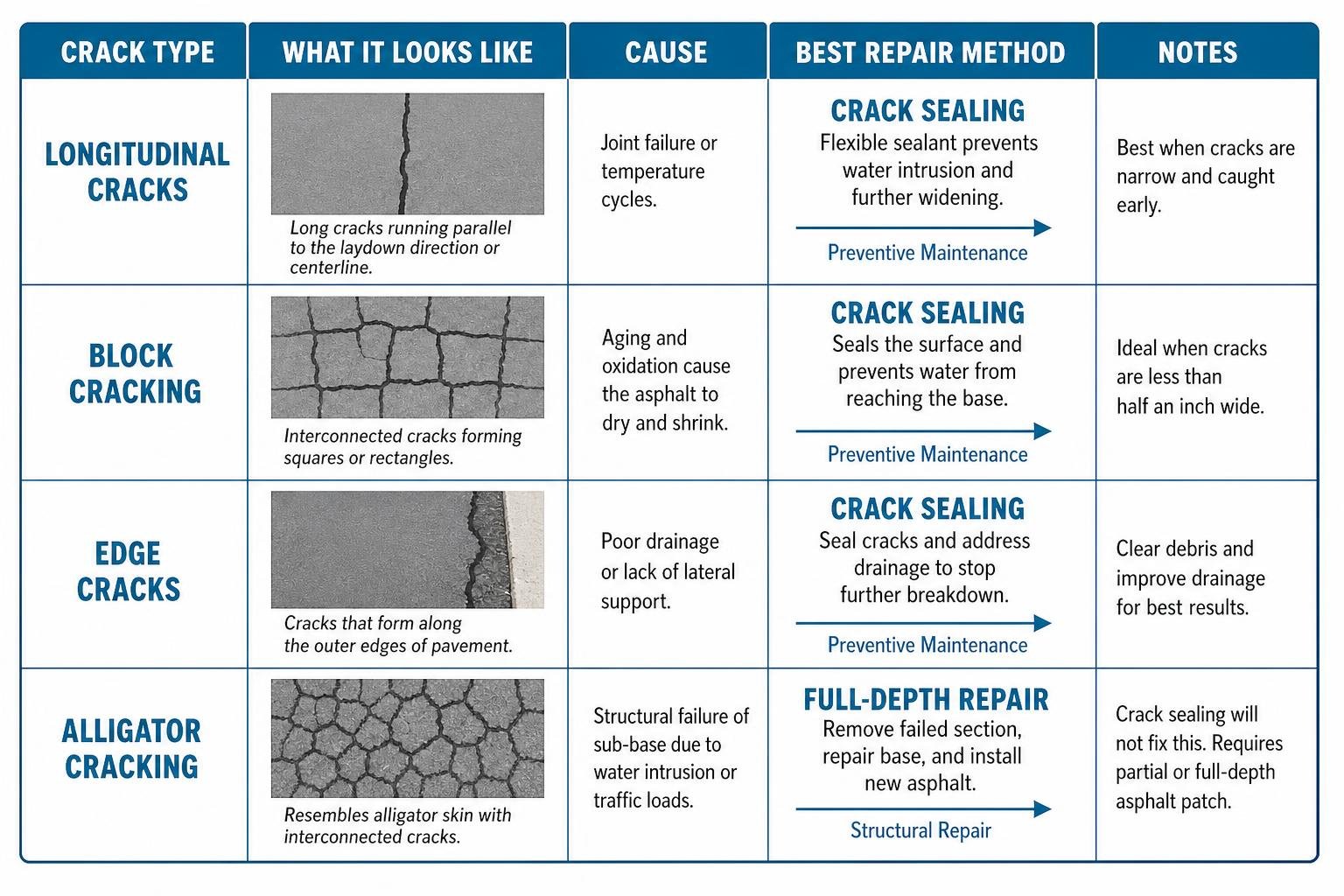
- Longitudinal Cracks: These run parallel to the laydown direction or the centerline of the pavement. They are often caused by joint failure or temperature cycles. If caught early, they are prime candidates for professional crack sealing.
- Block Cracking: These look like large, interconnected squares or rectangles. They typically form as the asphalt binder ages and dries out. If the cracks are less than a half-inch wide, we can seal them to prevent water intrusion.
- Edge Cracks: These form along the outer edges of the pavement, often due to poor drainage or lack of lateral support. Clearing nearby debris, improving drainage, and sealing these cracks will stop them from crumbling.
- Alligator Cracking: Named because it resembles the scaly skin of an alligator, this pattern indicates a deep structural failure of the sub-base. Water has penetrated the base, or the asphalt was under-designed for the traffic load. Standard crack sealing will not fix alligator cracking. Instead, these areas require a partial- or full-depth asphalt patch.
If you want to understand the exact steps to handle these issues, check out our guide on how to repair asphalt cracks to see how we restore pavement integrity.
The Professional Crack Sealing Process and Best Practices
To achieve a repair that lasts for years, you can’t simply pour cold liquid filler from a bottle over a dirty crack. A professional application requires a highly systematic approach, specialized heavy equipment, and commercial-grade materials.
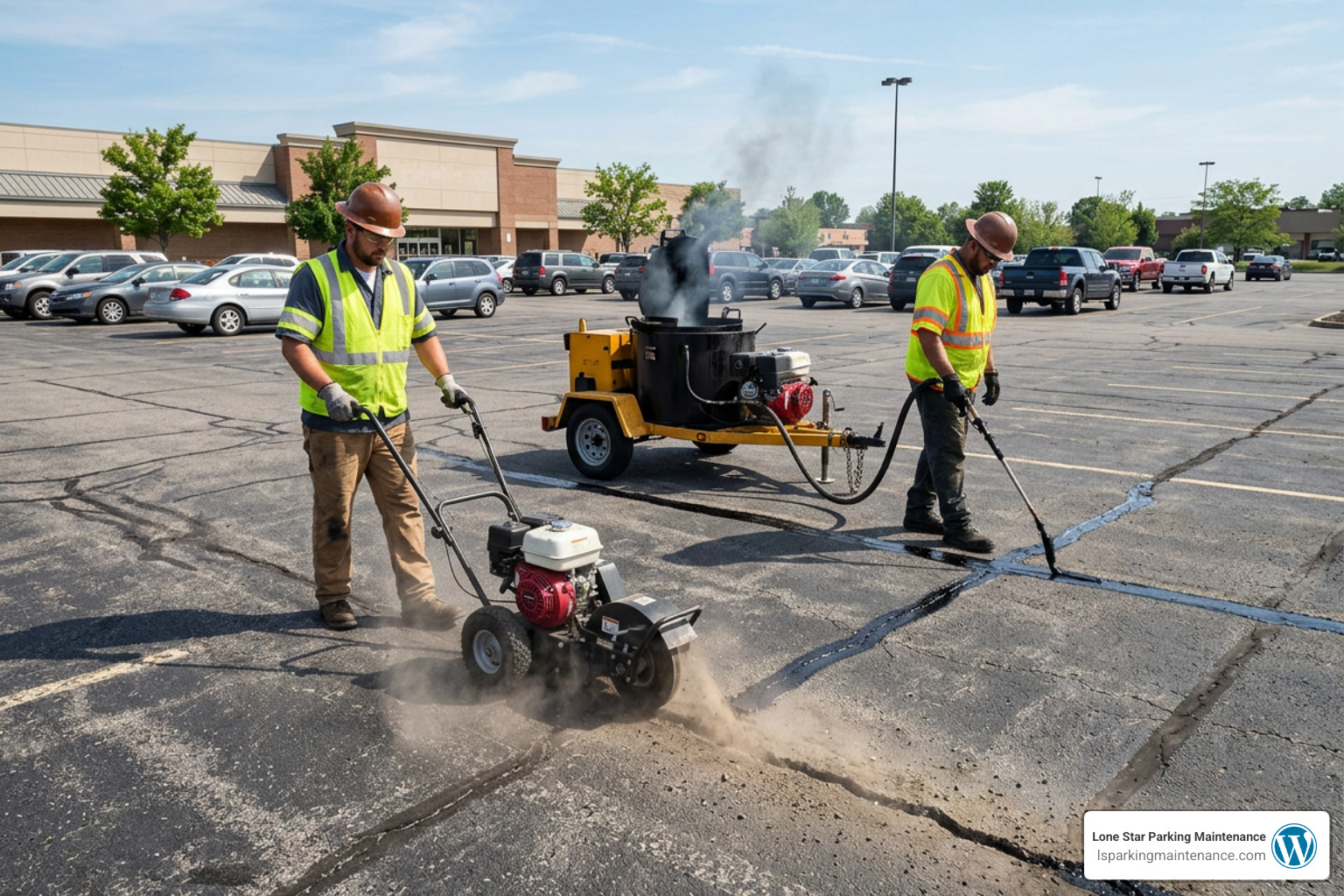
Here is how we execute the process at Lone Star Parking Maintenance:
Step 1: Surface Preparation and Crack Routing
First, we inspect the cracks to determine which ones are suitable for sealing. For working cracks, we often use a mechanical router to cut a clean, uniform reservoir along the crack. This creates a balanced width-to-depth ratio, allowing the sealant to expand and contract efficiently.
Step 2: Debris and Moisture Removal
Next, we blast out all dirt, vegetation, rocks, and dust using high-pressure compressed air or a heat lance. This step is absolutely critical. If there is any residual moisture or dirt inside the crack, the hot sealant will not bond to the asphalt walls, leading to premature failure.
Step 3: Hot-Pour Sealant Application
Once the crack is completely clean and dry, we inject a commercial-grade, polymer-modified rubberized sealant heated to approximately 380°F. We apply the material directly into the crack using a pressurized wand.
Step 4: Finishing and Squeegeeing
We use a specialized V-shaped squeegee to strike off the excess sealant, creating a flush, clean profile over the crack. This ensures traffic can roll smoothly over the repair without pulling the sealant out of the joint.
Step 5: Curing and Protection
The hot-pour material cools and cures quickly, usually within 10 to 30 minutes depending on the ambient temperature. Once cured, the parking lot can be reopened to traffic immediately, minimizing disruption to your tenants, customers, or residents.
DIY vs. Professional DFW Asphalt Crack Maintenance
It can be tempting to send a maintenance worker to a local home improvement store to buy a few jugs of cold-pour asphalt filler. However, DIY attempts on commercial parking lots almost always end in frustration and wasted money.
Here is why professional application is superior, especially in North Texas:
- Bonding Failures: Retail cold-pour fillers are water-based and dry through evaporation. They tend to shrink, crack, and peel out of the joint within a few months. Professional hot-pour sealants form a chemical and thermal bond with the surrounding asphalt.
- Inability to Handle Texas Heat: Cheap DIY fillers soften dramatically in summer temperatures, sticking to car tires and tracking into your buildings. Professional polymer-modified materials are formulated specifically to withstand high surface temperatures without tracking.
- Moisture Trapping: If a DIYer seals a crack without properly drying it with a heat lance, moisture gets trapped underneath. When the sun heats the pavement, this trapped water vaporizes, expands, and forces the sealant out, worsening the damage.
- Equipment Limitations: Professional crews use high-output routing machines, air compressors, heat lances, and specialized oil-jacketed melting kettles. This equipment allows us to clean and seal thousands of linear feet in a single day with surgical precision.
If you are curious about the differences in application, you can read our comparison on how to fill cracks quickly or explore our guide on why commercial properties should avoid basic blacktop crack sealing products. For high-traffic commercial spaces, investing in professional crack sealing services ensures your repairs hold up against heavy vehicles and extreme weather.
Key Benefits, Frequency, and Costs of Timely Maintenance
Investing in routine DFW asphalt crack maintenance is the single most effective way to protect your physical asset. Let’s look at the numbers. Industry data shows that 68.4% of municipal road maintenance budgets are dedicated to crack sealing and preventive care because it is highly cost-effective.
By sealing cracks early, you create an impermeable water barrier that prevents water from reaching the sub-grade. This stops pothole formation in its tracks. In fact, using crack sealing reduces long-term repair costs by nearly 39% compared to leaving pavements untreated.
To put this into perspective, let’s compare a proactive maintenance strategy against a reactive repair approach over a 15-year lifecycle:
| Maintenance Metric | Proactive Strategy (Regular Sealing & Sealcoating) | Reactive Strategy (Neglect & Patching) |
|---|---|---|
| Average Lifespan | 20–25 Years | 10–12 Years |
| Pothole Frequency | Extremely Rare | High |
| Trip Hazard Liability | Low / Managed | High |
| 15-Year Cumulative Cost | Low (Minor maintenance touch-ups) | High (Requires extensive patching & early resurfacing) |
| Aesthetic Appeal | Clean, dark black, professional | Faded gray, cracked, crumbling |
As a property owner, understanding the benefits of crack filling is essential for long-term budget planning.
Recommended Maintenance Schedule for North Texas Properties
To maximize your pavement’s lifespan, we recommend a structured maintenance cycle tailored to our local climate:
- Annual Visual Inspections: Walk your property every spring after the winter freeze cycles have ended. Look for new cracks, shifting joints, or areas where water pools.
- Crack Sealing (Every 2–3 Years): Address new cracks promptly before they exceed a half-inch in width. Keeping up with this cycle prevents water from penetrating the sub-base.
- Sealcoating Integration (Every 3–5 Years): Sealcoating should be applied after crack sealing. This acts as a protective shield against UV oxidation and motor oil spills.
- Pavement Markings and Striping: Whenever you sealcoat, you must restripe your parking lines, handicap spaces, and fire lanes to maintain ADA compliance and safety.
For a deeper dive into managing your property’s pavement assets, consult our comprehensive asphalt parking lot repair guide 2026. To learn more about how to set up a preventative plan, read our expert advice on Texas asphalt crack repair experts.
Cost Factors for Asphalt Crack Sealing in the DFW Area
In 2026, the average cost for professional asphalt crack sealing in the DFW area typically ranges between $0.50 and $2.00 per linear foot.
However, several variables will influence your final quote:
- Crack Width and Depth: Wider and deeper cracks require more hot-pour material and more extensive preparation, which increases material and labor costs.
- Total Project Size: Larger commercial properties with thousands of linear feet of cracks can benefit from economy of scale. Bulk pricing can bring the cost down closer to $0.40 per linear foot.
- Mobilization and Access: Parking lots that must be completed in multiple phases (to keep retail businesses open, for example) require more crew mobilizations, which can affect pricing.
- Preparation Level: Cracks choked with heavy weeds, dirt, or old, failing silicone sealant require extensive routing and cleaning, which adds to the labor time.
To get a better idea of how these costs are calculated, read our breakdown on how much to seal the deal.
DFW Neighborhoods and Commercial Corridors Served
Lone Star Parking Maintenance serves commercial, multi-family, and industrial properties across the entire Dallas–Fort Worth Metroplex. Whether you manage a retail strip center along I-20 in Arlington, a corporate headquarters in Addison, an industrial warehouse in Grand Prairie, or a residential community in Mansfield, we have crews ready to assist.
We regularly work in:
- Dallas County: Dallas, Addison, Carrollton, Garland, Irving, Grand Prairie
- Tarrant County: Fort Worth, Arlington, Mansfield, Kennedale, Keller, Grapevine
If you are located in the southern Metroplex or any surrounding area, our team provides comprehensive pavement care tailored to local soil and weather conditions. For large-scale commercial property managers looking for comprehensive maintenance, establishing a preventative pavement program is the key to protecting your long-term assets and maintaining curb appeal.
Frequently Asked Questions about DFW Asphalt Maintenance
How do I know if my parking lot needs crack filling?
You should schedule an inspection if you notice visible cracks wider than a hairline (about 3 mm), grass or weeds growing out of the pavement, or areas where water pools for long periods after a rainstorm. If your pavement is turning a light gray color, it is highly oxidized and likely needs both crack sealing and sealcoating. For more tips on what to look for, read our guide on how do I know if my parking lot needs crack filling.
Why is parking lot sealing important after crack filling?
While crack sealing addresses the deep, individual fissures, sealcoating acts as a protective shield for the entire pavement surface. It locks out water, protects against UV oxidation, prevents oil and gasoline from dissolving the asphalt binder, and restores that rich, dark black finish that makes your property look brand new.
You can find more details on this process in our article why is parking lot sealing important or read our complete guide to Everything You Need to Know About DFW Asphalt Sealing.
Can alligator cracks be repaired with standard crack filler?
No. Alligator cracking is a sign of structural failure in the sub-grade, usually caused by water saturation or heavy vehicle overloads. Applying standard crack filler over alligator cracks is a temporary cosmetic fix that will fail within weeks. These areas must be cut out and repaired with a partial- or full-depth asphalt patch.
To learn more about treating severe pavement damage, refer to our guide on asphalt patching and sealing best practices.
Conclusion
At the end of the day, your parking lot is the very first thing customers, tenants, and visitors see when they arrive at your property. A neglected, cracked, and pothole-ridden surface sends the wrong message—and exposes you to expensive trip-and-fall liabilities and vehicle damage claims.
By partner-scheduling regular DFW asphalt crack maintenance, you can protect your investment, boost your property’s curb appeal, and extend the lifespan of your pavement by years.
At Lone Star Parking Maintenance, we are committed to providing top-quality materials, utilizing industry-best standards, and ensuring a safe, seamless experience from start to finish. Ready to protect your asphalt? Learn more about our professional parking lot sealing and crack filling services and request your free on-site consultation today!