
How to Divert Water From a Parking Lot
Start by finding where water pools and where it can safely go. Grade the pavement so runoff flows to a catch basin, trench drain, or landscaped basin instead of sitting in parking spaces or crossing walkways. Where space allows, curb cuts can send water into a planted area. Every route needs a safe overflow path for heavy rain.
The right fix depends on your lot’s slope, soil, and existing drains. I’m Cason, and I’ll walk you through the options, from small flow changes to larger drainage upgrades.
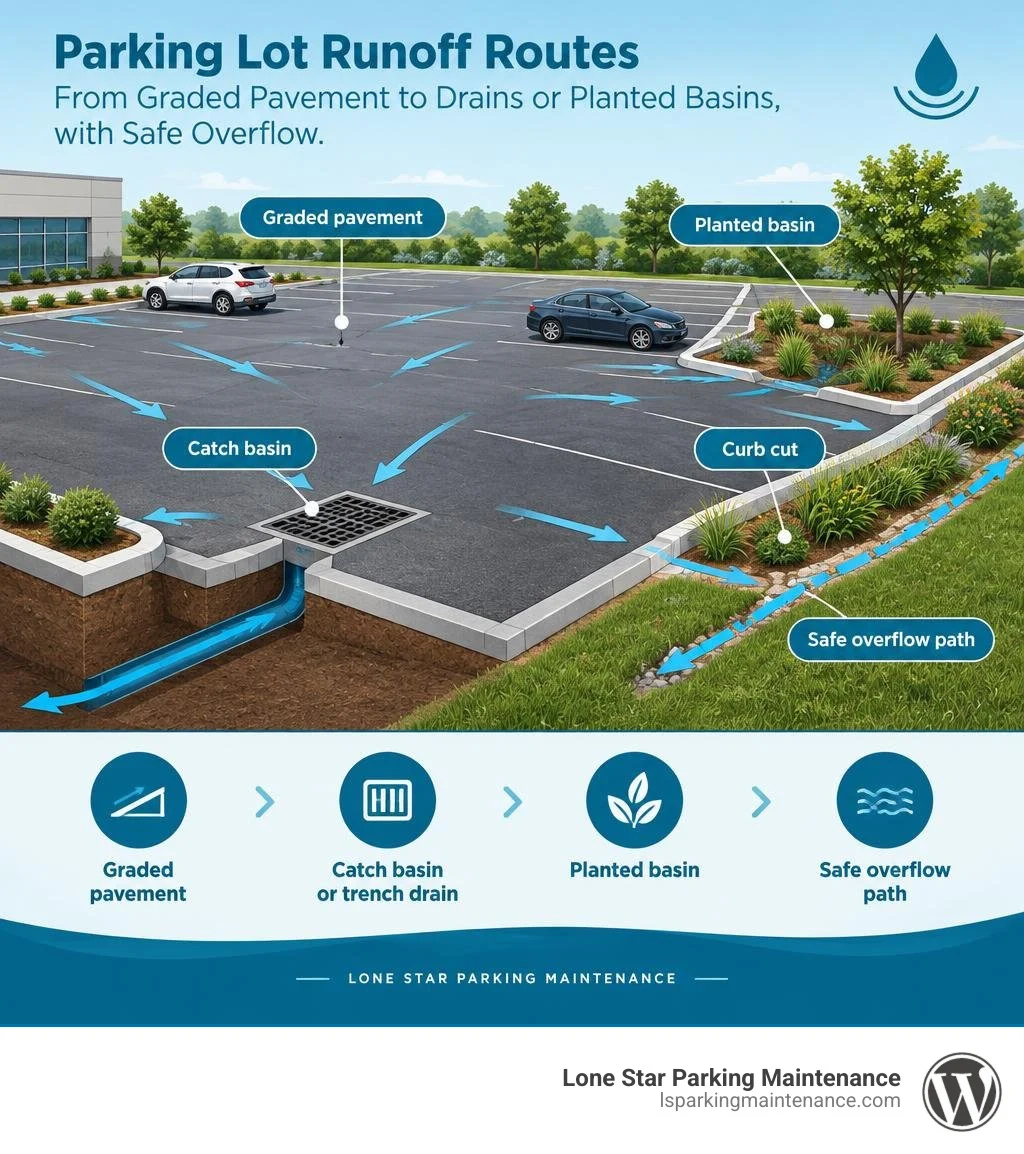
Parking lot water diversion terms at a glance:
Primary Methods for Commercial Parking Lot Water Diversion
When rain hits an impervious asphalt or concrete surface, it creates instantaneous runoff. Without deliberate engineering, that sheet flow concentrates into low spots, creating hydroplaning hazards, eroding landscape perimeters, and seeping into the subbase to crack your pavement. Effective catchment design balances surface velocity, collection structures, and downstream release.
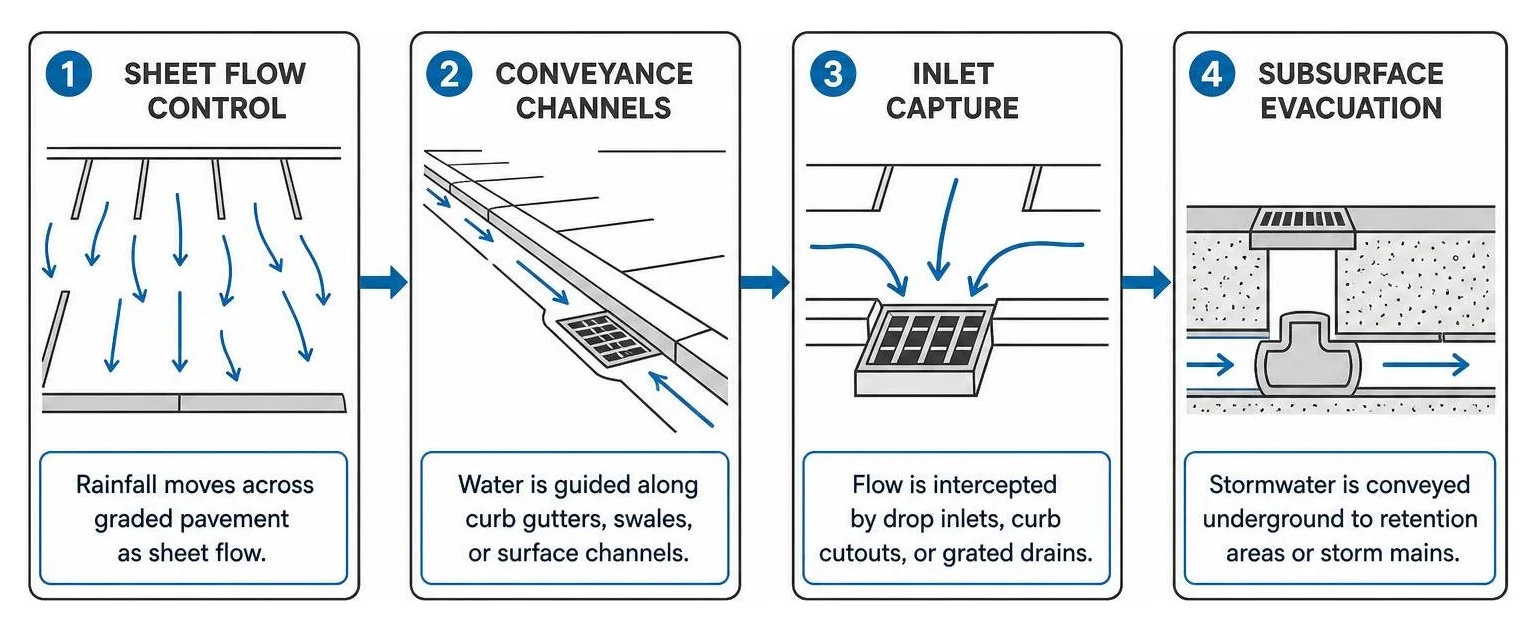
To manage heavy rainfall events, we rely on practical parking lot drainage solutions that separate runoff into manageable stages:
- Sheet Flow Control: Directing thin sheets of surface water across graded asphalt before it pools.
- Conveyance Channels: Guiding the water along curb gutters, swales, or surface channels.
- Inlet Capture: Intercepting surface flow through drop inlets, curb cutouts, or grated drains.
- Subsurface Evacuation: Transporting stormwater through underground pipe networks to retention areas or municipal storm mains.
Surface vs. Subsurface Conveyance Systems
Every property needs the right mix of surface pathways and underground infrastructure. Surface systems are accessible and easy to inspect, while subsurface piping moves high volumes of water out of high-traffic zones without disrupting vehicle flow.
- Trench Drains: Continuous, narrow surface channels topped with heavy-duty grates. They capture sheet flow across wide drive lanes, garage thresholds, and loading docks.
- Catch Basins: Subterranean concrete boxes that sit beneath surface grates. Installing traffic-rated catch basins ensures the structures withstand regular delivery trucks and daily customer traffic without collapsing.
- French Drains: Perforated pipes surrounded by washed gravel and wrapped in geotextile fabric. Strategic french drain installations intercept subsurface water migrating beneath pavement edges before it softens the subgrade.
- Underground Culverts: High-capacity smooth interior corrugated polyethylene or concrete pipes designed to move storm volume away from low-lying areas.
A reliable system relies on regular storm drain maintenance to remove sediment, trash, and leaf litter that quickly reduce intake capacity during downpours.
Small-Scale Barriers and Temporary Parking Lot Water Diversion
When major excavation isn’t practical or you need quick flow control, surface-mounted barriers can redirect water away from building entrances, garage ramps, and sunken bays:
- Concrete Diversion Berms: Low-profile, poured-in-place concrete ridges (typically 1 to 2 inches high and 3 to 6 inches wide with tapered edges). They route nuisance runoff into adjacent landscape beds without scraping vehicle undercarriages.
- Rubber Threshold Seals: Heavy-duty rubber and polyurethane strips secured with commercial masonry anchors and polyurethane adhesive to keep wind-driven rain from crossing garage doors and pedestrian ramps.
- Asphalt Diversion Humps: Custom-profiled asphalt berms laid across driving lanes to guide water toward catch basins.
- Reusable Water-Filled Barriers: Heavy-duty, UV-resistant PVC tubes deployed during sealcoating or fleet power washing. They contain washdown water and prevent detergents, oil, and loose debris from entering municipal storm drains.
Engineered Slopes, Curb Cuts, and Flow Redirection Tactics
Water naturally follows gravity, but uncontrolled water damages property lines and undermines foundations. Under Texas Water Code Section 11.086, property owners are prohibited from diverting surface runoff in a manner that damages neighboring properties. Proper grading and on-site retention ensure you handle your runoff responsibly.
| Diversion Method | Primary Function | Ideal Application | Flow Capacity |
|---|---|---|---|
| Topographical Grading | Guides broad sheet flow | Open parking bays and drive aisles | High (distributed volume) |
| Trench Drains | Intercepts cross-slope sheet flow | Garage aprons and pedestrian crosswalks | High (concentrated intake) |
| Curb Cutouts | Transfers water into bio-basins | Perimeter islands and median strips | Moderate |
| Engineered Swales | Filters and slows runoff velocity | Property perimeters and rights-of-way | Moderate to High |
| Surface Berms | Reroutes minor nuisance pooling | Dock ramps and garage entryways | Low to Moderate |
Careful planning and commercial parking lot drain installation protect your pavement base from saturated soil conditions that trigger asphalt raveling, potholes, and rutting.
Topographical Grading and Slope Calculation
Proper grading is the foundation of any dry, long-lasting parking lot. The primary rule of commercial paving is simple: never build a dead-flat asphalt surface.
- Minimum Longitudinal Slope: Asphalt parking lots must maintain a minimum slope of 1.0% (a 1-foot drop per 100 linear feet of run). For concrete lots, a 0.5% minimum grade is acceptable due to its smoother, uniform surface.
- Cross Slopes (Crowns): Drive aisles should feature a 1.5% to 2.0% crown, shedding water outward toward perimeter curbs rather than letting it sit in driving lanes.
- Eliminating Depressions: Sags and birdbaths happen when contractors fail to achieve 95% Standard Proctor density on subgrade soils before paving.
For transitions, driveways, and sloped approaches, installing trench drains intercepts sheet flow before it reaches low points or entrances.
Curb Inlets and Perimeter Depressions
Standard concrete barrier curbs often trap water on the asphalt. Retrofitting curbs with cutouts lets you divert runoff off the pavement into green spaces:
- Curb Openings: Openings 12 to 24 inches wide cut through curb profiles let storm runoff exit into sunken bio-swales and perimeter medians.
- Energy Dissipation Aprons: Placing riprap stone or articulated concrete blocks directly beneath curb cuts slows water velocity and prevents soil erosion.
- Integrated Sediment Traps: A 2- to 3-inch drop from the asphalt lip into the basin prevents sediment from backing up onto the pavement.
- Grate Protection: Outfitting perimeter storm inlets with heavy-duty drain grates catches debris while keeping tires and pedestrians safe.
Green Infrastructure and Permeable Surfaces for Runoff Reduction
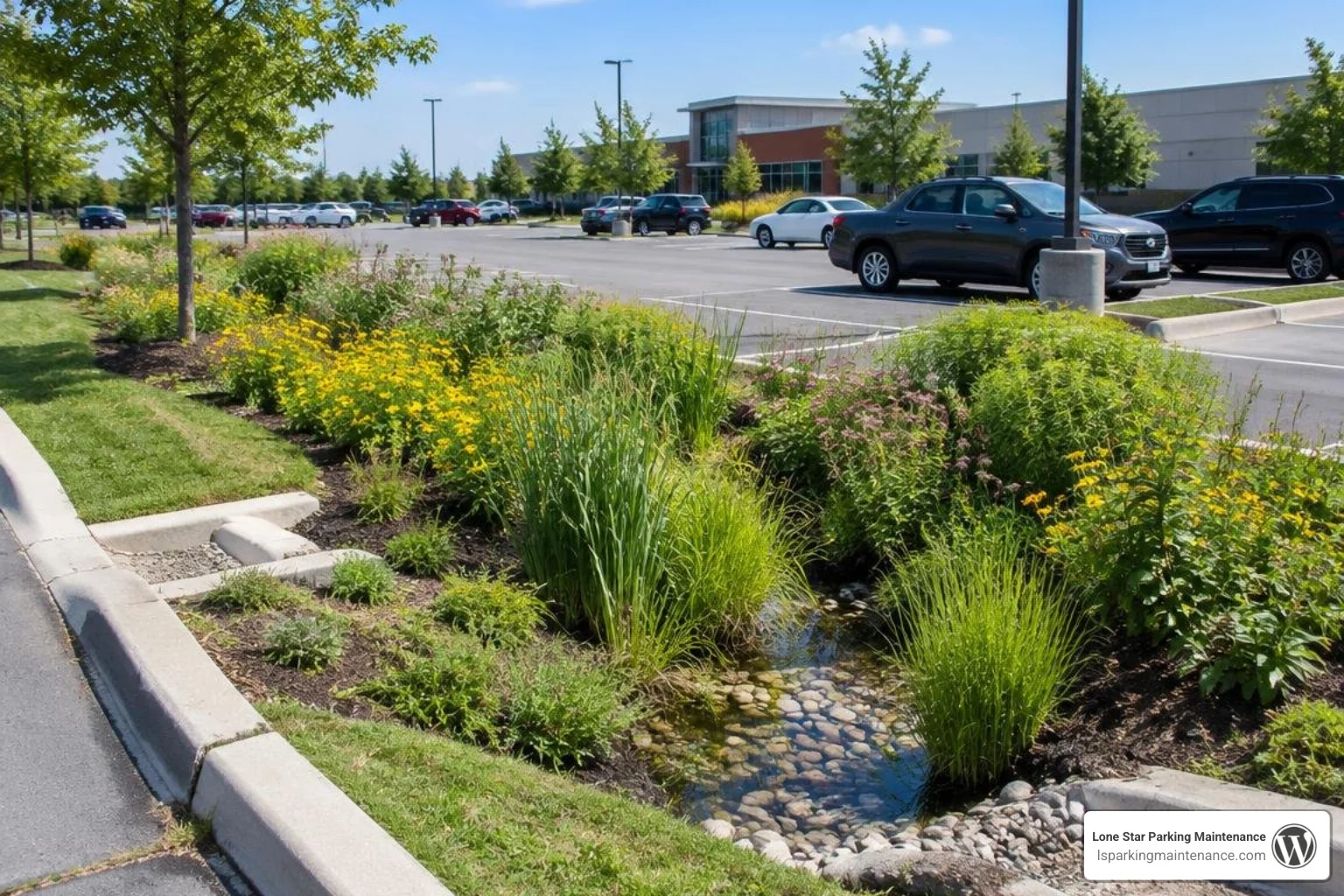
Commercial stormwater design is shifting away from purely funneling water into underground pipes. Low-Impact Development (LID) strategies treat runoff as a resource, using it for passive landscape irrigation and aquifer recharge while reducing the load on municipal systems.
Infiltration Basins, Bioswales, and Passive Irrigation
Bioswales and bioretention cells are engineered, vegetated depressions designed to capture, filter, and infiltrate runoff within 24 to 48 hours.
According to EPA bioretention design standards, these systems remove 95% to 98% of heavy metals (such as cadmium, zinc, and lead) and filter out automotive hydrocarbons before runoff reaches local waterways.
Key design elements of engineered vegetated swales and bioretention cells include:
- Storage Depth: A maximum ponding depth of 6 inches ensures water clears quickly, preventing mosquito breeding.
- Soil Filtration Mix: A blend of 80% to 88% coarse sand, 8% to 12% clay/silt, and 3% to 5% organic matter ensures infiltration rates between 1 and 8 inches per hour.
- Overflow Structures: Overflow grates set 6 inches above the basin floor (and 2 inches below the curb height) allow extreme storms to discharge safely into city systems.
- Native Landscaping: Selecting deep-rooted, drought-tolerant native plants provides natural shade, lowers ambient asphalt temperatures, and eliminates extra irrigation costs.
For actionable steps to implement these features on your property, check out our parking lot drainage tips.
Permeable Pavements and Porous Paving Systems
Permeable pavements allow stormwater to pass directly through the surface into an underlying stone reservoir for natural infiltration and ground recharge.
Recent hydrological research on permeable pavements shows that even under intense rainfalls of 2 mm per minute, permeable systems delay initial runoff for at least 42 minutes, reducing peak runoff rates by nearly 50%. Furthermore, permeable surfaces reduce total nitrogen by up to 40% and phosphorus by up to 65%.
In major commercial developments, large-scale permeable parking installations have eliminated the need for multi-acre retention ponds. For example, a 15-acre permeable plastic grid lot in Texas can drain up to 1,000 inches of rain per hour with zero surface runoff. This project recycled over 862,000 pounds of post-consumer plastic and freed up land for 1,000 additional parking spaces.
Retrofitting Existing Lots with Parking Lot Water Diversion Systems
You don’t always need a complete property overhaul to add modern water diversion. Strategic retrofits can dramatically improve drainage performance:
- Parking Island Conversions: Excavate raised, mulch-choked parking lot islands into sunken bioretention cells fed by curb cuts.
- Wheel-Track Paving: Replacing full asphalt drive bays with permeable pavers in the parking stalls—while keeping standard asphalt in the high-traffic center aisles—can cut impervious surface area by more than 50%.
- Targeted Underdrain Installation: In areas with dense clay subgrades, excavating narrow perimeter trenches and adding perforated underdrains relieves hydraulic pressure against pavement edges.
- Asphalt Milling and Regrading: Milling out low spots and laying a fresh, crowned asphalt course redirects water away from structural foundations and toward catch basins.
Frequently Asked Questions About Parking Lot Drainage
How much slope is required for effective parking lot water runoff?
Asphalt parking surfaces require a minimum slope of 1.0% (1 foot of fall per 100 feet) to prevent standing water. Concrete lots can function at a 0.5% grade due to their rigid, uniform finish. High-traffic drive aisles should incorporate a 1.5% to 2.0% cross slope crown to shed water quickly toward side gutters and catch basins.
How do soil types affect the performance of parking lot infiltration systems?
Sandy and loamy soils drain easily, with percolation rates above 0.2 inches per hour, allowing water to infiltrate naturally. Heavy, expansive clay soils absorb water very slowly. When installing bioswales or permeable pavers over clay subgrades, you must install perforated underdrain pipes and an aggregate reservoir base to carry excess water to municipal storm lines once the stone storage fills.
What routine maintenance is required for parking lot drainage and diversion systems?
Catch basins and trench drains require bi-annual cleanings to remove sediment, trash, and gravel before lines clog. Bioswales and rain gardens should be inspected after storms exceeding 1 inch of rain; replace hardwood mulch every two to three years and clear weeds regularly. Permeable pavers require annual regenerative air vacuum sweeping to prevent silt and fine debris from clogging the aggregate joints.
Conclusion: Protecting Pavement Integrity and Property Value
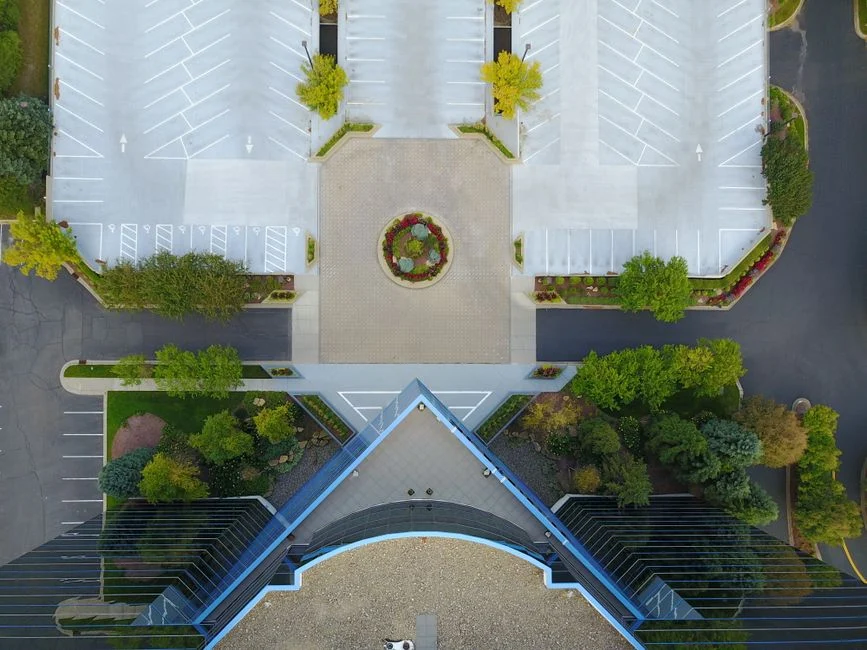
Water is the single greatest threat to parking lot longevity. Uncontrolled pooling softens subgrade soils, creates dangerous potholes, and exposes commercial property owners to serious slip-and-fall and vehicle damage liabilities.
By combining engineered surface slopes, catch basins, curb cuts, and green bioretention features, you protect your pavement, improve site aesthetics, and stay compliant with stormwater regulations.
At Lone Star Parking Maintenance, we help commercial property managers protect their pavement investments across the DFW Metroplex. Whether you need asphalt repairs, regrading, catch basin installation, sealcoating, or comprehensive parking lot maintenance services, our team delivers durable, high-performance solutions. Reach out to us today to inspect your property’s drainage and keep your pavement dry year-round.