
Garage Floor Striping That Stands Up to Traffic
For a busy garage, choose two-part epoxy for durable, long-term lines. Heavy-duty floor tape is a good choice when you need quick installation or may change the layout. Traffic paint costs less upfront but usually needs more frequent touch-ups. Whichever method you choose, clean away oil, check for moisture, and prepare the surface before striping. Even a tough coating can peel if it cannot bond to the floor.
Clear lines help drivers find bays and make pedestrian routes easier to see. I’m Cason, and I’ll walk you through how to choose and apply markings that fit your garage. For broader facility planning, the Occupational Safety and Health Administration provides guidance on floor marking color codes that can help you align your layout with recognized safety practices.
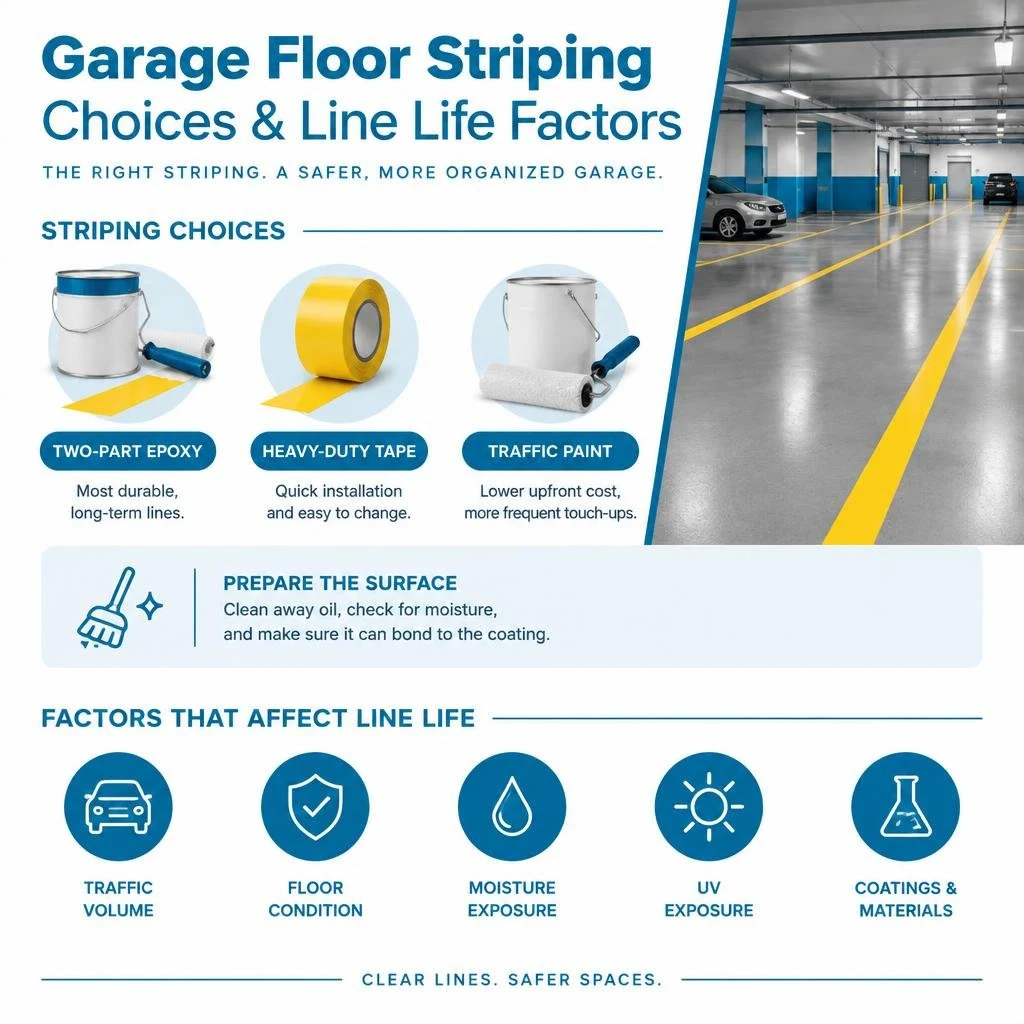
Quick garage floor striping definitions:
Core Materials for Long-Lasting Garage Floor Striping
Selecting the right marking material makes the difference between crisp, multi-year demarcation and flaking lines that disappear after a single season. Vehicles tracking in road grit, chemical drippings, and hot tires subject garage floors to intense physical stress.
| Striping System | Durability Rating | Chemical & Oil Resistance | Hot-Tire Pickup Resistance | Typical Cure / Return to Service Time | Cost Efficiency |
|---|---|---|---|---|---|
| Heavy-Duty Floor Tape | 2–4 Years | Moderate to High | High (Beveled Edges) | Immediate (0 Hours) | Moderate Initial Cost / Low Labor |
| Standard Traffic Paint | 1–2 Years | Low to Moderate | Low to Moderate | 1–4 Hours | Lowest Initial Cost / Frequent Recoats |
| Two-Part High-Solids Epoxy | 3–7+ Years | Excellent | Superior | 24–48 Hours (Full Cure) | Higher Initial Cost / Lowest Cost per Year |
Heavy-Duty Floor Marking Tape
Industrial-grade PVC floor marking tapes are engineered with beveled edges and thick rubber-based or acrylic adhesives. Unlike standard utility tapes that tear upon contact with vehicle tires, heavy-duty marking tapes resist sheer forces from steering maneuvers.
The primary advantage is speed: peel, stick, tamp, and drive over immediately. For facilities that require modular updates or cannot afford operational downtime, heavy-duty tape provides a durable semi-permanent boundary that can be removed cleanly without heavy concrete grinding.
Standard Acrylic and Traffic Paints
Waterborne and solvent-based acrylic paints represent the most common entry-point materials. They dry rapidly—often in under an hour—making them cost-effective for basic bay identification.
Standard acrylics perform well in light-traffic storage areas, but heavy vehicle braking and turning will cause noticeable wear over time. If you use standard coatings, review our guide to professional parking lot line painting to understand how traffic wear patterns dictate your repainting schedule.
Two-Part High-Solids Epoxy Systems
When you need permanent demarcation that withstands forklifts, delivery vans, and heavy automotive traffic, a two-component 100% solids epoxy is the premier solution. Industrial formulations utilize factory-ground pigment powders rather than liquid tints, delivering deep, opaque color saturation and superior UV stability.
High-performance epoxy systems boast an abrasion loss rating as low as 6 milligrams, compared to 25 to 40 milligrams for standard liquid-tinted retail epoxies. Furthermore, advanced formulations cure reliably down to 40°F, allowing installation during cooler months across the DFW Metroplex without risking improper cross-linking.
Concrete Surface Preparation to Prevent Coating Failures
More than 80% of coating and striping failures stem from improper surface preparation rather than defective materials. Concrete is naturally porous—absorbing up to 95% of spilled water—but it also traps automotive oils, tire plasticizers, and curing compounds that prevent coatings from bonding.
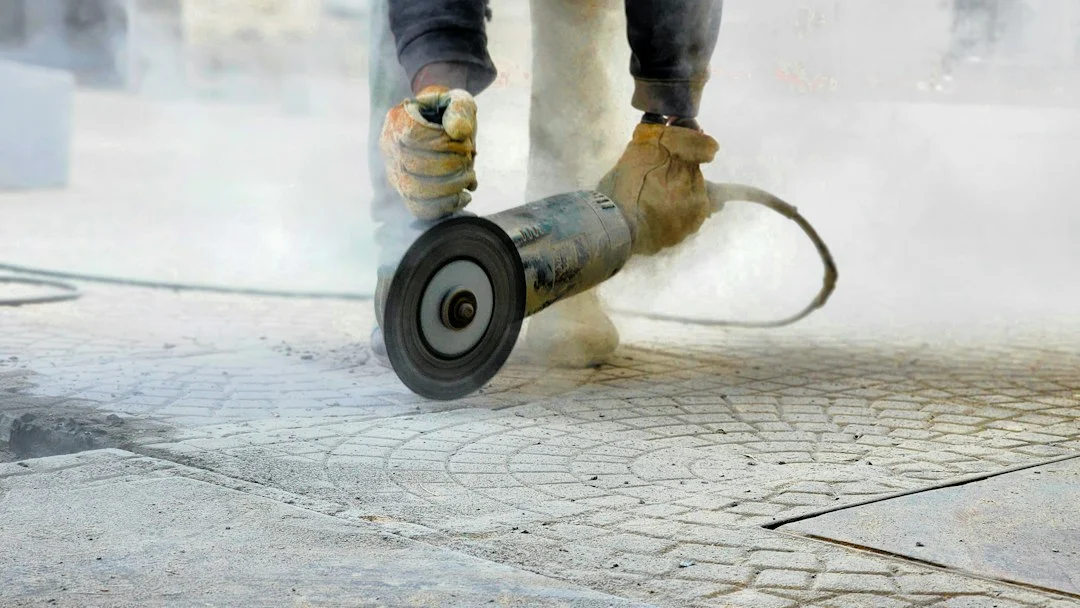
To prevent hot-tire pickup, where hot tires cool down, contract, and pull coatings right off the floor, concrete must be thoroughly cleaned, degreased, and profiled. As part of routine garage floor maintenance, use trisodium phosphate (TSP) or an industrial alkaline degreaser to emulsify embedded hydrocarbons before taking any mechanical profiling steps.
Testing for Moisture, Sealers, and Concrete Laitance
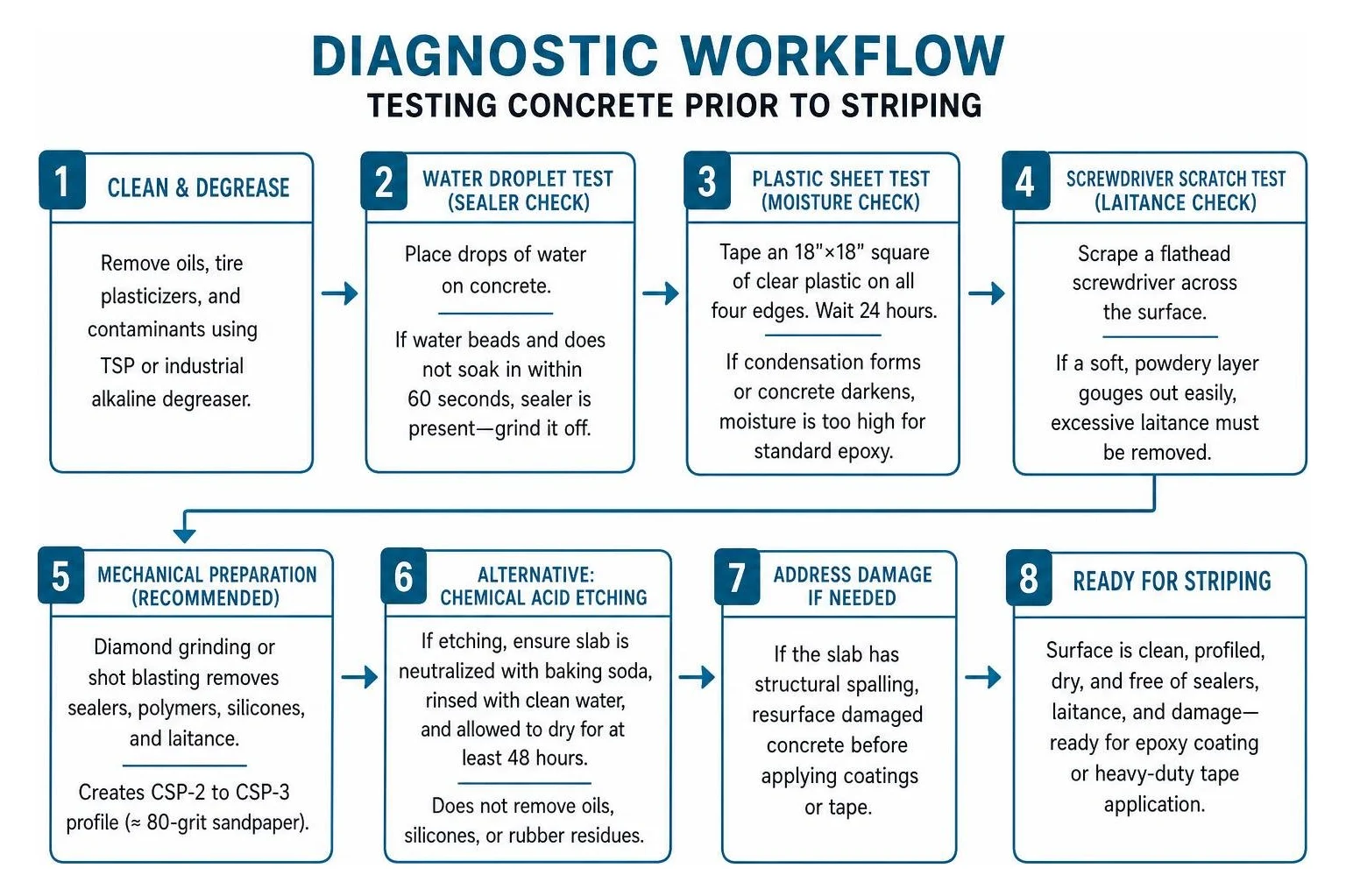
Never apply a permanent epoxy coating or heavy-duty tape before running these three baseline diagnostics:
- Water Droplet Test (Sealer Check): Place several drops of water on the concrete. If the water beads rather than soaking in within 60 seconds, the floor has a curing compound or penetrating sealer that must be ground off.
- Plastic Sheet Test (Moisture Check): Tape an 18-by-18-inch square of heavy clear plastic to the floor using duct tape on all four edges. Wait 24 hours. If condensation collects under the plastic or the concrete darkens significantly, moisture vapor transmission is too high for standard epoxy without an underlying moisture-blocking primer.
- Screwdriver Scratch Test (Laitance Check): Scrape a flathead screwdriver firmly across the bare concrete. If a soft, powdery layer gouges out easily, you are dealing with excessive laitance (a weak surface layer of cement dust and water from when the slab was poured). This weak layer must be removed so your lines do not pull up weak concrete underneath.
Mechanical Grinding vs. Chemical Acid Etching
Creating an open, porous surface with the proper Concrete Surface Profile (CSP) is non-negotiable.
- Diamond Grinding & Shot Blasting: Mechanical preparation using a low-speed planetary diamond grinder or edge grinder is the professional gold standard. It physically removes sealers, tire polymers, silicone residues, and laitance, creating an ideal CSP-2 to CSP-3 texture resembling 80-grit sandpaper.
- Chemical Acid Etching: While popular for residential DIYers using muriatic acid, acid etching does not dissolve oils, silicones, or rubber tire residues. If you choose etching, ensure the slab is completely neutralized with a baking soda wash, rinsed with clean water, and allowed to dry for at least 48 hours. If the slab has structural spalling, evaluate resurfacing damaged concrete before laying down your lines.
Step-by-Step Installation Techniques for Crisp Lines
Razor-sharp lines signal professionalism and clear vehicle navigation. Sloppy, bleeding edges make even a brand-new facility look poorly managed.
Layout Planning and Safety Compliance Standards
Before opening a can of paint or unrolling tape, map out your floor plan. Industrial facilities and commercial service bays must adhere to designated color-coding frameworks:
- Safety Yellow: Marks primary traffic lanes, forklift aisles, and physical hazard boundaries.
- Safety Red: Reserved for fire protection equipment, emergency shut-offs, and critical stop points.
- Safety White: Delineates standard vehicle parking stalls and general storage areas.
- Safety Blue & Green: Used for equipment staging, waste containers, or first-aid stations.
For commercial service shops handling vehicle inspections, adhering to clear layout dimensions—such as the standard 300mm bay boundary lines—keeps operations safe and uniform. Ensure your layout prevents operational citations by reviewing compliance standards and line markings.
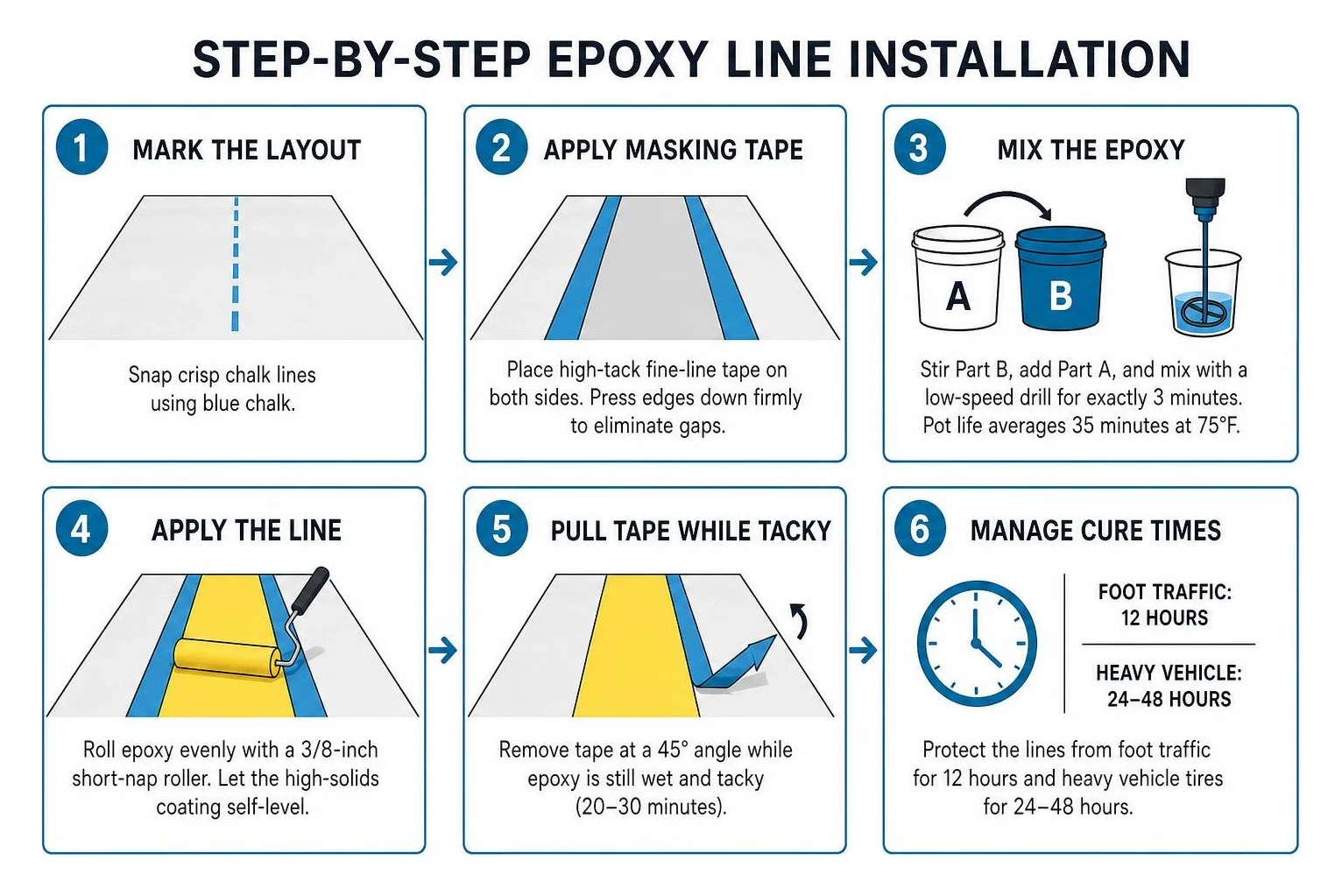
Step-by-Step Guide to Garage Floor Striping with Epoxy and Paint
- Mark the Layout: Snap crisp chalk lines using blue chalk (avoid red chalk, as it can bleed through light-colored paints).
- Apply Industrial Masking Tape: Lay high-tack fine-line masking tape along both outside edges of the chalk line. Press the tape edges down firmly using a clean roller or putty knife to eliminate air gaps.
- Mix the Epoxy: For two-part systems, thoroughly stir Part B (resin) to disperse settled pigment powders. Pour Part A (hardener) into Part B and mix with a low-speed drill and paddle mixer for exactly 3 minutes. Respect the pot life, which averages 35 minutes at 75°F.
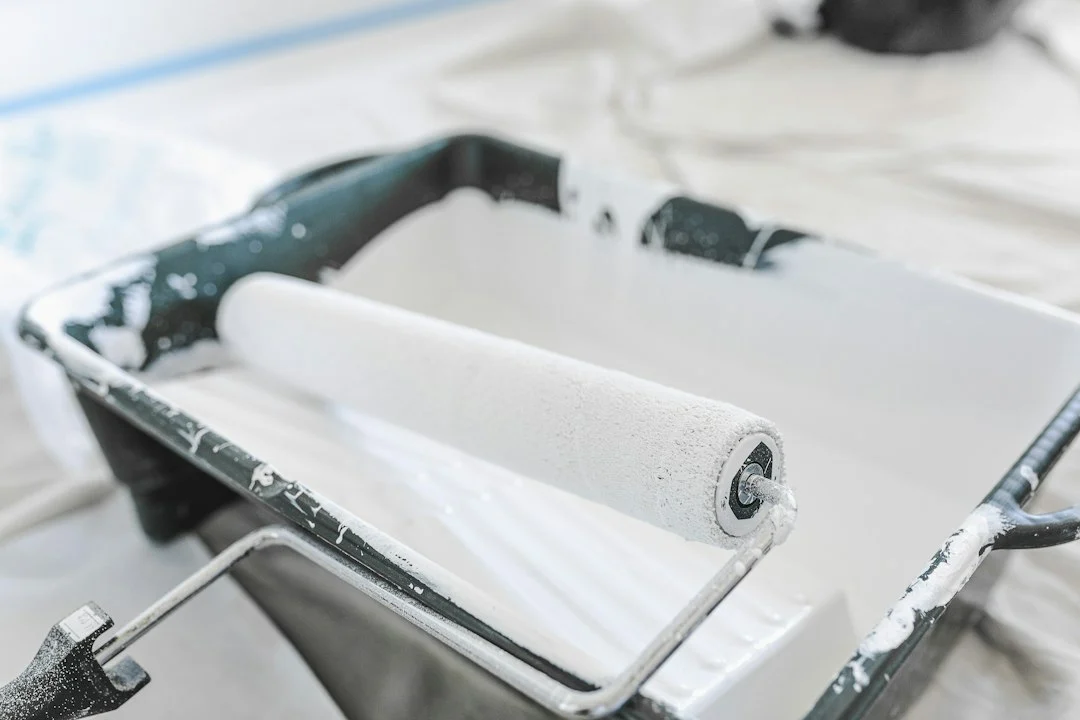
- Apply the Line: Using a high-density 3/8-inch short-nap roller, roll the epoxy evenly down the masked channel. Avoid overworking the material; let the high-solids formulation self-level. For larger multi-bay parking garages, professional contractors use specialized parking lot painting equipment to maintain consistent dry-film thickness.
- Pull Tape While Tacky: Do not let the epoxy fully cure before removing the masking tape. Pull the tape up at a sharp 45-degree angle while the material is still wet and tacky (usually within 20 to 30 minutes of application). This produces crisp, clean edges without tearing the coating film.
- Manage Cure Times: Protect the lines from foot traffic for 12 hours and heavy vehicle tires for 24 to 48 hours.
Industrial Tape Application Process
When installing heavy-duty PVC floor tape:
- Clean the floor and follow up with a 90% isopropyl alcohol wipe along the installation path.
- Unroll the tape smoothly without over-stretching it, which causes tension rebound and edge lifting.
- Cut butt joints cleanly at all 90-degree intersections rather than overlapping corners.
- Run a 100-pound weighted tamping roller directly over the applied tape at least three times to activate the pressure-sensitive adhesive.
Industrial Performance vs. DIY Approaches and Common Pitfalls
Commercial vs. DIY Garage Floor Striping Systems
Retail boxed striping kits often rely on waterborne or solvent-thinned epoxies with liquid colorants. While cheap, liquid color tints often produce washed-out lines that require multiple coats to cover dark concrete.
Industrial systems utilize factory-ground pigment powders suspended in 100% solids epoxy matrices. A single gallon of industrial safety striping epoxy covers up to 450 linear feet at a standard 4-inch line width, covering dark grey concrete in a single coat without bleeding or thinning.
Before applying striping across expansion joints or structural cracks, inspect the slab. Learn the right steps for repairing floor cracks and joints to keep concrete movement from snapping your line markings.
Common Application Mistakes and How to Avoid Them
- Painting Over Unprofiled Concrete: Paint applied to smooth, power-troweled concrete will peel as soon as tires turn on it. Always grind or etch to a porous profile.
- Waiting Too Long to Pull Masking Tape: Leaving tape on until the epoxy hardens creates ragged, chipped edges. Always remove tape while the coating is wet.
- Applying in Low Temperatures Below Rating: Applying standard epoxies below 50°F halts the chemical curing reaction, leaving a tacky film. Verify that your epoxy is rated for low-temperature curing down to 40°F.
- Trapping Moisture Under the Film: Painting over damp concrete traps hydrostatic vapor, leading to blistering. Ensure the concrete is completely dry.
- Stripe Failure from Old Flaking Layers: Applying new striping over peeling paint only bonds the new stripe to a failing layer. Remove old coatings by mechanical abrasion before restriping worn garage layouts.
Frequently Asked Questions About Garage Line Striping
How long do different striping methods last under heavy vehicle traffic?
Two-part 100% solids epoxy striping typically lasts between 3 and 7 years in active commercial garages. Heavy-duty PVC tape lasts 2 to 4 years, while standard traffic paint requires refresh coats every 12 to 24 months depending on turning friction and tire traffic.
What are the standard OSHA safety colors for garage floors?
OSHA specifies Safety Yellow for physical hazards, aisles, and primary traffic lanes; Safety Red for fire protection, stop buttons, and hazard perimeters; Safety Green for first aid and safety equipment; Safety White for general traffic marking and stall boundaries; and Safety Blue for staging and informational demarcations.
Can you stripe directly over a sealed or coated concrete floor?
No. You should never apply striping directly over an unprofiled sealer or existing glossy epoxy. You must mechanically scuff the existing coating using 80-to-100-grit sandpaper or a diamond grinding pad, wipe away the dust with a solvent cleaner, and then apply your striping material within the recoat window.
Conclusion
Durable garage floor markings keep traffic flowing smoothly, protect pedestrians, and keep your facility organized. Whether you opt for the rapid deployment of heavy-duty floor tape or the permanent, chemical-resistant strength of a two-part 100% solids epoxy system, success always comes down to proper surface profiling and precise installation.
At Lone Star Parking Maintenance, we provide complete surface and parking facility solutions across the DFW Metroplex. From mechanical surface preparation and power washing to crisp layout design and durable coatings, we ensure your facility meets all commercial standards. Contact us today for professional parking lot striping and garage marking services tailored to your facility’s traffic demands.