
Parking Lot Bumper Stops Protect More Than Cars
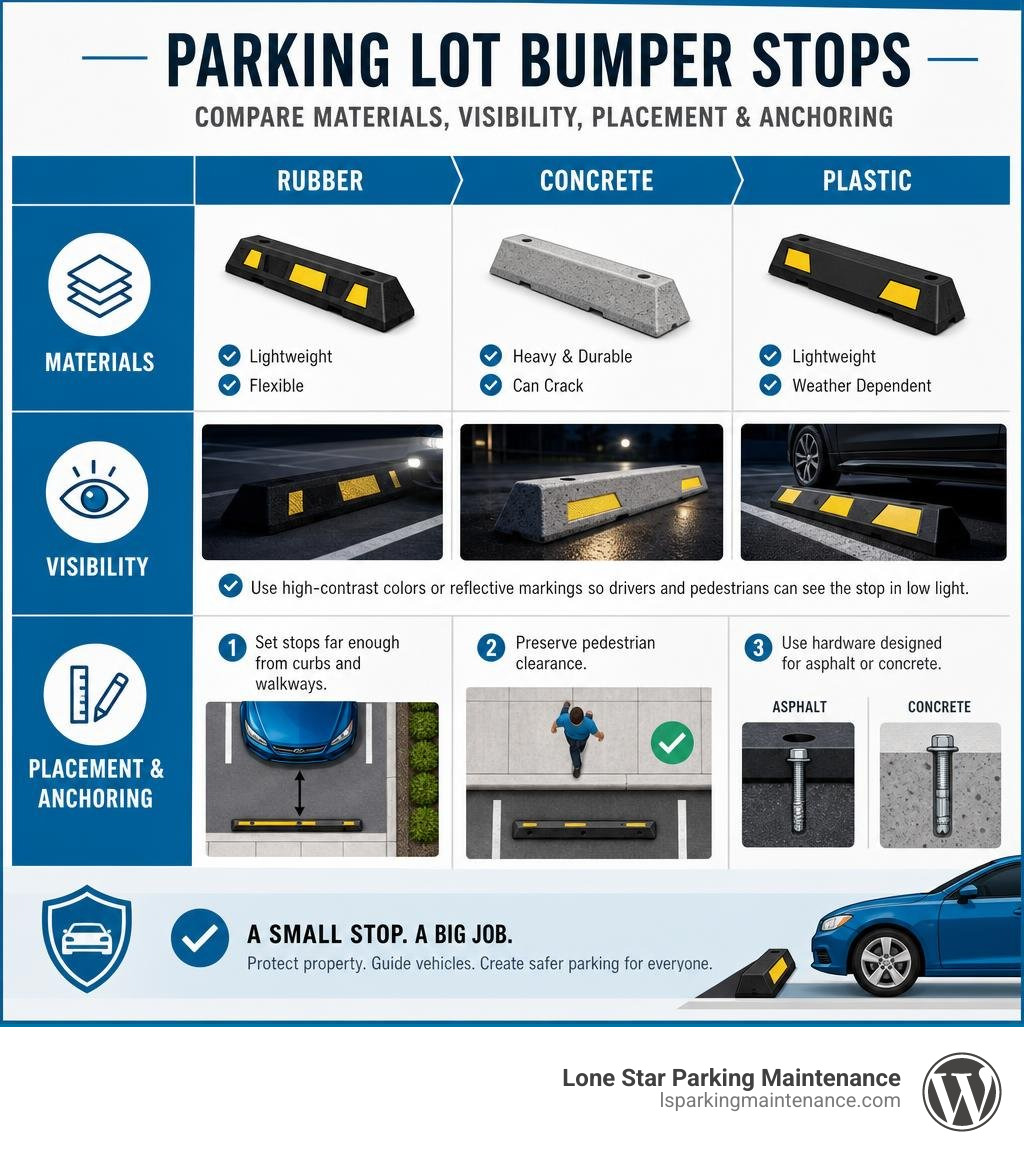
Parking lot bumper stops, also called wheel stops or parking blocks, help drivers stop before they reach sidewalks, landscaping, walls, and other vehicles. For most commercial lots, the right choice comes down to three things:
- Material: Rubber is lighter and flexible; concrete is heavy and durable but can crack; plastic is light but may not suit every climate or traffic level.
- Visibility: Use high-contrast colors or reflective markings so drivers and pedestrians can see the stop in low light.
- Placement and anchoring: Set stops far enough from curbs and walkways to preserve pedestrian clearance, then use hardware designed for asphalt or concrete.
A wheel stop is a small detail with a big job. It helps control vehicle position, reduces the chance of costly property damage, and can make a parking area easier to navigate. A typical 6-foot rubber stop weighs about 35.5 pounds, while a comparable concrete unit can weigh roughly 260 to 275 pounds – a difference that affects installation labor, maintenance, and replacement planning.
I am Cason, and this guide will help you choose, place, and maintain bumper stops that fit your DFW property.
Learn more about parking lot bumper stops:
Core Benefits of Installing Parking Lot Bumper Stops
Managing a commercial property in the DFW Metroplex involves balancing safety, curb appeal, and liability risk. While painted striping guides vehicles into parking stalls, painted lines alone cannot physically halt an over-accelerating SUV or a distracted driver.
Installing sturdy parking lot bumper stops creates a reliable physical perimeter that delivers multiple protective benefits across your facility:
- Pedestrian Walkway Protection: When vehicles pull forward into a stall, front bumpers often overhang the sidewalk by 18 to 24 inches. Without wheel blocks, an overhanging vehicle narrows the accessible pedestrian pathway, forcing wheelchair users or pedestrians into traffic lanes.
- Structural and Building Asset Preservation: Errant vehicles frequently collide with storefront glass, structural support pillars, utility meters, and low-profile HVAC equipment. Installing quality wheel stoppers keeping vehicles in place prevents bumper strikes that lead to structural repairs and insurance claims.
- Landscape and Curb Defense: Raised concrete curbing and flowerbeds suffer continuous chip and gouge damage from low-riding car spoilers and heavy pickup tires. A dedicated bumper stop absorbs the rolling contact instead.
- Liability Mitigation: Trip-and-fall incidents and low-speed vehicle-to-structure accidents are common premises liability risks. Well-placed, high-contrast wheel stops demonstrate proactive property maintenance and risk management.
Material Selection Guide for Commercial Wheel Stops
Choosing the right material for your parking blocks affects your initial purchase price, labor expenses, long-term maintenance cycles, and overall site aesthetics. In high-traffic North Texas environments, materials must withstand intense summer heat, UV radiation, torrential thunderstorms, and occasional winter freeze-thaw cycles.
| Material Feature | Recycled Rubber | Precast Concrete | Recycled HDPE Plastic |
|---|---|---|---|
| Average Weight (6′ Unit) | 34 – 36 lbs | 260 – 275 lbs | 16 – 30 lbs |
| Structural Compressive Strength | Flexible / Impact-absorbing | 5,000+ PSI | Semi-rigid polymer |
| Installation Crew Size | 1 Person | 2–3 People or Equipment | 1 Person |
| Freeze-Thaw Durability | Immune to spalling | Susceptible to micro-cracking | Resistant to cracking |
| Color & Visibility | Molded chevrons & glass beads | Requires periodic paint | Molded-in solid color |
| Relative 10-Year Upkeep Cost | Lowest (virtually zero upkeep) | High (repainting & spall repair) | Moderate (warping checks) |
Material Comparison: Rubber, Concrete, and Plastic Parking Lot Bumper Stops
When evaluating material profiles for your property, consider the core properties of each solution:
1. 100% Recycled Crumb Rubber
Manufactured from vulcanized scrap passenger and commercial truck tires, recycled rubber stops are compression-molded under high heat and pressure.
- Flexibility: Unlike rigid materials, rubber conforms naturally to uneven surface contours and dips in worn asphalt, preventing the rocking or snapping issues common with rigid blocks.
- Durability: Rubber stops resist oil, engine fluids, road de-icing salts, and UV degradation. They come with molded-in reflective chevrons and provide substantial impact resistance without chipping or cracking. Many manufacturers back these units with extensive warranties against breakage.
- Weight & Labor: At roughly 35.5 lbs for a standard 6-foot stop (72″ L x 6″ W x 4.5″ H), a single technician can handle and install them without specialized lifting machinery. For heavy-duty commercial bays, extended 6.5-foot parking bumpers or heavy-duty units like the Garvee 72-inch rubber parking stopper provide up to 44,000–55,000 lbs of load capacity to easily manage light delivery vans and utility trucks.
2. Precast Concrete
Precast concrete has been the traditional parking block standard for decades. Formed with internal reinforcing steel rebar cages, commercial-grade concrete stops boast a compressive strength exceeding 5,000 PSI.
- Stopping Power: Weighing 260 to 275 lbs for a 6-foot block (and over 420 lbs for an 8-foot industrial curb), concrete provides substantial stopping mass that stays planted in high-impact zones. Discover the durability advantages of precast concrete for distribution docks and heavy fleet yards.
- Maintenance Considerations: Concrete is rigid and porous. Over a 10-year lifespan, exposure to moisture and freeze-thaw cycles can cause internal rebar to rust, creating concrete spalling, cracking, and crumbling. Routine repainting is also required to keep concrete blocks visible. Commercial facilities requiring concrete units should specify reinforced precast options engineered to withstand high-volume traffic and harsh weather.
3. Recycled HDPE Plastic and Engineered Hybrids
Recycled plastic blocks are extruded from blends of 80% post-industrial and 20% post-consumer plastic polymers.
- Characteristics: Highly resistant to chemical degradation and moisture rot, plastic units are lightweight (16 to 30 lbs) and come with molded-in solid color profiles that never require repainting.
- Considerations: In areas subjected to intense Texas summer sun, solid lightweight plastic blocks can warp or soften under prolonged heat if they are not engineered with structural internal ribbing.
- Hybrid Options: Engineered solutions like the Tuf-Stop hybrid car stop resolve this issue by combining a UV-stabilized, high-impact polymer outer shell with an on-site concrete core, yielding 124 lbs of stopping power without external paint degradation.
Color Coding and ADA Compliance Standards
Parking block visibility directly affects both pedestrian safety and regulatory compliance. Property managers must balance bright daytime visual contrast with nighttime reflectivity:
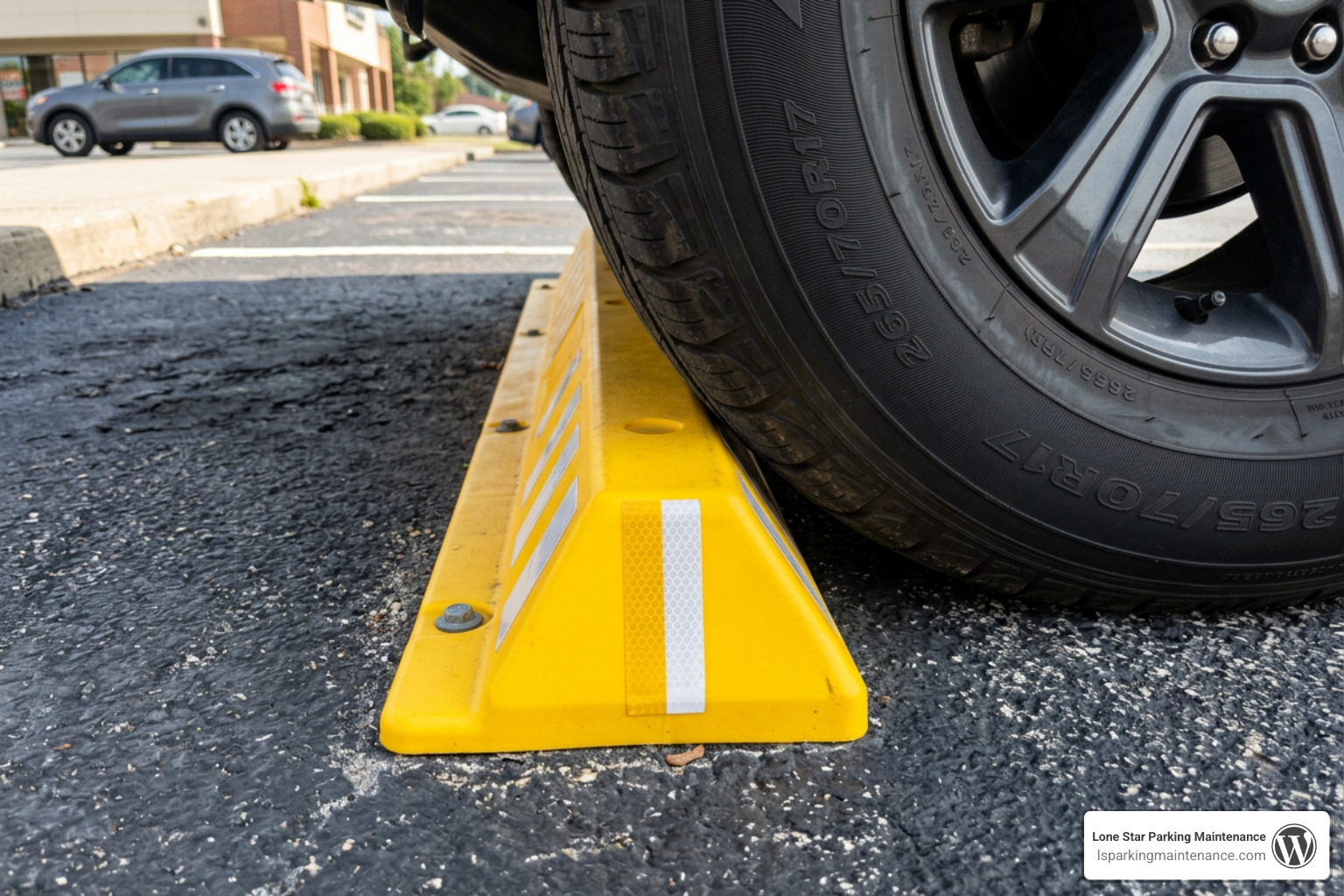
- High-Visibility Safety Yellow: The standard choice for general commercial stalls, drive-through lanes, and delivery drop zones. High-contrast yellow and black designs—such as a 65-inch rubber wheel stop with yellow chevrons—maximize daytime depth perception and contrast sharply against dark asphalt.
- Handicap Accessible Blue: Required for designating ADA-accessible stalls and access aisles. Blue stops immediately reinforce designated spaces for disabled patrons. Review our guide on selecting appropriate bumpers for medical centers to meet stringent healthcare accessibility and safety mandates.
- Architectural White or Concrete Gray: Frequently used across upscale retail centers and office complexes to complement finished curbing. However, solid white blocks provide lower visual contrast on faded concrete surfaces and during severe weather.
- Reflective Beads and Chevrons: Premium rubber wheel blocks incorporate molded-in thermoplastic road-marking tape embedded with microscopic retroreflective glass beads. These elements bounce vehicle headlight beams directly back to the driver’s line of sight, drastically reducing low-light collisions and pedestrian trip hazards.
Placement and Installation Best Practices
Improper placement of parking blocks is one of the leading causes of tripped pedestrians, damaged vehicle suspensions, and torn-up asphalt. Reviewing an essential buying checklist for parking stops helps ensure you select the appropriate length, profile, and hardware for your property layout.
To ensure your bumper stops function safely and effectively, follow these core placement principles:
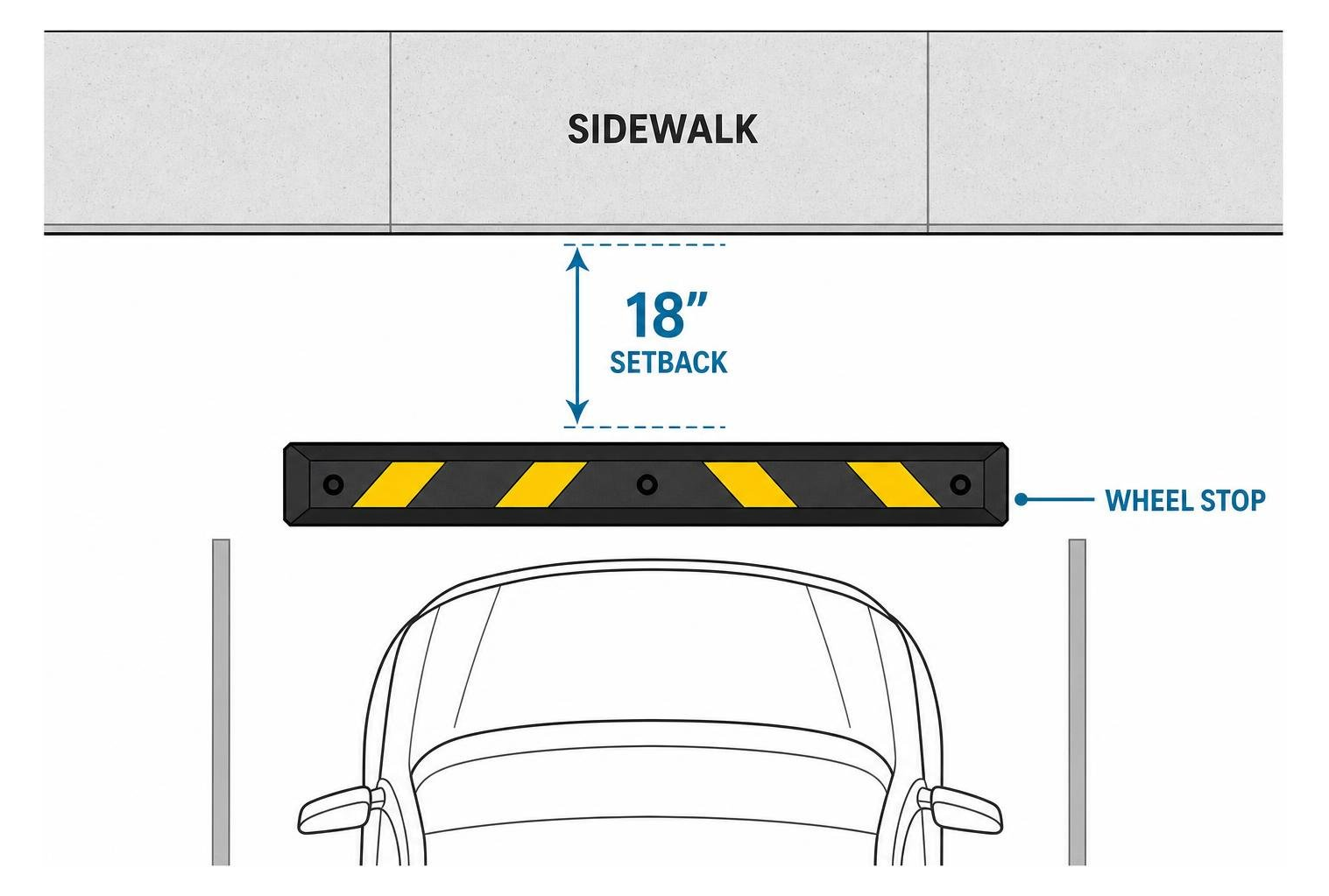
- Setback Distance: Wheel stops should never be placed flush against a raised curb or sidewalk. Always install the block 18 to 24 inches back from the curb or pedestrian walkway. This creates sufficient clearance for the vehicle’s front overhang while ensuring pedestrians have an unobstructed path along the sidewalk.
- Stall Centering: Center the bumper stop horizontally within the painted parking stall lines. For standard 9-foot-wide stalls, a 6-foot (72-inch) stop provides ideal coverage for passenger cars, crossovers, and pickup trucks without intruding into pedestrian access pathways between vehicles.
- Drainage and Runoff Management: Commercial surface lots rely on sheet drainage to funnel stormwater toward retention basins. Wheel stops must not block natural water channels. Quality rubber stops feature built-in underside drainage channels, allowing rainwater to flow freely underneath without pooling silt or debris.
Step-by-Step Installation on Asphalt vs. Concrete
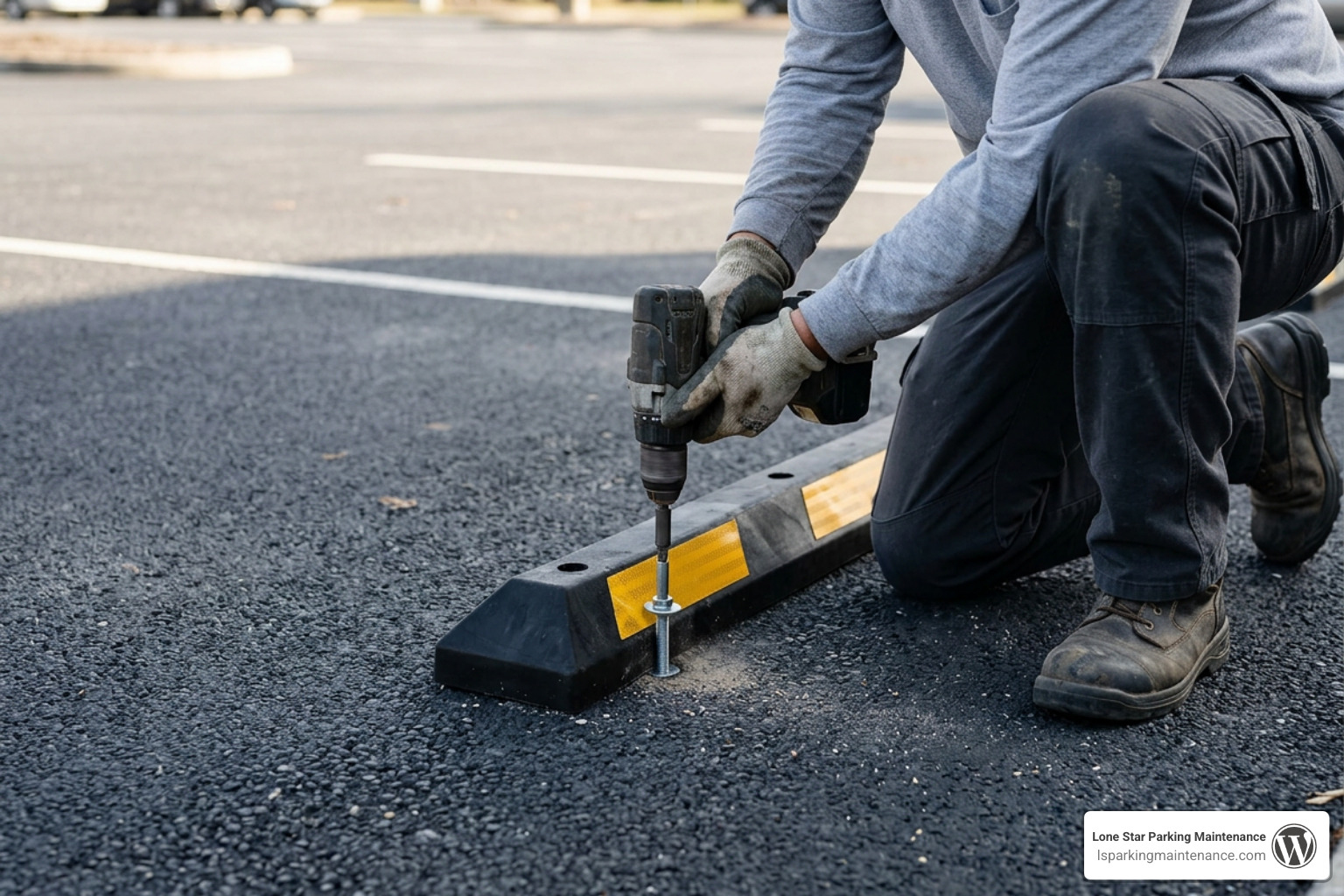
Securing wheel stops requires hardware matched specifically to your parking surface. Learn the fundamentals of a five-step wheel stop installation to ensure a lasting mechanical anchor.
Anchoring to Asphalt Substrates
Asphalt is a flexible, bitumen-based pavement that will soften in summer heat and crack if subjected to rigid expansion anchors.
- Position the parking block at the measured setback distance (18–24 inches from the end of the stall) and center it between the painted stall stripes.
- Mark the pre-drilled hardware holes onto the asphalt surface using a center punch or chalk.
- Drill pilot holes into the asphalt using a high-speed rotary hammer drill with a 1/2-inch masonry bit, clearing out loose dust with compressed air.
- Insert heavy-duty 1/2-inch x 12-inch or 14-inch steel rebar spikes through the block’s pre-drilled holes.
- Drive the rebar pins flush into the asphalt using a small sledgehammer, ensuring the top washer seats firmly within the molded counterbore to prevent tire puncture hazards.
Anchoring to Solid Concrete Pavements
Unlike asphalt, concrete is a rigid substrate that requires mechanical expansion anchors to resist shearing forces.
- Align and position the wheel stop accurately within the parking stall.
- Drill pilot holes directly into the concrete using a masonry hammer drill matched to the diameter of your lag shield anchors (typically 3/4-inch diameter).
- Thoroughly clean the drill hole of all concrete dust, slurry, and debris.
- Insert heavy-duty lead expansion shields or nylon mechanical anchors flush into the drilled concrete holes.
- Place the wheel stop over the anchors, insert lag bolts (typically 3/8-inch x 6-inch or 8-inch) with flat washers, and torque them securely into the expansion shields using an impact wrench.
Installing Parking Lot Bumper Stops in Multi-Level Garages
Parking garages require specialized engineering considerations compared to ground-level surface lots. When working on elevated decks, check our guide on practical garage wheel stop installation to avoid costly structural damage.
Elevated concrete parking structures frequently utilize post-tensioned (PT) structural slabs. Drilling deeply into a post-tensioned garage deck risks striking high-tension internal steel cables, which can cause catastrophic structural failure.
- Epoxy and Adhesive Anchoring: In multi-level decks where drilling is restricted, use heavy-duty commercial epoxy adhesives or polyurethane bonding systems. Clean and power-wash the concrete deck surface to remove oil residues, apply two-part industrial epoxy to the underside of a rubber or plastic stop, and weigh it down while the adhesive cures.
- Low-Profile and Indoor Air Quality: Garages often experience tighter vehicle clearances and lower illumination. Low-profile rubber stops reduce pedestrian tripping while eliminating the strong toxic off-gassing odors common with low-grade vulcanized imports. High-capacity products like the Garvee extra-wide heavy-duty floor stopper or standardized recycled rubber parking stops provide clean profiles suitable for indoor decks and electric vehicle charging bays.
Frequently Asked Questions About Parking Blocks
What are the standard dimensions for commercial wheel stops?
A standard commercial parking block measures 6 feet (72 inches) in length, 6 inches in width, and 4 to 4.5 inches in height. This height profile provides a firm stopping point against automobile tires without contacting low-slung vehicle air dams, front splitters, or splash shields. Compact 3-foot and 4-foot models are used for tight motorcycle stalls, while extended 8-foot curbs are installed in distribution centers and industrial loading zones.
Why do concrete wheel stops crack and how can that be prevented?
Concrete wheel stops crack primarily due to a combination of internal steel corrosion, surface impact stress, and seasonal thermal expansion. When rainwater enters micro-fissures in unsealed concrete, winter temperature drops cause the water to freeze and expand, spalling the outer surface. Furthermore, when unsealed internal rebar oxidizes, it expands and cracks the block from the inside out.
Understanding why commercial lots rely on concrete stops highlights the importance of using minimum 5,000 PSI precast concrete, applying UV-resistant exterior sealants, and maintaining regular inspections to repair chips before cracks compromise the rebar cage.
What hardware is required to anchor wheel stops securely?
The anchoring hardware depends strictly on the pavement surface:
- For Asphalt Lots: Use fluted or ribbed steel rebar spikes (12 to 14 inches long and 1/2-inch in diameter) with top washers that grip the flexible pavement base.
- For Concrete Pavements: Use zinc-plated lag bolts (6 to 8 inches long) paired with lead expansion shields or mechanical sleeve anchors.
- For Multi-Deck Garages: Use commercial-grade structural polyurethane adhesives or two-part epoxy systems to bond the block directly to the slab without penetrating internal post-tension cables.
Conclusion
Installing durable, properly spaced parking lot bumper stops is an essential investment in protecting your commercial property, managing vehicle movement, and safeguarding pedestrians. Whether your DFW facility requires heavy-duty precast concrete blocks for an industrial fleet yard or low-maintenance, high-visibility recycled rubber stops for a bustling retail shopping center, selecting quality materials and correct anchoring hardware ensures years of worry-free performance.
At Lone Star Parking Maintenance, we handle complete parking facility safety, striping, and hardware installation across the entire DFW Metroplex. Explore our professional curb stop installation and maintenance services to secure your parking facility today.