
Lot Drainage System Maintenance Starts With the Next Rain
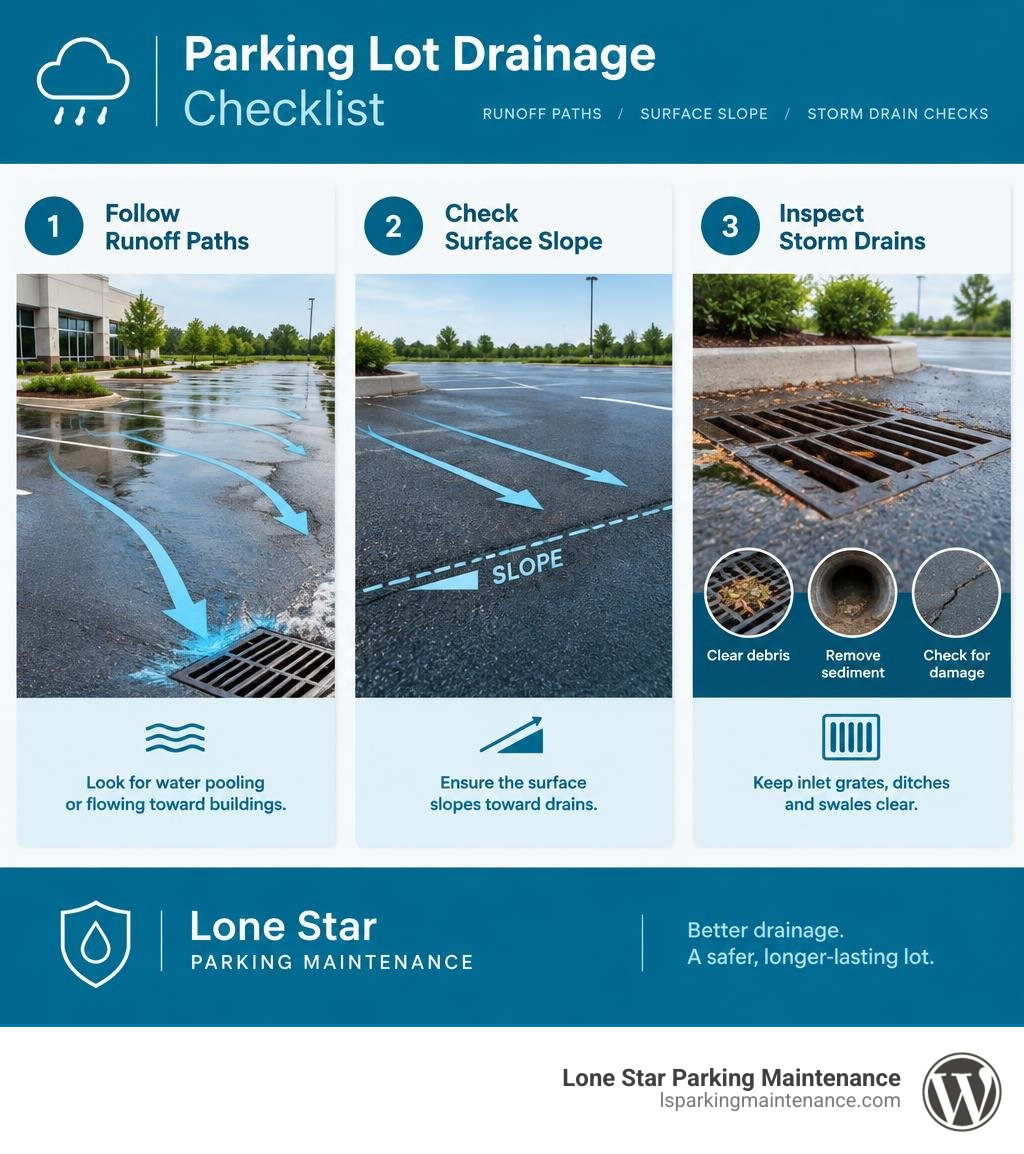
For effective lot drainage system maintenance, inspect your parking lot after heavy rain. Note where water pools or flows toward buildings. Clear leaves and trash from inlet grates, ditches, and swales. Check for sediment, erosion, and damaged pavement. If the same spots stay wet after storms, have the slope and drains checked rather than patching the pavement alone.
Standing water can seep beneath asphalt, weaken its base, and lead to cracks and potholes. A clear path for runoff helps protect your lot and makes wet-weather driving safer.
I’m Cason, and I’ll show you what to check, what to maintain, and when to call a professional.
Lot drainage system maintenance helpful reading:
Why Commercial Lot Drainage System Maintenance Protects Your Pavement and Foundation
When water lingers on commercial property, it quietly attacks structural investments from the surface down to the bedrock. Every facility manager knows that standing water is an eyesore and a tripping hazard, but the true threat lies in subgrade saturation. Without an intentional, operational approach to stormwater flow, your surface pavement, structural subbase, and concrete foundation footings slowly deteriorate. Routine preventative maintenance preserves structural integrity and keeps replacement costs off your capital expense ledger.
How Standing Water Accelerates Pavement Deterioration and Base Saturation
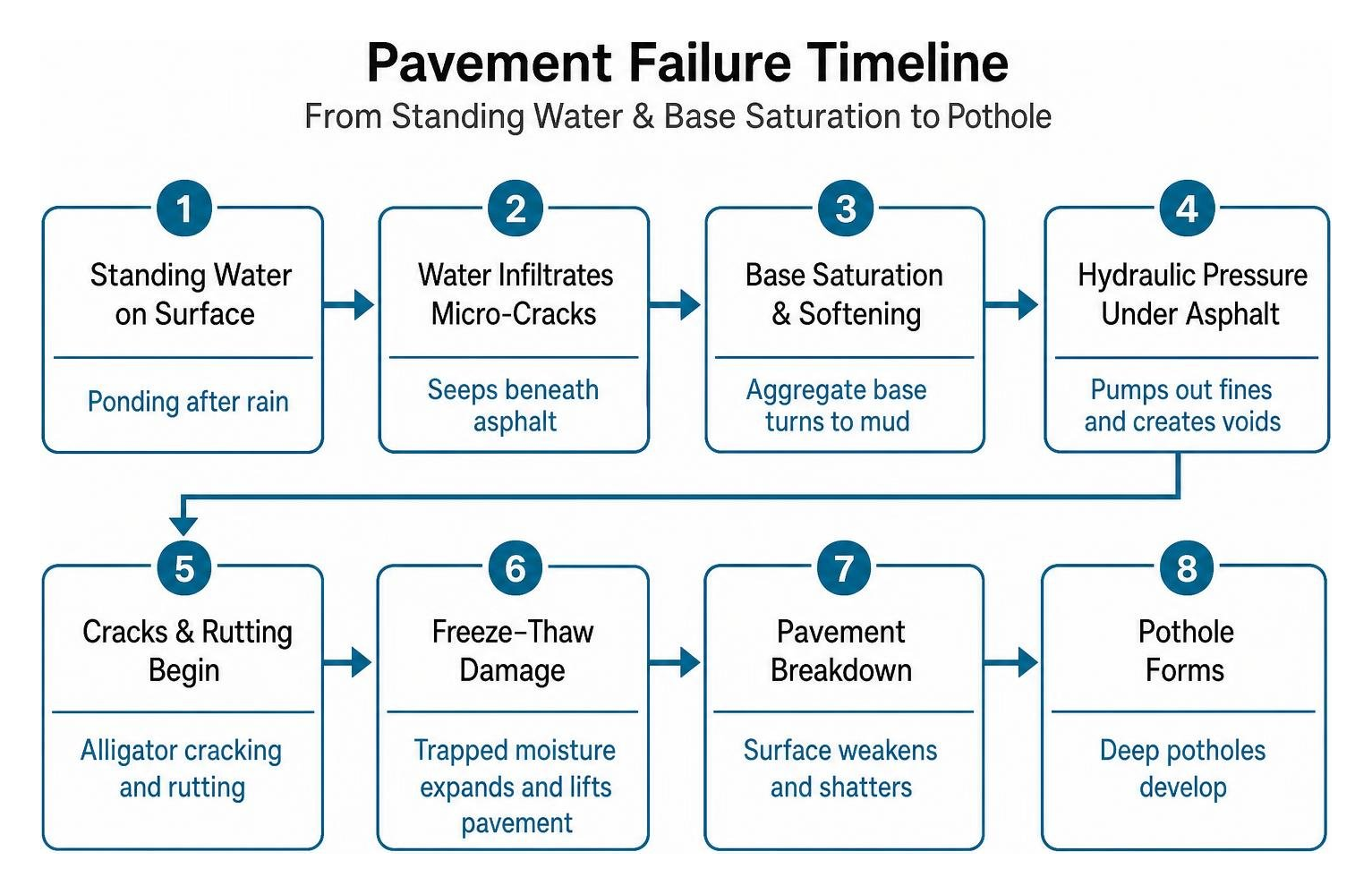
A parking lot built with adequate slope and clear drainage inlets can achieve a working lifespan of 25 years when supported by standard crack sealing and sealcoating cycles. In contrast, a facility struggling with chronic ponding water often requires full-depth structural reconstruction within just 10 to 12 years.
Water infiltrates surface micro-cracks and saturates the aggregate base below. Once this structural subbase softens into mud, vehicle wheel loads generate hydraulic pressure beneath the asphalt, pumping out fines and leaving voids. This quickly causes alligator cracking, localized rutting, and deep potholes. During winter freeze-thaw cycles across North Texas, trapped moisture expands, lifting pavement sections and shattering the binder.
Reviewing A Practical Guide to Parking Lot Drainage highlights how critical rapid surface shedding is to pavement survival. Understanding foundational Parking Lot Drainage 101 concepts helps property managers realize that asphalt is flexible; if the foundation beneath it turns to soup, the surface will fail regardless of how often you patch it.
Legal Responsibilities, Lot-to-Lot Runoff, and Stormwater Compliance
Many commercial operators are surprised to discover that lot-to-lot drainage disputes between neighboring private properties are civil legal matters rather than city public works responsibilities. As detailed in public resources on Owner Versus City Storm Water System Responsibilities, municipalities maintain public infrastructure within dedicated easements and rights-of-way, but private landowners must manage on-site runoff, channels, and inlets.
The common law rule of natural drainage requires downstream property owners to accept natural overland runoff from higher ground. However, an upstream owner cannot alter grading or install collection systems that concentrate and discharge high-velocity stormwater onto an adjacent lot without adequate energy dissipation and dispersion.
Furthermore, commercial operations must maintain compliance with Clean Water Act mandates and municipal National Pollutant Discharge Elimination System (NPDES) permits. Allowing untreated sediment, oils, or construction debris to wash into the municipal storm sewer network can trigger steep municipal fines and stop-work orders. Standard operating practices outlined in the Facility Best Management Practices and Drainage Infrastructure Operations & Maintenance Manual require rigorous on-site source controls to capture debris before it escapes property boundaries.
How to Diagnose Drainage Failures Across Your Property
Effective stormwater management requires routine site audits. Rather than waiting for a tenant to complain about a miniature lake blocking access to customer walkways, facility managers should conduct systematic runoff evaluations across both surface and subsurface assets.
Identifying Post-Storm Warning Signs and Surface Pooling
The golden rule of commercial stormwater inspection is the 24-to-48-hour benchmark. Any standing water remaining on paved surfaces or landscaped margins 48 hours after rainfall ends indicates an active drainage failure.
During and immediately following a heavy storm, walk your property and look for these warning signs:
- Surface Ponding and Birdbaths: Depressions in the asphalt holding more than an inch of water across traffic lanes or parking stalls.
- Runoff Flowing Toward Buildings: Negative grading that channels water toward perimeter foundations, entryways, or retaining walls.
- Sediment Fans and Sheet Erosion: Sand, mulch, and gravel deposited in sheets across parking surfaces, signaling unarmored slopes or overflowing bioswales.
- Sinking or Shifting Asphalt: Depressions surrounding catch basin frames, indicating subgrade soil loss or deteriorated basin joints.
- Persistent Odors and Mold Growth: Damp perimeters and organic slime accumulating along curb lines, curbing appeal and driving tenant churn.
As we emphasize in Don’t Let Poor Lot Water Management Sink Your Commercial Property Value, visible drainage distress instantly devalues commercial real estate. You can Stop the Soak With These Parking Lot Drainage Tips by catching minor slope settling before it causes structural subgrade failure.
Evaluating Subsurface and Structural Drainage Health
Surface clues often point to hidden blockages underground. Subsurface drainage networks—including collector pipes, weeping tiles, and underground detention vaults—require proactive inspection.
When inspecting subsurface elements, evaluate the following:
- Catch Basin Sump Levels: Open grates to measure accumulated sludge. A catch basin that is 50% full of sediment has lost its settling capacity and will bypass dirty runoff or flood during heavy rainfall.
- Outfall Pipe Obstructions: Inspect collector discharge points into ditches or detention ponds. Look for crushed pipe ends, root intrusion, rodent nests, or iron ochre buildup.
- Pipe Alignment and Structural Integrity: Deep lateral pipes can shift over time. Utilizing camera inspections every 5 to 7 years identifies joint separations, pipe fractures, and debris blockages before sinkholes form above them.
- Subsurface Relief Vents: Ensure underground drainage vent pipes remain clear and undamaged so that air binding does not slow gravity flow through discharge mains, as discussed in agricultural and commercial engineering studies on Tile Drainage.
Cost-Effective Solutions and Upgrades to Eliminate Standing Water
Solving lot drainage problems does not always demand full excavation and concrete repaving. Implementing targeted surface diversions, minor regrading, and green infrastructure can correct hydraulic bottlenecks at a fraction of major construction costs.
Minor Regrading, Downspout Extensions, and Surface Diversions
Surface stormwater moves purely by gravity. Maintaining a minimum slope of 1% to 2% across parking surfaces and landscape swales ensures positive drainage toward collection points.
When addressing localized standing water near buildings or sidewalks:
- Correct Foundation Pitch: Ensure the ground slopes away from exterior walls, creating at least 6 inches of fall within the first 5 to 10 feet.
- Install Downspout Splash Pads and Extensions: Roof runoff accounts for thousands of gallons of concentrated water during a storm. Route downspouts at least 5 feet away from building foundations and paved edges, discharging onto splash pads or directly into dedicated underground storm lines.
- Construct Shallow Swales and French Drains: Excavate wide, grassed or rock-lined swales to catch overland sheet flow. For persistent subsurface saturation, install fabric-wrapped perforated pipes surrounded by clean crushed stone to draw water table levels away from pavement edges.
Property managers can consult guides on Parking Lot Water Diversion Systems and Slopes That Keep Pavement Dry and French Drains 101: Stop Sinking and Start Draining Your Lot to map out effective interception routes across their properties.
Low-Impact Development (LID) and Permeable Alternatives
Low-Impact Development (LID) strategies manage stormwater at its source through natural infiltration and detention. Studies by the U.S. Environmental Protection Agency and engineering universities show that green infrastructure can reduce total project costs by 15% to 50% compared to conventional concrete and pipe infrastructure, while delivering whole-lifecycle cost savings of 10% to 15%.
Key low-impact solutions include:
- Permeable Pavement and Pavers: Interlocking permeable pavers or porous asphalt allow water to infiltrate directly into a clean stone reservoir beneath, reducing total runoff volume by 80% to 100% compared to traditional impervious surfaces.
- Bioswales and Rain Gardens: Engineered landscape depressions planted with native, deep-rooted vegetation filter heavy metals and suspended solids. LID systems regularly achieve an 80% to 90% reduction in suspended solids, 60% to 80% reduction in nutrients, and 50% to 70% reduction in heavy metals.
- Riparian Buffer Zones: As noted in the Landowner’s Handbook to Building and Maintaining Private Roadways, keeping a 50-foot vegetated buffer zone along drainage channels slows runoff velocity, stabilizes slopes, and prevents erosion.
| Drainage Solution | Upfront Cost Level | Runoff Volume Reduction | Primary Maintenance Task | Expected Lifespan |
|---|---|---|---|---|
| Traditional Catch Basins & Pipes | Moderate | 0% (Conveys only) | Vacuuming sumps & jetting lines | 30–50 Years |
| Concrete Trench Drains | Moderate to High | 0% (Linear interception) | Grate clearing & sediment scooping | 20–30 Years |
| Subsurface French Drains | Low to Moderate | 20–40% (Localized infiltration) | Flushing perforated pipes & silt traps | 15–25 Years |
| Permeable Paver Systems | High | 80–100% (Direct storage) | Vacuum sweeping joint aggregate | 25–35 Years |
| Vegetated Bioswales | Low | 40–70% (Infiltration/storage) | Mowing, trash clearing & sediment removal | Indefinite with care |
Operational Checklist for Commercial Stormwater Systems
A robust preventative maintenance plan prevents sudden drainage emergencies. Facilities that schedule semi-annual catch basin cleanings prevent over 90% of non-structural drainage failures, eliminating unexpected flooding and emergency pump-out expenses.
Step-by-Step Lot Drainage System Maintenance for Property Managers
When managing commercial retail centers, office parks, or industrial distribution facilities across the DFW Metroplex, execute this clear operational sequence:
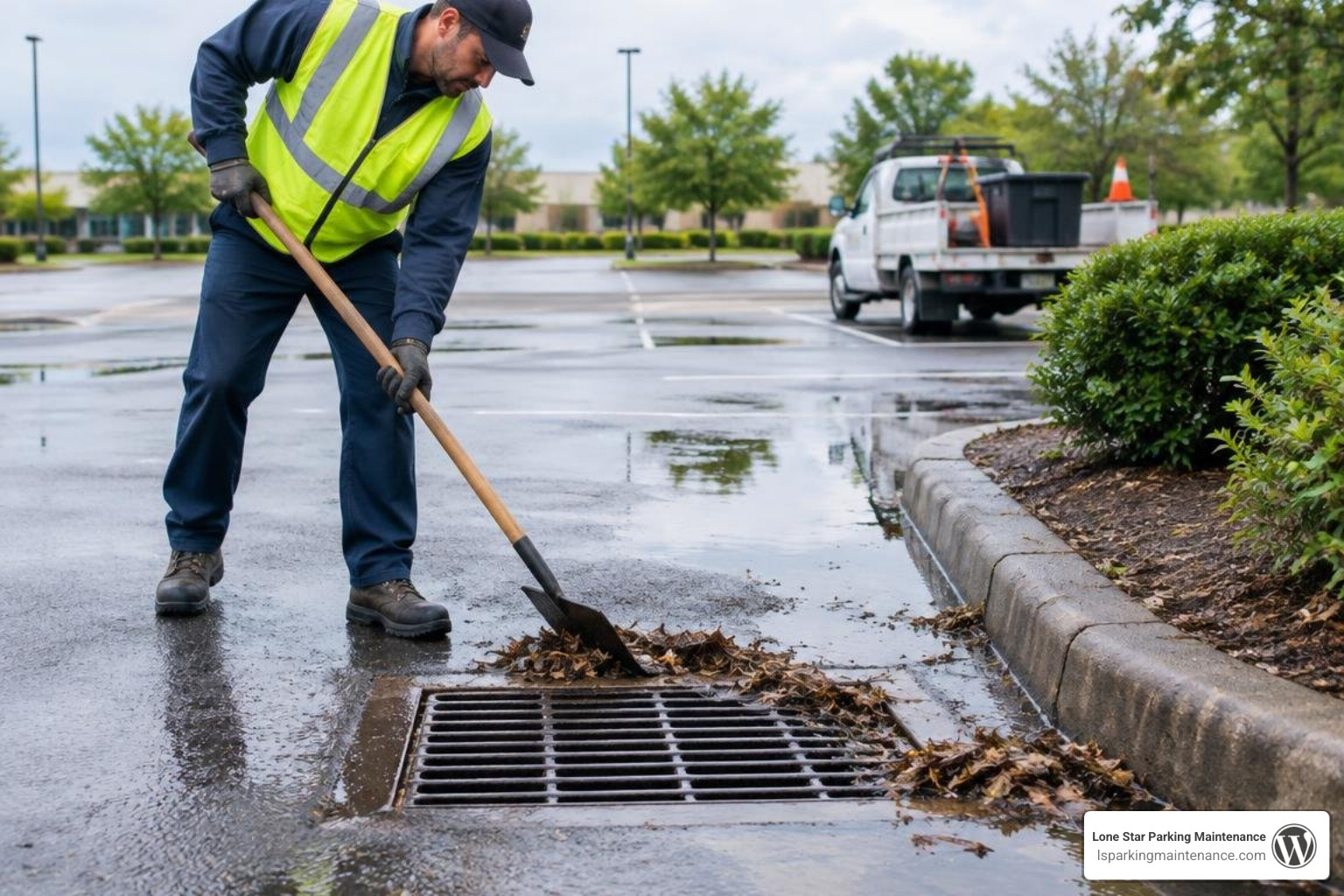
- Clear Surface Grates: Weekly or ahead of forecasted storms, remove leaves, plastic bags, and landscaping clippings resting over drain openings.
- Inspect Sump Capacity: Remove basin grates using proper lifting tools. Measure the depth of accumulated sediment in the sump pit. When debris reaches 50% of the sump depth below the invert of the lowest outlet pipe, schedule vacuum extraction immediately.
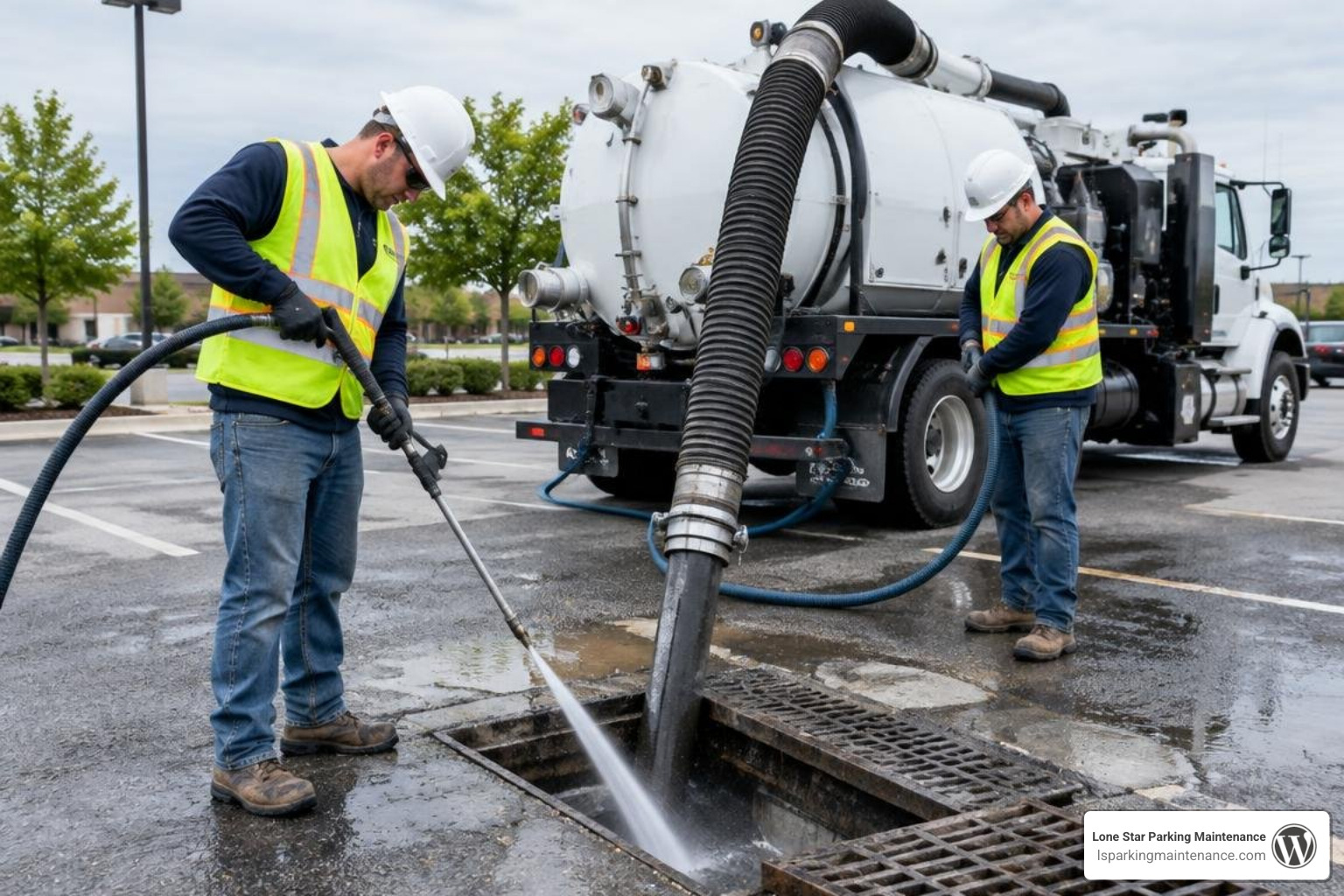
- Vacuum Clean Basin Sumps: Utilize specialized vacuum trucks to extract heavy grit, sand, and trash from the bottom of each catch basin.
- Hydro-Jet Lateral Lines: Clear stubborn blockages, grease, and built-up silt in outlet pipes using high-pressure water jetting (up to 4,000 psi) without damaging the pipe walls.
- Inspect Structural Concrete and Castings: Check for mortar deterioration, brick shifting, or cracks around inlet boxes. Ensure you choose heavy-duty hardware that handles heavy vehicle loads.
To keep your storm inlets running smoothly, check our guides on how Your Parking Lot Storm Drain Is the Unsung Hero of Pavement and read A Comprehensive Guide to Parking Lot Drain Covers and Grates. For heavy vehicle traffic, review Don’t Crack Under Pressure: Choosing Traffic-Rated Catch Basins to avoid collapsed infrastructure.
Best Practices for Long-Term Lot Drainage System Maintenance
Beyond cleaning catch basins, maintaining the property’s overland flow routes keeps the entire system working during intense storms:
- Maintain Vegetated Swales: Keep grass inside drainage channels mowed to an optimal height of 4 to 6 inches. Cutting grass too short weakens root systems and causes soil erosion, while letting it grow past 8 inches impedes water flow and traps debris.
- Inspect Rock Check Dams: Clear accumulated silt behind rock check dams in drainage ditches to maintain their ability to slow water and capture sediment.
- Clear Culvert Inlets and Outlets: Inspect roadway cross-culverts twice annually for blockages, vegetative overgrowth, or soil erosion at headwalls, in line with the STORMWATER OPERATIONS AND MAINENTANCE MANUAL.
- Protect Entrances with Trench Drains: Install and clear channel drains across parking lot entrances to stop street runoff from flooding your lot. For setup details, see how to Install the Best Driveway Trench Drain Before the Next Big Storm.
When to Call a Professional Drainage Contractor vs. Civil Engineer
Routine sediment removal and gutter clearing are straightforward maintenance tasks, but complex water flow issues require professional engineering. Knowing who to call saves time and ensures lasting results.
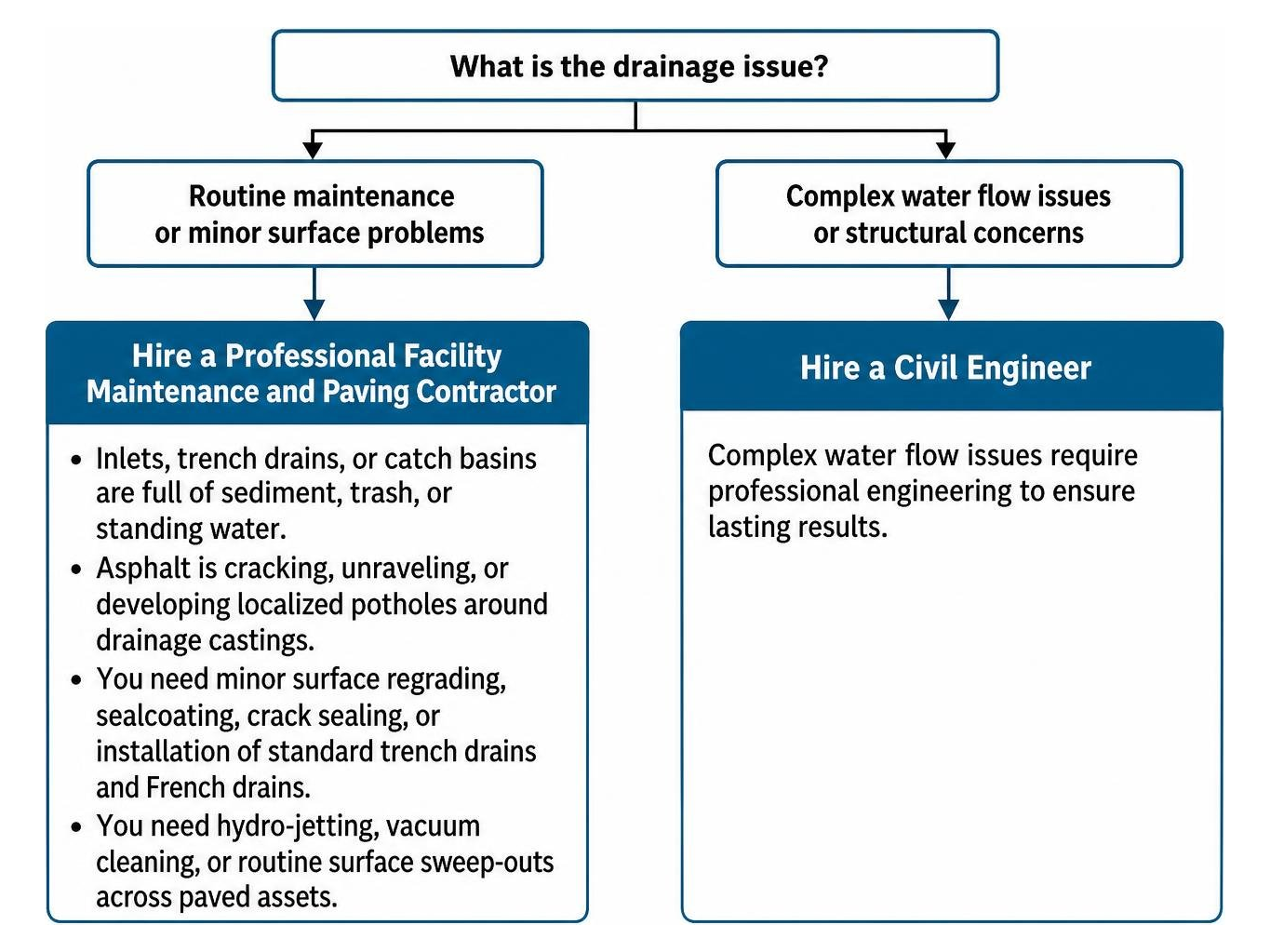
Hire a Professional Facility Maintenance and Paving Contractor when:
- Inlets, trench drains, or catch basins are full of sediment, trash, or standing water.
- Asphalt is cracking, unraveling, or developing localized potholes around drainage castings.
- You need minor surface regrading, sealcoating, crack sealing, or installation of standard trench drains and French drains.
- You need hydro-jetting, vacuum cleaning, or routine surface sweep-outs across paved assets.
Consult our guides like Don’t Let Your Business Sink: A Guide to Installing Parking Lot Drains and Go With the Flow: A DIY Guide to Trench Drain Installation to see how standard drainage structures are installed and maintained.
Hire a Licensed Civil Engineer when:
- You are redesigning a large site or expanding impervious pavement footprints requiring municipal site plan revisions.
- Stormwater regularly floods building interiors, threatening structural foundation footings.
- You experience severe lot-to-lot legal disputes requiring certified hydraulic capacity modeling and topographical boundary surveys.
- You need to size and permit retention or detention ponds to meet municipal post-construction stormwater regulations.
Frequently Asked Questions About Lot Drainage Systems
What is lot-to-lot drainage, and who is legally responsible for runoff?
Lot-to-lot drainage refers to surface stormwater that flows naturally across property boundaries from higher ground to lower ground. Legally, managing this runoff is a private civil matter between adjoining property owners, not the local municipality’s responsibility.
Under standard drainage law, downstream owners must accept natural surface runoff from upstream properties. However, upstream owners cannot alter grading, concentrate sheet flow into high-velocity pipes, or redirect discharge to cause erosion or flooding on neighboring parcels without proper dispersion systems in place.
How often should commercial catch basins and storm drains be cleaned?
Commercial catch basins should be inspected and cleaned at least twice a year—typically in spring to clear winter sand and debris, and in late autumn after leaf fall.
Properties with dense tree canopies, active construction, or heavy industrial traffic often require quarterly service. Regular catch basin cleaning prevents over 90% of non-structural drainage failures, ensuring your system runs smoothly during heavy rain.
What are the consequences of letting sediment wash into public storm drains?
Allowing sediment, construction dirt, or landscaping mulch to wash from private property into municipal storm sewers violates municipal stormwater ordinances and federal Clean Water Act regulations.
Consequences include:
- Municipal citations and fines up to thousands of dollars per day.
- Stop-work orders on commercial construction or renovation projects.
- Clogged municipal storm sewers, causing street backups and property damage liability.
- Environmental damage to downstream creeks and waterways, leading to enforcement action by state environmental agencies.
Conclusion
Proactive stormwater management is one of the most effective ways to protect your commercial real estate investments. By clearing inlets, inspecting subsurface sumps, and maintaining positive grading, property managers can eliminate hazardous puddles and double their asphalt’s working lifespan.
At Lone Star Parking Maintenance, we help facility managers and commercial property owners across the DFW Metroplex keep their parking lots clean, compliant, and well-maintained. From parking lot sweeping, power washing, and striping to concrete repairs, sealcoating, lighting, and signage, our team delivers high-quality service built on safety and customer satisfaction.
Explore our comprehensive facility services at Lone Star Parking Maintenance to schedule an on-site pavement and surface drainage assessment before the next big storm.