
How to Find DFW Crack Sealing Experts Who Protect Your Pavement
To find a reliable crack sealing contractor in Dallas-Fort Worth, ask for an on-site pavement check before accepting a quote. A good contractor will measure the cracks, explain how they will clean and dry them, name the sealant they plan to use, and tell you when cars can return. They should also point out potholes or widespread cracking that need more than sealant.
North Texas heat can make cracks widen, while rain can carry water beneath the asphalt. Sealing suitable cracks early helps protect the pavement below. I’m Cason, and I’ll walk you through what to check before you hire.
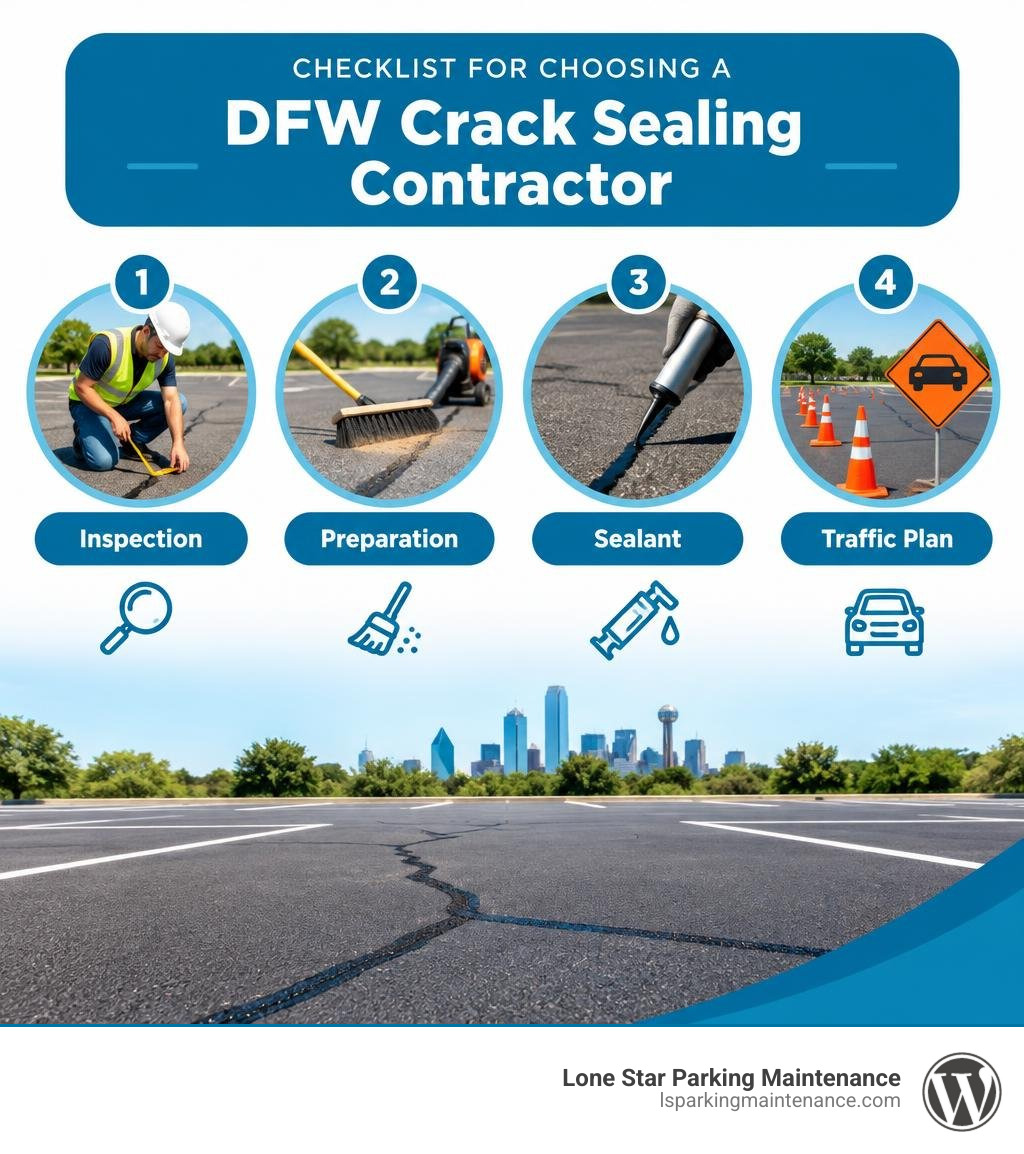
Quick look at DFW crack sealing experts:
Why Local Climate Makes Crack Sealing Critical in Dallas-Fort Worth
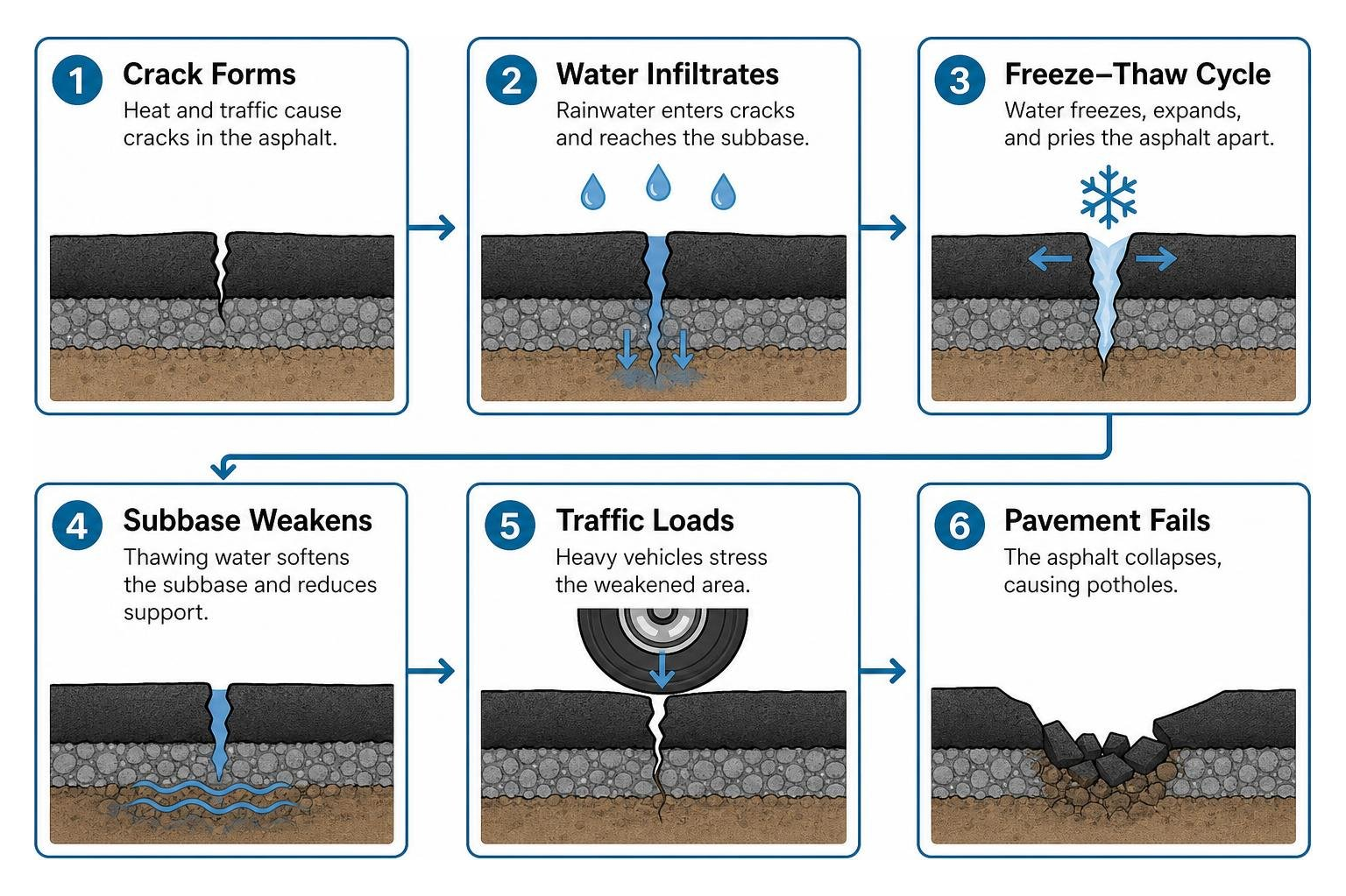
Managing commercial asphalt in North Texas presents distinct environmental challenges. Between scorching summer afternoons where surface temperatures exceed 140°F and rapid winter cold snaps, pavement expands and contracts constantly. In fact, untreated pavement cracks in Texas can widen by up to a quarter of an inch every single year strictly due to thermal stress.
When cracks form, they create an open pathway for moisture intrusion. Although North Texas is famous for summer heat, the Dallas-Fort Worth area experiences an average of over 200 freeze-thaw cycles each year. When winter moisture enters unsealed cracks and freezes, it expands by roughly 9%, prying the asphalt apart from within. As temperatures climb back up, that trapped water softens the underlying subbase. Heavy commercial traffic then rolls over the weakened section, collapsing the asphalt and creating severe potholes.
Regional environmental conditions—such as intense sunlight and local air quality factors tracked by regional initiatives like the Dallas-Fort Worth: Latest Ozone Planning Activities—accelerate the oxidation and embrittlement of binder oils in your asphalt. Proactive property managers stay ahead of this cycle by following an essential asphalt repair and protection plan that seals surface fissures before moisture degrades the structural foundation.
How to Identify When You Need DFW Crack Sealing Experts
Catching pavement damage early saves thousands of dollars in premature replacement costs. To determine whether your parking facility is ready for service, walk your property and evaluate crack width, pattern, and total linear footage.
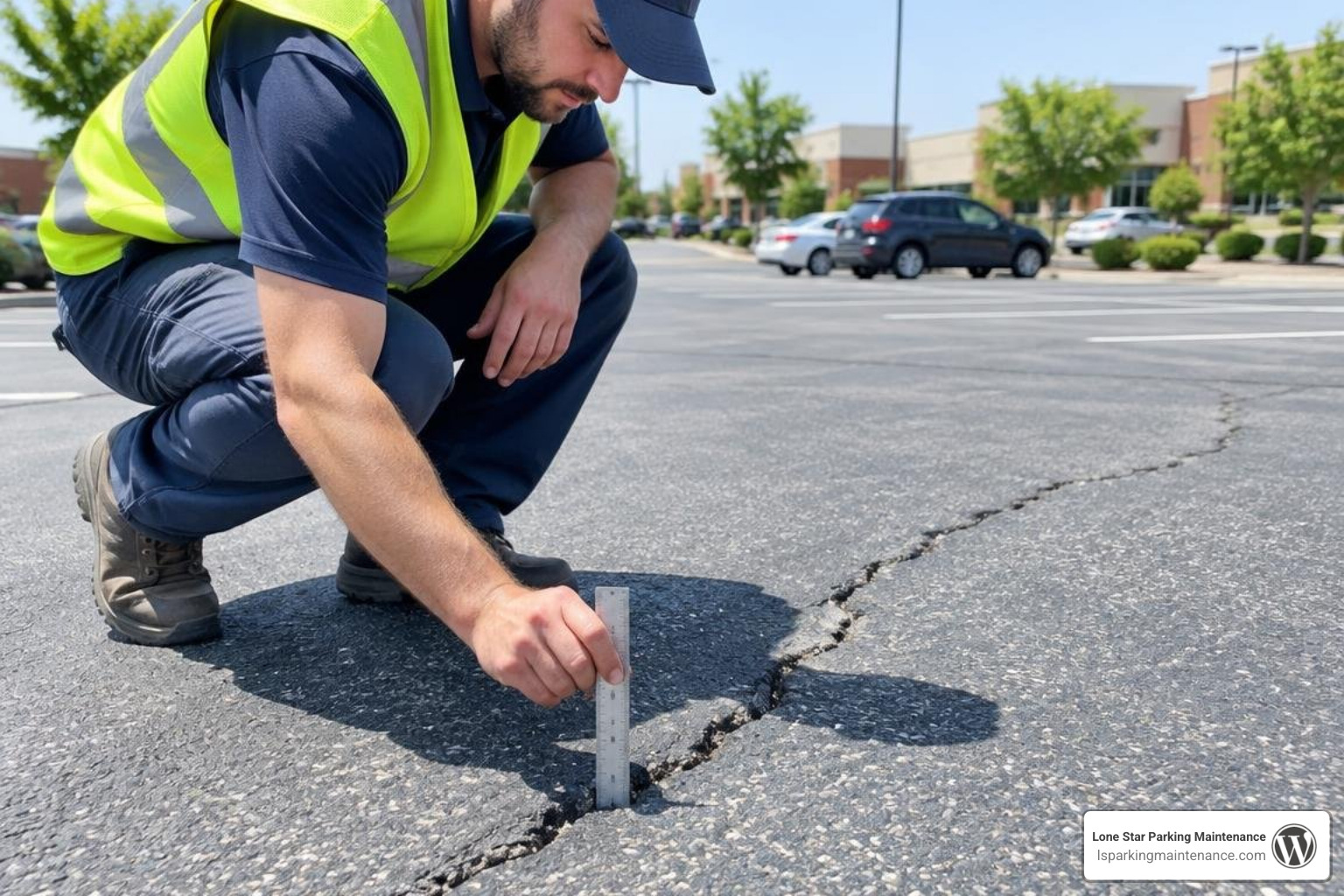
Properties in North Texas benefit most when cracks are treated while they are between 1/8 inch and 1 inch wide. These are classified as working cracks—fissures that continue to shift horizontally and vertically with temperature swings. To evaluate whether your parking facility is an ideal candidate for intervention, review our guide on determining if parking lots need crack filling.
| Pavement Condition Stage | Typical Repair Method | Expected Cost Range | Expected Extension to Pavement Life |
|---|---|---|---|
| Early Surface Cracking (1/8″ – 1″) | Hot-Pour Rubberized Crack Sealing | $0.50 – $1.50 per linear foot | +5 to 10 years |
| Moderate Joint Separation | Routing & Polymer Crack Sealing | $1.00 – $2.00 per linear foot | +3 to 6 years |
| Deferred Maintenance (Alligator Cracking) | Asphalt Patching / Mill & Overlay | $3.00 – $7.00 per square foot | Restores localized structural capacity |
| Subbase Failure & Deep Rutting | Full-Depth Asphalt Replacement | $5.00 – $15.00 per square foot | Resets pavement lifecycle |
Signs Handled Directly by DFW Crack Sealing Experts
Crack sealing is designed for distinct, linear breaks across the pavement surface, including:
- Transverse Cracks: Fissures running perpendicular to the pavement centerline, primarily triggered by thermal shrinkage during sudden temperature drops.
- Longitudinal Cracks: Cracks running parallel to the direction of traffic, frequently forming along paving seams or joints.
- Reflective Cracking: Cracks mirroring underlying joints or historical fractures beneath an asphalt overlay.
- Edge Cracks: Fractures running along the outer edges of a lot, often caused by poor drainage or lack of lateral support.
Treating these specific structural fractures early according to proven Texas crack sealing and repair guidelines stops water before it compromises your base.
When Pavement Damage Requires More Than Standard Crack Filling
Not every asphalt defect can be solved with rubberized sealant. If you notice interconnected cracks resembling reptile scales—known as alligator or fatigue cracking—the subbase beneath has lost its structural integrity.
Crack sealing cannot bridge alligator cracking or stabilize deep potholes. In those situations, water has already eroded the underlying aggregate, and pushing hot rubber into crumbling stone will not stop structural failure. Those areas require full-depth asphalt patching or localized milling before applying preventative surface treatments.
Professional Step-by-Step Crack Sealing Process
Delivering a long-lasting seal requires rigorous preparation and application. Here is the step-by-step process our team uses to guarantee lasting results across North Texas:
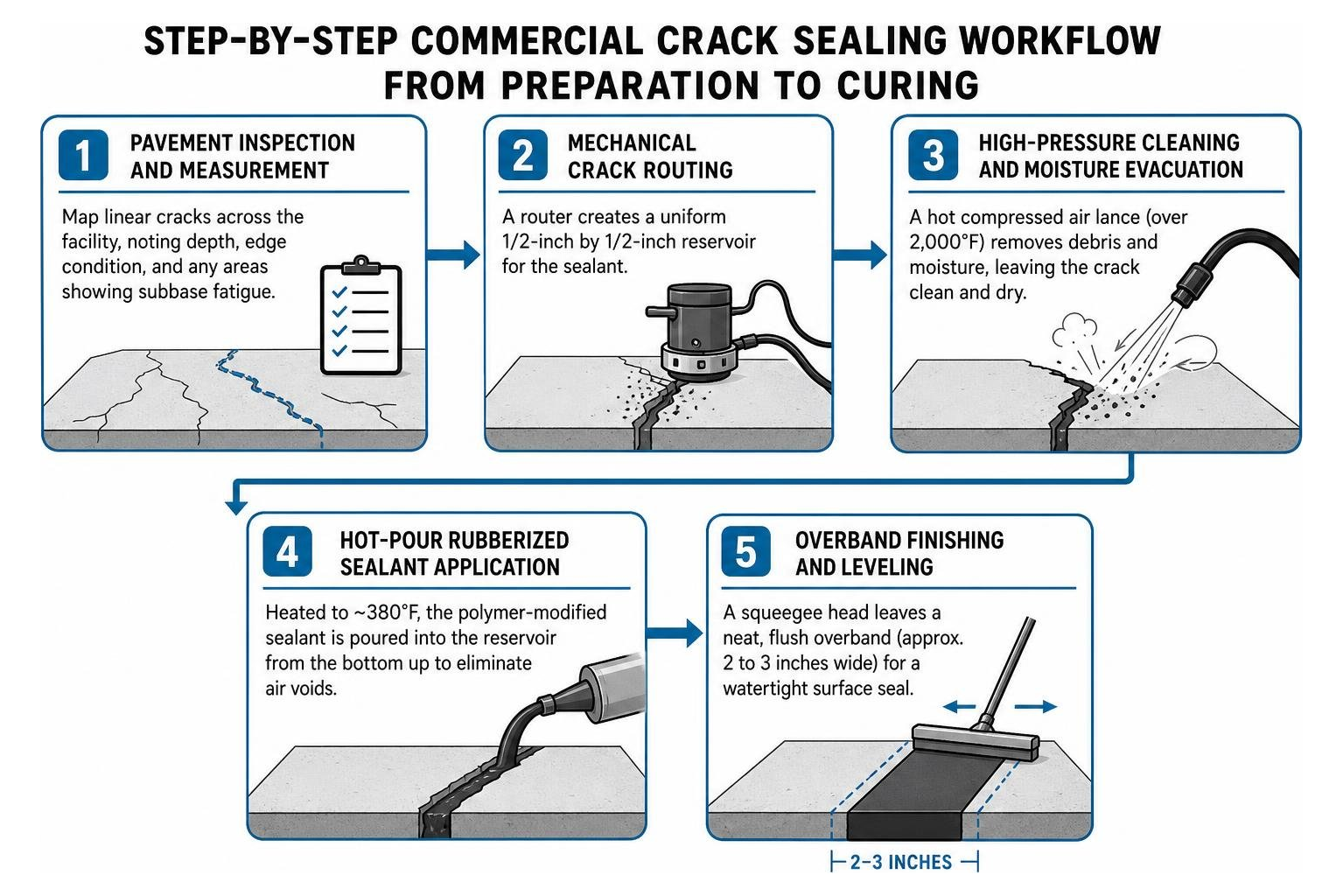
- Pavement Inspection and Measurement: We map out linear cracks across the entire facility, noting depth, edge condition, and any areas showing subbase fatigue.
- Mechanical Crack Routing: For active working cracks, a mechanical router creates a uniform 1/2-inch by 1/2-inch reservoir. This clean channel allows the sealant to flex smoothly during thermal expansion without tearing loose from the sidewalls.
- High-Pressure Cleaning and Moisture Evacuation: Using a specialized hot compressed air lance operating at over 2,000°F, we blast away dirt, loose aggregate, and organic matter while completely drying the fissure.
- Hot-Pour Rubberized Sealant Application: An oil-jacketed melter heats specialized polymer-modified asphalt sealant to roughly 380°F. The molten rubber is injected directly into the reservoir from the bottom up to eliminate air voids.
- Overband Finishing and Leveling: A specialized squeegee strike-off head leaves a neat, flush overband (approximately 2 to 3 inches wide) over the crack, providing a watertight seal at the asphalt surface.
- Cooling and Safe Traffic Release: The hot-pour material sets within 20 to 45 minutes, allowing you to open lanes back up to parking traffic with minimal operational disruption.
To see how these practices translate into field success, explore these five steps to repair asphalt cracks.
How to Select the Right Contractor for Commercial Properties
Hiring the right team ensures your maintenance dollars deliver maximum longevity. General handymen and budget operators frequently use cold-pour liquid emulsions from big-box stores that shrink, crack, and fail after a single North Texas summer.
When evaluating potential asphalt partners, make sure they possess commercial-grade melter applicators, dedicated routing machines, and industrial hot-air lances. Review their past work on high-traffic facilities—such as major distribution hubs, shopping centers, and heavy transport corridors near DFW International Airport—to verify they understand commercial durability. Reviewing detailed resources on finding the best asphalt crack repair service will help you separate qualified specialists from casual handymen.
Crucial Questions to Ask DFW Crack Sealing Experts Before Hiring
Before approving any contractor proposal, ask these essential questions:
- What specific sealant material do you use? Ensure they use hot-pour, polymer-modified elastomeric sealant meeting ASTM D6690 specifications rather than standard cold-pour emulsions.
- Do you clean cracks with a hot compressed air lance? A basic leaf blower cannot remove deep-seated moisture or heat the sidewalls for optimal bonding.
- Do you rout working cracks before sealing? Routing creates the proper reservoir geometry needed for extreme thermal expansion cycles.
- How do you handle traffic control and lot staging? A professional contractor will phase the work to keep tenant entrances and commercial traffic flow open.
- Are you fully insured and licensed for commercial facilities? Verify general liability and workers’ compensation coverage to protect your property from liability.
Adopting proactive DFW crack maintenance strategies safeguards both your budget and commercial curb appeal.
Cost Breakdown and Long-Term Value in North Texas
Professional crack sealing is one of the most cost-effective investments a property manager can make. On average, commercial hot-pour crack sealing in Dallas-Fort Worth ranges from $0.50 to $1.50 per linear foot, depending on total volume, crack depth, and preparation needs.
In contrast, letting pavement deteriorate into alligator cracking and potholes leads to full pavement replacement costing $5.00 to $15.00 per square foot. Because crack sealing can extend pavement life by 5 to 10 years, it consistently cuts total lifetime pavement maintenance costs by up to 50%.
Frequently Asked Questions About DFW Crack Sealing
How long does a professional crack sealing job last in North Texas?
A properly prepared hot-pour rubberized seal typically lasts 3 to 8 years in the DFW Metroplex. Longevity depends on baseline pavement condition, traffic volume, and UV exposure. Scheduling annual inspections ensures new hairline cracks are sealed before water penetrates the base.
What is the difference between crack sealing and crack filling?
Crack sealing is a preventative treatment applied to active, working cracks using heated elastomeric rubber that stretches as joints shift. Crack filling is applied to non-working, stationary cracks using more rigid materials. Sealing active cracks accommodates ongoing ground movement without losing adhesion.
What is the best time of year for crack sealing in Dallas-Fort Worth?
Spring and fall provide ideal conditions for crack sealing in North Texas. Moderate temperatures (between 50°F and 80°F) keep cracks at a mid-range width, allowing the rubberized sealant to bond cleanly and handle subsequent summer expansion and winter contraction.
Conclusion
Your parking lot is one of the largest physical assets on your commercial property. Ignoring surface fissures allows rain and freeze-thaw cycles to erode the subbase, turning minor maintenance needs into expensive structural repairs. Partnering with Lone Star Parking Maintenance protects your investment with top-grade hot-pour sealants, professional routing, and proven workmanship across the DFW Metroplex.
Keep your pavement smooth, safe, and visually appealing. Contact our team today to schedule an on-site pavement evaluation and discover how our dedicated commercial parking lot sealing and crack filling services can double the working life of your North Texas asphalt.