
Parking Lot Signs Keep Your Property Safe, Clear, and Enforceable
The right parking lot signs tell drivers where to park, where not to park, how to exit safely, and which spaces must stay open. Start with clear entrance and exit signs, stop and speed-limit signs, directional arrows, accessible parking signs, fire-lane notices, and any restrictions your property needs, such as visitor-only or tow-away warnings.
For commercial properties, signs should do more than look professional. They must be easy to read, placed where drivers can see them in time, and coordinated with pavement markings, curbs, and accessible spaces. Public-facing traffic signs often follow MUTCD standards, while ADA spaces and private towing notices have additional rules that can vary by jurisdiction.
A well-planned sign package reduces confusion, protects emergency access, supports accessibility, and gives property managers a stronger basis for enforcing parking rules.
I am Cason, and this guide will help you choose compliant, durable signage for a safer, more organized parking lot.
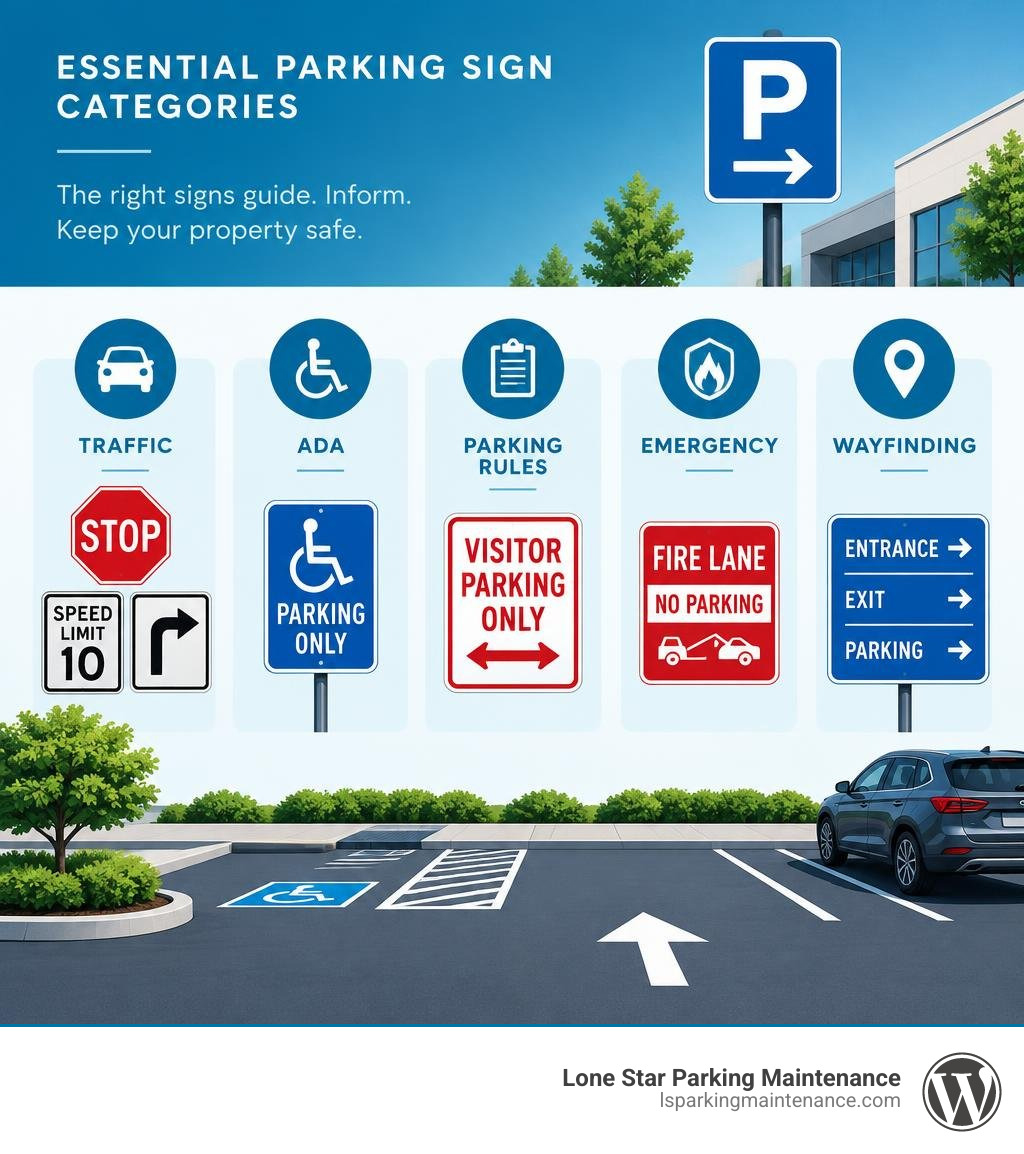
Core Types of Parking Lot Signs for Commercial Properties
Every successful commercial layout relies on a clear hierarchy of visual cues. When drivers pull off busy streets into your facility, they immediately need clear direction to navigate safely without causing gridlock.
Essential Regulatory and Parking Lot Signs Every Facility Needs
Regulatory signs form the backbone of safe traffic movement. Without them, even the most spacious parking design turns chaotic during peak morning and evening rushes.
- Stop Signs (R1-1): Standard octagonal stop signs must be positioned at internal intersections, blind corners, and facility exits. They establish clear right-of-way rules and give drivers time to check for oncoming traffic and pedestrians.
- Speed Limit Signs (R2-1): Transitioning drivers from a high-speed arterial roadway to a pedestrian-heavy lot requires a visible reduction in speed. Typical facility speed limits range from 5 to 15 MPH.
- Prohibitive Signs: To maintain clear travel lanes, prohibitive signs feature a red legend or red border on a crisp white background. These include standard “No Parking Any Time” and “No Standing” warnings.
- Permissive Signs: When authorizing time-limited parking, permissive signs use green lettering and borders on a white background. These tell drivers when and where they can park for 15, 30, or 60 minutes.
- Wayfinding and Directional Signs: Clear arrows and lane-designation panels guide vehicles toward parking bays, ramps, and exits.
Property managers can effectively stop the chaos with clear parking area signs positioned strategically across driving aisles. Installing the best parking lot entrance signs to keep your property organized sets a clear flow from the moment visitors arrive. To ensure high visibility and legal conformity, all standard traffic control signs should align with MUTCD R7 parking and standing sign standards.

Dedicated Spaces: Reserved, Visitor, and Emergency Zones
Managing specific user groups keeps high-value stalls open for paying clients, tenants, and visitors:
- Customer and Visitor Stalls: Reserving spots directly in front of retail storefronts or leasing offices boosts customer satisfaction and prevents staff vehicles from occupying prime spaces.
- Curbside Delivery and Loading: The explosion of rapid fulfillment, rideshare pickup, and freight unloading requires dedicated 10-to-15-minute stalls to keep main aisles clear.
- Emergency Fire Zones: Fire lanes must remain unobstructed 24/7. Property owners must post dedicated fire lanes signage to preserve immediate access for emergency responders. Reviewing our resource on fire lanes 101 keeping the path clear for heroes helps you stay aligned with local fire code enforcement.
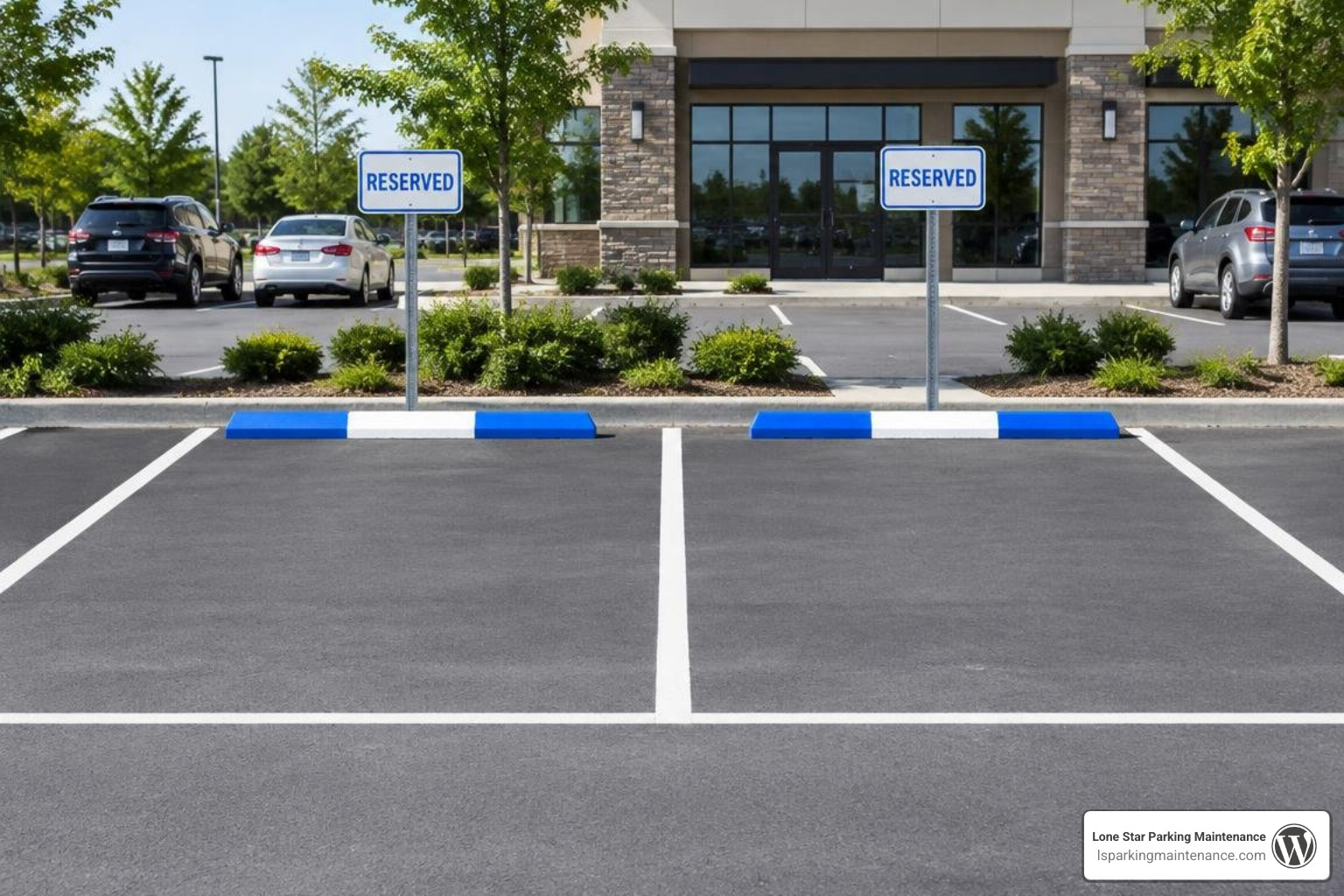
Combining upright metal signs with curb stenciling creates redundant visual enforcement. By mastering curb painting and directional arrows for full code compliance, you eliminate ambiguity for motorists day or night.
ADA Accessibility Standards and Legal Compliance
Accessible parking compliance is a federal mandate enforced under Title III of the Americans with Disabilities Act (ADA). Non-compliant spaces risk substantial federal fines, legal liabilities, and property access barriers.
ADA Space Ratios and Van-Accessible Sign Rules
The law mandates a minimum ratio of accessible parking spots relative to total facility capacity. Every accessible space requires an upright sign displaying the International Symbol of Accessibility (ISA).
| Total Spaces in Lot | Minimum Accessible Spaces | Van-Accessible Spaces (1 in 6) |
|---|---|---|
| 1 to 25 | 1 | 1 |
| 26 to 50 | 2 | 1 |
| 51 to 75 | 3 | 1 |
| 76 to 100 | 4 | 1 |
| 101 to 150 | 5 | 1 |
| 151 to 200 | 6 | 1 |
| 201 to 300 | 7 | 2 |
| 301 to 400 | 8 | 2 |
| 401 to 500 | 9 | 2 |
| 501 to 1000 | 2% of total | 1 for every 6 accessible spaces |
| 1001 and over | 20, plus 1 per 100 over 1000 | 1 for every 6 accessible spaces |
To calculate your exact layout, reference our breakdown in a simple guide to ada parking space ratios.
At least one out of every six accessible stalls must be designated as van-accessible. These spaces require wider adjacent access aisles (minimum 96 inches) and must feature a supplemental “VAN ACCESSIBLE” plaque mounted directly beneath the ISA placard. Learn all critical parameters by reviewing everything you need to know about ada van parking requirements and our dedicated guide on handicap parking compliance.
Mounting Height and Stencil Synchronization
A frequent compliance error involves installing accessible signs too low. If a parked sport utility vehicle obscures an ADA placard, drivers cannot identify open accessible spots.
- Vertical Clearance: Federal ADA guidelines mandate that the bottom edge of an accessible parking sign must measure a minimum of 60 inches (5 feet) above the finished parking surface or sidewalk.
- Pedestrian Pathways: If the post is installed along an active pedestrian circulation route, standard safety codes raise this clearance to 84 inches (7 feet) to prevent head injuries.
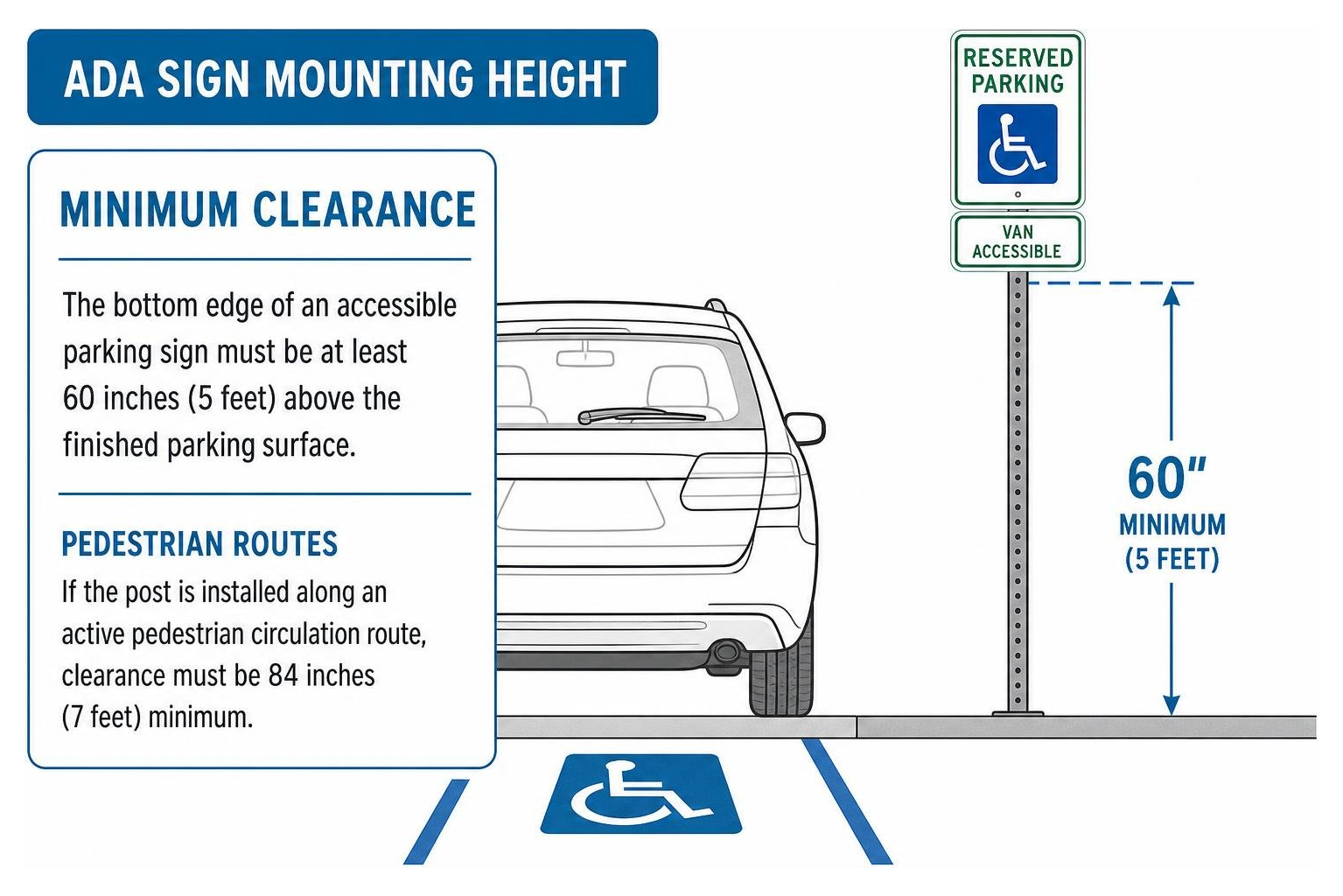
Ensuring long-term compliance involves mounting your ada signs the right way. Pair these posts with fresh parking lot striping to maintain clear, visible access aisles. For complete technical specs, consult our ada parking standards a field guide to markings and signage.
Technical Specifications: Sizing, Lettering, and Enforceability
Unauthorized parking frustrates tenants and clogs operations. However, you cannot legally tow a vehicle from a private lot without strictly compliant signage.
Legibility Calculations and Tow-Away Notice Requirements
To be legally enforceable, towing notices must provide unequivocal information at every vehicle entry point.
- Letter Height Standards: Primary warning legends (such as “TOW-AWAY ZONE” or “RESERVED PARKING”) must have a minimum letter height of 3 inches. Secondary restrictions (such as hourly limits) must measure at least 2 inches.
- The 75-Foot Viewing Rule: For signs erected more than 75 feet from a property entrance, letter height must increase by 1 inch for each additional 25-foot interval.
- Mandatory Contact Info: Tow-away signs must display the towing company or parking facility manager’s 24-hour telephone number to facilitate vehicle recovery.
Learn the legal benchmarks through our resource on private no parking signs and what makes them legally enforceable. For properties across the DFW Metroplex, signs must align with Texas tow-away signage compliance rules and overarching state statutory posting guidelines.
Tailoring Signage for HOAs, Municipalities, and Private Lots
Different property types operate under distinct operational priorities:
- Commercial Retail Centers: Prioritize high-turnover visitor stalls, clearly designated curbside loading, and bold directional pointers to parking structures.
- Homeowners Associations (HOAs): Rely heavily on permit-parking warnings, resident-reserved carports, and speed deterrents to protect pedestrians.
- Industrial Facilities: Demand heavy-duty freight routing, truck-only clearance markers, and no-idling policies.
Finding the right balance begins with our buying guide for compliant parking lot signs.
Materials, Reflectivity Grades, and Hardware Selection
Sign longevity depends on matching aluminum thickness and retroreflective sheeting to your property’s environmental exposure.
Selecting Materials and Reflectivity for Durable Parking Lot Signs
Parking signs endure relentless sun, severe storms, and accidental impacts. Cheap plastic or thin sheet metal will warp, fade, and rust within months.
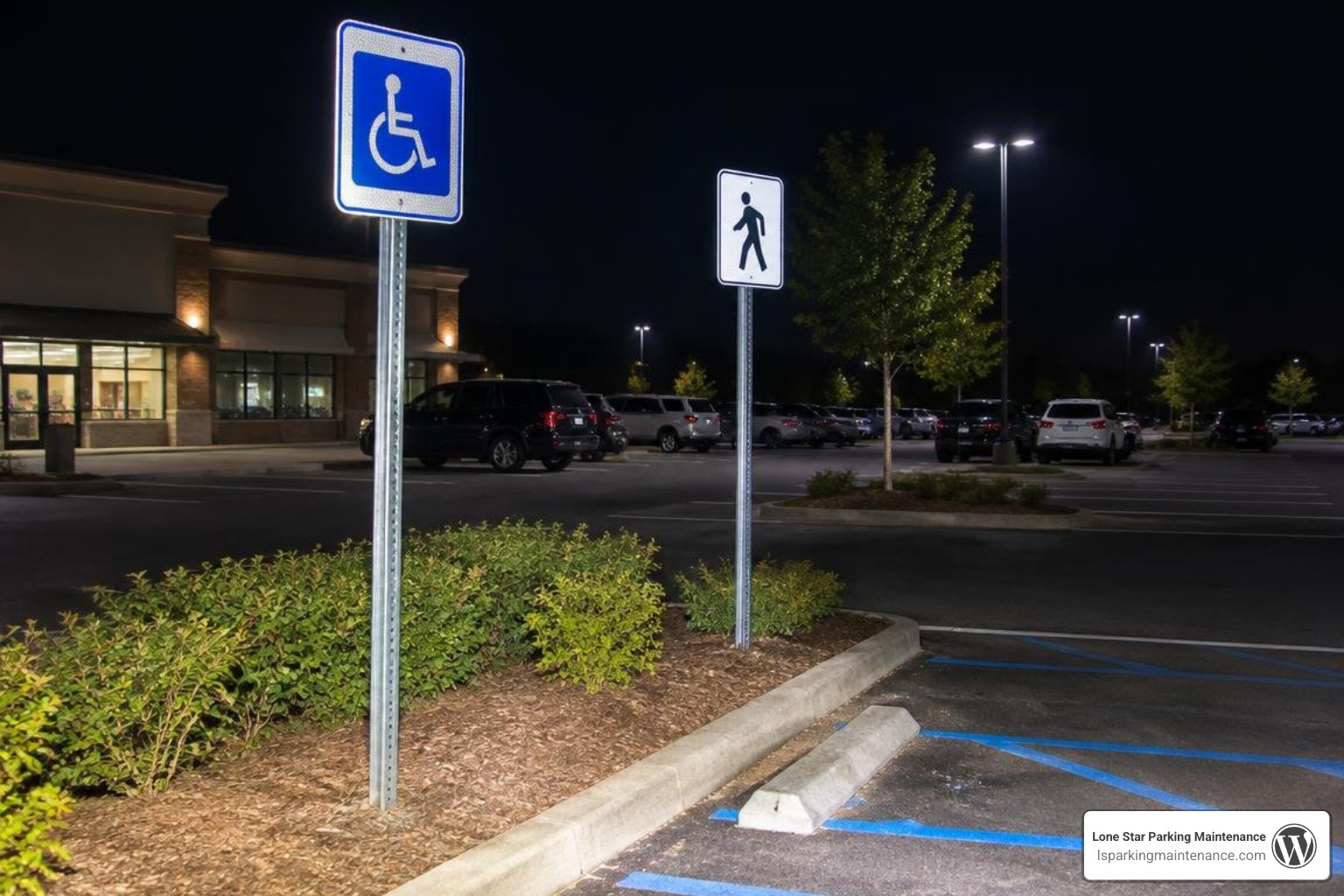
Commercial signs rely on two main grades of rust-proof aluminum:
- .040 Gauge Aluminum: An economical choice for lightweight indoor parking structures or temporary fencing.
- .080 Gauge Heavy-Duty Aluminum: The industry standard for outdoor commercial lots. This rigid thickness resists high winds, bending vandalism, and thermal warping in extreme heat up to 180°F.
| Spec / Grade | Best Use Case | Reflective Tech | Expected Lifespan |
|---|---|---|---|
| .040 Non-Reflective | Indoor garages / temporary | Standard baked enamel | 2–4 Years |
| .080 Engineer Grade (EG) | Low-traffic, lighted lots | Enclosed glass beads | 7–10 Years |
| .080 High-Intensity Prismatic (HIP) | Commercial entries, stop signs | Microprismatic lenses | 10–12 Years |
| .080 Diamond Grade (DG3) | High-speed roads, critical hazards | Full-cube retroreflective | 12+ Years |
Using premium UV-resistant inks ensures warning text remains legible without peeling or fading across years of intense sun exposure.
Posts, Weighted Bases, and Installation Methods
Mounting hardware is just as vital as the sign face. A bent or leaning post reflects poorly on your business and can create a physical hazard.
- In-Ground U-Channel Posts: Baked-enamel or galvanized steel U-channel posts are driven deep into dirt or sub-base, offering robust, economical wind resistance.
- Square Breakaway Posts: Required near high-speed municipal accessways to minimize vehicle damage upon impact.
- Surface-Mount Flanged Posts: Bolted directly onto concrete decks or post-tension slabs using heavy anchor bolts.
- Portable Weighted Bases: For dynamic valet zones, event parking, or temporary detours, portable stands with 30 lb, 60 lb, or 90 lb recycled rubber bases provide stable wind resistance without requiring drilling.
Learn how to spec hardware with a practical guide to parking sign posts from base to bolt. Protect your investments by pairing uprights with protective pole covers and curb stop installation as part of a complete parking lot signage package.
Customization and Facility Branding Options
While regulatory signs must adhere to strict color schemes, secondary markers offer an excellent opportunity to showcase your property’s brand identity.
Discover creative options in branding your asphalt custom parking signs with logo and explore our walkthrough on the ultimate guide to custom made parking lot signs.
Frequently Asked Questions About Parking Lot Signs
What are the legal height requirements for installing parking lot signs?
For regulatory and traffic signs installed along standard roadways without pedestrians, the bottom of the sign must sit at least 5 feet (60 inches) above the ground. In commercial parking lots where pedestrians walk along sidewalks or near parked vehicles, signs must be installed with at least 7 feet (84 inches) of clearance between the ground and the bottom of the sign. ADA accessible parking signs mounted where pedestrians do not walk require a minimum ground clearance of 5 feet (60 inches).
What is the difference between Engineer Grade and High-Intensity Prismatic reflectivity?
Engineer Grade (EG) uses microscopic glass beads suspended in a transparent film. It provides basic retroreflectivity suitable for well-lit commercial drives. High-Intensity Prismatic (HIP) uses advanced microprismatic lenses that bounce back more than three times as much light as Engineer Grade. HIP is the preferred grade for mandatory regulatory signs like Stop and Do Not Enter signs.
How many accessible handicap parking signs does my facility legally need?
Federal ADA guidelines dictate accessible stall counts based on your lot’s total parking capacity:
- 1 to 25 total stalls: Minimum 1 accessible space (van-accessible).
- 26 to 50 total stalls: Minimum 2 accessible spaces (at least 1 van-accessible).
- 51 to 75 total stalls: Minimum 3 accessible spaces (at least 1 van-accessible).
- 76 to 100 total stalls: Minimum 4 accessible spaces (at least 1 van-accessible).
Every designated space must have its own upright sign displaying the International Symbol of Accessibility. Lots with 501 to 1,000 stalls must allocate 2% of total spaces to accessible parking. Lots exceeding 1,000 stalls require 20 accessible spaces, plus 1 additional space for every 100 spaces over 1,000. At least 1 out of every 6 accessible spaces must be designated as van-accessible.
Conclusion
A well-planned parking sign strategy protects your property from liability, maintains clear emergency access, eliminates driver frustration, and enhances your property’s appearance. From heavy-duty .080 aluminum stop signs to ADA-compliant accessible placards and custom-branded tenant panels, investing in quality materials guarantees long-term performance.
At Lone Star Parking Maintenance, we help property managers across the DFW Metroplex design, install, and maintain fully compliant parking environments. Whether you need an ADA signage overhaul or an entire lot refresh, our team brings industry-standard materials, precision installation, and unmatched customer care to every job.
Ready to optimize your facility’s traffic flow and safety? Explore our insights on the best parking lot entrance signs to keep your property organized or reach out to our team today to schedule your comprehensive on-site parking signage audit.