
What Property Managers Need to Know About Reserved Parking Signs
A reserved parking sign tells drivers who may use a space. For employee, tenant, or visitor parking, choose a sign drivers can read before they pull in. Then check local rules before adding tow warnings or fines.
Accessible spaces need more than a generic “Reserved Parking” sign. They must meet applicable accessibility rules for the space, sign, and van-accessible label. MUTCD requirements may also apply depending on where the sign is used; they do not automatically apply to every private-lot sign.
The right sign starts with the space it marks. I’m Cason, and I’ll walk through the materials, placement, and rules property managers should check before ordering.
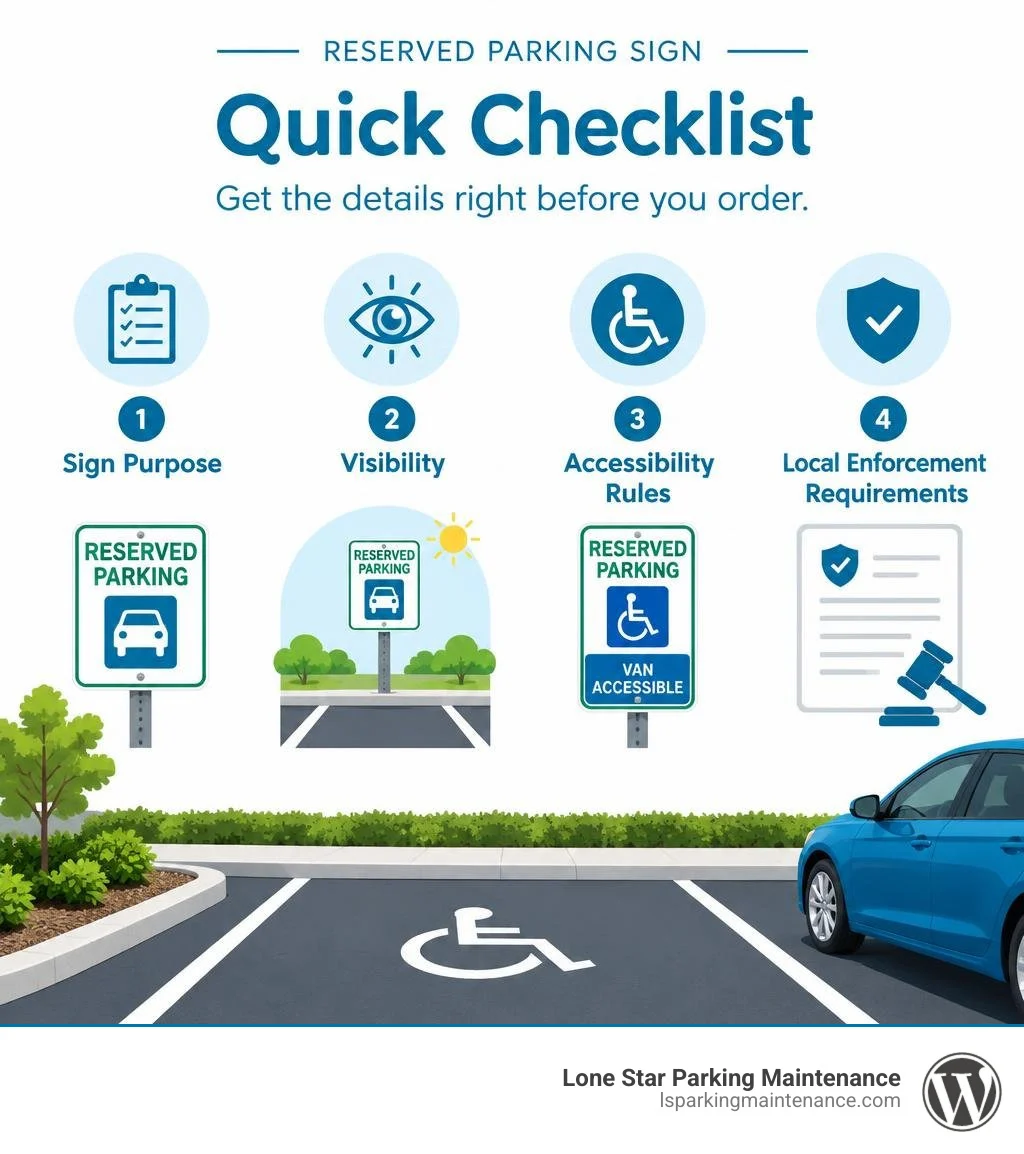
Reserved parking sign vocabulary:
Choosing the Right Reserved Parking Sign: Materials, Sizes, and Reflectivity
Managing a busy facility across the Dallas-Fort Worth Metroplex means dealing with high traffic volumes, intense summer heat, and unpredictable weather. When drivers pull into your facility, clear communication prevents bottlenecks, protects assigned stalls, and ensures smooth property operations.
Before installing hardware, consult our definitive guide to buying parking lot signs to align sign durability with your facility’s long-term maintenance strategy. Standard parking control products range from simple parking spot number signs to fully reflective entrance signage.
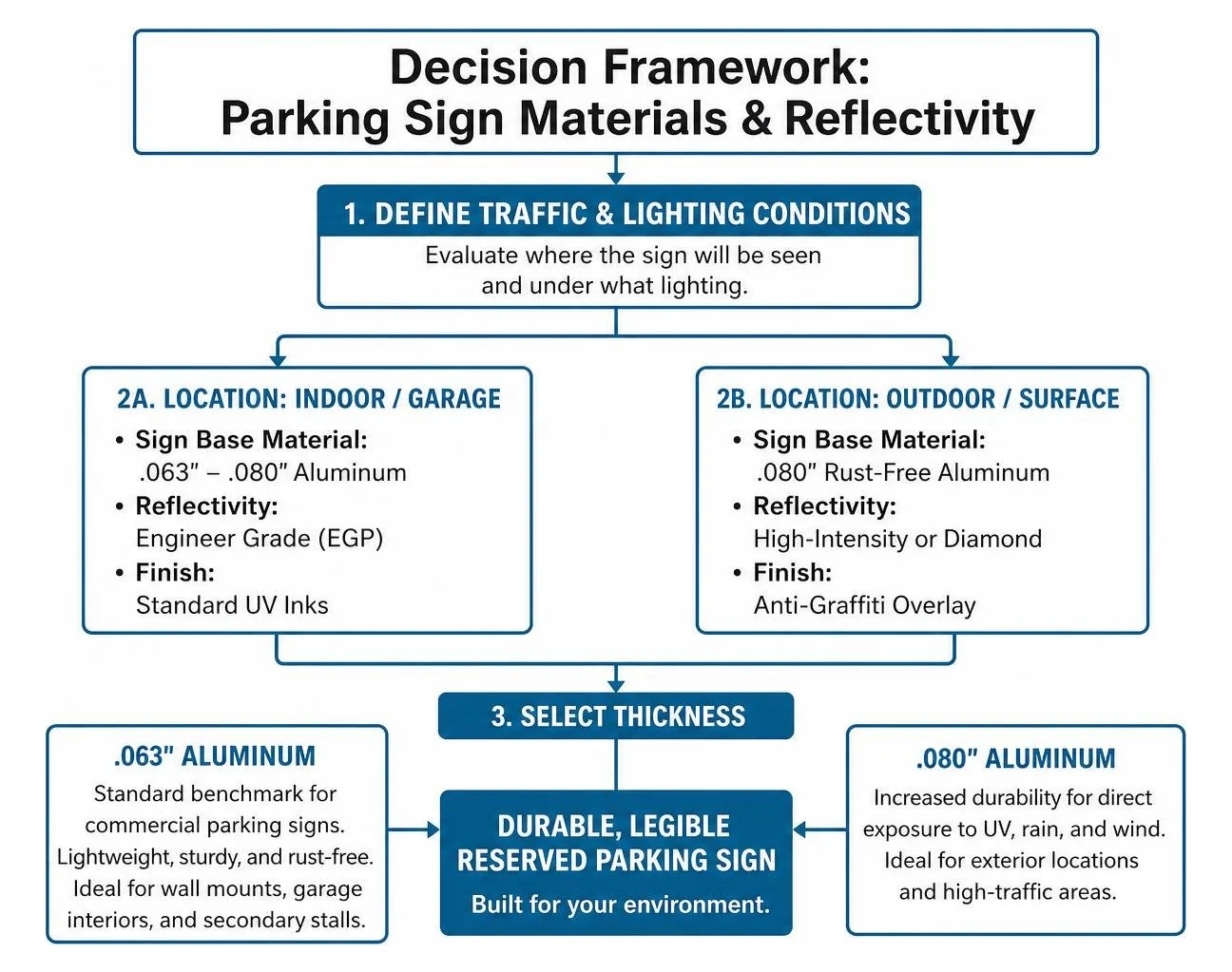
Aluminum Thickness and Sign Base Materials
Outdoor signs must endure direct UV radiation, driving rain, and wind load. Selecting the proper substrate ensures your signage stays rigid and legible over years of exposure:
- 0.063-Inch Aluminum: The standard benchmark for commercial parking applications. Lightweight yet sturdy, it resists bending and will never rust. Ideal for wall mounts, garage interiors, and secondary parking stalls.
- 0.080-Inch Heavy-Duty Aluminum: The mandatory standard for municipal roadways and high-traffic open surface lots. Its enhanced rigidity prevents warping during severe storms and provides impact resistance against wind gusts.
- Aluminum Composite Material (ACM / 3 mm): Constructed with a solid polyethylene core sandwiched between two pre-finished aluminum sheets. ACM provides a flat, rigid display surface that performs exceptionally well on flat wall mounts or perimeter security fencing.
- Rigid Polyethylene / Plastic: Best suited for indoor parking structures, temporary event stalls, or temporary barricade mounts where metal signs might present weight or handling concerns.
To protect against fading and vandalism, choose signs treated with UV-cured inks and protective over-laminates (such as DuroShield-style topcoats). These transparent barrier layers shield the underlying retroreflective sheeting from chemical cleaners, allowing graffiti and stickers to be stripped away without destroying the sign face.
Understanding Reflective Sheeting Grades and Lifespan
Reflective performance dictates whether a motorist spots a reserved stall 50 feet away or 500 feet away in low-light conditions. Standard reflective sheeting uses microscopic glass beads or microprisms to direct headlamp beams straight back to the driver’s eyes.
| Reflective Sheeting Grade | Technology Type | Light Return Percentage | Sightline Detection Range | Expected Outdoor Lifespan | Primary Facility Application |
|---|---|---|---|---|---|
| Engineer Grade (EGP) | Enclosed Glass Beads / Microprisms | ~10% to 15% | Up to 500 feet | 7 – 10 Years | Covered garages, private alleys, low-speed internal drives |
| High-Intensity Prismatic (HIP) | Microprismatic Cubes | ~30% to 35% | Up to 1,000 feet | 10 – 12 Years | Commercial surface lots, loading zones, primary access roads |
| Diamond Grade (DG) | Full-Cube Prismatic Micro-optics | Up to ~58% – 60% | 1,000+ feet (Wide-Angle) | 12 – 15+ Years | High-traffic thoroughfares, critical ADA routes, poor-light zones |
For standard commercial lots, standard green-on-white reserved signs manufactured with Engineer Grade Prismatic aluminum provide dependable everyday legibility. For intersections and major shopping centers exposed to fast-moving vehicle headlights, stepping up to a Diamond Grade reflective aluminum sign delivers maximum brightness across wide approach angles.
Sizing Your Reserved Parking Sign for Maximum Visibility
Choosing the right dimensions depends on the speed of approaching vehicles and the viewing distance required:
- 12″ x 18″ (Standard Industry Format): The primary baseline for individual reserved parking stalls, tenant spots, and standard accessible bays. It balances compact profile with clear readability at low speeds (5 to 15 mph).
- 18″ x 24″ (High-Traffic / Primary Access): Used along main driving aisles, shared delivery corridors, or van-accessible spaces where supplemental regulatory plaques (such as fine schedules or tow warnings) must be combined onto a single placard.
- 8″ x 12″ to 10″ x 14″ (Compact / Garage Wall Mount): Best utilized inside covered parking structures where vertical clearance is limited and mounting directly onto concrete structural pillars is required.
Legal Regulations and Compliance: ADA, MUTCD, and Local Codes
Signage in private commercial facilities is governed by overlapping rules: federal accessibility mandates, national traffic control guidelines, and Texas state statutes. Keeping these synchronized avoids civil liability, code citations, and tenant disputes.
Reviewing a comprehensive signage buying guide will help you audit your current inventory against current Texas municipal codes.
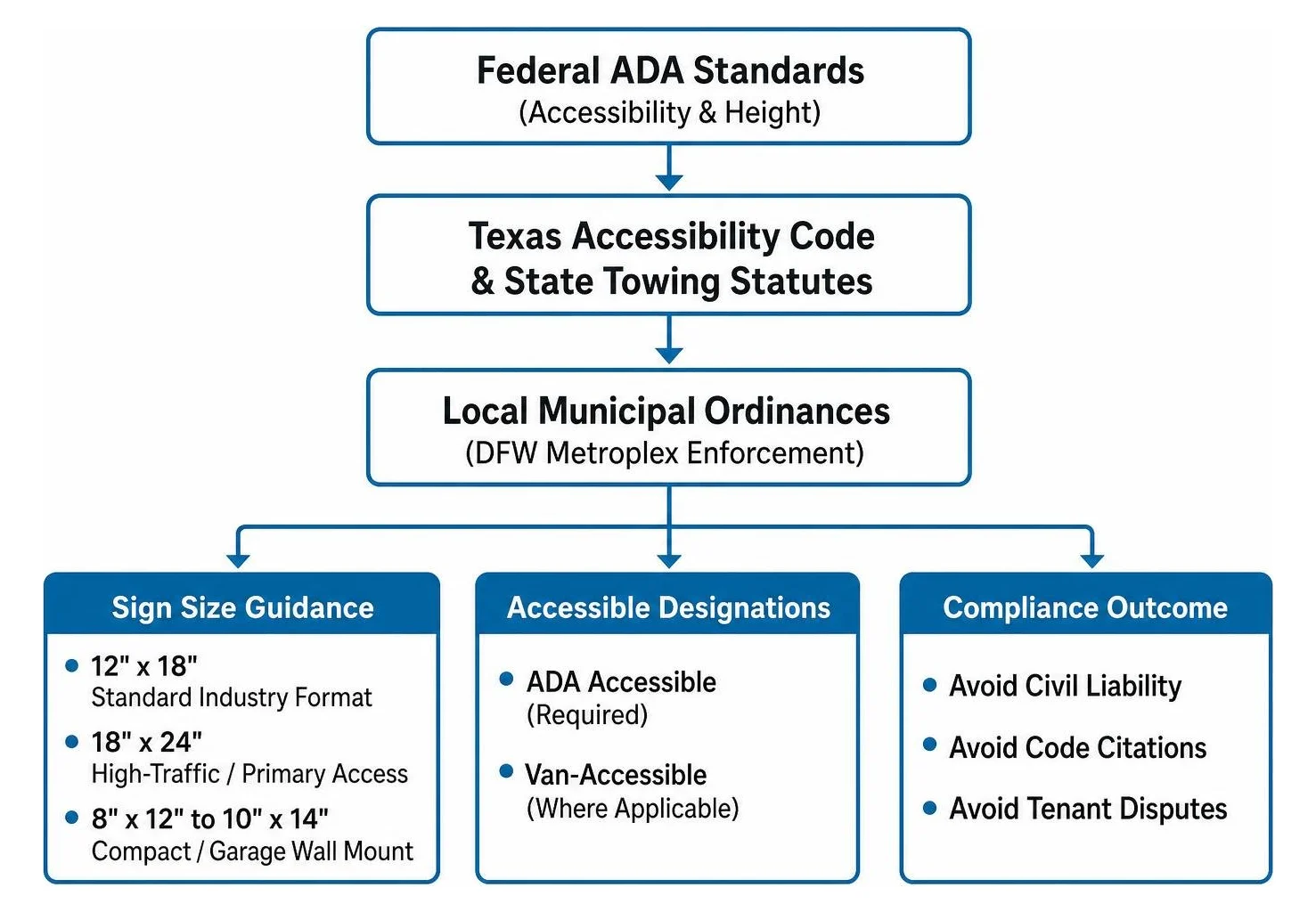
ADA Accessible and Van-Accessible Designations
Federal Americans with Disabilities Act (ADA) guidelines, alongside the Texas Accessibility Standards (TAS), establish strict legal requirements for designating accessible stalls:
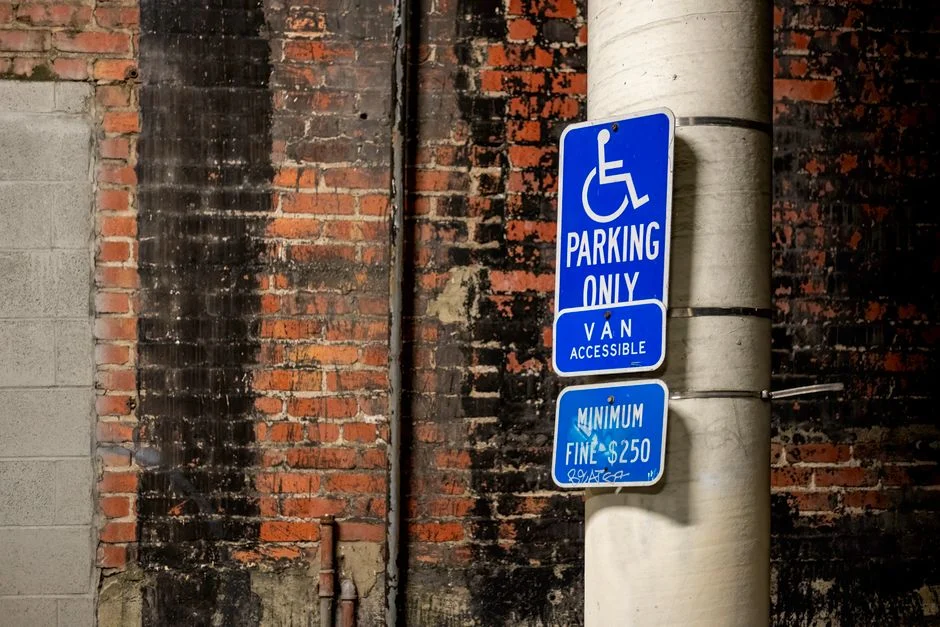
- The International Symbol of Accessibility (ISA): Every accessible space must display the universal wheelchair symbol. The graphic must feature strong contrast, traditionally white on a blue background.
- Van-Accessible Designation: For every six accessible spaces (or fraction thereof), at least one space must be van-accessible. These spaces require a designated “Van Accessible” plaque mounted directly beneath or integrated into the main sign face.
- Mounting Elevation: Signs must be mounted at a minimum height of 60 inches (5 feet) measured from the parking surface to the bottom of the lowest sign panel. If placed in pedestrian circulation pathways, the minimum clearance jumps to 80 to 84 inches to prevent head injuries.
- Unobstructed Sightlines: The sign must remain clearly visible to drivers regardless of whether a vehicle is currently parked in the stall.
For an exhaustive breakdown of physical stall measurements, access aisles, and striping cross-hatching, review our ADA parking standards field guide and keep up to date with the 2026 handicap parking guidelines.
Enforceability and Tow-Away Warning Requirements
Reserving stalls for executives, expectant mothers, or leasing office visitors is legally permissible on private property. However, enforcing those restrictions with private property impounds requires compliance with specific state statutes.
In Texas, non-consent towing on private property requires adherence to the Texas Occupations Code (Chapter 2308). If you intend to have unauthorized vehicles towed, your signs must incorporate specific elements:
- A clear, bold warning indicating that unauthorized vehicles will be towed at the vehicle owner’s expense.
- The standard international towing graphic (a vehicle silhouette being towed).
- Continuous restriction hours (e.g., “24 Hours / 7 Days a Week”) or specific enforcement timeframes.
- A functional 24-hour telephone number allowing motorists to locate impounded vehicles immediately.
To learn more about drafting enforceable restrictive covenants, read our guide on what makes parking signs legally enforceable. For property owners seeking regional compliance templates, state-specific resources like Texas-compliant reserved parking signs ensure your warning language meets state standards.
Customization, Applications, and Mounting Methods
Beyond mandatory accessible designations, parking lots require clear internal structure to prevent congestion. Well-placed signage eliminates confusion for customers, contractors, and corporate personnel alike.
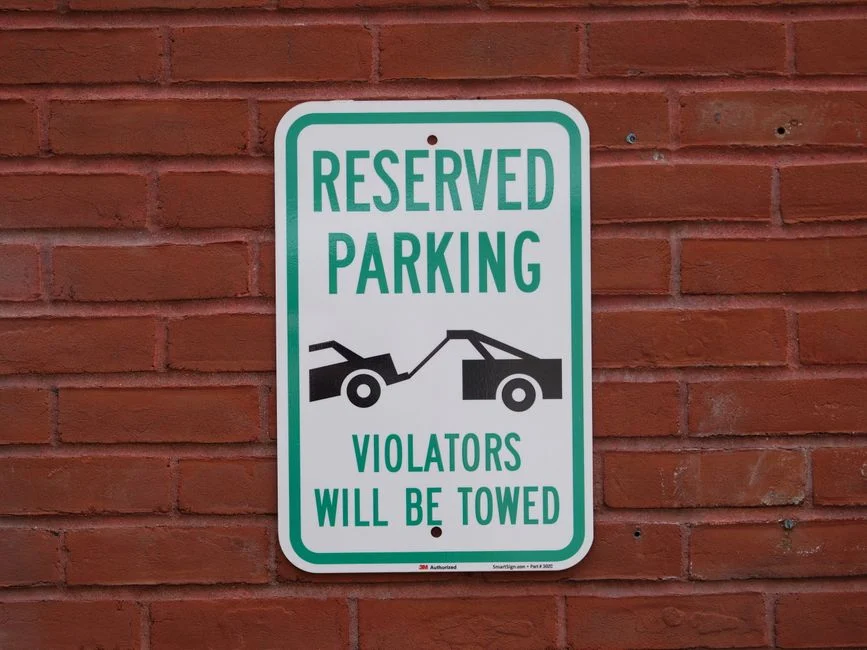
Custom Reserved Parking Sign Options for Businesses and Tenants
Customized placards allow properties to balance firm traffic control with professional architectural branding:
- Tenant and Assigned Stalls: Multi-tenant commercial complexes benefit from personalized wording like Reserved for Suite 400 or Future Resident Parking. Adding clear high visibility number signs prevents delivery couriers and visitors from taking assigned spots.
- Corporate Branding and Logos: Custom manufacturing makes it easy to integrate high-resolution corporate logos, color-matched backgrounds, and brand identity onto durable aluminum blanks. Explore our guide to custom parking lot signs and learn about branding asphalt parking spaces.
- Specialty Operations: Clearly mark spaces for specific needs such as Electric Vehicle Charging Only, Curbside Pickup, Physician On Call, or Employee of the Month. For lighthearted creative settings, you can even install novelty parking signs.
- Temporary Traffic Control: When managing seasonal rushes, special gatherings, or maintenance re-routes, use special event signage or reflective cone message sleeves for quick, flexible deployment.
If you are sourcing signage directly, platforms offering custom aluminum reserved signs or personalized 3M reflective parking placards provide straightforward design tools to configure custom text, arrows, and warning headers.
Sign Post Hardware and Installation Best Practices
Selecting a premium sign panel is only half the battle; the sign must be mounted securely to remain plumb, stable, and protected from vehicle bumper strikes:
- Post Selection:
- Galvanized U-Channel Posts: The industry benchmark. Featuring 3/8-inch punched holes spaced at 1-inch centers along the entire spine, these posts offer high tensile strength and rust protection.
- Telespar Square Tube Posts: Ideal for urban municipal settings and high-wind environments. Their four flat sides support multidirectional sign mounting and integrate with breakaway safety bases.
- Mounting on Concrete and Brick Walls:
- When mounting directly to garage walls or concrete pilasters, use heavy-duty masonry anchors (Tapcon screws or sleeve expansion anchors) paired with neoprene washers to prevent cracking the reflective sheeting face.
- Hardware and Fasteners:
- Fasten sign blanks with 5/16-inch vandal-resistant aluminum or stainless steel drive rivets and lock nuts. This prevents unauthorized removal, theft, or wind-induced rattling.
To review post selection, concrete footing depths, and bolt specs, check out our comprehensive parking sign post guide and follow best practices for mounting accessible signage properly.
Frequently Asked Questions About Reserved Parking Signage
What is the standard mounting height for reserved parking signs?
For standard accessible (ADA) stalls, federal and Texas accessibility standards require a minimum vertical clearance of 60 inches (5 feet) from the pavement surface to the bottom edge of the primary sign panel.
However, if the sign is installed along a pedestrian sidewalk, pathway, or corridor where people might walk close to the post, the minimum clearance increases to 80 to 84 inches (7 feet). This elevated clearance prevents sightline obstructions from parked SUVs and prevents pedestrian injuries.
How do Engineer Grade and Diamond Grade reflective signs differ?
The primary differences lie in optical technology, light return efficiency, and expected lifespan:
- Engineer Grade Prismatic (EGP): Returns roughly 10% to 15% of headlamp light back to the driver. It is readable up to 500 feet away and offers an outdoor service life of 7 to 10 years. It is best suited for low-speed private lots and indoor garages.
- Diamond Grade (DG): Features high-efficiency microprisms that return up to 58% to 60% of available light. It provides visibility past 1,000 feet, performs reliably at wide approach angles, and offers an outdoor lifespan of 12 to 15+ years. It is designed for multi-lane thoroughfares and critical regulatory intersections.
Are custom reserved parking signs legally enforceable on private property?
Yes, property owners have the legal authority to manage their own parking facilities and assign designated spaces. However, if you plan to enforce those rules through ticketing, booting, or towing unauthorized vehicles, your signage must strictly comply with local municipal codes and Texas state towing regulations.
Enforceable towing signs must include statutory warning language, an impound warning, the international towing symbol, and an active 24-hour dispatch phone number for the impound facility.
Conclusion
Well-planned parking signage protects reserved spaces, guides daily traffic safely, and keeps your facility compliant with state and federal accessibility standards. From selecting durable 0.080-inch rust-free aluminum to matching the right reflective grade to your property layout, every detail matters.
Lone Star Parking Maintenance provides parking lot striping, signage installation, concrete repairs, and maintenance services across the Dallas-Fort Worth Metroplex.
Whether you need a full accessibility layout update or custom branded tenant signage, contact our team today for a comprehensive lot evaluation and professional parking lot striping and signage services.